Pipevine Swallowtail Butterflies and Their Host, Dutchman’s Pipevine

Late one afternoon a pair of dazzling creatures caught my eye as I walked toward my car in the parking lot at Bowman’s Hill Wildflower Preserve.  They were Pipevine Swallowtail butterflies, a male and a female, flitting about in the neighborhood of a very large Dutchman’s Pipevine (Aristolochia macrophylla), the plant that gives them their name.

As I watched, the female occasionally landed on the Dutchman’s Pipevine, staying in one spot for a few moments, with her lower abdomen curved slightly to touch the Pipevine leaves or stems.  She was laying eggs!  In the photo below, two roundish orange eggs are visible on the stem of the vine, next to her right front leg.  If you look carefully at the tip of her abdomen, you can see a spot of orange – she’s just about to lay another.
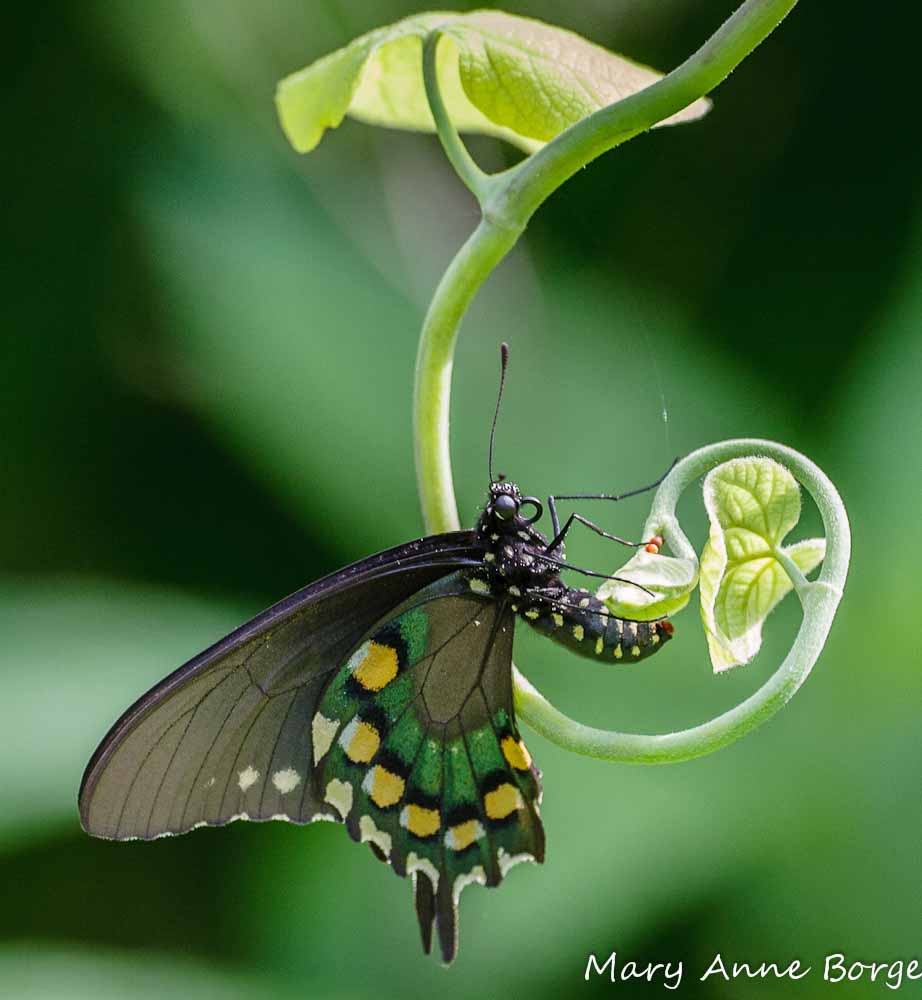
Pipevine Swallowtail Butterfly laying eggs on Dutchman’s Pipevine

Some butterflies have evolved a survival strategy that enables their caterpillars to feed on a wide variety of plants, but others, like the Pipevine Swallowtail, have chosen to specialize on a small number of plants that give them a particular advantage.  To protect itself from being eaten, Dutchman’s Pipevine has evolved with chemicals that are at minimum distasteful to those who would eat it, and if a sufficient amount is ingested, they are toxic.  Pipevine Swallowtail caterpillars are among the few creatures who are able to process these chemicals without harm to themselves, then store them in their bodies in such a way that they are toxic to their potential predators.  This chemical protection even survives metamorphosis and extends to the adult butterfly.  It is so effective that other butterflies mimic the appearance of the Pipevine Swallowtail, since this is often enough to warn off predators.

Pipevine Swallowtails lay their eggs in small clusters of usually less than twenty, often on young leaves or stems of Pipevine plants, members of the genus Aristolochia.  In the mid-Atlantic, the only species that Pipevine Swallowtail caterpillars can eat are Dutchman’s Pipevine and Virginia Snakeroot.  In the southwestern part of its range, there are other native Pipevine species that this butterfly uses as its caterpillar food plants.
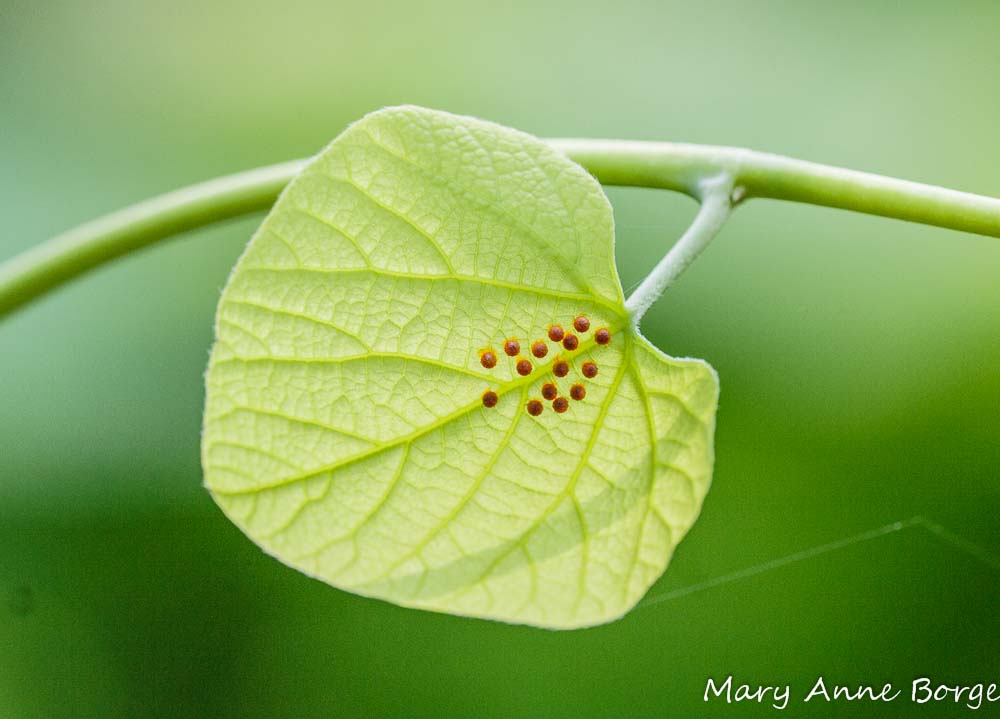
Pipevine Swallowtail Eggs on Dutchman’s Pipevine

Soon after they hatch, the young caterpillars have a reddish spiny appearance. They tend to feed together in groups.

Young Pipevine Swallowtail Caterpillars

Older caterpillars usually feed alone, and their appearance changes, with colors appropriate for Halloween – black with orange trim.
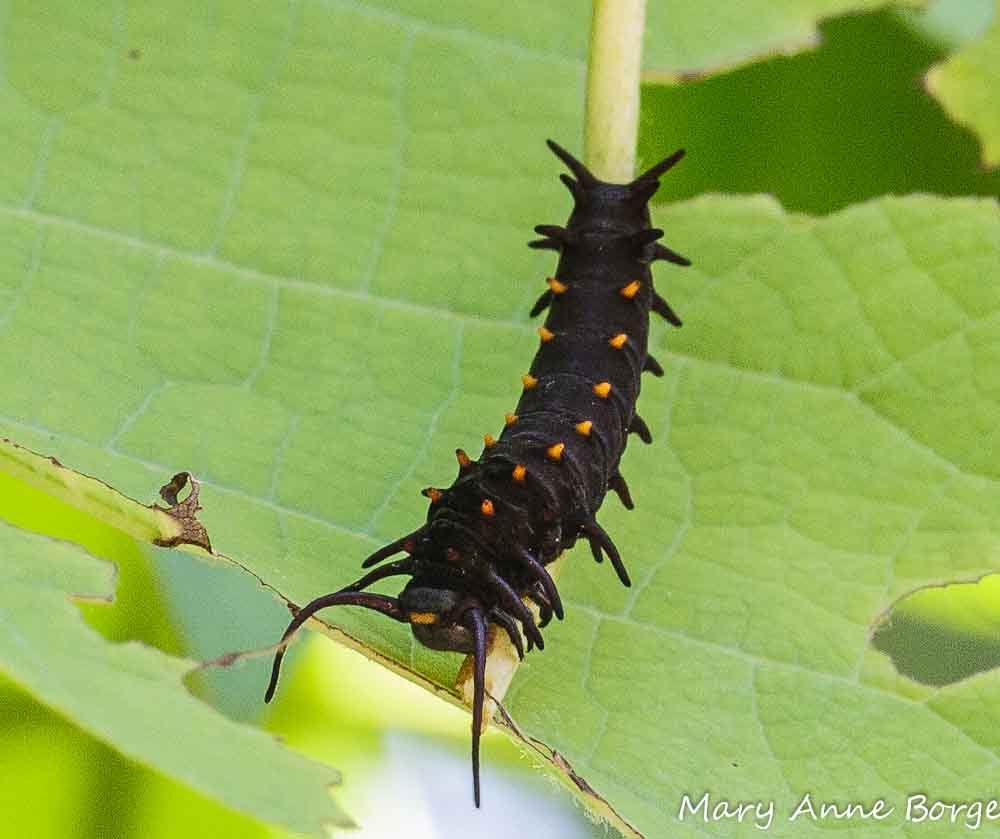
Pipevine Swallowtail Caterpillar on Dutchman’s Pipevine

Adult butterflies feed on a variety of plants for their nectar, and may also seek out minerals at puddles.  They don’t feed on the flowers of the Pipevines, however, because they are not a good anatomical match for feeding or pollination.

Dutchman’s Pipevine is a deciduous vine with large heart-shaped leaves, but it is named for the shape of its flowers, which have a curved tubular shape ending in a flair with an opening in the center to allow pollinators to enter and search for a nectar reward.  The graceful Pipevine Swallowtail is too large to enter, and even its proboscis can’t extend enough to navigate the long curved tube to reach the flower’s food offerings.
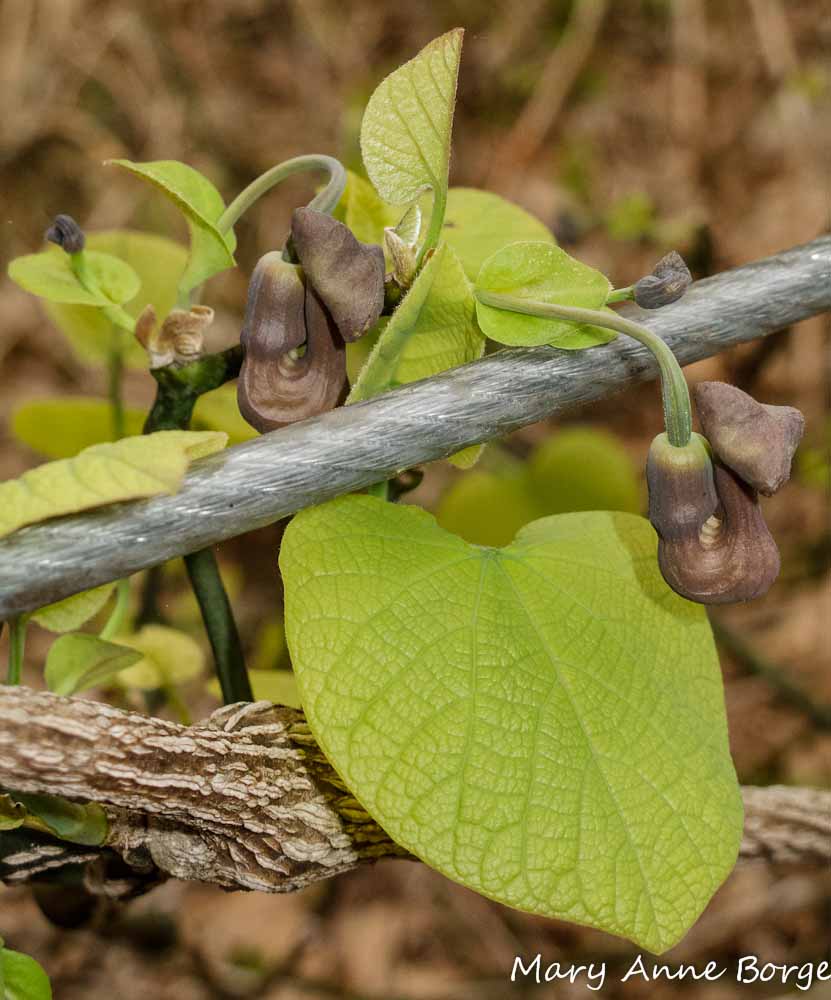
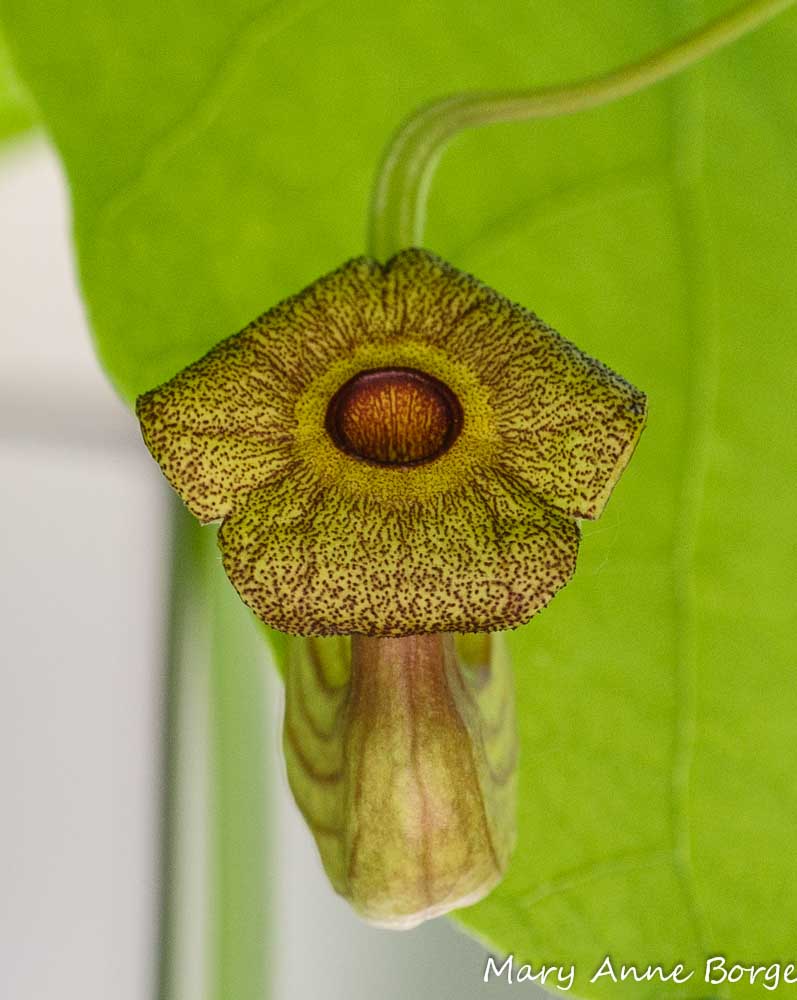
Dutchman’s Pipevine Flower in bloom

So how are the Pipevine flowers pollinated?  Small flies and gnats are attracted to the open throat of the flower by an aroma they can detect, and by the color pattern, both directing them forward down the tube.  As the insects enter, they are prevented from reversing course by hairs that line the flower’s throat, forcing the insect forward, a little like the metal spikes at parking lot entrances that will puncture your tires if you back up.  When the insect reaches the nectar source, it meets the sticky stigma of the female flower parts, depositing pollen brought in on its body from another Pipevine flower.  The plant detains the insect until the flower has been fertilized, offering it shelter and nectar, sort of like a little insect bed and breakfast.  The female flower parts wither, and the male parts mature, releasing pollen for the insect to pick up on its body.  The flower tube and its hairs relax enough for the insect to escape the way it entered, taking the pollen to the next flower it visits, ensuring the continuation of both the Dutchman’s Pipevine and the Pipevine Swallowtail species.

Dutchmans Pipevine on fence at Bowman’s Hill Wildflower Preserve

Juvenile Downy Woodpeckers Learn to Forage for Food

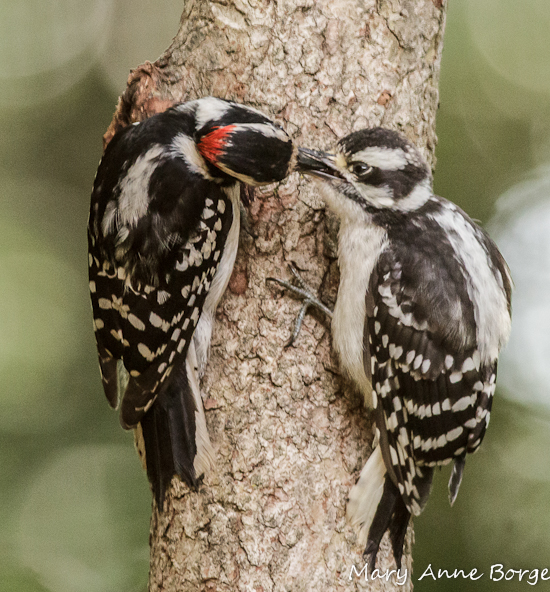
For the past week or so I’ve been watching a family of Downy Woodpeckers in my back yard.  My first glimpse was of an adult female feeding an insect to one of her offspring.

Since then, Mom has made herself scarce, and Dad seems to have the assignment of teaching the kids how to eat convenience food from our feeder.

The male flies to the feeder for a seed, then to the trunk of a Flowering Dogwood tree where he uses the hollowed out space of a knothole to mash the seed, repeatedly pecking at it with his beak to prepare it for consumption.  Sort of like using a mortar and pestle to make a paste.  Once the food is properly prepared, he feeds his offspring, occasionally having a bite himself.

Initially I saw the adult male with just one other bird who was flying pretty confidently, so at first I thought I might be watching a mate feeding ritual between an adult male and female.

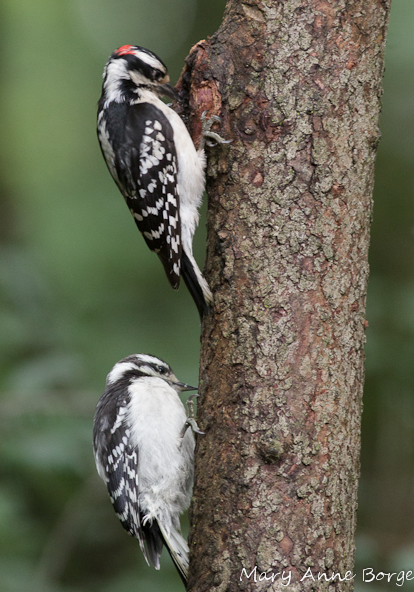
Then three Downies appeared together, an adult male in the company of two birds that were lacking the signature red patch on the back of the head that distinguishes the adult male Downy from the female and juvenile Downies.  The adult male fed both of the other birds, and there wasn’t much squabbling, so I had to take a more careful look to be sure of what was going on.

On closer inspection, the birds that are being fed have black plumage that is somewhat duller than the adults, the white streak above the eye is broader and ends toward the back of the head with white speckles, and there are white speckles just above the beak, characteristics of juvenile birds.  Mystery solved!

So two young Downy Woodpeckers have just about successfully fledged.  They’re still looking for handouts from Mom and Dad, but they’re learning to feed themselves.

This slideshow requires JavaScript.

To enlarge a photo, click on the image below.

Mid-Spring in the Sourlands – Hidden blossoms, dazzling critters, and a bounty of ferns

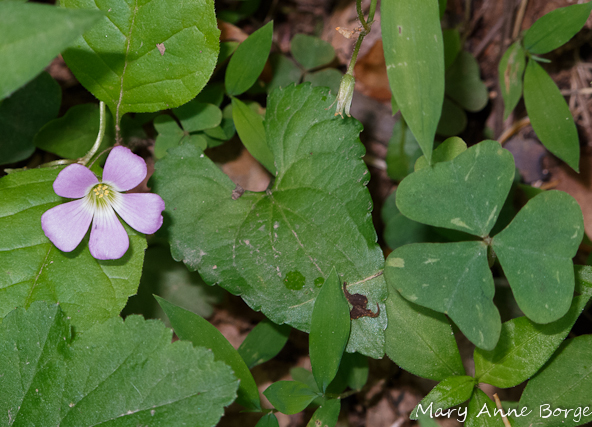
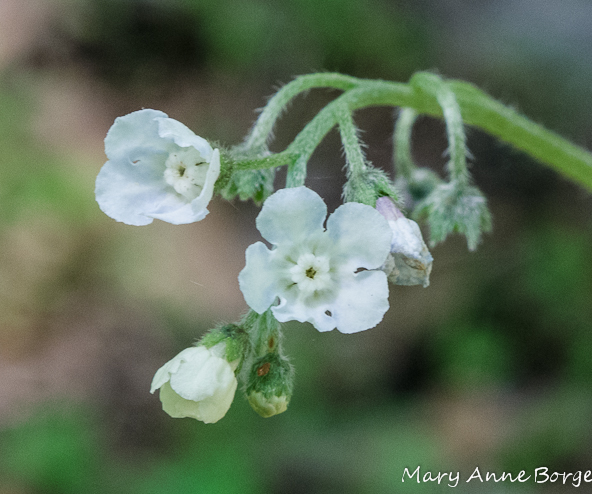
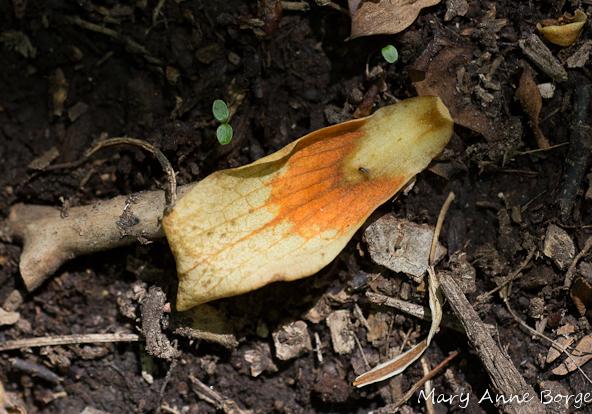
A recent walk in the Sourland Mountains revealed Violet Wood-sorrel (Oxalis violacea) with its clover-like leaves mingling with violets and Virginia Creeper, bright white Dewberry blossoms, large leaf blades of Wild Comfrey (Cynoglossum virginianum) topped with delicate sprays of pale blue flowers, and a last glimpse of Showy Orchids (Galearis spectabilis) before they fade for the season, hidden among ferns and fruiting Bellworts (Uvularia sp.) under arching branches of Spicebush.

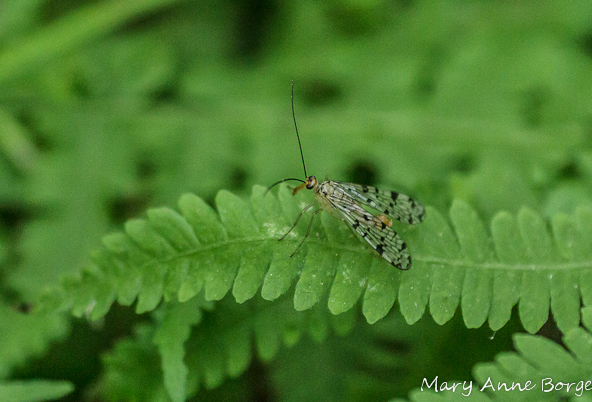
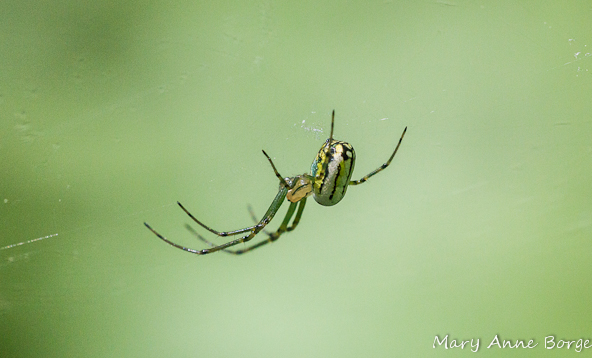
Brightly colored snipe and robber flies dashed about to catch their meals, making their living by eating other insects.  Meanwhile spiders waited quietly for a snack to come to them.  In contrast to their name, Scorpianflies are so benign that they feed on insects that are already dead, including leftovers from spider webs.

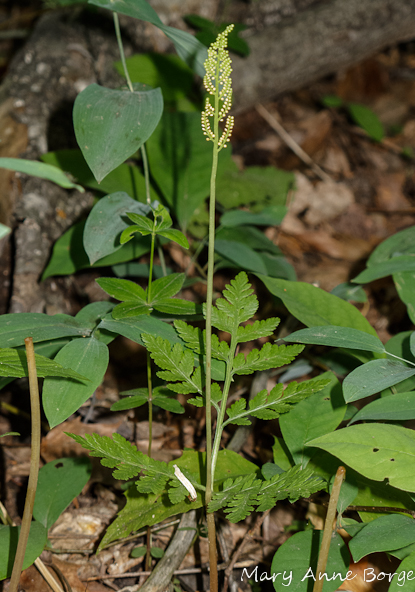
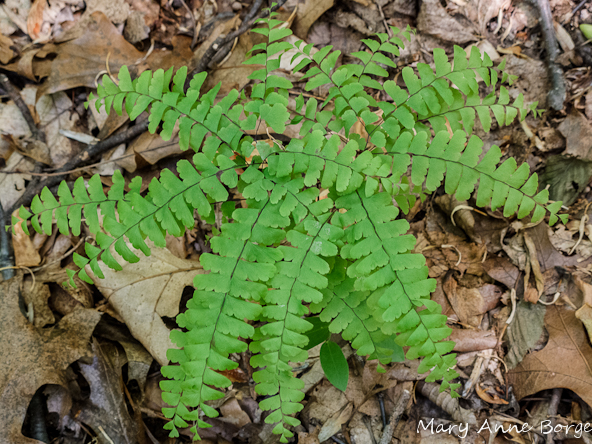
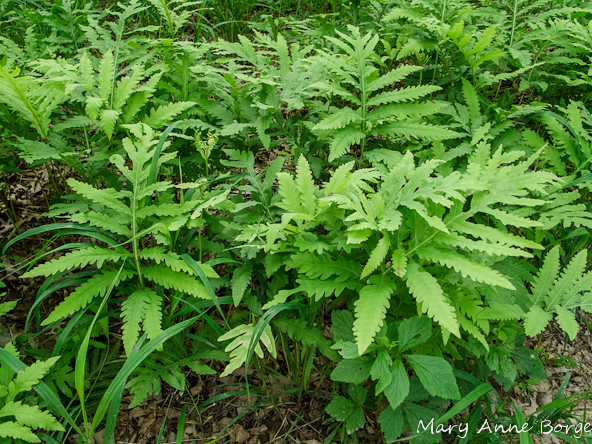
Ferns spectacularly line the trails, many of them invisible a month ago.

This slideshow requires JavaScript.

Golden Alexander Hosts Black Swallowtail Butterflies!

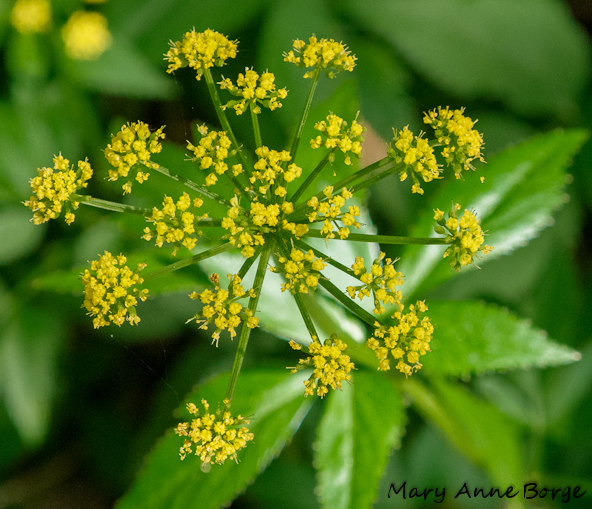
Golden Alexander’s (Zizia aurea) umbrella shaped clusters of tiny sunshine yellow flowers have been lighting up my shade garden for weeks, and will continue for a while longer.

Golden Alexander

Golden Alexander

Like so many plants, Golden Alexander responded to the unusually warm winter and early spring temperatures by blooming a few weeks earlier than normal.  When the flowers are pollinated, dry fruit capsules replace them, an attractive feature for many weeks to come.  Golden Alexander’s rich green foliage is visible for much of the year.  Continue reading

For Great Spangled Fritillaries, Leave the Leaf Litter!

Great Spangled Fritillary on Butterflyweed

Great Spangled Fritillary on Butterflyweed

If we really want to get to know butterflies a little better, we need to encourage them to take up residence on our property rather than just stopping for a quick bite to eat.  To achieve that, we need to think about providing the habitat they need throughout as much of their life cycle as we are able.  Let’s look at the Great Spangled Fritillary as an example.

Adult Great Spangled Fritillaries love to cruise fields, meadows, open woods, and gardens, looking for nectar rich flowers.  Some of their favorite food sources include Butterfly-weed (Asclepias tuberosa), Common Milkweed (Asclepias syriaca), Wild Bergamot (Monarda fistulosa), Joe-pye-weeds (Eutrochium dubium, E. fistulosum, E. maculatum, E. purpureum), Ironweeds (Vernonia sp.), and Dogbanes (Apocynum cannabinum).  These plants all have broad appeal to many species of butterflies, including the showy bright orange and brown Fritillaries.  Continue reading