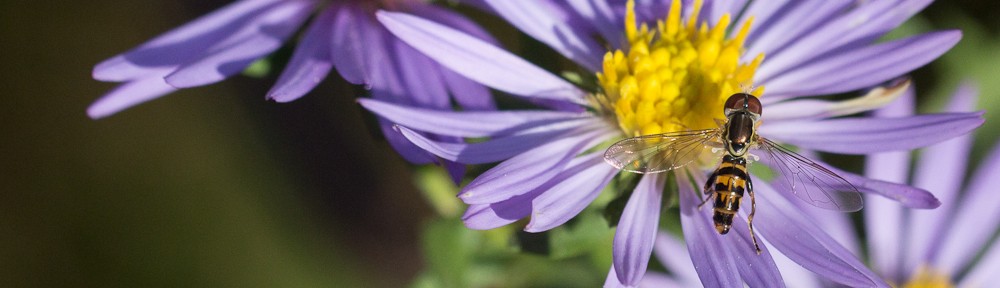
We often think of butterflies as relying on nectar from flowers as their primary source of food for adult butterflies, and many species do.
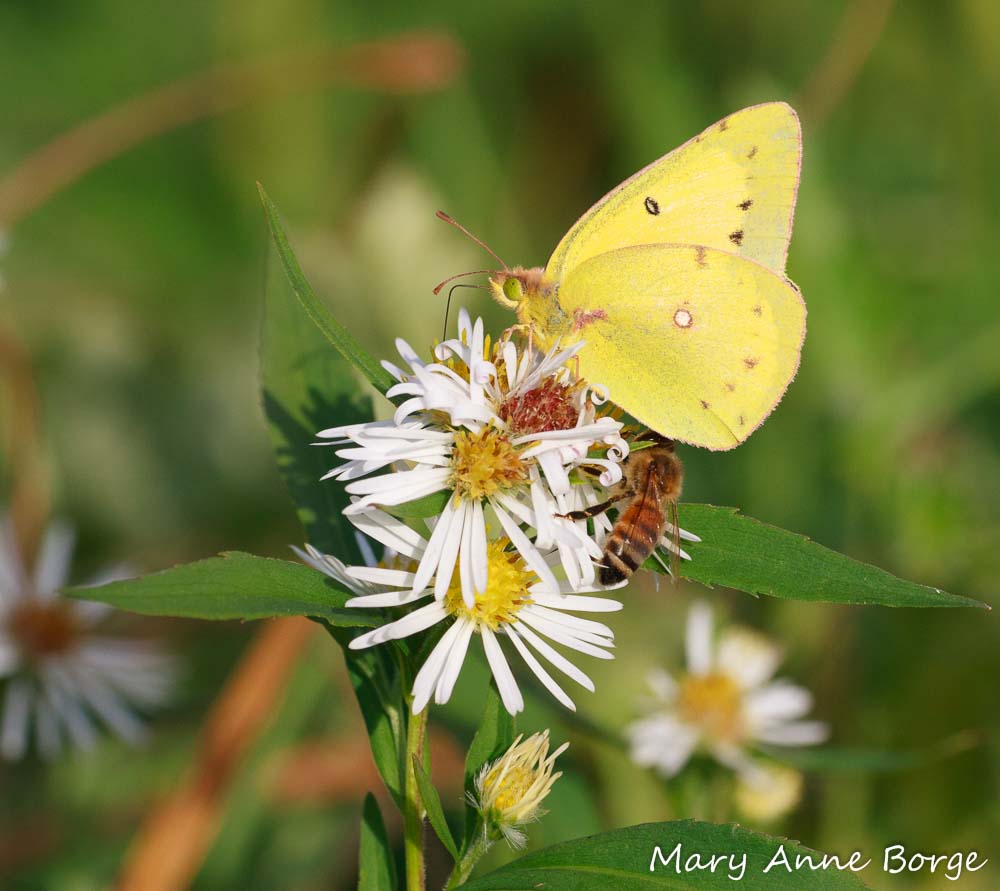
Clouded Sulphur and Honey Bee on Aster
But there are others who feed mainly on minerals, often from mud or dung, or who consume both nectar and mineral sources.
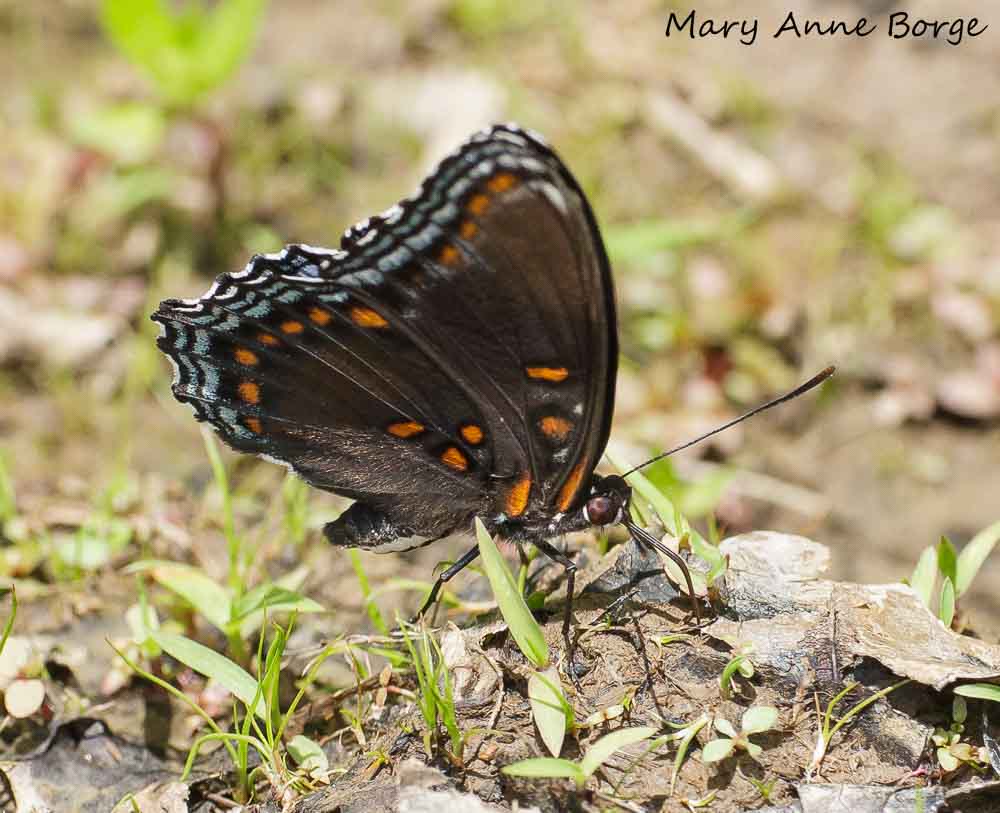
Red-spotted Purple feeding on minerals in mud
One species that has more unusual eating habits is the Harvester (Feniseca tarquinius).
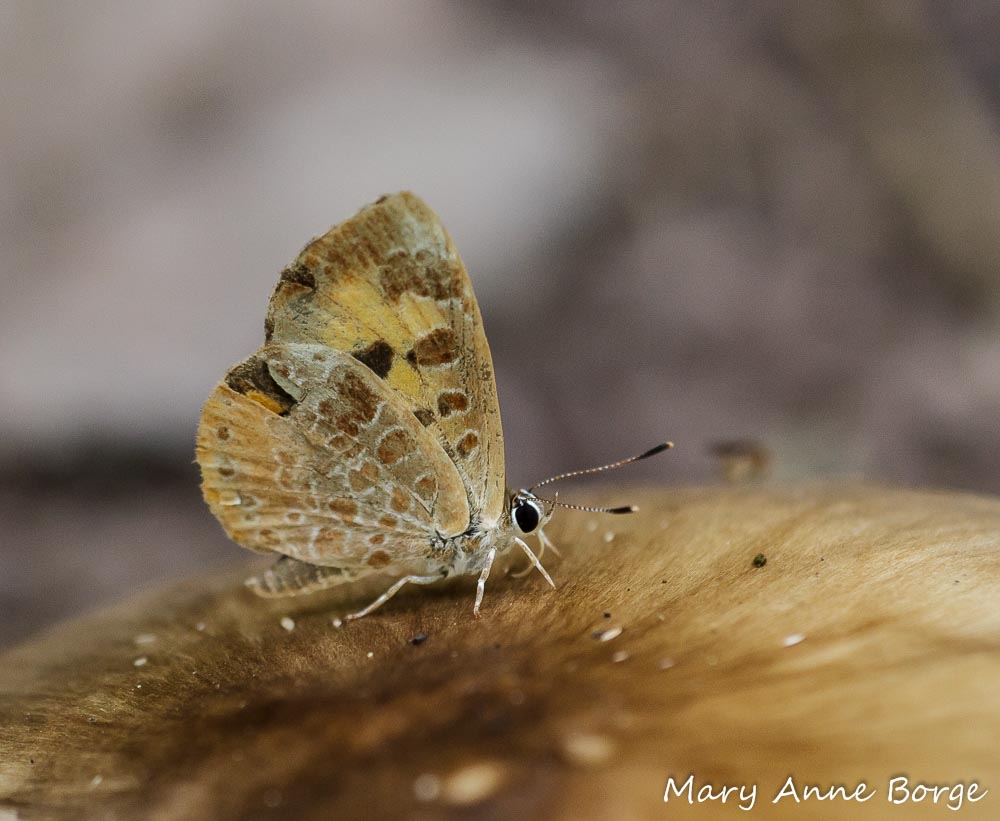
Harvester (Feniseca tarquinius)
This butterfly rejects flower nectar in favor of honeydew, the sugary secretion produced by aphids. Harvesters also feed on mineral sources such as dung, sap and mud. In the photo below, the butterfly is feeding on a mushroom.
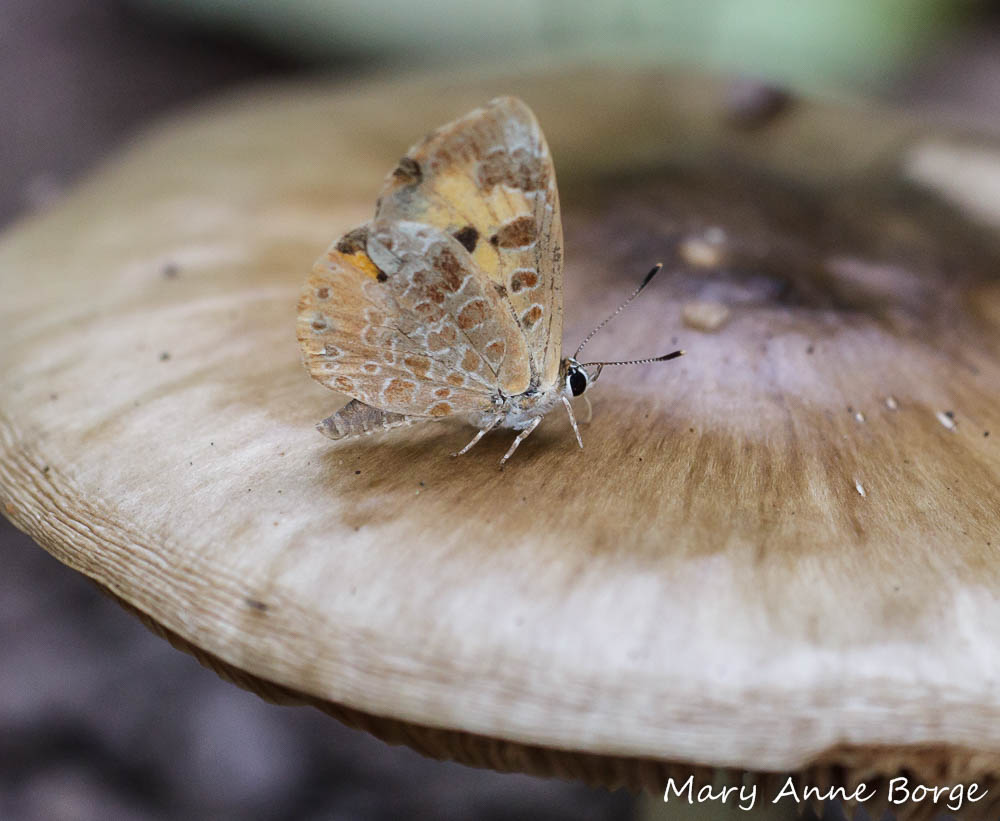
Harvester (Feniseca tarquinius)
The Harvester’s eating habits explain its habitat preference, wet woodlands or along streams, especially where alders are found.
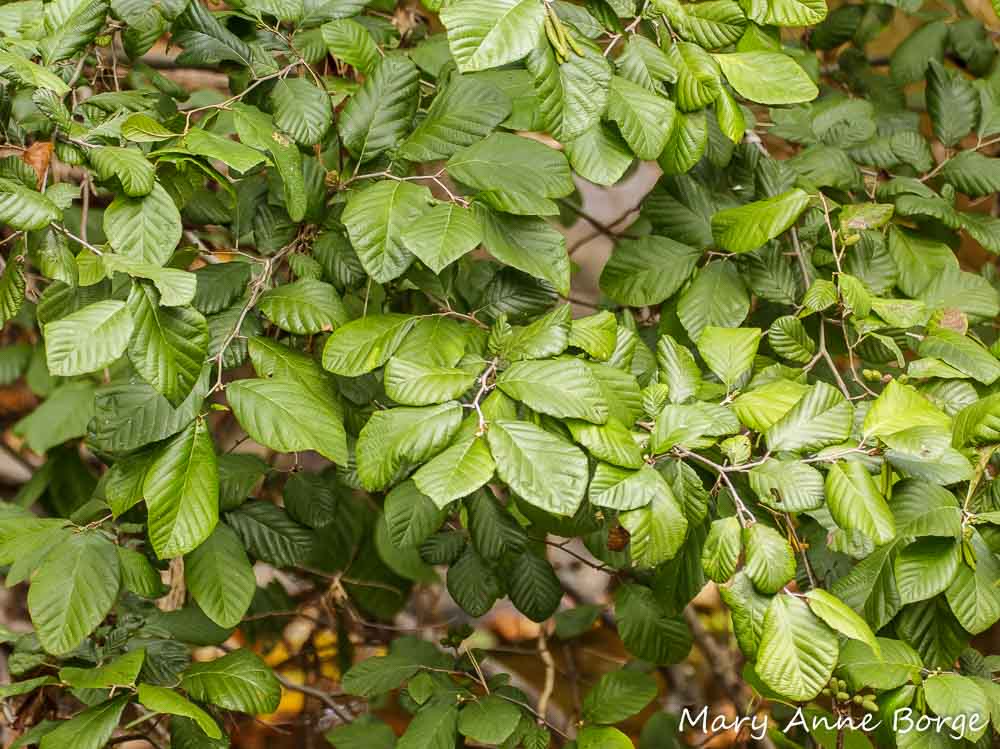
Smooth Alder (Alnus serrulata)
Alders are hosts to the Woolly Alder Aphid (Prociphilus tessellatus), a favorite honeydew source for Harvesters.
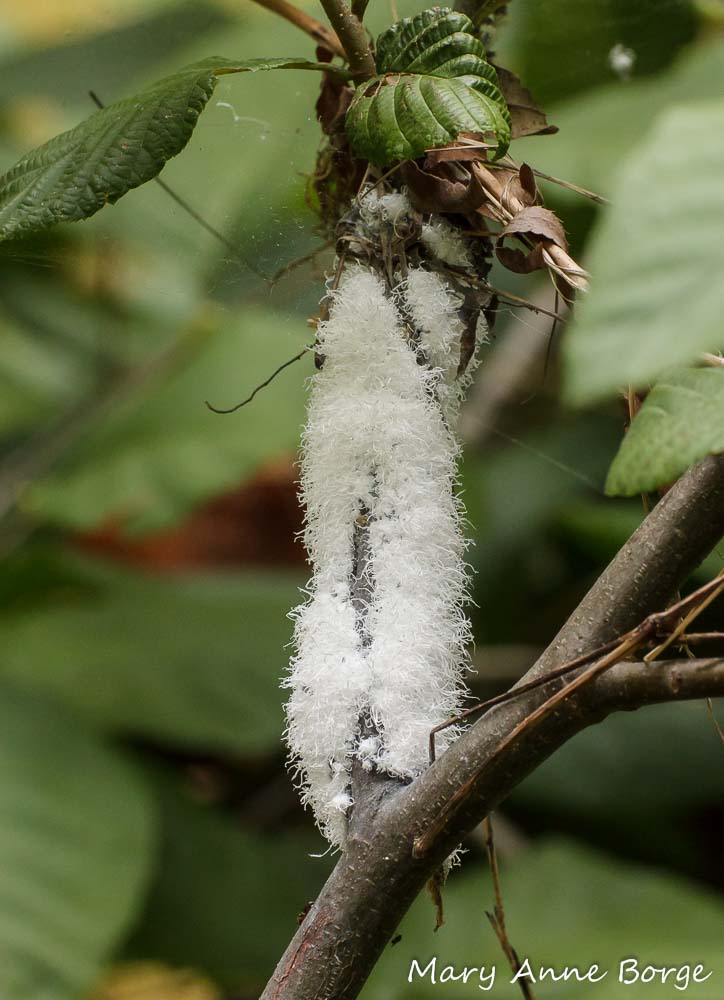
Woolly Alder Aphids on Smooth Alder (Alnus serrulata)
Even more important for the Harvester, these aphids are a favorite diet source of its caterpillars. The Harvester is the only butterfly species in North America whose caterpillars are strictly carnivorous. They feed primarily on several species of woolly aphids, often the Woolly Alder Aphid, but also the Woolly Beech Aphid, as well as others. The caterpillars will sometimes disguise themselves from predators by using their silk to tie to their bodies the remains of the aphids they consume. This is especially effective as protection from ants that may be tending the aphids for their honeydew. The Harvester caterpillars share some of the chemical signature of their aphid diet, which also may give them protection from predatory ants.
So wooly aphids feed both the Harvester butterfly and its caterpillars. Because of its habitat and food preferences, the Harvester is not commonly seen. So consider yourself lucky if you encounter one!
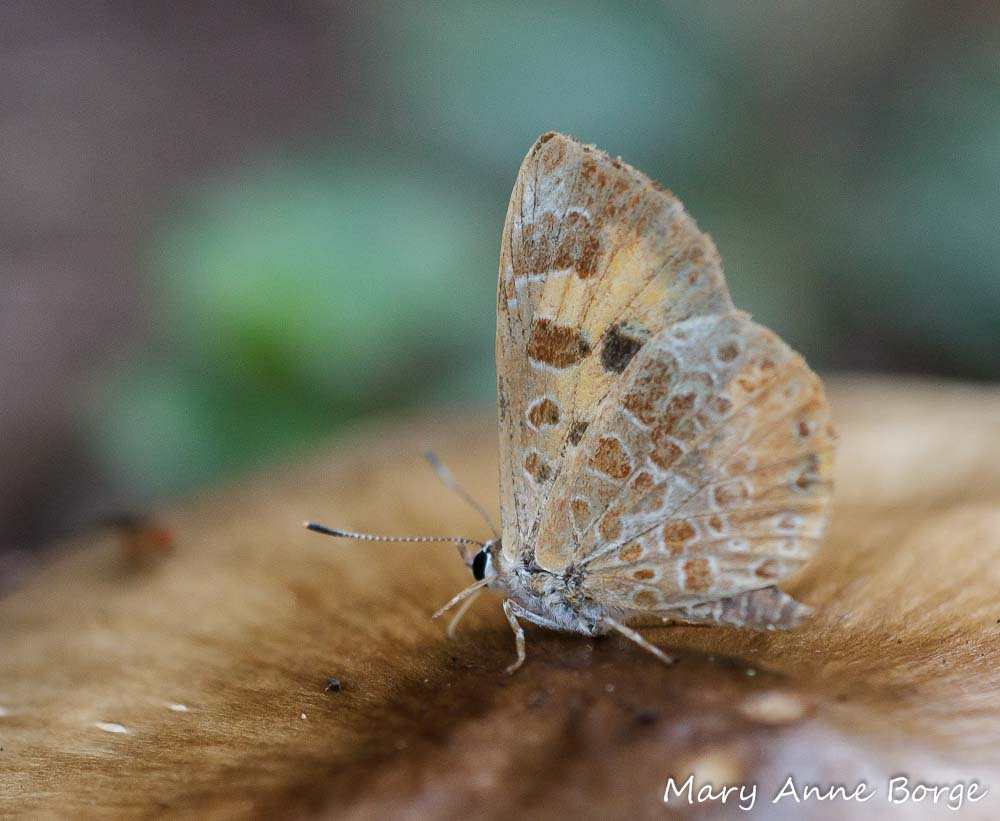
Harvester
Resources
Brock, Jim P.; Kauffman, Ken. Kaufman Field Guide to Butterflies of North America. 2003.
Cech, Rick; Tudor, Guy. Butterflies of the East Coast. 2005.
Glassberg, Jeffrey. Butterflies through Binoculars A Field Guide to Butterflies in the Boston-New York-Washington Region. 1993.
Featured Creatures – University of Florida
Butterflies and Moths of North America
 The Natural Web