Late Spring in Stowe, Vermont

Spring unfolds more slowly in northern Vermont than it does where I live in the mid-Atlantic.  So we were able to catch some late spring action in the Stowe area recently.  The show started in the gardens at Trapp Family Lodge, where an Eastern Chipmunk foraged among the Wild Columbine (Aquilegia canadensis) and Wild Bleeding Heart (Dicentra eximia),
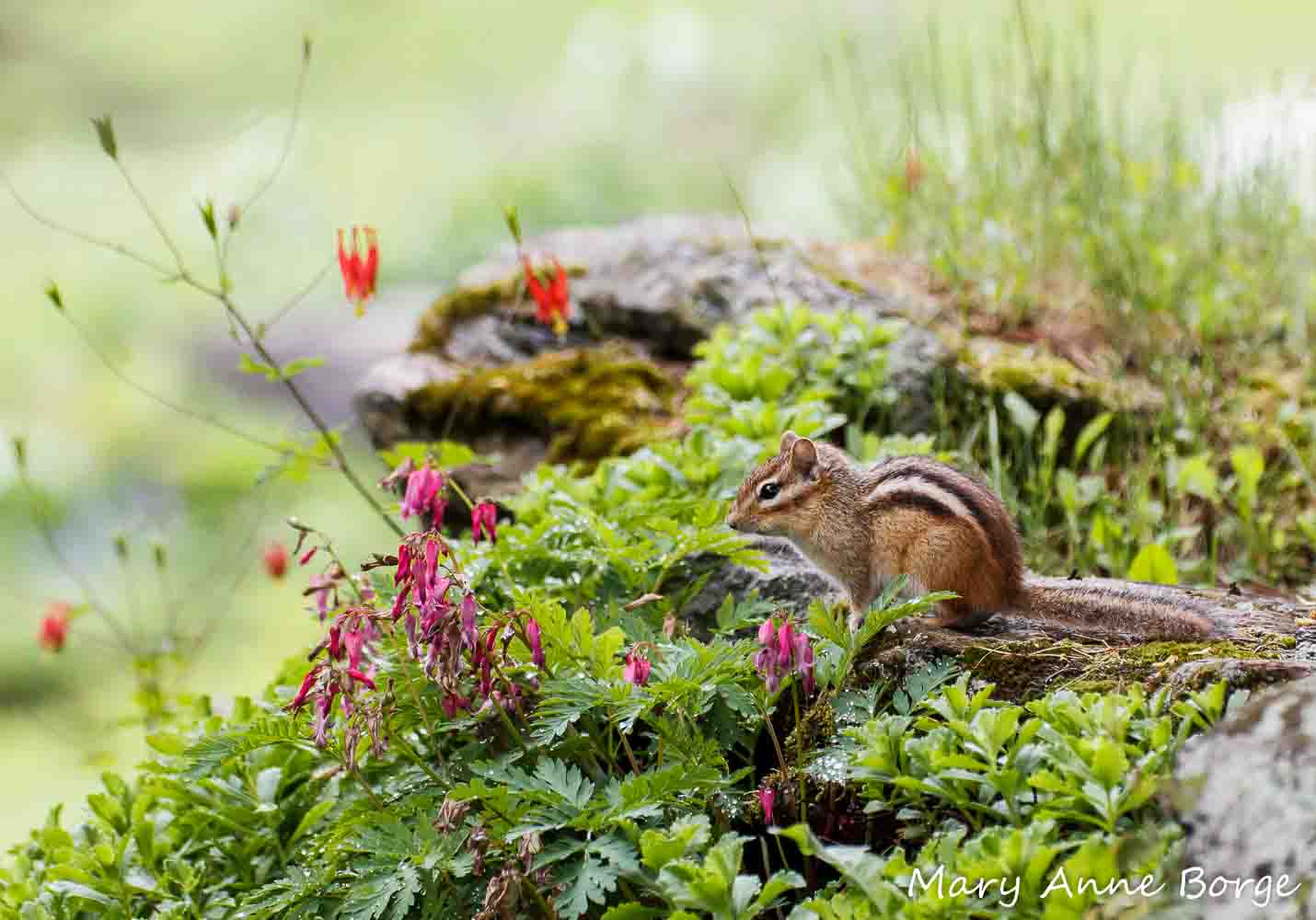
Eastern Chipmunk with Wild Columbine (Aquilegia canadensis) and Wild Bleeding Heart (Dicentra eximia)

Eastern Chipmunk with Wild Columbine (Aquilegia canadensis) and Wild Bleeding Heart (Dicentra eximia)

while a Groundhog family watched nearby.

Groundhog family in the garden at Trapps

Groundhog family in the garden at Trapps

The woods at Trapps and the other natural areas we visited were lush with ferns, with a bounty of other diverse plants peaking through them.

The woods from Fox Track trail at the Trapp Family Lodge

The woods from Fox Track trail at the Trapp Family Lodge

Narrow Beech Fern (Phegopteris hexagonoptera) with Foamflower (Tiarella cordifolia) and Hooked Crowfoot (Ranuunculus recurvatus)

Narrow Beech Fern (Phegopteris hexagonoptera) with Foamflower (Tiarella cordifolia) and Hooked Crowfoot (Ranuunculus recurvatus)

Bunchberry (Cornus canadensis) at Wiessner Woods

Bunchberry (Cornus canadensis) at Wiessner Woods

Pink Lady’s Slippers (Cypripedium acaule) shyly raised their heads for our viewing pleasure.
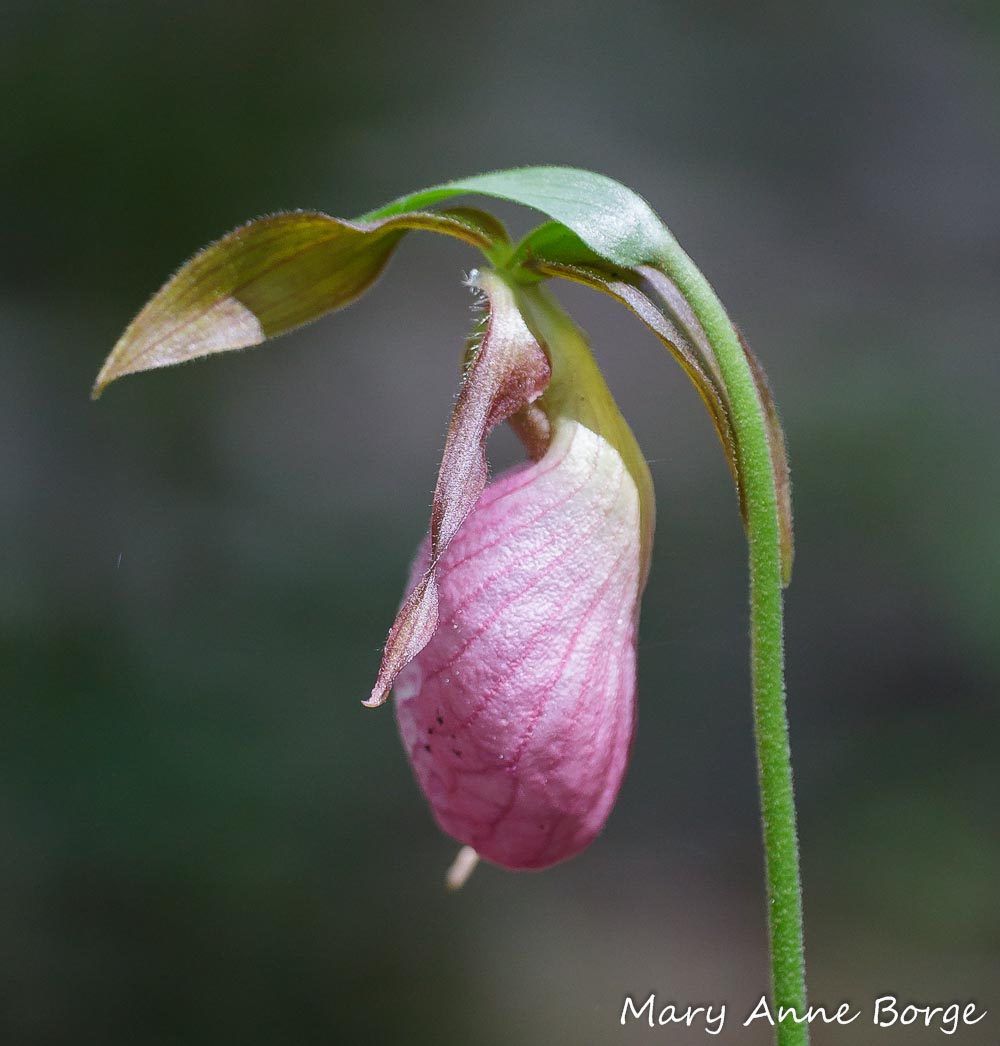
Pink Lady's Slipper (Cypripedium acaule)

Pink Lady’s Slipper (Cypripedium acaule)

Pink Lady's Slipper (Cypripedium acaule)

Pink Lady’s Slipper (Cypripedium acaule)

Goldthread (Coptis trifolia) had finished blooming, and was setting fruit.

Goldthread (Coptis trifolia) with Canada Mayflower (Maianthemum canadense) leaves

Goldthread (Coptis trifolia) with Canada Mayflower (Maianthemum canadense) leaves

Canada Mayflower (Maianthemum canadense) shown in the sun’s spotlight,
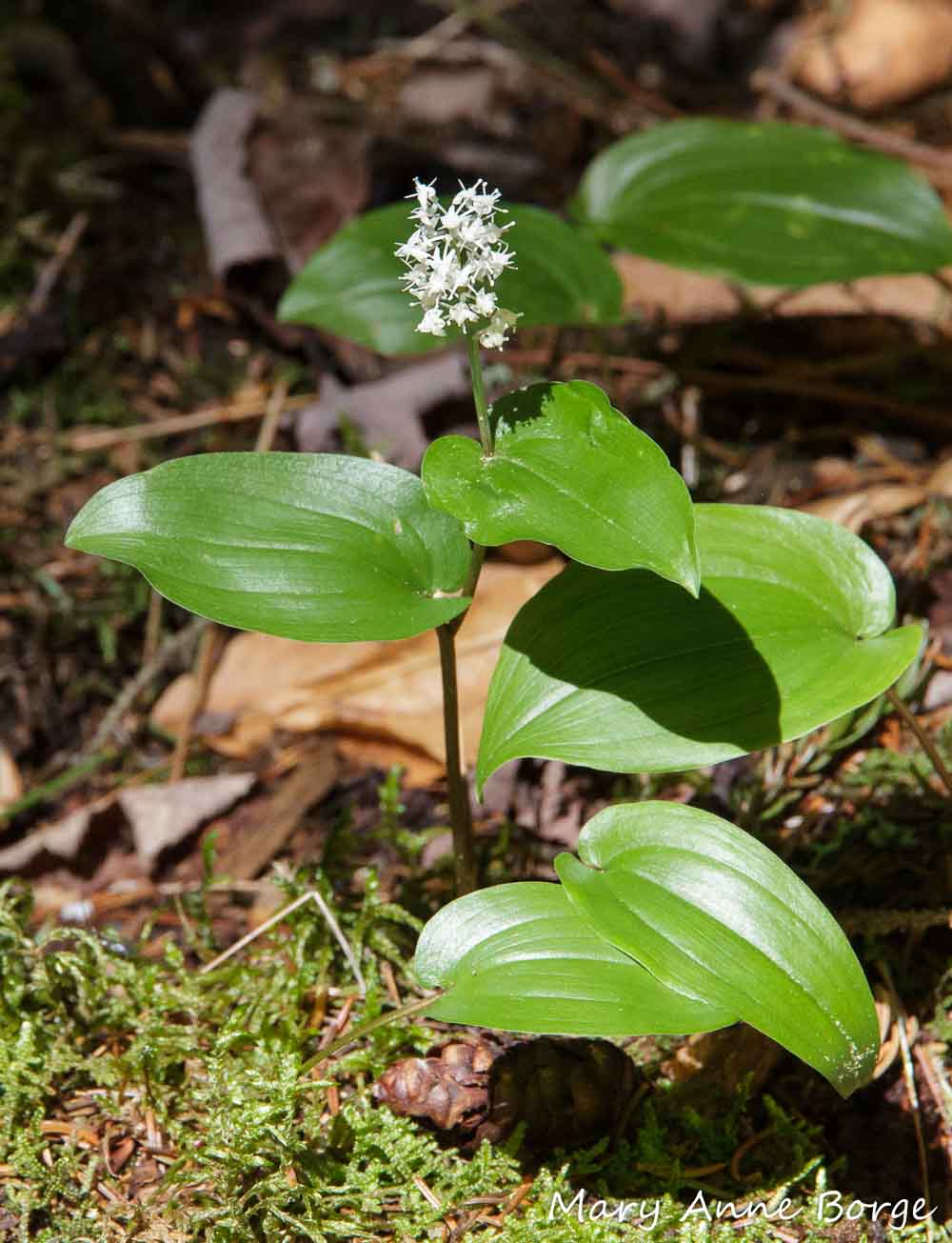
Canada Mayflower (Maianthemum canadense)

Canada Mayflower (Maianthemum canadense)

while the delicate blossoms of False Solomon’s Seal (Maianthemum racemosum) lit the trails.

False Solomon’s Seal (Maianthemum racemosum)

False Solomon’s Seal (Maianthemum racemosum)

A White-tailed Deer was unfazed by our visit to her domain.

White-tailed Deer

White-tailed Deer

Foamflower (Tiarella cordifolia) was in various stages of its bloom cycle in different locations. We often found it close to water.
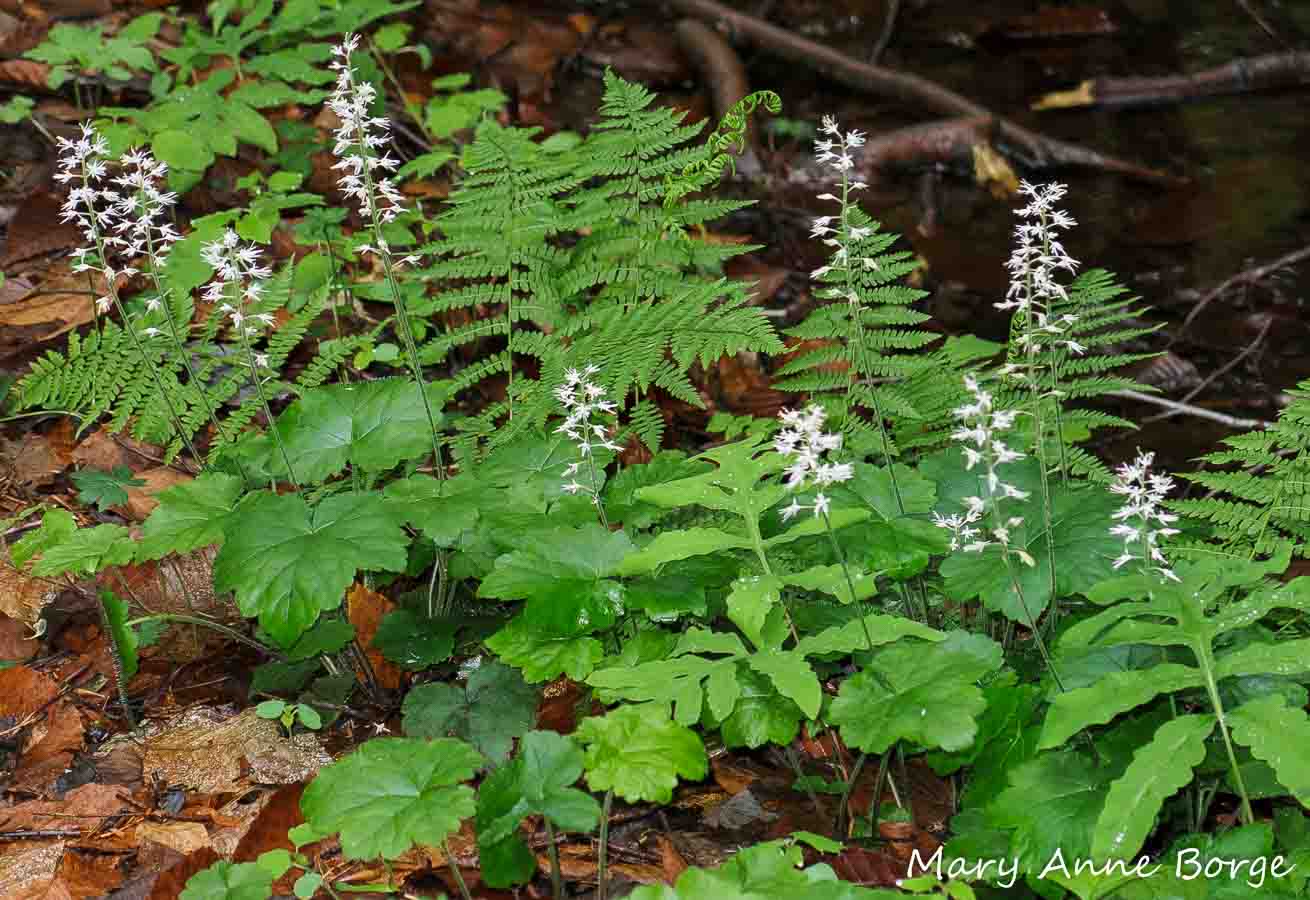
Foamflower (Tiarella cordifolia)

Foamflower (Tiarella cordifolia)

In the woods, most of the potential pollinators were flies of various species.  In the photo below, the fly on the Foamflower is harvesting pollen, a food source for some fly species.

Fly harvesting pollen from Foamflower (Tiarella cordifolia)

Fly harvesting pollen from Foamflower (Tiarella cordifolia)

Bluebead Lily (Clintonia borealis) was just beginning to bloom, often visited by the fly shown here.

Bluebead Lily (Clintonia borealis)

Bluebead Lily (Clintonia borealis)


Bluebead Lily (Clintonia borealis) with flower visitor

Bluebead Lily (Clintonia borealis) with flower visitor

A Robber Fly, better know for its diet of other insects than for drinking nectar, visited Dwarf Ginseng (Panax trifolius) flowers.
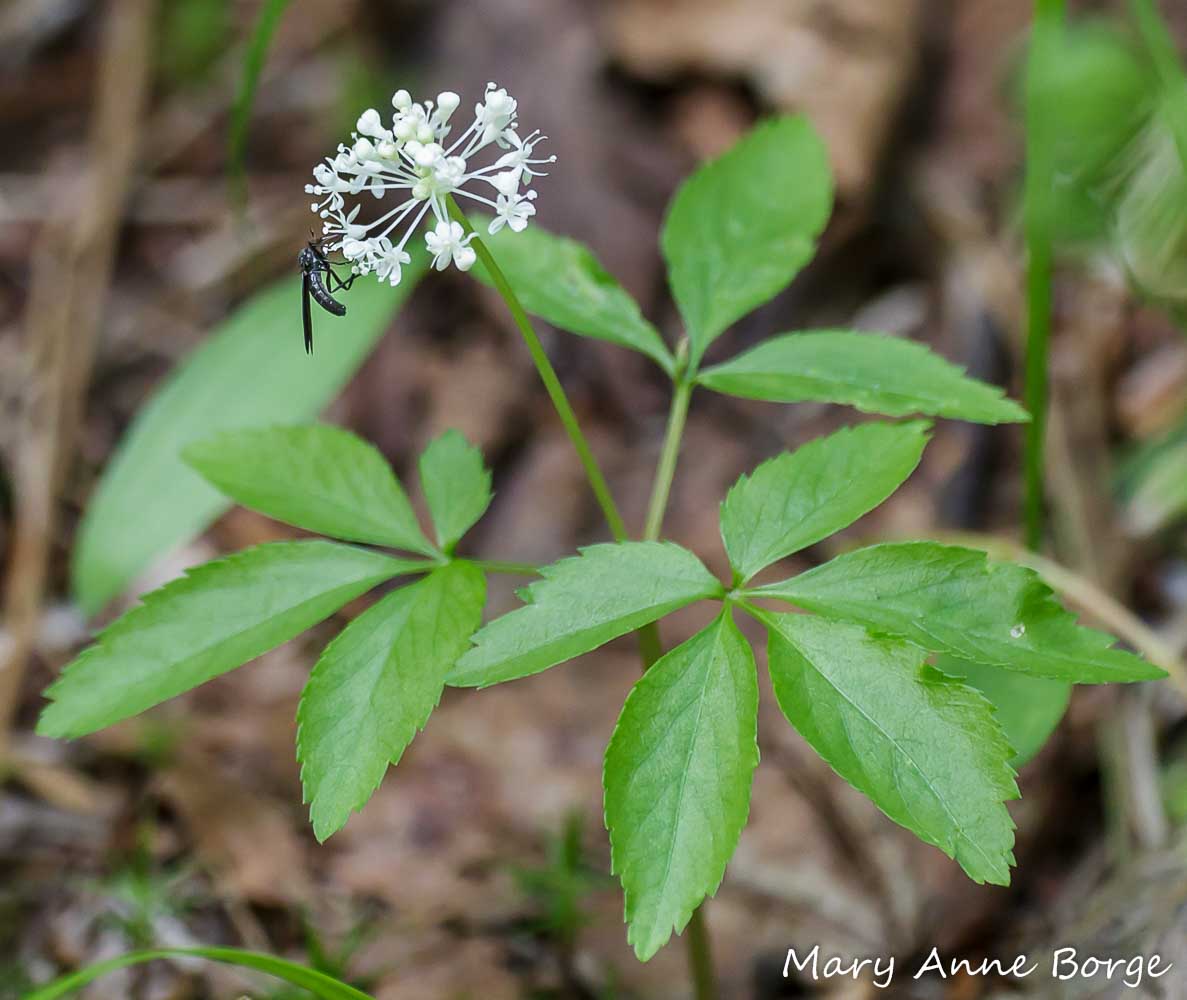
Dwarf Ginseng (Panax trifolius) with Robber Fly

Dwarf Ginseng (Panax trifolius) with Robber Fly

Dwarf Ginseng was popular with another fly visitor who unknowingly gathered pollen on its hairy body for possible dispersal to other flowers.

Dwarf Ginseng (Panax trifolius) with potential pollinator

Dwarf Ginseng (Panax trifolius) with potential pollinator

Near Stevenson Brook in Little River State Park,
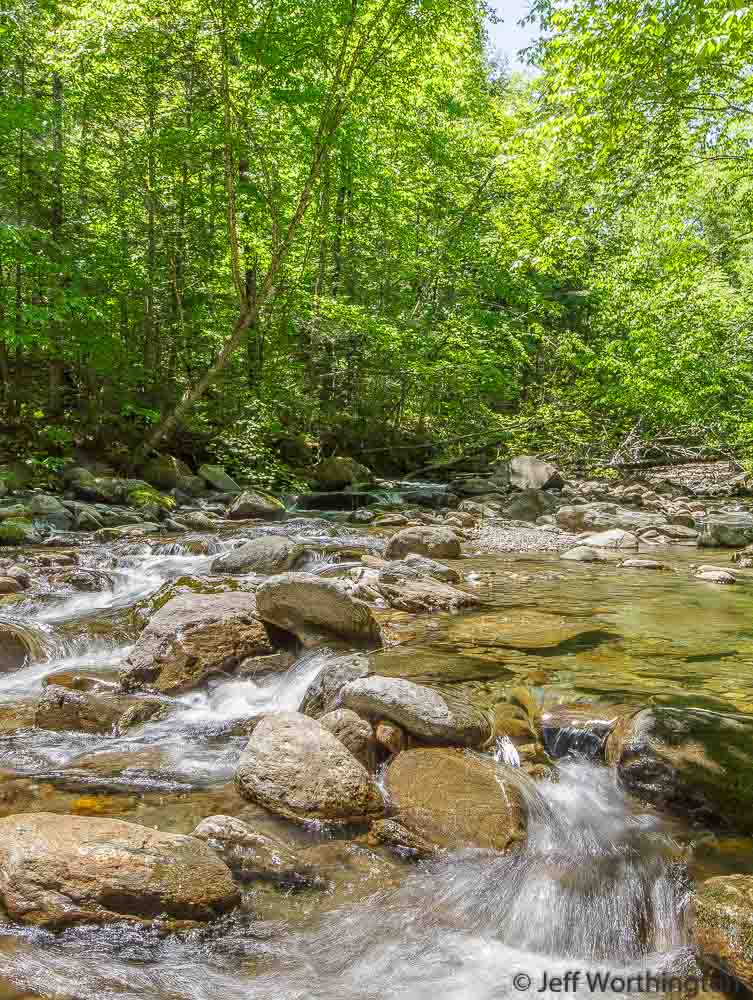
Stevenson Brook at Little River State Park

Stevenson Brook at Little River State Park

Virginia Waterleaf (Hydrophylum virginianum) bloomed a deep violet, pictured here with a flower visitor coming in for a landing.
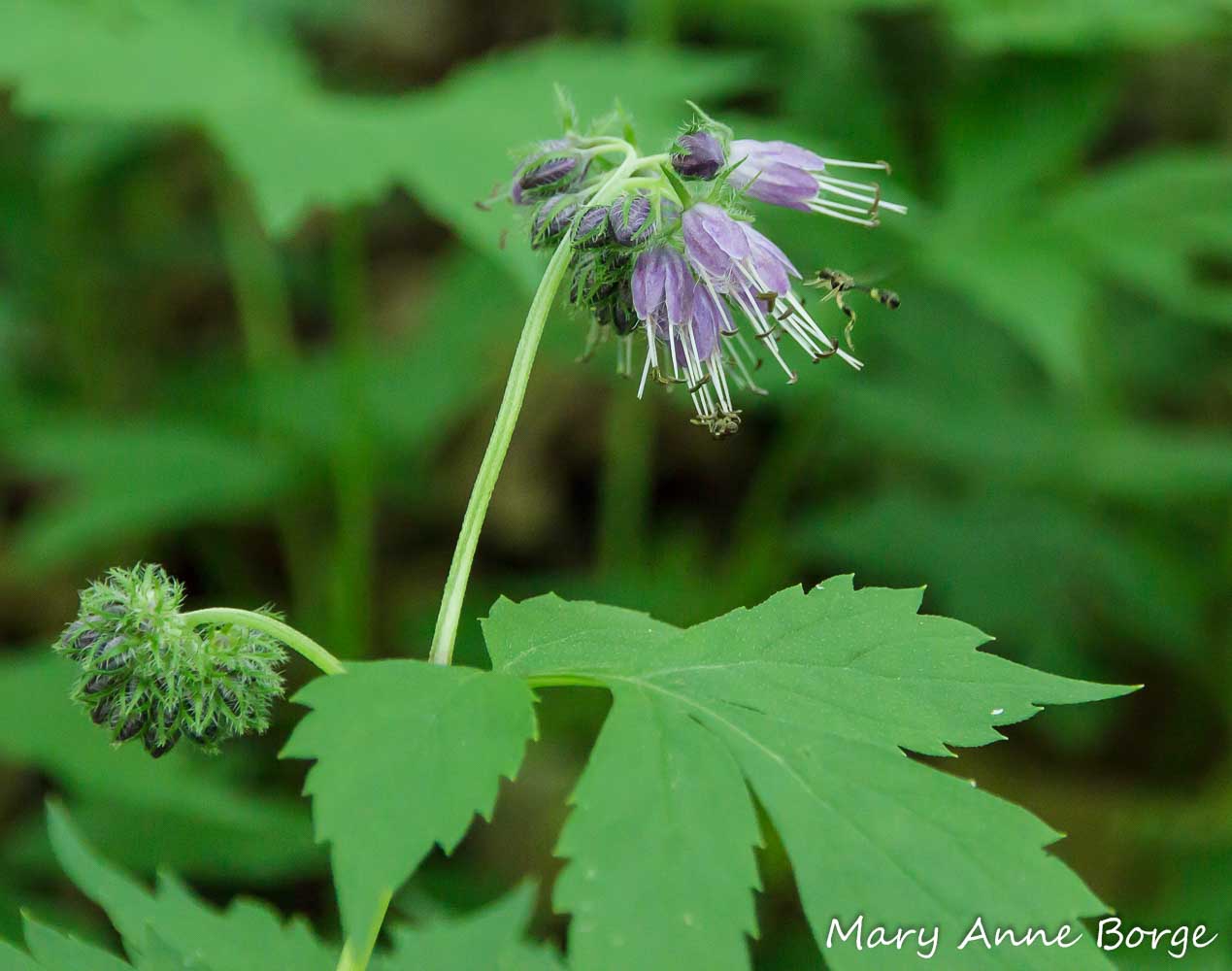
Virginia Waterleaf (Hydrophylum virginianum)

Virginia Waterleaf (Hydrophylum virginianum)

Southern Pygmy Clubtail dragonflies rested on a fern at Sterling Falls Gorge.

Southern Pygmy Clubtail dragonflies
Southern Pygmy Clubtail dragonflies

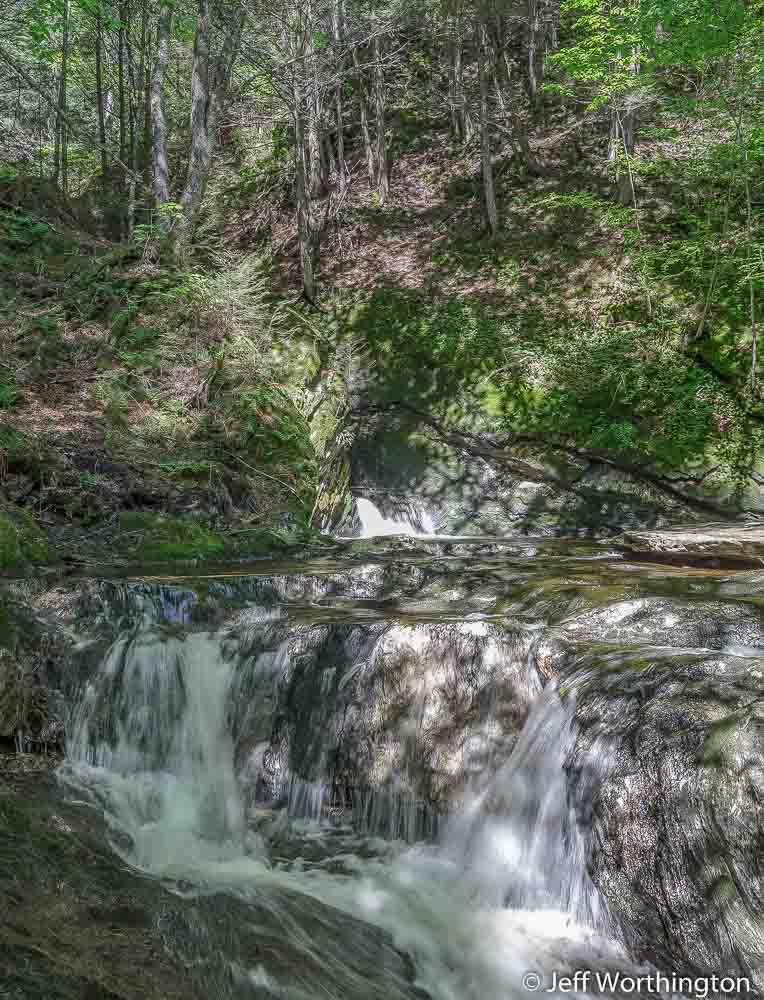
Sterling Falls Gorge

Sterling Falls Gorge

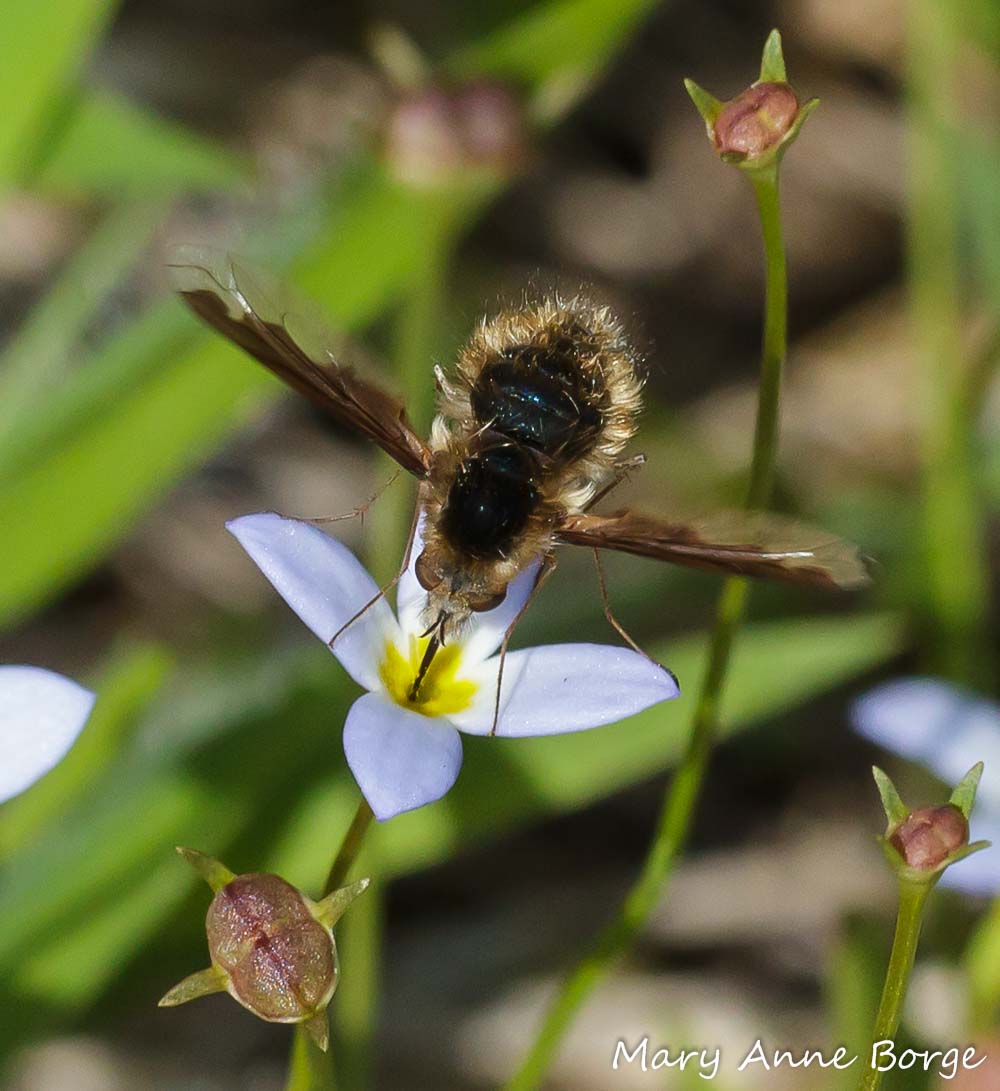
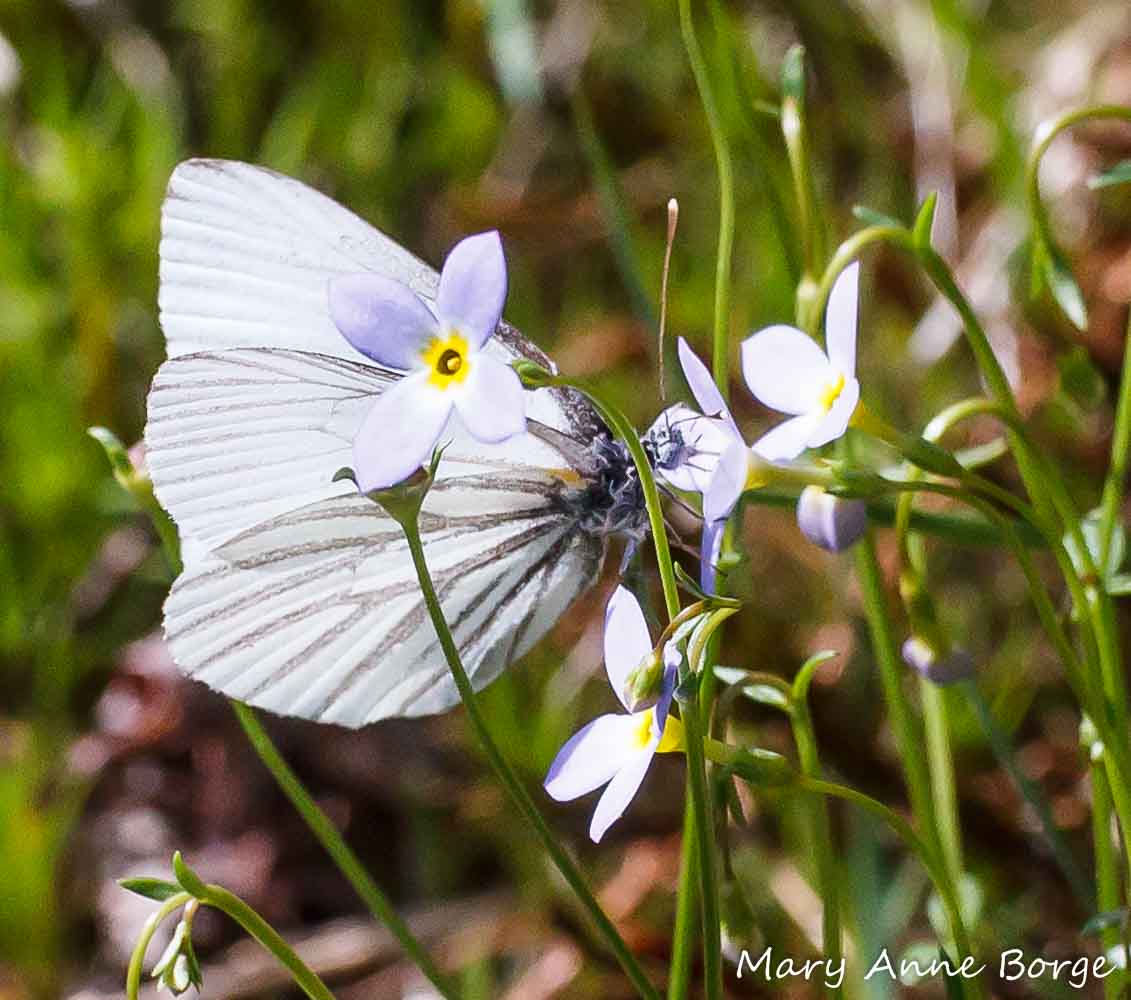
Bluets (Houstonia caerulea) brightened  a meadow at Trapps, the yellow nectar guides at their throats attracting a variety of visitors, incuding Bumble Bees, Eight-spotted Forester moths, Bee Flies and a Mustard White butterfly.

Bluets (Houstonia caerulea)

Bluets (Houstonia caerulea)

Bluets (Houstonia caerulea) with Bumble Bee
Bluets (Houstonia caerulea) with Bumble Bee

Bluets (Houstonia caerulea) with Bee Fly (Bombylius major)
Bluets (Houstonia caerulea) with Bee Fly (Bombylius major)


Bluets (Houstonia caerulea) with Mustard White butterfly

Bluets (Houstonia caerulea) with Mustard White butterfly

The Mustard White was a new butterfly for me.  Its numbers have diminished in recent years because of habitat loss, and possibly also due to the increase of the invasive Garlic Mustard (Alliaria petiolata).  Mustard White caterpillars rely for food on our native mustards, such as Toothwort (Cardamine diphylla) and Cut-leaved Toothwort (Cardamine concatenata).  Toothwort is present along the trails near the clearing where we saw the Mustard White, and Garlic Mustard was nowhere to be seen.

Back in the woods, two crane flies mated, doing their part to ensure that the show will continue.
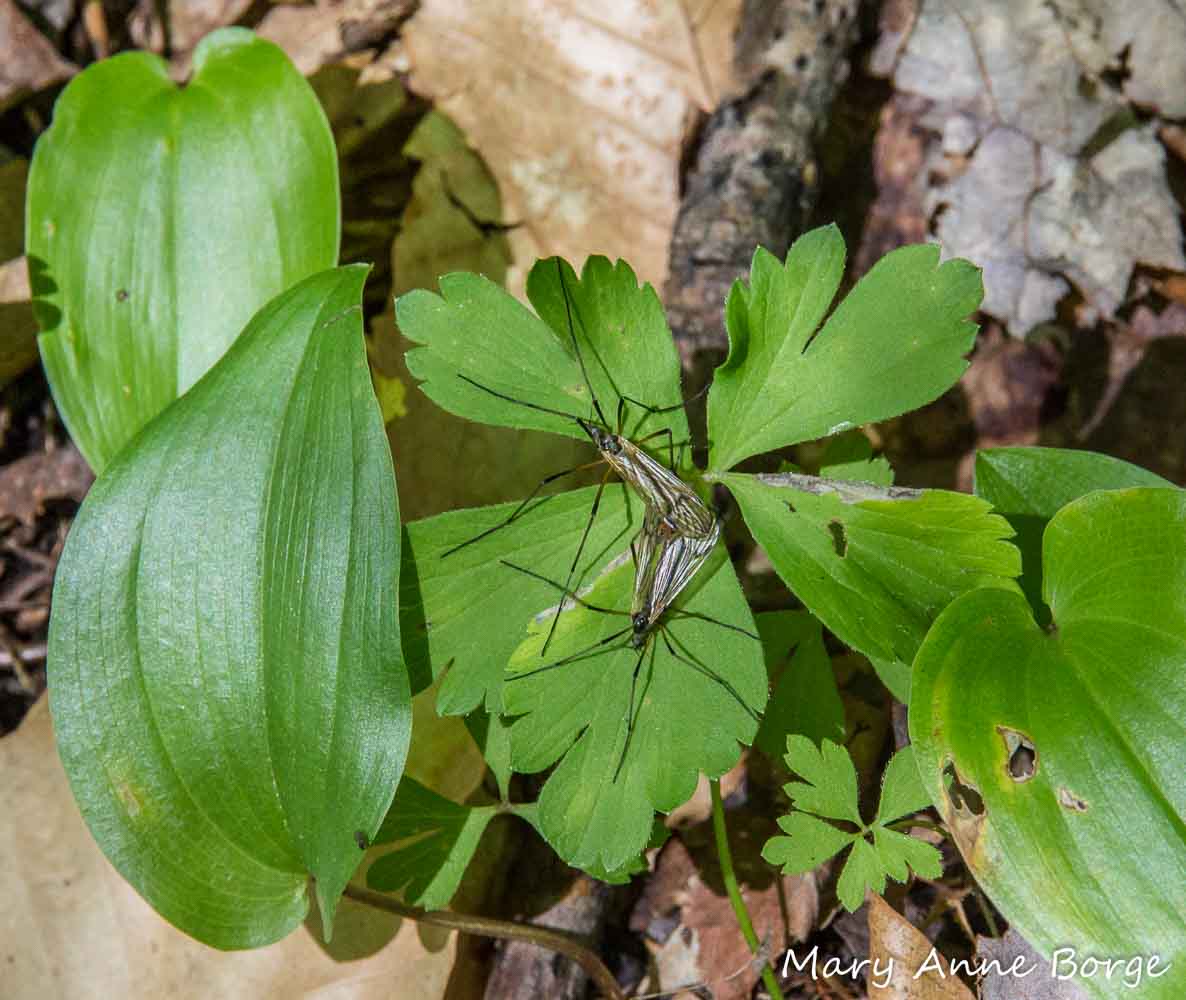
Crane Flies mating

Crane Flies mating
 

Related Posts

Cut-leaved Toothwort 

Yellow Lady’s Slipper – Like Winning the Lottery

The existence of Yellow Lady’s Slipper (Cypripedium parviflorum) orchids is like winning the lottery, on so many levels.  Their bright yellow moccasin shaped petals, complemented by deeply veined lush green leaves, are strikingly beautiful.

Yellow Lady's Slipper (Cypripedium parviflorum) orchids

Yellow Lady’s Slipper (Cypripedium parviflorum) orchids

Yellow Lady’s Slipper uses its showy floral display to entice bees to assist in its pollination.  In addition to the bright yellow pouch, the flowers have two more petals, one on each side of the slipper, usually twisted, with striping varying from green to dark maroon or purple.  They look like they should be the ties that would be used to keep the slipper on a lady’s foot.  The sepals, which can be seen above and below the back of the slipper, resemble the petals.  Together, they create a display designed to entice potential pollinators.

Yellow Lady's Slipper (Cypripedium parviflorum)

Yellow Lady’s Slipper (Cypripedium parviflorum)

Bees visit flowers in the expectation of a food reward in the form of nectar, or pollen, or both.  Yellow Lady’s Slippers don’t produce nectar, so pollen is the only possible reward.  Once a bee has discovered the flower, more direction is provided.  At the back of the opening to the slipper, there is a triangular structure dotted with maroon, pointing downward.  This advertisement is the kind of sign the bee is expecting, promising it a reward if it enters the slipper.

Yellow Lady's Slipper (Cypripedium parviflorum) Note the shield-shaped 'nectar' guide at the back of the flower

Yellow Lady’s Slipper (Cypripedium parviflorum) Note the shield-shaped ‘nectar’ guide at the back of the flower

There is maroon-purple striping inside the slipper, pointing to the reproductive parts of the flower, which are behind the triangular structure beckoning the bee to enter the slipper.  Gland-tipped hairs nudge the bee toward the receptive female flower part (the stigma) first.  If the bee has already visited a compatible flower, pollen will be scraped off and deposited, fulfilling the bee’s role in the pollination process.  The bee must then pass by one of two anthers, the male flower part where the pollen is found.  In many flowers, this would be the bee’s payback.  The bee would be able to harvest pollen to bring back to its nest to feed its offspring.  But all of the pollen grains of a Yellow Lady’s Slipper’s anther, of which there are thousands, are packed together in a single pollinium, which is attached to the bee as it passes the anther, preparing to exit the flower from the side of the triangular advertising structure.  The pollen grains are not available to the bee to harvest for its own use.  The bee has been duped!  The flower advertised falsely, and the bee leaves without a reward.

Yellow Lady's Slipper (Cypripedium parviflorum) Note the maroon striping inside the 'slipper'.

Yellow Lady’s Slipper (Cypripedium parviflorum) Note the maroon striping inside the ‘slipper’. The bee is only able to exit the slipper from the openings on either side of the triangular structure whose nectar guides first enticed it to enter the slipper.

It is usually a medium sized bee, possibly a Little Carpenter, Halictid, Mason or Andrenid, that successfully navigates a Yellow Lady’s Slipper, since the pollinator must be small enough to fit through the flower’s exit hole.  If the bee is too large, it may be trapped inside the flower.

Perhaps not surprisingly, successful pollination does not often occur.  (How many bees are gullible enough to fall for the false advertising twice, the minimum number of times necessary to achieve pollination?  Probably not that many.)  So Yellow Lady’s Slipper makes every successful pollination event count, enabling fertilization of thousands of ovules in the plant that receives them.

The result is a fruit capsule that contains thousands of tiny, dust-like seeds that are wind dispersed through slits in the capsule.  But only a small percentage of the seeds find their way to a location that is hospitable to the plant.  The presence of the right mycorrhizal fungus in the soil is especially important, since it is only through the fungus that the orchid is able to obtain the nutrients it needs to survive.  Even if the seed finds the right conditions to establish itself, it can take ten years or more to be mature enough to produce a flower.

Yellow Lady's Slipper (Cypripedium parviflorum) fruit capsule

Yellow Lady’s Slipper (Cypripedium parviflorum) fruit capsule

Yellow Lady’s Slipper is fairly widespread, but not common, and is considered threatened or endangered in some states.  This lovely orchid can be found in a variety of habitats, from woodland understory to meadows and bogs, primarily in the eastern United States (excluding Florida), the Rocky Mountain states, most Canadian provinces, and even Alaska.

If you see it, you know you’ve won the lottery.

Yellow Lady's Slipper (Cypripedium parviflorum)

Yellow Lady’s Slipper (Cypripedium parviflorum)


Note:  There are three varieties of Yellow Lady’s Slipper.  The most common is Greater Yellow Lady’s Slipper (Cypripedium parviflorum var. pubescens).  Cypripedium parviflorum var. makasin is often, but not always, smaller, and may have a musty scent.  It can be found in the northern part of the range.  Lesser Yellow Lady’s Slipper (Cypripedium parviflorum var. parviflorum) tends to be smaller, and has more consistently dark markings on the lateral petals and sepals.  It’s range is more southern.

Resources

Eastman, John.  The Book of Forest and Thicket.  1992.

Gracie, Carol.  Spring Wildflowers of the Northeast. 2012.

Willmer, Pat.  Pollination and Floral Ecology.  2011.

Flora of North America

Illinois Wildflowers

USDA Plants Database

USDA Forest Service


Blackhaw Viburnum – A Subtle Beauty

Blackhaw Viburnum (Viburnum prunifolium)

Blackhaw Viburnum (Viburnum prunifolium)

Blackhaw Viburnum (Viburnum prunifolium) begins to bloom about a week after Flowering Dogwood (Cornus florida), its profuse rounded clusters of creamy white flowers visited by a variety of bees, flies and butterflies for their nectar and pollen.  Although less well known than some of its woodland neighbors, such as Dogwood and Redbud, Blackhaw Viburnum’s subtle beauty is a common and essential element of the forest’s palette in spring.

Blackhaw Viburnum (Viburnum prunifolium)

Blackhaw Viburnum (Viburnum prunifolium)

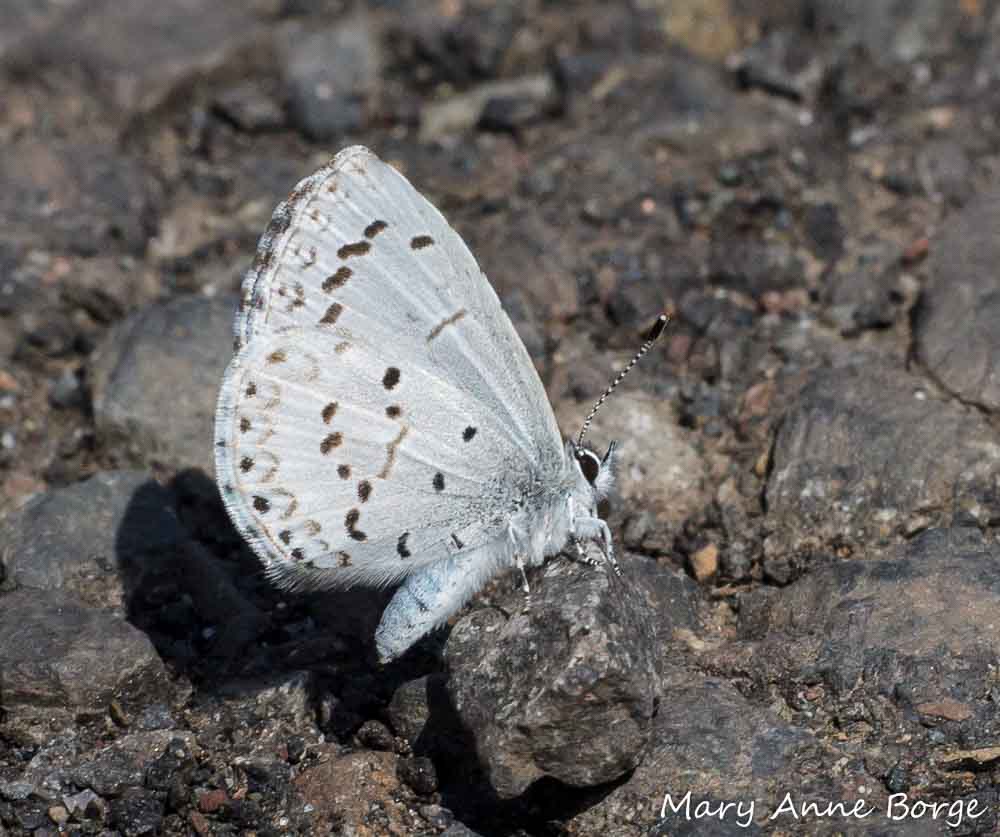
Spring Azure butterfly caterpillars may eat the flowers or buds of many woody plant species, including the viburnums.

Spring Azure

Spring Azure

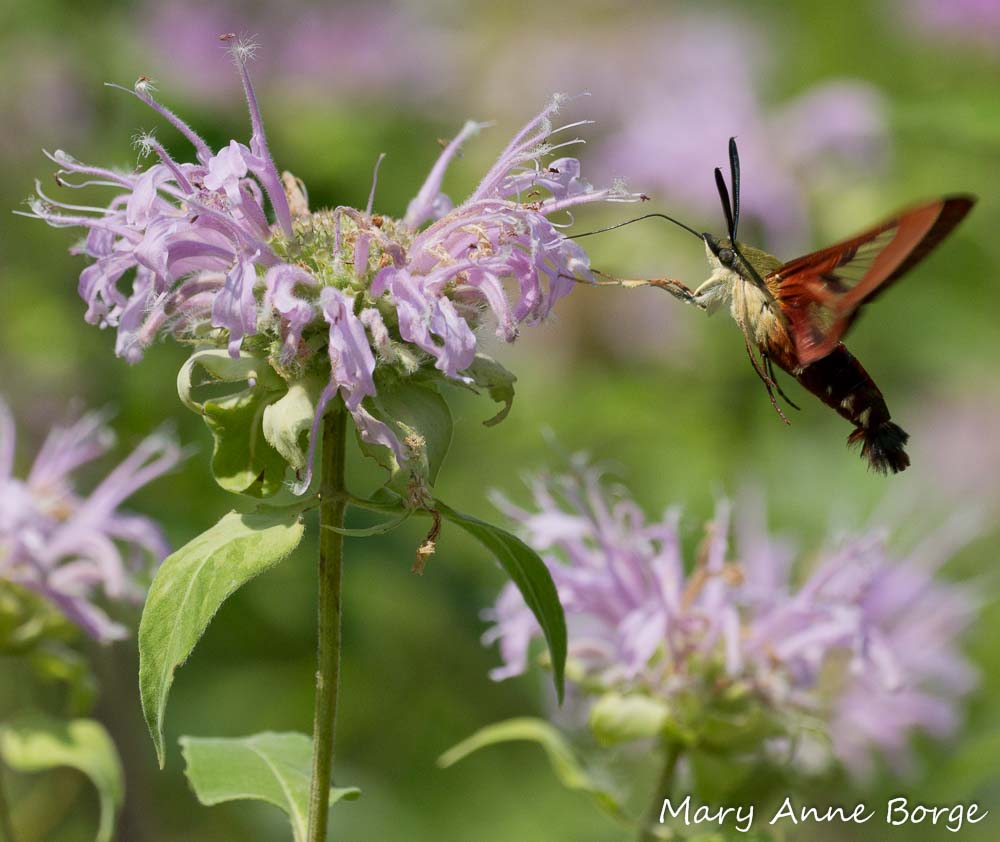
Hummingbird Clearwing moth caterpillars may feed on their leaves.

Hummingbird Clearwing nectaring on Wild Bergamot (Monarda fistulosa)

Hummingbird Clearwing nectaring on Wild Bergamot (Monarda fistulosa)

In their later development stages, even Baltimore Checkerspot caterpillars may migrate from the leaves of their preferred food plant, Turtlehead (Chelone glabra) to eat viburnum leaves.

Baltimore Checkerspot

Baltimore Checkerspot

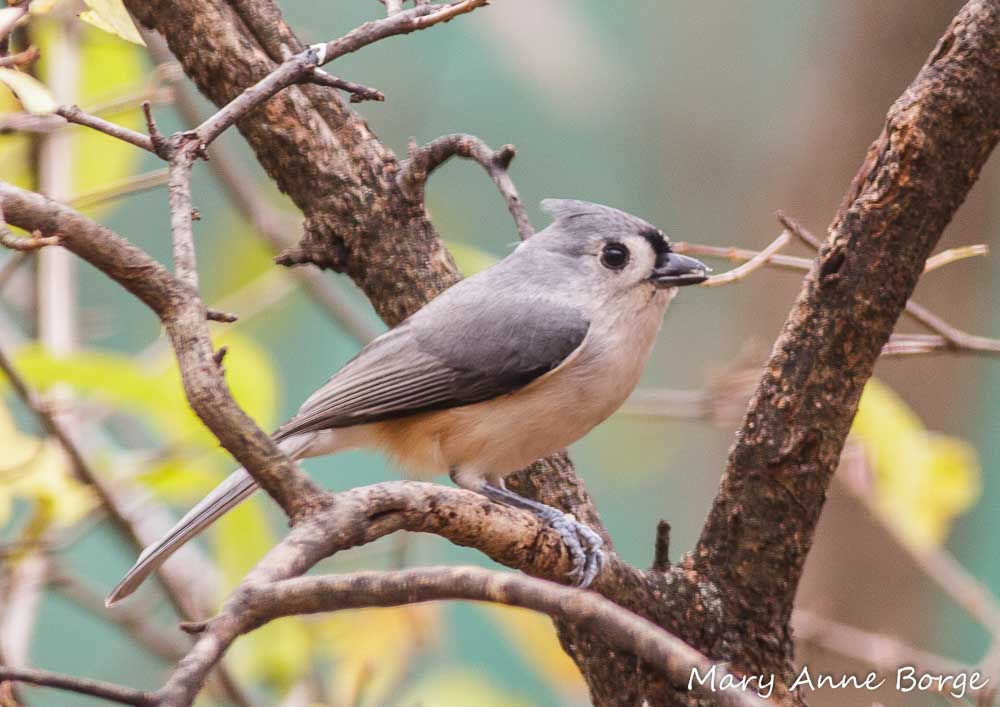
The caterpillars may be lucky enough to attain adulthood, or they may become food for another animal somewhere along the way.  Caterpillars are an important source of food for many animals, but especially for birds.  It can take thousands of caterpillars to feed a hungry brood of young Chickadees or Titmice.

Tufted Titmouse

Tufted Titmouse

If Blackhaw Viburnum’s spring visitors successfully pollinate its flowers, dark blue fruits (called drupes) are produced, maturing in fall.

Blackhaw Viburnum (Viburnum prunifolium) fruit

Blackhaw Viburnum (Viburnum prunifolium) fruit

Chipmunks, squirrels and many bird species, including Hermit Thrush, Cardinals, Bluebirds and White-throated Sparrows, are among those that eat the fruit.

Northern Cardinal

Northern Cardinal

Blackhaw Virburnum can be single or multi-stemmed, and grows to a maximum height of about 15-25 feet (4.6-7.6 meters).  It tends to grow taller when single-stemmed.  Its natural habitat is generally medium to dry upland areas, even growing in rocky soil, like the Sourland Mountains of New Jersey where I live.  Its range is from New York to Michigan and Wisconsin in the north, to the south from Texas to Georgia.

Blackhaw Virburnum makes a great landscape plant.  Look for it blooming in a forest near you, or better yet, add it to your garden and enjoy it and its visitors throughout the seasons.

Blackhaw Viburnum (Viburnum prunifolium)

Blackhaw Viburnum (Viburnum prunifolium)


Resources

Cech, Rick; Tudor, Guy.  Butterflies of the East Coast.  2005.

Wagner, David L.;  Caterpillars of Eastern North America, 2005.

http://www.illinoiswildflowers.info/trees/plants/blackhaw.htm

Cut-leaved Toothwort

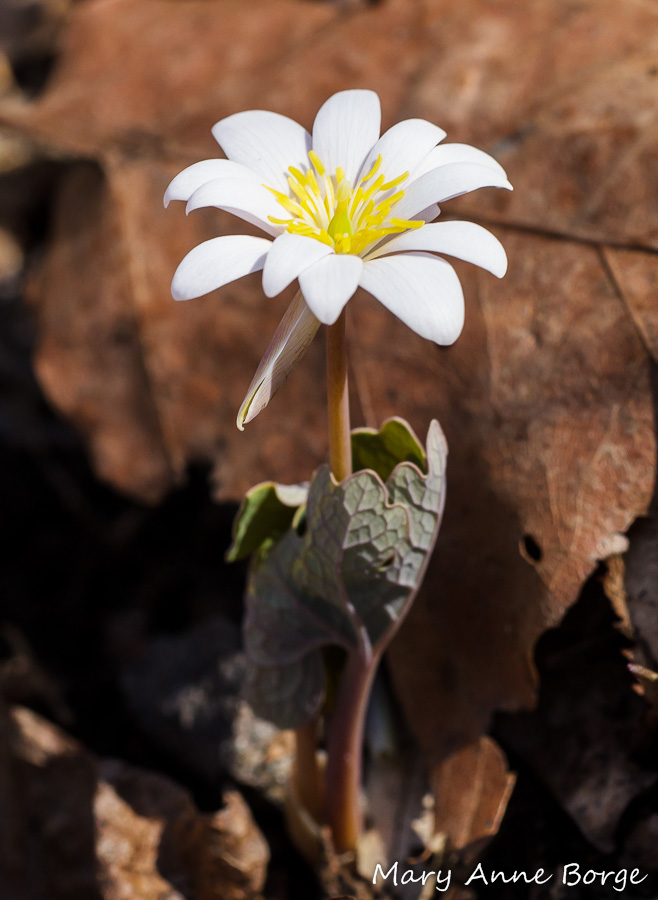
Last week’s star players in the world of woodland understory plants in the eastern deciduous forest in my neighborhood were Bloodroot (Sanguinaria canadensis)

Bloodroot (Sanguinaria canadensis)

Bloodroot (Sanguinaria canadensis)

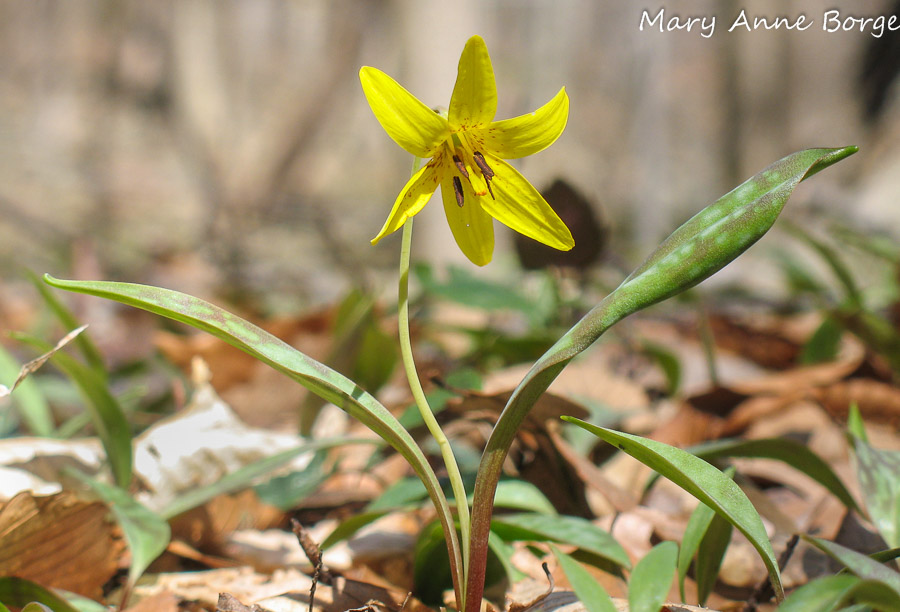
and Trout Lily (Erythronium americanum).

Trout Lily (Erythronium americanum)

Trout Lily (Erythronium americanum)

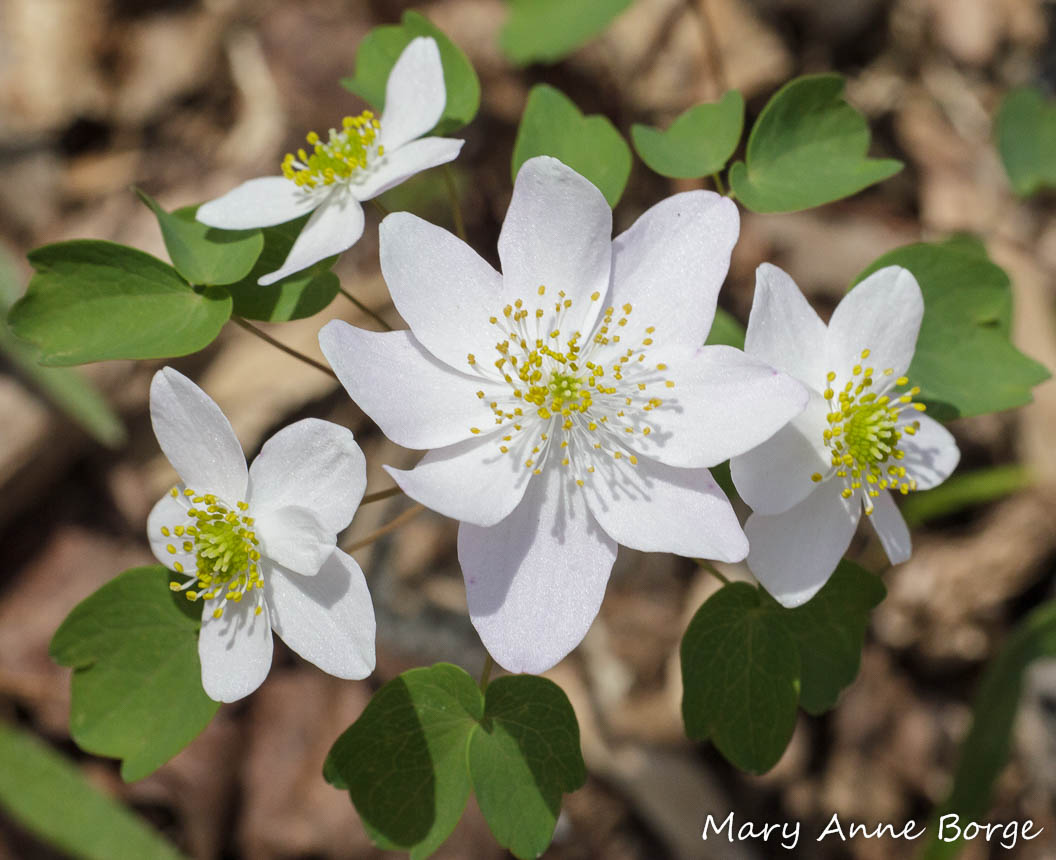
This week Bloodroot is already developing fruit capsules.  Trout Lily is still blooming on warm days, but will finish soon.  New stars have emerged from the obscurity of their winter blanket of fallen leaves to take center stage.  Rue Anemone (Thalictrum thalictroides), completely invisible a week ago, is now in full bloom.

Rue Anemone (Thalictrum thalictroides)

Rue Anemone (Thalictrum thalictroides)

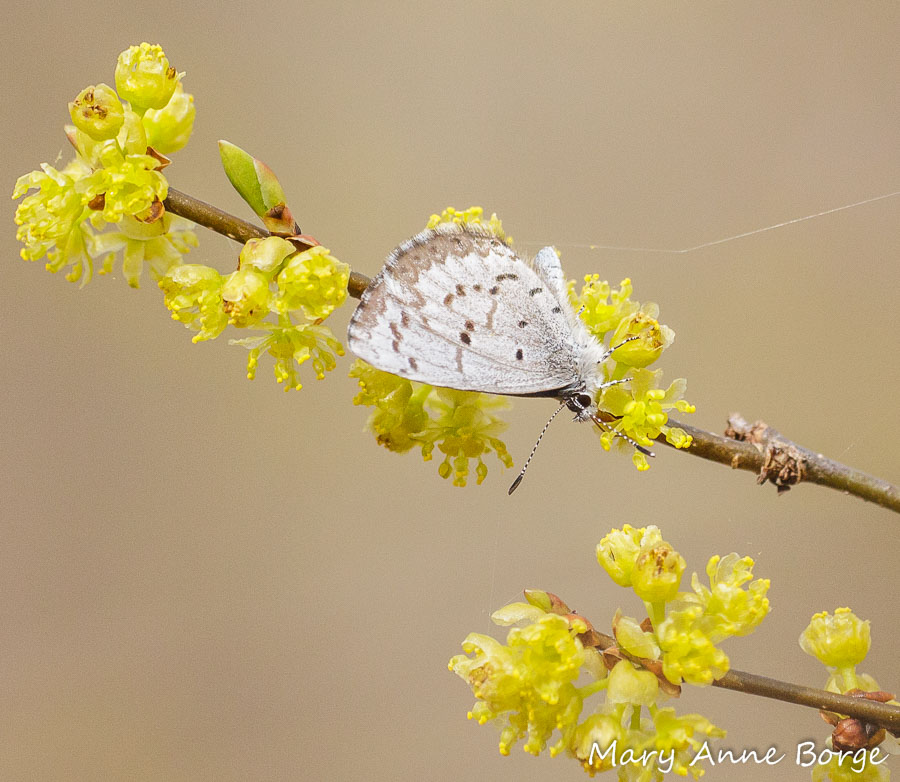
Spicebush (Lindera benzoin) is blooming, too, and the Spring Azure in the photo below is taking advantage of the nectar offered by the starburst yellow flowers.  At first I couldn’t understand why she was practically laying on her side while she sipped.  It seemed like an unusual posture for a nectaring butterfly, until I finally realized that she was positioning herself to catch the sun’s rays on a slightly cool and breezy spring day.  Very efficient!

Spicebush (Lindera benzoin) with nectaring Spring Azure

Spicebush (Lindera benzoin) with nectaring Spring Azure

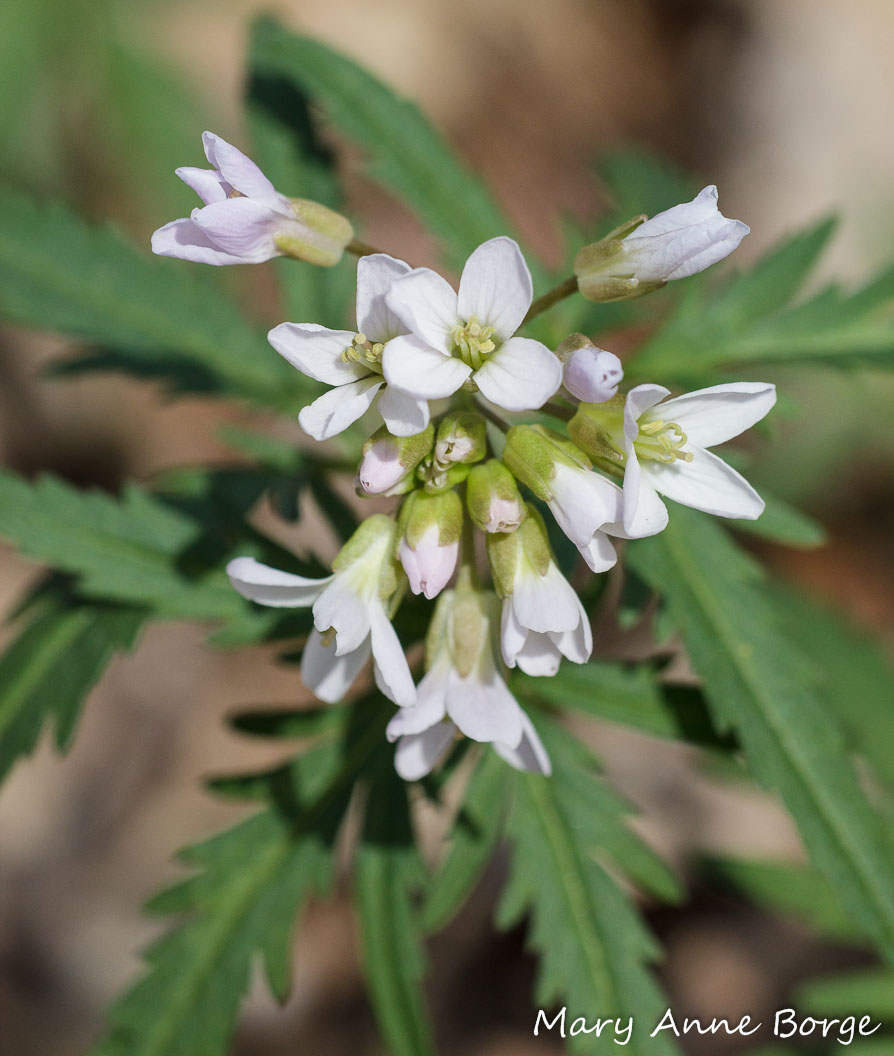
Cut-leaved Toothwort (Cardamine concatenata) blossoms are lighting up the forest floor.  It gets its name from its deeply lobed leaves, and the tooth-shaped projections on its rhizomes.  Typical of a member of the mustard family, Cut-leaved Toothwort’s flowers have four petals arranged in a cross shape, for this species forming a tube at their base.  The buds have a hint of pink or violet, and while the flowers may retain a blush when open, they are most often white.

Cut-leaved Toothwort (Cardamine concatenata)

Cut-leaved Toothwort (Cardamine concatenata)

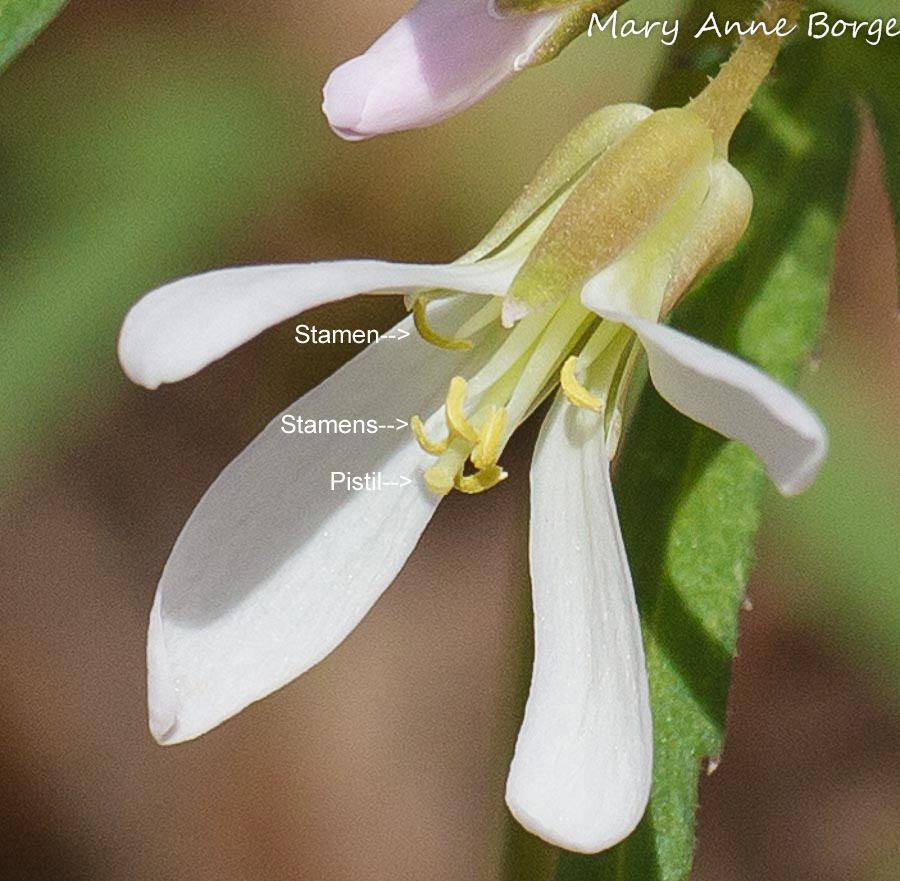
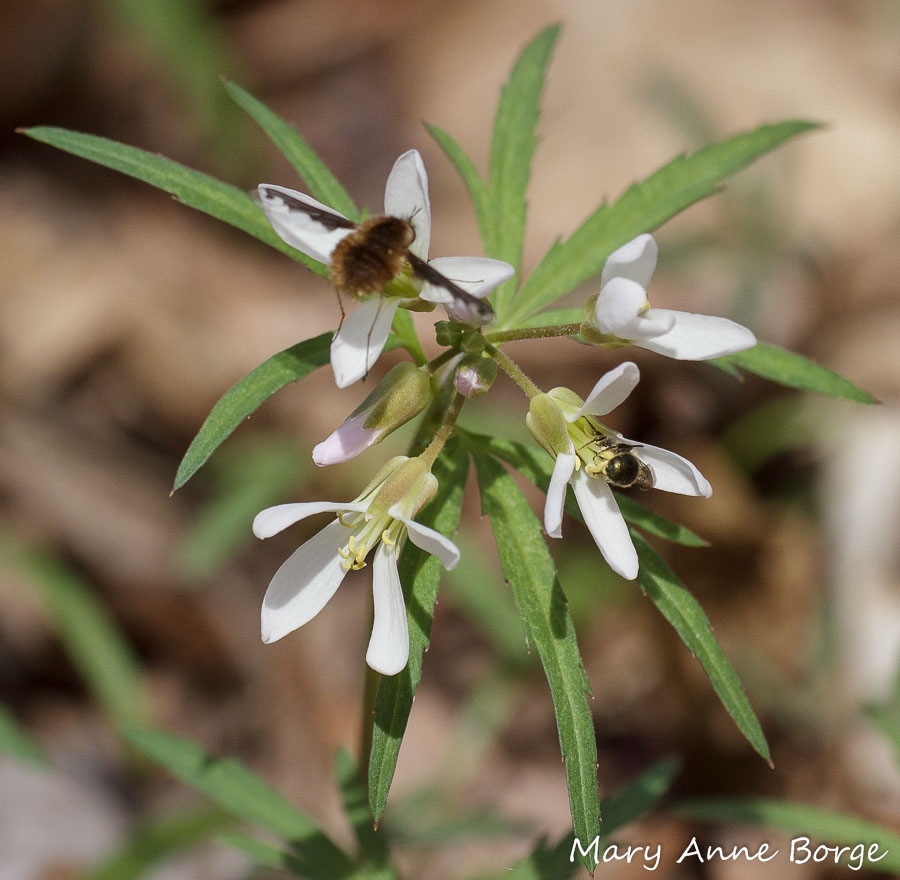
Look closely at a Cut-leaved Toothwort flower, and see if you can see that it has six stamens (the male reproductive flower parts).  In Cut-leaved Toothwort, the stamens are of two different heights;  four stamens are long, and surround the pistil (the female flower part), while the other two are shorter and slightly apart from the others.  The stamens are tipped with anthers that open to release the pollen.  The pistil is a bit longer than the stamens, offering at its tip the stigma, its receptive part, for incoming pollen deposits.

Cut-leaved Toothwort (Cardamine concatenata)

Cut-leaved Toothwort (Cardamine concatenata)

Plants evolve to be as efficient as possible in attracting pollinators, and in manipulating them to pick up and deposit pollen.  So why would Cut-leaved Toothwort have evolved to have anthers of two different heights?  If we look at some flower visitors at work we might find some clues.
Cut-leaved Toothwort (Cardamine concatenata)  with visitors

Cut-leaved Toothwort (Cardamine concatenata) with visitors

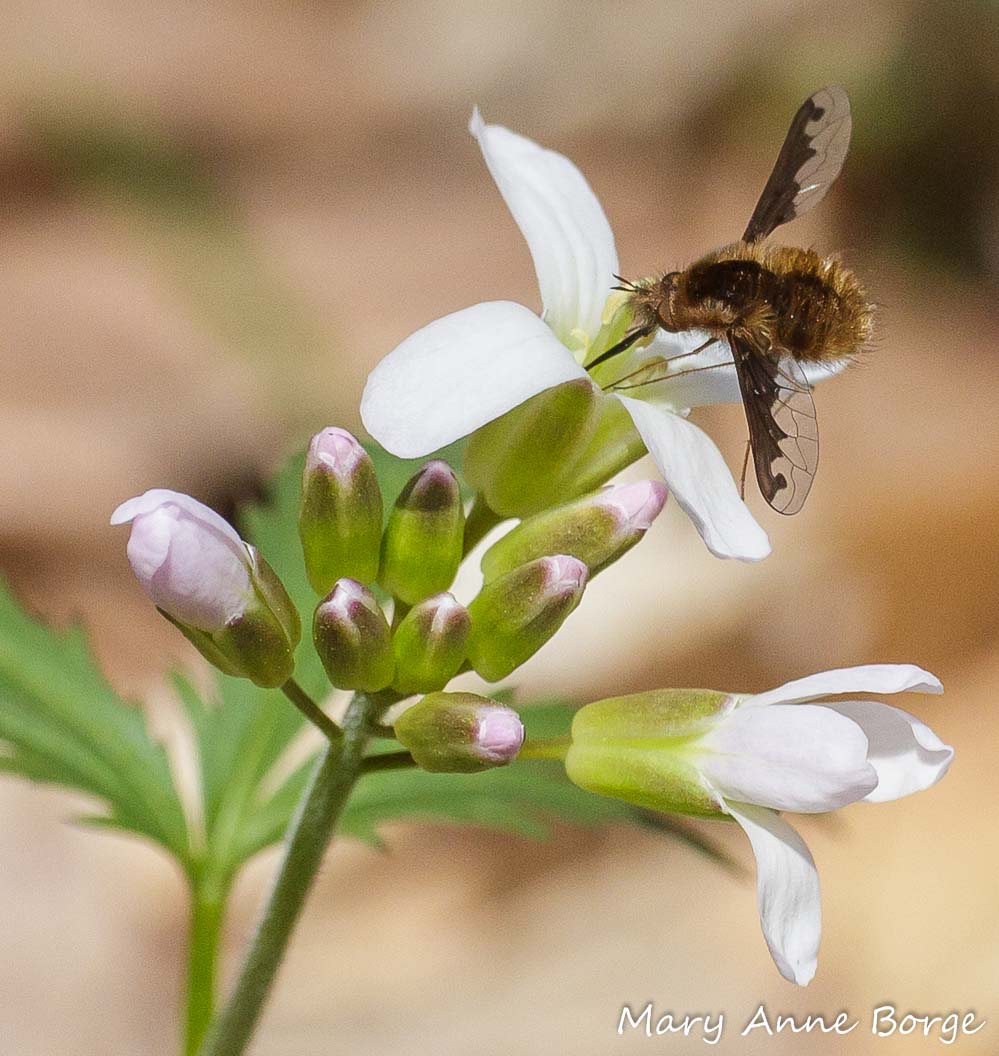
The bee-fly (Bombylius major) below is interested in nectar, which in Cut-leaved Toothwort can be found in nectaries well inside the flower.  The bee-fly’s long tongue and legs enable it to eat without its body going very deep into the flower, but it may brush against at least the anthers on the taller stamens.  The bee-fly’s hairy head and body are effective in picking up and transporting pollen, so it is a potential pollinator.  But based on its position when visiting the flower for nectar, it may be somewhat random as to whether the bee-fly brushes the stigma to deposit the collected pollen on the next flower it visits.
Cut-leaved Toothwort (Cardamine concatenata)  with bee-fly (Bombylius major)

Cut-leaved Toothwort (Cardamine concatenata) with bee-fly (Bombylius major)

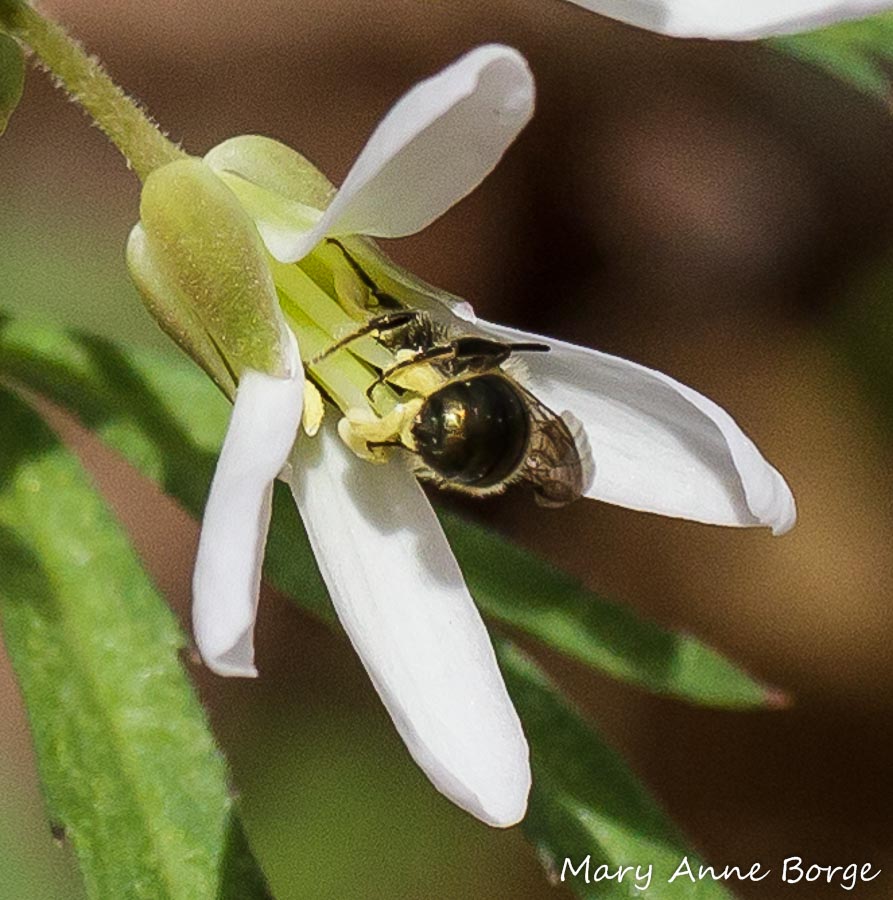
Bees drink nectar, and they may also eat pollen.  Female bees collect both pollen and nectar to bring back to their nests as food for their larvae.  The bee in the photo below appears to be harvesting pollen from the anther of one of the shorter stamens, while at the same time its lower abdomen is brushing against the stigma, depositing any pollen it might have brought in from another Cut-leaved Toothwort flower.  It will likely also pick up pollen from the taller stamens to take to the next flower it visits.  So for this bee, the pollen on the short stamens offer an enticement and reward for visiting, while it is unknowingly partnering with the plant to assist in pollination when it brushes against the stigma and the pollen on the taller stamens.  This could be the explanation for the two tiers of stamens.  It would also seem to indicate that not all flower visitors are equally effective pollinators.
Cut-leaved Toothwort (Cardamine concatenata)  with bee

Cut-leaved Toothwort (Cardamine concatenata) with bee

Cut-leaved Toothwort is native in deciduous woodlands in much of the eastern two thirds of North America, from North Dakota, Ontario and Quebec in the north to Texas and Florida in the south.  It’s a food plant for the caterpillars of the West Virginia White and Mustard White butterflies. Populations of both of these butterfly species have declined in recent years as a result at least in part of both habitat loss and the influx of Garlic Mustard (Allaria petiolata), a species native to Europe that is invasive in North America because it lacks predators here.  The caterpillars of the West Virginia White butterflies in particular are able to digest only a few species of the mustard family, those with which the butterflies evolved.  Garlic Mustard’s chemical composition is similar enough to Cut-leaved Toothwort’s to lure female butterflies to lay their eggs on it, but the resulting caterpillars can’t survive on a diet of Garlic Mustard.  They need Cut-leaved Toothwort.

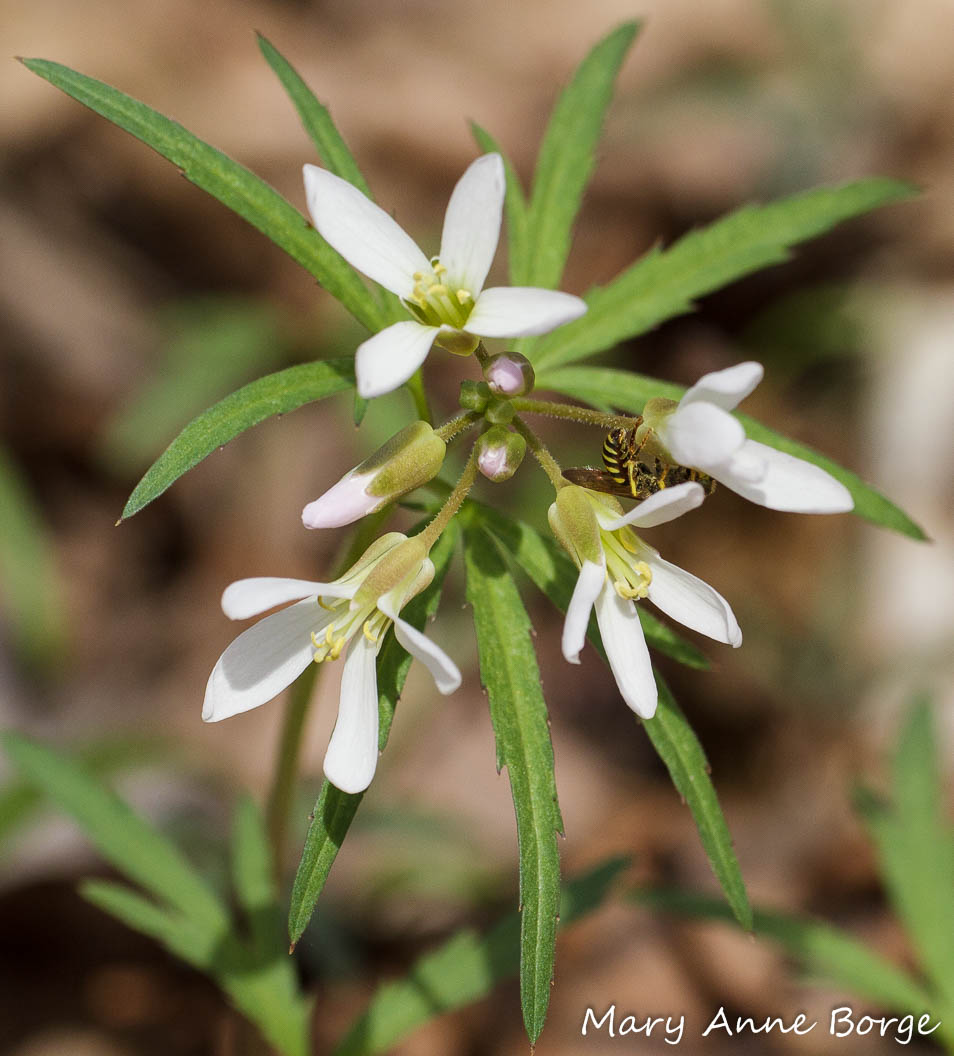
Cut-leaved Toothwort (Cardamine concatenata)  with possible nectar thief

Cut-leaved Toothwort (Cardamine concatenata) with possible nectar thief

Everything changes so rapidly in spring.  Don’t miss a single scene of the show!

Related Posts

Spicebush or Forsythia?

Spring Comes to the Sourlands

Signs of Spring – Mining Bees

Resources

Cech, Rick; Tudor, Guy.  Butterflies of the East Coast.  2005.

Eastman, John.  The Book of Forest and Thicket.  1992.

Eaton, Eric R.; Kauffman, Ken.  Kaufman Field Guide to Insects of North America.  2007.

Glassberg, Jeffrey.  A Swift Guide to Butterflies of North America.  2012.

Rhoads, Ann Fowler; Block, Timothy A.  The Plants of Pennsylvania.  2007


Late Winter Bird Food

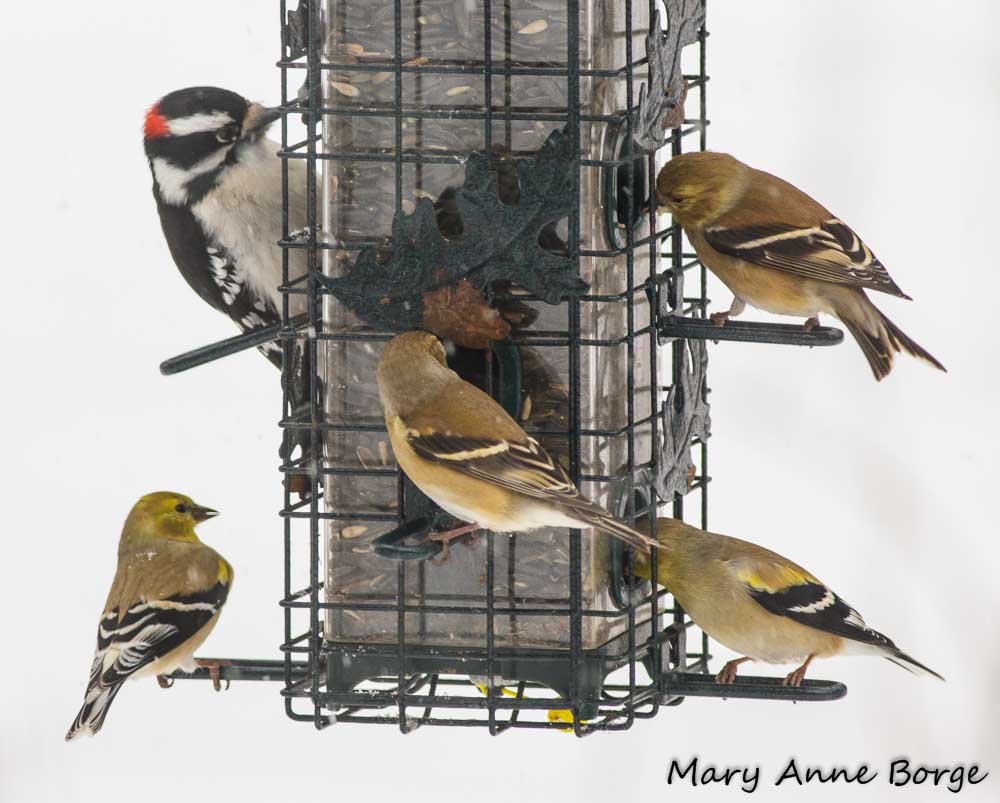
A Downy Woodpecker and Goldfinches sharing a meal

A Downy Woodpecker and Goldfinches sharing a meal

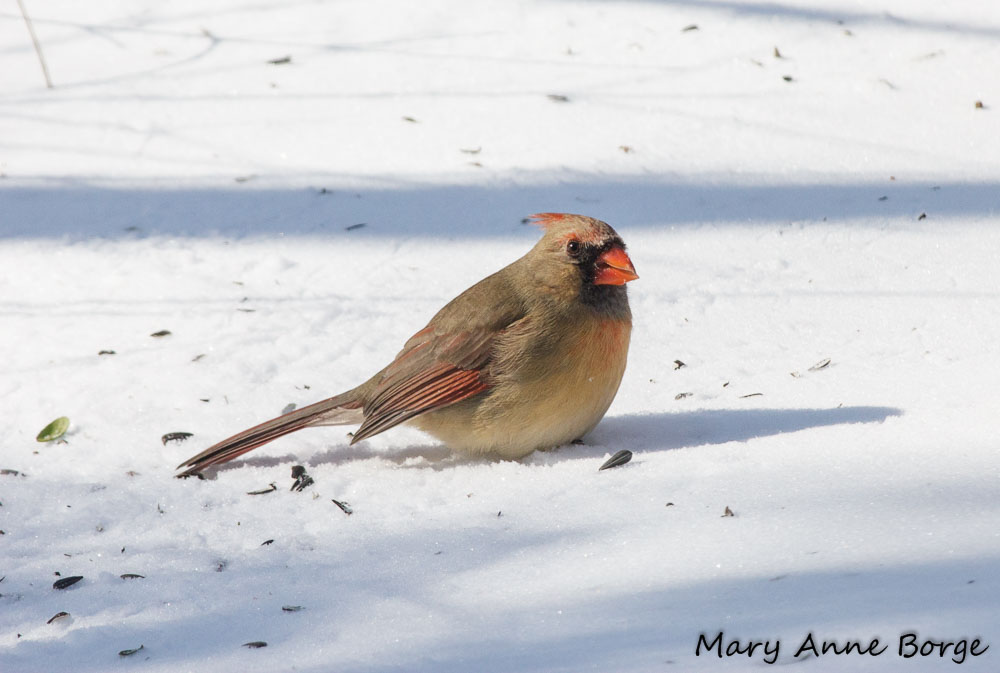
The ground has been solidly snow covered for weeks.  As a result, traffic at bird feeders is heavy, with birds often emptying our feeder in less than a day.  It’s especially tough on birds that feed on the ground, like Cardinals,

Female Northern Cardinal

Female Northern Cardinal

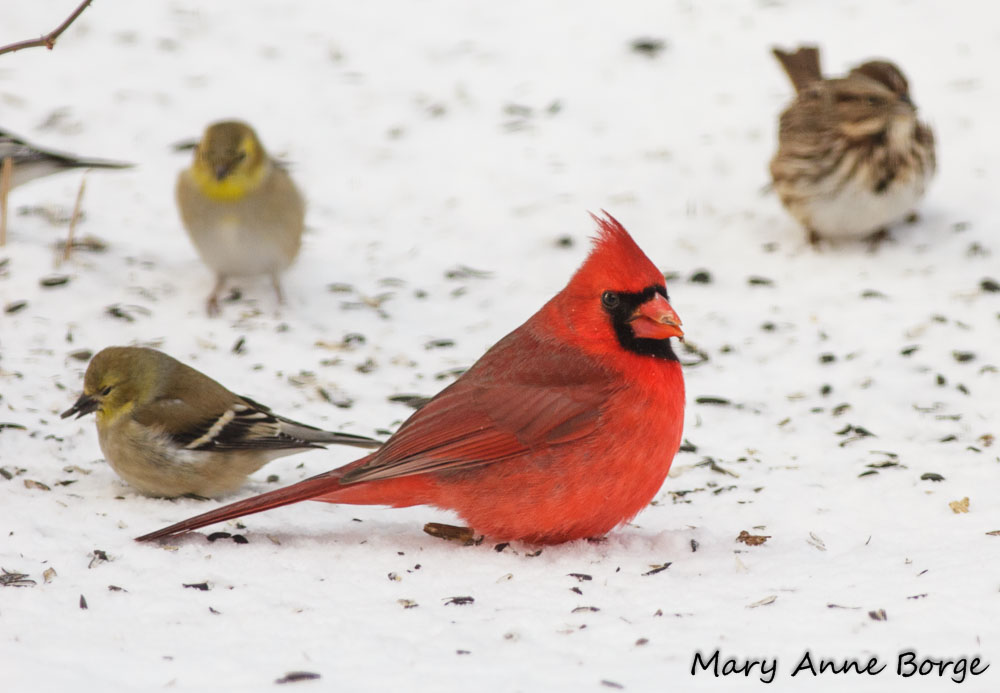
Male Northern Cardinal with American Goldfinches and Song Sparrow

Male Northern Cardinal with American Goldfinches and Song Sparrow

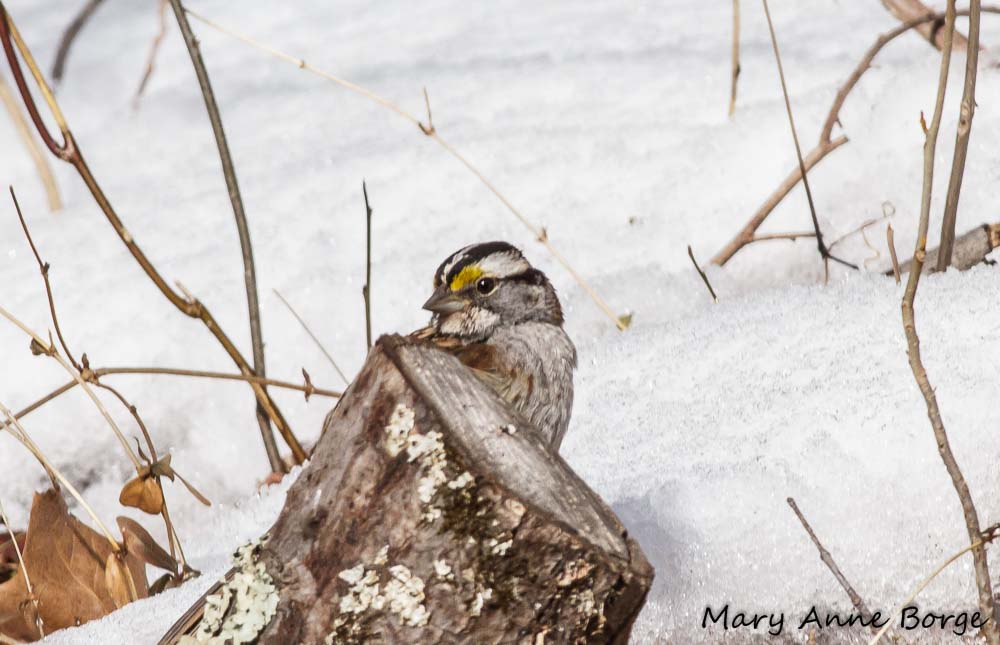
White-throated Sparrows

White-throated Sparrow

White-throated Sparrow

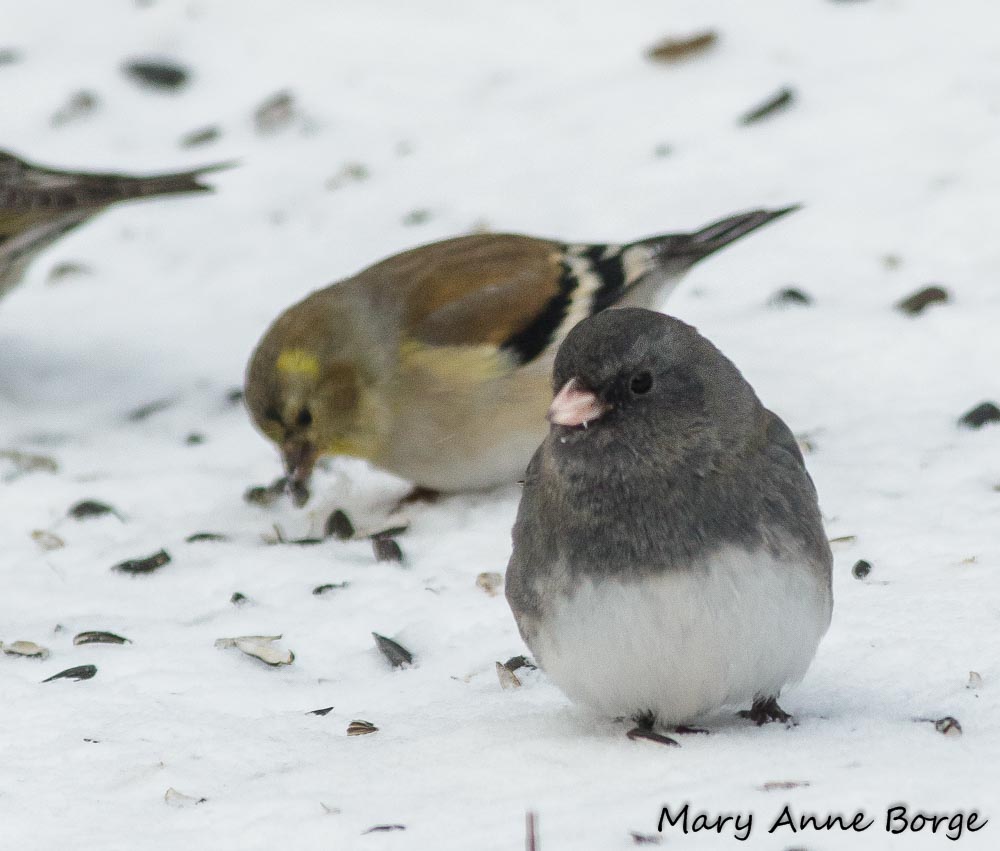
and Dark-eyed Juncos.

Dark-eyed Junco with American Goldfinch

Dark-eyed Junco with American Goldfinch

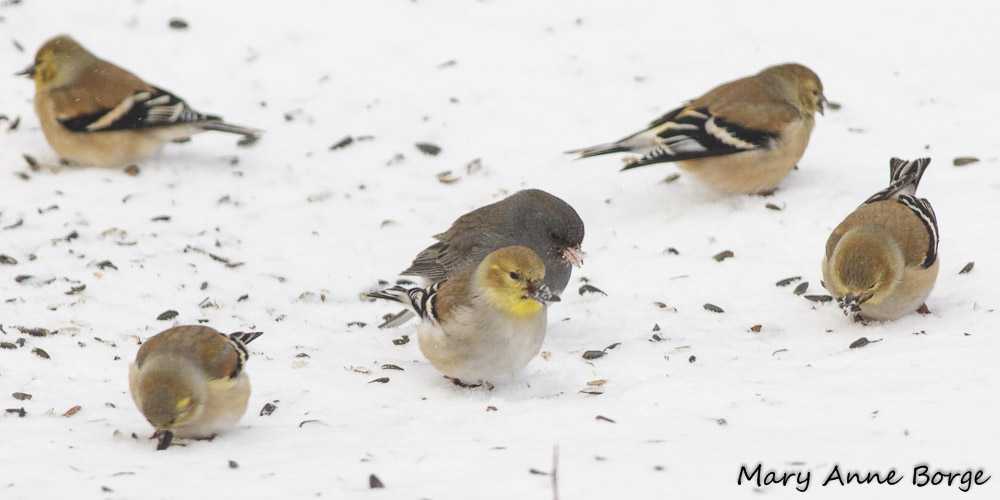
In our yard, a flock of Goldfinches moved back and forth from the feeder to the ground below,

American Goldfinches with Dark-eyed Junco

American Goldfinches with Dark-eyed Junco

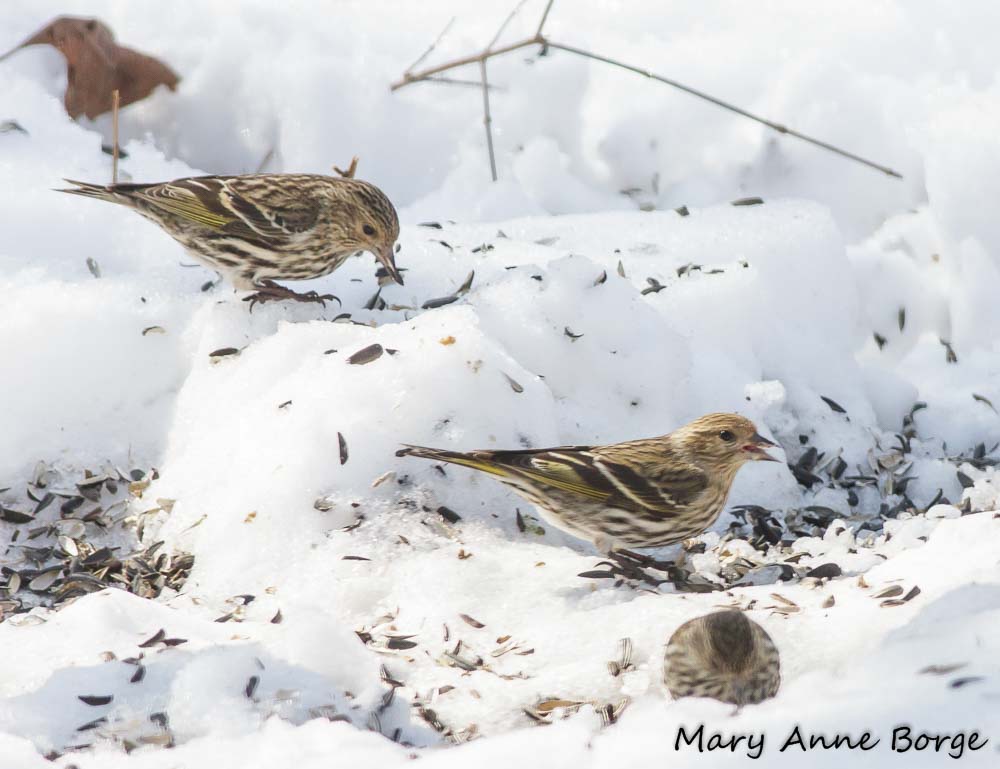
joined by a trio of Pine Siskins, visiting us for the past few weeks.

Pine Siskins and American Goldfinches

Pine Siskins and American Goldfinches

Pine Siskins

Pine Siskins

Birds take advantage of the food we provide, but what else do they eat in winter?

White-throated Sparrow

White-throated Sparrow

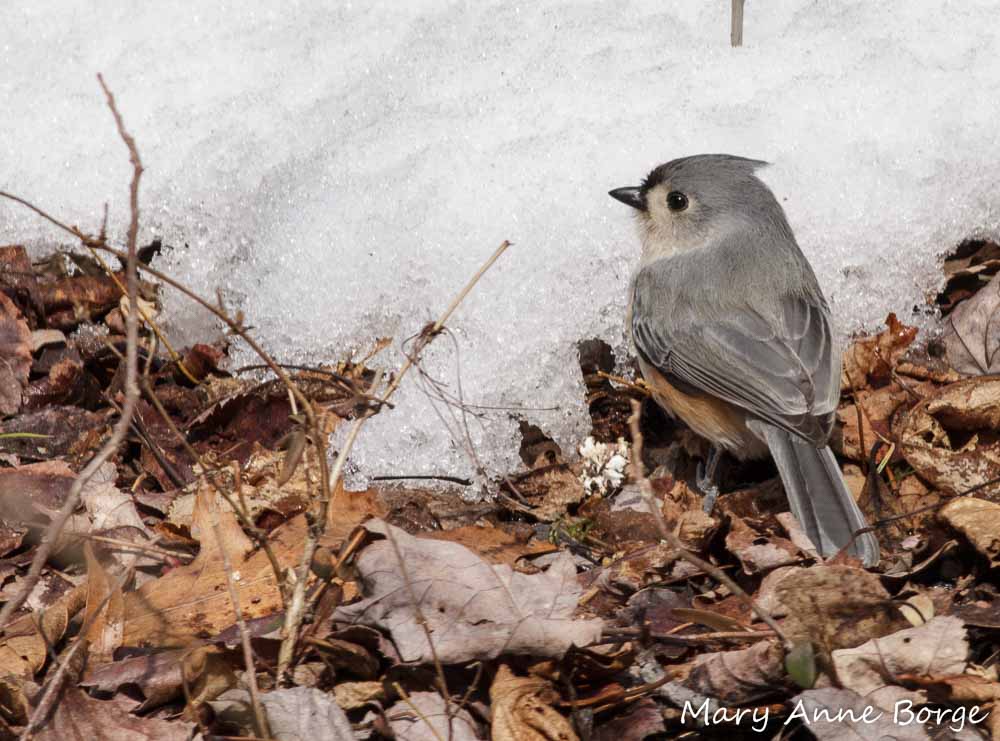
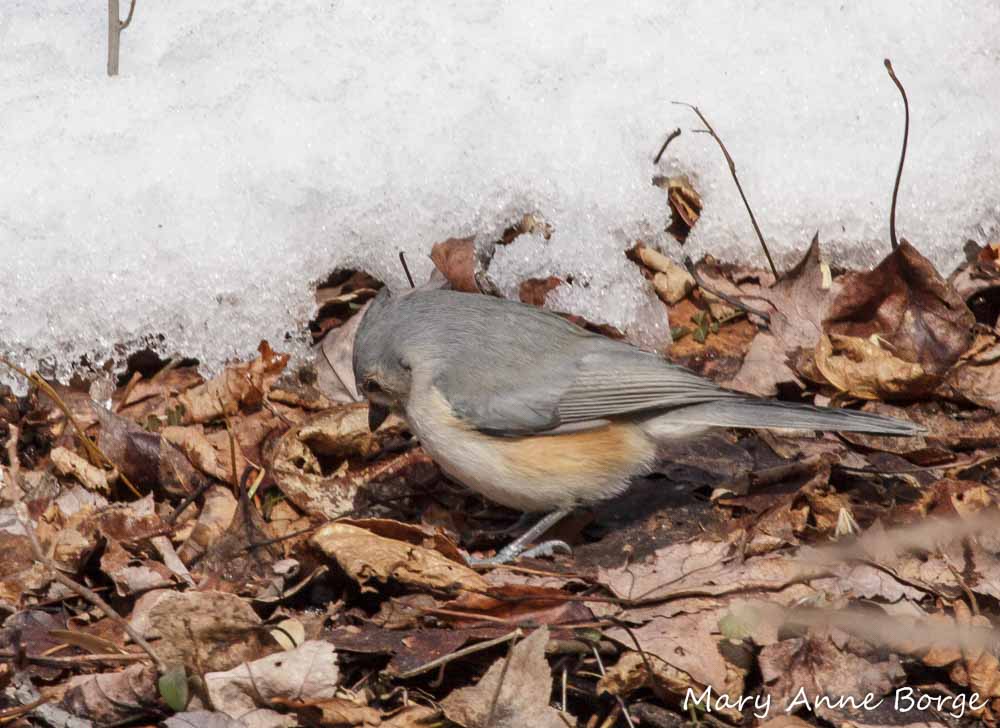
Just as in the warm months, insects are still an important part of their diet.  As soon as there is open ground, birds begin tossing and probing leaves, looking for overwintering insects to eat.

Tufted Titmouse

Tufted Titmouse

Tufted Titmouse searching for food

Tufted Titmouse searching for food

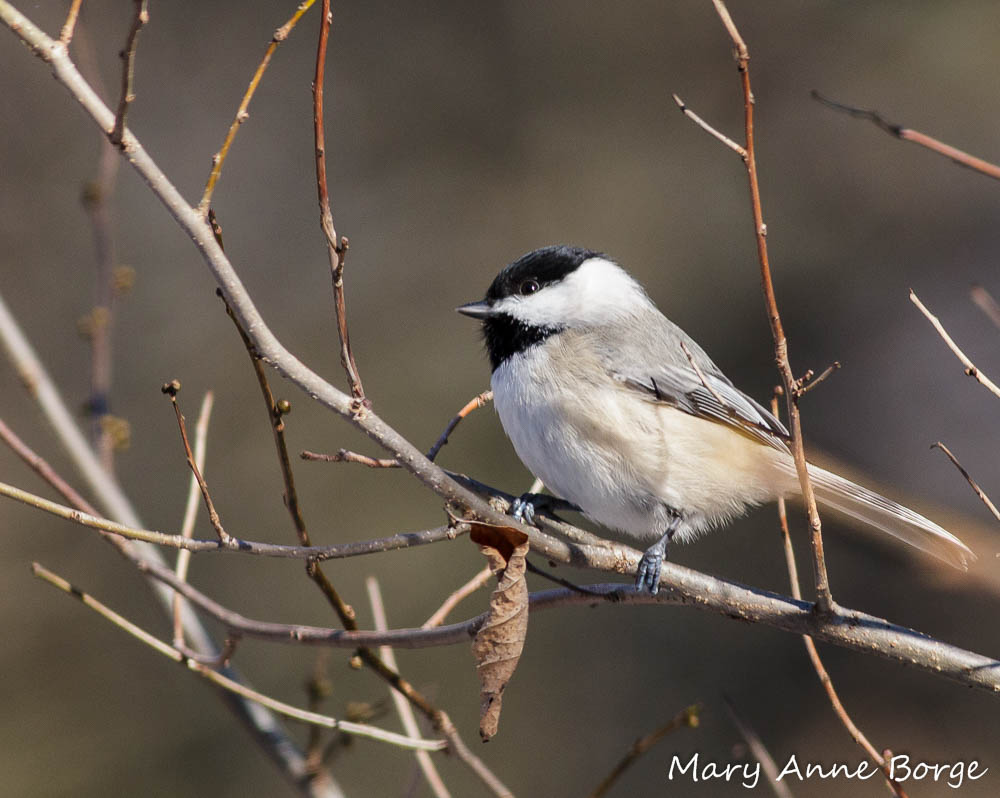
Watch for Chickadees and Titmice searching branches of trees and shrubs for eggs, chrysalises, caterpillars and other insects sheltering there.

Carolina Chickadee

Carolina Chickadee

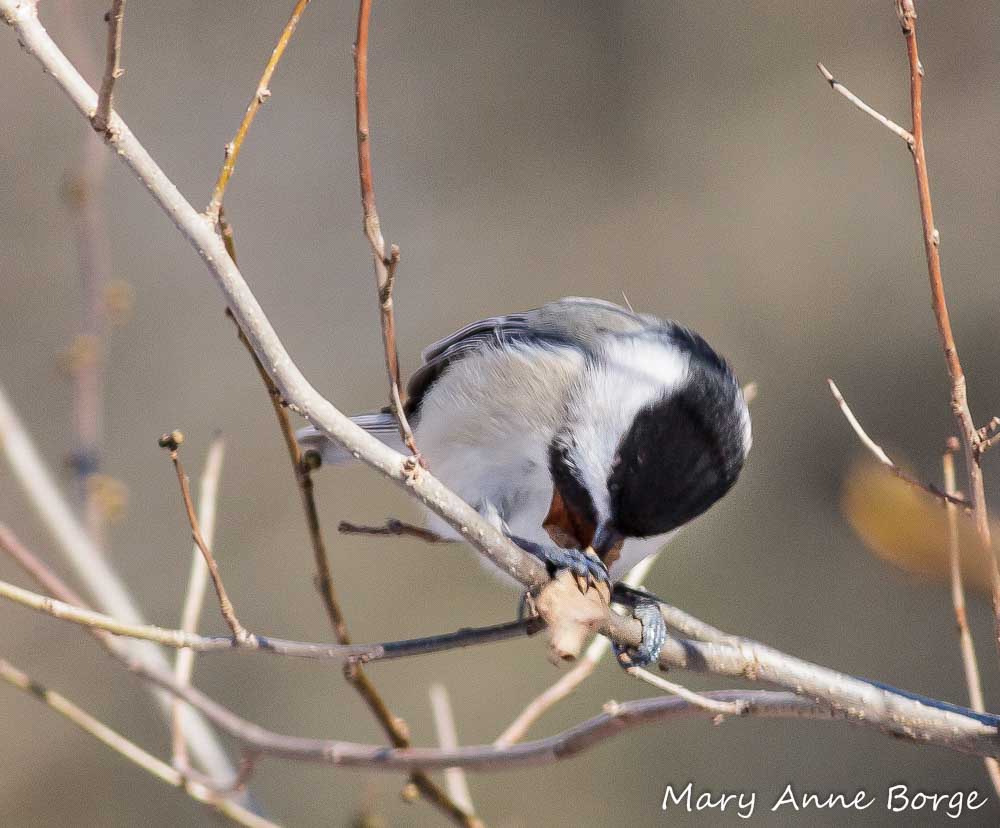
Chickadees investigate curled leaves clinging to branches, knowing that a leaf might be a winter insect shelter.

Carolina Chickadee searching for an insect in a leaf

Carolina Chickadee searching for an insect in a leaf

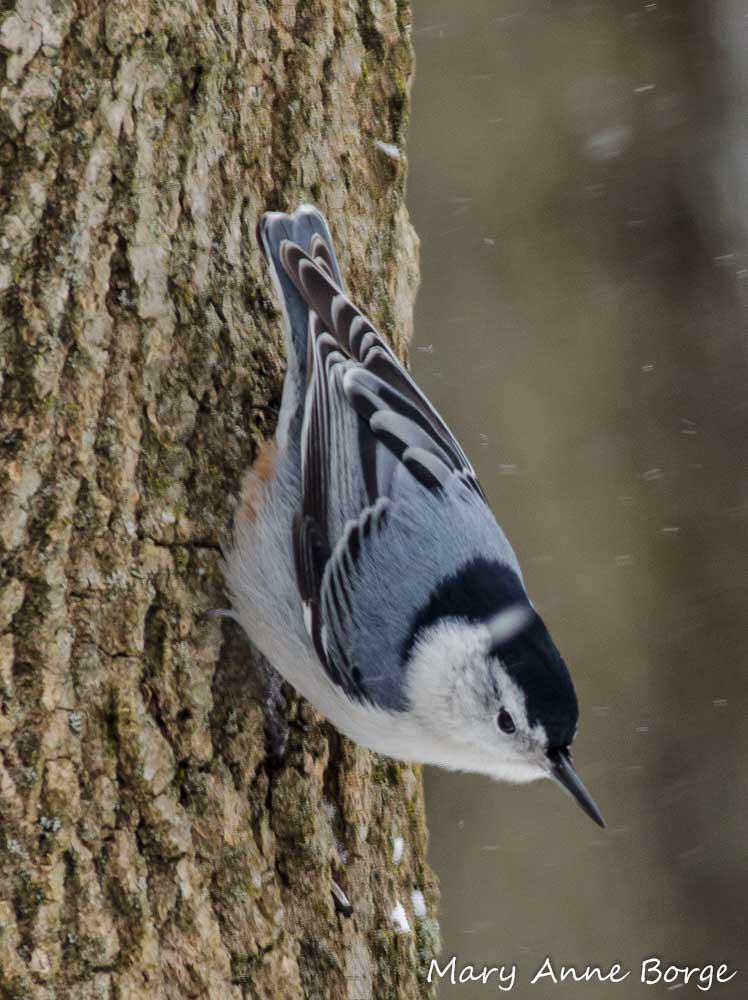
Nuthatches travel down tree trunks probing bark crevices, looking for a winter insect snack.  Brown Creepers cover the same territory in the opposite direction, eating what the Nuthatches miss.

White-breasted Nuthatch

White-breasted Nuthatch

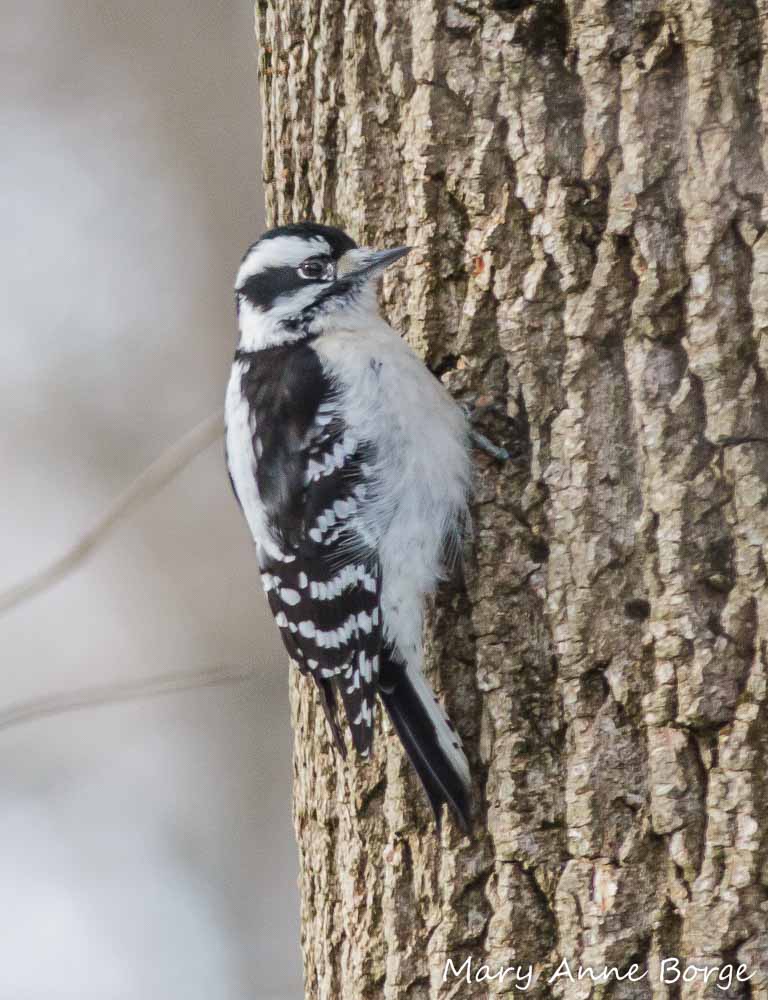
Downy Woodpeckers explore both branches and tree trunks looking for food.

Downy Woodpecker

Downy Woodpecker

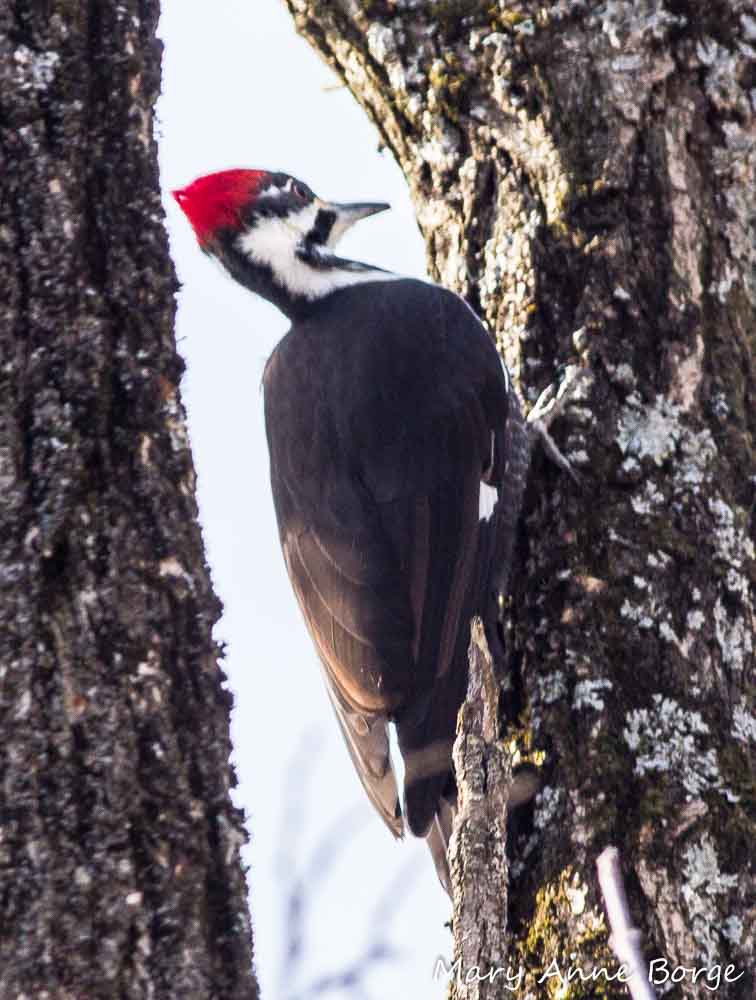
This Pileated Woodpecker

Pileated Woodpecker

Pileated Woodpecker

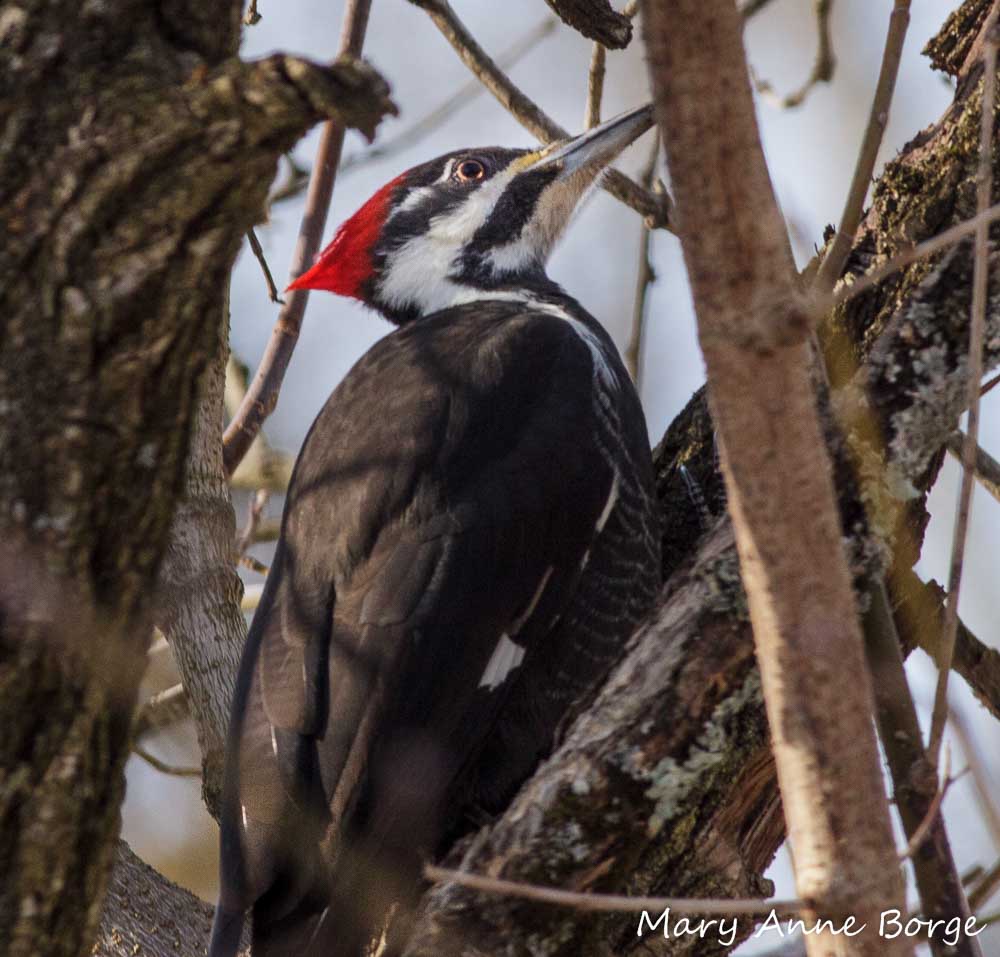
found a branch that promised her an insect reward, probably Carpenter Ants.

Pileated Woodpecker, excavating a branch for ants

Pileated Woodpecker, excavating a branch for ants

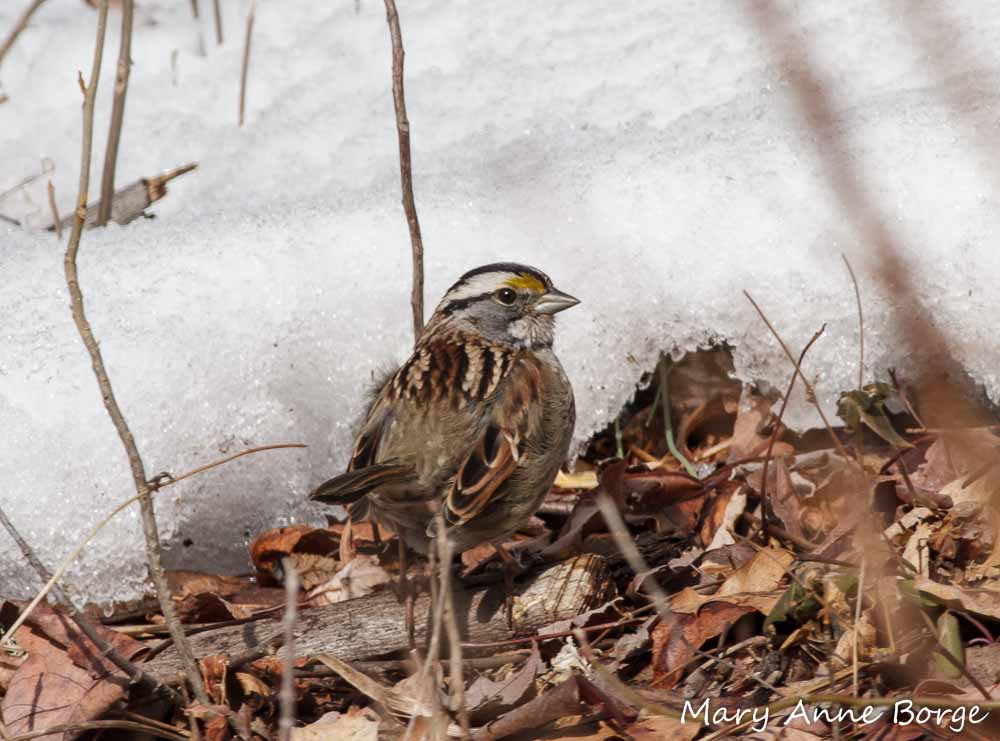
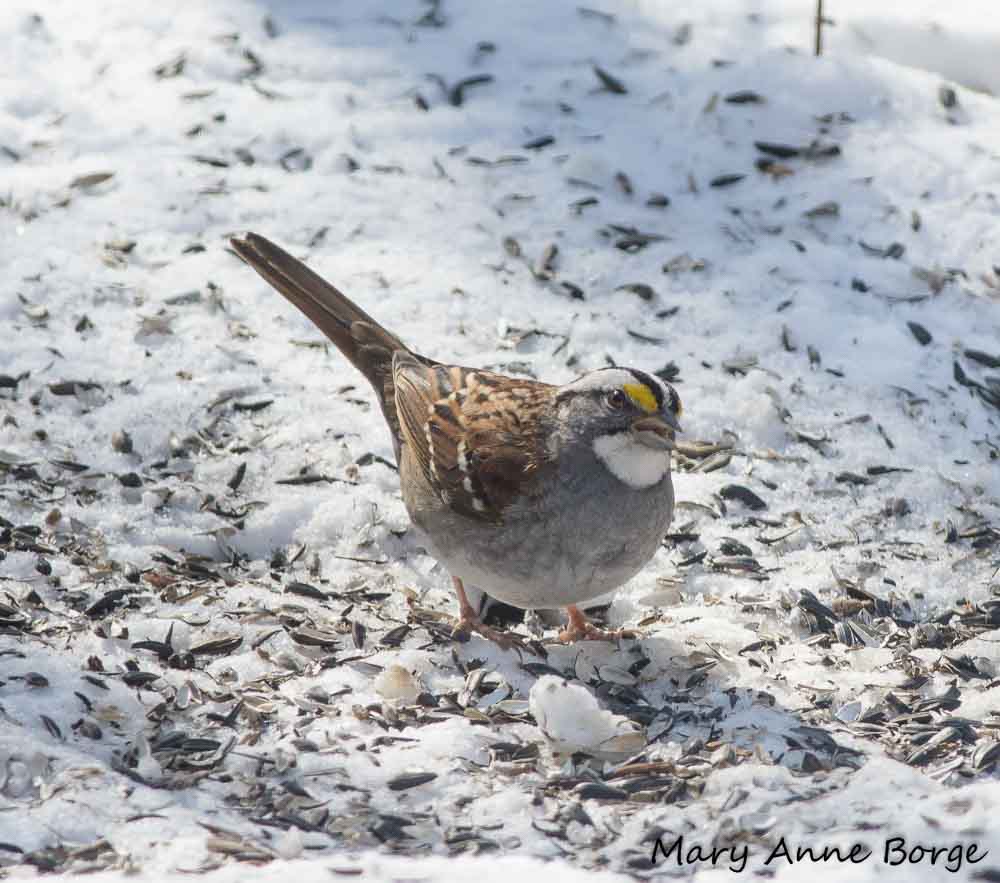
Signs of spring are beginning to show.  Look closely at the plumage of male Goldfinches and you’ll see some splotches of bright yellow, the beginning of their molt to summer garb.  This White-throated Sparrow is already sporting its summer suit, in spite of the snow!

White-throated Sparrow

White-throated Sparrow