Coralberry – A Winter Standout

Some plants are at their showiest in winter. Coralberry (Symphoricarpos orbiculatus), also called Indian Currant, is one of them.

Coralberry (Symphoricarpos orbiculatus) fruit

Coralberry (Symphoricarpos orbiculatus) fruit

Named for its fruit, Coralberry’s bright clusters of purplish to coral colored berry-like drupes persist on this shrub’s otherwise bare branches throughout much of the winter.  Drupes are fleshy fruits with seeds inside in a stony enclosure, like a peach.

Some plants have evolved to have their fruit be at its most appealing to their target seed dispersers (usually birds and some mammals) in late winter, when there is less food available. This strategy works well for the plants, since there is less competition from other food sources. It works for the animals, too, since it means they will have something to eat throughout the cold weather, tiding them over until the growing season begins.  Robins and Bobwhites are among the birds that consume Coralberry’s fruit.

American Robin

American Robin

From a human perspective, Coralberry’s fruit is not really recommended for consumption. It contains saponins, which give the fleshy fruit a bitter taste, and in sufficient (really large) quantities can be toxic. Saponins have antimicrobial and antifungal properties, in addition to some other potential medicinal applications. They likely help to protect the plant from invaders. Some Native American tribes made a decoction from the inner bark or leaves to use as a wash for weak, sore or inflamed eyes.

Coralberry grows to a maximum height of about 4 – 6 feet (1 – 2 meters) with gracefully arching branches. Its opposite leaves are typical of the Honeysuckle (Caprifoliaceae) family, of which Coralberry is a member.

Coralberry (Symphoricarpos orbiculatus) branch in summer

Coralberry (Symphoricarpos orbiculatus) branch in summer

You could walk past this shrub while it’s in bloom and never notice the flowers. They are small, bell-shaped, whitish, and completely concealed from above by leaves.  Fortunately, the bees, wasps and flies that are their likely pollinators are able to find them.  It flowers in mid-summer, usually July in the mid-Atlantic region.

Coralberry (Symphoricarpos orbiculatus) flowers and buds

Coralberry (Symphoricarpos orbiculatus) flowers and buds

A day-flying moth, the Snowberry Clearwing (Hemaris diffinis), has evolved to rely primarily on Coralberry and other members of the Honeysuckle family as food for its caterpillars, although they can also consume Dogbane (Apocynum species) leaves.

Snowberry Clearwing Moth (Hemaris diffinis)

Snowberry Clearwing Moth (Hemaris diffinis)

Snowberry Clearwing (Hemaris diffinis) caterpillar eating Japanese Honeysuckle

Snowberry Clearwing (Hemaris diffinis) caterpillar eating Japanese Honeysuckle

Snowberry Clearwings are named for their dependence on Coralberry and the closely related Snowberries (Symphoricarpos species) as caterpillar food plants. The Snowberries’ clusters of fruit are white, giving them their name.

The Hummingbird Clearwing (Hemaris thysbe) moth, another day-flier, also uses Symphoricarpos species, possibly including Coralberries, as food for its caterpillars. The Hummingbird Clearwing’s caterpillars have a somewhat broader palate, including hawthorns, cherries, plums and some viburnums in addition to the Snowberries.
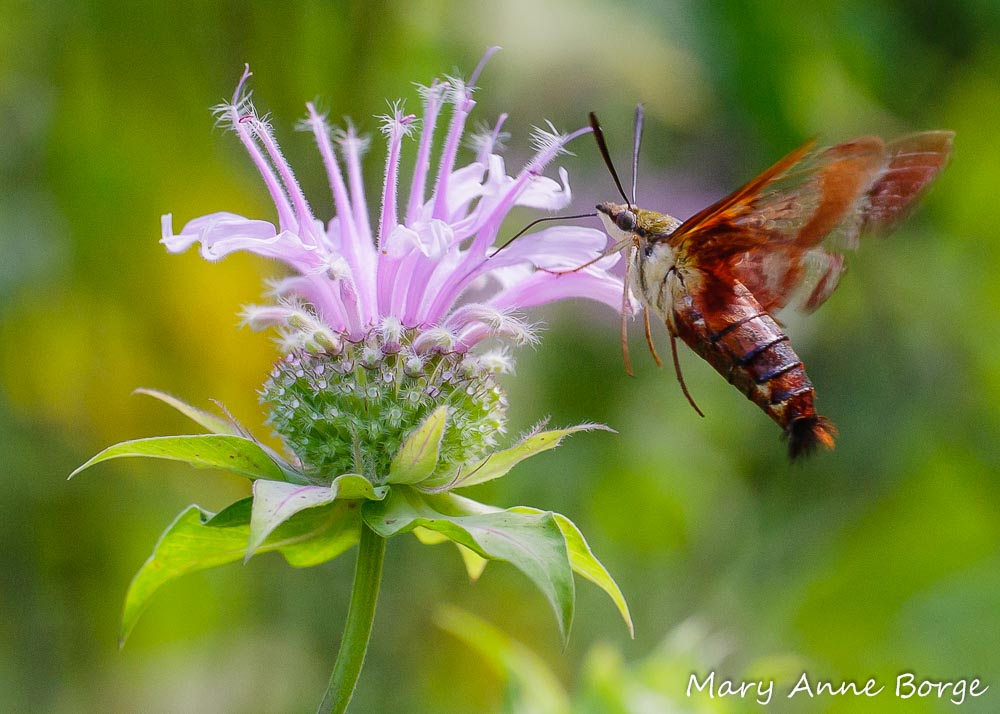
Hummingbird Clearwing Moth (Hemaris thysbe) drinking nectar from Wild Bergamot (Monarda fistulosa)

Hummingbird Clearwing Moth (Hemaris thysbe) drinking nectar from Wild Bergamot (Monarda fistulosa)

Coralberry tolerates a wide range of soils, and grows in light conditions from partial shade to full sun. It reproduces through seed dispersal, with the assistance of birds or other animals that eat its fruit, and also through stolons, above ground runners that root where they touch the soil.  Its native range is primarily the eastern two-thirds of the United States, and parts of Utah.  It has also been introduced in Ontario province.

Winter is the time of year that Coralberry demands your attention. Look for its bright fruit along woodland edges and in open meadows.

Coralberry (Symphoricarpos orbiculatus) fruit

Coralberry (Symphoricarpos orbiculatus) fruit


Resources

Beadle, David; Leckie, Seabrooke. Peterson Field Guide to Moths of Northeastern North America. 2012.

Hoffmann, David. Medical Herbalism.  2003.

Martin, Alexander C.; Zim, Herbert S.; Nelson, Arnold L. American Wildlife & Plants A Guide to Wildlife Food Habits.  1951.

Moerman, Daniel E. Native American Ethnobotany. 1998.

Rhoads, Ann Fowler; Block, Timothy A. The Plants of Pennsylvania.  2007

Wagner, David L.; Caterpillars of Eastern North America, 2005.

Illinois Wildflowers

Butterflies and Moths of North America
USDA Plant Database


What Winter Reveals: Hoptrees

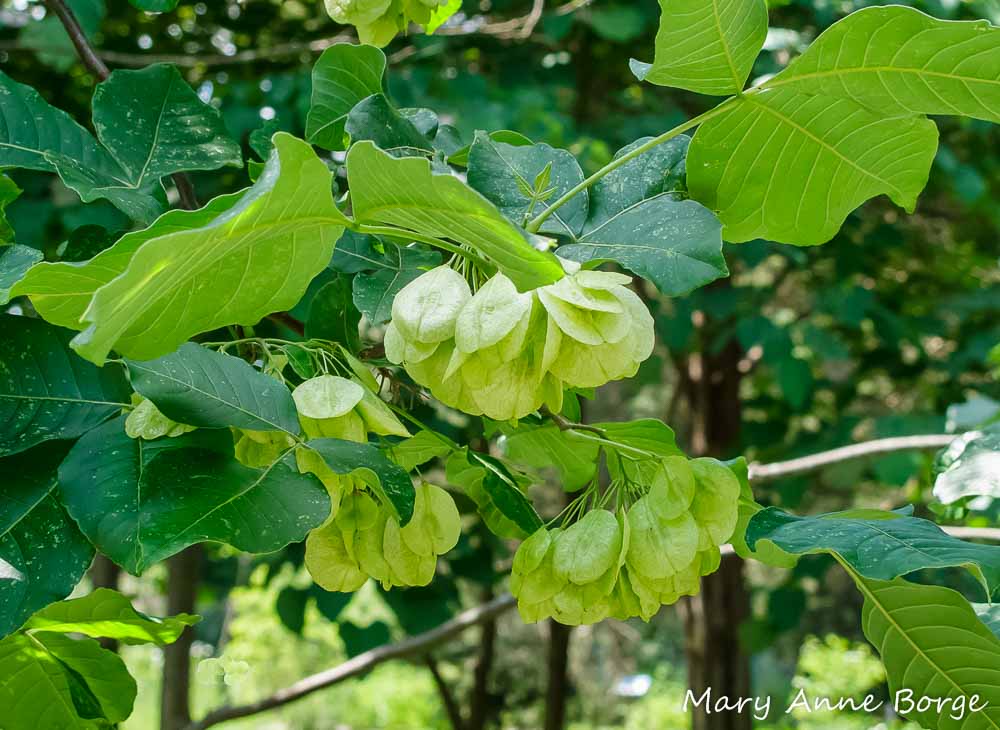
A winter walk reveals things that might be missed during the growing season, when leaves densely cover the trees.  The fruits of Hoptrees (Ptelea trifoliata), or Wafer-ash, are among those potentially hidden treasures, hanging in clusters like seasonal ornaments from otherwise bare branches throughout the late fall and winter months.  The fruits are samaras, a type of dry fruit (not fleshy like a berry), each with a single seed encased in a papery covering with a winged edge surrounding the seed, designed to help the wind disperse it.

Hoptree (Ptelea trifoliata) samaras in winter

Hoptree (Ptelea trifoliata) samaras in winter

Many of the Hoptree’s aliases refer to these fruits.  The common name ‘Hoptree’ is a nod to the use of the fruits as a substitute for hops in brewing beer.  Another common name for this small tree or shrub is ‘Wafer-ash’, a name that refers to the wafer-like shape of the samaras.  Female ash trees also display clusters of fruits through late fall, although ash samaras are shaped like a paddle.  Hoptree samaras look more like the samaras of elm trees, a resemblance that is reflected in its genus, ptelea, which means elm tree.

Hoptree (Ptelea trifoliata) samaras in summer

Hoptree (Ptelea trifoliata) samaras in summer

In spite of these superficial similarities to elm and ash trees, Hoptrees are not related to either.  The Hoptree is a member of the Rue (Rutaceae) family, which also encompasses the genus citrus.  Because of this, the Rue family is often called the Citrus family.

Like many plant species, Hoptrees produce chemicals to protect themselves from being eaten by foraging animals.  All parts of the plant, including leaves, branches and twigs, have glands that release volatile oils when crushed, spraying a light mist on any critter naive enough to browse them, much like the mist produced when pealing a citrus fruit.  Fragrant and bitter chemical compounds are discharged, discouraging most potential consumers.  For good measure, this spray also contains chemicals that irritate the skin and make it photosensitive.  Altogether, it makes for an effective package of deterrents.  This is not a plant that is likely to be browsed by deer.

But there are a few insects that have evolved to be able to consume these leaves, synthesizing the deterrent chemical compounds in their bodies.  These sequestered chemicals help protect the insects from being eaten by other animals.  The Giant Swallowtail butterfly is one of the few insect species that uses this and other Rue family members as food plants for their caterpillars.

Attacks on Hoptrees by insects or fungi prompt the production of phytoalexins, which are additional protective compounds that have antimicrobial and antifungal properties.

Hoptrees produce many chemical compounds that have powerful medicinal uses.  Some Native American tribes, including the Menominees, used Hoptree constituents as a general health panacea or tonic.  The Hoptree, like ginseng, is one of a small number of plant species that are believed to be effective in improving the functioning of the human body as a whole.  Hoptrees have also been found to have properties that make other medicines more effective.

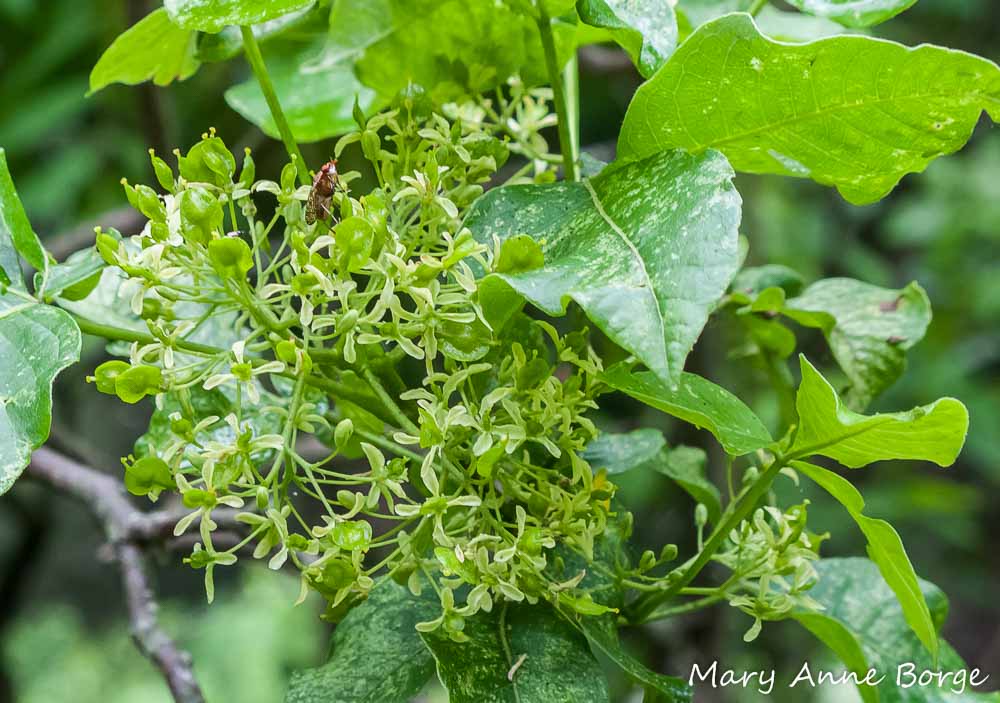
Hoptree flowers bloom in mid-spring, typically May.  The flowers are very fragrant, attracting many insect visitors to drink their nectar and potentially assist in pollination, including bees, butterflies, flies and wasps.

Hoptree (Ptelea trifoliata) flowers, being visited by a fly, a potential pollinator

Hoptree (Ptelea trifoliata) flowers, being visited by a fly, a potential pollinator

The northern border of the Hoptree’s native range includes Quebec and Ontario provinces, and Nebraska, Colorado and Utah.  The range extends from there to all states to the south from Arizona to Florida.  Hoptrees can be found in a variety of habitats, including open woods, thickets, stream banks and prairies.  They like well-drained soil, and prefer shade to part-shade, but can tolerate full sun.  They are endangered in New Jersey and New York, and threatened in Pennsylvania.

Resources

Beresford-Kroeger, Diana.  Arboretum America: A Philosophy of the Forest.  2003

Hoffmann, David.  Medical Herbalism.  2003.

Lewis, Walter H.; Elvin-Lewis, Memory P.F.  Medical Botany. 2003.

Illinois Wildflowers

Missouri Botanical Garden

USDA Plants Database


New England Asters – A Hotbed of Activity!

As the temperatures cool and the changing color of the leaves intensifies, plants in the Aster (Asteraceae) family continue to offer a bright display and food for flower visitors.

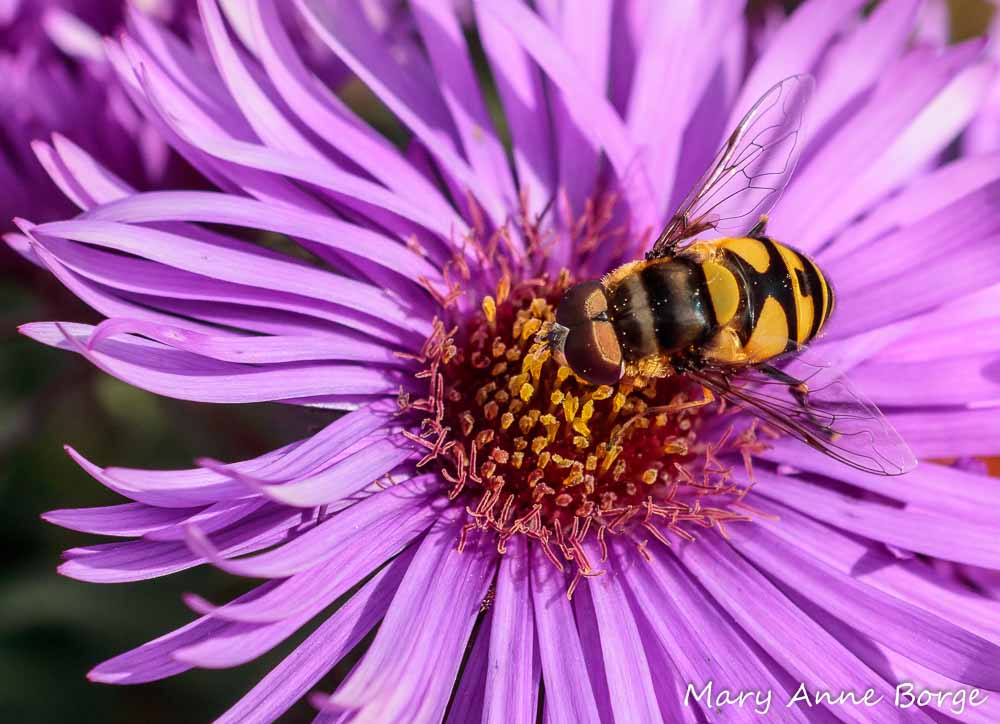
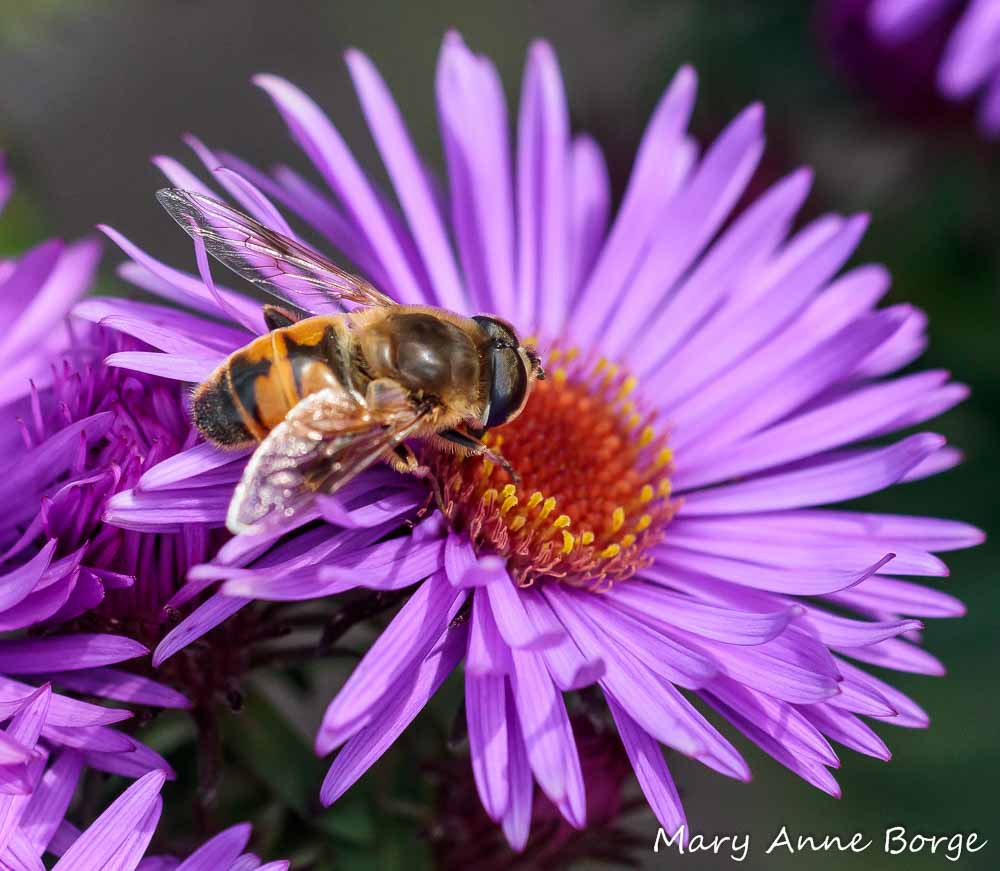
New England Asters (Symphyotrichum novae-angliae) with a flower fly (Eristalis transversa) and sweat bee (Agapostemom species)

New England Asters (Symphyotrichum novae-angliae) with a flower fly (Eristalis transversa) and sweat bee (Agapostemom species)

The Aster family is also called the composite family, because of the arrangement of their flowers. What looks to us like a single flower is actually a cluster of many flowers, often of two different types: ray flowers, which look like petals, and small tubular disk flowers in the center of the display.

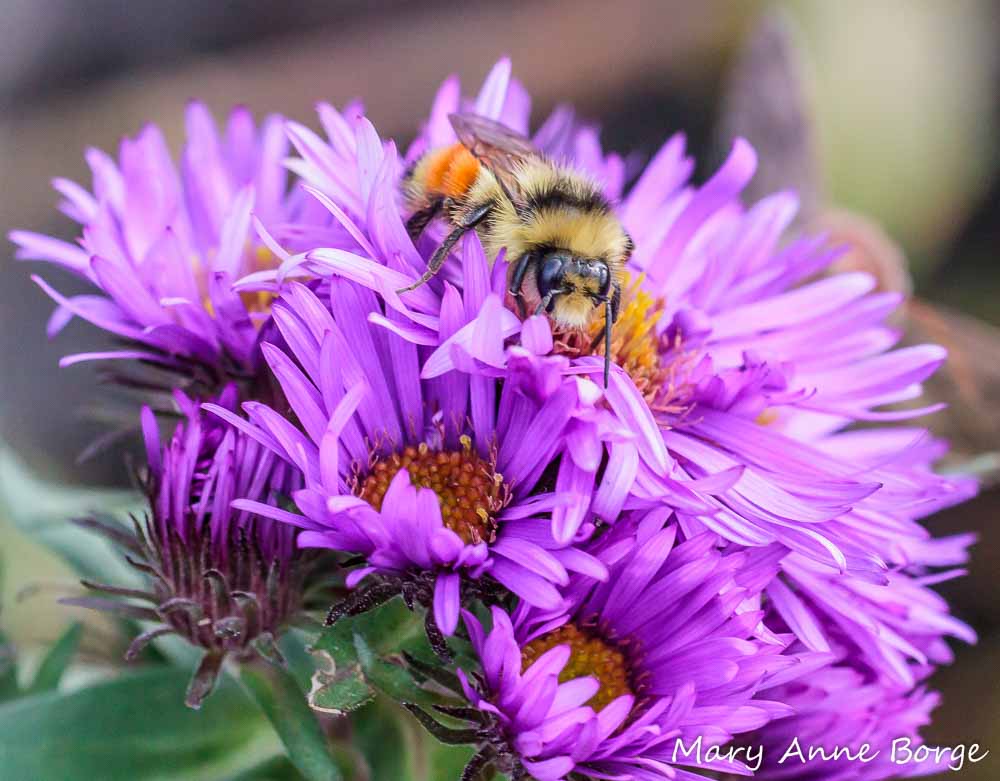
Tricolored Bumble Bee (Bombus ternarius) feeding on New England Asters (Symphyotrichum novae-angliae)

Tricolored Bumble Bee (Bombus ternarius) feeding on New England Asters (Symphyotrichum novae-angliae)

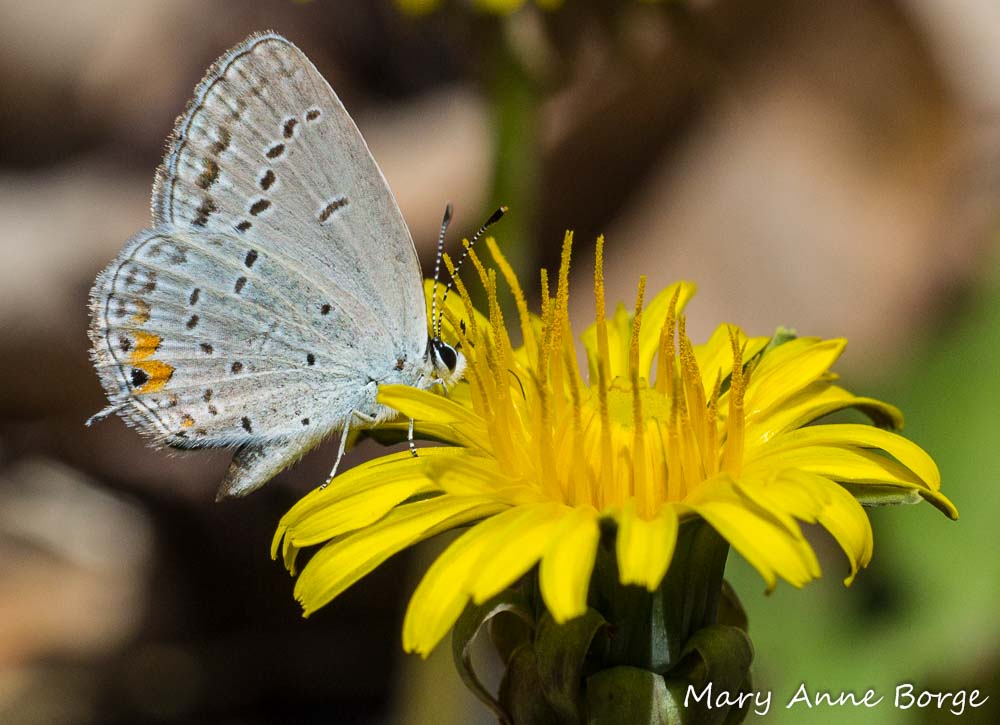
Some aster family members, like dandelions (Taraxacum species), only have ray flowers.

Eastern-Tailed Blue butterfly drinking nectar from dandelion

Eastern-Tailed Blue butterfly drinking nectar from dandelion

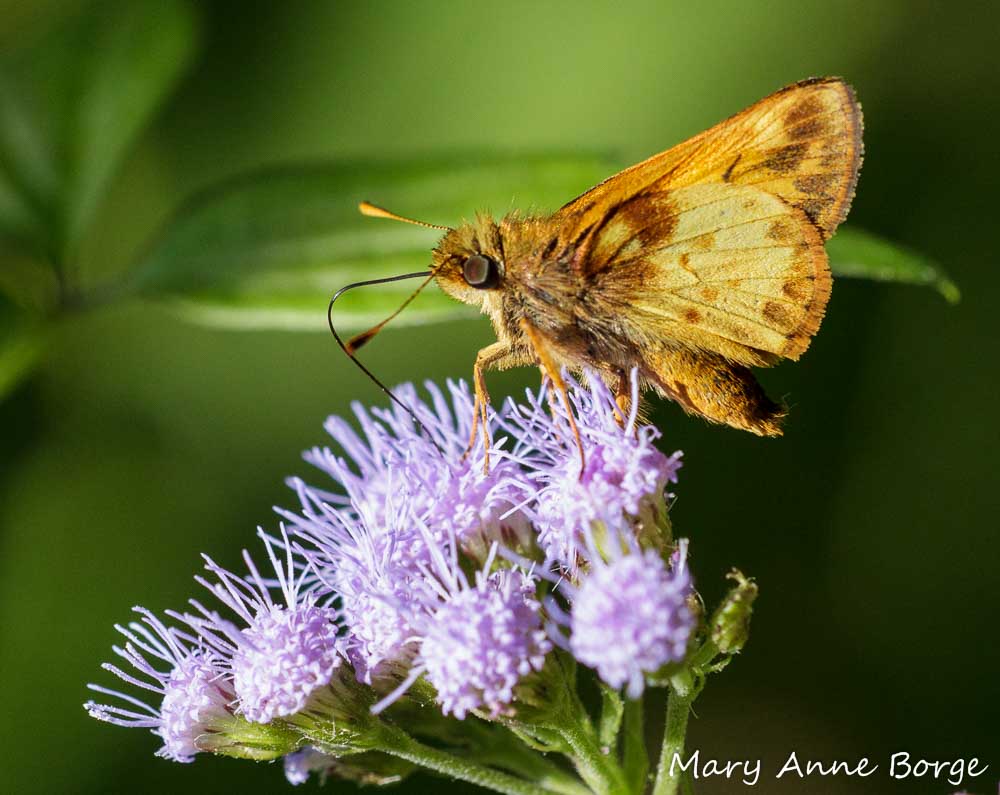
Others have only disk flowers, like Mistflower (Conoclinium coelestinum).

Zabulon Skipper nectaring from Mistflower (Conoclinium coelestinum)

Zabulon Skipper nectaring from Mistflower (Conoclinium coelestinum)

In the case of New England Asters (Symphyotrichum novae-angliae), the ray flowers’ function is primarily to add to the attraction of the floral display to entice potential pollinators to visit the flowers.  It’s the tiny disk flowers at the center of each flower cluster that offer the reward of nectar and pollen.

Tricolored Bumble Bee (Bombus ternarius) feeding on New England Asters (Symphyotrichum novae-angliae)

Tricolored Bumble Bee (Bombus ternarius) feeding on New England Asters (Symphyotrichum novae-angliae)

Even on cool, blustery days, Bumble Bees, like the Tricolored Bumble Bee (Bombus ternarius) in the photo above, forage for food. The hair on their bodies helps to keep them warm, and is a good vehicle to pick up pollen from one flower and transfer it to another.

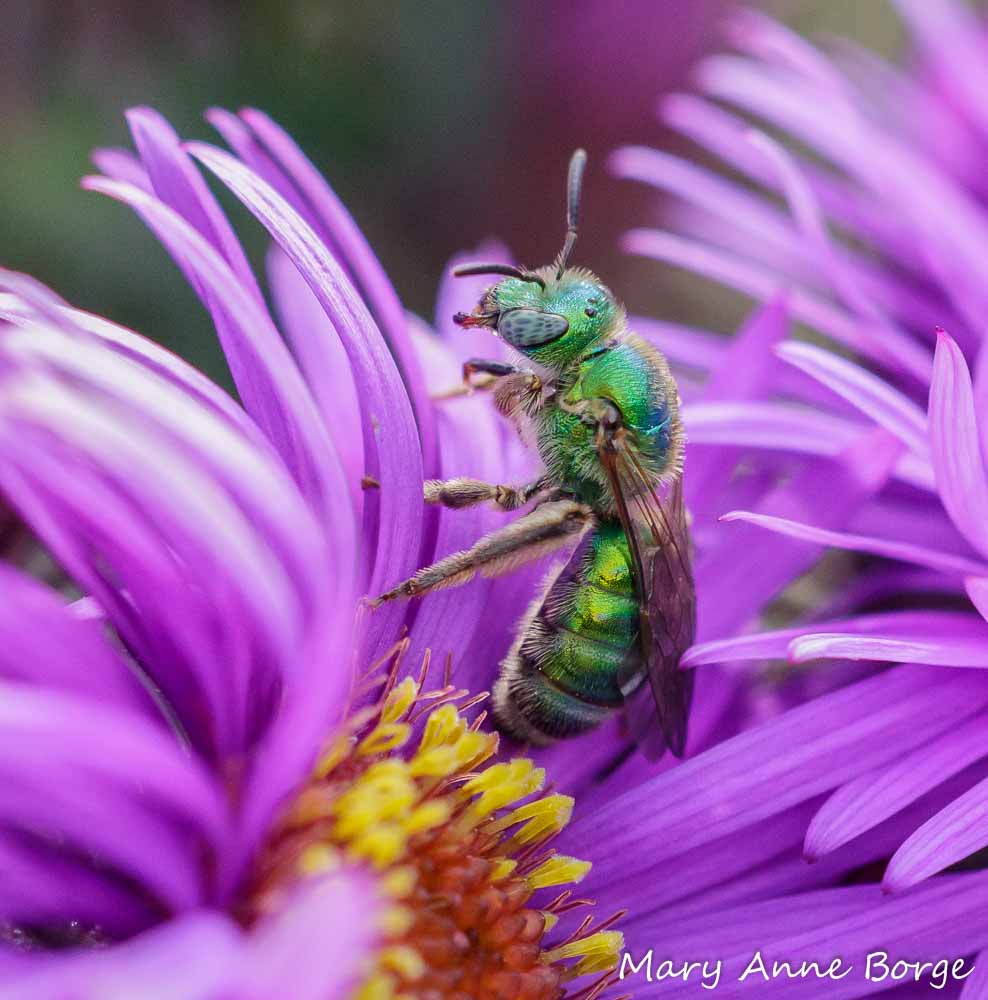
Sweat Bees are still active in autumn, fueled by the nectar aster family members offer.

Sweat bee (Halictid family)

Sweat bee (Halictid family)

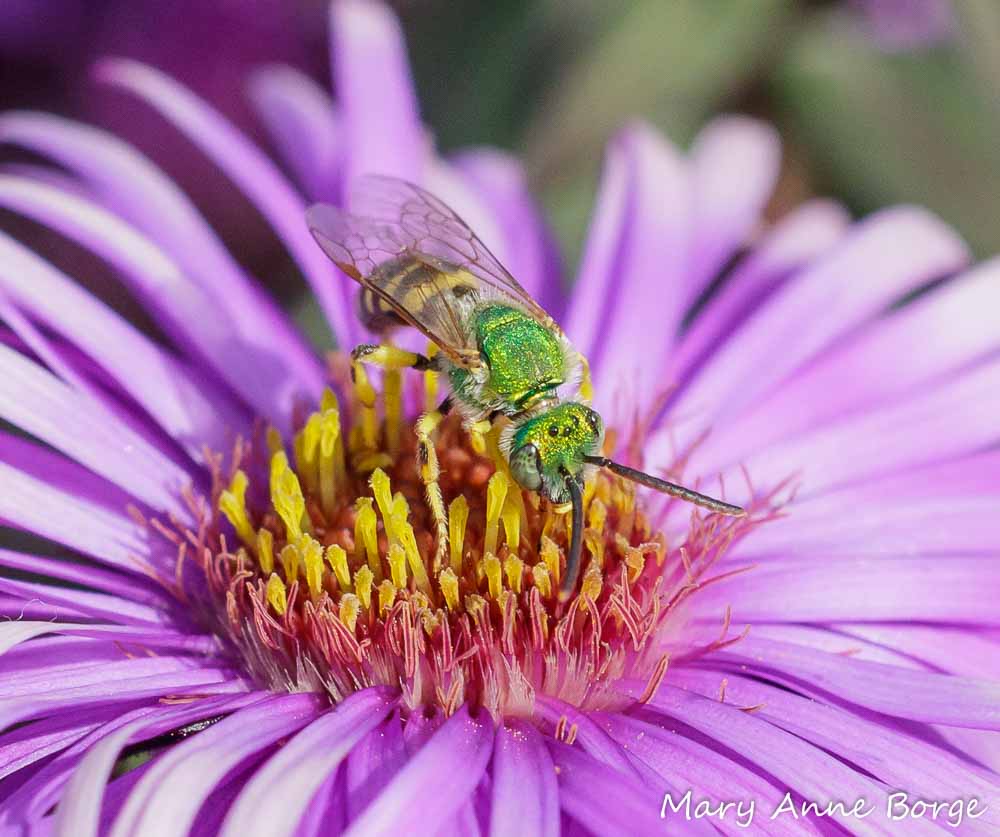
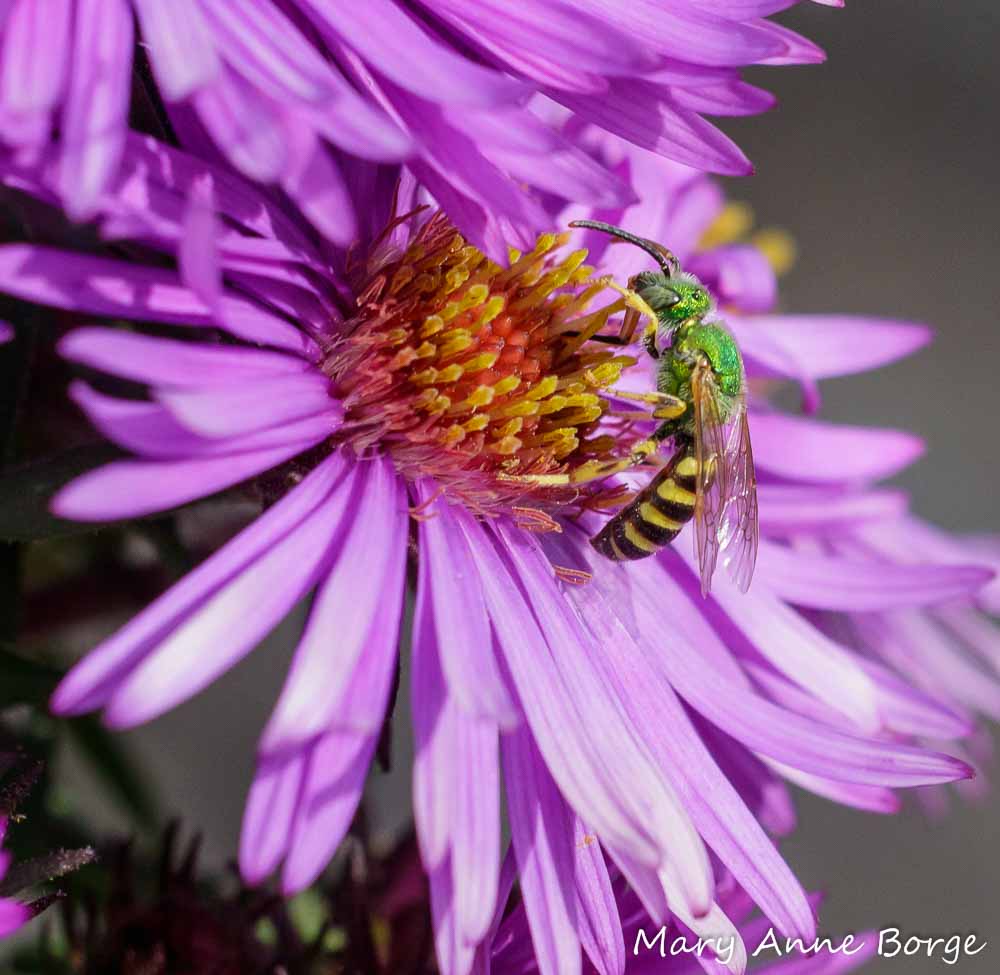
Sweat bee (Agapostemom species) feeding from New England Aster (Symphyotrichum novae-angliae)

Sweat bee (Agapostemom species) feeding from New England Aster (Symphyotrichum novae-angliae)

Sweat bee (Agapostemom species) feeding from New England Aster (Symphyotrichum novae-angliae)

Sweat bee (Agapostemom species) feeding from New England Aster (Symphyotrichum novae-angliae)

Bees are not the only flower visitors at this time of year. Flies are second only to bees in their importance as pollinators.  Some species can be seen throughout fall.

Flower fly (Eristalis transversa) feeding from New England Aster (Symphyotrichum novae-angliae)

Flower fly (Eristalis transversa) feeding from New England Aster (Symphyotrichum novae-angliae)

Many fly species have evolved to look like bees or wasps in an effort to frighten off potential predators, but if you look carefully you can see the short antennae and very large eyes that almost meet in the center of their faces that are typical of flies.

Flower fly (Eristalis arbustorum) feeding from New England Aster (Symphyotrichum novae-angliae)

Flower fly (Eristalis arbustorum) feeding from New England Aster (Symphyotrichum novae-angliae)

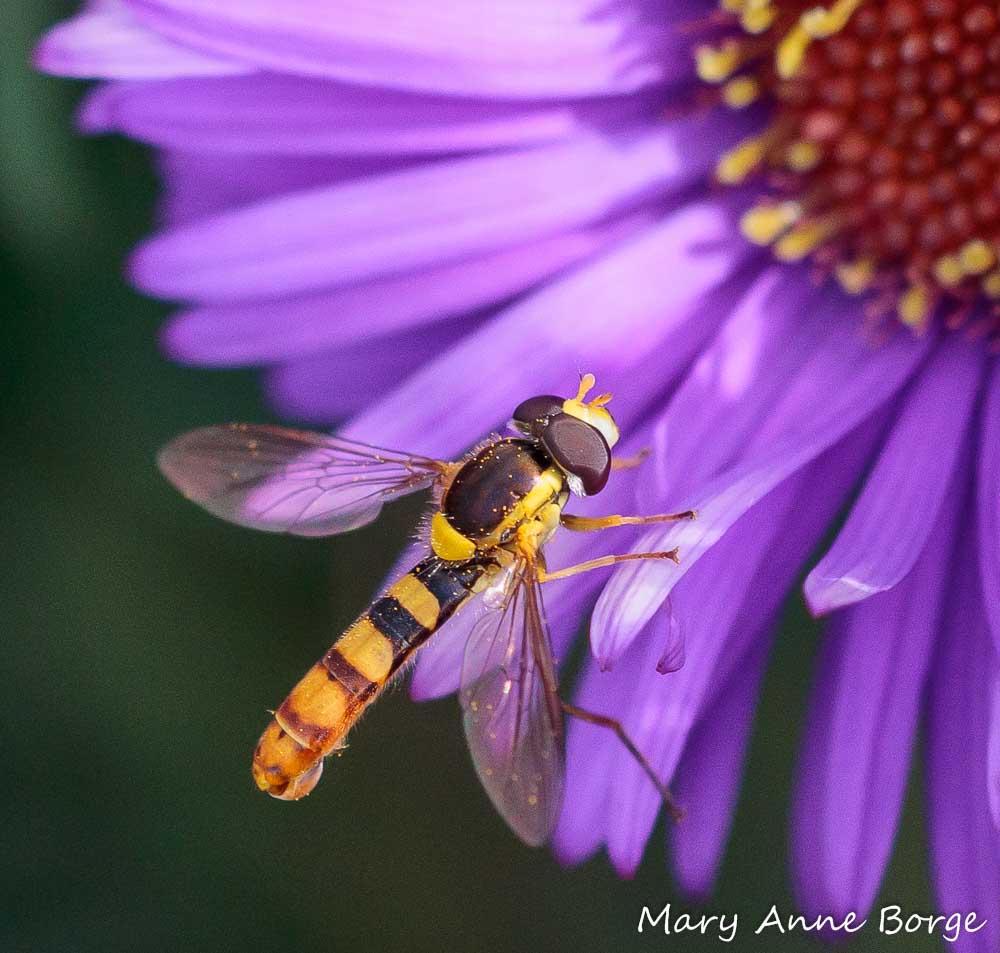
The fly below is masquerading as a small wasp, hoping to elude predators.  It’s larvae consume aphids, another benefit from this diminutive creature!

Flower fly (Sphaerophoria contigua) on New England Aster (Symphyotrichum novae-angliae)

Flower fly (Sphaerophoria contigua) on New England Aster (Symphyotrichum novae-angliae)

Flower fly (Sphaerophoria contigua) on New England Aster (Symphyotrichum novae-angliae)

Flower fly (Sphaerophoria contigua) on New England Aster (Symphyotrichum novae-angliae)

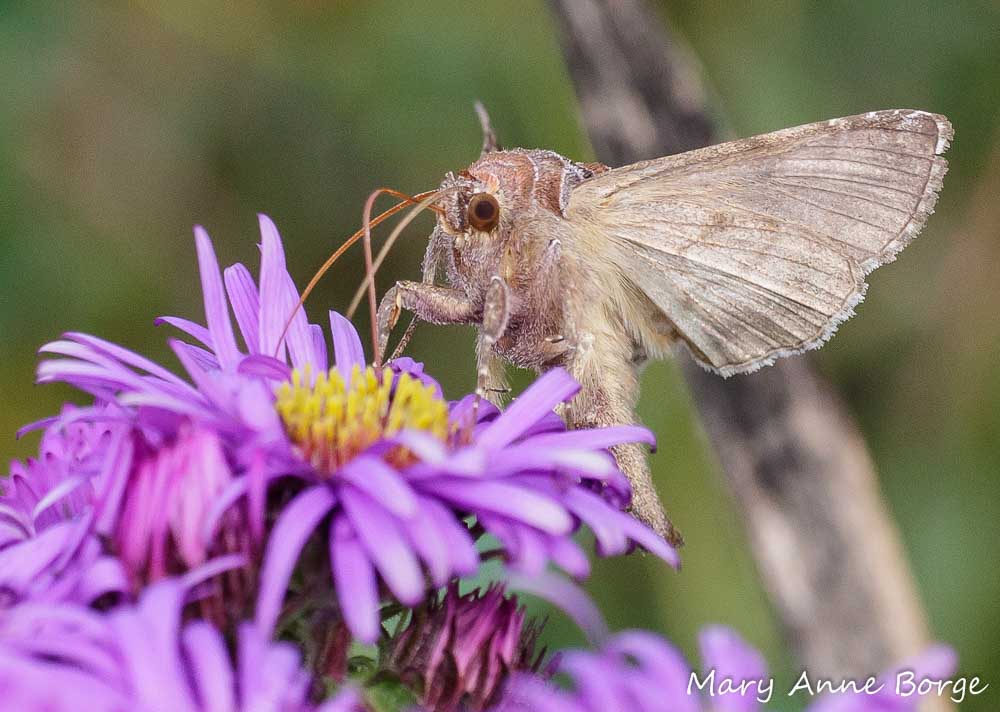
Moths and butterflies also use New England Aster flowers as a convenient energy drink.

Common Looper Moth (Autographa precationis) feeding on New England Aster (Symphyotrichum novae-angliae)

Common Looper Moth (Autographa precationis) feeding on New England Aster (Symphyotrichum novae-angliae)

Despite their name, New England Asters are native throughout much of the United States and several Canadian provinces. They grow along roadsides and in meadows, and make a great addition to a sunny garden with average to moist soil, even tolerating clay soil.

Take a look at the New England Asters in the photo below. How many visitors can you find on these flowers?

New England Asters (Symphyotrichum novae-angliae) with flower visitors. How many can you find?

New England Asters (Symphyotrichum novae-angliae) with flower visitors. How many can you find?


Related posts

Asters Yield a Treasure Trove

Resources

Eaton, Eric R.; Kauffman, Ken. Kaufman Field Guide to Insects of North America.  2007.

USDA Plant Database

Missouri Botanical Garden

Illinois Wildflowers


Benefits of Pawpaws

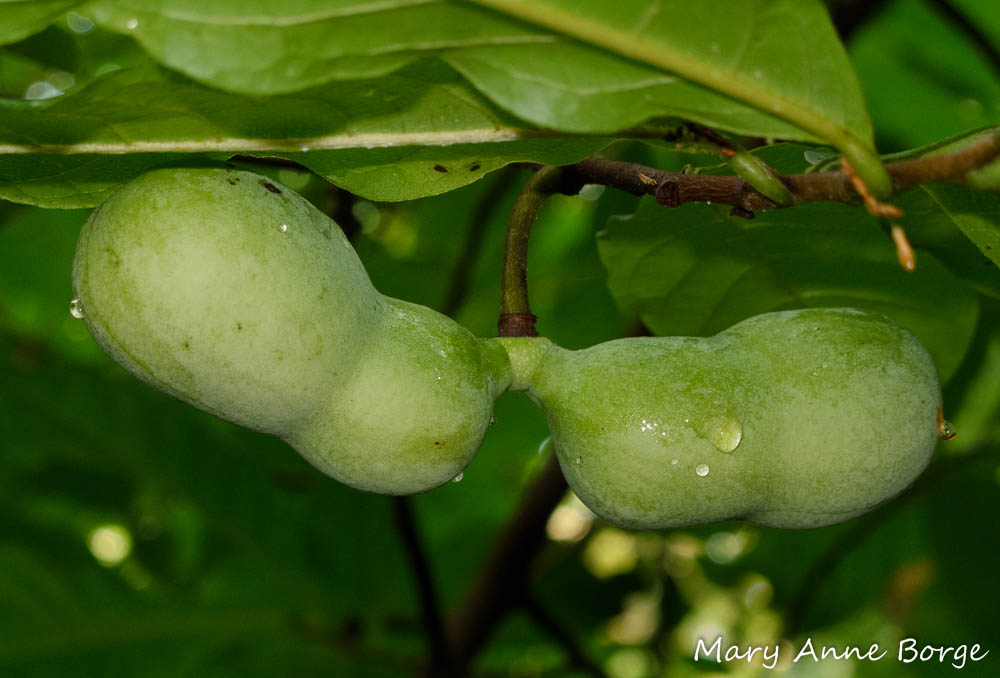
The large, luscious fruit of Pawpaw (Asimina triloba) trees is ripening now. Its flavor is a bit reminiscent of a tropical fruit, hinting at banana or mango. In addition to people, the fruits are eaten by many other mammals, including raccoons, fox, and squirrels. These animals help to distribute Pawpaw’s seeds.

Pawpaw (Asimina triloba) fruit

Pawpaw (Asimina triloba) fruit

Pawpaws contain more nutrients than many more commonly eaten fruits, including apples, grapes and peaches. They contain annonaceous acetogenins, chemical compounds that have anticancer properties. These compounds are able to sap cancer cells of their energy, and are thought to have potential in treating cancers that are resistant to other drugs. The compounds are also effective against malaria, as well as other microbial infections.

In addition to having fruit with a tropical taste, this woodland understory tree has a tropical look, with long, broad, tapering leaves.

Pawpaw (Asimina triloba) leaves

Pawpaw (Asimina triloba) leaves

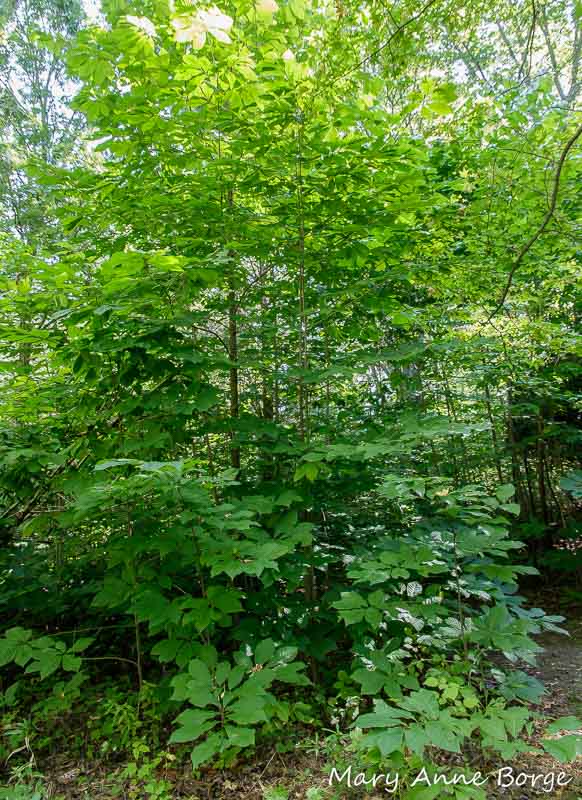
Pawpaw reproduces easily through its root system, tending to form colonies. It’s appropriate for this tree and its fruit to hint of the tropics, since it is a member of the Custard Apple (Annonaceae) plant family, the majority of whose members are native to the tropics.

Pawpaw (Asimina triloba)

Pawpaw (Asimina triloba)

The leaves contain compounds that deter herbivores, so deer browsing is not a problem, and few insects eat the leaves. There are always exceptions, though. Zebra Swallowtail butterfly and Pawpaw Sphinx moth caterpillars can tolerate consuming these chemicals. As a result, the chemicals protect the caterpillars, pupae and adults of these species, making them less palatable to predators. As the trees prepare for their winter dormancy over the next few weeks, Pawpaw leaves will turn bright yellow before finally falling from their branches.

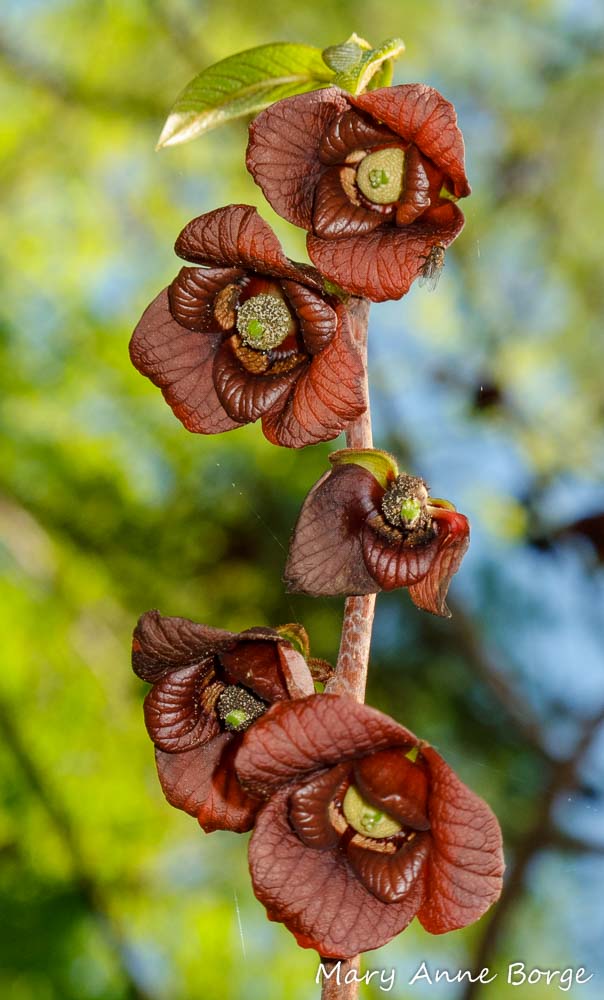
Look for the flowers of Pawpaw as the leaves unfold in spring, usually in early May.

Pawpaw (Asimina triloba) flowers

Pawpaw (Asimina triloba) flowers

Pawpaw’s dark reddish maroon flowers attract insects as pollinators, primarily flies that lay their eggs in carrion (dead rotting flesh!), where their larvae, called maggots, develop. Some Carrion beetles may also be pollinators for this species. Pawpaw has evolved to attract these insects as pollinators through deception. The flower color mimics the carrion these insects visit to lay their eggs.  But these flower visitors will have to keep searching to find the right food for their offspring.

Pawpaw (Asimina triloba) flowers with a fly, a possible pollinator

Pawpaw (Asimina triloba) flowers with a fly, a possible pollinator

Pollination is just one service these insects perform. Their larvae decompose and recycle the flesh of dead animals, a public sanitation function they share with vultures that is very important in helping to minimize the spread of disease.

Pawpaw trees can be found in rich, moist woods in the eastern United States from New York south to northern Florida, west across southern Ontario to Michigan, Illinois, and Iowa, south to Nebraska and eastern Texas. Kentucky State University has a full time research program aimed at developing and refining methods to cultivate Pawpaw as a viable commercial crop.

Pawpaw (Asimina triloba) flower

Pawpaw (Asimina triloba) flower

Resources

Beresford-Kroeger, Diana. Arboretum America: A Philosophy of the Forest. 2003

Illinois Wildflowers

Kentucky State University Pawpaw Program

The Alternative Medicine Pawpaw and Its Acetogenin Constituents Suppress Tumor Angiogenesis via the HIF-1/VEGF Pathway

USDA NRCS Plant Database


Combating Japanese Beetles

Japanese Beetle (Popillia japonica)

Japanese Beetle (Popillia japonica)

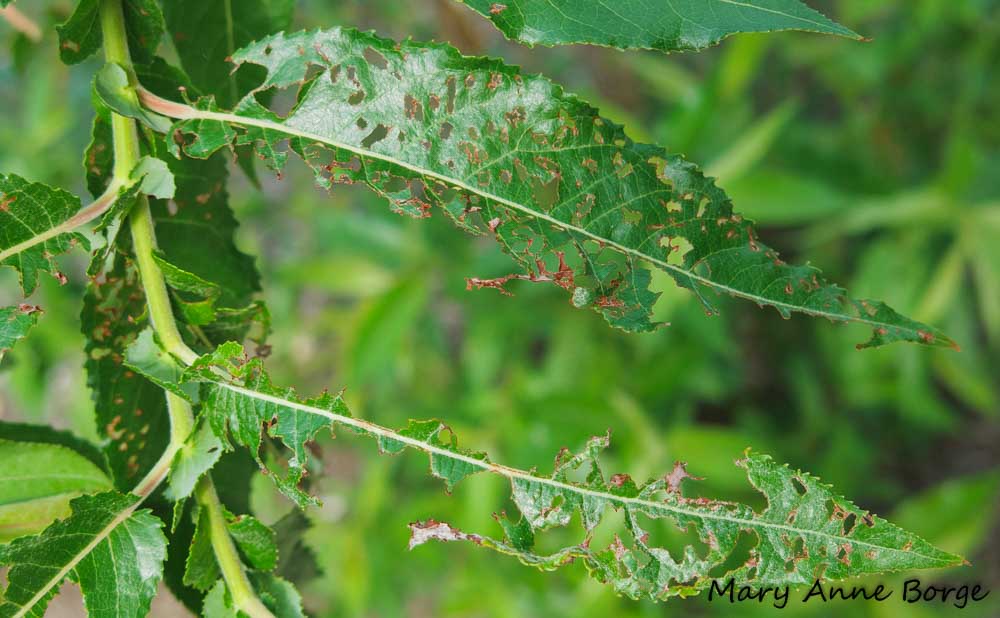
Japanese Beetles (Popillia japonica) are especially prolific this summer, voraciously consuming the leaves, flowers and buds of herbaceous (non-woody) plants, shrubs and trees. They were first discovered at a nursery in New Jersey in 1916, probably introduced here with imported nursery stock. Now widespread east of the Mississippi River in the United States and southern Canada, these insects are destructive pests in North America because the natural predators with which they evolved are not present here to keep them in check.
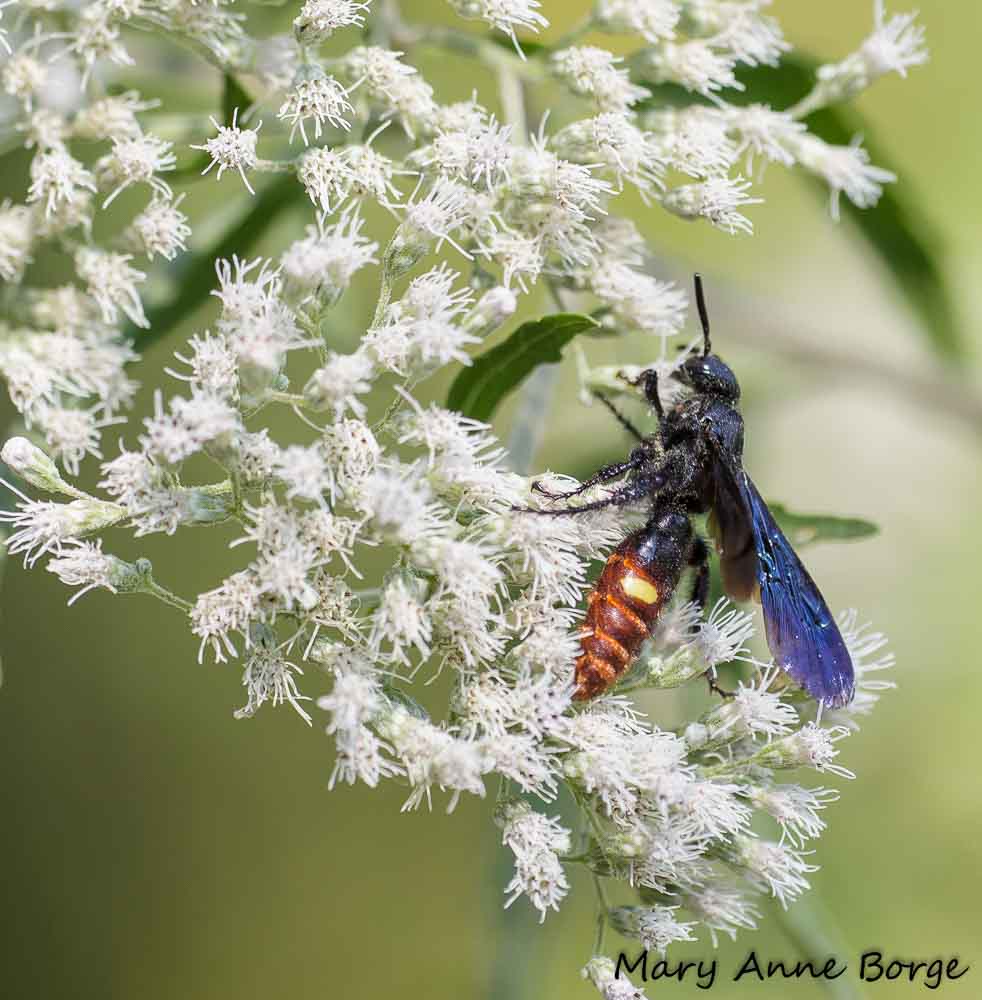
Red Chokeberry (Photinia Pyrifolia) leaves skeletonized by Japanese Beetles

Red Chokeberry (Photinia Pyrifolia) leaves skeletonized by Japanese Beetles

What can you do to combat these critters? Enlist the help of some predatory insects that are native to North America.

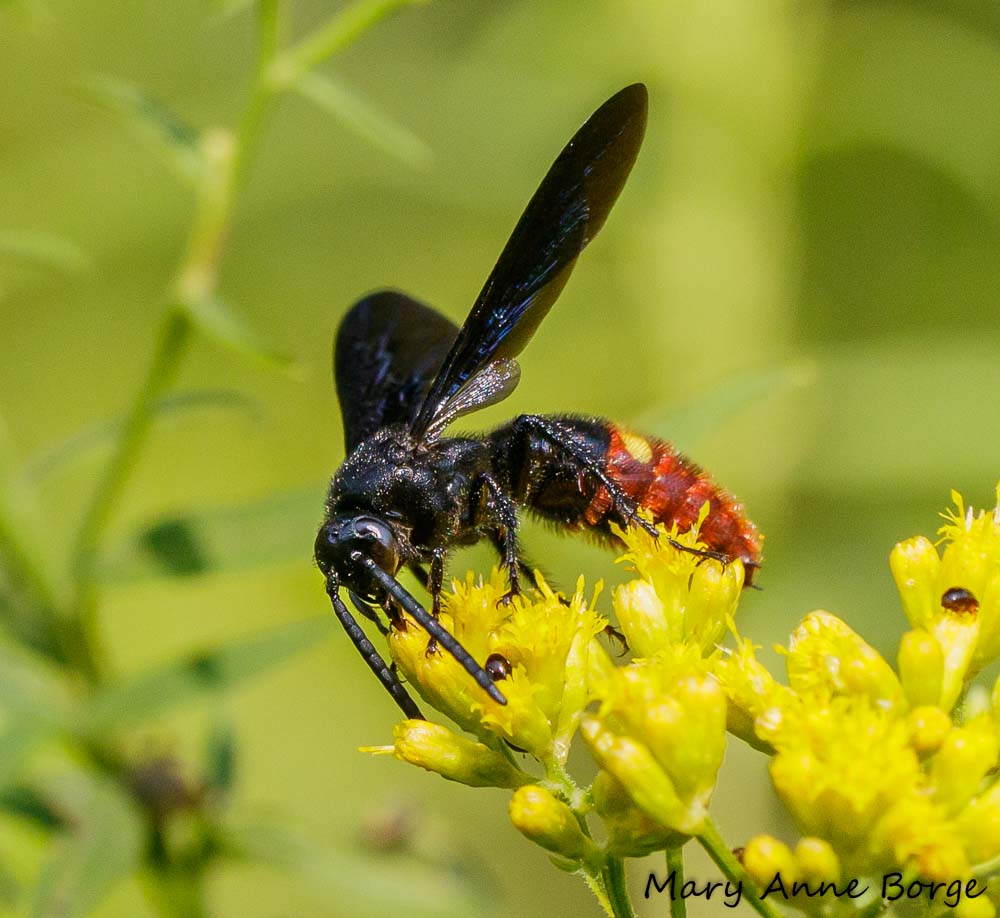
Scolia dubia on Boneset (Eupatorium species). Scolia dubia is known to prey on the larvae of Japanese Beetles.

Scolia dubia on Boneset (Eupatorium species). Scolia dubia is known to prey on the larvae of Japanese Beetles.

Scoliid wasps prey on the larvae of scarab beetles to feed their own larvae. Japanese Beetles are a species of scarab beetle. Female Japanese Beetles burrow a few inches into the ground to lay their eggs. Their larvae, often called grubs, develop underground and feed on the roots of plants. Female scoliid wasps find and enter the underground burrows of Japanese and other scarab beetles, and lay an egg on each grub. The wasp larva hatches and consumes the grub.  Two species of scoliid wasps are shown in this post, Scolia dubia and Scolia bicincta.

Scolia dubia on Grass-leaved Goldenrod (Euthamia graminifolia)

Scolia dubia on Grass-leaved Goldenrod (Euthamia graminifolia)

How can you entice these beneficial wasps to patrol your property? They can be bought with food. The adult wasps drink nectar from flowers, usually flowers that have short tubes, arranged in dense clusters that provide a landing platform for the wasp. Mountain mints and many aster family members fit this description. They seem especially partial to goldenrods and bonesets, in addition to the mountain mints.

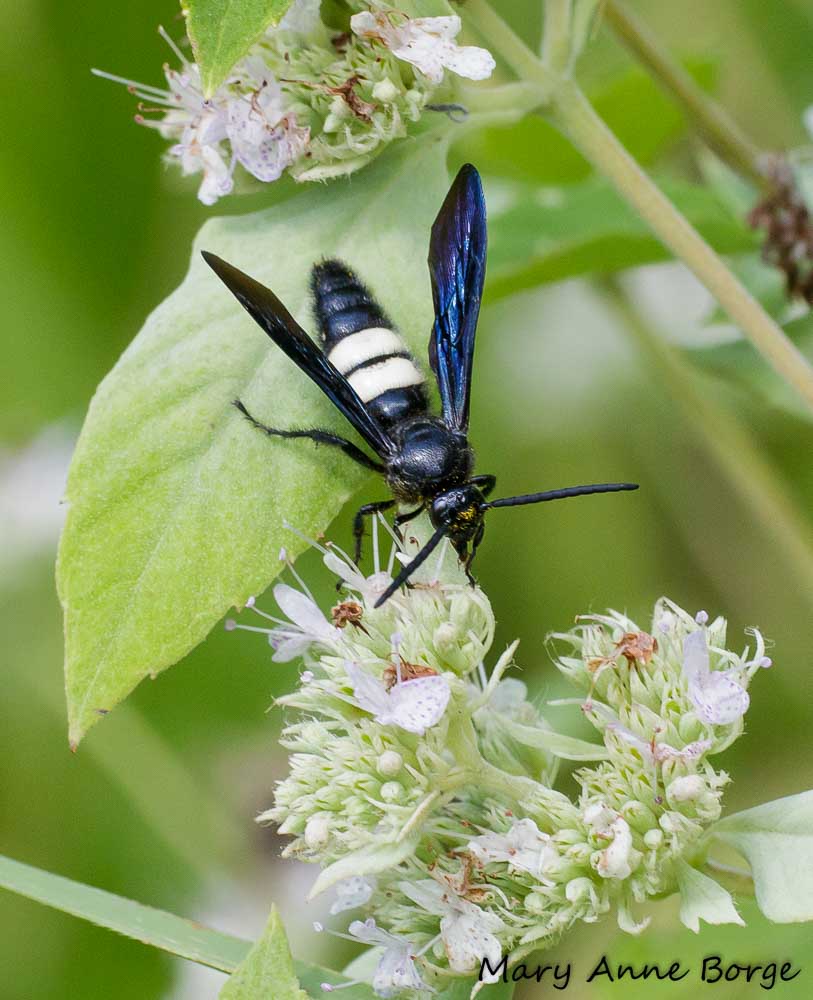
Scolia bicincta on Hoary Mountain Mint (Pycnanthemum incanum). Scolia bicincta may also be a Japanese Beetle predator.

Scolia bicincta on Hoary Mountain Mint (Pycnanthemum incanum). Scolia bicincta may also be a Japanese Beetle predator.

These beneficial wasps are hairy, helping to make them to be effective pollinators of the plants they visit for nectar. The pollen is likely to adhere to their hairy bodies and be carried to another plant for deposit.

Scolia bicincta on Hoary Mountain Mint (Pycnanthemum incanum).

Scolia bicincta on Hoary Mountain Mint (Pycnanthemum incanum).

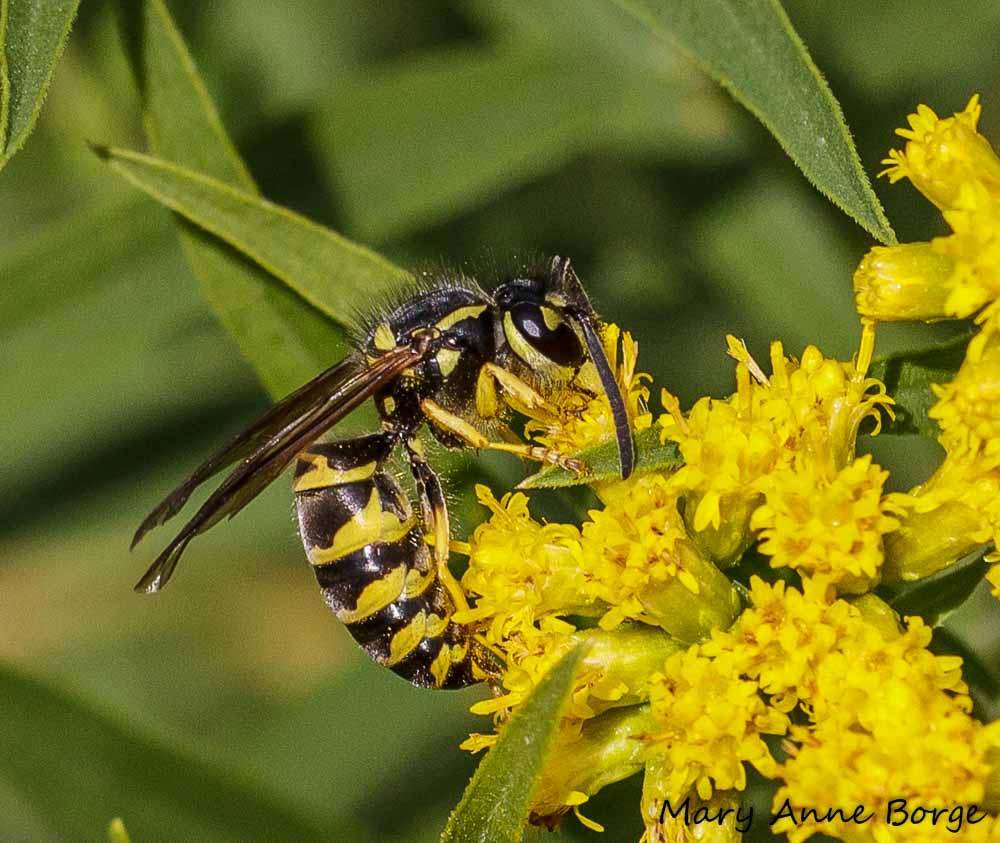
You may be worried about having wasps around, because of their reputation for stinging. While that reputation may be deserved for some social wasp species, like the Yellowjackets, it’s more a case of guilt by hasty generalization for solitary wasps like the scoliids. Social wasps live in colonies, which they aggressively defend from intruders. But scoliids, like many wasp species, are solitary. So there is no colony to defend. Stingers are really ovipositors (egg laying structures) that can be used for two purposes. Females may use the ovipositor to sting and subdue their prey, and also to lay their eggs. Male wasps and bees don’t lay eggs, so the don’t have ovipositors, and can’t sting. Solitary wasps like the scoliids are quite gentle, and would generally have no reason to sting a person.

Eastern Yellowjacket (Vespula maculifrons) on Goldenrod (Solidago species)

Eastern Yellowjacket (Vespula maculifrons) on Goldenrod (Solidago species)

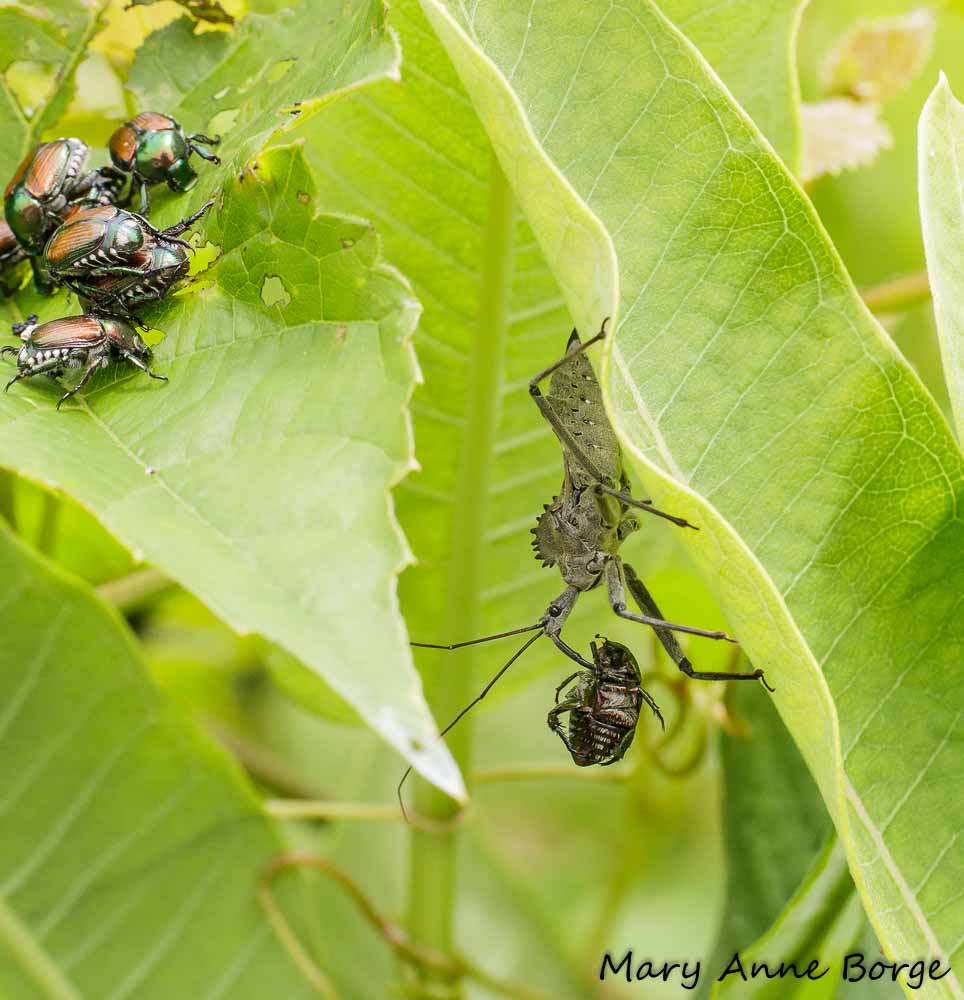
The Wheel Bug (Arilus cristatus) is a type of assassin bug that is happy to devour adult Japanese Beetles. Wheel Bugs hunt their prey by blending in with a plant. They wait for a hapless victim to come close enough to grab it with their somewhat hairy and sticky front legs, then stab it with their beak, injecting enzymes that paralyze and then liquefy their victim’s innards. The Wheel Bug then slurps up the resulting insect smoothie, with the victim’s exoskeleton acting as a to-go cup.

Wheel Bug (Arilus cristatus) preying on Japanese Beetle; more Japanese Beetles continue to eat in upper left.

Wheel Bug (Arilus cristatus) preying on Japanese Beetle; more Japanese Beetles continue to eat in upper left.

Japanese Beetle grubs (larvae) are especially fond of eating the roots of lawn grasses. As a result, lawns are the favored location for Japanese Beetles to excavate a burrow for their eggs. Replacing as much lawn as possible with a mix of herbaceous plants, shrubs and trees will minimize the habitat available to Japanese Beetles for reproduction. Reduced habitat means fewer Japanese Beetles.

Japanese Beetles (Popillia japonica)

Japanese Beetles (Popillia japonica)

What can you do to combat Japanese Beetles?  In order to attract beneficial insects like those shown here, be sure you have a variety of plants native to your area. Take away the Japanese Beetle’s preferred habitat by minimizing the size of your lawn. There will be a corresponding reduction in the number of Japanese Beetles you see.

Spicebush (Lindera benzoin) leaf skeletonized by Japanese Beetles

Spicebush (Lindera benzoin) leaf skeletonized by Japanese Beetles


Related posts

Mountain Mints are Pollinator Magnets!

Asters Yield a Treasure Trove

Fall Allergies? Don’t Blame Goldenrod!


Resources

Eaton, Eric R.; Kauffman, Ken. Kaufman Field Guide to Insects of North America. 2007.

USDA Japanese Beetles

Beneficial Insects in the Garden