Evening Primrose

By late February, the spent stems of many herbaceous plants are beginning to fall to the ground and break down, adding to the nutrients in the soil, or making nesting material available for birds and other animals. Evening Primrose (Oenothera biennis) is an exception, with stems still upright, and fruit capsules still dispersing seeds – via wind, or scattered on the ground near parent plants.  Evening Primrose is a biennial, a characteristic reflected in its scientific name, ‘biennis’.  This means that it typically lives only two years, the first as a ground-level rosette of leaves.  If it gathers enough energy, the second year of life it will bloom, develop fruits, and die.  Replacing the parent plant with offspring in the same location is a good evolutionary strategy for the plant.
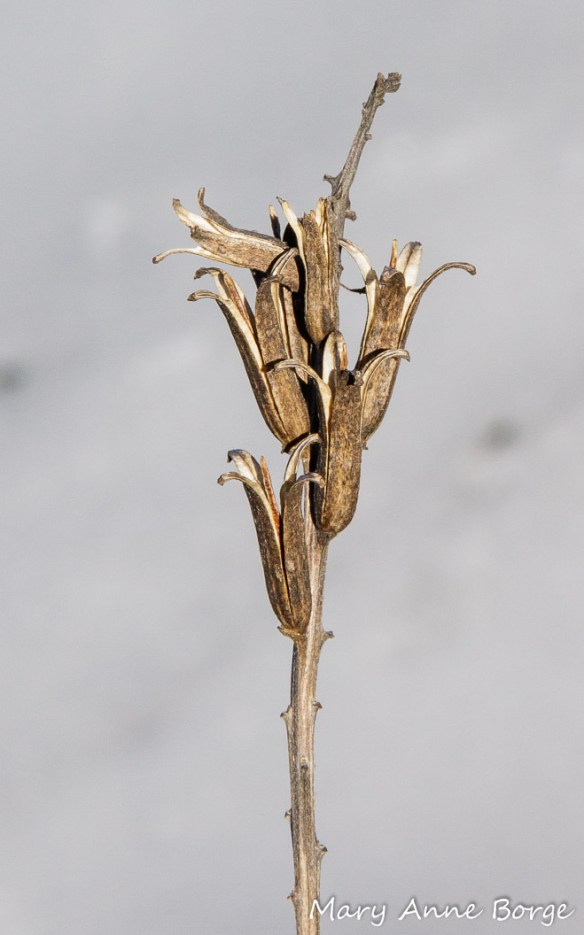
Evening Primrose fruit capsules

Evening Primrose (Oenothera biennis) fruit capsules

Not all seeds are destined to grow into another Evening Primrose plant, since some will become a snack for hungry birds. Evening Primrose can afford this loss.  There are plenty of seeds, with potentially hundreds produced by each fruit capsule.

Eastern Goldfinches eat Evening Primrose seeds.

Eastern Goldfinches eat Evening Primrose seeds.

Evening Primrose can be found throughout most of the United States (some Rocky Mountain states are an exception) and Canada, blooming from late June through much of the fall, often in disturbed areas.  ‘Evening’ in this plant’s name refers to the fact that the flowers open late in the day, usually blooming from dusk until the early morning hours, although they may stay open longer on cloudy or overcast days.
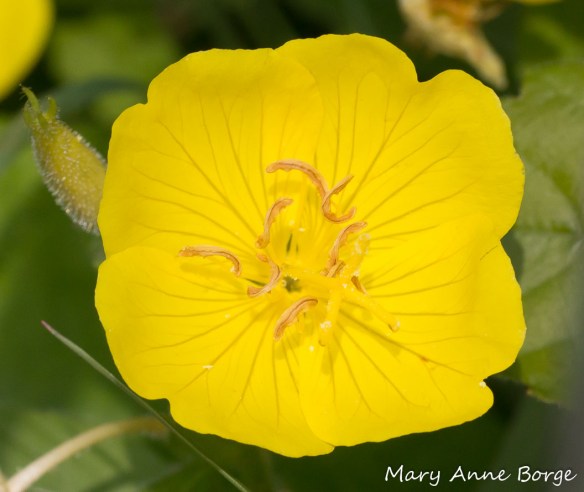
Evening Primrose in bloom

Evening Primrose in bloom

Plant species that bloom at night have generally evolved to partner for pollination services with an animal that is active at night, usually moths or bats. The flowers are fragrant, which is another characteristic of night blooming plants.  Many moth species can detect fragrances from long distances, and will follow the fragrance to find their nectar reward.  Moths, particularly some sphinx moths, are among Evening Primrose’s pollinators.

During those daylight hours that the flowers are open, butterflies may drink nectar from Evening Primrose flowers.

Little Glassywing drinking nectar from an Evening Primrose flower.

Little Glassywing drinking nectar from an Evening Primrose flower.

Many bee species also visit the flowers, including some that specialize on Evening Primrose and other related species.

Sweat Bee, probably Lasioglossum oenotherae, on Evening Primrose
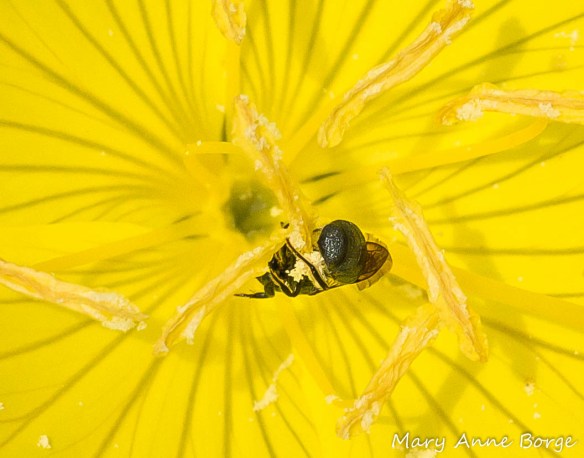
Sweat Bee, probably Lasioglossum oenotherae, on Evening Primrose

Sweat Bee, probably Lasioglossum oenotherae, harvesting pollen from Evening Primrose. These bees have evolved scopa that are efficient for handling Evening Primrose's stringy pollen.

Sweat Bee, probably Lasioglossum oenotherae, harvesting pollen from Evening Primrose. These bees have evolved scopa that are efficient for handling Evening Primrose’s stringy pollen.

Some of these specialists are able to fly in dim light during dusk and dawn, and even into the night when there is enough moonlight. In addition to the large compound eyes on each side of their faces, bees have ocelli, simple eyes at the top of their heads.  Ocelli help the bee in positioning and orientation, with the aid of light from the sun or even a full moon. These specialist bees are aided by larger ocelli than the typical bee, so they can function in low light.
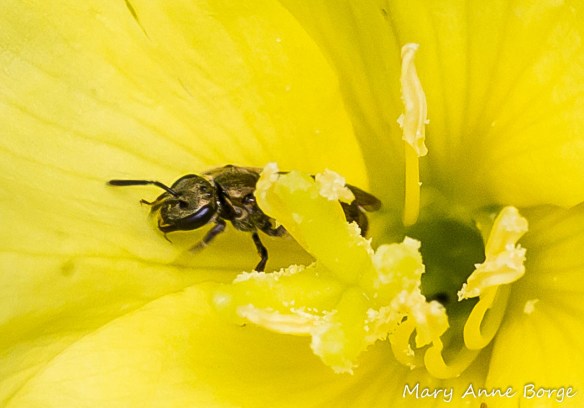
Sweat Bee, probably Lasioglossum oenotherae, on Evening Primrose.  These bees have evolved scopa that are efficient for handling Evening Primrose's stringy pollen.  Look for the ocelli (eyes) at the top of its head.  They look like  little dots.

Sweat Bee, probably Lasioglossum oenotherae, on Evening Primrose. These bees evolved scopa on their hind legs that are efficient for carrying Evening Primrose’s stringy pollen. Look for the ocelli (eyes) at the top of its head. They look like little dots.

Caterpillars of several moth species feed on the leaves or flowers of Evening Primrose.
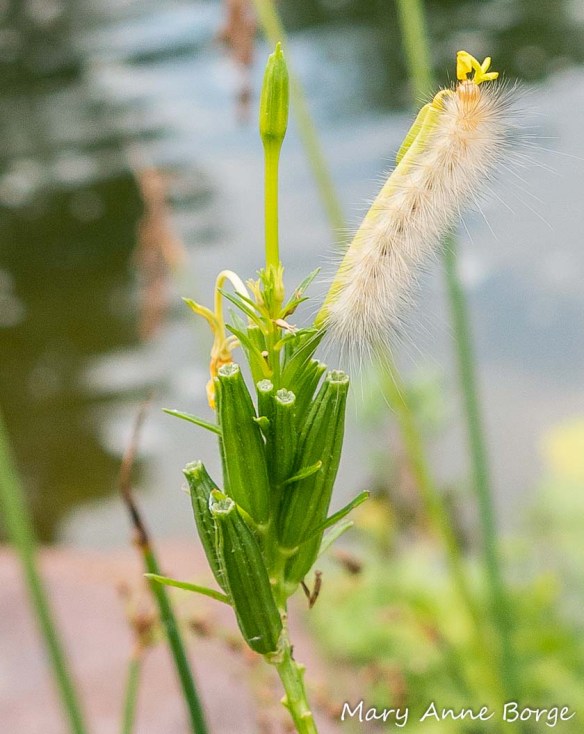
Yellow Bear (Virginian Tiger Moth) caterpillar on Evening Primrose

Yellow Bear (Virginian Tiger Moth) caterpillar on Evening Primrose

For human consumers, the young leaves, flowers, shoots and first year roots of Evening Primrose are edible, with the proper preparation. The leaves and roots are thought to have a peppery taste.   Evening Primrose is cultivated for its oil, which contains some essential fatty acids (Omega-6 fatty acid, linolenic acid and gamma-linolenic acid). Evening Primrose oil has been licensed in several countries for treatment of eczema and breast pain.  Native Americans used it to treat a broad range of ills.
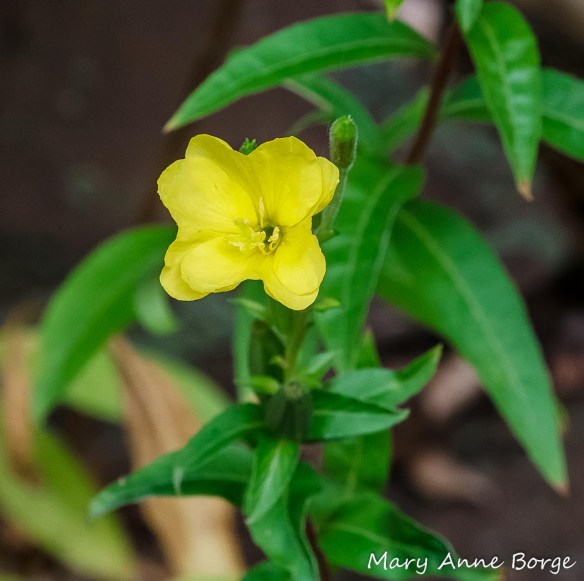
Evening Primrose (Oenothera biennis)

Evening Primrose (Oenothera biennis)

Look for Evening Primrose fruit capsules now,

Evening Primrose (Oenothera biennis) fruit capsules

Evening Primrose (Oenothera biennis) fruit capsules

and watch for new plants blooming at nearby locations this summer.

Evening Primrose (Oenothera biennis) in bloom

Evening Primrose (Oenothera biennis) in bloom


Resources

Foster, Steven; Duke, James A. A Field Guide to Medicinal Plants and Herbs of Eastern and Central North America.  2000.

Peterson, Lee Allen. A Field Guide to Edible Wild Plants of Eastern and Central North America. 1977.

Wagner, David L.; Caterpillars of Eastern North America, 2005.

Wilson, Joseph S.; Carril, Olivia Messinger. The Bees in Your Backyard. 2016.

Illinois Wildflowers

Discover Life

USDA Plant Database

Mayo Clinic

Coralberry – A Winter Standout

Some plants are at their showiest in winter. Coralberry (Symphoricarpos orbiculatus), also called Indian Currant, is one of them.

Coralberry (Symphoricarpos orbiculatus) fruit

Coralberry (Symphoricarpos orbiculatus) fruit

Named for its fruit, Coralberry’s bright clusters of purplish to coral colored berry-like drupes persist on this shrub’s otherwise bare branches throughout much of the winter.  Drupes are fleshy fruits with seeds inside in a stony enclosure, like a peach.

Some plants have evolved to have their fruit be at its most appealing to their target seed dispersers (usually birds and some mammals) in late winter, when there is less food available. This strategy works well for the plants, since there is less competition from other food sources. It works for the animals, too, since it means they will have something to eat throughout the cold weather, tiding them over until the growing season begins.  Robins and Bobwhites are among the birds that consume Coralberry’s fruit.

American Robin

American Robin

From a human perspective, Coralberry’s fruit is not really recommended for consumption. It contains saponins, which give the fleshy fruit a bitter taste, and in sufficient (really large) quantities can be toxic. Saponins have antimicrobial and antifungal properties, in addition to some other potential medicinal applications. They likely help to protect the plant from invaders. Some Native American tribes made a decoction from the inner bark or leaves to use as a wash for weak, sore or inflamed eyes.

Coralberry grows to a maximum height of about 4 – 6 feet (1 – 2 meters) with gracefully arching branches. Its opposite leaves are typical of the Honeysuckle (Caprifoliaceae) family, of which Coralberry is a member.

Coralberry (Symphoricarpos orbiculatus) branch in summer

Coralberry (Symphoricarpos orbiculatus) branch in summer

You could walk past this shrub while it’s in bloom and never notice the flowers. They are small, bell-shaped, whitish, and completely concealed from above by leaves.  Fortunately, the bees, wasps and flies that are their likely pollinators are able to find them.  It flowers in mid-summer, usually July in the mid-Atlantic region.

Coralberry (Symphoricarpos orbiculatus) flowers and buds

Coralberry (Symphoricarpos orbiculatus) flowers and buds

A day-flying moth, the Snowberry Clearwing (Hemaris diffinis), has evolved to rely primarily on Coralberry and other members of the Honeysuckle family as food for its caterpillars, although they can also consume Dogbane (Apocynum species) leaves.

Snowberry Clearwing Moth (Hemaris diffinis)

Snowberry Clearwing Moth (Hemaris diffinis)

Snowberry Clearwing (Hemaris diffinis) caterpillar eating Japanese Honeysuckle

Snowberry Clearwing (Hemaris diffinis) caterpillar eating Japanese Honeysuckle

Snowberry Clearwings are named for their dependence on Coralberry and the closely related Snowberries (Symphoricarpos species) as caterpillar food plants. The Snowberries’ clusters of fruit are white, giving them their name.

The Hummingbird Clearwing (Hemaris thysbe) moth, another day-flier, also uses Symphoricarpos species, possibly including Coralberries, as food for its caterpillars. The Hummingbird Clearwing’s caterpillars have a somewhat broader palate, including hawthorns, cherries, plums and some viburnums in addition to the Snowberries.

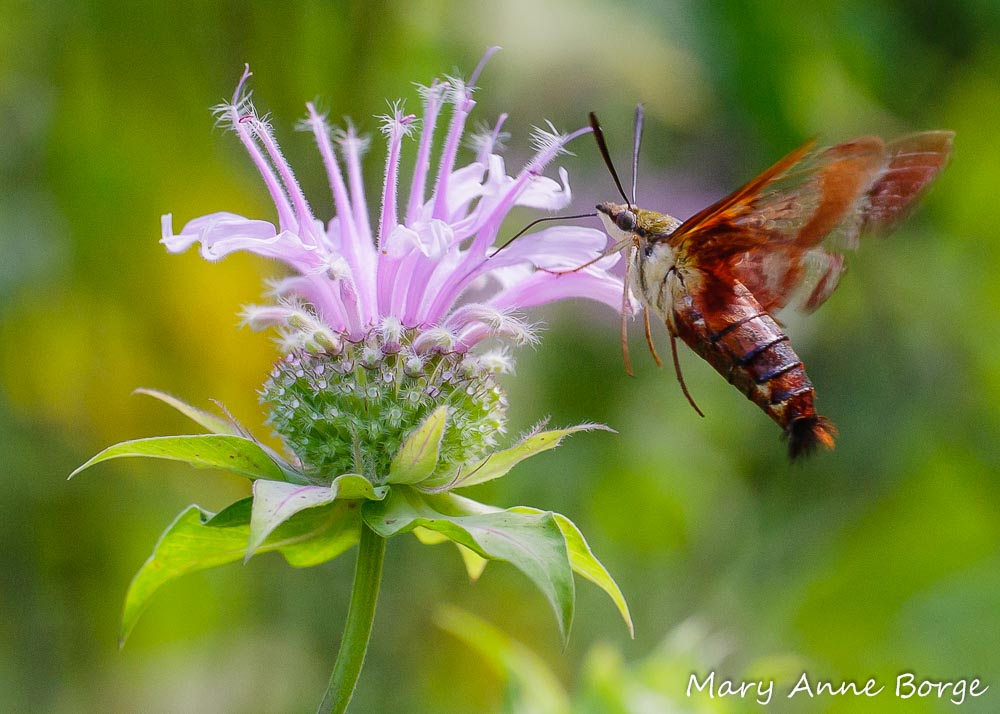
Hummingbird Clearwing Moth (Hemaris thysbe) drinking nectar from Wild Bergamot (Monarda fistulosa)

Hummingbird Clearwing Moth (Hemaris thysbe) drinking nectar from Wild Bergamot (Monarda fistulosa)

Coralberry tolerates a wide range of soils, and grows in light conditions from partial shade to full sun. It reproduces through seed dispersal, with the assistance of birds or other animals that eat its fruit, and also through stolons, above ground runners that root where they touch the soil.  Its native range is primarily the eastern two-thirds of the United States, and parts of Utah.  It has also been introduced in Ontario province.

Winter is the time of year that Coralberry demands your attention. Look for its bright fruit along woodland edges and in open meadows.

Coralberry (Symphoricarpos orbiculatus) fruit

Coralberry (Symphoricarpos orbiculatus) fruit


Resources

Beadle, David; Leckie, Seabrooke. Peterson Field Guide to Moths of Northeastern North America. 2012.

Hoffmann, David. Medical Herbalism.  2003.

Martin, Alexander C.; Zim, Herbert S.; Nelson, Arnold L. American Wildlife & Plants A Guide to Wildlife Food Habits.  1951.

Moerman, Daniel E. Native American Ethnobotany. 1998.

Rhoads, Ann Fowler; Block, Timothy A. The Plants of Pennsylvania.  2007

Wagner, David L.; Caterpillars of Eastern North America, 2005.

Illinois Wildflowers

Butterflies and Moths of North America

USDA Plant Database


December Bounty

What will birds and other animals do for food, now that we’re entering the long winter months?

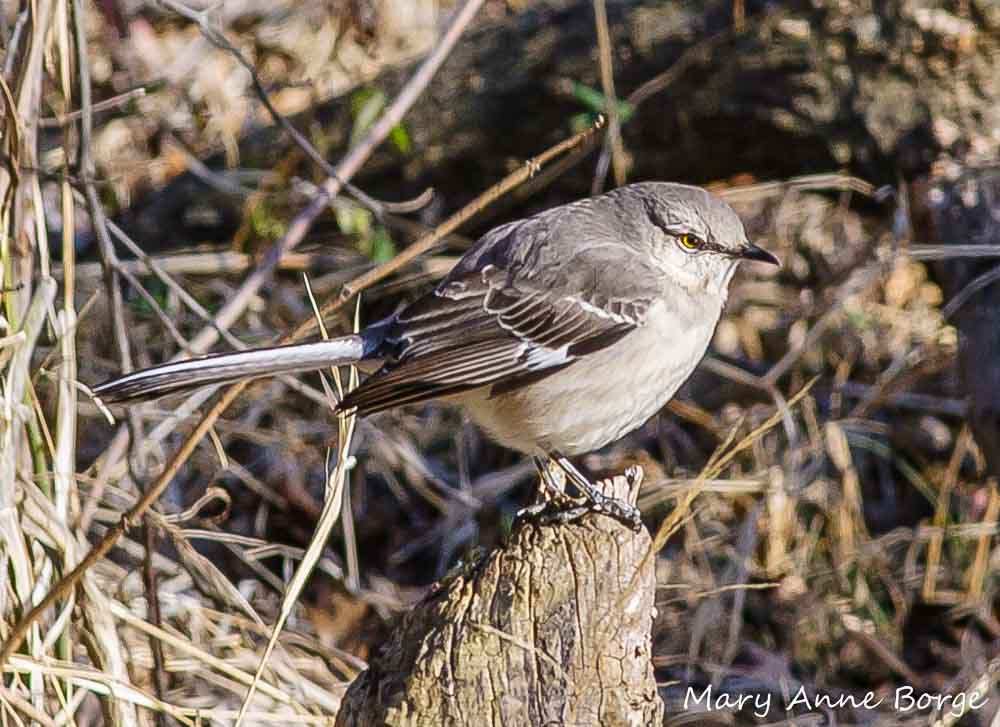
Northern Mockingbird

Northern Mockingbird

They’ll still be foraging for protein in the form of insects, but the supply will be much less plentiful than in the warmer months when many more insects are active. Ground feeders will forage among the fallen leaves, while others will investigate branches and probe bark crevices of trees and shrubs for a meal.

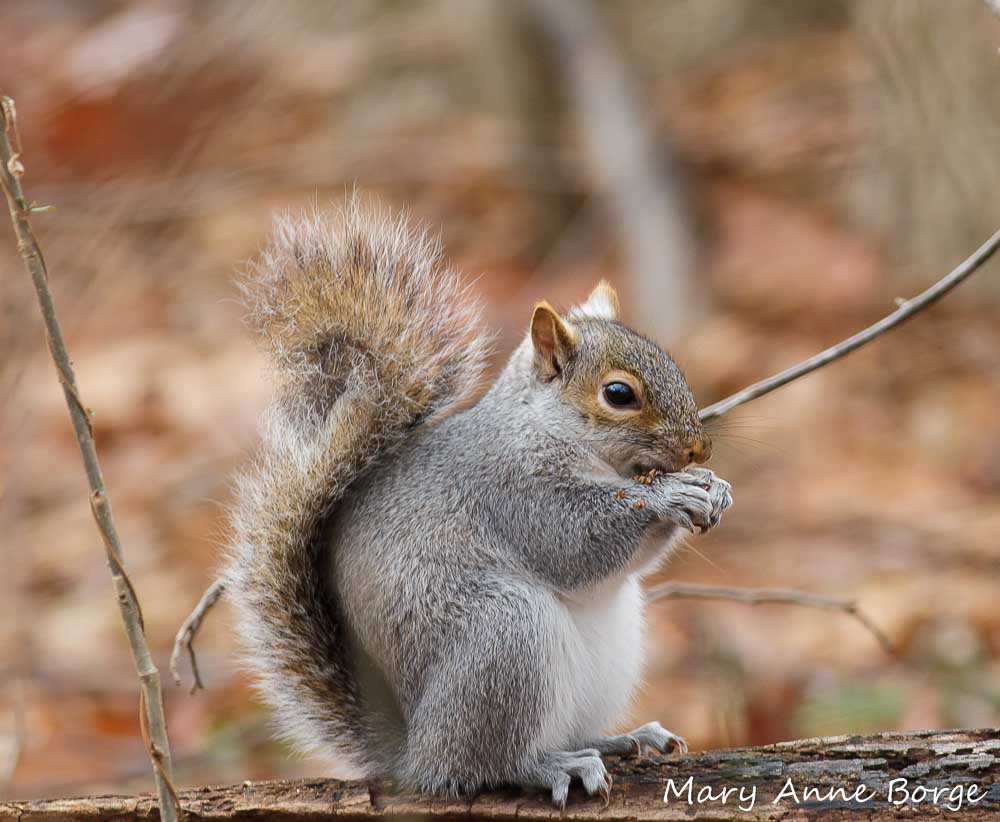
Gray Squirrel

Gray Squirrel

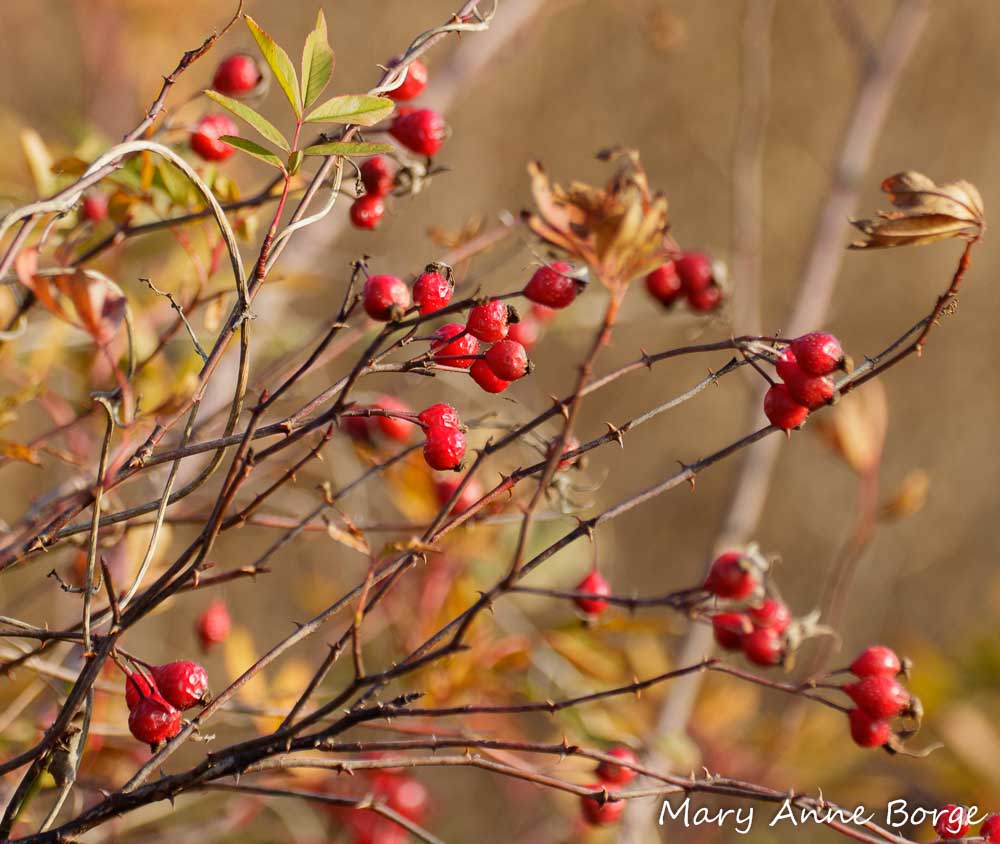
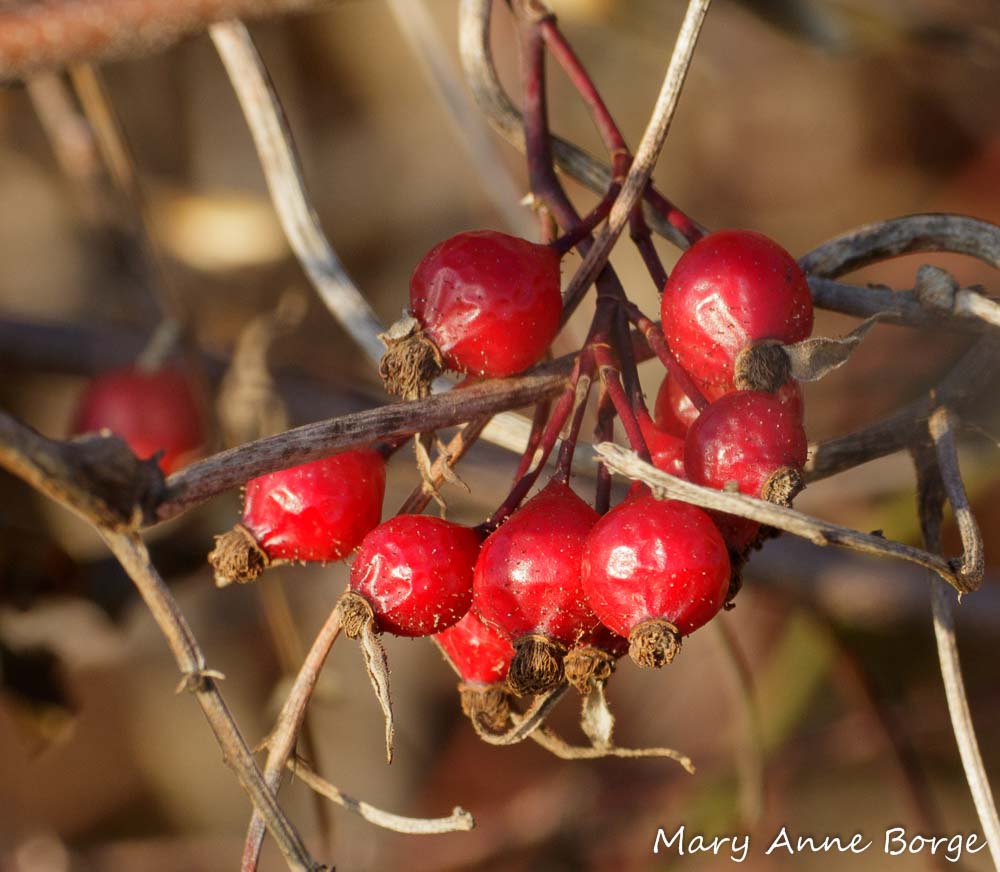
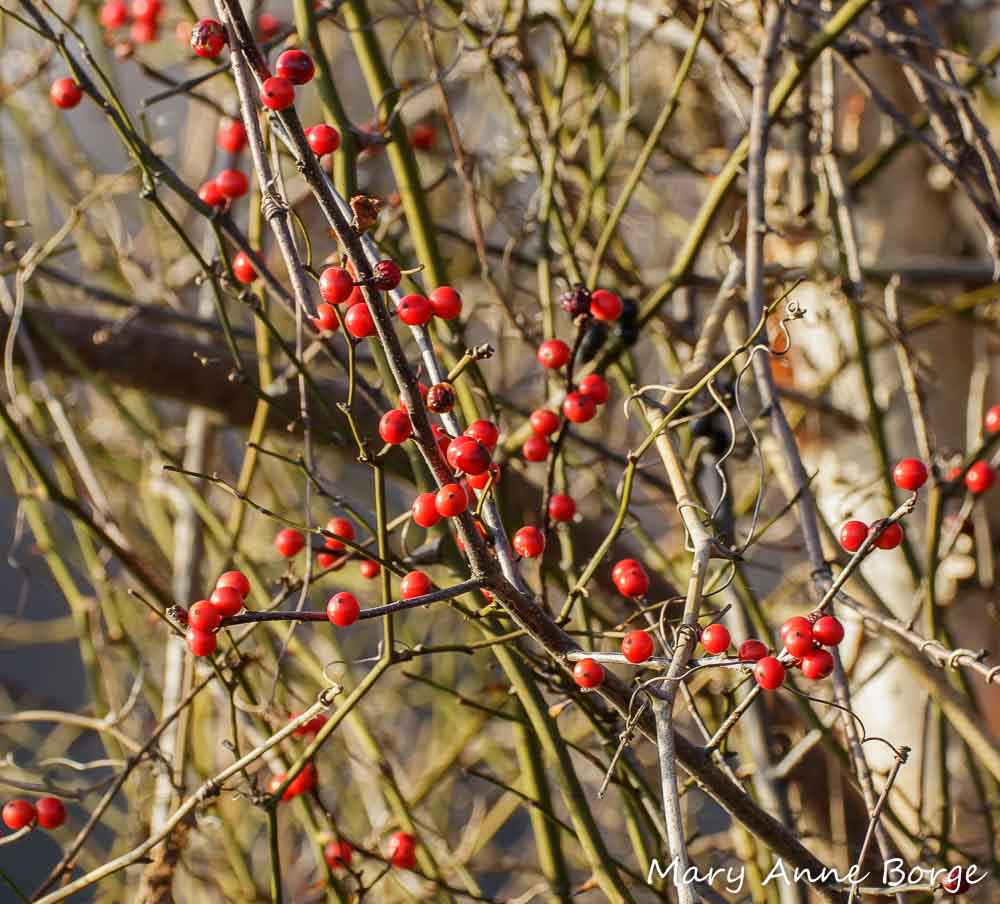
Ripe fruit will also help sustain resident winter animals. On a recent visit to Spring Lake at the Abbott Marshlands, from a single spot where the land meets the marsh, we found a bounty of food, including the hips of Swamp Rose (Rosa palustris),

Hips of Swamp Rose (Rosa palustris). Rose hips are rich in vitamin C. The hips of some rose species are used in teas.

Hips of Swamp Rose (Rosa palustris). Rose hips are rich in vitamin C. The hips of some rose species are used in teas.

Hips of Swamp Rose (Rosa palustris).

Hips of Swamp Rose (Rosa palustris).

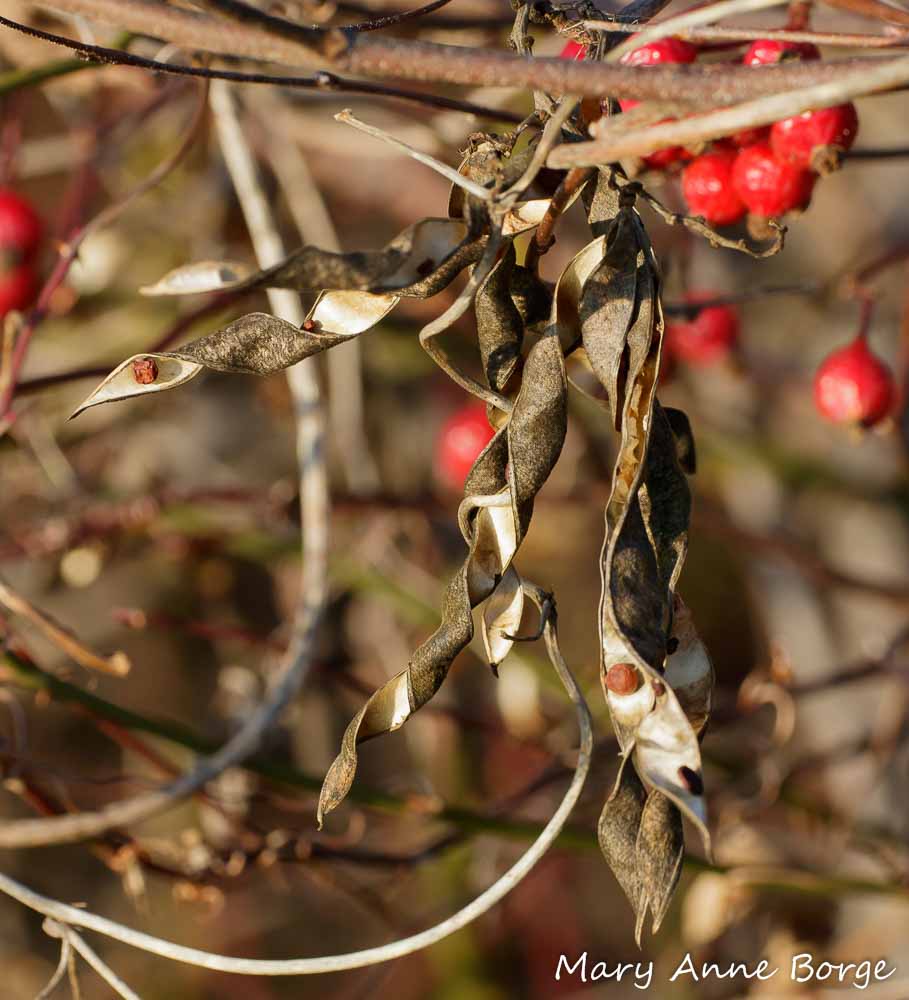
open legumes of Groundnut (Apios americana), a pea family member,

Open legumes of Groundnut (Apios americana)

Open legumes of Groundnut (Apios americana)

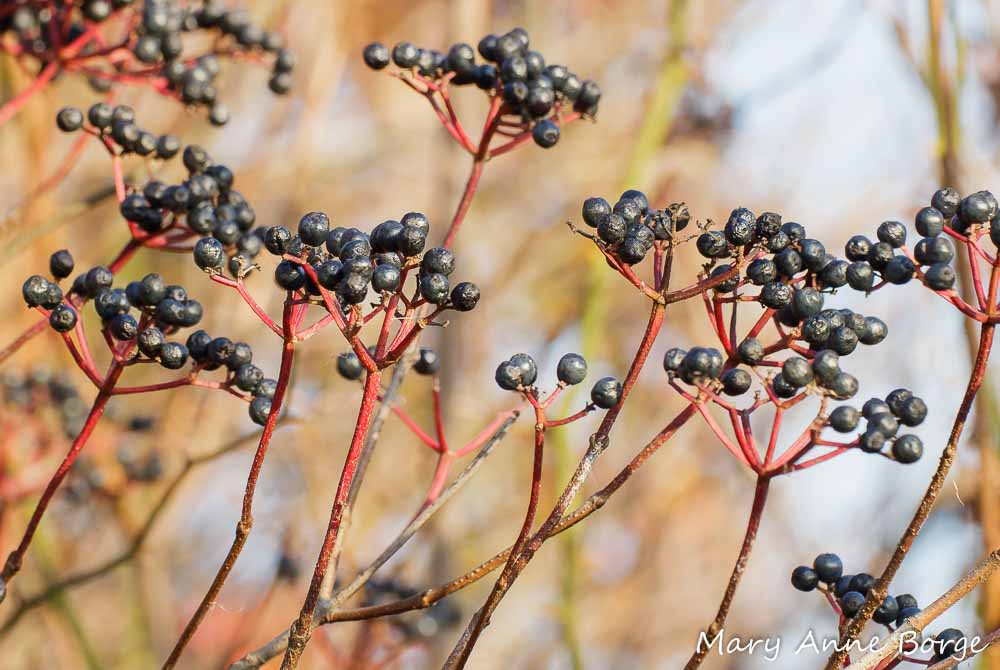
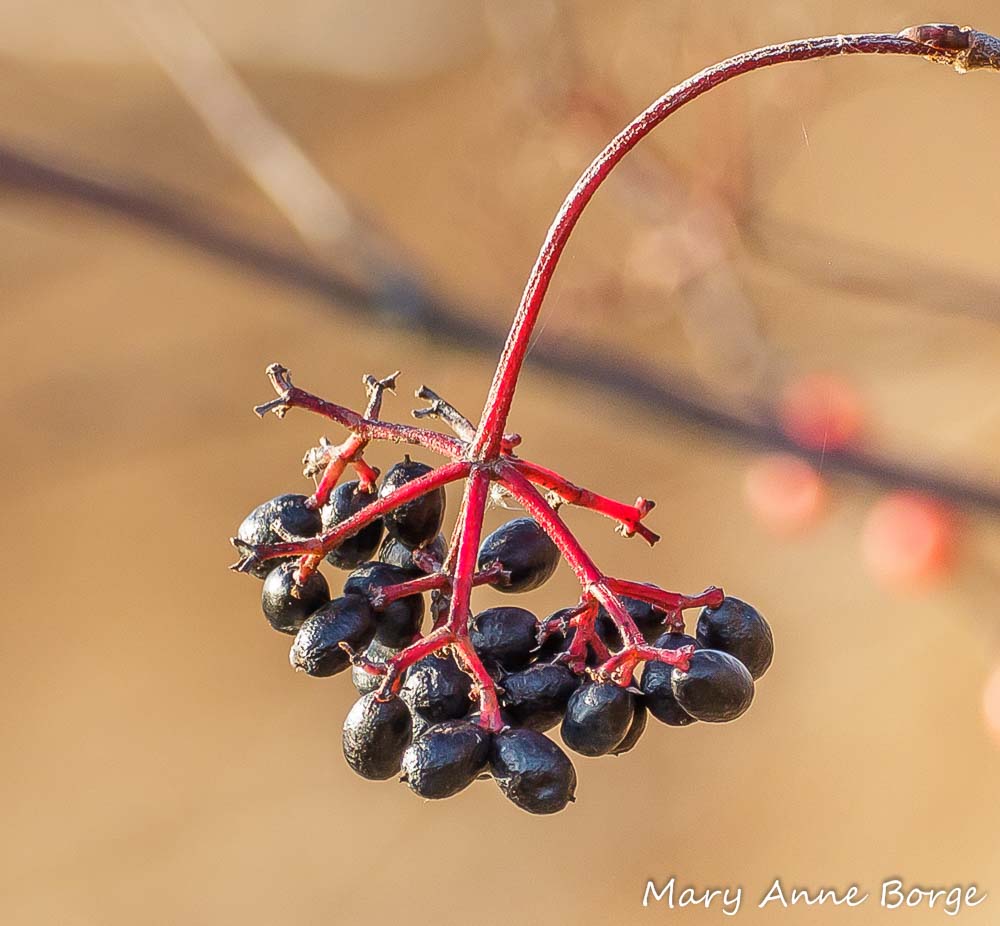
ripe drupes of Arrowwood Viburnum (Viburnum dentatum),

Arrowwood Viburnum (Viburnum dentatum) fruit

Arrowwood Viburnum (Viburnum dentatum) fruit

Arrowwood Viburnum (Viburnum dentatum) fruit, called drupes

Arrowwood Viburnum (Viburnum dentatum) fruit, called drupes

the berry-like drupes of Winterberry Holly (Ilex verticillata),

Winterberry Holly (Ilex verticillata) fruit

Winterberry Holly (Ilex verticillata) fruit

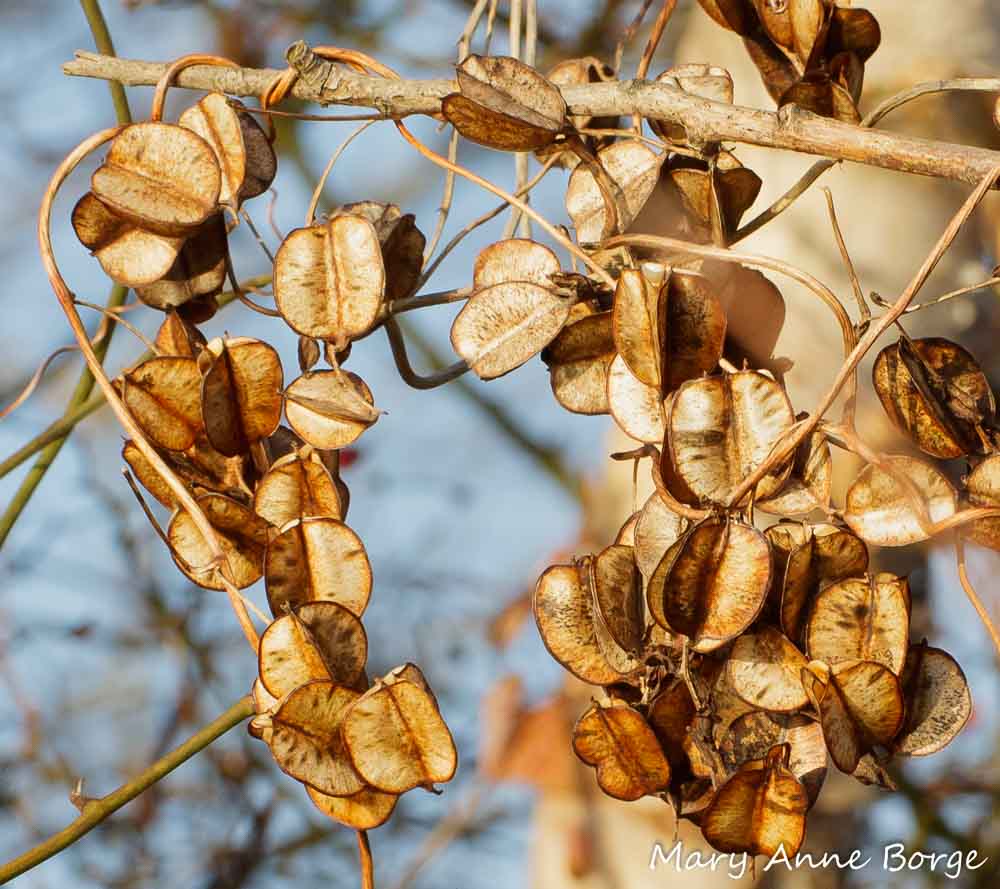
and a cascade of Wild Yam (Dioscorea villosa) fruit capsules.

Wild Yam (Dioscorea villosa) fruit capsules

Wild Yam (Dioscorea villosa) fruit capsules

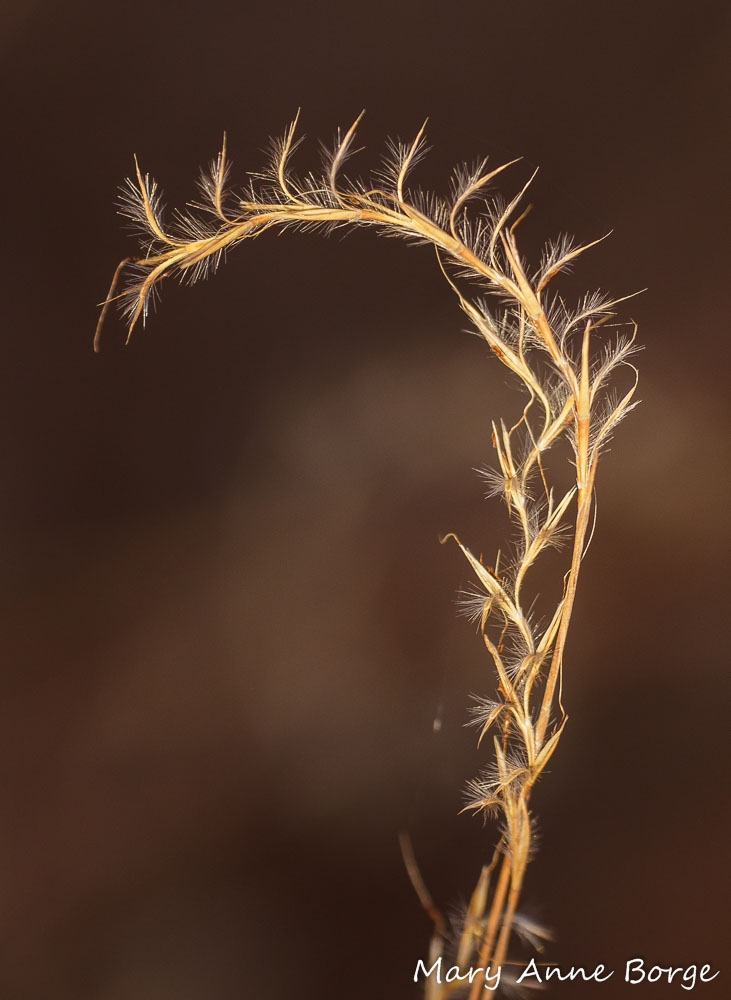
Little Bluestem (Schizachyrium scoparium) fluttered in the breeze a bit further down the trail.

Little Bluestem (Schizachyrium scoparium)

Little Bluestem (Schizachyrium scoparium)

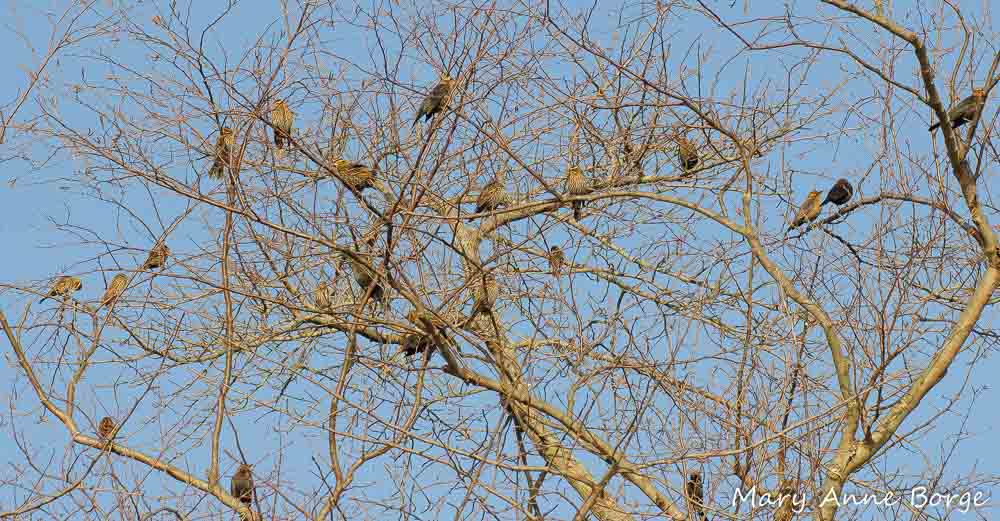
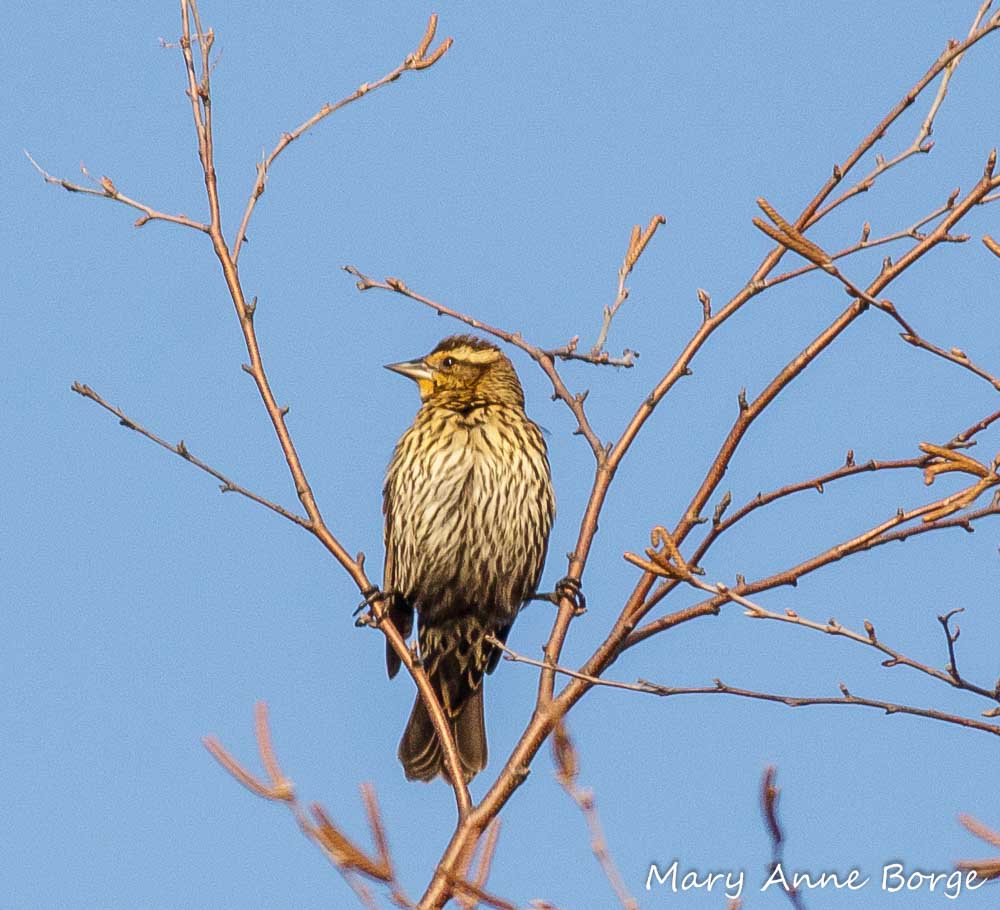
A mixed flock of migrating Red-winged and Rusty Blackbirds paused in the bare branches of trees overlooking the feast, to rest and refuel before continuing their journey.

Red-winged and Rusty Blackbirds

Red-winged and Rusty Blackbirds

Female Red-winged Blackbird

Female Red-winged Blackbird


Related Posts

A Winter Garden Can be a Wildlife Habitat

Late Winter Bird Food

Wild Yam

Resources

Rhoads, Ann Fowler; Block, Timothy A. The Plants of Pennsylvania.  2007


What Winter Reveals: Hoptrees

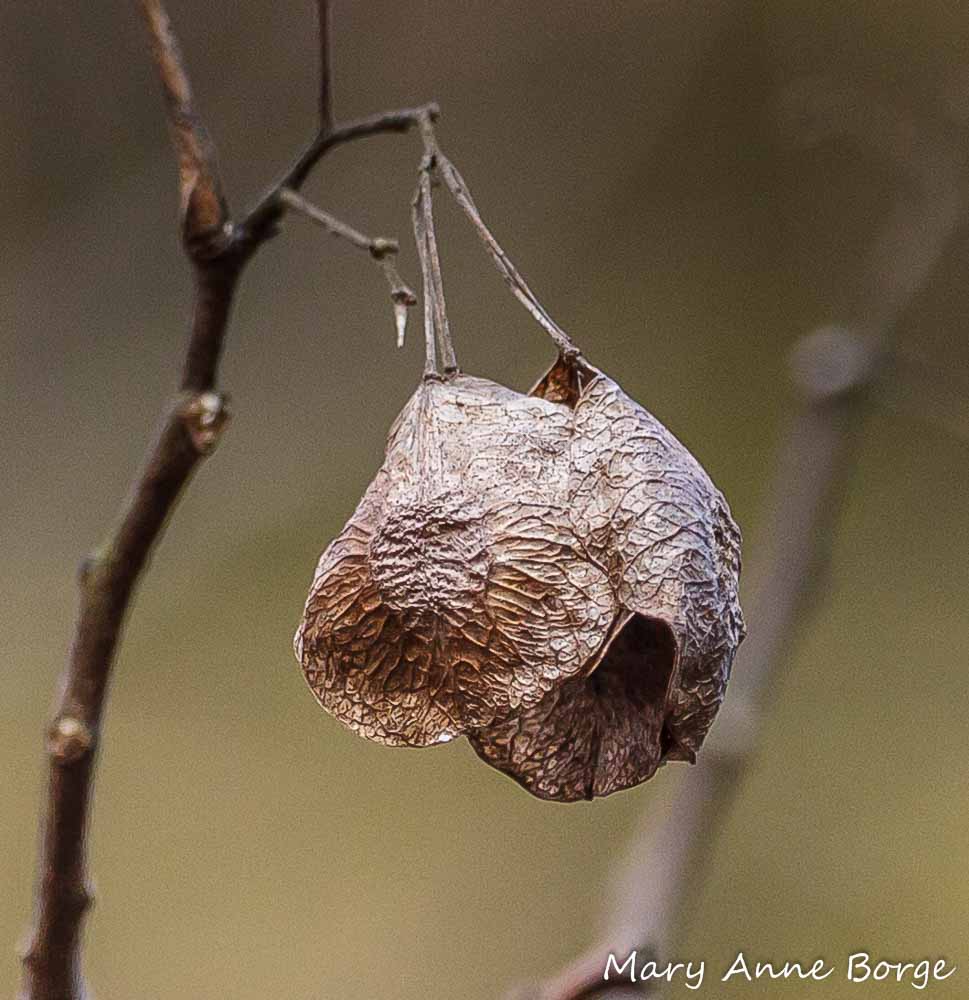
A winter walk reveals things that might be missed during the growing season, when leaves densely cover the trees.  The fruits of Hoptrees (Ptelea trifoliata), or Wafer-ash, are among those potentially hidden treasures, hanging in clusters like seasonal ornaments from otherwise bare branches throughout the late fall and winter months.  The fruits are samaras, a type of dry fruit (not fleshy like a berry), each with a single seed encased in a papery covering with a winged edge surrounding the seed, designed to help the wind disperse it.

Hoptree (Ptelea trifoliata) samaras in winter

Hoptree (Ptelea trifoliata) samaras in winter

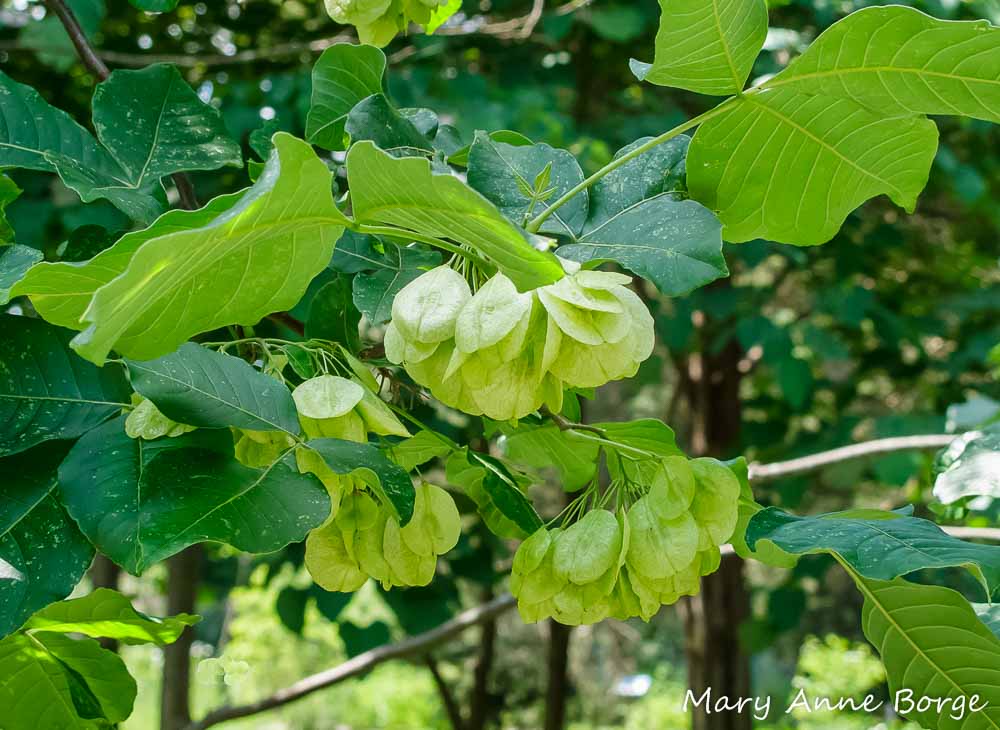
Many of the Hoptree’s aliases refer to these fruits.  The common name ‘Hoptree’ is a nod to the use of the fruits as a substitute for hops in brewing beer.  Another common name for this small tree or shrub is ‘Wafer-ash’, a name that refers to the wafer-like shape of the samaras.  Female ash trees also display clusters of fruits through late fall, although ash samaras are shaped like a paddle.  Hoptree samaras look more like the samaras of elm trees, a resemblance that is reflected in its genus, ptelea, which means elm tree.

Hoptree (Ptelea trifoliata) samaras in summer

Hoptree (Ptelea trifoliata) samaras in summer

In spite of these superficial similarities to elm and ash trees, Hoptrees are not related to either.  The Hoptree is a member of the Rue (Rutaceae) family, which also encompasses the genus citrus.  Because of this, the Rue family is often called the Citrus family.

Like many plant species, Hoptrees produce chemicals to protect themselves from being eaten by foraging animals.  All parts of the plant, including leaves, branches and twigs, have glands that release volatile oils when crushed, spraying a light mist on any critter naive enough to browse them, much like the mist produced when pealing a citrus fruit.  Fragrant and bitter chemical compounds are discharged, discouraging most potential consumers.  For good measure, this spray also contains chemicals that irritate the skin and make it photosensitive.  Altogether, it makes for an effective package of deterrents.  This is not a plant that is likely to be browsed by deer.

But there are a few insects that have evolved to be able to consume these leaves, synthesizing the deterrent chemical compounds in their bodies.  These sequestered chemicals help protect the insects from being eaten by other animals.  The Giant Swallowtail butterfly is one of the few insect species that uses this and other Rue family members as food plants for their caterpillars.

Attacks on Hoptrees by insects or fungi prompt the production of phytoalexins, which are additional protective compounds that have antimicrobial and antifungal properties.

Hoptrees produce many chemical compounds that have powerful medicinal uses.  Some Native American tribes, including the Menominees, used Hoptree constituents as a general health panacea or tonic.  The Hoptree, like ginseng, is one of a small number of plant species that are believed to be effective in improving the functioning of the human body as a whole.  Hoptrees have also been found to have properties that make other medicines more effective.

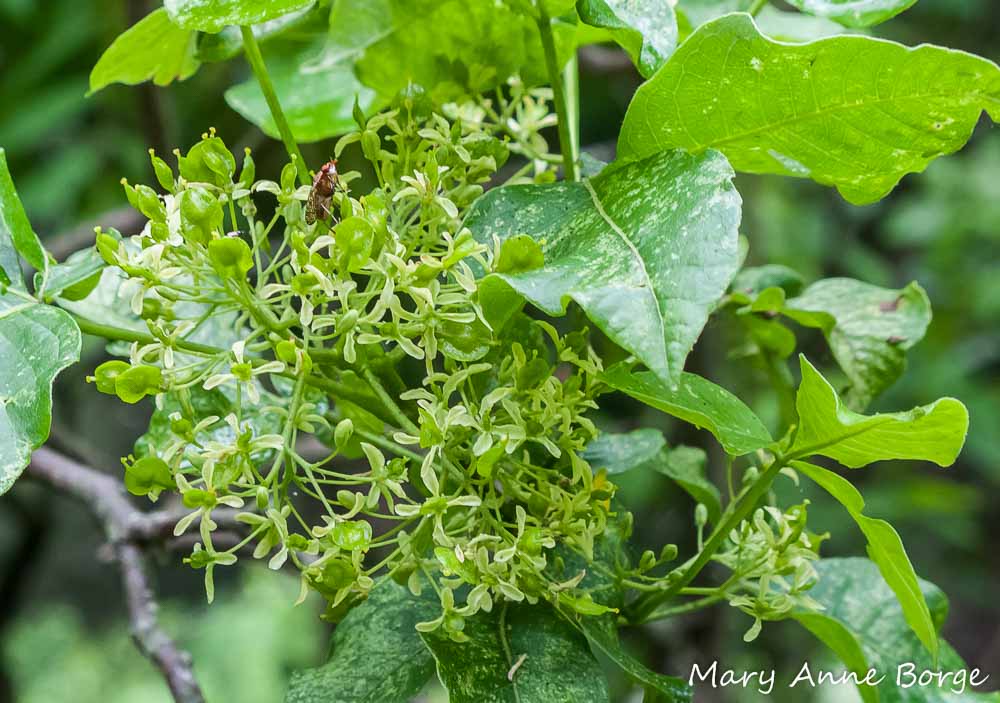
Hoptree flowers bloom in mid-spring, typically May.  The flowers are very fragrant, attracting many insect visitors to drink their nectar and potentially assist in pollination, including bees, butterflies, flies and wasps.

Hoptree (Ptelea trifoliata) flowers, being visited by a fly, a potential pollinator

Hoptree (Ptelea trifoliata) flowers, being visited by a fly, a potential pollinator

The northern border of the Hoptree’s native range includes Quebec and Ontario provinces, and Nebraska, Colorado and Utah.  The range extends from there to all states to the south from Arizona to Florida.  Hoptrees can be found in a variety of habitats, including open woods, thickets, stream banks and prairies.  They like well-drained soil, and prefer shade to part-shade, but can tolerate full sun.  They are endangered in New Jersey and New York, and threatened in Pennsylvania.

Resources

Beresford-Kroeger, Diana.  Arboretum America: A Philosophy of the Forest.  2003

Hoffmann, David.  Medical Herbalism.  2003.

Lewis, Walter H.; Elvin-Lewis, Memory P.F.  Medical Botany. 2003.

Illinois Wildflowers

Missouri Botanical Garden

USDA Plants Database


American Persimmon

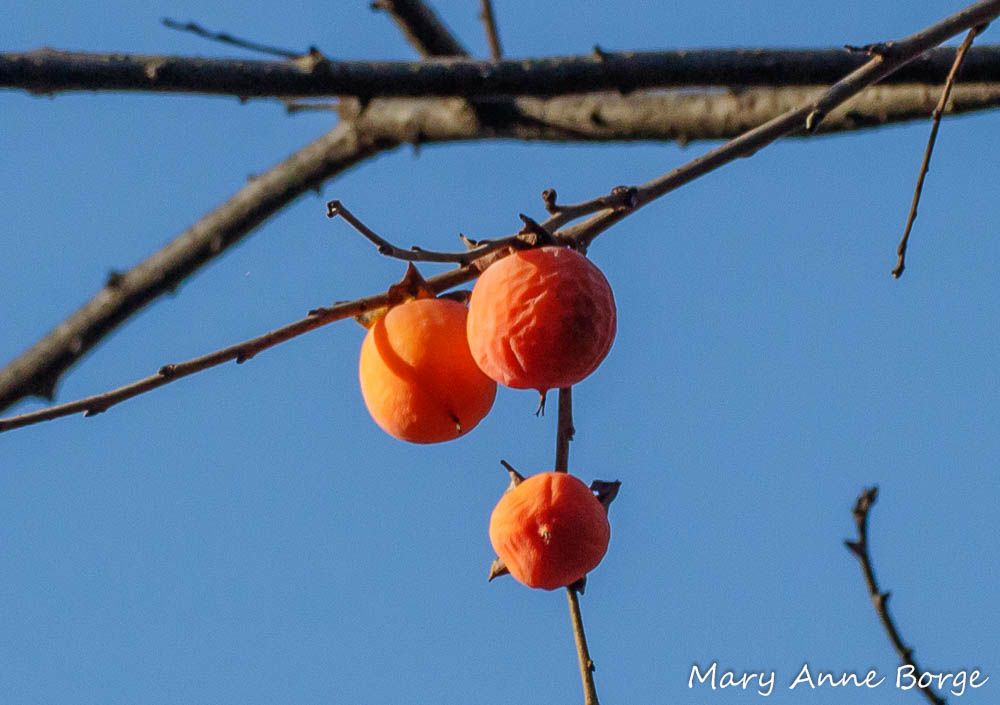
If you look up while wandering in the woods in the fall, you may see bright orange ball-like fruit hanging like holiday ornaments from the bare branches of some deciduous trees. They are probably persimmons, the fruit of the American Persimmon (Diospyros virginiana) tree.

American Persimmon (Diospyros virginiana) fruit, Sourland Mountains, West Amwell, NJ

American Persimmon (Diospyros virginiana) fruit, Sourland Mountains, West Amwell, NJ

Male and female flowers are on separate trees, blooming in spring or early summer. Only the female trees bear fruit.  The eye-catching fruits are edible, very tasty and mildly sweet when they are ripe.  They can also be used for baking.

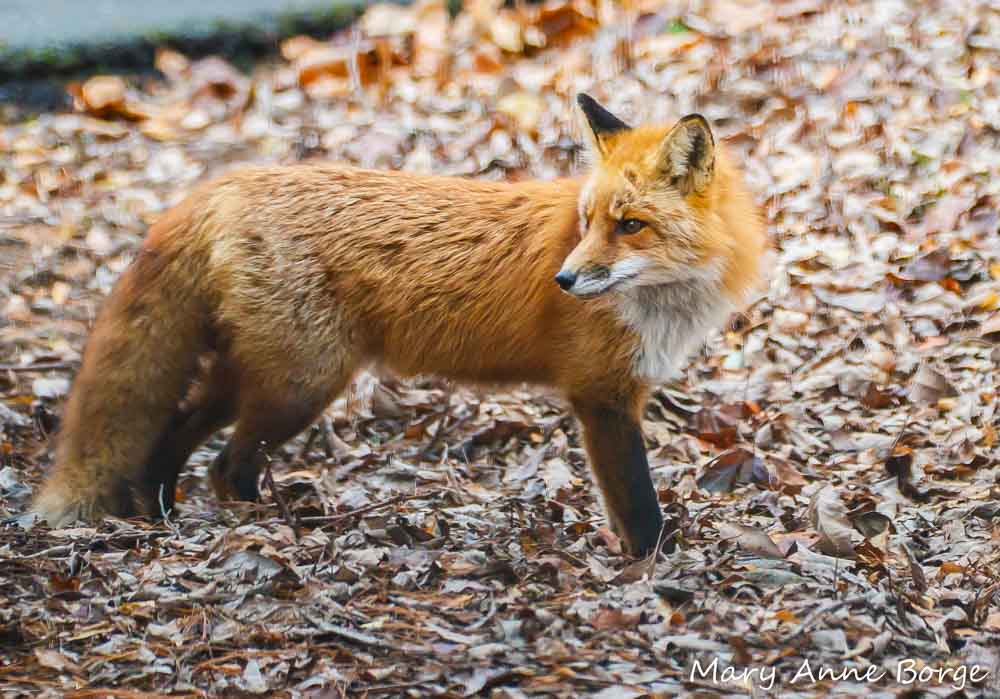
Humans are not the only ones who find these fruits desirable. Fox, raccoons, opossum, skunks and white-tailed deer are among the mammals that eat persimmons and help disperse their seeds.

Red Fox

Red Fox consume fruit, including persimmons

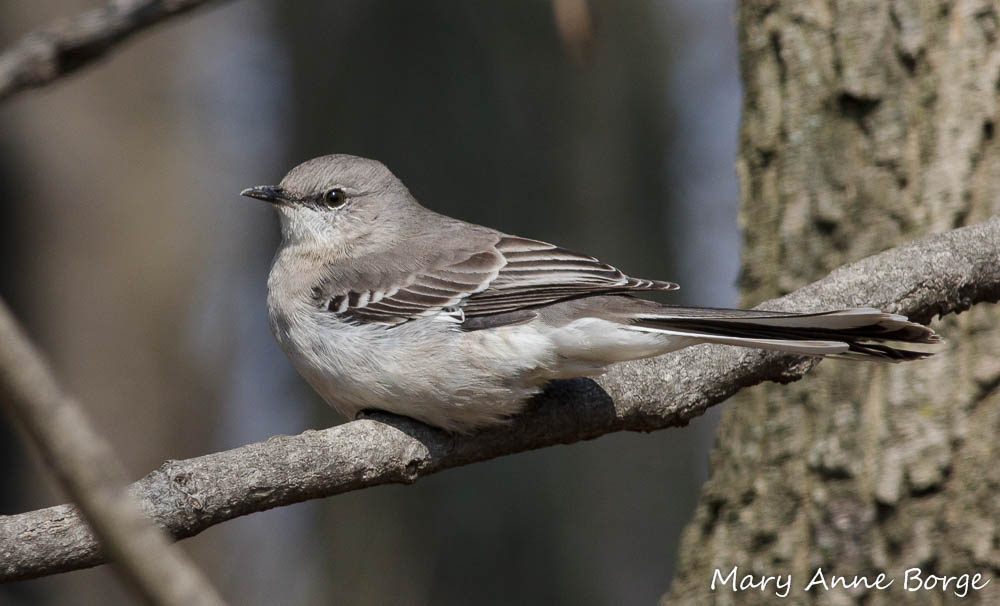
Birds that consume this tasty treat include Catbirds, American Robins, Cedar Waxwings, Mockingbirds,

Northern Mockingbird

Northern Mockingbird

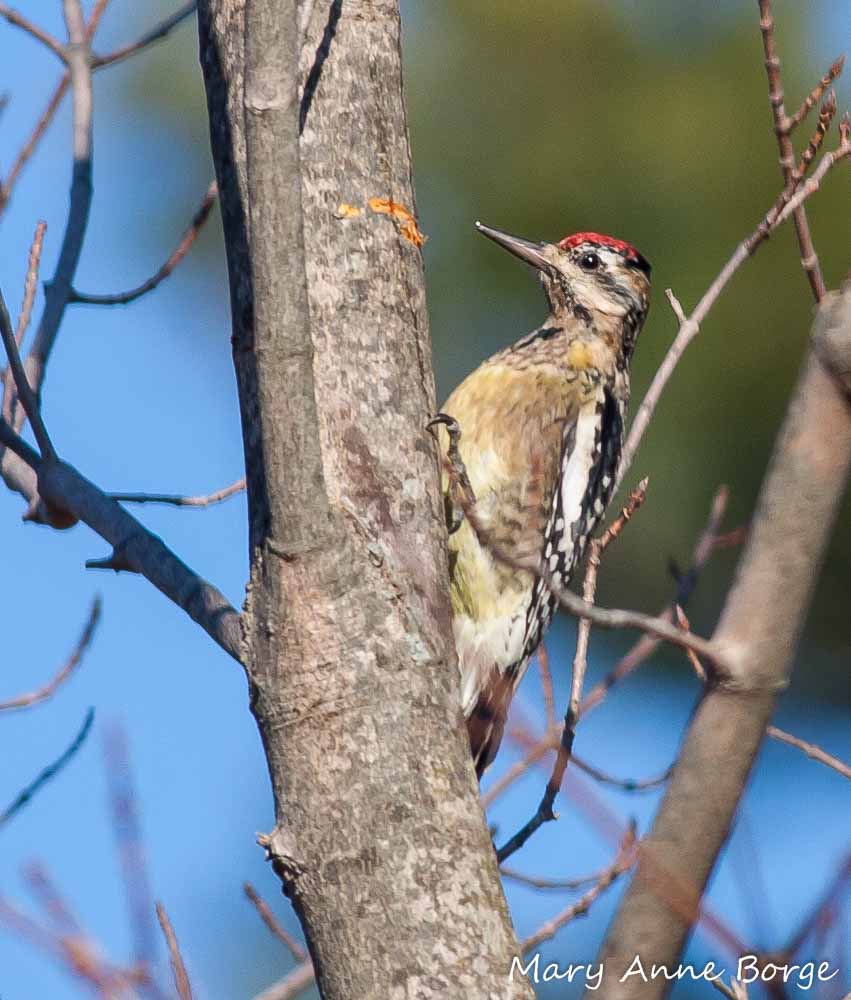
Yellow-bellied Sapsuckers,

Yellow-bellied Sapsucker

Yellow-bellied Sapsucker

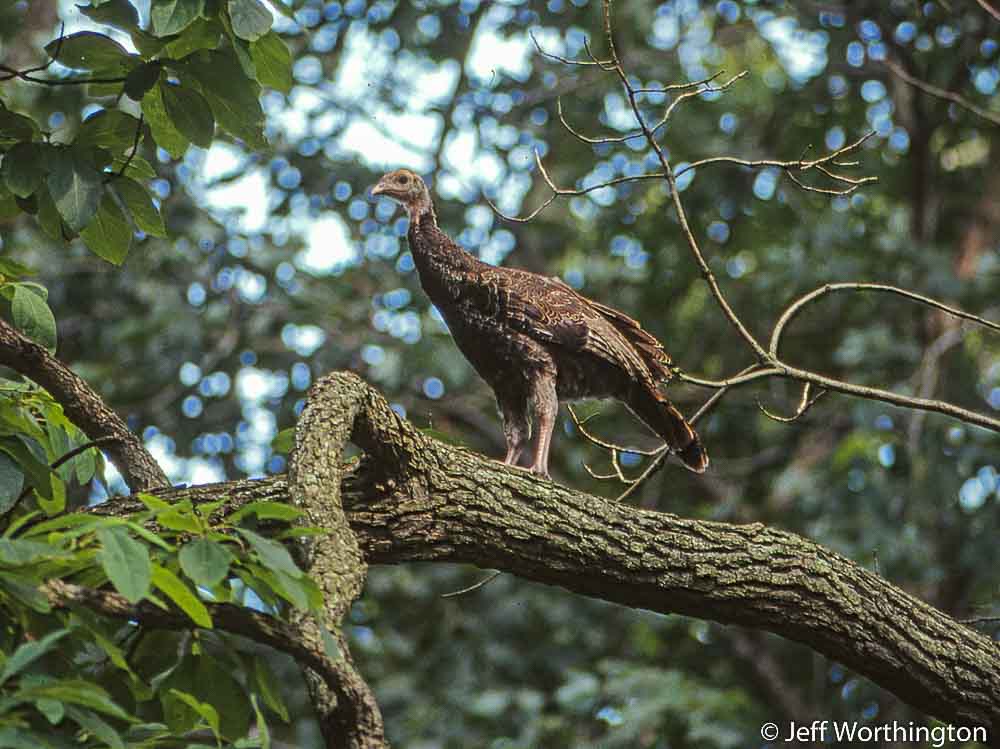
and the seasonally appropriate Wild Turkey.

Wild Turkey

Wild Turkey

The caterpillars of Luna, Regal and Hickory Horned Devil moths feed on American Persimmon leaves. The caterpillars may complete their metamorphosis to become moths, or they may become a meal for a hungry bird or other predator.

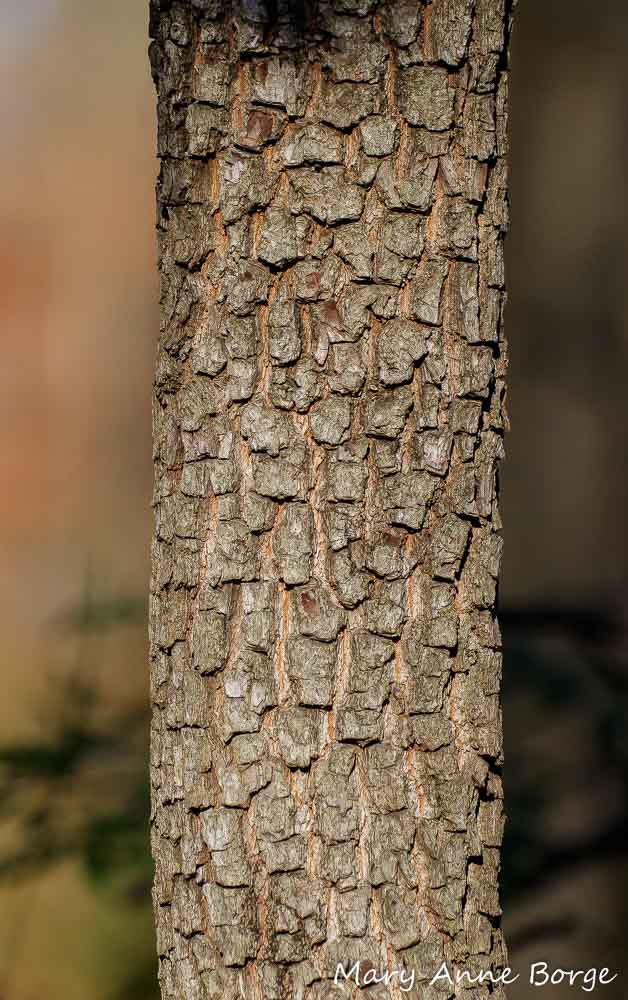
In addition to its fruit, American Persimmon can be recognized by its bark, which is deeply furrowed, forming rectangular blocks.

American Persimmon (Diospyros virginiana) bark, Sourland Mountains, West Amwell, NJ

American Persimmon (Diospyros virginiana) bark, Sourland Mountains, West Amwell, NJ

American Persimmon is a member of the ebony family, with wood that is very hard and shock resistant. It has been used to make textile shuttles, and for the heads of some golf clubs that are also called woods.

American Persimmon does well in a broad range of sites, from open fields to woodlands, in moist to dry soils, growing to a maximum height of about 50 feet (15 meters). Its native range is primarily the eastern and central United States, including parts of Massachusetts, Connecticut, and southern New York, as far west as Nebraska, and to the south from Texas to Florida.  It may also be found in parts of California and Utah.  Like Eastern Red Cedar (Juniperus virginiana), American Persimmon is considered a pioneer species, one that is an early colonizer in the transition from a field to a forest.  It may eventually be shaded out as a mature forest rises above it.

American Persimmon (Diospyros virginiana) fruit, Sourland Mountains, West Amwell, NJ

American Persimmon (Diospyros virginiana) fruit, Sourland Mountains, West Amwell, NJ


Resources

Martin, Alexander C.; Zim, Herbert S.; Nelson, Arnold L. American Wildlife & Plants A Guide to Wildlife Food Habits.  1951.

Wagner, David L.; Caterpillars of Eastern North America, 2005.

Illinois Wildflowers

USDA Forest Service

USDA NRCS Database

USDA NRCS Plant Guide