Purple Giant Hyssop

Eastern Tiger Swallowtail with Bumble Bee on Purple Giant Hyssop

Pictured here are an Eastern Tiger Swallowtail and a Bumble Bee, dining together amicably at Purple Giant Hyssop (Agastache scrophulariifolia) flowers.  This graceful plant is quite an attraction to butterflies and other beneficial pollinators, including many species of bees.  They may be seen on a single flower spike drinking contentedly.

Ruby-throated Hummingbirds may also sip nectar from the tiny purple tubular flowers.  Although the individual flowers are tiny, they can still accommodate this thirsty, industrious little bird.

Generally blooming from late July or early August through September, like so many other plants this year Purple Giant Hyssop started blooming many weeks earlier than normal, encouraged by the unusually warm temperatures.  It started blooming in June, and shows no sign of stopping.

Reaching to a height of two to four feet, Purple Giant Hyssop can tolerate part shade to full sun, and prefers a moist soil.  Characteristic of the mint family, this plant has a square stem, and opposite leaves that are fragrant when crushed.

Tiny flowers mass in showy spikes five to six inches long, adorning the candelabra-like plant.  As with other mint family members, blooming takes place out over a long period, since the individual flowers on each spike don’t all open at once.  The flowers open gradually over a period of several weeks, maximizing the plant’s chances of successful pollination, with the assistance of its insect partners.  This long bloom period is good for the pollinators, too, since it offers a continuing supply of food.  Individual flowers on the spike open to a tasteful shade of purple when in bloom, and provide a softer background color when the flower is spent.

If the dry flower spikes are left standing in the garden after the bloom period is finished, you may find that you have an unexpected bonus: a source of food for birds.  Local Chickadees and Goldfinches may seek out the seeds that result from flowers pollinated by the summer visits of butterflies and bees.  Left in the garden, the flower heads will last through the winter, retaining their shape and form.  Purple Giant Hyssop will readily reproduce from seed, so if you prefer that it not spread, deadhead the spent flowers before they produce and release their seeds.

If pale yellow is more your color, there is a close relative, Yellow Giant Hyssop (Agastache nepetoides), with similar characteristics, but pale yellow flowers.

Both Purple and Yellow Giant Hyssop are rated as imperiled species in New Jersey because of their rarity, primarily due to habitat destruction.

Purple Giant Hyssop is easy to grow, and those fragrant leaves make it deer resistant.  It is native in the eastern United States from New Hampshire to Georgia, and as far north and west as Ontario province, Minnesota and North Dakota, and south to Kansas, so it has adapted to the growing conditions in this broad area.

Include this plant in your garden, and enjoy the butterflies, birds and bees that visit.

Pipevine Swallowtail Butterflies and Their Host, Dutchman’s Pipevine

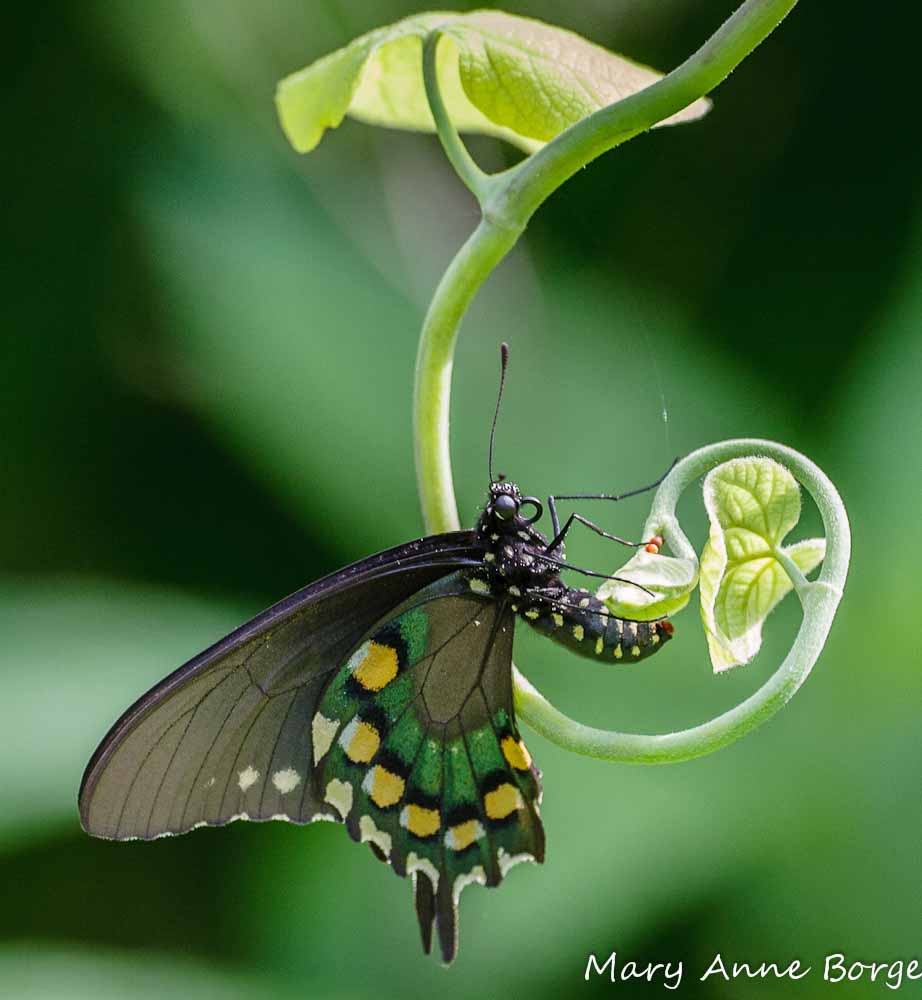
Late one afternoon a pair of dazzling creatures caught my eye as I walked toward my car in the parking lot at Bowman’s Hill Wildflower Preserve.  They were Pipevine Swallowtail butterflies, a male and a female, flitting about in the neighborhood of a very large Dutchman’s Pipevine (Aristolochia macrophylla), the plant that gives them their name.

As I watched, the female occasionally landed on the Dutchman’s Pipevine, staying in one spot for a few moments, with her lower abdomen curved slightly to touch the Pipevine leaves or stems.  She was laying eggs!  In the photo below, two roundish orange eggs are visible on the stem of the vine, next to her right front leg.  If you look carefully at the tip of her abdomen, you can see a spot of orange – she’s just about to lay another.

Pipevine Swallowtail Butterfly laying eggs on Dutchman’s Pipevine

Some butterflies have evolved a survival strategy that enables their caterpillars to feed on a wide variety of plants, but others, like the Pipevine Swallowtail, have chosen to specialize on a small number of plants that give them a particular advantage.  To protect itself from being eaten, Dutchman’s Pipevine has evolved with chemicals that are at minimum distasteful to those who would eat it, and if a sufficient amount is ingested, they are toxic.  Pipevine Swallowtail caterpillars are among the few creatures who are able to process these chemicals without harm to themselves, then store them in their bodies in such a way that they are toxic to their potential predators.  This chemical protection even survives metamorphosis and extends to the adult butterfly.  It is so effective that other butterflies mimic the appearance of the Pipevine Swallowtail, since this is often enough to warn off predators.

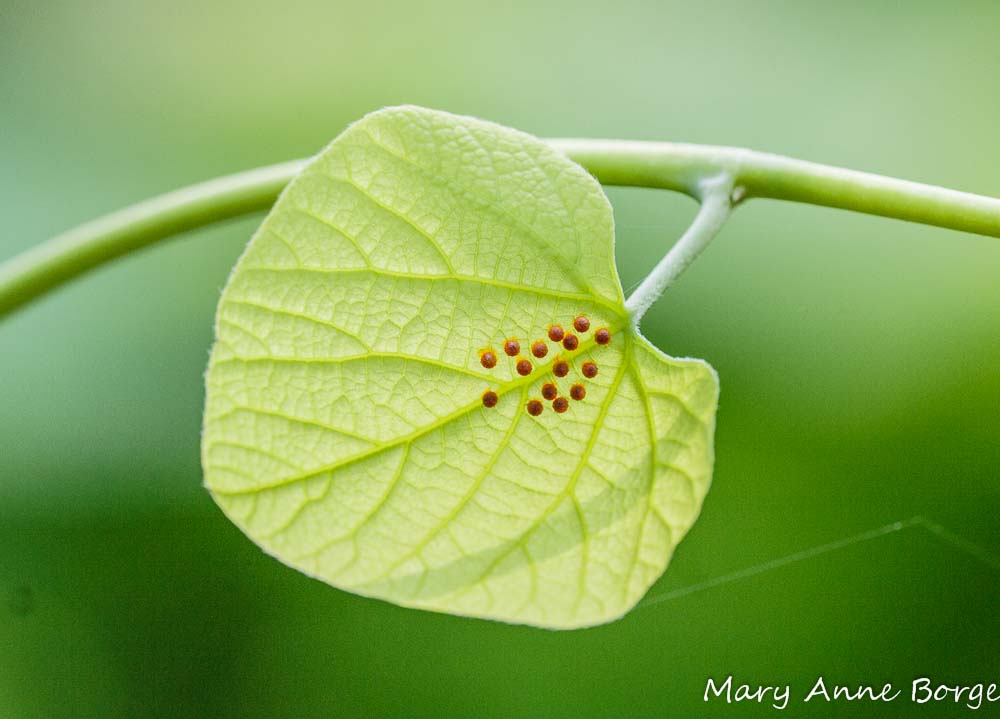
Pipevine Swallowtails lay their eggs in small clusters of usually less than twenty, often on young leaves or stems of Pipevine plants, members of the genus Aristolochia.  In the mid-Atlantic, the only species that Pipevine Swallowtail caterpillars can eat are Dutchman’s Pipevine and Virginia Snakeroot.  In the southwestern part of its range, there are other native Pipevine species that this butterfly uses as its caterpillar food plants.

Pipevine Swallowtail Eggs on Dutchman’s Pipevine

Soon after they hatch, the young caterpillars have a reddish spiny appearance. They tend to feed together in groups.

Young Pipevine Swallowtail Caterpillars

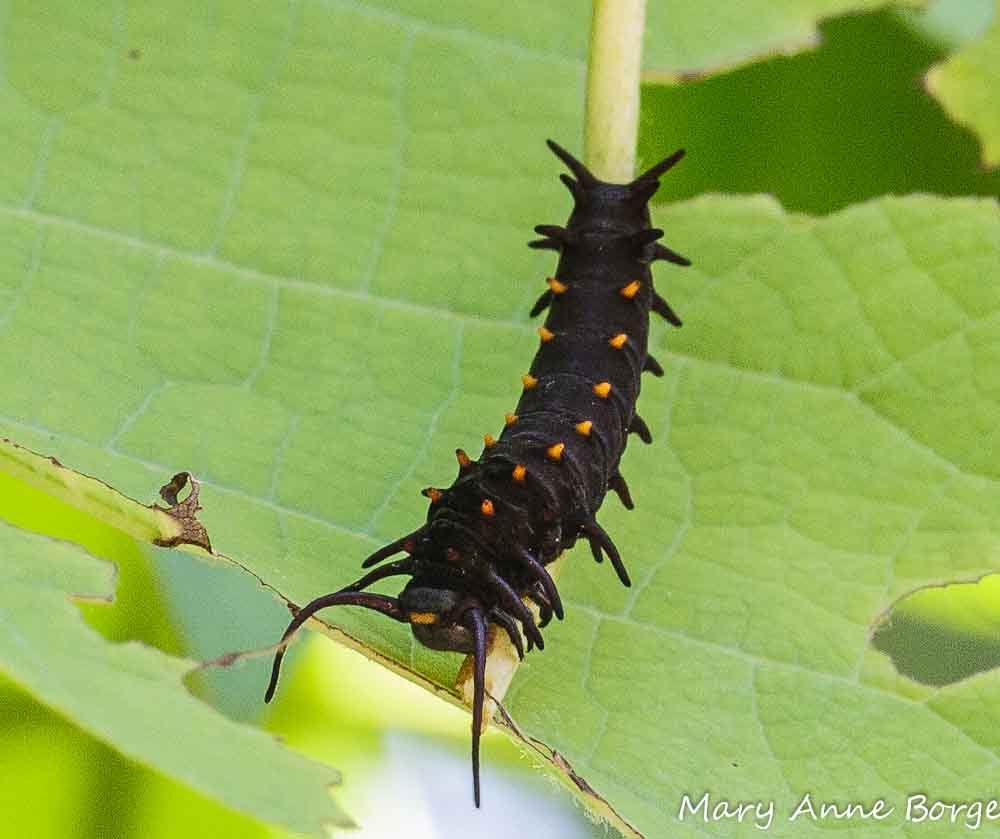
Older caterpillars usually feed alone, and their appearance changes, with colors appropriate for Halloween – black with orange trim.

Pipevine Swallowtail Caterpillar on Dutchman’s Pipevine

Adult butterflies feed on a variety of plants for their nectar, and may also seek out minerals at puddles.  They don’t feed on the flowers of the Pipevines, however, because they are not a good anatomical match for feeding or pollination.

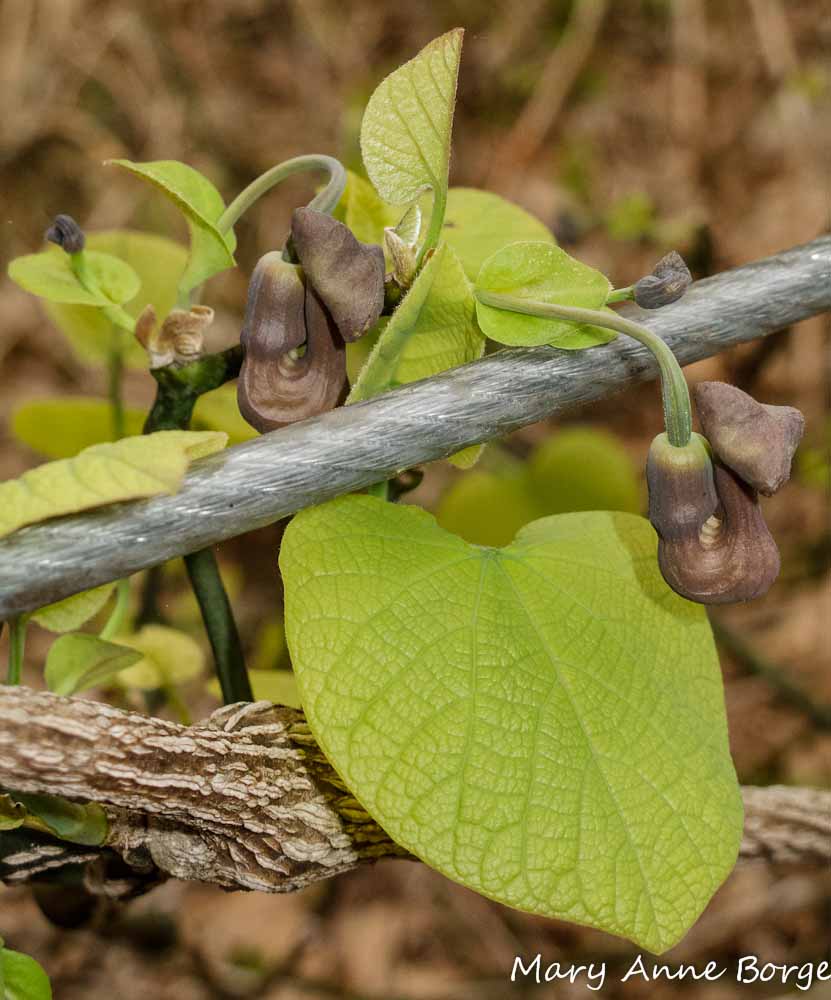
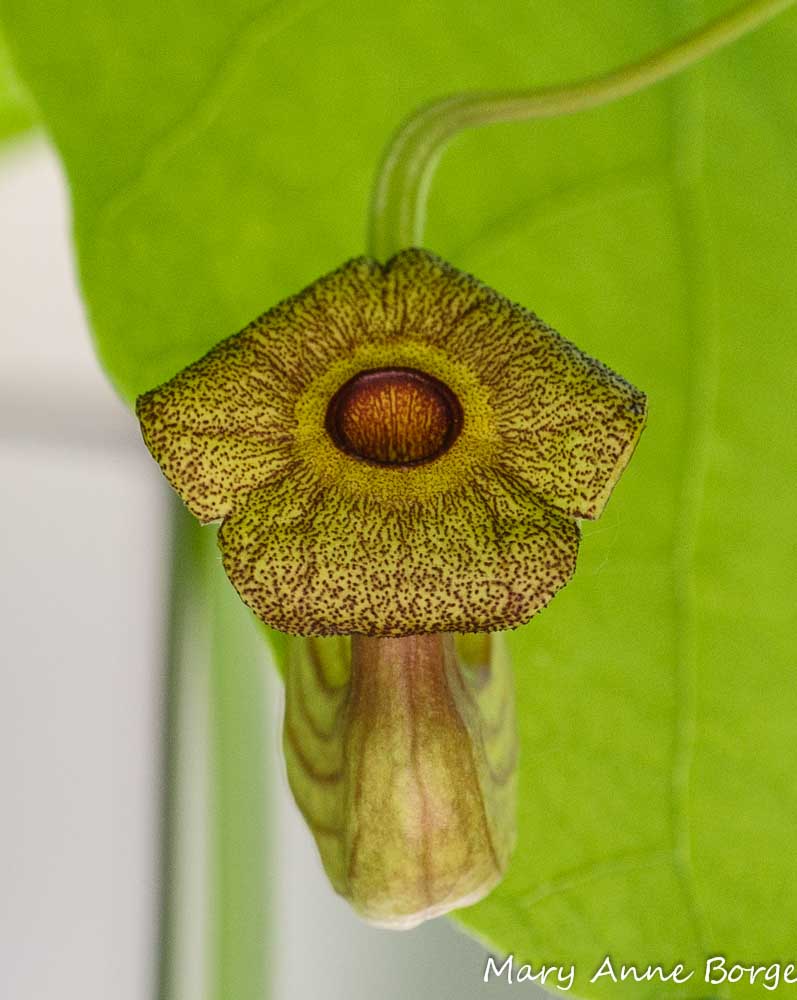
Dutchman’s Pipevine is a deciduous vine with large heart-shaped leaves, but it is named for the shape of its flowers, which have a curved tubular shape ending in a flair with an opening in the center to allow pollinators to enter and search for a nectar reward.  The graceful Pipevine Swallowtail is too large to enter, and even its proboscis can’t extend enough to navigate the long curved tube to reach the flower’s food offerings.

Dutchman’s Pipevine Flower in bloom

So how are the Pipevine flowers pollinated?  Small flies and gnats are attracted to the open throat of the flower by an aroma they can detect, and by the color pattern, both directing them forward down the tube.  As the insects enter, they are prevented from reversing course by hairs that line the flower’s throat, forcing the insect forward, a little like the metal spikes at parking lot entrances that will puncture your tires if you back up.  When the insect reaches the nectar source, it meets the sticky stigma of the female flower parts, depositing pollen brought in on its body from another Pipevine flower.  The plant detains the insect until the flower has been fertilized, offering it shelter and nectar, sort of like a little insect bed and breakfast.  The female flower parts wither, and the male parts mature, releasing pollen for the insect to pick up on its body.  The flower tube and its hairs relax enough for the insect to escape the way it entered, taking the pollen to the next flower it visits, ensuring the continuation of both the Dutchman’s Pipevine and the Pipevine Swallowtail species.

Dutchmans Pipevine on fence at Bowman’s Hill Wildflower Preserve

Golden Alexander Hosts Black Swallowtail Butterflies!

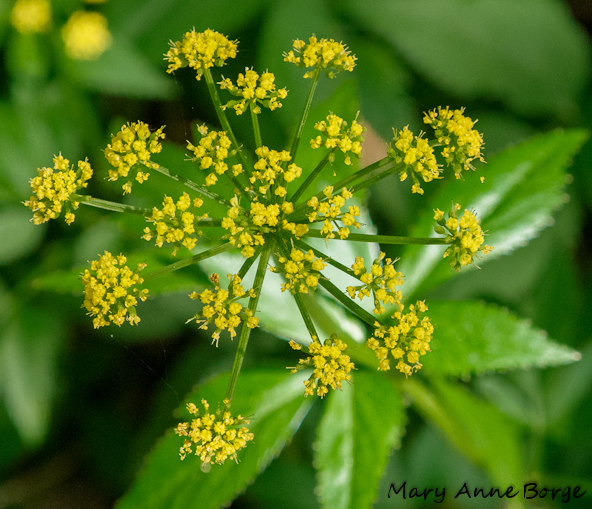
Golden Alexander’s (Zizia aurea) umbrella shaped clusters of tiny sunshine yellow flowers have been lighting up my shade garden for weeks, and will continue for a while longer.

Golden Alexander

Golden Alexander

Like so many plants, Golden Alexander responded to the unusually warm winter and early spring temperatures by blooming a few weeks earlier than normal.  When the flowers are pollinated, dry fruit capsules replace them, an attractive feature for many weeks to come.  Golden Alexander’s rich green foliage is visible for much of the year.  Continue reading

Warm Enough for Butterflies

Zabulon Skipper – Male

After two and a half days of cool, cloudy weather and some much needed rain, the skies cleared, the temperatures soared, and so did a myriad of butterflies.  They were just waiting for temperatures warm enough to give them the solar power to flit through gardens, meadows and woods.

Doll's Eyes (Actaea pachypoda) in fruit

Doll’s Eyes (Actaea pachypoda) in fruit

I was drawn outside to our garden by the sight of this bright little Zabulon Skipper, catching the sun’s rays as he landed on the horizontal leaves of a Doll’s Eyes, also known as White Baneberry (Actaea pachypoda).  Because of the warm early spring weather, the Doll’s Eyes has already finished blooming, and is now developing fruit.  Later in the summer when the fruit is mature, it should look like the plant in this photo.  Maybe you can begin to see the origin of the name.

The skipper found this sunlit platform to be the perfect spot to hang out, displaying his many positive attributes, while looking for hot chicks in the form of female Zabulon Skippers.  His forewings curved slightly, protecting the effect of the pheromones he wafted in hopes of enticing a partner.

This little guy is a testament to the notion that size is not important.  Each time larger butterflies came close to his perch, including swallowtails, anglewings and Red Admirals, he flew up as if to warn them to keep on moving, because they were encroaching on his turf.  Then he reclaimed his spot.

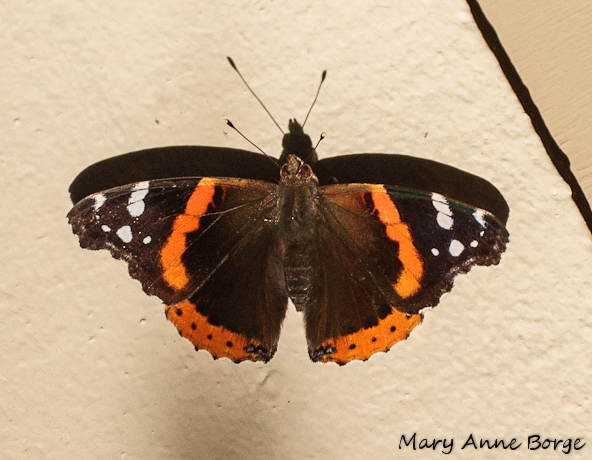
Red Admiral

Red Admirals are willing to use even human-made structures like roads and buildings to showcase themselves while looking for the perfect mate.  Eventually a Red Admiral found a place where he, too, could display without inviting a conflict with the Zabulon Skipper.

For Great Spangled Fritillaries, Leave the Leaf Litter!

Great Spangled Fritillary on Butterflyweed

Great Spangled Fritillary on Butterflyweed

If we really want to get to know butterflies a little better, we need to encourage them to take up residence on our property rather than just stopping for a quick bite to eat.  To achieve that, we need to think about providing the habitat they need throughout as much of their life cycle as we are able.  Let’s look at the Great Spangled Fritillary as an example.

Adult Great Spangled Fritillaries love to cruise fields, meadows, open woods, and gardens, looking for nectar rich flowers.  Some of their favorite food sources include Butterfly-weed (Asclepias tuberosa), Common Milkweed (Asclepias syriaca), Wild Bergamot (Monarda fistulosa), Joe-pye-weeds (Eutrochium dubium, E. fistulosum, E. maculatum, E. purpureum), Ironweeds (Vernonia sp.), and Dogbanes (Apocynum cannabinum).  These plants all have broad appeal to many species of butterflies, including the showy bright orange and brown Fritillaries.  Continue reading