Signs of Spring – Mining Bees

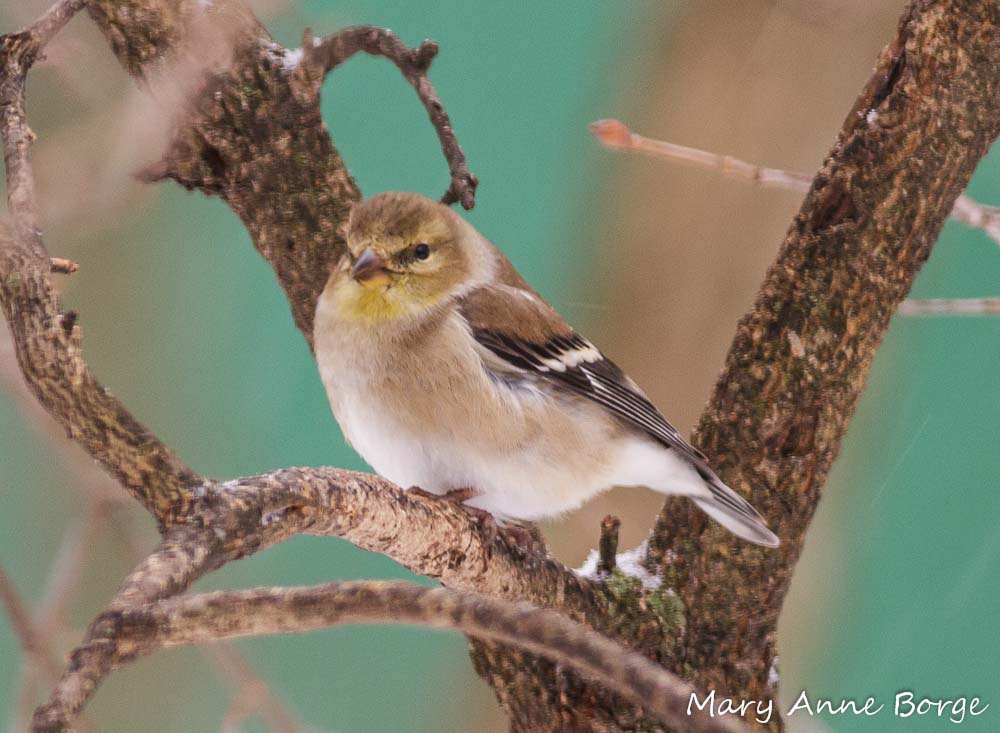
After a long, snowy winter, signs of spring are everywhere. Starting early each morning, birds are singing, woodpeckers are drumming, and in the woods, you may hear a chorus of Spring Peepers or Wood Frogs. At our backyard feeder the other day I saw a male Goldfinch that had almost completed his change to summer plumage.

American Goldfinch

American Goldfinch

Chickadees are excavating nesting holes. Many birds have paired up for the mating season, both our year-round residents, and winter visitors who are getting ready to head back north to their breeding grounds.

Male and female Green-winged Teal at Abbott Marshlands

Male and female Green-winged Teal at Abbott Marshlands

Pair of Blue-winged Teal at Abbott Marshlands

Pair of Blue-winged Teal at Abbott Marshlands

Skunk Cabbage (Symplocarpus foetidus) has been blooming for weeks, American Hazelnut ( Corylus Americana) joined in about March 19, and even Red Maples are in flower. Snow trillium and Hepatica are blooming, too.
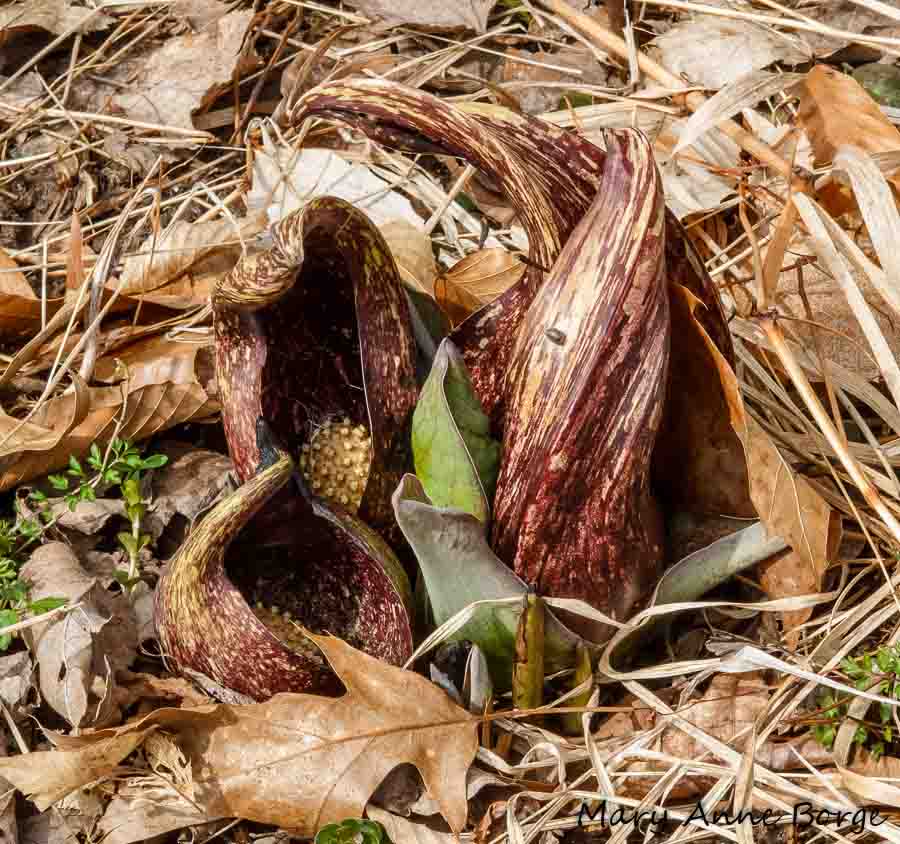
Skunk Cabbage at Bowman's Hill Wildflower Preserve

Skunk Cabbage at Bowman’s Hill Wildflower Preserve

Change is rapid this time of year. Spring ephemerals that were not even visible one day are a few inches above ground, some with buds, two or three days later. It’s amazing to think that these delicate plants easily work their way through their winter blanket of fallen leaves. This natural covering still provides warmth on cool spring nights, as it helps preserve moisture and prevent competing plants from taking hold in the soil, even after these spring flowers fully emerge.

Virginia Bluebells emerging from their winter blanket of leaves at Bowman's Hill Wildflower Preserve

Virginia Bluebells emerging from their winter blanket of leaves at Bowman’s Hill Wildflower Preserve

Insects are out and about. I saw my first butterflies of the season this week – 3 anglewing sightings, probably all Eastern Commas, flitting about with only rare breaks. Can you spot the well-camouflaged butterfly in this photo?

Anglewing butterfly, probably Eastern Comma

Anglewing butterfly, probably Eastern Comma

Mining Bees (Andrena sp.) were very active this week, flying just above the leaf litter, moving steadily back and forth, occasionally taking a break.
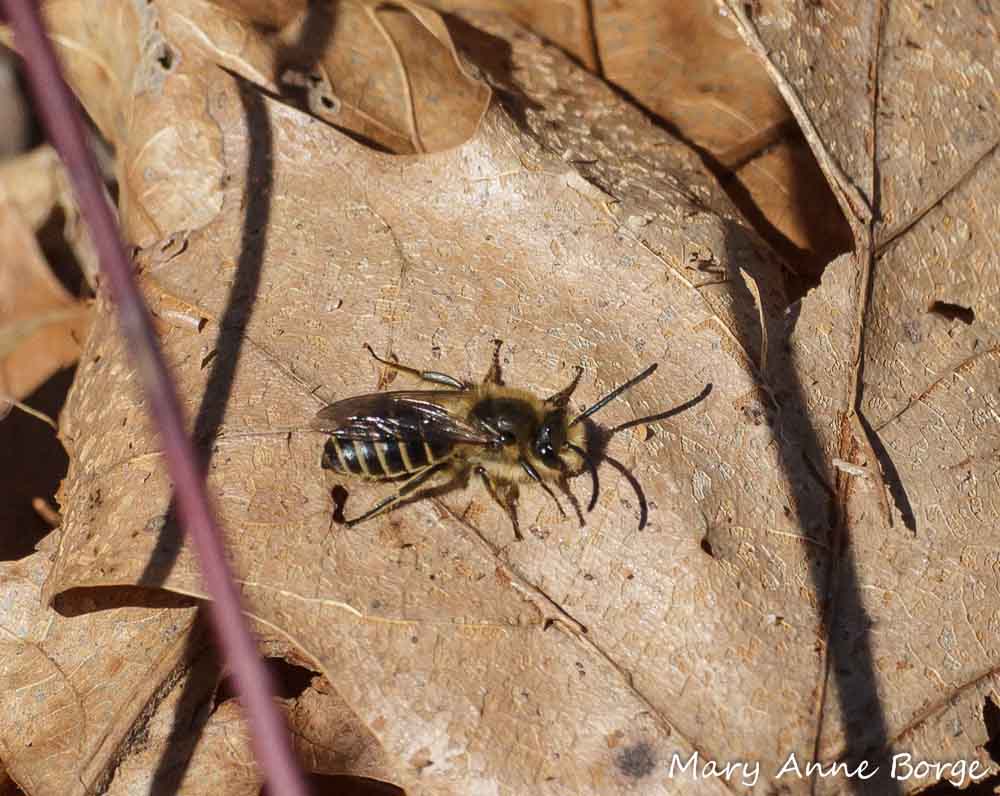
Mining Bee (Andrena sp.) at Abbott Marshlands

Mining Bee (Andrena sp.) at Abbott Marshlands

Mining Bees are solitary. This means that each female excavates her own nest, lays her eggs in brood cells in the nest, and provisions them with food. In the case of Mining Bees, nests are excavated in the ground, a practice that gives this family its common name. Above ground, the nest entrances look a lot like the entrance to some ant colonies, but with bigger holes.

Although each female bee has her own nest, Mining bees often excavate their nests in close proximity to each other, in large aggregations of bees. At Abbott Marshlands, there were dozens of Mining Bee nest holes along and beyond the edges of the trail. Aggregations can be much larger still.
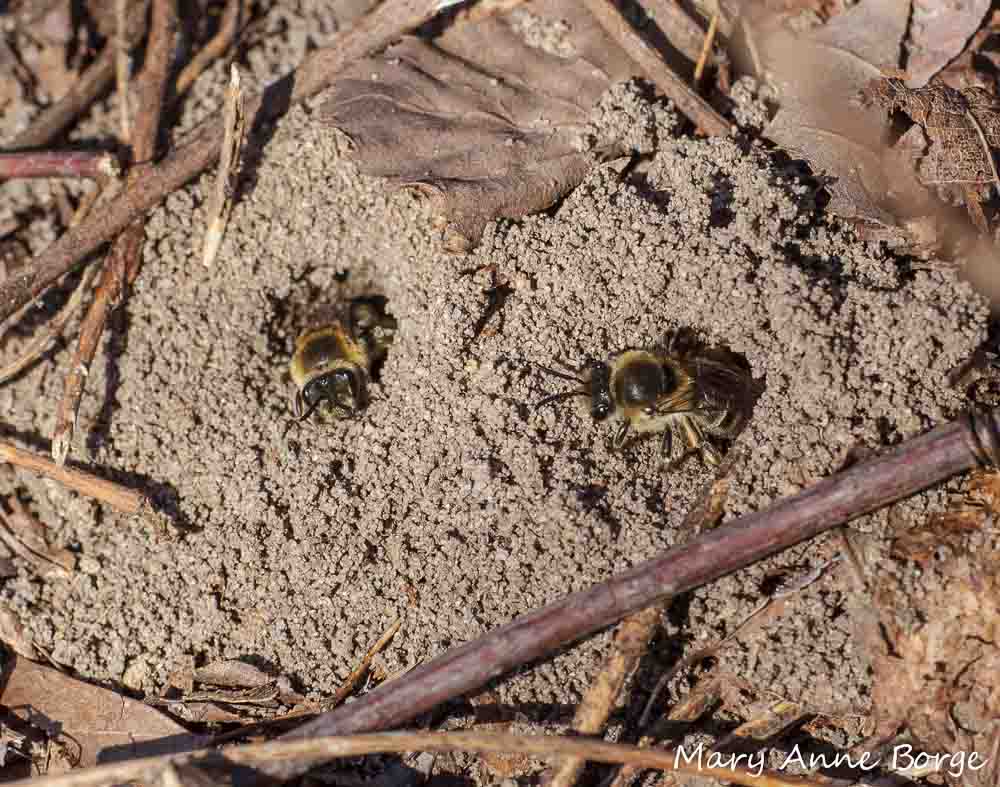
Mining Bees (Andrena sp.) at Abbott Marshlands

Mining Bees (Andrena sp.) at Abbott Marshlands

The bees in the picture above reminded me of two neighbors sitting on their front porches chatting. While I watched, another bee came in flying low right over them. The bee on the right ducked into her nest, but the bee on the left was receptive to the male bee’s advances.

Mining Bees (Andrena sp.) mating at Abbott Marshlands

Mining Bees (Andrena sp.) mating at Abbott Marshlands

There are about 400 species of Andrena bees in North America alone, hundreds more worldwide. They are abundant in spring, with many species foraging for food on a single plant species, or a few closely related species of plants. One species, Andrena erigeniae, relies almost exclusively on the pollen of Spring Beauty (Claytonia virginica, C. caroliniana) as food for their offspring. Another species, Andrena erythronii, specializes on Trout Lily (Erythronium americanum) as a food source to provision its brood cells for its larvae. Many Mining Bee species look very similar to each other, so sometimes the easiest way to tell them apart is by the plant on which they are foraging.

The Mining Bees I saw at Abbott Marshlands were near a location where there is a lot of Spring Beauty, and just a bit farther down the trail, a large colony of Trout Lily. It should be only a few more days before they start to bloom. Which flowers will these bees visit?

Resources

Eaton, Eric R.; Kauffman, Ken. Kaufman Field Guide to Insects of North America. 2007.

Gracie, Carol. Spring Wildflowers of the Northeast. 2012.

Mader, Eric; Shepherd, Matthew; Vaughan, Mace; Black, Scott Hoffman; LeBuhn, Gretchen. Attracting Native Pollinators: Protecting North America’s Bees and Butterflies. 2011.

Insect Visitors of Illinois Wildflowers http://www.illinoiswildflowers.info/flower_insects/files/oligoleges.htm


Even Bald-faced Hornets Recycle

During the winter, Bald-faced Hornet (Dolichovespula maculata) nests are more visible than they are during the growing season when the woods are dense with leaves.

Bald-faced Hornet Nest in winter

Bald-faced Hornet Nest in winter

This large nest looks like it is made of paper, and in fact it is. Initially the queen, and later the workers in the colony use their mandibles to scrape up and recycle bits of dead wood, then they mix the wood with their saliva to create the paper mache like substance from which they gradually construct their nest, adding new cells as the colony grows.
Bald-faced Hornet Nest in winter.  The bottom has been removed, revealing the cells where larvae develop

Bald-faced Hornet Nest in winter. The bottom has been removed, revealing the cells where larvae develop

These nests are generally not active in winter, except occasionally in the southernmost part of the Bald-faced Hornet’s range. All the colony members die as winter sets in, with the exception of the fertilized queen. She finds a safe, warm place to spend the winter, usually in or under a fallen log, in a hollow tree, or sometimes underground.

In spring, birds take advantage of these abandoned structures and rip away bits of the paper to use as building material in their own nests. If you look at the lower right section of the nest below, it looks like there is some recycled ‘paper’ along with the plant materials that were used in this construction.

Bird's nest made from plant materials and wasp nest paper

Bird’s nest made from plant materials and wasp nest paper

Because paper is used in the construction of the nest, people often think this large football shaped shelter belongs to Paper Wasps. While Paper Wasps use the same materials for constructing their nests, the homes they build for their larvae are much smaller, and somewhat umbrella-shaped, like the one below.

Paper Wasp Nest

Paper Wasp Nest

Paper Wasp (Polistes carolinus)

Paper Wasp (Polistes carolinus)

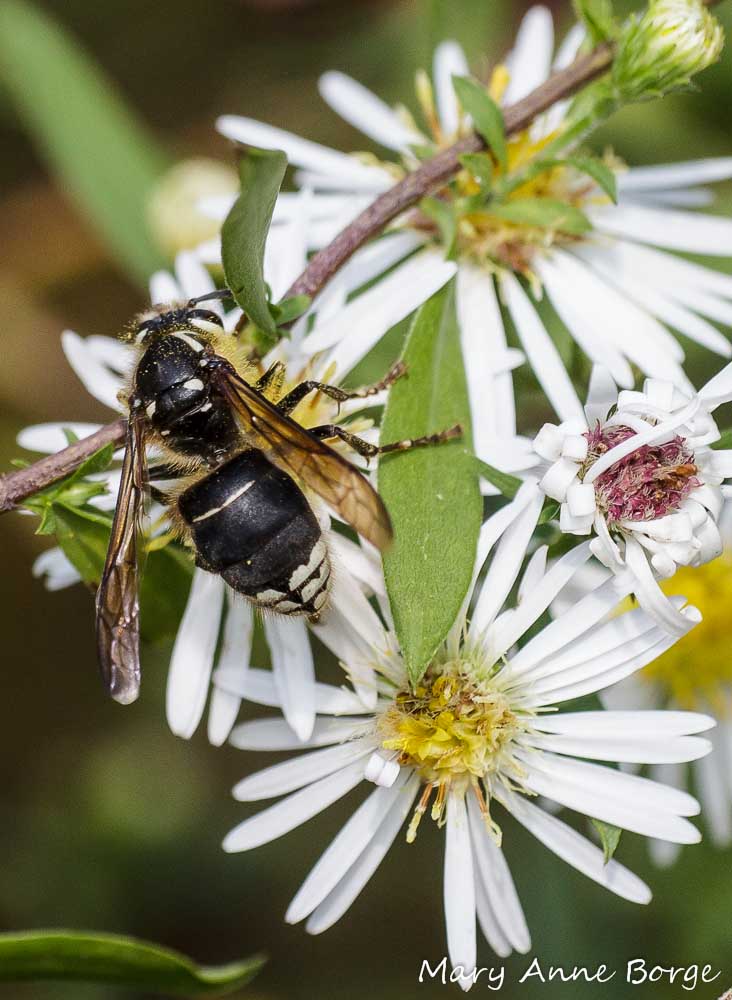
Bald-faced Hornets are named for the white markings on their face, and are sometimes called White faced Hornets. They also have white markings on the lower part of their abdomens.

Bald-faced Hornet feeding on nectar.  Note the white facial markings that give this species its name, and the pollen on its head.

Bald-faced Hornet feeding on nectar. Note the white facial markings that give this species its name, and the pollen on its head.

Does the word ‘hornet’ make you want to reach for a can of insecticide spray? Well, don’t!  That’s almost never a good idea.

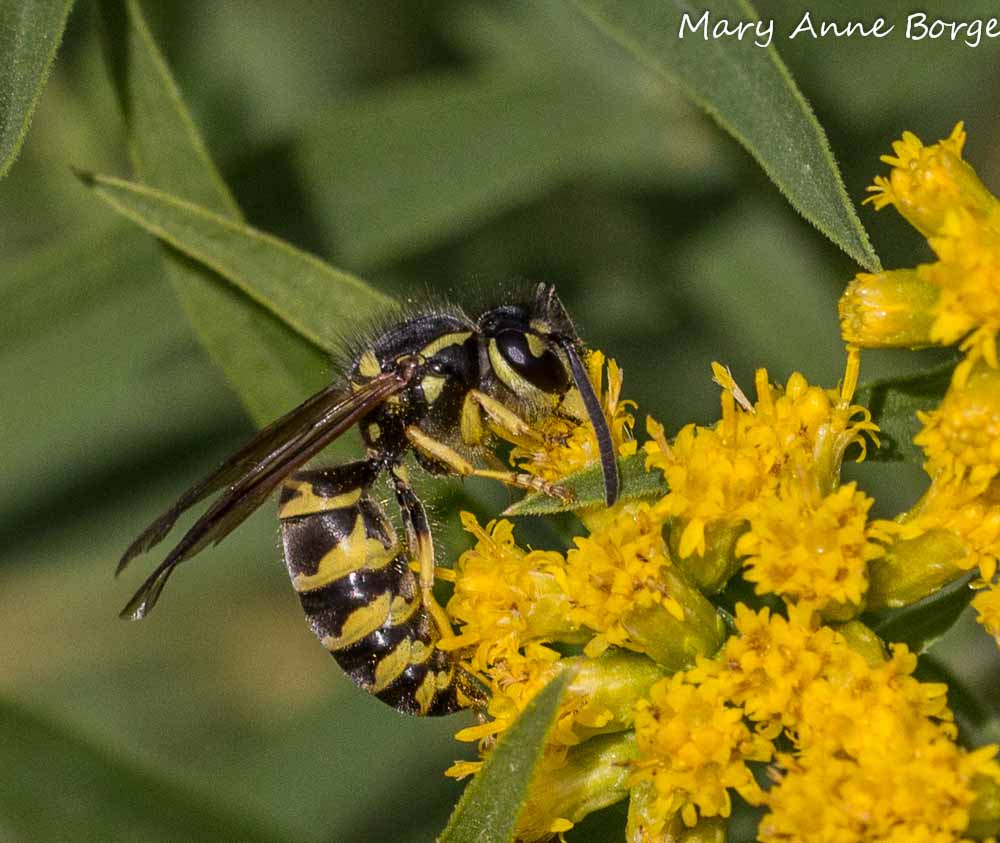
It may help to know that Bald-faced Hornets are not really hornets! They are wasps, one of the wasp species known as Yellowjackets. Ok, I get that this might not make you feel any more comfortable with them. We’re used to Eastern Yellowjackets relentlessly competing for picnic food, and they can be quite aggressive.

Eastern Yellowjacket (Vespula maculifrons) on Goldenrod

Eastern Yellowjacket (Vespula maculifrons) on Goldenrod

It’s true that if Bald-faced Hornets think you are a threat to their nest, they may sting you, so it’s best to give an active nest a wide berth. As long as you do that, you are unlikely to have an unpleasant encounter with them.

Bald-faced Hornets are actually beneficial in several ways. Like many wasp species, they help to keep the insect population in balance. Bald-faced Hornets feed many types of insects to their developing offspring, and are especially fond of flies and even other Yellowjackets. They can be helpful by harvesting caterpillars for their offspring on a farm or near a vegetable garden – think unwanted Tomato Hornworns.

Bald-faced Hornet nectaring on asters

Bald-faced Hornet nectaring on asters

Adult Bald-faced Hornets feed primarily on nectar or other sweet treats like aphid honeydew. In the process, they provide pollination services to the flowers where they are drinking. And in spite of their size and stingers (in the case of females), Bald-faced Hornets may become a meal for a larger predator.

Bald-faced Hornets can make good neighbors, as long as you give them their space.

References:

Eaton, Eric R.; Kauffman, Ken.  Kaufman Field Guide to Insects of North America.  2007.

http://ento.psu.edu/extension/factsheets/baldfaced-hornet

https://nature.mdc.mo.gov/discover-nature/field-guide/bald-faced-hornet

http://naturemappingfoundation.org/natmap/facts/bald-faced_hornet_712.html

http://www.inaturalist.org/taxa/baldfaced_hornet

http://eol.org/pages/239818/overview

http://www.biology.ualberta.ca/bsc/ejournal/bmc_05/84d_maculata.html

http://www.clemson.edu/cafls/departments/esps/factsheets/medvet/baldfaced_hornets_mv15.html

Backyard Birds, Snowstorm Number ??

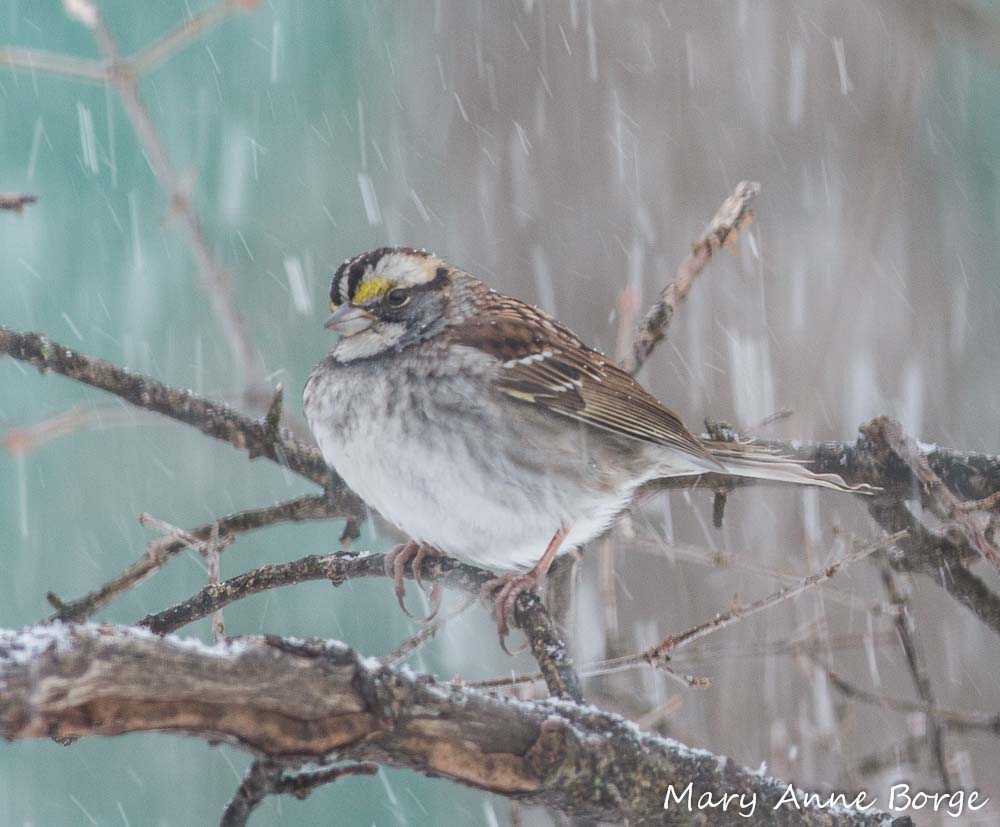
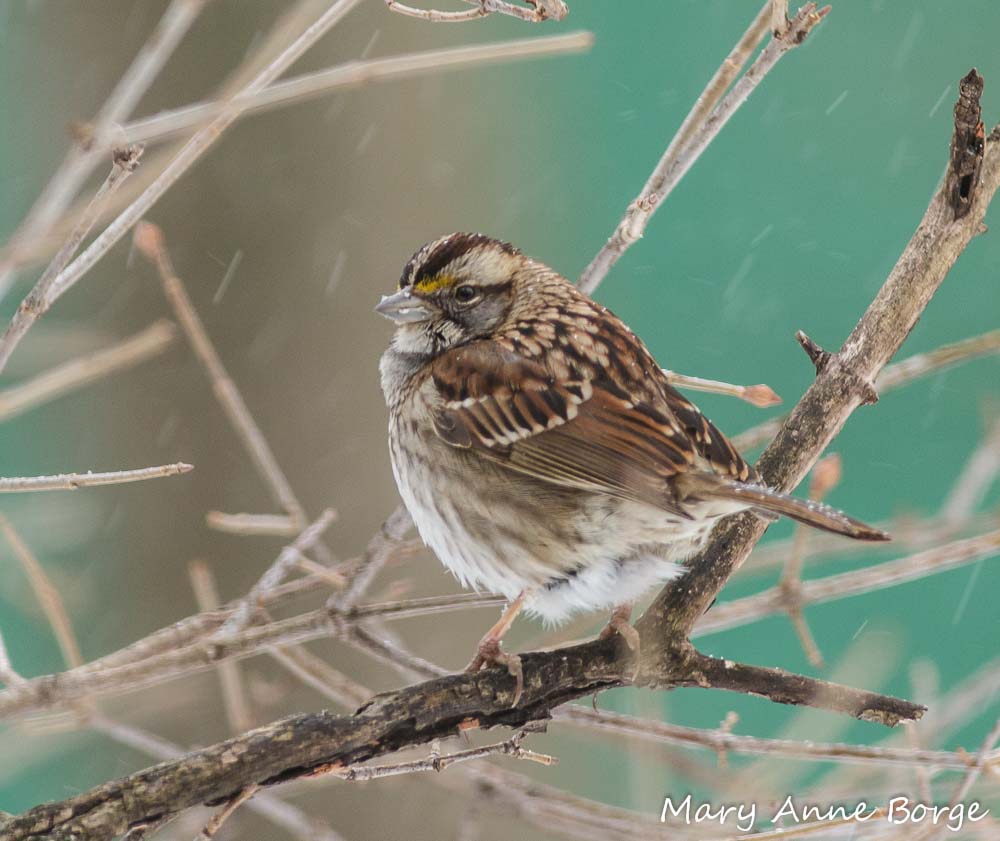
White-throated Sparrow in a snowstorm

White-throated Sparrow in a snowstorm

When I opened the shades yesterday, there was already about 7 inches of new snow on the ground and the air was thick with swirling, heavy wet flakes. I confess my first thought was, “How beautiful!” (Go ahead, call me crazy – you wouldn’t be the first!  But it may mitigate your assessment a bit to know I didn’t have to go out.)

The birds were already up and foraging for food. The area surrounding our feeder was a very popular spot, and remained so all day long throughout the storm.

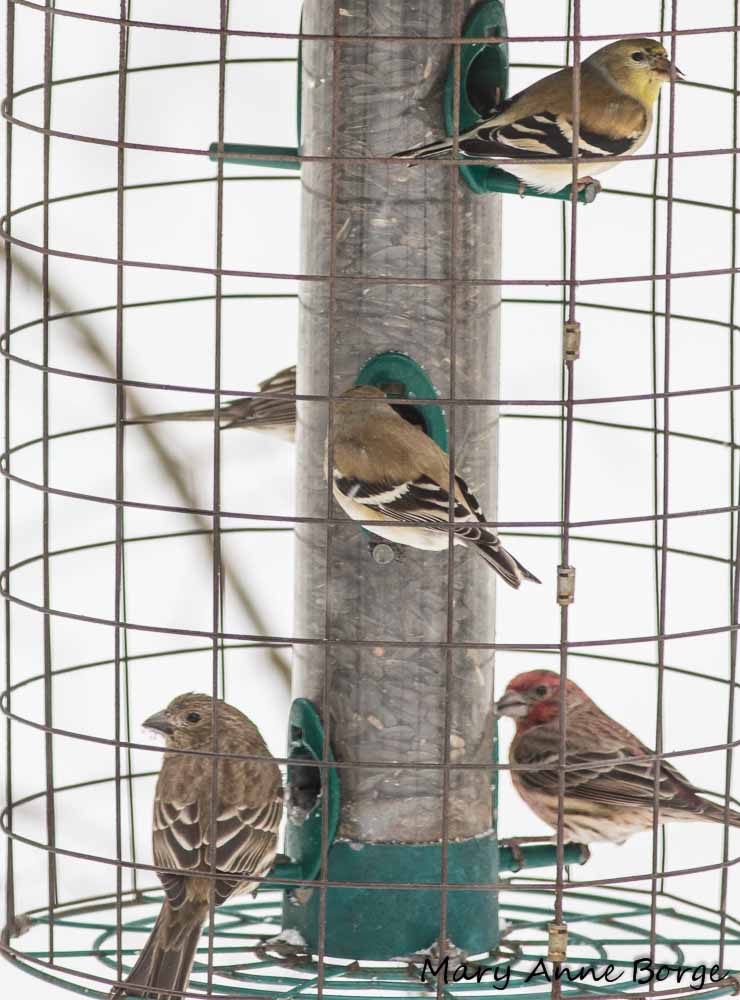
Goldfinches and House Finches at the feeder

Goldfinches and House Finches at the feeder

Goldfinches and House Finches were the most constant visitors to the feeders, perching in the trees near by in between snacks.

Goldfinch

Goldfinch

Goldfinch, with male House Finch in the background

Goldfinch, with male House Finch in the background

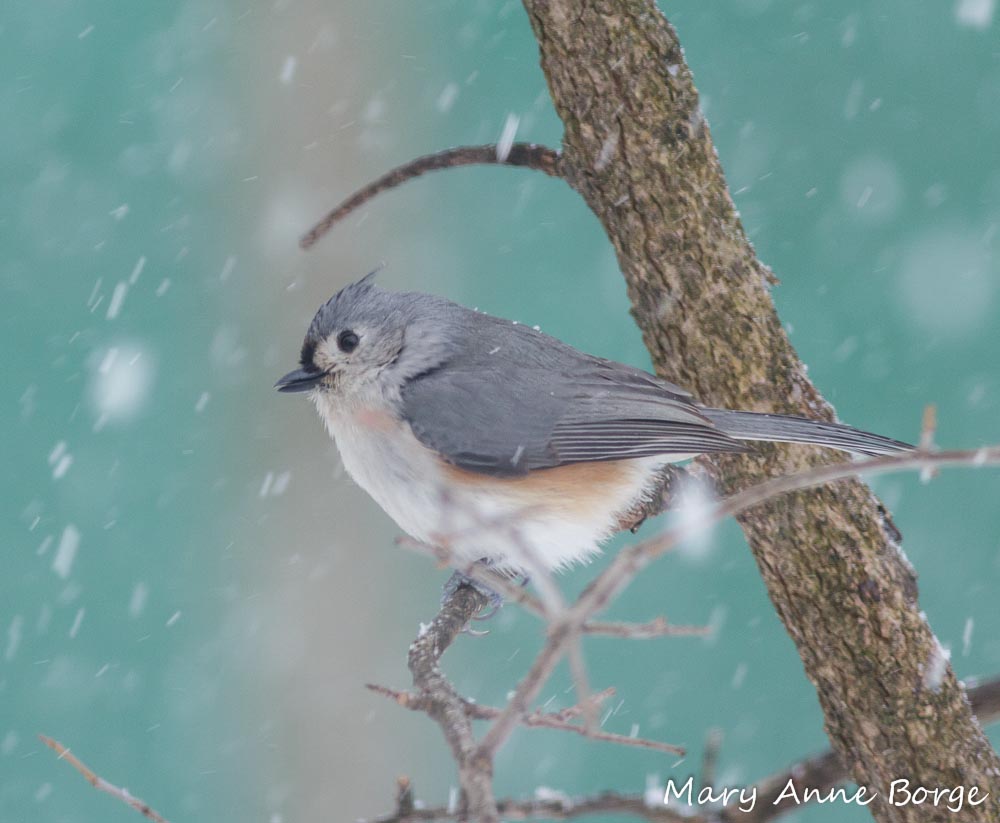
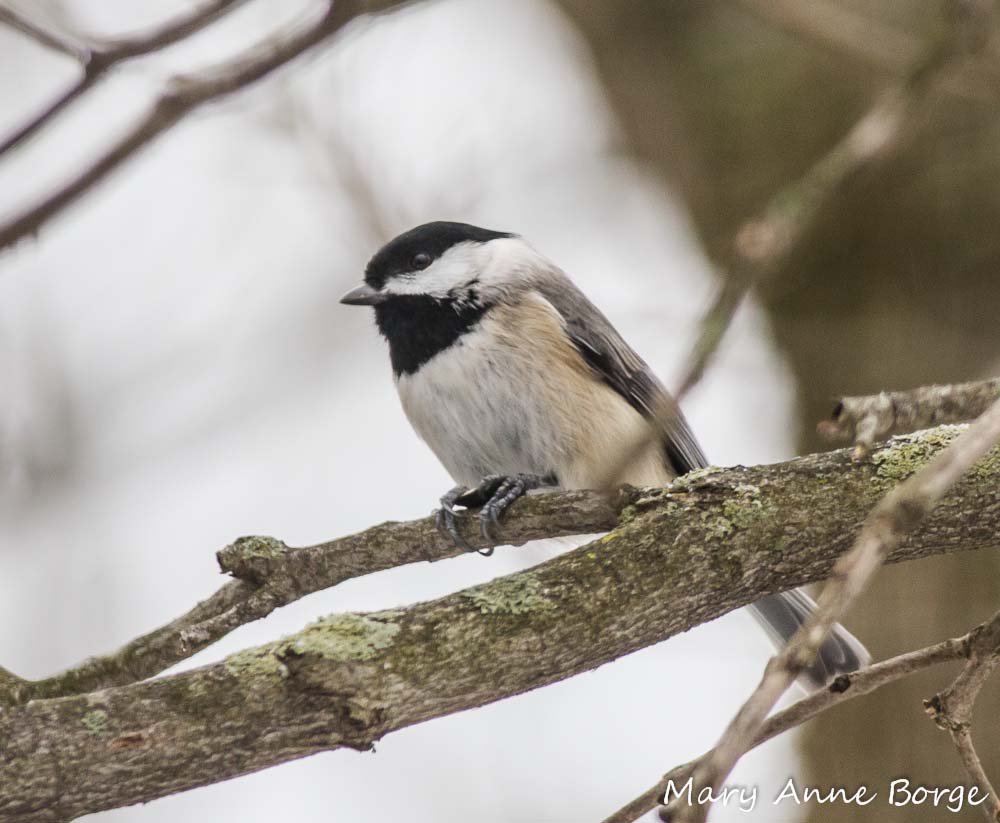
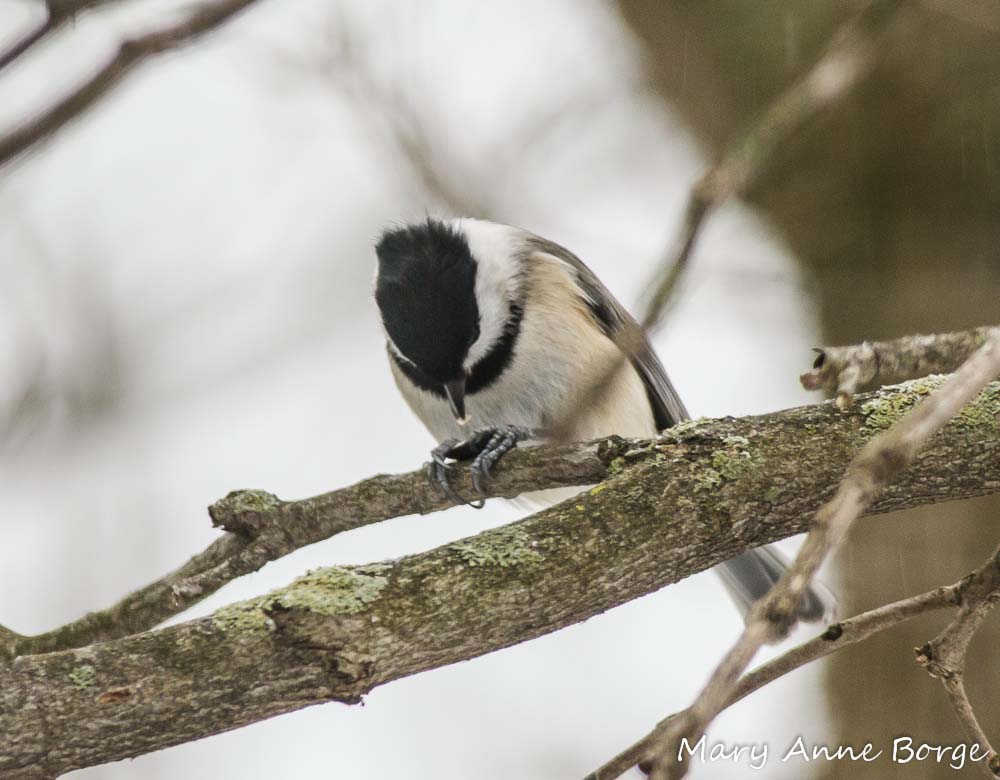
Chickadees and Titmice darted to the feeder to get their share, with Chickadees tossing rejects on the ground for the grateful birds feeding there.

Tufted Titmouse

Tufted Titmouse

Carolina Chickadee

Carolina Chickadee

Carolina Chickadee, with lunch

Carolina Chickadee, with lunch

A few of the ground feeding birds, like this White-throated Sparrow

White-throated Sparrow

White-throated Sparrow

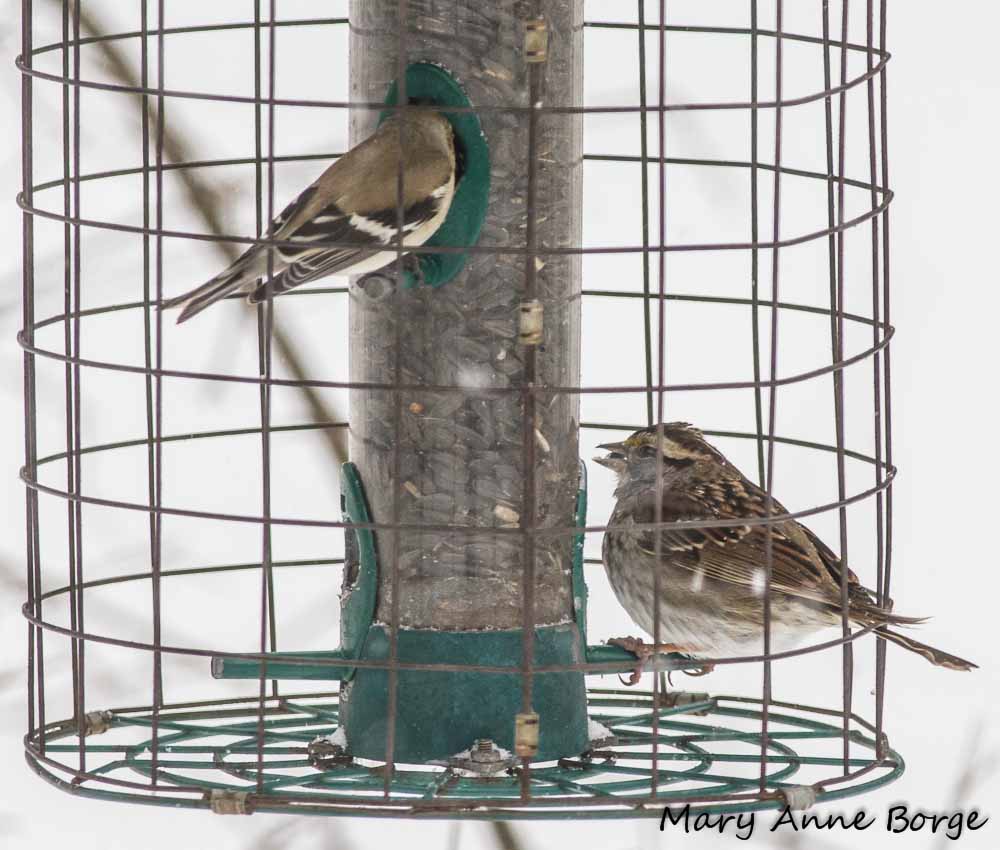
grew impatient with having to wait for food to be tossed down to them and decided to go directly to the source themselves.

White-throated Sparrow eating at feeder

White-throated Sparrow eating at feeder

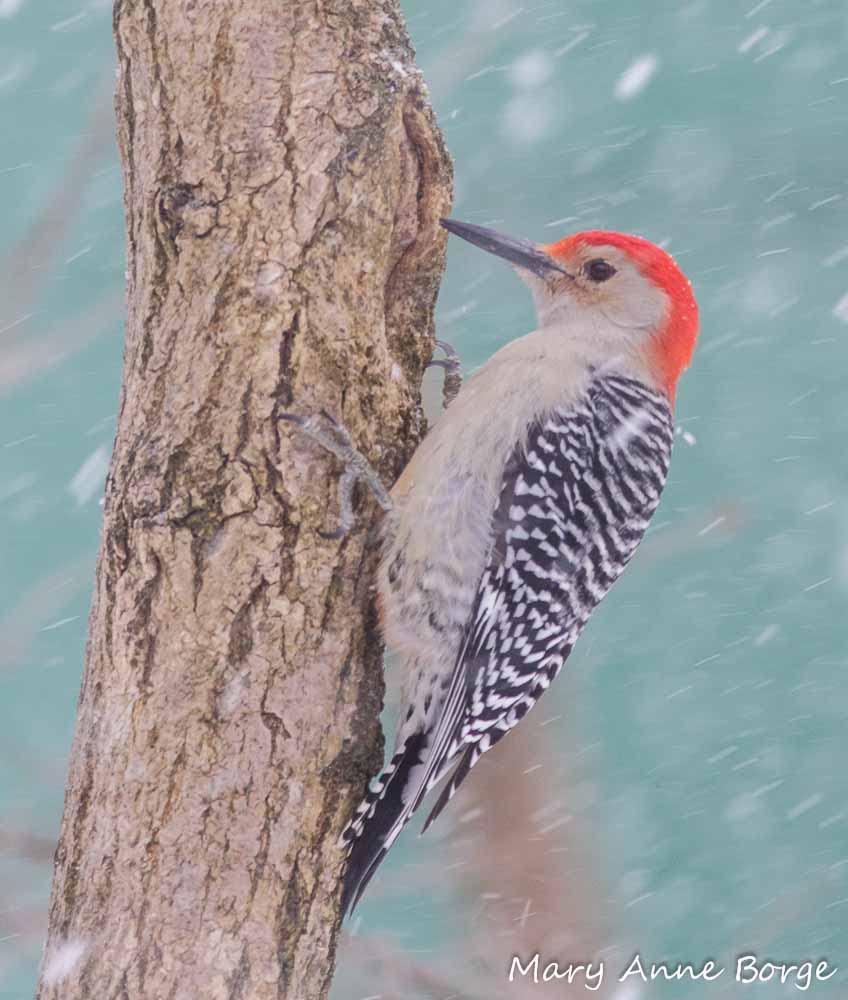
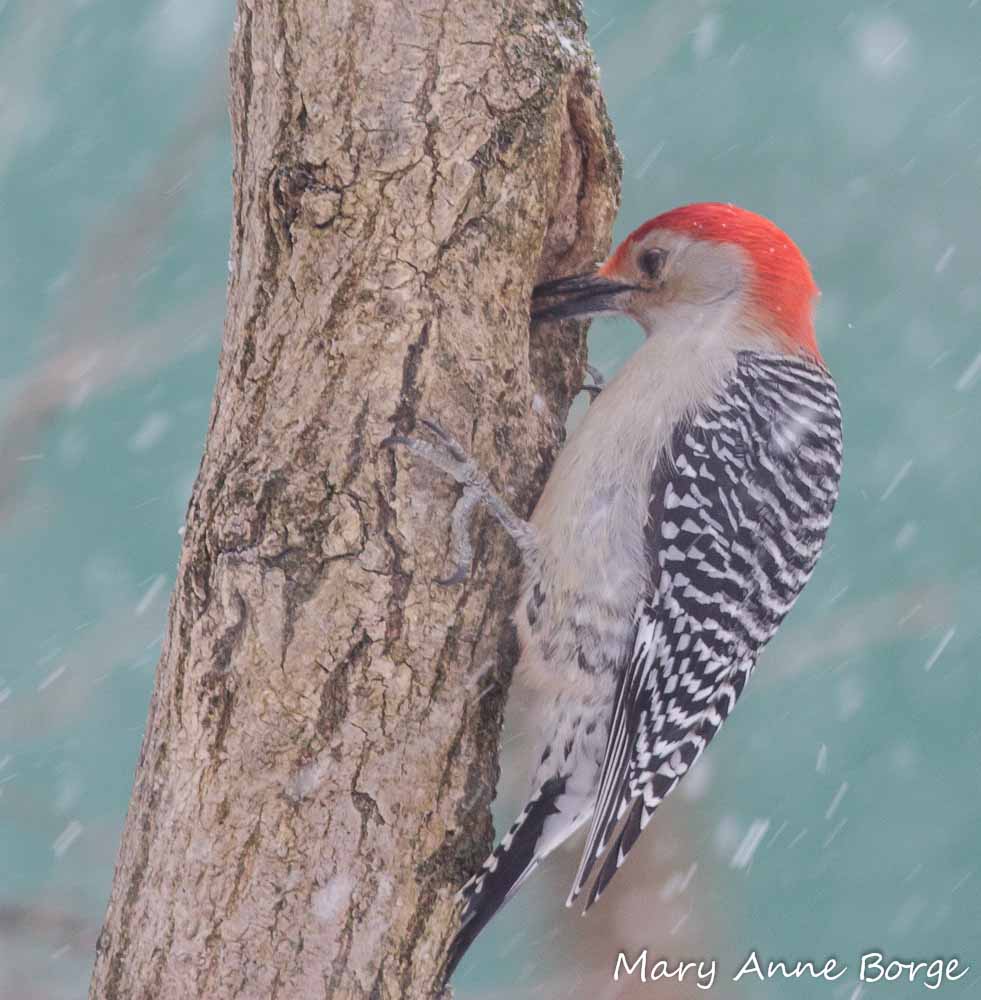
Even a few Dark-eyed Juncos also attempted to use the feeder.  A male Red-bellied Woodpecker watched for his opportunity,

Red-bellied Woodpecker, male

Red-bellied Woodpecker, male

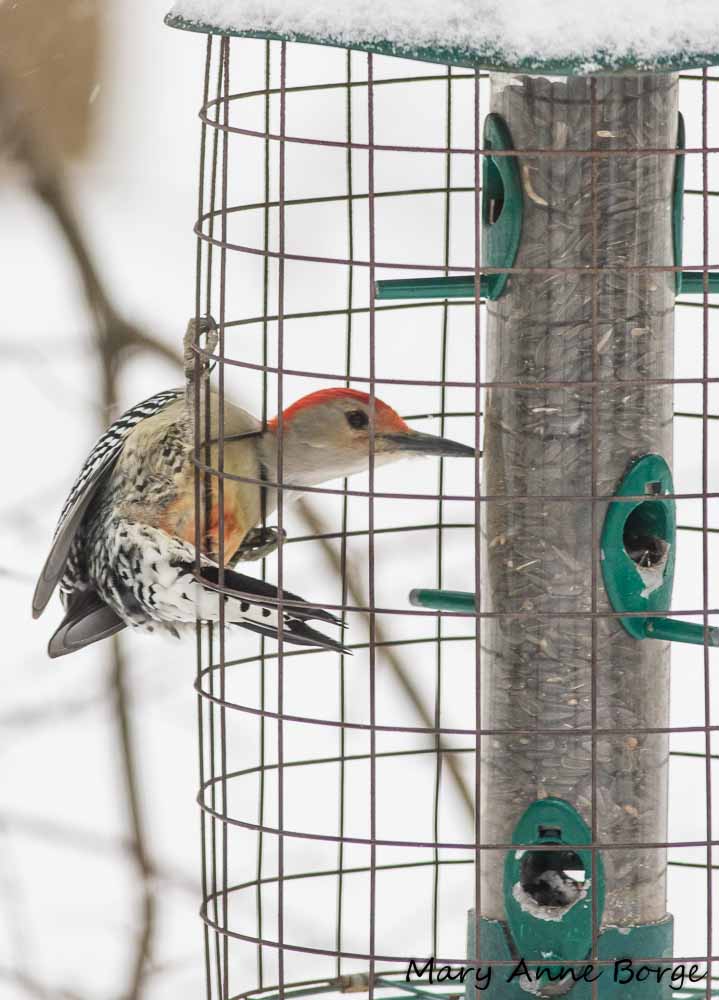
then used his gymnastics skills to get to some food …

Male Red-bellied Woodpecker at feeder

Male Red-bellied Woodpecker at feeder

and bring it back to his mortar-and-pestle-like feeding spot on a near-by tree.

Male Red-bellied Woodpecker preparing a meal

Male Red-bellied Woodpecker preparing a meal

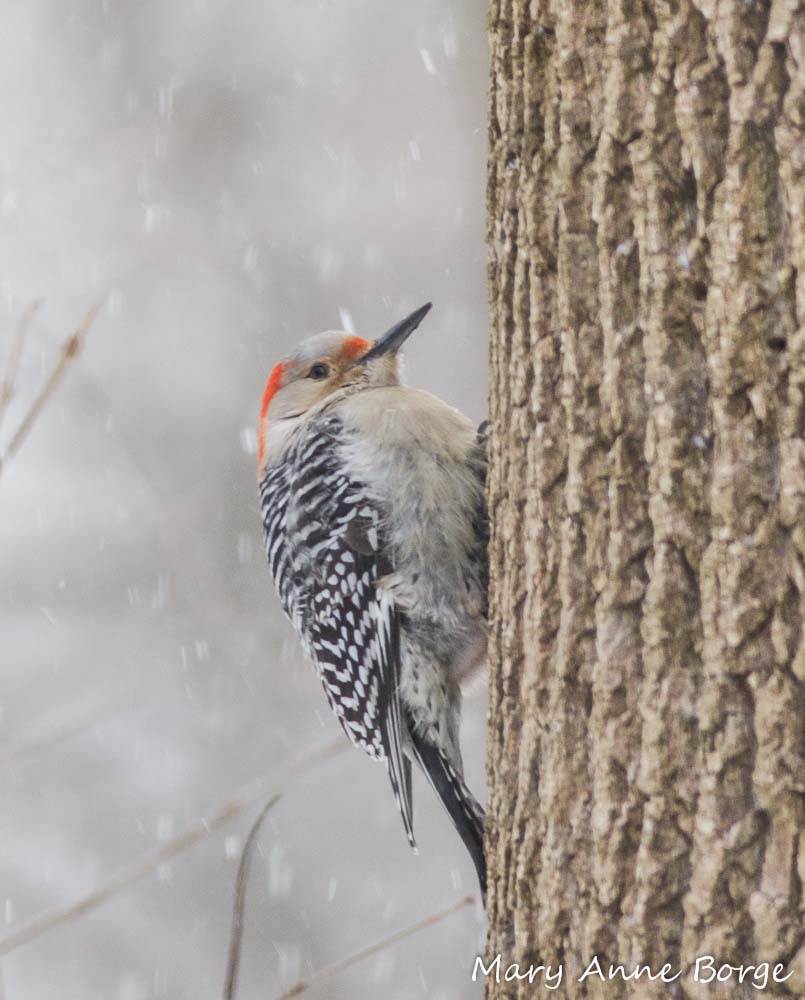
His female partner

Red-bellied Woodpecker, female

Red-bellied Woodpecker, female

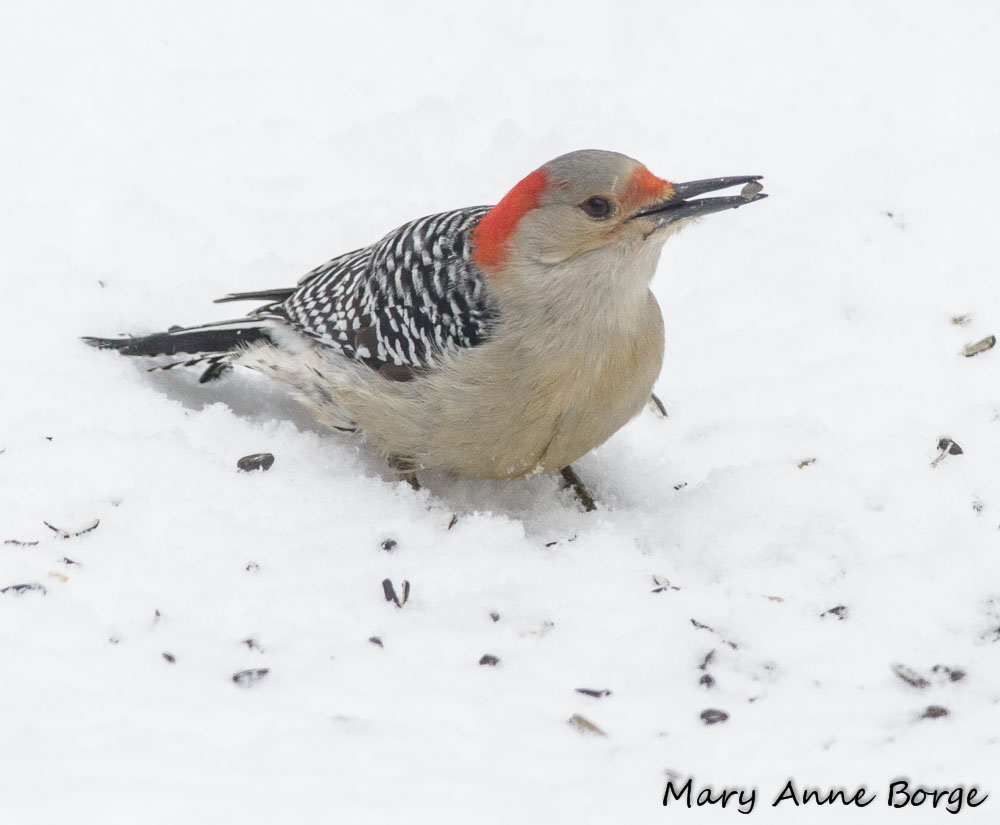
elected to join the ground feeders.

Female Red-bellied Woodpecker foraging on the ground

Female Red-bellied Woodpecker foraging on the ground

Female Red-bellied Woodpecker successfully foraging on the ground

Female Red-bellied Woodpecker successfully foraging on the ground

She seemed tentative at first, staying only a few seconds with each trip, but eventually she became more comfortable both with the process and her ground feeding companions.

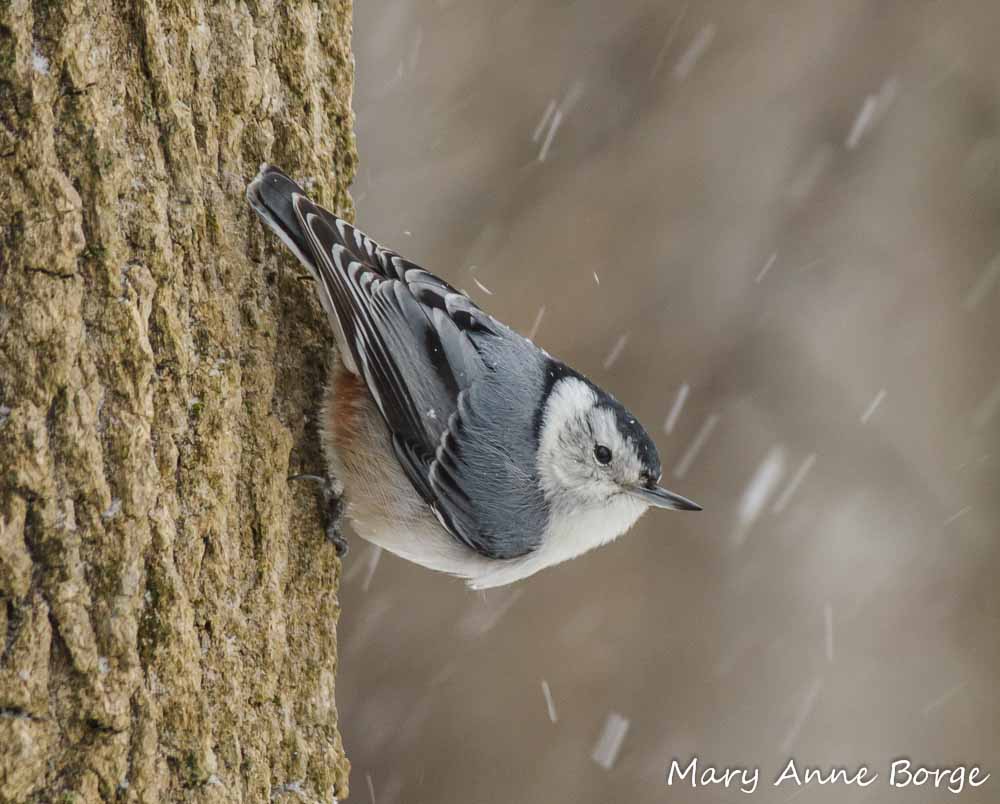
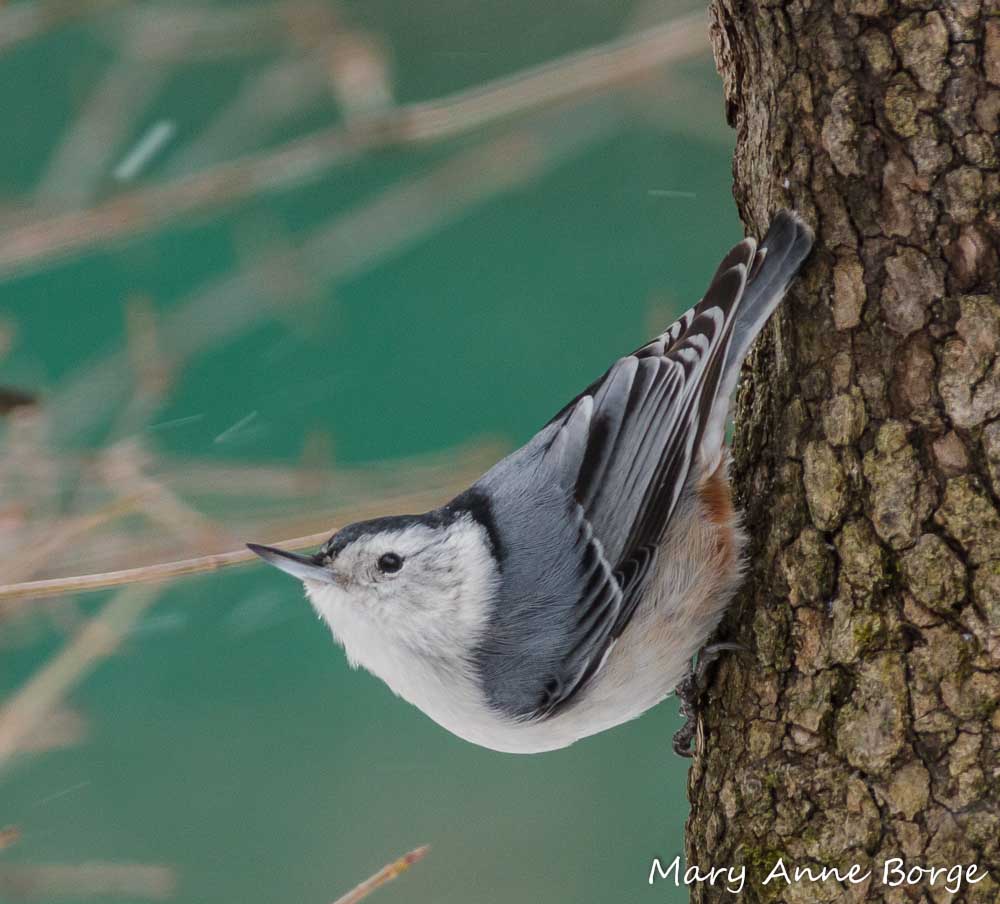
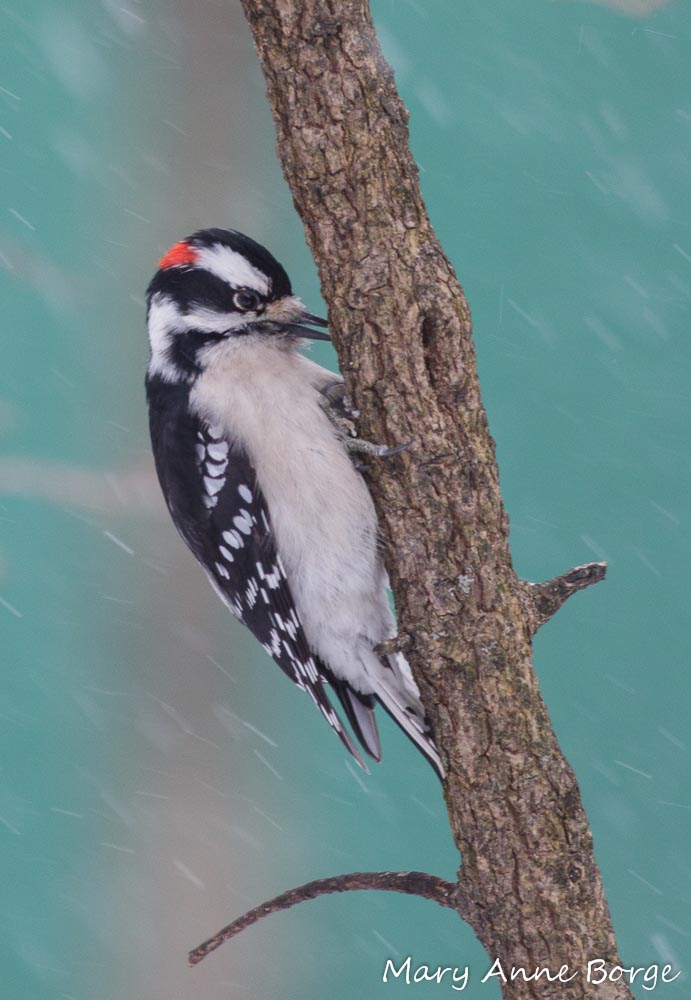
White-breasted Nuthatches and a Downy Woodpecker joined the party a bit later in the day.

White-breasted Nuthatch

White-breasted Nuthatch

White-breasted Nuthatch on Flowering Dogwood (Cornus florida)

White-breasted Nuthatch on Flowering Dogwood (Cornus florida)

Downy Woodpecker

Downy Woodpecker

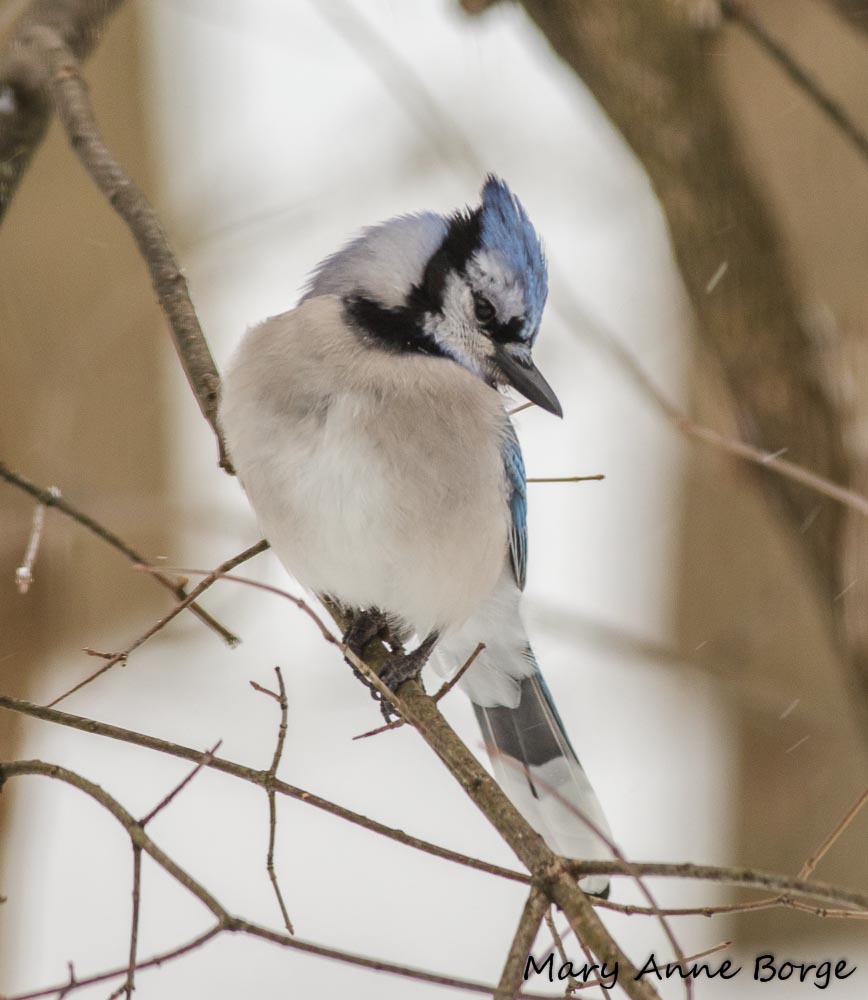
A Blue Jay stopped by briefly, turning his face to escape the wind.

Blue Jay

Blue Jay

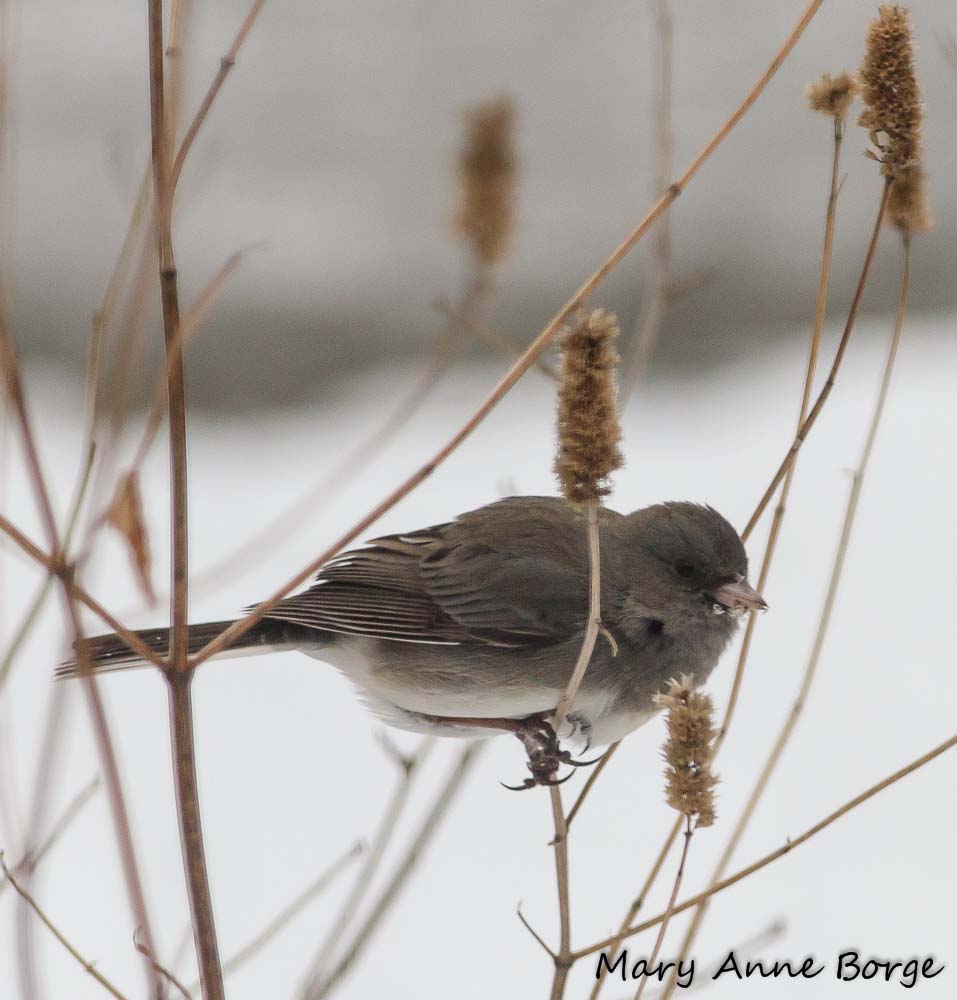
Dark-eyed Juncos and Goldfinches browsed for seed at our Purple Giant Hyssop (Agastache scrophulariifolia), one of the few additional seed sources not buried in snow.

Dark-eyed Junco feeding on Purple Giant Hyssop (Agastache scrophulariifolia) seeds

Dark-eyed Junco feeding on Purple Giant Hyssop (Agastache scrophulariifolia)seeds

When not actively feeding, many birds took refuge in the relative safety and shelter of neighboring Black-haw Viburnums (Viburnum prunifolium) and White Pines (Pinus strobus).

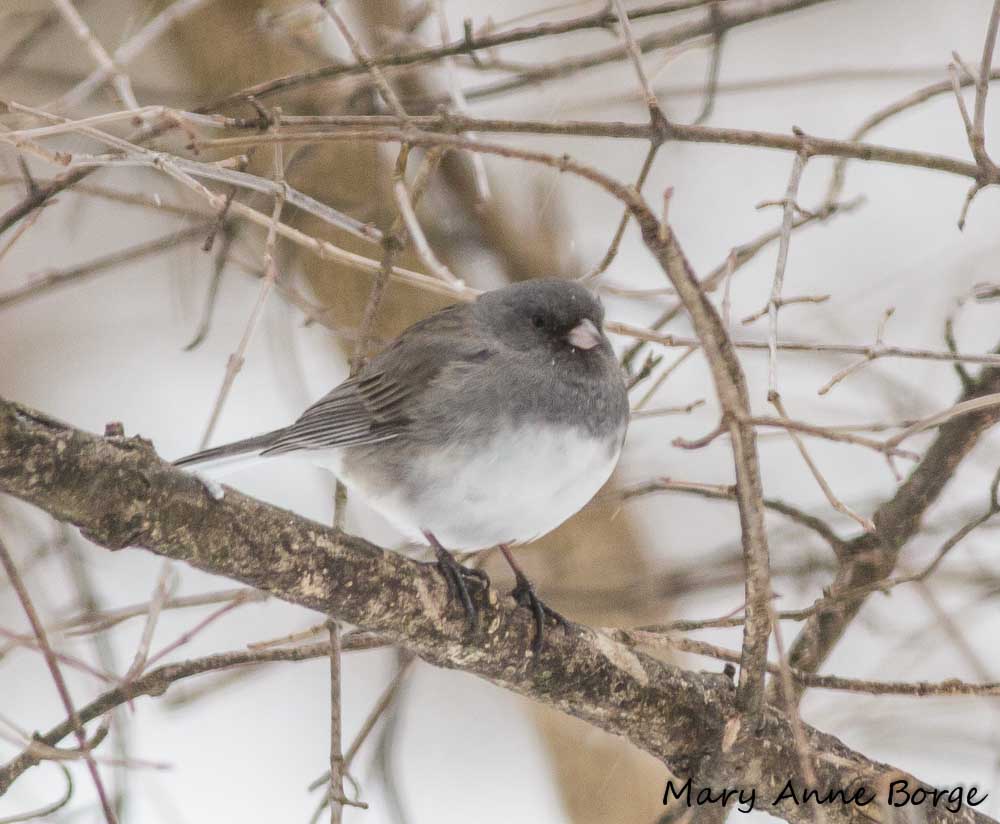
Dark-eyed Junco

Dark-eyed Junco

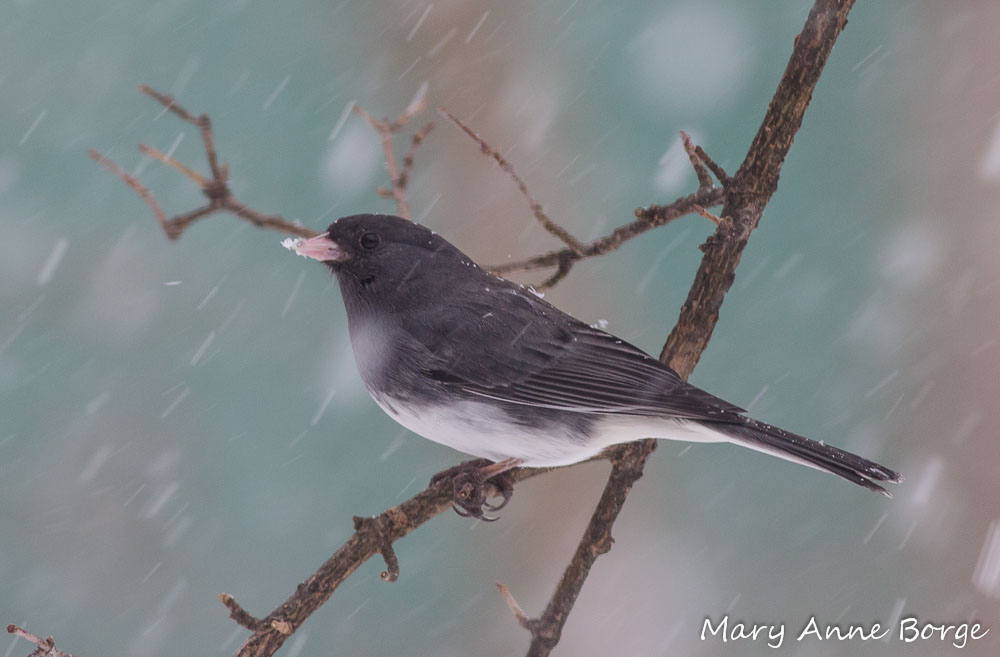
Dark-eyed Junco

Dark-eyed Junco

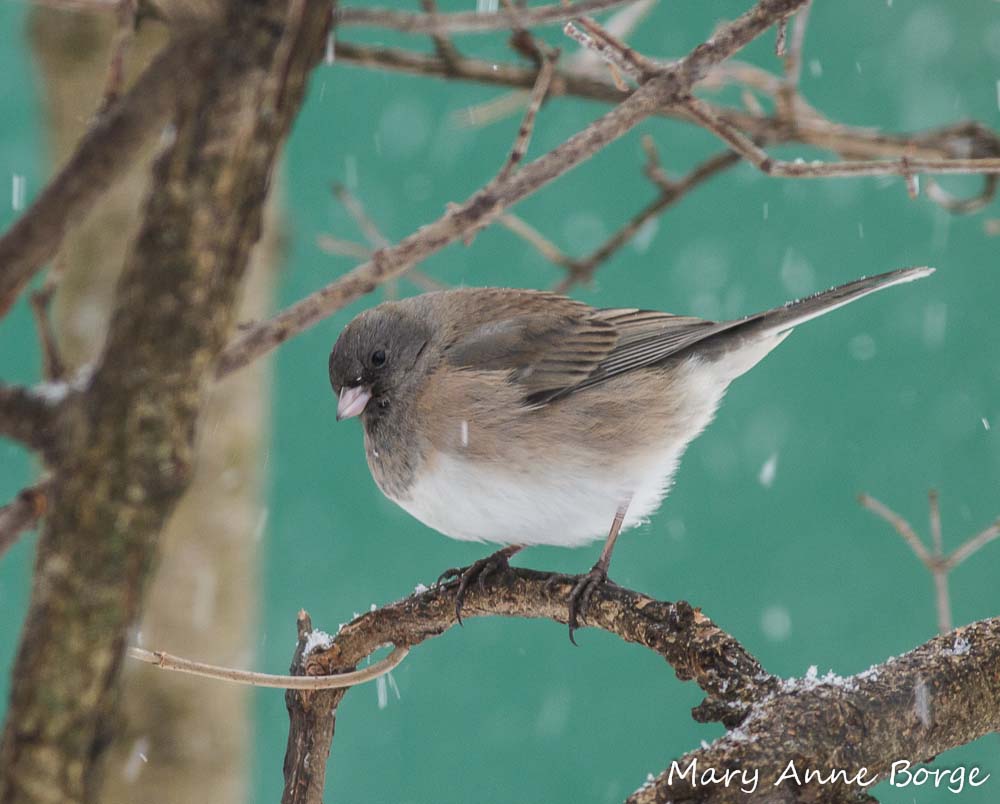
Dark-eyed Junco

Dark-eyed Junco

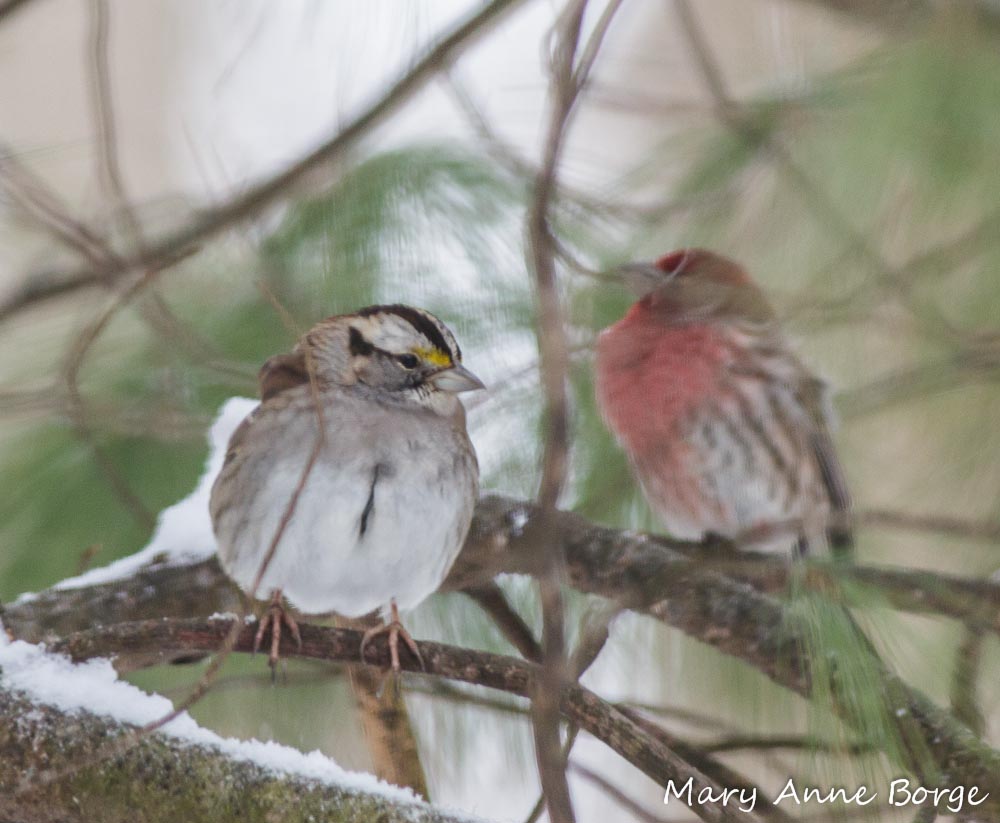
White-throated Sparrow in White Pine with House Finch in the background

White-throated Sparrow in White Pine with House Finch in the background

The weather is pretty benign today, but clouds are starting to move in. Ready for the next round?

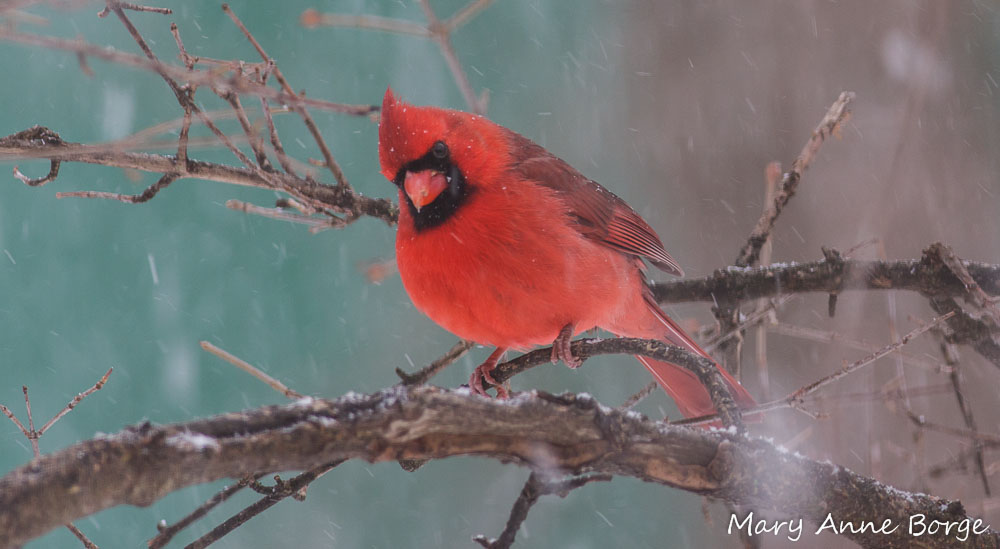
Northern Cardinal

Northern Cardinal

A Snowy Owl and More at Forsythe National Wildlife Refuge

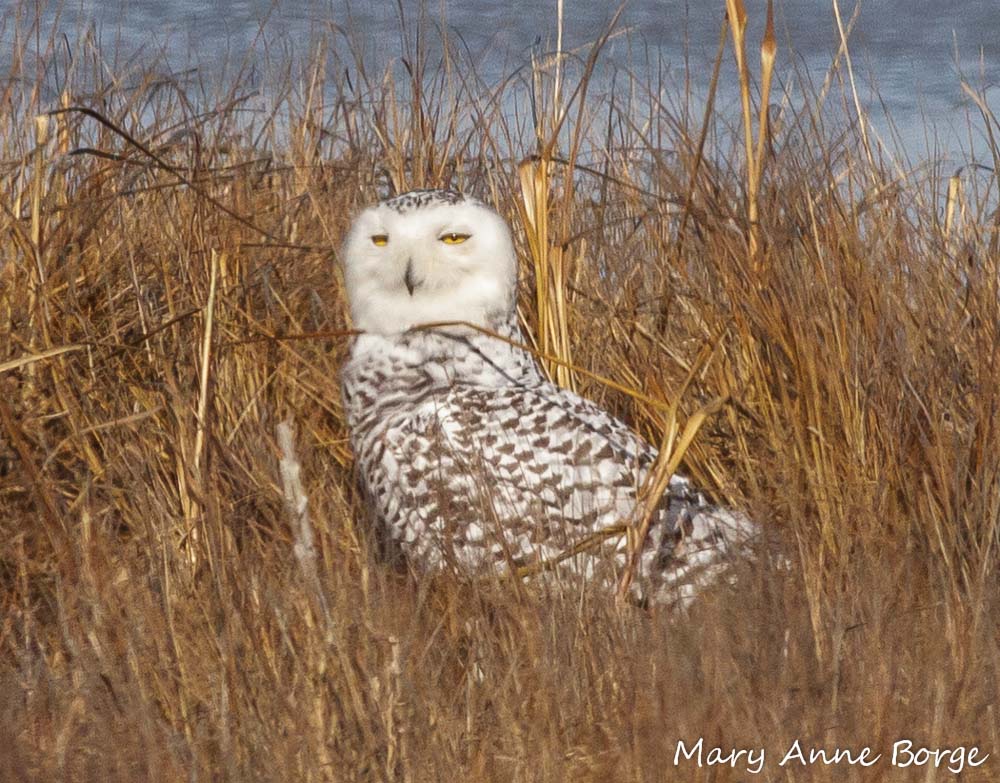
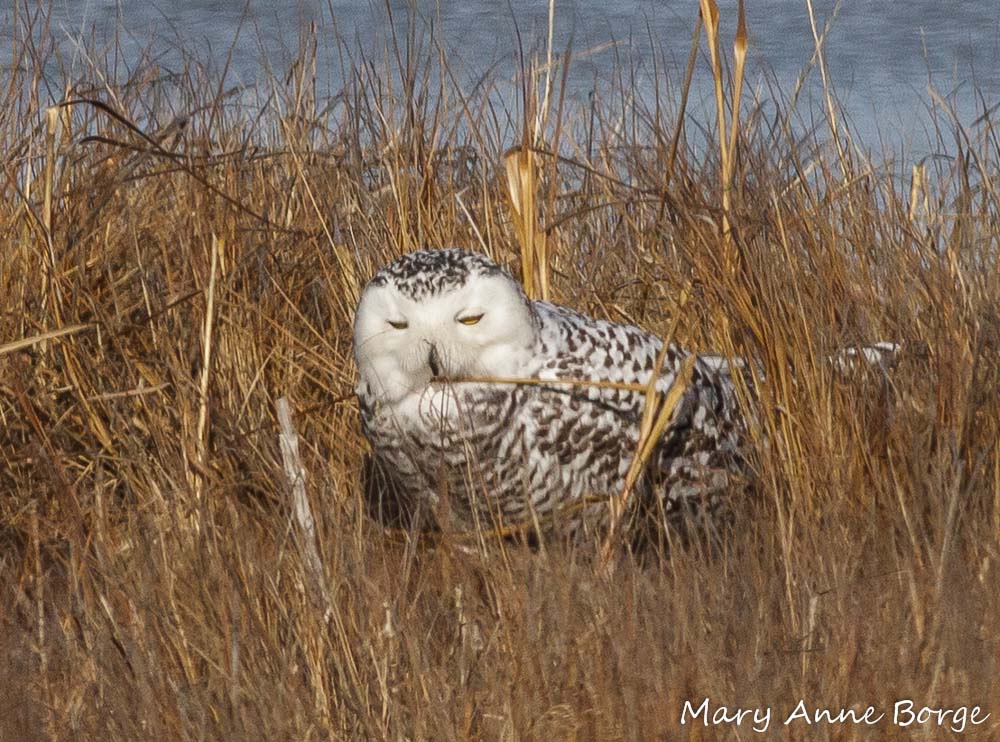
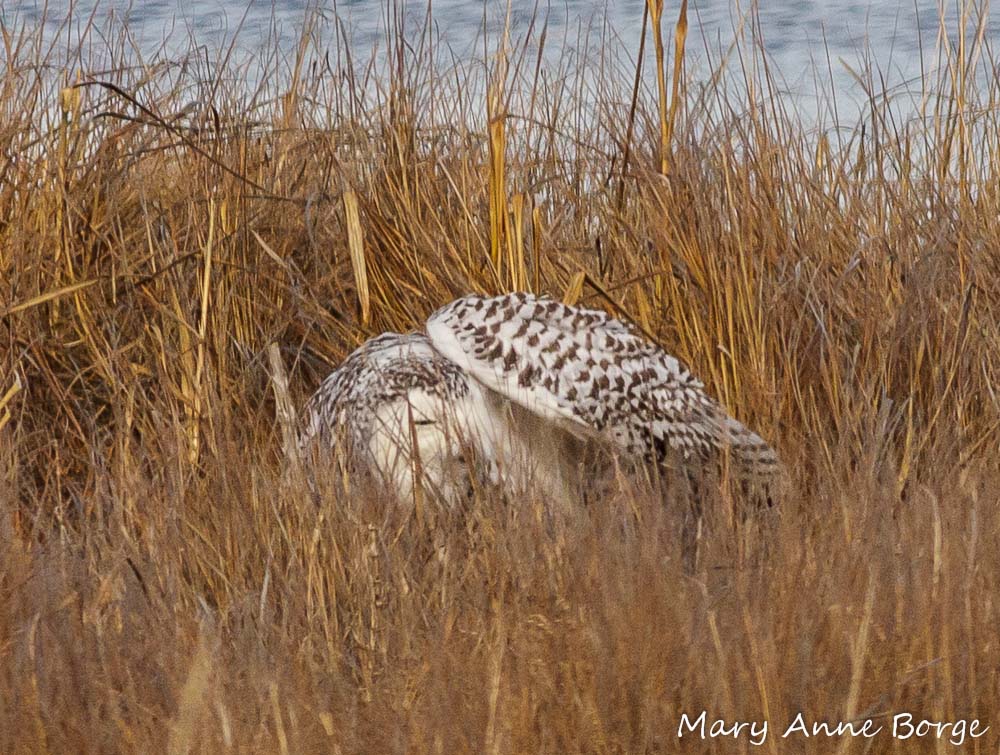
Like every other birder in North America, we decided that this winter was the best chance we would ever have to see a Snowy Owl.  So we went to Forsythe National Wildlife Refuge at the Jersey shore, the location near here likely to be the most reliable for finding them.  There were a number of other birders who had the same idea, and the way we spotted the owl was to look across the marsh from where about a dozen cars were parked, their occupants outside with binoculars, scopes and cameras ready.  We joined them.  Fortunately for the bird, she was quite a distance away, probably more than a hundred yards, with water and marsh grasses between her and her admirers. She seemed to be undisturbed by the attention she was getting.

Snowy Owl in the marsh at Forsythe National Wildlife Refuge

Snowy Owl in the marsh at Forsythe National Wildlife Refuge

Based on the amount of dark barring in her plumage, my best guess is that it was a first year female. (If you can correct me, please let me know!)

Snowy Owl, probably a first year female

Snowy Owl, probably a first year female

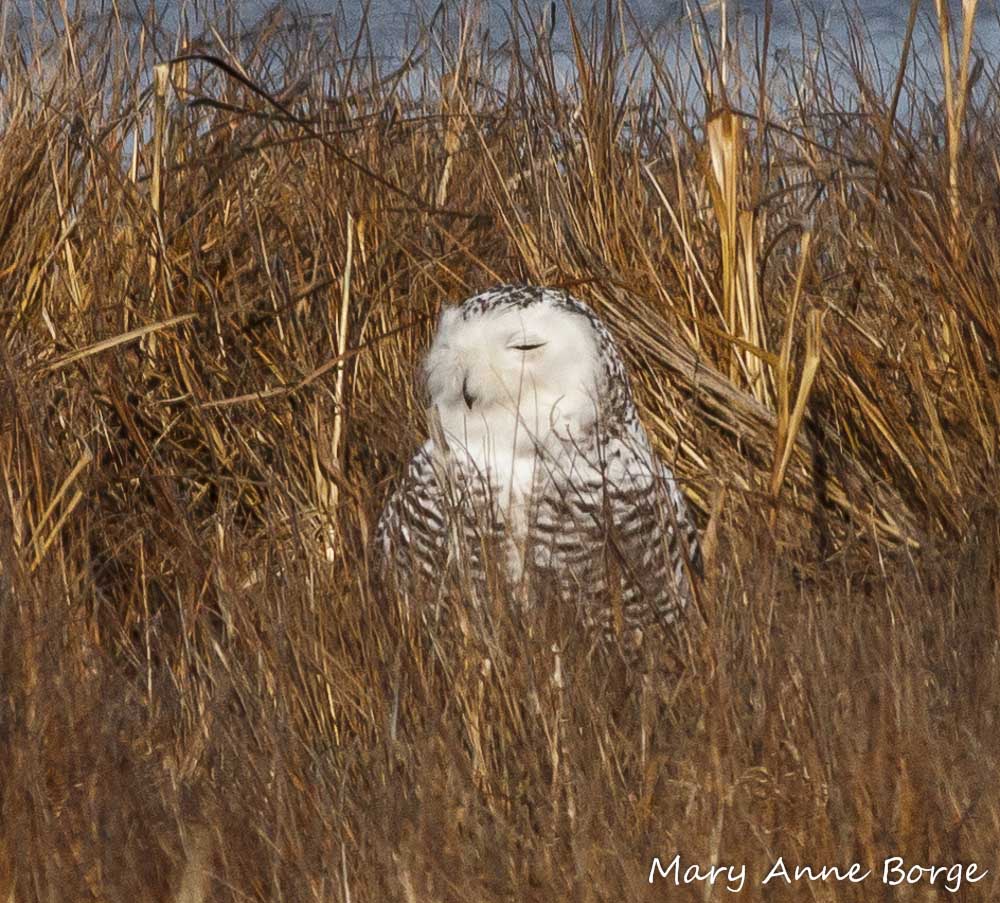
She spent much of her time alertly swiveling her head from side to side, often with her eyes partly or mostly closed; her hearing may have been a more important tool in monitoring  her surroundings.

Snowy Owl

Snowy Owl

Snowy Owl

Snowy Owl

She did take time to fluff out her feathers

Snowy Owl fluffing out her feathers

Snowy Owl fluffing out her feathers

and for some grooming.

Snowy Owl grooming (Checking for under-wing freshness?)

Snowy Owl grooming (Checking for under-wing freshness?)

At one point she looked ready for a nap.

Snowy Owl - yawning?

Snowy Owl – yawning?

Snowy Owl

Snowy Owl

Forsythe is always a productive birding spot. On this day, Northern Harriers hunted the marshes, and flocks of Dunlins fed together in the mud flats.

Dunlins

Dunlins

Great Blue Herons hunted in the channels along side the road.

Great Blue Heron

Great Blue Heron

So did a few Buffleheads.

Bufflehead

Bufflehead

Seeing this pair of Hooded Mergansers was a treat for me.

A pair of Hooded Mergansers, male on the left, female on the right

A pair of Hooded Mergansers, male on the left, female on the right

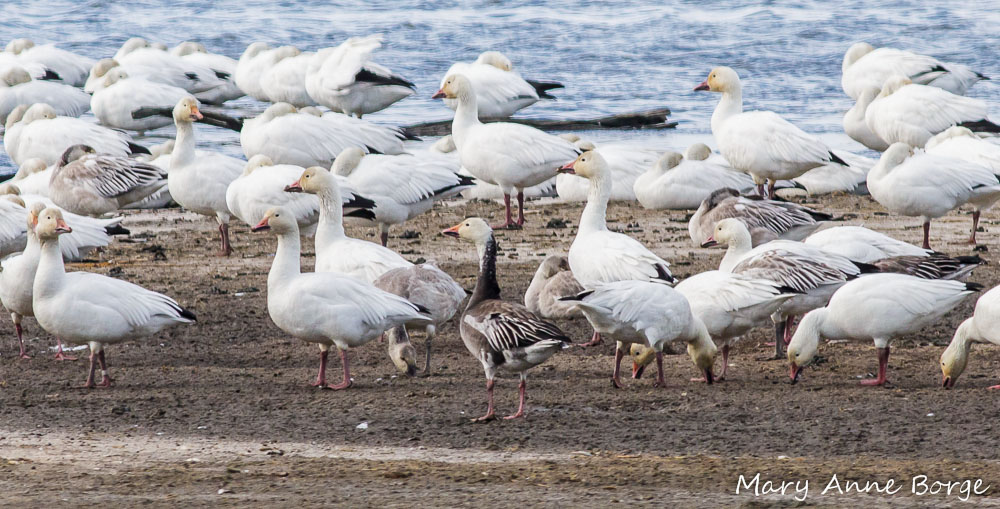
Hundreds of Snow Geese flocked together in the ponds and marshes.

Snow Geese at Forsythe National Wildlife Refuge

Snow Geese at Forsythe National Wildlife Refuge

Snow Geese

Snow Geese

Even a dark morph Snow Goose was present.

Snow Geese, with one dark morph bird

Snow Geese, with one dark morph bird

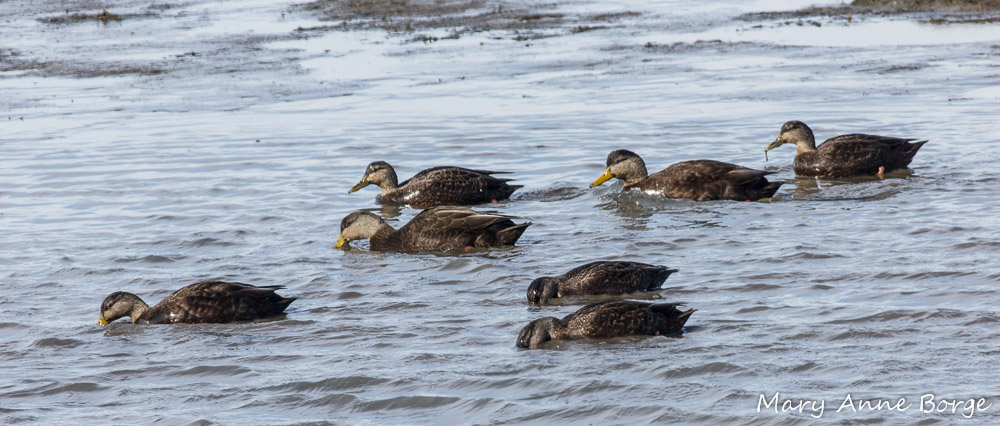
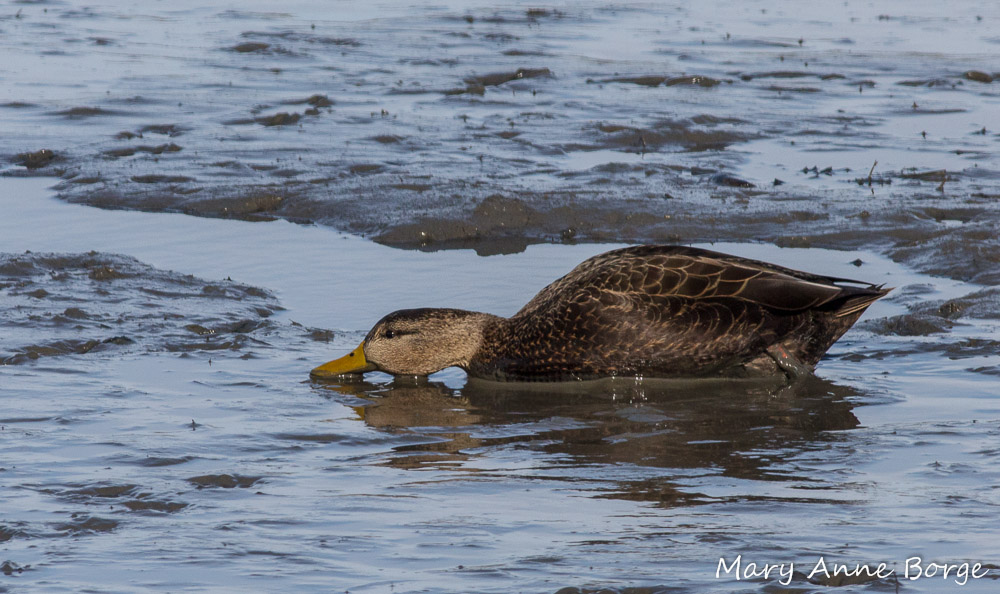
Flocks of American Black Ducks swam in the pools, dipping their beaks just below the water surface searching for food.

American Black Ducks

American Black Ducks

American Black Duck, feeding

American Black Duck, feeding

Northern Pintails fed together in the shallow streams.

Northern Pintail pair, female upper left, male lower right

Northern Pintail pair, female upper left, male lower right

Female Northern Pintail

Female Northern Pintail

Northern Pintail, male

Northern Pintail, male

Northern Pintails

Northern Pintails

Northern Pintails

Northern Pintails

Finally it was time to leave.

Northern Pintail

Northern Pintail

Not a bad day!

Snowy Owl

Snowy Owl

Wild Yam

A few days ago the weather was chilly but dry, so we went for a walk at Spring Lake in the Abbott Marshlands.  The holidays are over, but woodland shrubs there are still decorated with garlands of Wild Yam (Dioscorea villosa).

Wild Yam fruit capsules in Winter

Wild Yam fruit capsules in Winter

This vine isn’t much of an attention-getter during the growing season, although it has lovely glossy, deeply veined heart-shaped leaves.  It has male and female flowers on separate plants, but both are pretty inconspicuous.  I always notice this plant in winter, much less often in summer.

Wild Yam with male flowers

Wild Yam with male flowers

Almost luminous in the sunlight, hanging clusters of Wild Yam’s dried three-sided fruit capsules are eye-catching in winter.  These fruits are opening now to release their winged seeds, a design well adapted for wind dispersal.

Although it is related to the yams and sweet potatoes we eat, Wild Yam is not really edible.  In fact, when consumed fresh, the underground rhizomes might make you nauseous or result in other unpleasant side effects.  But prepared properly it does have medicinal uses.  This unassuming looking plant is worth noting, because it has played an important role in modern drug development.  The roots of Wild Yam contain chemicals called diosgenins, from which many steroid hormones, including contraceptives, were derived.  These chemicals are components in medications used to treat ailments from asthma, arthritis and eczema to reproductive system problems and high blood pressure.

Wild Yam is generally thought to help relieve pain, and to be an effective anti-spasmodic.  Alternate common names are Colic-root or Rheumatism Root, after a few of its uses.  Native Americans used tea made of Wild Yam root to relieve the pain of childbirth.

Wild Yam is insect pollinated, and provides cover and nesting habitat for birds.  It is native in much of the eastern two-thirds of North America, from Ontario to Minnesota, Nebraska and Vermont, south to Texas in the west, Florida and even Puerto Rico in the east.  Look for it in woodlands and thickets, climbing in the shrub layer.

Wild Yam fruit capsules in winter

Wild Yam fruit capsules in winter

References

Foster, Stephen; Duke, James A.  A Field Guide to Medicinal Plants and Herbs of Eastern and Central North America, Second Edition.  2000.

Cech, Richo. American Wild Yam. From Planting the Future, Saving Our Medicinal Herbs, edited by Gladstar, Rosemary and Hirsch, Pamela. 2000.

USDA Natural Resources Conservation Service Plants Database

Illinois Wildflowers

Native American Ethnobotany (University of Michigan – Dearborn)