The Mist, the Meadow, and a Mystery

The weather this winter has been very variable, with warm temperatures and foggy conditions one day, followed by cold, wind and snow the next.  On one of the recent warm foggy days, I went for a walk at Bowman’s Hill Wildflower Preserve, just south of New Hope, Pennsylvania.  The misty air exaggerated everything – silence, sounds, colors and images.
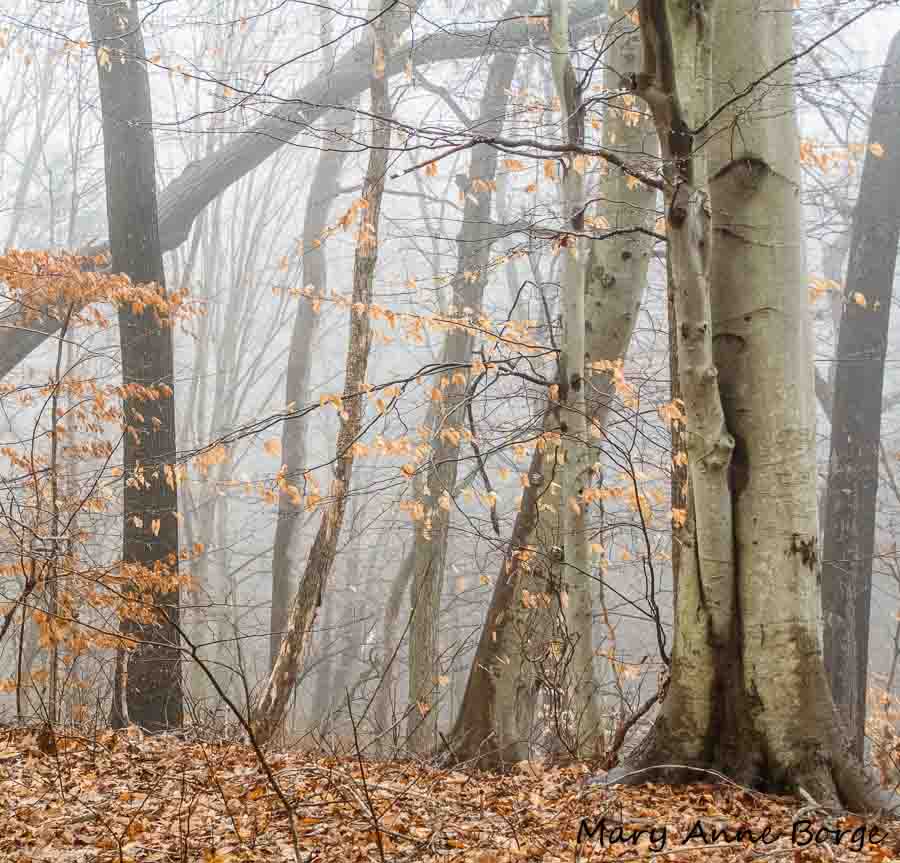
Fog in the woods

Fog in the woods

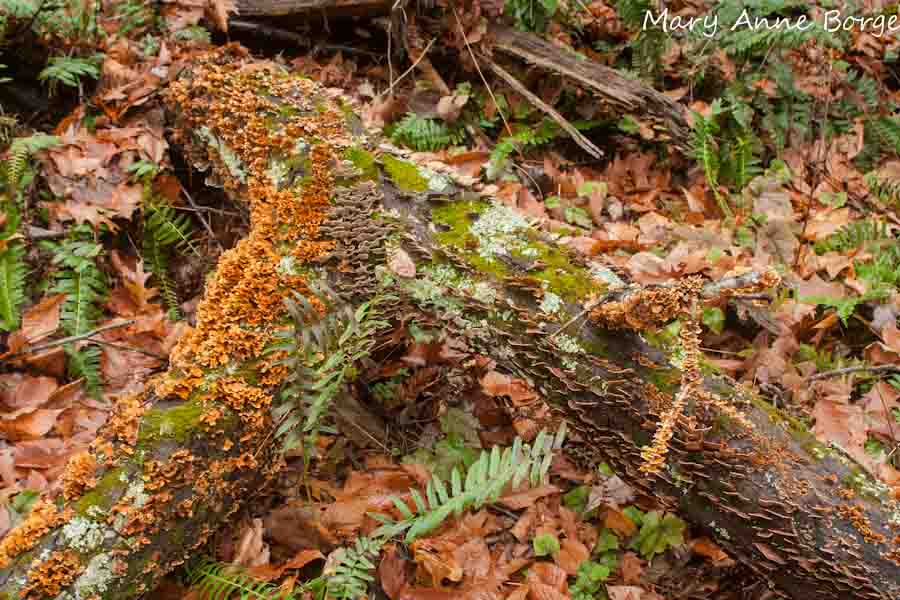
Soft light intensified the bright white and green of the Lumpy Bracket (Trametes gibbosa) mushroom, causing it to jump out and catch my eye.
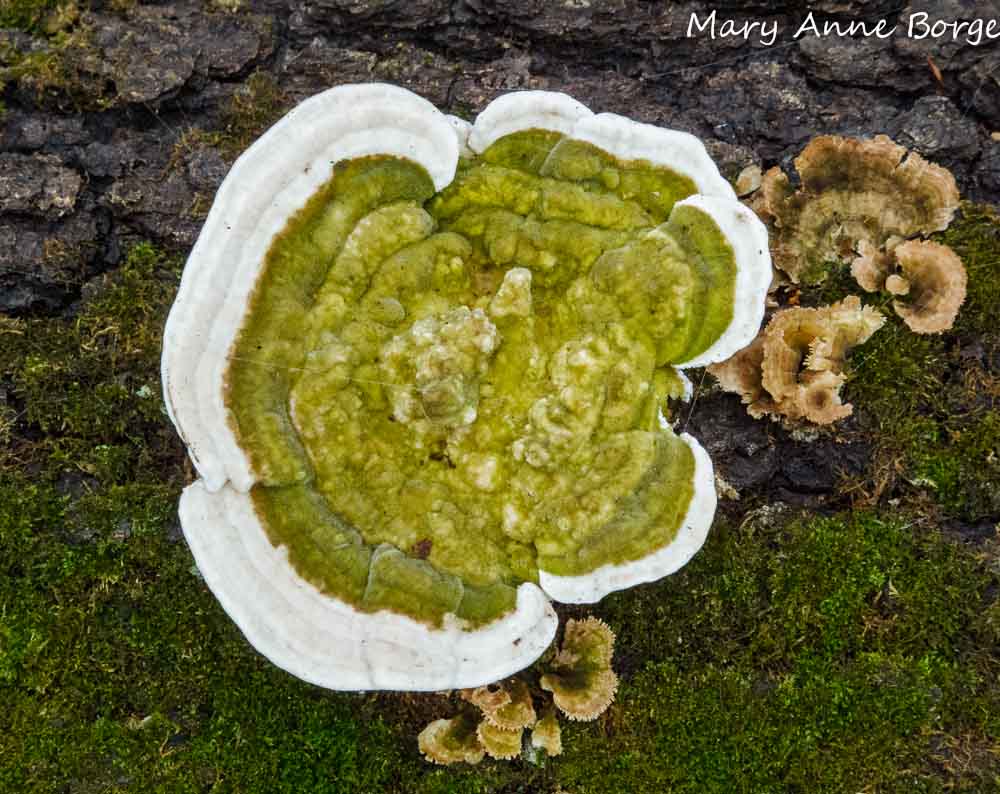
Lumpy Bracket (Trametes gibbosa)

Lumpy Bracket (Trametes gibbosa)

The changeable weather makes it challenging to adjust to the season, not just for people, but for plants, too.  I saw Golden Alexanders (Zizea aurea) in bud, a plant that typically blooms in early May in this area in eastern Pennsylvania.  A little scary!

Golden Alexanders (Zizia aurea)

Golden Alexanders (Zizia aurea)

Two White Ash (Fraxinus americana) trees were sentinels on the approach to the meadow…
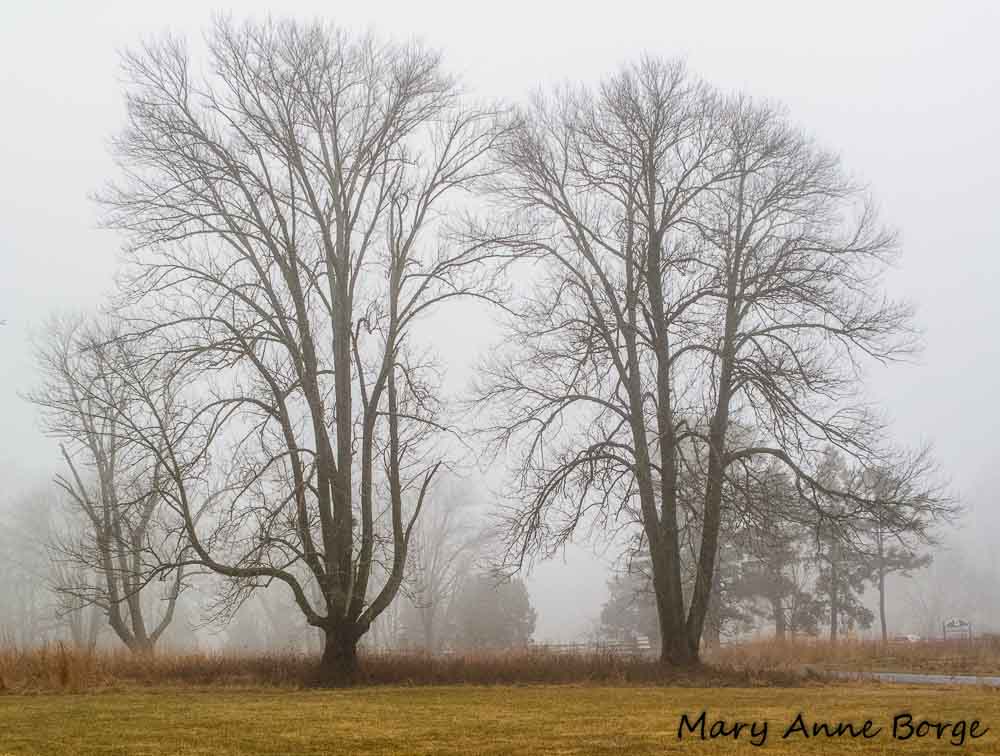
White Ash (Fraxinus americana) trees at the edge of the meadow

White Ash (Fraxinus americana) trees at the edge of the meadow

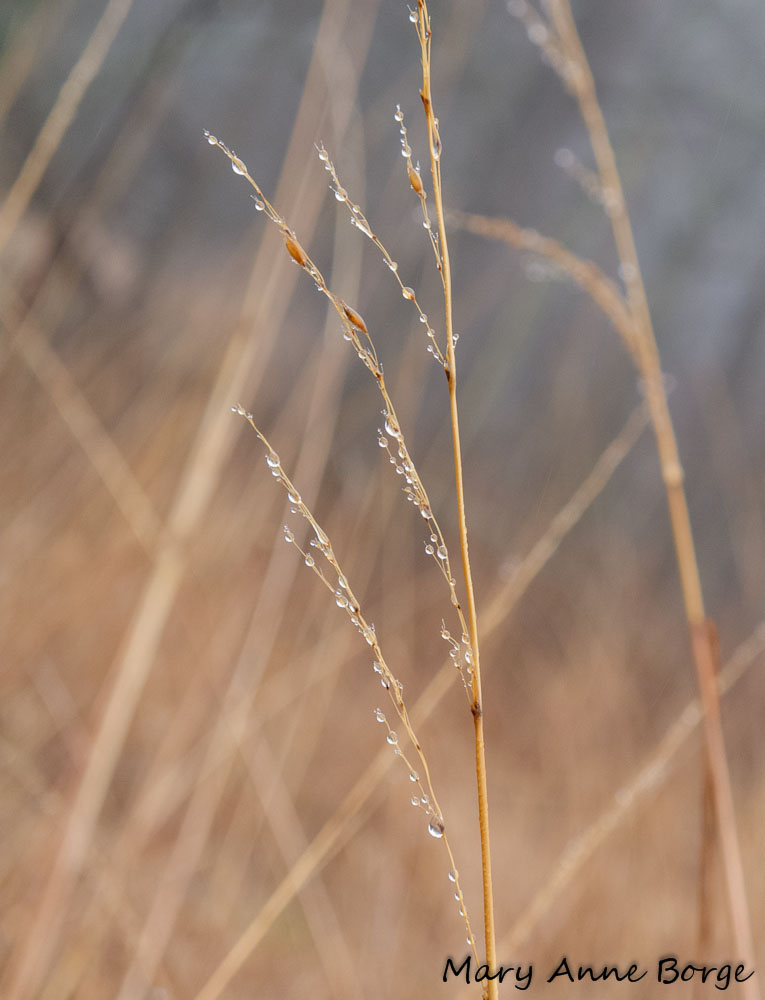
…where the grasses were beaded with water droplets.

Switchgrass (Panicum virgatum)

Switchgrass (Panicum virgatum)

Purpletop (Tridens flavus)

Indiangrass (Sorghastrum nutans)

Indiangrass (Sorghastrum nutans)

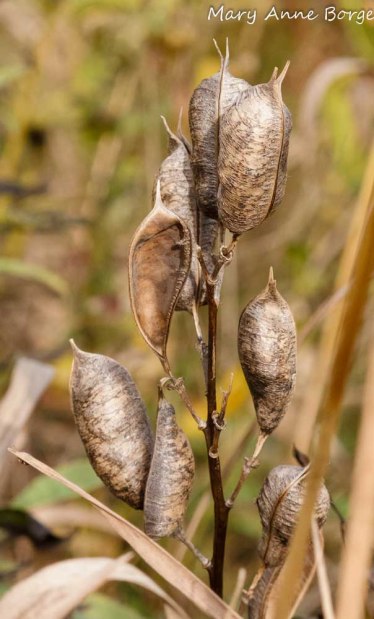
There were many signs of life in the meadow. A spider successfully blended in with the dried fruit capsules of Culver’s Root (Veronicastrum virginicum).

Culver’s Root (Veronicastrum virginicum) with spider

Culver’s Root (Veronicastrum virginicum) with spider

Spider on Culver’s Root (Veronicastrum virginicum)

 Chinese Mantis (Tenodera aridofolia sinensis) egg cases were very common.

Chinese Mantis egg case on Indian-hemp (Apocynum cannabinum) fruit capsules

Chinese Mantis egg case on Indian-hemp (Apocynum cannabinum) fruit capsules

Much less common was the egg case of a native, the Carolina Mantis (Stagmomantis carolina). I only found one.

Carolina Mantis (Stagmomantis carolina) egg case

Carolina Mantis (Stagmomantis carolina) egg case

The mantises are pretty indiscriminate about where they deposit their egg cases. They are not plant specific, but will use any sturdy structure that’s handy – a shrub, a perennial, even a fence will do.  Each egg case, or ootheca, may contain hundreds of eggs.  The young will all emerge at the same time in the spring. (Unless they’re eaten by another insect first!)

Goldenrod galls were evidence of insects overwintering. A gall is a growth that is a plant’s reaction to being used, or colonized, by another organism.  Galls generally don’t cause any harm to the plant.

Goldenrod Ball Gall

Goldenrod Ball Gall

One of the easiest galls to recognize is the goldenrod ball gall, a spherical growth found on the stems of some goldenrods, caused by the goldenrod gall fly (Eurosta solidaginis), a fruit fly. There are many species of goldenrod, but the goldenrod gall fly is very particular about which species it will use;  it specializes primarily on Solidago altissima, but Solidago giantea may also be a host. (Solidago altissima goes by many common names: the USDA calls it Canada Goldenrod, but other sources may use Tall or Late Goldenrod. Solidago giantea is Giant Goldenrod according to the USDA, but it is referred to by other sources as Late or Smooth Goldenrod. So confusing! This makes the need for a standard scientific name clear.)

The adult female goldenrod gall fly lays an egg in the leaf bud of the goldenrod before the leaves unfold. After hatching, the larva bores into the stem of the plant, and begins to eat. This stimulates the plant to generate additional nutrients and the gall tissue, a process that takes about three weeks to complete. The gall provides food and shelter for the insect for the remainder of its stay.  After spending the winter in a dormant state, called diapause, if the insect is lucky it will pupate in spring and then emerge as an adult from its winter home.

But there are many dangers that could cut the life of the goldenrod gall fly larva short while it takes shelter in the gall. Other insects, including two chalcid wasp species, Eurytoma gigantea and Eurytoma obtusiventris, may eat the insect larva and take possession of the gall. If the goldenrod gall fly larva manages to avoid these and other predators, a Downy Woodpecker or a Chickadee may make it a tasty winter meal.

This Goldenrod Ball Gall has been excavated by a Downy Woodpecker

This Goldenrod Ball Gall has been excavated by a Downy Woodpecker

The goldenrod bunch gall resembles a flower, but it is actually a rosette of leaves caused by the entry of a goldenrod bunch gall midge (Rhopalomyia solidaginis) larva into the stem of its host goldenrod species, Solidago altissima. This stops additional upward growth in the stem of the plant, although leaves will continue to sprout, forming the rosette.  Additional growth is through side shoots branching off from the stem below the gall.  The presence of this gall actually increases the diversity of other insect species where it is present, by providing additional habitat for them.
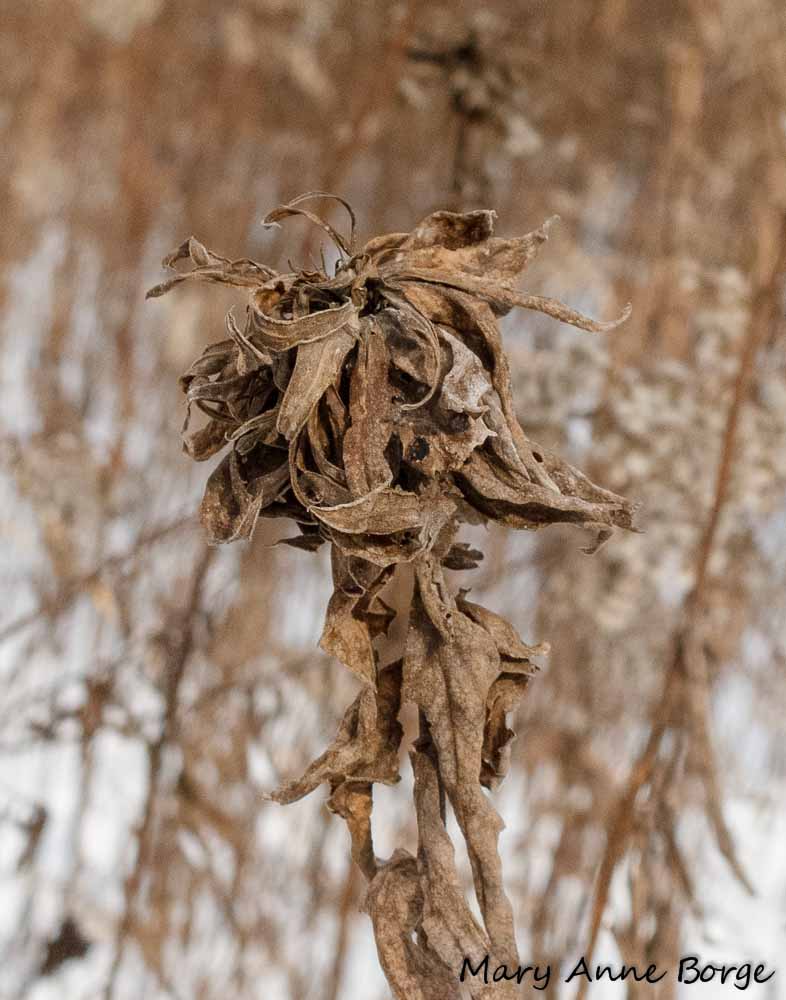
Goldenrod Bunch Gall

Goldenrod Bunch Gall

I found a wonderful, complex, twisted, origami-like structure made in the leaves of Indiangrass (Sorghastrum nutans) that remains a mystery to me.
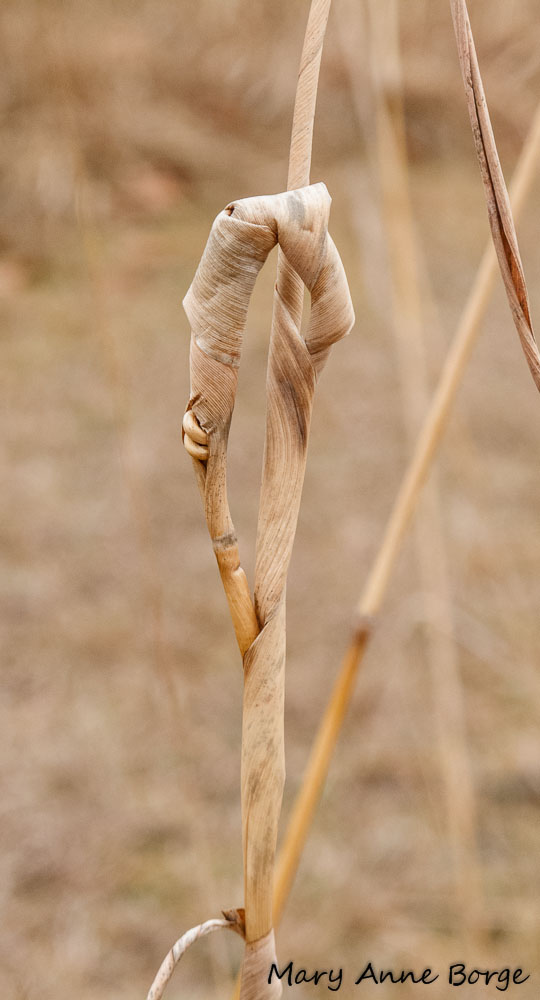
Mystery shelter

Mystery shelter

Could it be a winter shelter for a butterfly caterpillar, maybe a Pepper and Salt Skipper?  This butterfly is possible, although not common in this area, and its caterpillars spend the winter in rolled grass leaves, including Indiangrass.  Maybe some other skipper?  Or did a spider make this refuge? If you have any idea who could be hiding inside, let me know!

If you are lucky enough to have custody of a meadow, you may be wondering how to maintain it without killing the critters that live there. To prevent a meadow from evolving into a forest, you will have to mow it. But this will disrupt habitat for the resident insects, birds and mammals. To minimize the damage, try mowing at a height of 12-16 inches, in a mosaic pattern if possible, and don’t mow more than a third of the meadow in a year. For the sake of birds and mammals, mow as late in the winter as you can. These techniques will help preserve life, and increase the diversity of the residents in your meadow.
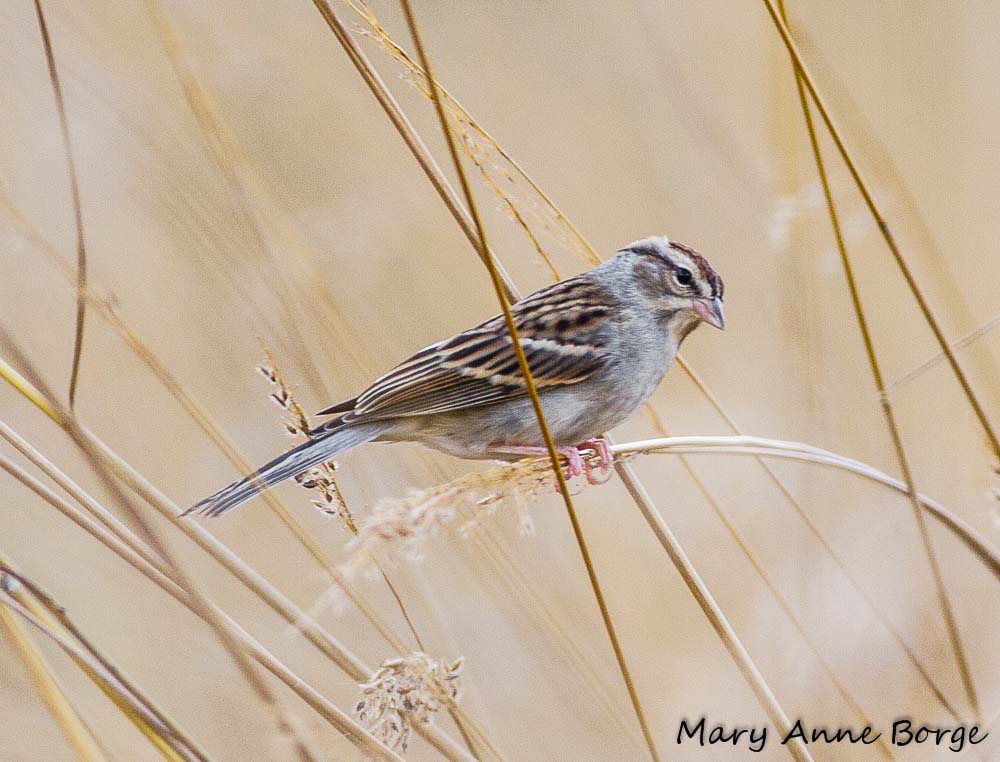
Chipping Sparrow on Indiangrass

Chipping Sparrow on Indiangrass

Resources

Eastman, John. The Book of Field and Roadside. 2003.

Eiseman, Charley; Charney, Noah. Tracks & Sign of Insects and Other Invertebrates. 2010.

Mader, Eric; Shepherd, Matthew; Vaughan, Mace; Black, Scott Hoffman; LeBuhn, Gretchen. Attracting Native Pollinators: Protecting North America’s Bees and Butterflies. 2011.

Special thanks to Beatriz Moisset, who was generous with information about goldenrod galls, including pointing me to some helpful information on Bugguide.net: http://bugguide.net/node/view/324012

I found this paper especially interesting: Host-plant Genotypic Diversity Mediates the Distribution of an Ecosystem Engineer, by Kerri M. Crawford, Gregory M. Crutsinger, and Nathan J. Sanders

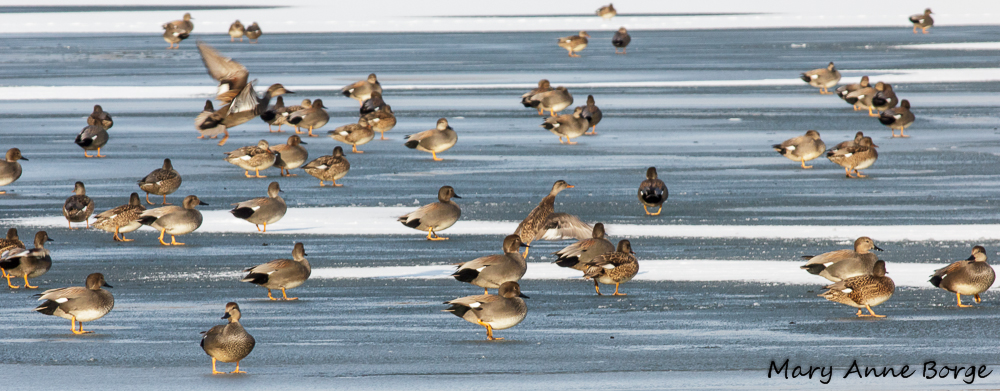
Wonders of a Winter Walk – The Marsh
Sunday was a beautiful winter day – cold, but not windy, sunny, with just a dusting of fresh snow that fell over night.  So we decided to go to ‘the marsh’ to look for wintering birds.

Gadwall Pair

Gadwall Pair

The marsh to us is the Abbott Marshlands, known until recently as the Hamilton-Trenton-Bordentown Marsh.  We went to the access point called Spring Lake at Roebling Park in Hamilton Township, New Jersey.  It’s a reliable refuge for ducks looking to spend the winter in a place where there is enough open water to swim and feed.  As a result, it’s a reliable refuge for birders, too.  Sunday was not a disappointment.  Northern Shovelers, Northern Pintails, Gadwalls, Green-winged Teal, American Coots, and Mallards were all present.  Gadwalls, shown below assembling in a large flock on the ice at Spring Lake, were the most common species.  (It reminds me of some conventions I’ve attended!)

A large flock of Gadwalls, on ice at Spring Lake

A large flock of Gadwalls, on ice at Spring Lake

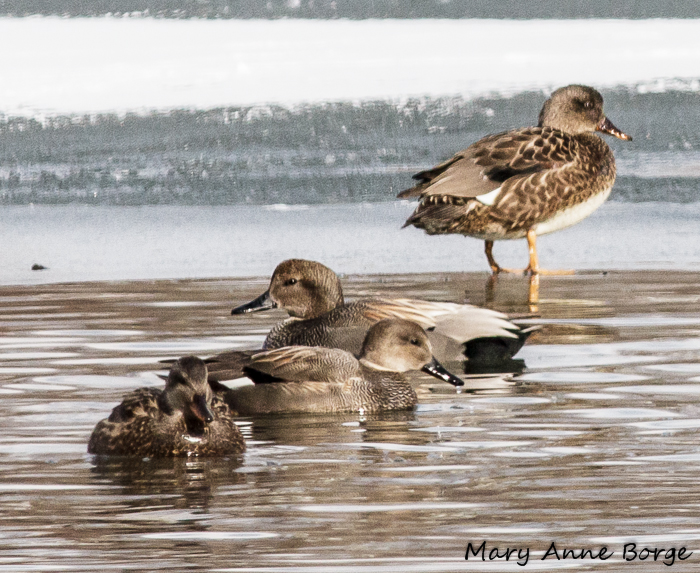
We saw Gadwalls gathering in open water, sometimes in small groups like these, possibly two mated pairs, relaxing with members of their own species.
Gadwalls, possibly mated pairs

Gadwalls, possibly mated pairs

The Gadwalls fed in groups, sometimes joined by American Coots.  Coots are known to snatch food away from other birds, but Gadwalls are among the species that reverse that role.  Were the Gadwalls stealing from the Coots, or the Coots from the Gadwalls, or were they working together as a cooperative group?

Gadwalls with American Coots, feeding

Gadwalls with American Coots, feeding

We saw Northern Shovelers, feeding in swirling cells, circling around and around to stir up food sources they could filter through their bills.

Northern Shovelers feeding in rotating cell, with Gadwall

Northern Shovelers feeding in rotating cell, with Gadwall

Later we watched Northern Shovelers, American Coots, and Gadwalls, and even Mute Swans all walking on thin ice.

Northern Shoveler, adult male

Northern Shoveler, adult male

Northern Shoveler, male, likely first year

Northern Shoveler, female

Northern Shoveler, female

American Coot, skating on thin ice

American Coot, skating on thin ice

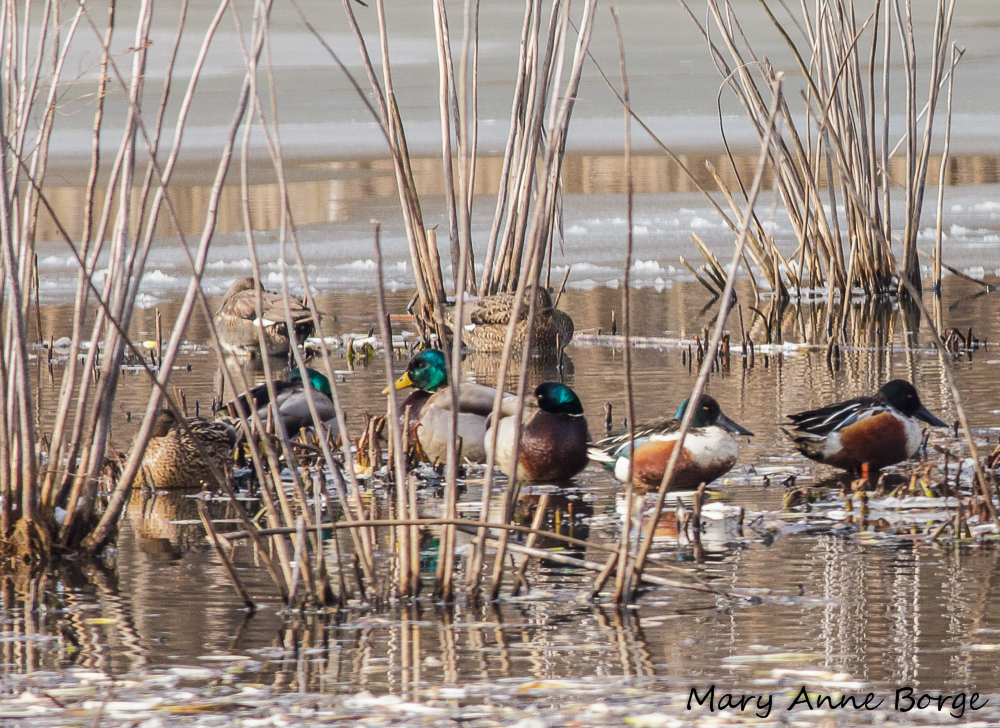
In the north marsh, Mallards, Northern Shovelers and Gadwalls took refuge together behind stalks of Swamp Rose Mallow.

Wintering Ducks - Northern Shovelers, Mallards, Gadwalls

Wintering Ducks – Northern Shovelers, Mallards, Gadwalls

My husband got my favorite shot of the day.

Gadwall in flight over Spring Lake

Gadwall in flight over Spring Lake

Resources:

Birds of Lake, Pond and Marsh, 1999, John Eastman

The Stokes Field Guide to the Birds, 2010, Donald & Lillian Stokes

http://www.allaboutbirds.org/guide/Gadwall/lifehistory

http://cmboviewfromthecape.blogspot.com/2012/12/when-is-female-northern-shoveler-not.html

Life in Dead Wood

‘Getting rid of dead wood’ or ‘Cutting out the dead wood’ are phrases that are so commonly used that they have become ubiquitous when referring to a ‘reduction in force’ in the corporate world. These phrases have their origin in advice for maintaining landscaping. In a formal setting where neatness is desired, or where a dead tree or branch poses a threat to people, property or power lines (why don’t they bury those power lines, anyway?), removing dead wood is certainly a prudent thing to do.

But is ‘getting rid of dead wood’ always a good idea? Does dead wood have any function or benefit in a less formal or a natural setting?

Well, let’s think about it. On the plus side, dead wood does provide a home for many species of fungi, some of which are eaten by insects, mammals (including people!) and other critters.

Mushrooms on dead wood

Mushrooms on dead wood

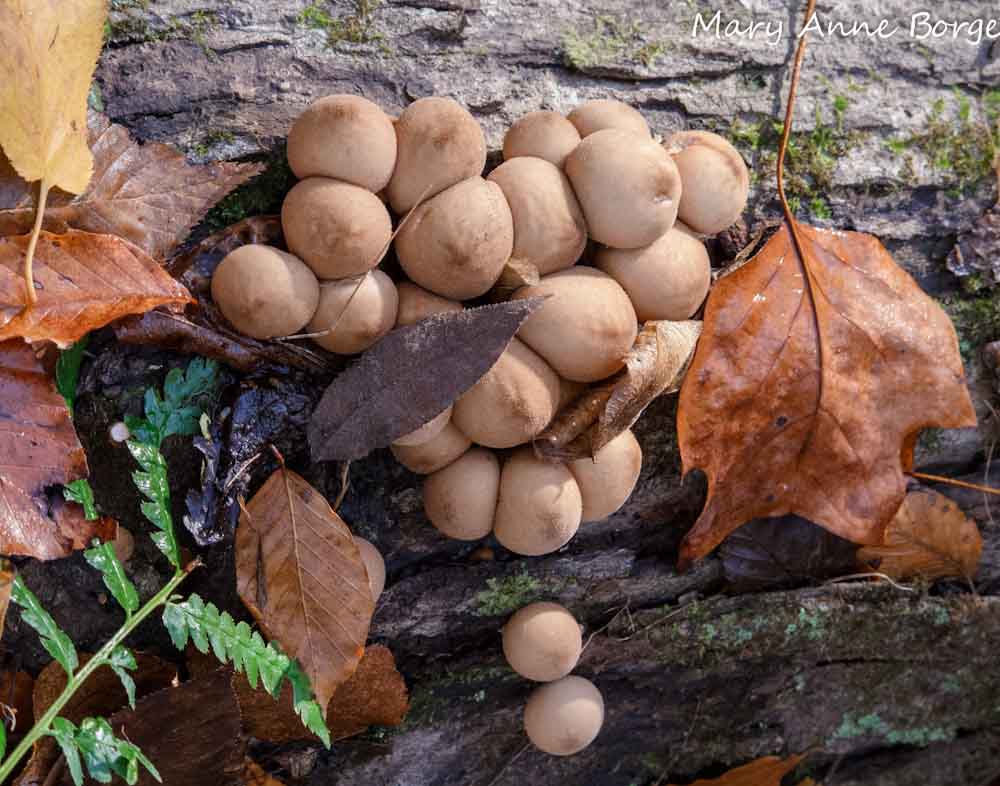
Some insects even develop inside mushrooms, like the puffballs pictured below.

Puffballs

Puffballs

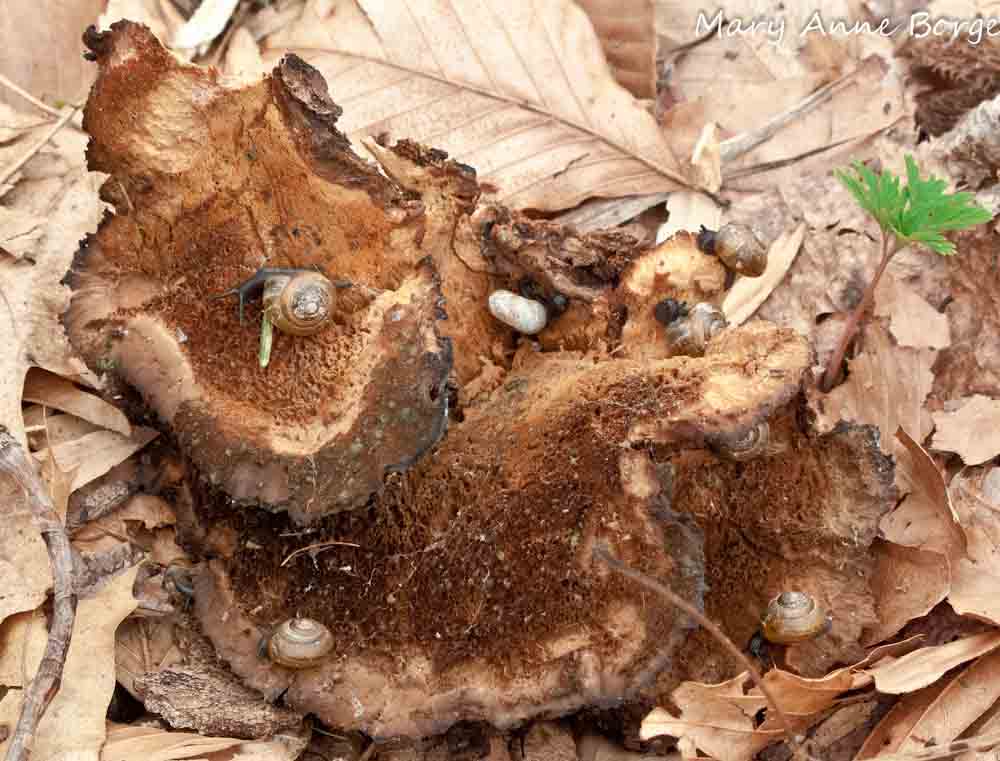
At first glance these snails seem to be using the mushrooms as a sun deck, but a closer look shows that they are feeding here.

Snails feeding on mushrooms

Snails feeding on mushrooms

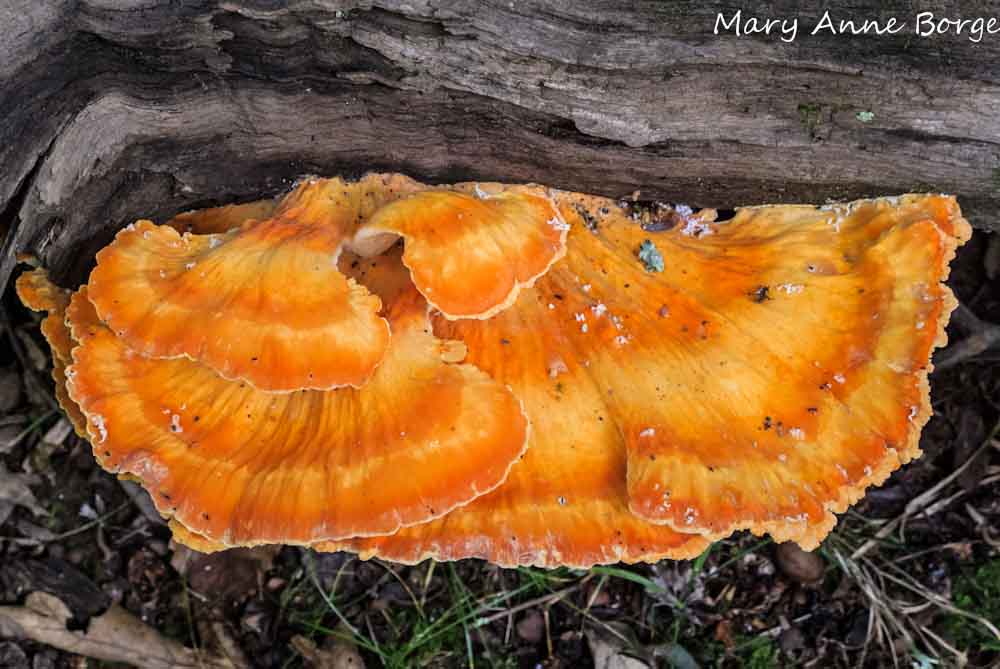
The young edges of the colorful Chicken of the Woods mushroom are edible, and taste like, well, chicken.

Chicken of the Woods

Chicken of the Woods

Many insect species, including ants, wasps, bees, beetles and even butterflies make dead wood their home for at least part of their life cycle.

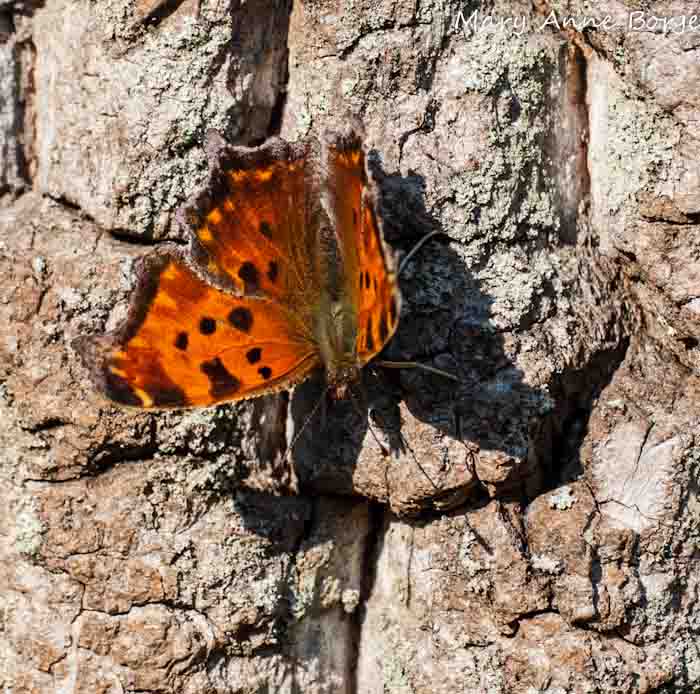
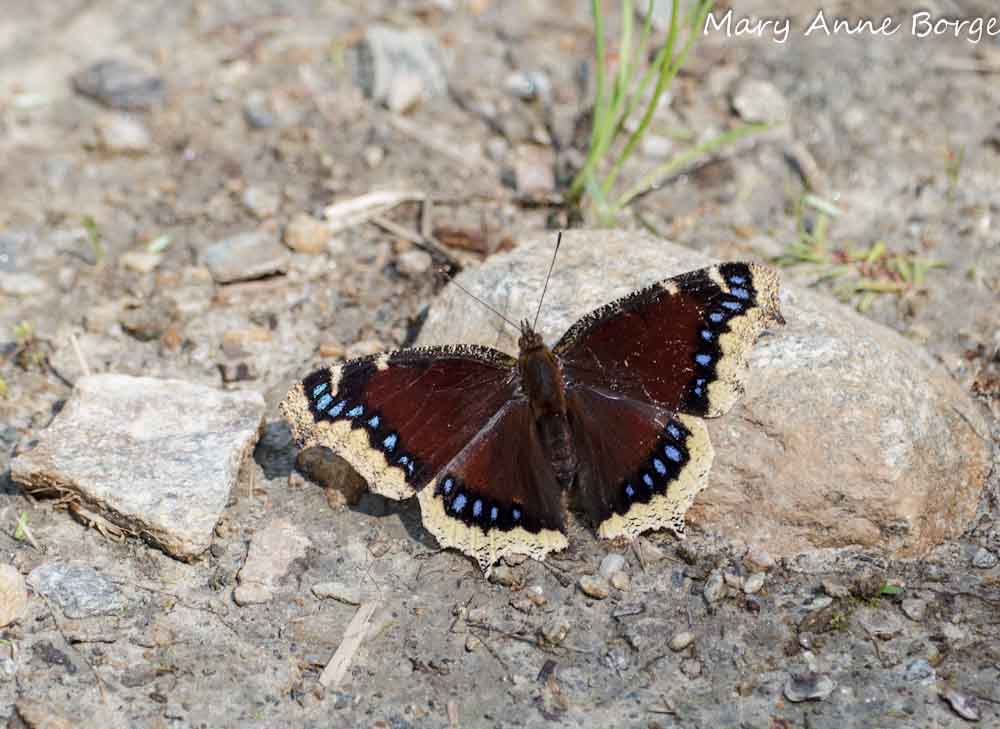
Eastern Commas, Question Marks and Mourning Cloaks survive the cold northern winter as adults, often taking shelter in a woodpile or underneath loose bark.

Eastern Comma

Eastern Comma

Mourning Cloak

Mourning Cloak

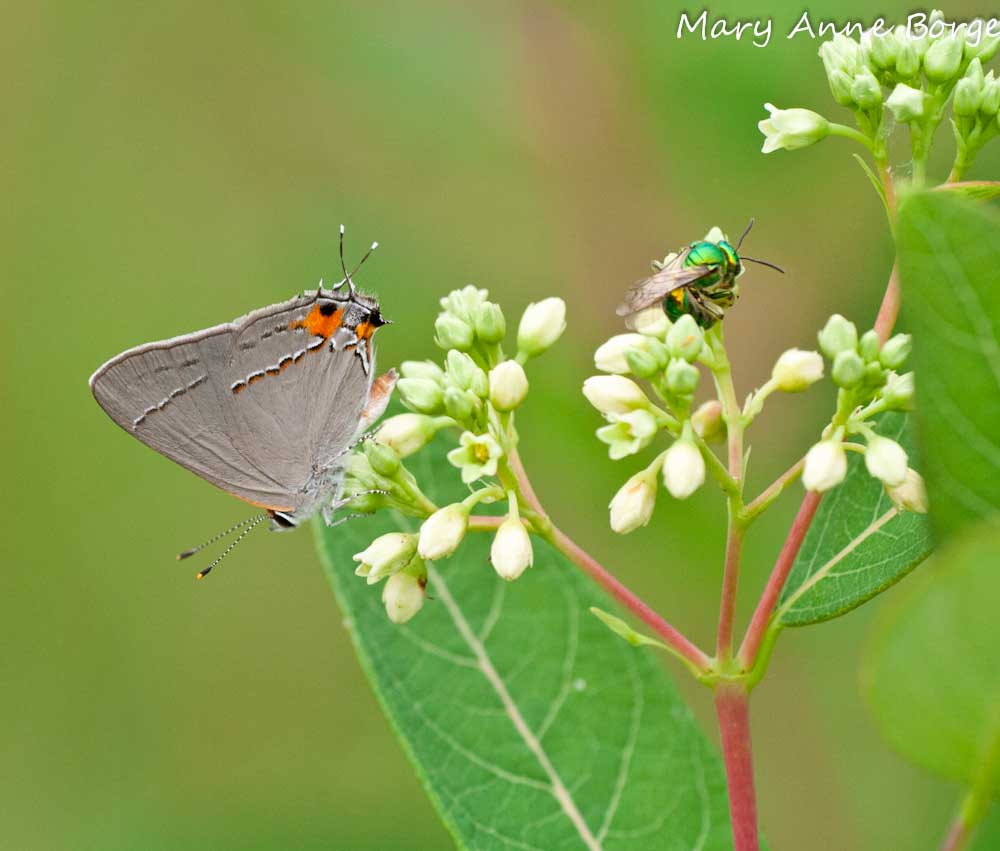
Some species of solitary bees may make their nests in dead wood, like the sweat bee pictured below sipping nectar in the company of a Gray Hairstreak butterfly. This little sweat bee and other solitary bees are important pollinators, many providing free pollination services for food crops. Some of our native bees are more efficient pollinators than Honey Bees, because the native bees are a better anatomical match for the plants with which they evolved.  Providing habitat for native bees can reduce the need to pay to truck in Honey Bees, the migrant workers of the insect world.  It may also increase pollination rates and crop yield.

Sweat Bee and Gray Hairstreak on Indian Hemp (Apocynum cannabinum)

Sweat Bee and Gray Hairstreak on Indian Hemp (Apocynum cannabinum)

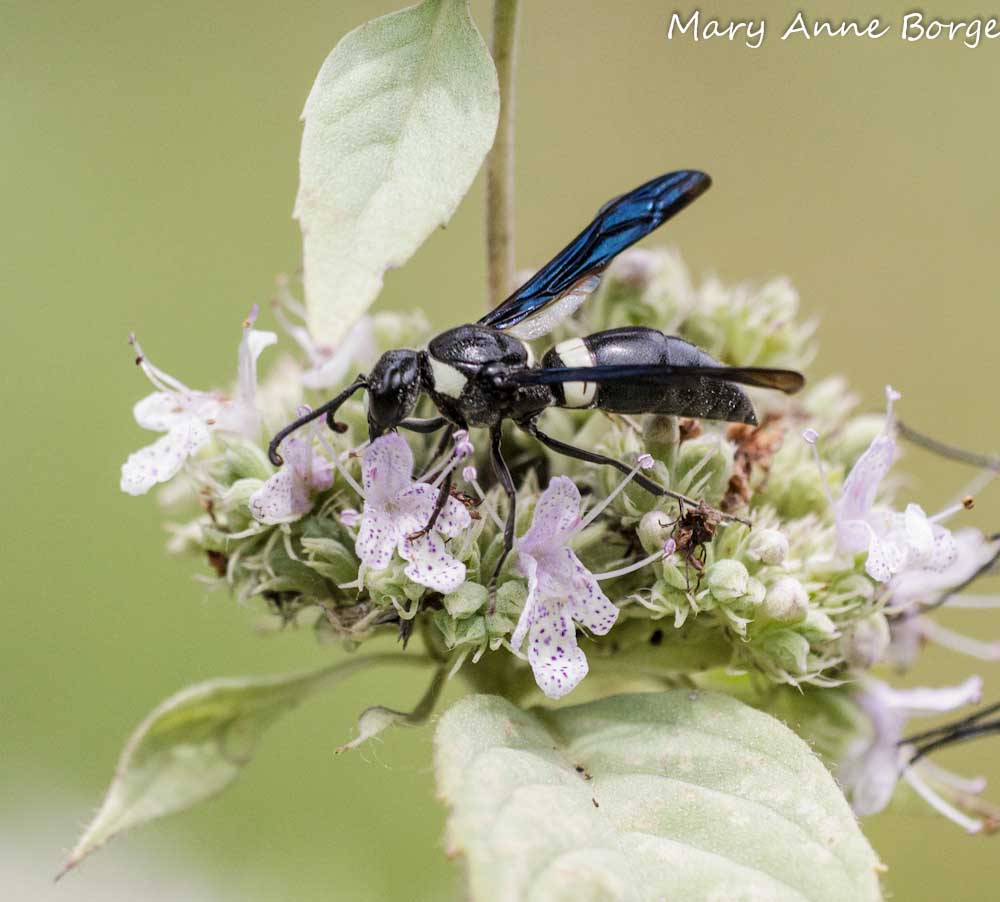
Most wasps are predators of other insects, helping to keep their populations in balance. Mason wasps, for example, provision their nests with caterpillars on which their larvae feed as they develop. They usually nest in borings made in dead wood by other insects like beetles or bees.

Mason Wasp (Monobia quadridens) on Hoary Mountain Mint (Pycnanthemum incanum)

Mason Wasp (Monobia quadridens) on Hoary Mountain Mint (Pycnanthemum incanum)

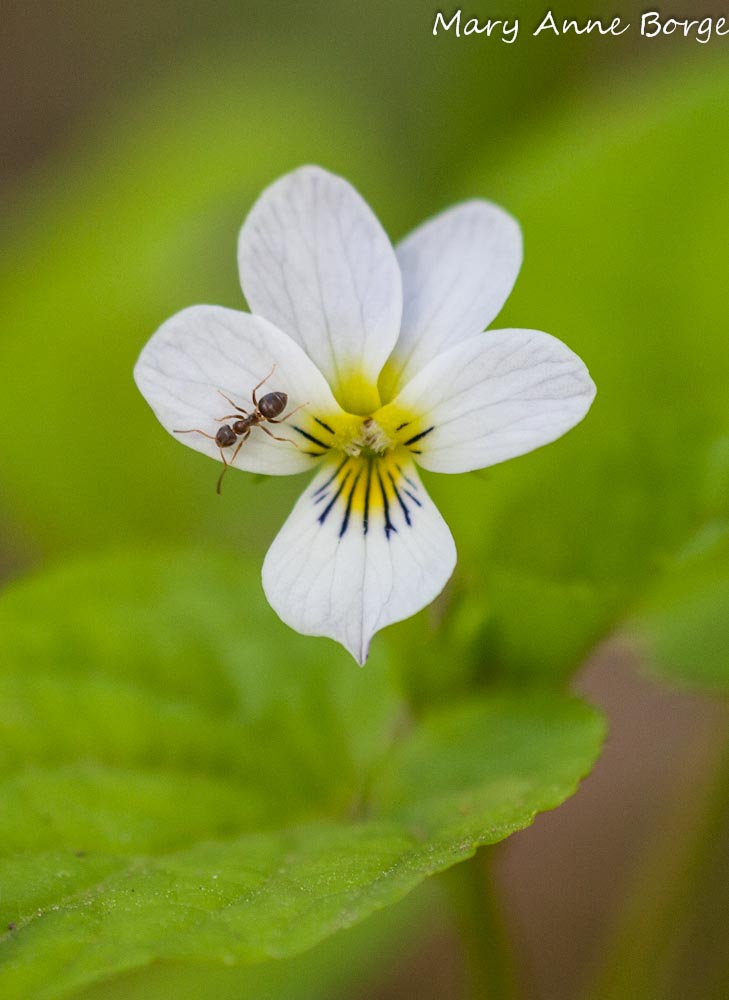
There are ant species that make their homes in rotting wood. Ants don’t cause wood to rot, and they don’t eat the wood. They excavate spaces for their nests in wood that is already soft, moist, and decaying. Ants are important seed dispersers for many plants, including violets, trilliums, Dutchman’s Breeches, Spring Beauty, and many more.

Ant with Canada Violet (Viola canadensis)

Ant with Canada Violet (Viola canadensis)

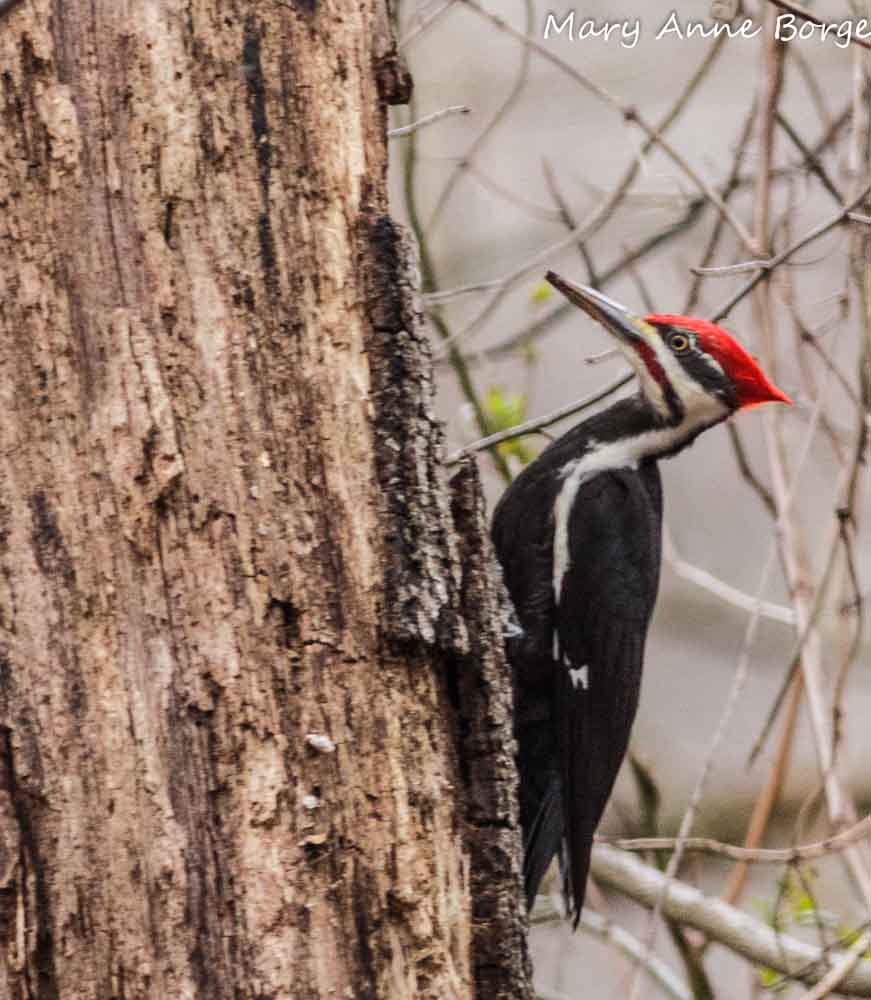
Ants and wood boring beetle larvae are favorite foods of many woodpeckers. Among them are the largest woodpeckers in North America, the Pileated Woodpecker. Have you have ever had a Pileated Woodpecker attack the siding of your home? If so, it’s because the bird has detected the presence of a delectable meal of carpenter ants there, which would only be present if you had rotting wood. So think of it as a free consultation, courtesy of nature, to let you know that you have some maintenance to do. Replace, paint or otherwise seal the wood to prevent moisture from getting in, and your problems with ants and woodpeckers will go away. They’ll go back to feeding on insects in the naturally rotting wood found in nature.

Pileated Woodpecker feeding on insects in dead tree

Pileated Woodpecker feeding on insects in dead tree

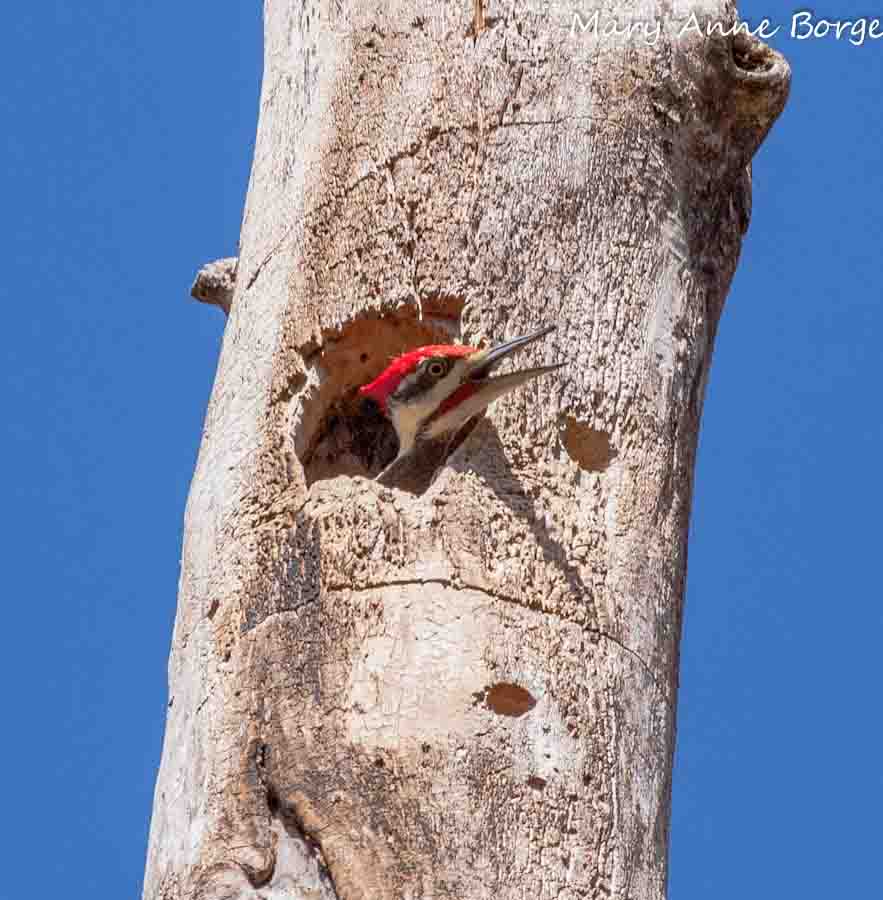
In the photo below a Pileated Woodpecker is peeking out from his nest hole. Can you tell what type of tree this is?

Pileated Woodpecker looking out of nest hole

Pileated Woodpecker looking out of nest hole

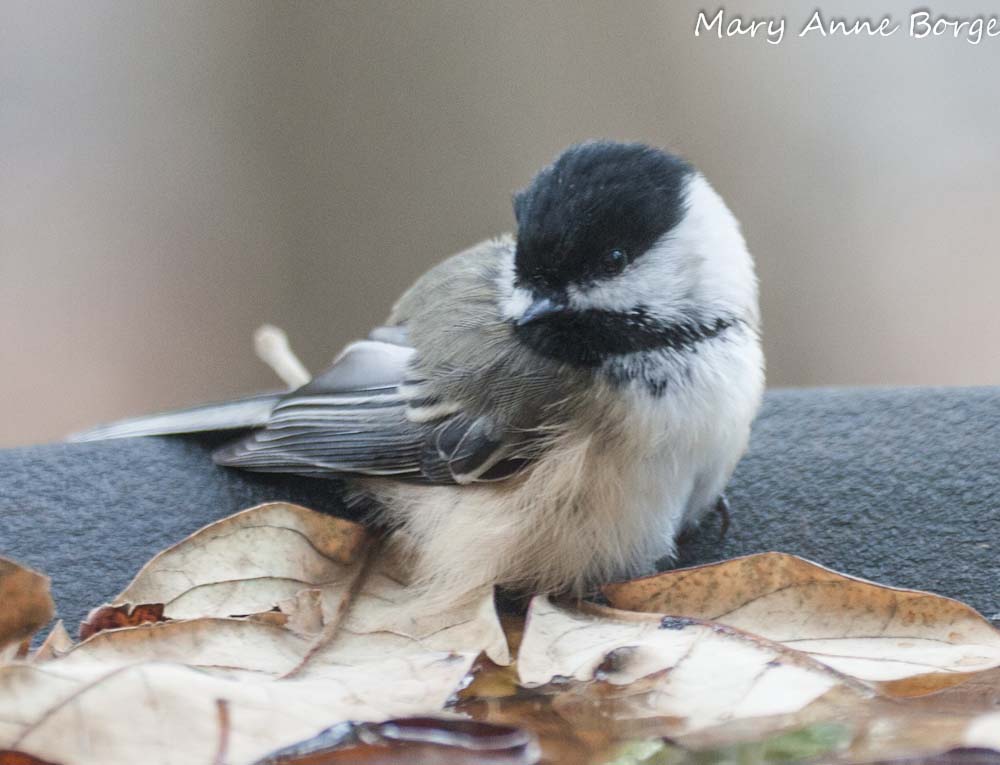
If you said ‘dead’, you’re correct! In addition to providing a bountiful source of insect protein, dead wood offers real estate for homes for many birds, including Downy, Hairy, and Red-bellied Woodpeckers, and Flickers. Even Chickadees excavate holes in very soft, rotting wood for their nests. Titmice, White- and Red-breasted Nuthatches, Carolina and House Wrens all nest in holes in dead or living trees, sometimes using abandoned woodpecker holes. All of these birds also forage for insect protein, a bounty of which is available in or on dead wood.

Carolina Chickadee

Carolina Chickadee

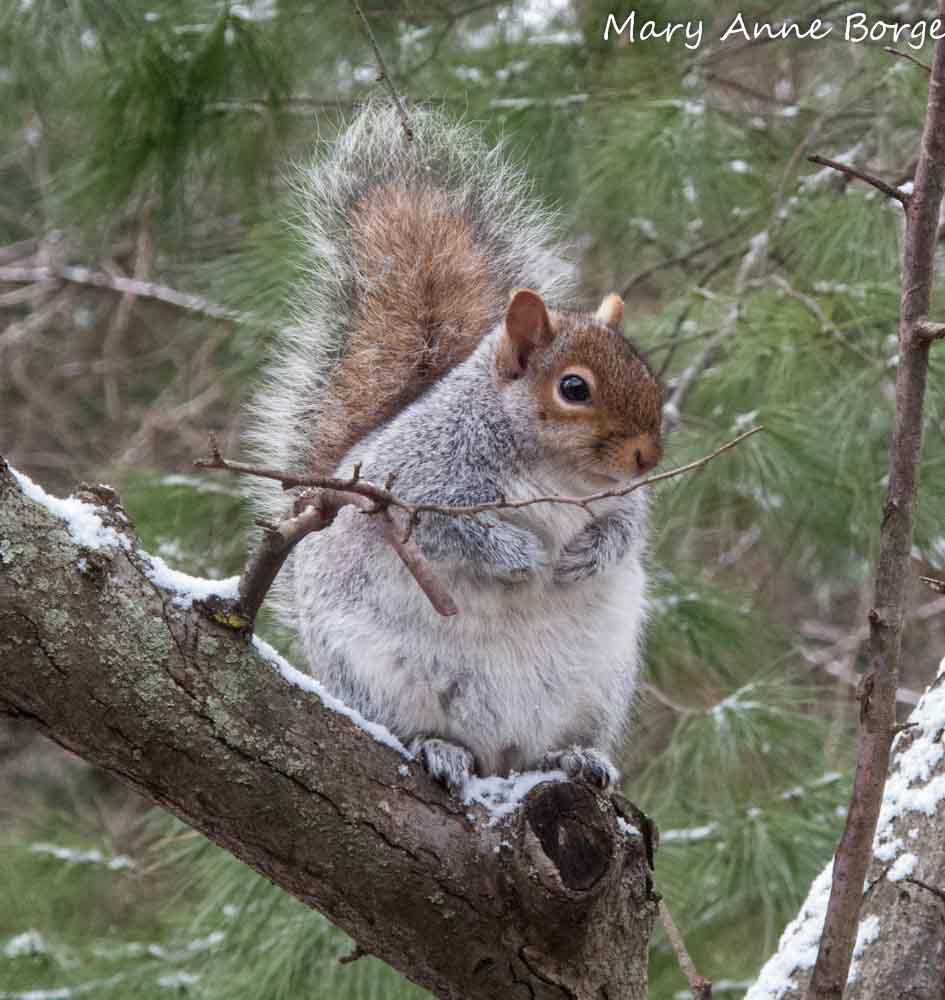
Eastern Gray Squirrels are among the small mammals that may make their homes in hollows in dead or living wood. Their diet depends heavily on tree nuts, but it also includes insects and fungi, as does that of Eastern Chipmunks.

Eastern Gray Squirrel

Eastern Gray Squirrel

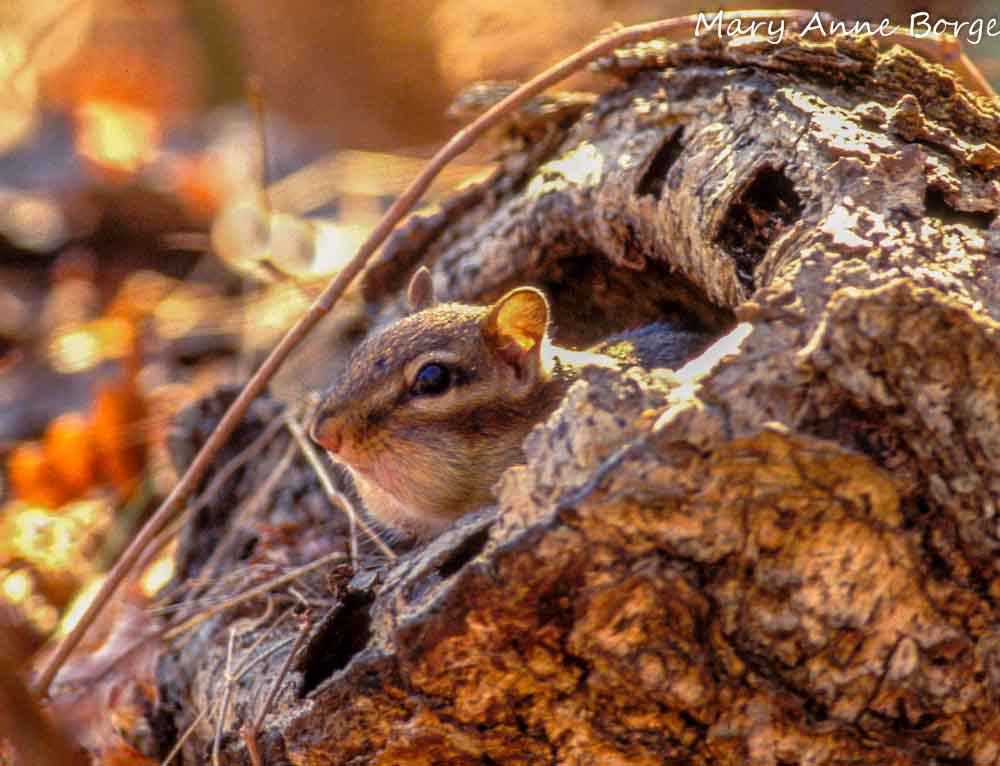
Chipmunks often dig underground burrows, but they also use tree cavities for shelter. Larger mammals, like Red Fox or even Black Bear may use fallen or hollowed out trees as a shelter.

Eastern Chipmunk peeking out of tree stump

Eastern Chipmunk peeking out of tree stump

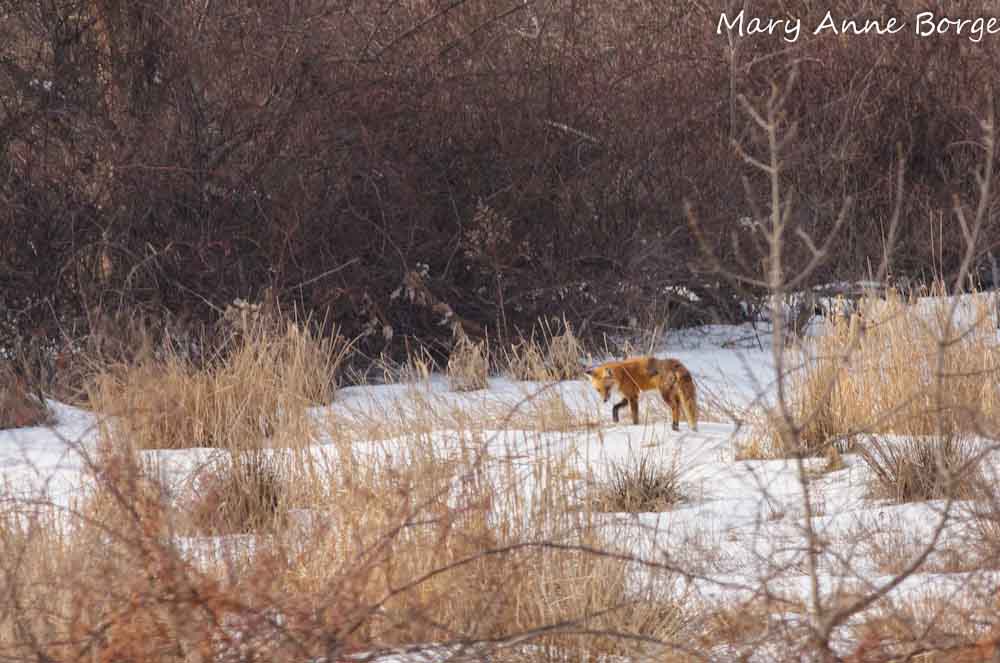
The chipmunks and squirrels may become a meal for a Red Fox …

Red Fox, hunting

Red Fox, hunting

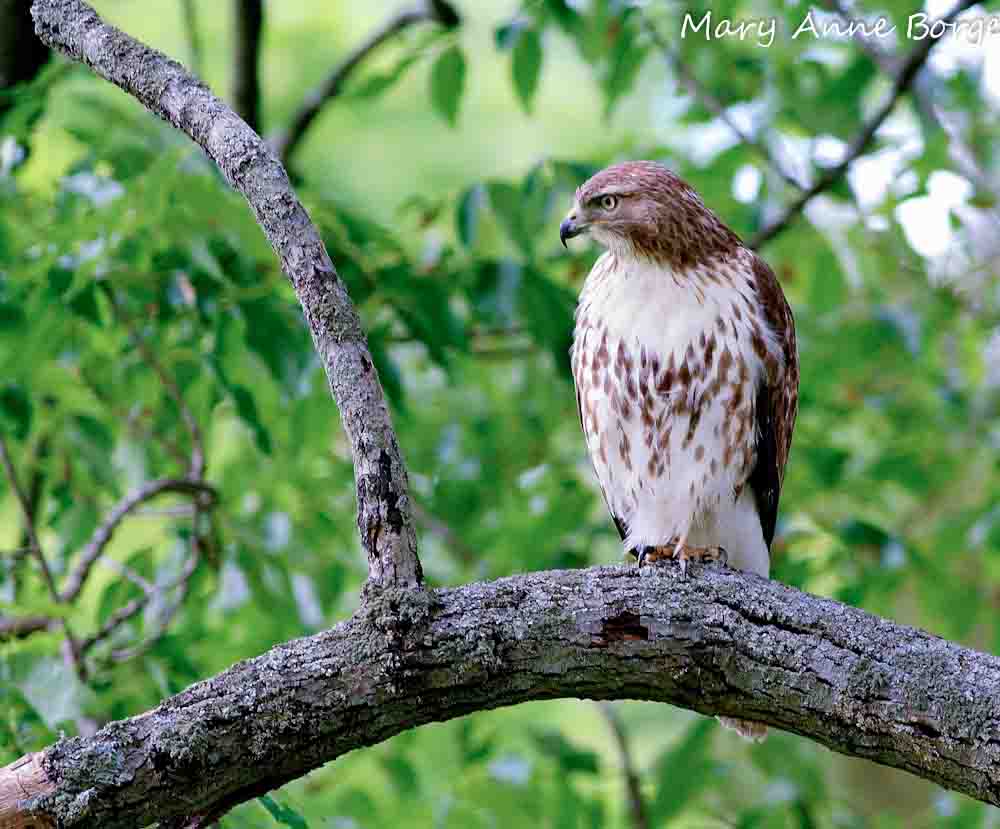
or a Red-tailed Hawk …

Red-Tailed Hawk

Red-Tailed Hawk

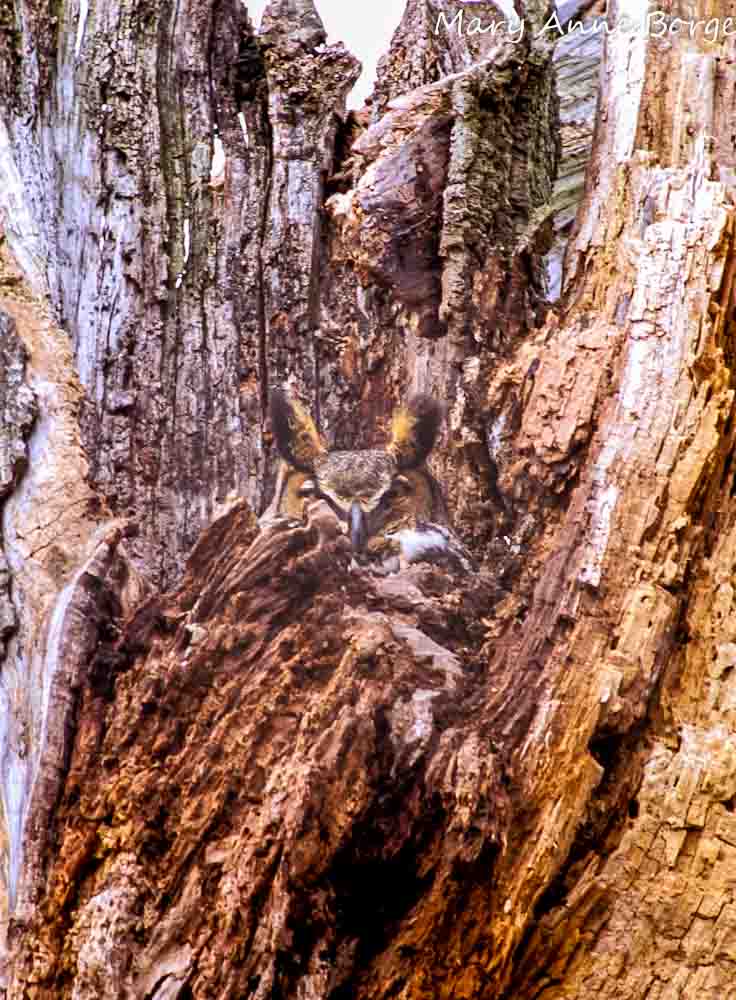
… or a Great Horned Owl. Dead broken trees, called snags, are a favorite nesting place for these large predators.

Great Horned Owl in snag

Great Horned Owl in snag

All of this activity contributes to the breakdown and decomposition of the wood, which provides valuable nutrients to the soil. This makes a new generation of plants possible, keeping the cycle of life going.

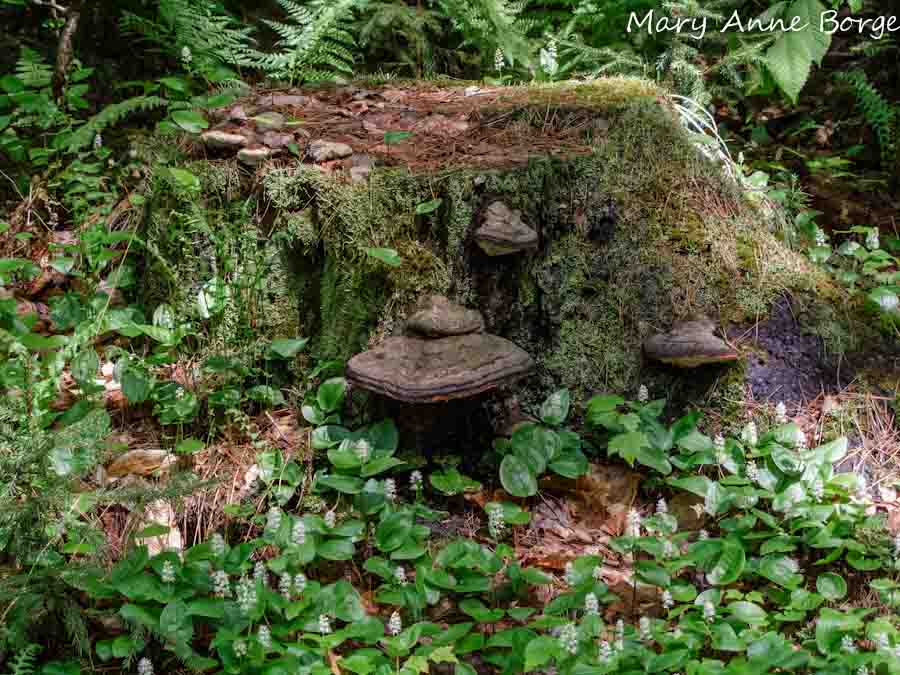
Tree stump with mushrooms, mosses, ferns and Canada Mayflower (Maianthemum canadense)

Tree stump with mushrooms, mosses, ferns and Canada Mayflower (Maianthemum canadense)

Dead wood provides shelter and food for insects and other arthropods, birds, and large and small mammals, including people. With the assistance of all of the inhabitants who avail themselves of these services, dead wood gradually breaks down, enhancing the soil for a new generation of plants.

Dead wood also helps to divert and slow the flow of water in heavy rainstorms, allowing the water to slowly penetrate into the soil where it falls, rather than rapidly running off into creeks, rivers, streams and storm sewer systems, contributing to flash flooding along the way.

So, what do you think, should we ‘get rid of the dead wood’?

Resources:

http://www.carnegiemnh.org/mollusks/palandsnails/ecology-diet.html

http://bugguide.net/node/view/5345

Cech, Rick; Tudor, Guy. Butterflies of the East Coast. 2005.

Eastman, John. Birds of Forest, Yard, & Thicket. 1997.

Eiseman, Charley; Charney, Noah. Tracks & Sign of Insects and Other Invertebrates. 2010.

Elbroch, Mark; Rinehart, Kurt. Behavior of North American Mammals. 2011.

Eaton, Eric R.; Kauffman, Ken. Kaufman Field Guide to Insects of North America. 2007.

Harrison, Hal H. Eastern Birds’ Nests. 1975

Mader, Eric; Shepherd, Matthew; Vaughan, Mace; Black, Scott Hoffman; LeBuhn, Gretchen. Attracting Native Pollinators: Protecting North America’s Bees and Butterflies. 2011.

For the Holidays …

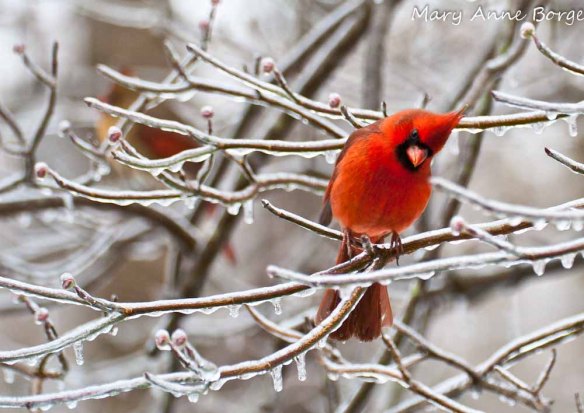
Cardinals, in dogwood in winter

Cardinals, in dogwood in winter

I wish you the peace and beauty of nature.

Mary Anne

A Winter Garden Can be a Wildlife Habitat

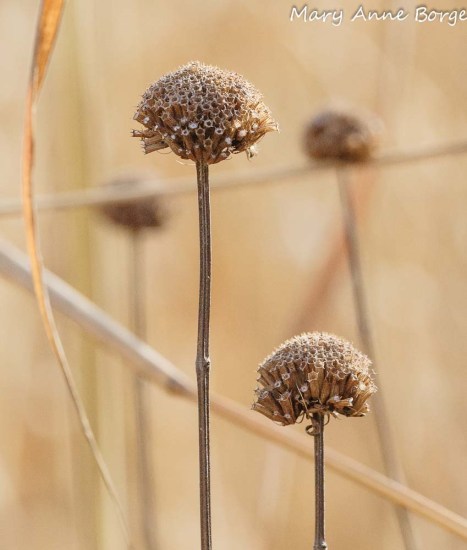
Wild Bergamot (Monarda fistulosa)

Wild Bergamot (Monarda fistulosa)

Thinking about ‘cleaning up’ your garden for the winter?  You might want to reconsider.  You may be disturbing the winter homes of many of the creatures you enjoy seeing during the warmer months.

For example, butterflies may be present in our yards and gardens in some life cycle stage year-round.  Except for species that migrate or live in more hospitable climates, butterflies will need to find a safe haven to survive the cold winter months in northern locations.   Fortunately, providing winter butterfly habitat may be less work than you think.

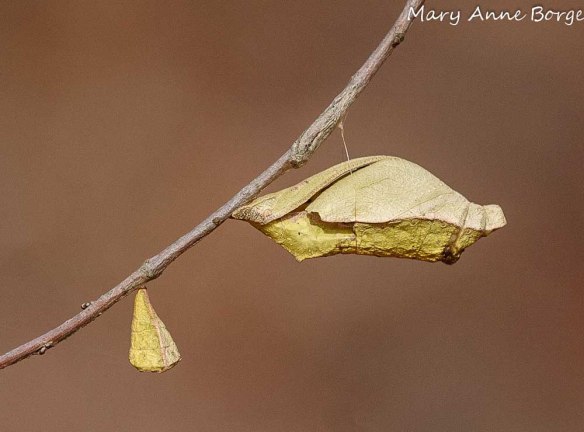
Swallowtail Chrysalis

Swallowtail Chrysalis

Leaving leaf litter is one of the most beneficial things you can do, for both the plants in your garden and the critters that live there.  Great Spangled Fritillaries and Baltimores are among the many butterfly species that spend the winter in or under this free, natural insulation and rich fertilizer.  A mulch that’s automatically replenished by nature every year, leaf litter helps to minimize the need for watering your garden, while protecting soil from erosion, and controlling weeds.  As the leaves gradually break down, they replenish the soil with essential nutrients plants need to survive and flourish.  Leaf litter is the best, most cost effective mulch you can use for your plants, and provides important habitat for insects and birds.

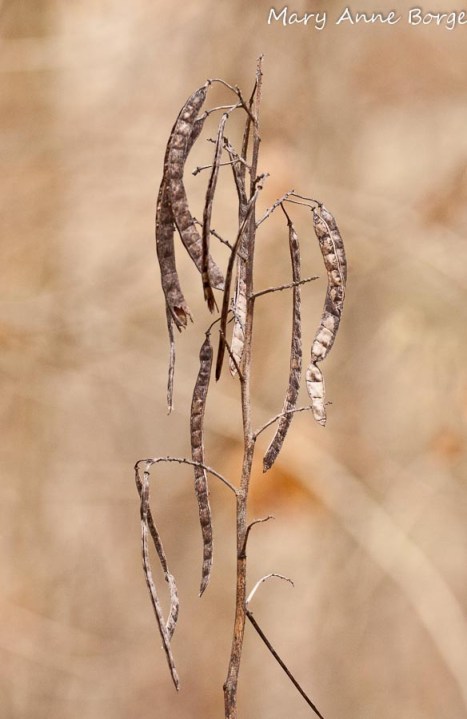
Wild Senna (Senna hebecarpa)

Wild Senna (Senna hebecarpa)

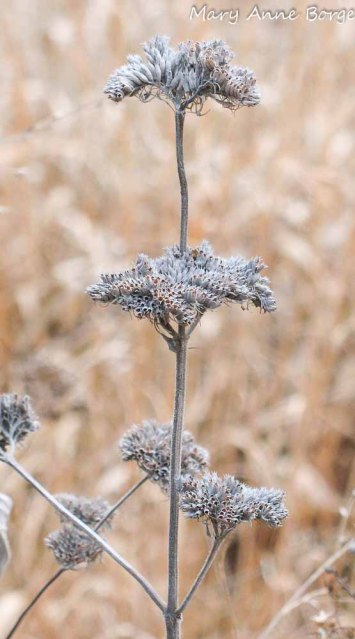
Hoary Mountain Mint (Pycnanthemum incanum)

Hoary Mountain Mint (Pycnanthemum incanum)

Many perennials and grasses have lovely forms in winter, while providing food and shelter for insects, birds and other critters, so it’s best to leave them standing as much as possible.  Pictured here are just a few of the many plants that provide visual interest in winter.  Butterflies that use some of these as food plants will often spend the winter in leaf litter below them, or on the plant itself.  Some skipper caterpillars may make a winter shelter in grass leaves, while overwintering Eastern-tailed Blue caterpillars may take refuge in a seed pod.

Blue False Indigo (Baptisia australis)

Blue False Indigo (Baptisia australis)

For those lucky enough to have a meadow, maintenance recommendations include mowing to a height of 12-16 inches in late winter, but it’s best not to mow more than a third of a site in a given year.  Although some overwintering butterflies and other beneficial insects will be lost as a result of mowing, the height helps to minimize harm to those whose shelters are at ground level or just above.  The timing offers winter food and cover for birds.  Mowing only a partial site enables the area to be repopulated by residents from the unaffected portions of the meadow.

Brush piles, logs, standing dead trees, tree cavities and loose bark may also provide overwintering sites, so preserve or make these available if you can.  Eastern Commas, Question Marks, and Mourning Cloaks are some of the last butterflies active in late fall, and the first to emerge in spring.  They spend the winter as adults, and are among the species that may use these winter shelters.  Butterflies that overwinter in other life cycle stages may also take refuge here.

Eastern Comma

Eastern Comma

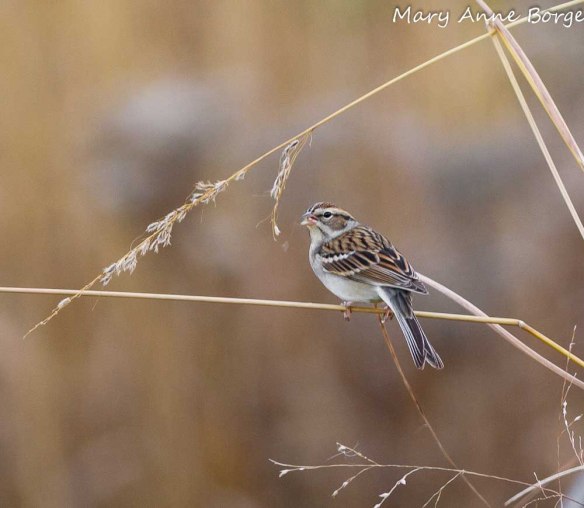
Birds may visit some of these plants for their seeds, like the Chipping Sparrow pictured here, feeding on Indian Grass.  Hungry foragers like Chickadees and Goldfinches are likely to visit the mints and coneflowers.  Birds may also find and feed on insects sheltering among these plants, including some of the overwintering butterflies.  But to make up for it, they will feed on insects that may otherwise parasitize the butterflies.  So over all, birds help keep the insect population in a healthy balance.

Chipping Sparrow eating  Indian Grass seeds

Chipping Sparrow eating Indian Grass seeds

I like the look of nature in winter.  It’s fun to search for signs of critters, like a butterfly chrysalis attached to a tree or shrub branch.  A few leaves of grass tied together with silk may be a winter haven for one of the skippers.  With birds foraging for seeds, fruits or insects, that’s all I need to keep me interested.  That’s a good thing, because the more we can leave their habitat in a natural state, the more good we will do for the insects and birds we enjoy so much.

Goldfinch in winter plumage

Goldfinch in winter plumage