
Blue Wood or Heart-leaved Aster (Symphyotrichum cordifolium) began its seasonal bloom in late September, and amazingly, at the end of November it’s still possible to find some blossoms.

Blue Wood Aster (Symphyotrichum cordifolium) with Sweat Bee (Halictus species)
Like all Aster (Asteraceae) family members, each flower ‘head’ of Blue Wood Aster consists of many tiny flowers that bloom gradually over a period of several weeks, offering nectar and pollen to a variety of flower visitors. Each Blue Wood Aster flower head has an outer ring of ice blue petal-like ray flowers designed to advertise this feast. Tiny tubular disk flowers form the center of the display; this is where Blue Wood Aster makes its bountiful food available in hope that while dining, visitors will pick up pollen and transfer it to another plant of the same species, enabling pollination to occur.
Blue Wood Aster’s disk flowers are pale yellow when they’re in bud and when they first open. They turn pink or magenta as they age, and when they have been successfully pollinated. This color change is a signal to pollinators, directing them to the receptive yellow flowers which are not yet pollinated and that will reward them with nectar, and steering them away from blossoms that are already satisfactorily pollinated and will not produce a nectar reward. This evolutionary adaptation makes the most efficient use of both the plant’s and the potential pollinator’s efforts.
To share in the bounty offered by Blue Wood Aster, I invite you to a virtual time-lapse visit to our garden in central New Jersey. You can see the last Blue Wood Aster blossoms for this year, and a selection of the many of the visitors that this lovely plant hosted throughout the season. Notice that the potential pollinators are generally visiting the yellow disk flowers, those that are still open for business, not the pinkish flowers that have shut down their nectar production.
Bumble Bees are the most frequent visitors.

Bumble Bee (Bombus species) drinking nectar from Blue Wood Aster (Symphyotrichum cordifolium)
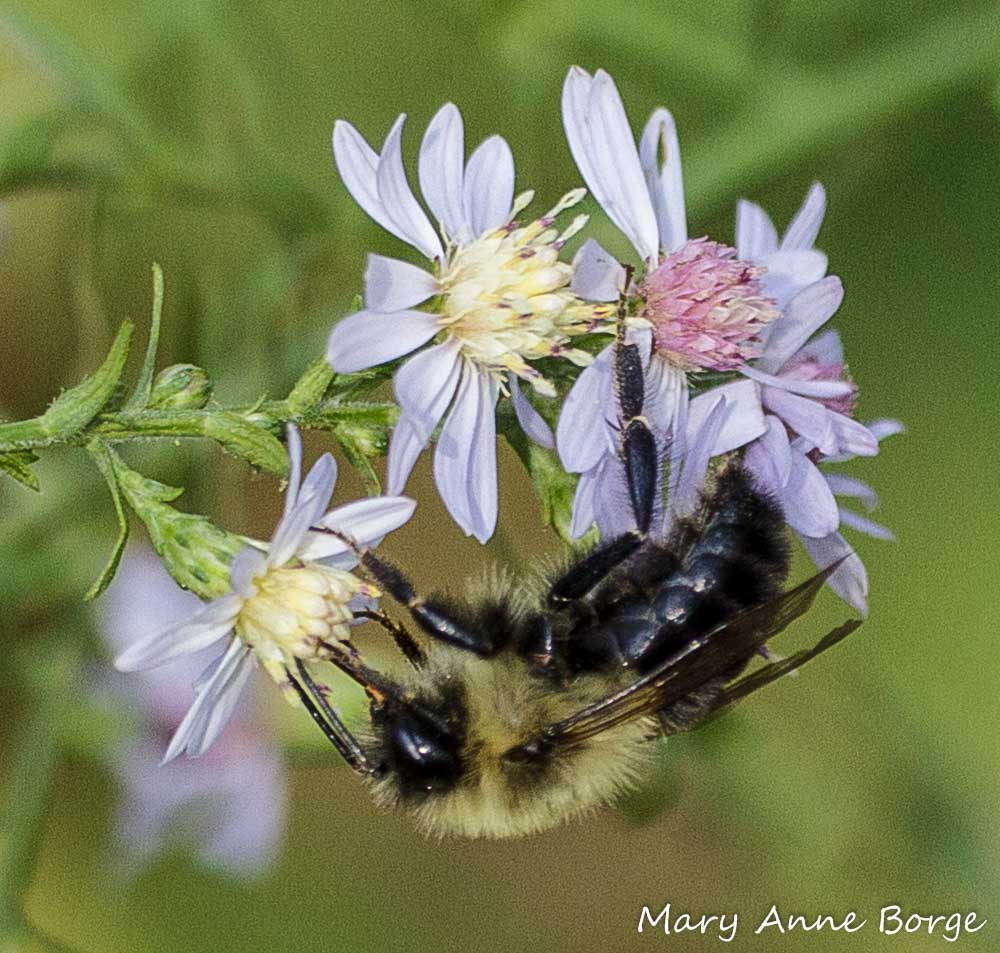
An athletic Eastern Carpenter Bee drinking nectar from Blue Wood Aster (Symphyotrichum cordifolium).
But many species of Sweat Bees (Halictid bees), and even Honey Bees dine on Blue Wood Aster nectar and pollen.

Sweat Bee (Halictus species) with Blue Wood Aster (Symphyotrichum cordifolium)
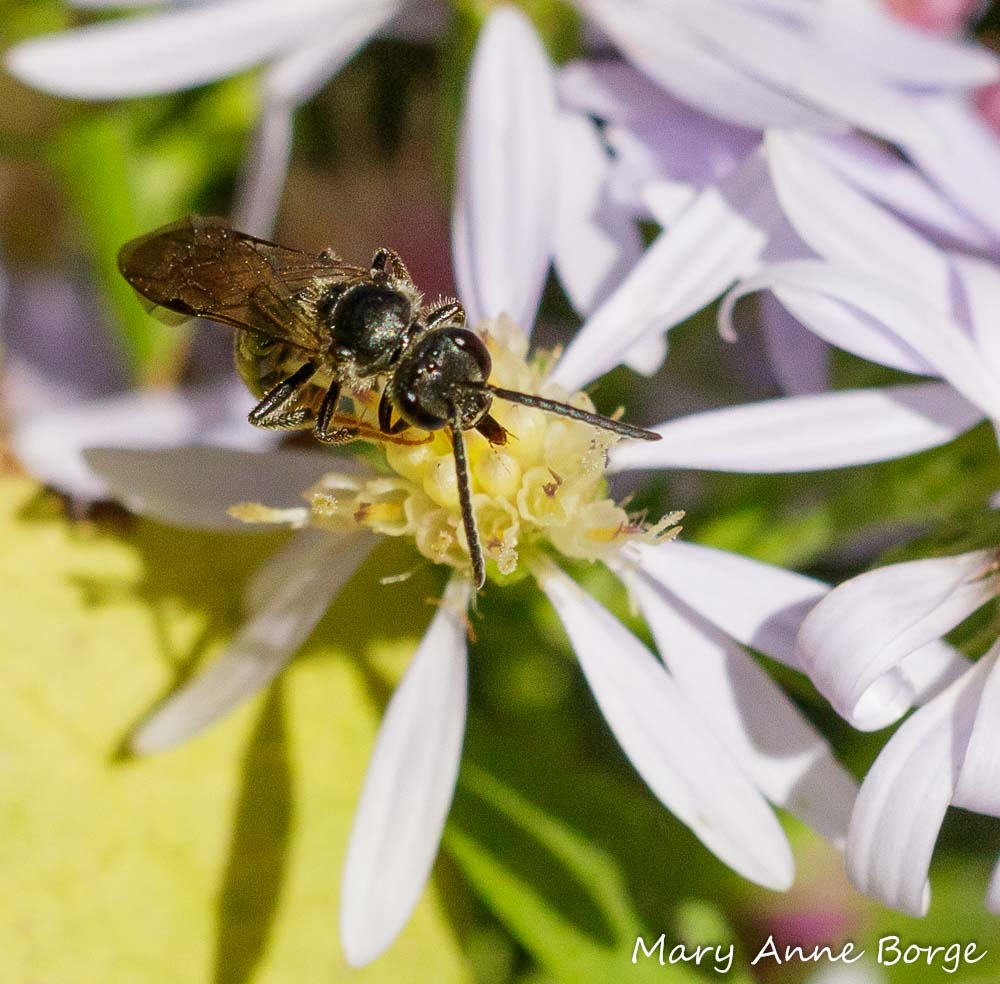
Sweat Bee (Halictus species) drinking nectar from Blue Wood Aster (Symphyotrichum cordifolium)

A gang of Sweat Bees (Halictus species) drinking nectar from Blue Wood Aster (Symphyotrichum cordifolium)

Sweat Bees (Halictid bees) of two different species visiting Blue Wood Aster (Symphyotrichum cordifolium)
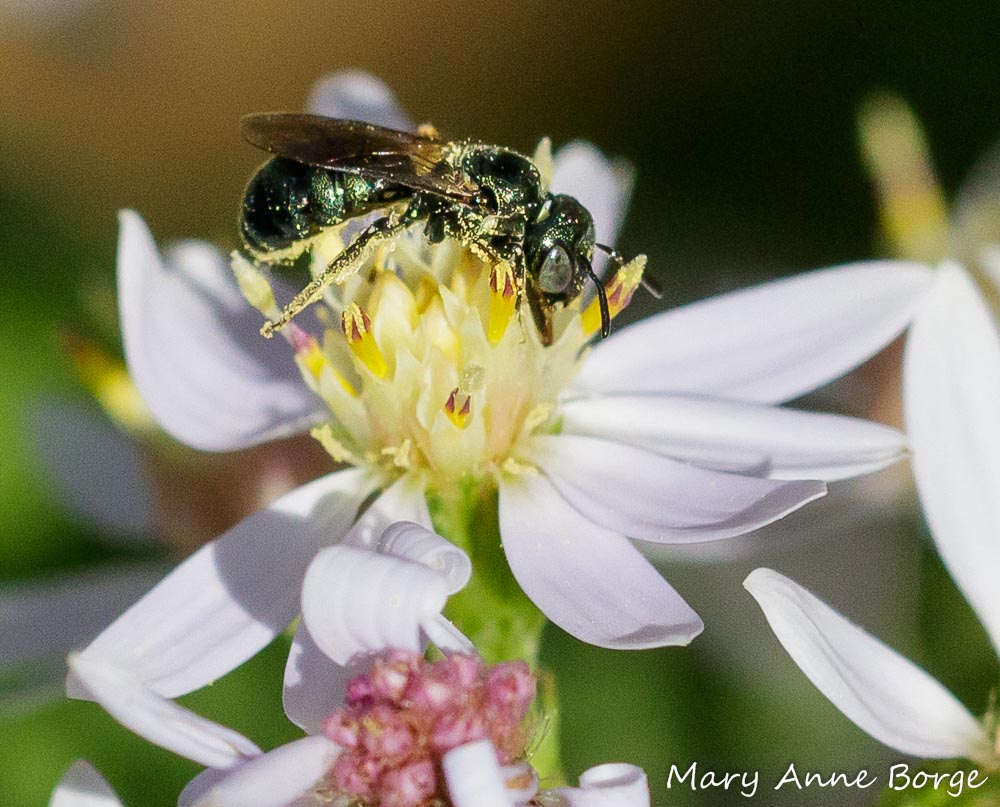
A Sweat Bee (Halictid bee) drinking nectar from Blue Wood Aster (Symphyotrichum cordifolium)
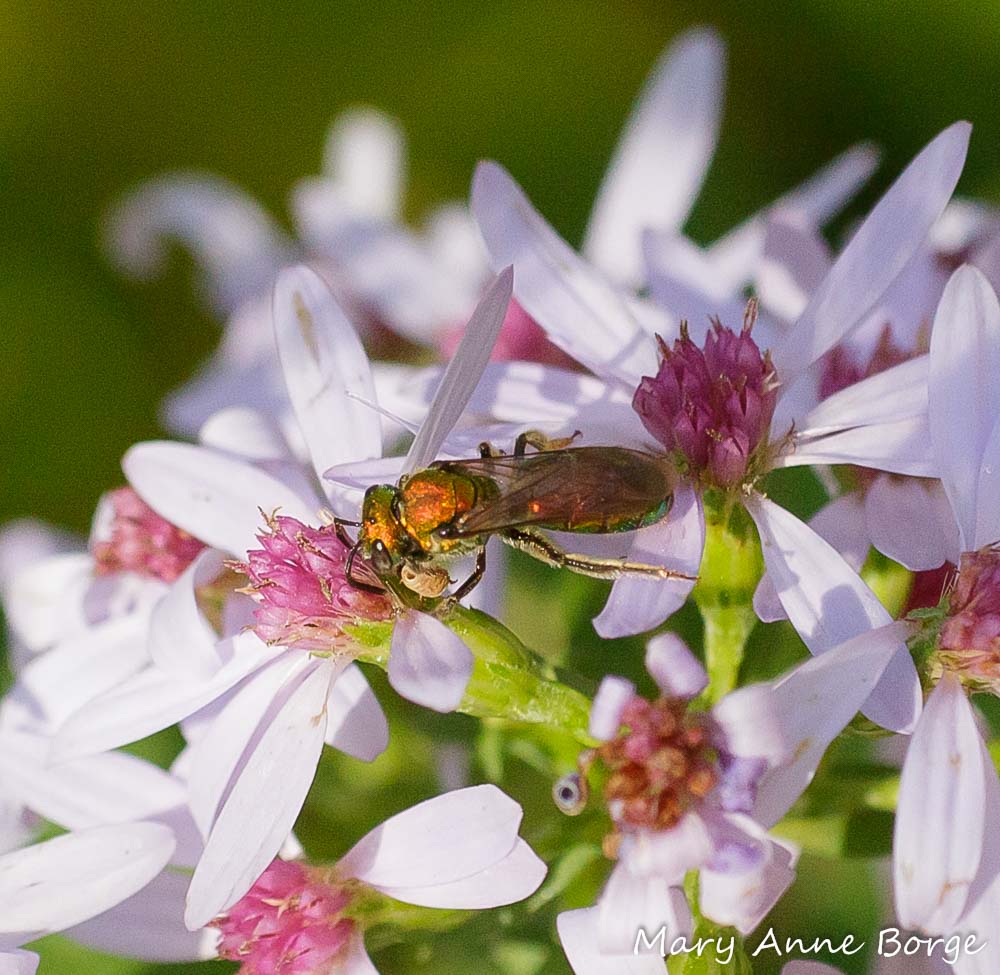
A Sweat Bee (Augochlorella species) investigating Blue Wood Aster (Symphyotrichum cordifolium)
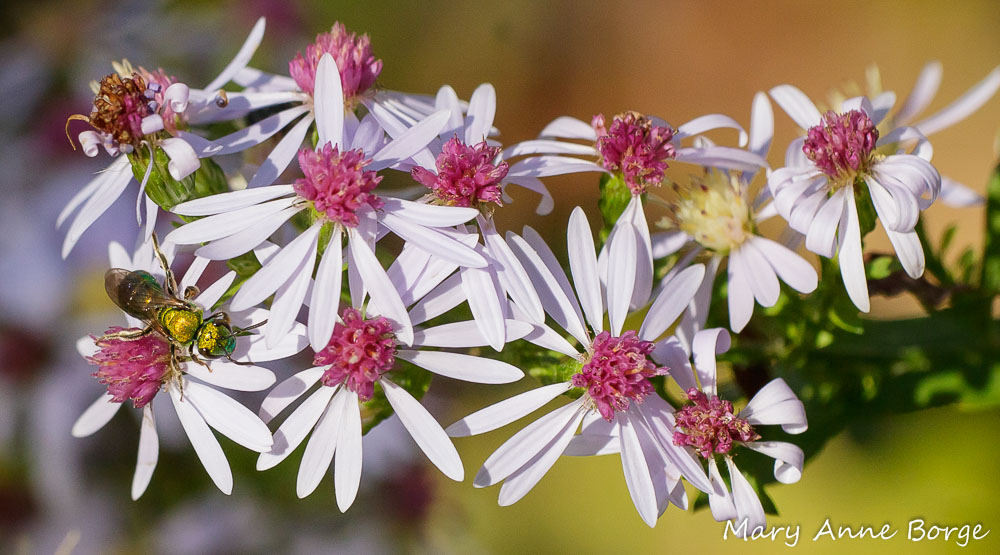
A Sweat Bee (Augochlorella species) investigating Blue Wood Aster (Symphyotrichum cordifolium)

A Honey Bee (Apis mellifera) nectaring from Blue Wood Aster (Symphyotrichum cordifolium)
A Mason Wasp stopped by for nourishment.
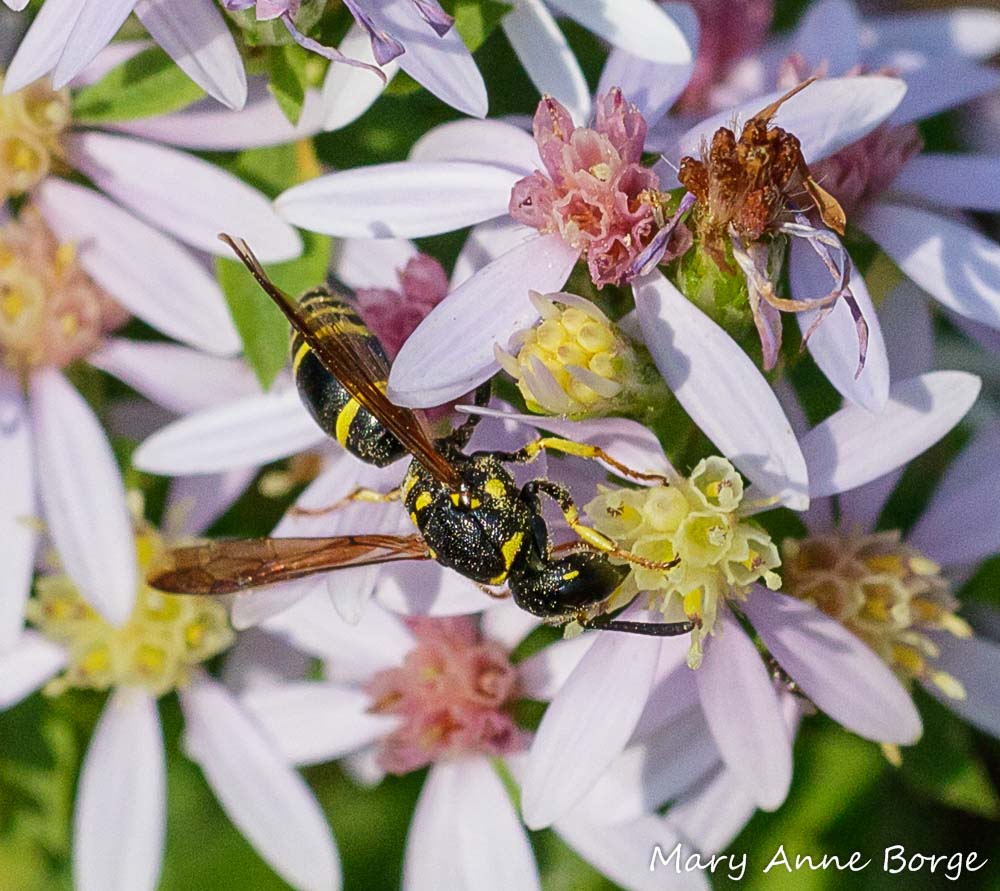
A Mason Wasp (Ancistrocerus species) drinking nectar from Blue Wood Aster (Symphyotrichum cordifolium)
Many fly species paused to drink, most disguised as bees or wasps in an attempt to appear threatening to potential predators.
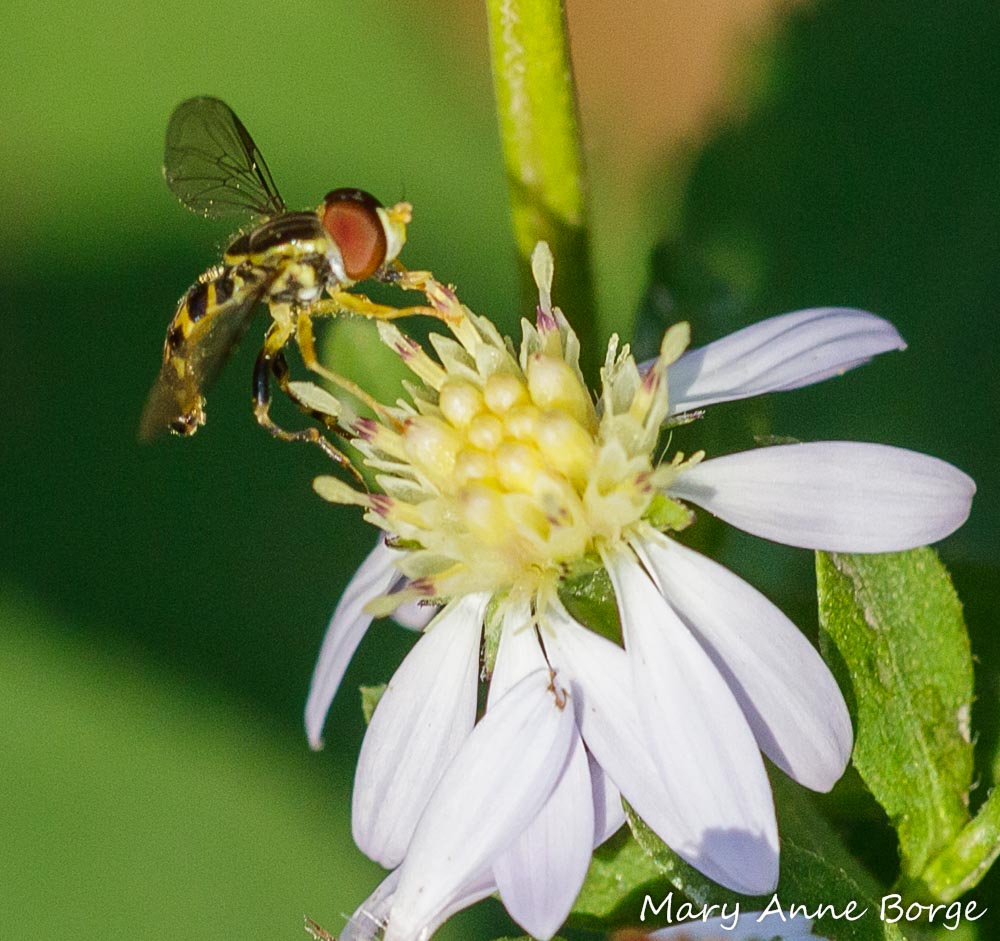
A Syrphid or Flower fly drinking nectar from Blue Wood Aster (Symphyotrichum cordifolium)

A Syrphid or Flower Fly (Toxomerous geminatus) drinking nectar from Blue Wood Aster (Symphyotrichum cordifolium)

A Syrphid or Flower Fly (Syrphus ribesii) drinking nectar from Blue Wood Aster (Symphyotrichum cordifolium)
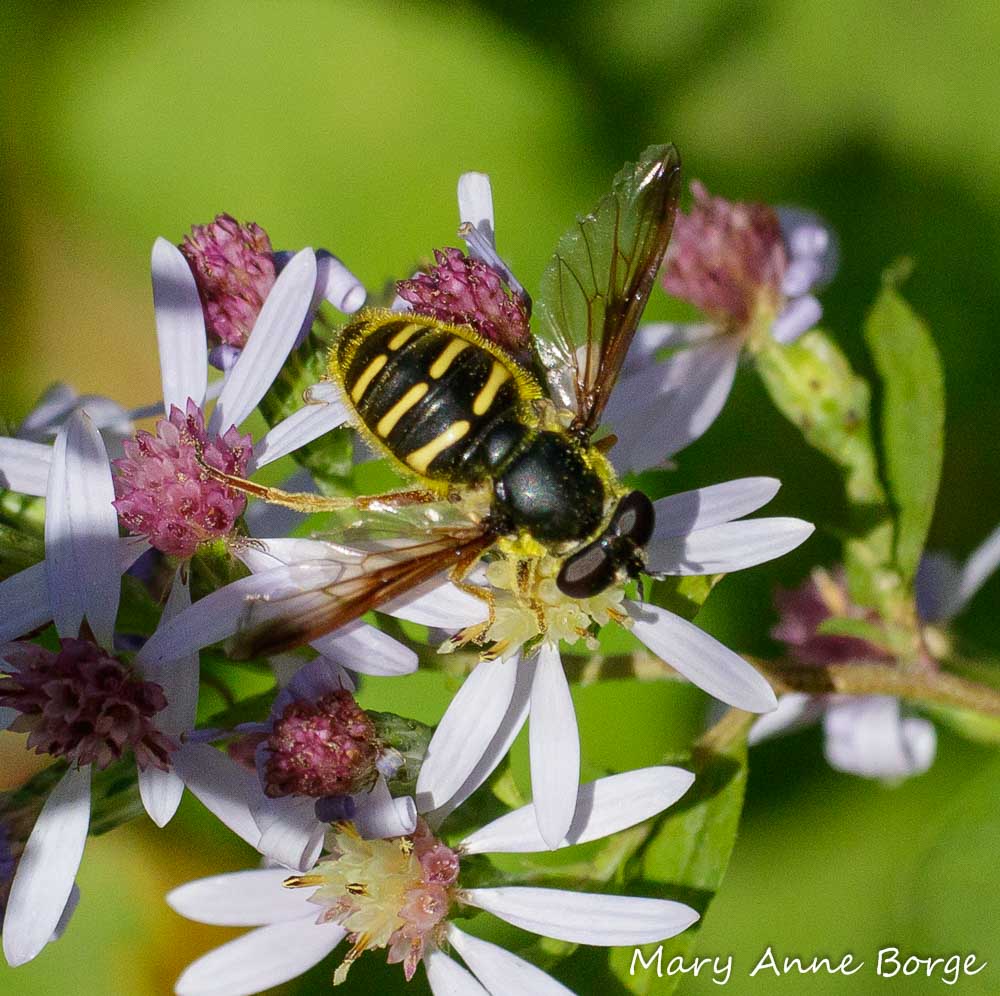
A Syrphid or Flower Fly (Sericomyia chrysotoxoides) drinking nectar from Blue Wood Aster (Symphyotrichum cordifolium)

A Syrphid or Flower Fly (Eristalis tenax) drinking nectar from Blue Wood Aster (Symphyotrichum cordifolium)
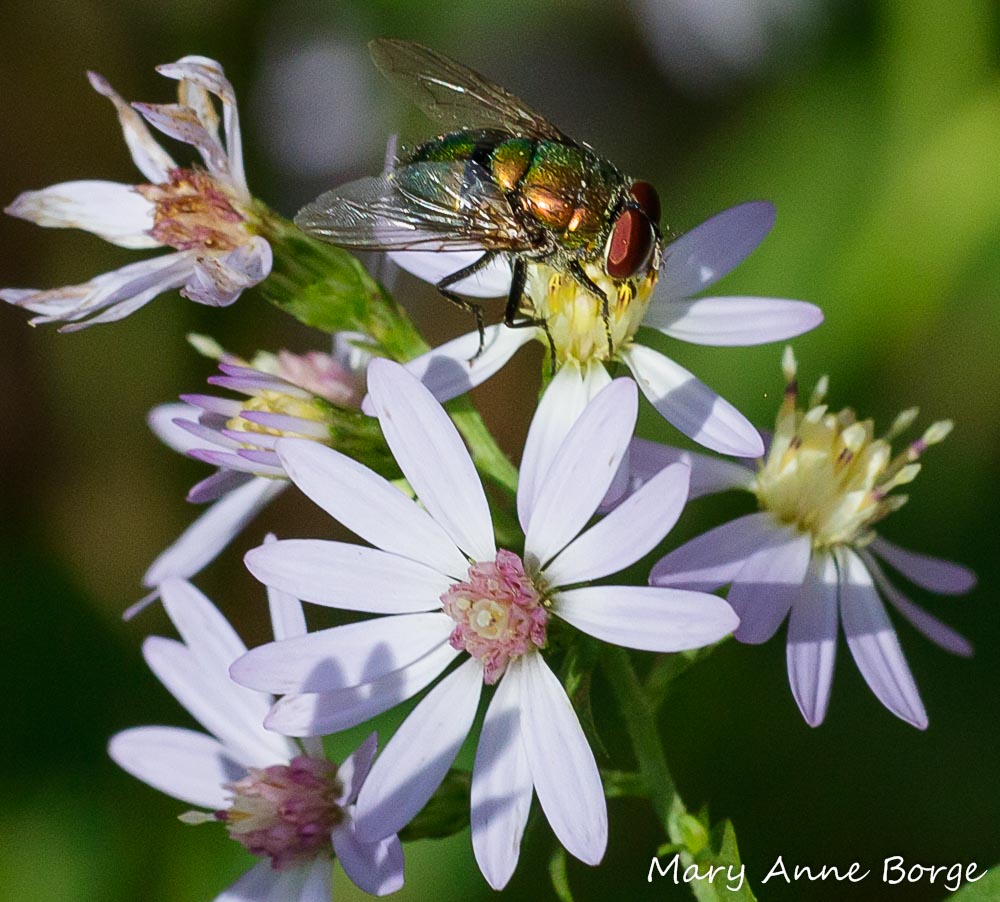
Greenbottle Fly (Lucilia sericata) drinking nectar from Blue Wood Aster (Symphyotrichum cordifolium)
Even late season butterflies and moths were able to refuel on Blue Wood Aster nectar.
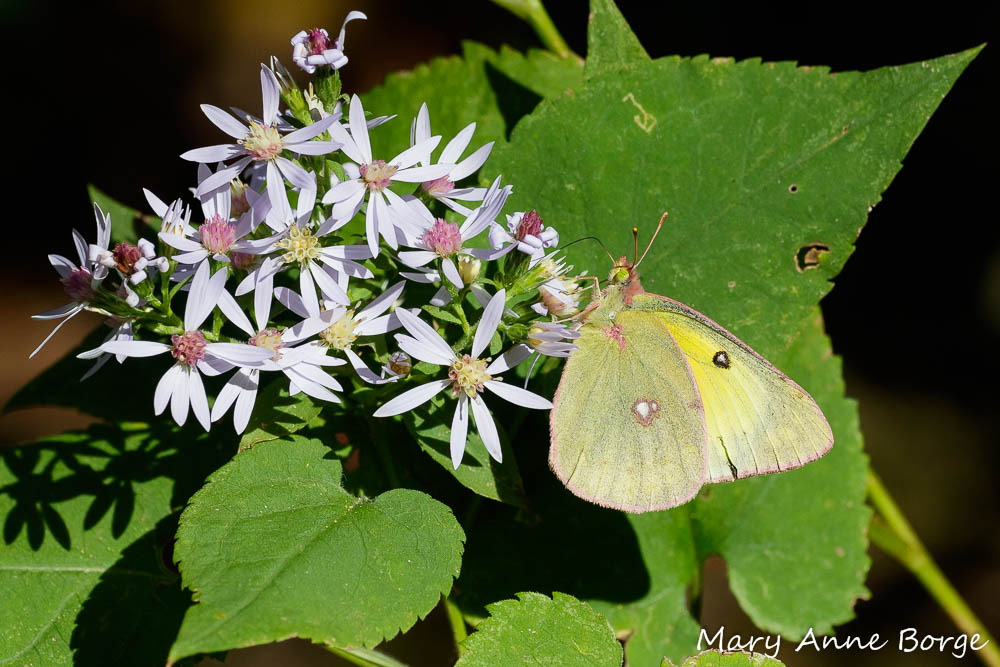
A Clouded Sulphur butterfly drinking nectar from Blue Wood Aster (Symphyotrichum cordifolium). Notice the heart-shaped leaves that are characteristic of this species.

A Pearl Crescent butterfly drinking nectar from Blue Wood Aster (Symphyotrichum cordifolium). Not only do these butterflies benefit from the nectar, but their caterpillars dine on the foliage of several aster species.
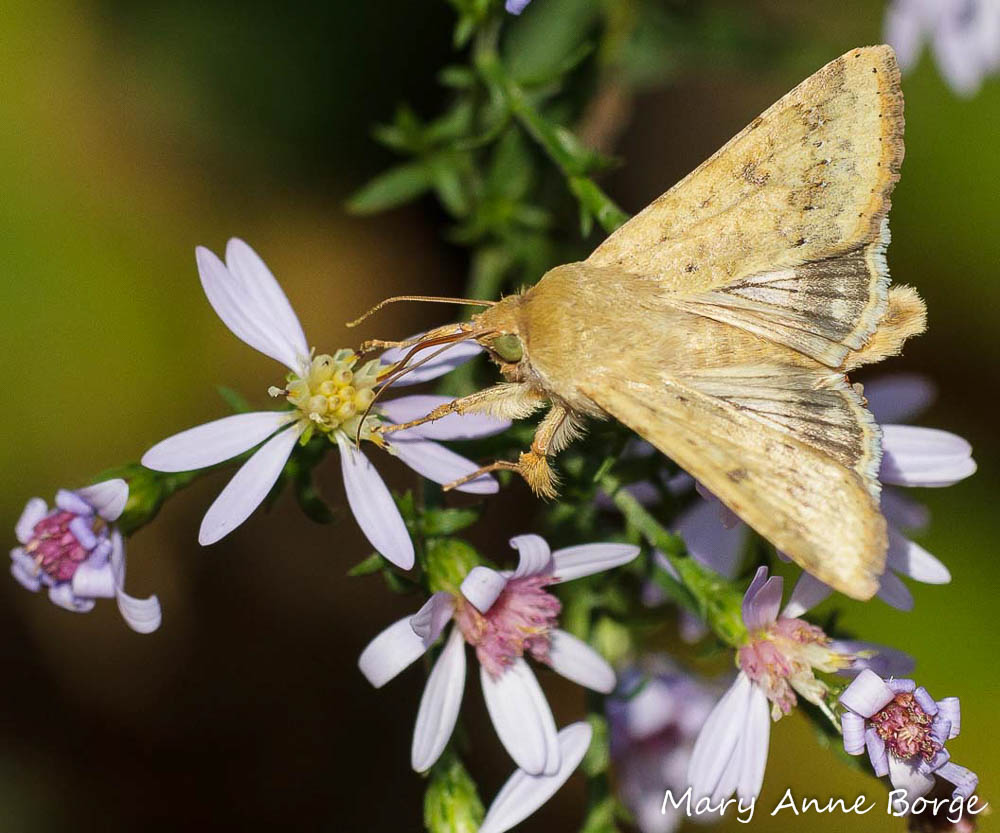
A Corn Earworm Moth drinking nectar from Blue Wood Aster (Symphyotrichum cordifolium).

A Yellow-collared Scape Moth (Cisseps fulvicollis) and Bumble Bee on Blue Wood Aster (Symphyotrichum cordifolium).
Meanwhile, a Brown-hooded Owlet Moth caterpillar dined on the leaves and spent flowers of Blue Wood Aster.
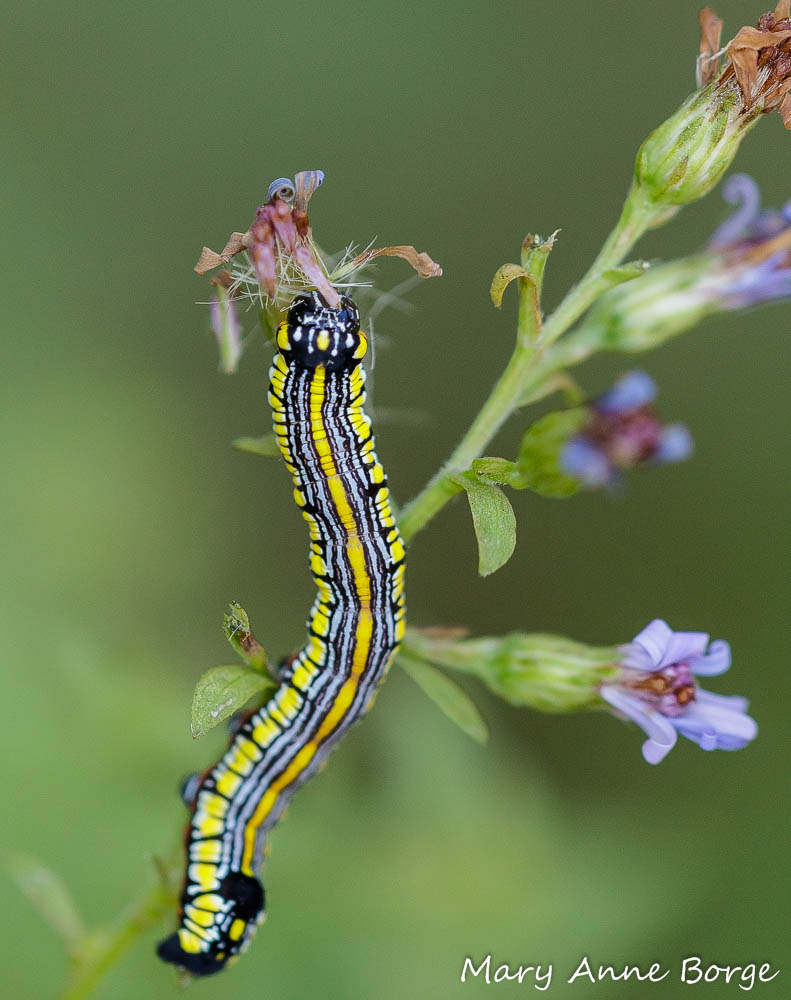
Brown-hooded Owlet caterpillar eating Blue Wood Aster (Symphyotrichum cordifolium) leaves and flowers.
Blue Wood Aster is native in much of the eastern half of the United States, and in British Columbia, Manitoba, Ontario, Quebec, Prince Edward Island and Nova Scotia in Canada. It can be found in a variety of habitats, including woodlands, meadows and roadsides. There may still be some blooming near you!
Related Posts
Asters Yield a Treasure Trove!
New England Asters – A Hotbed of Activity!
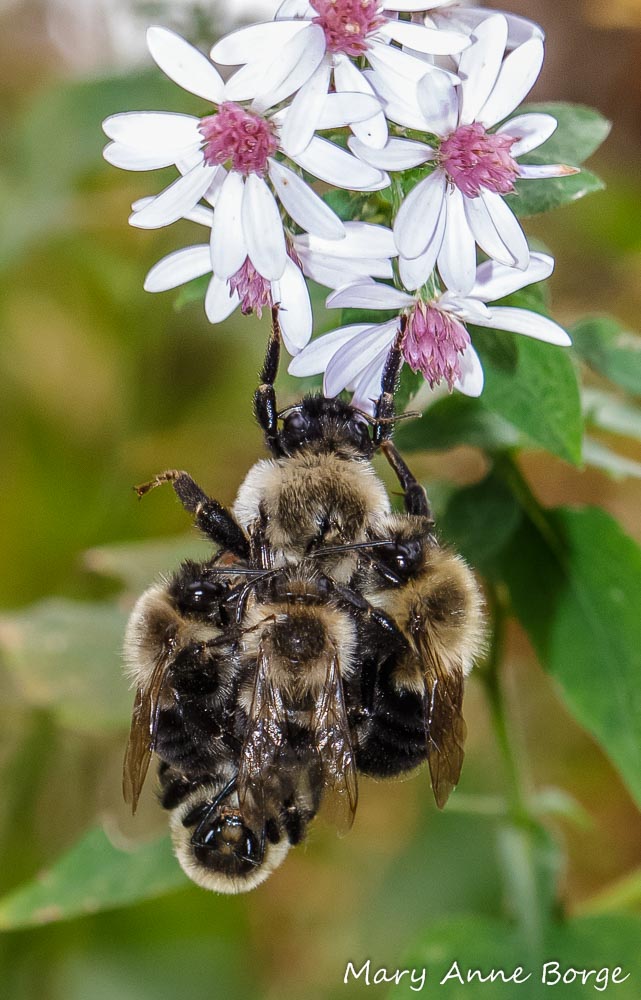
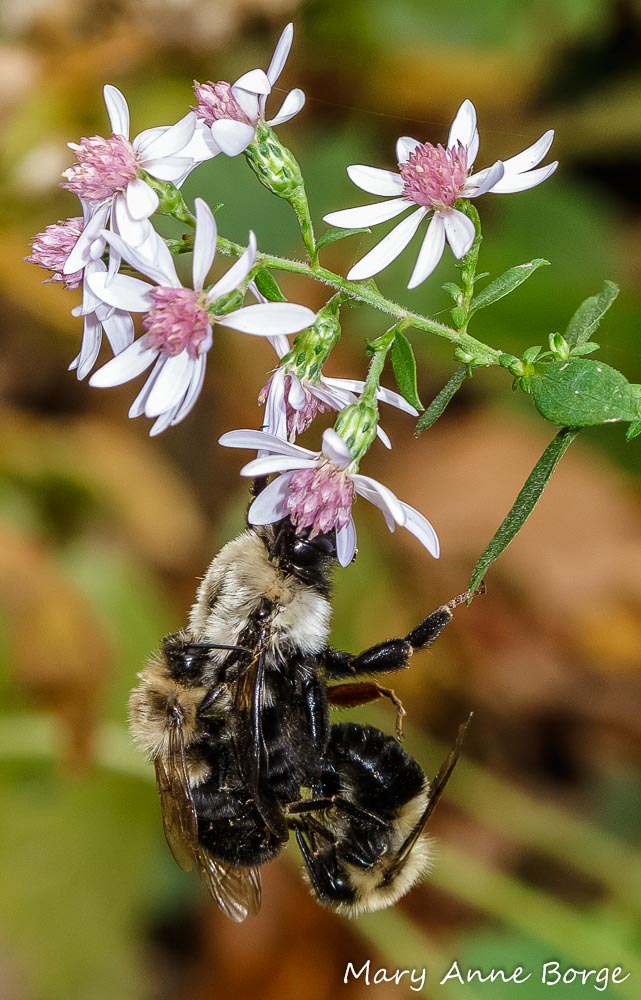
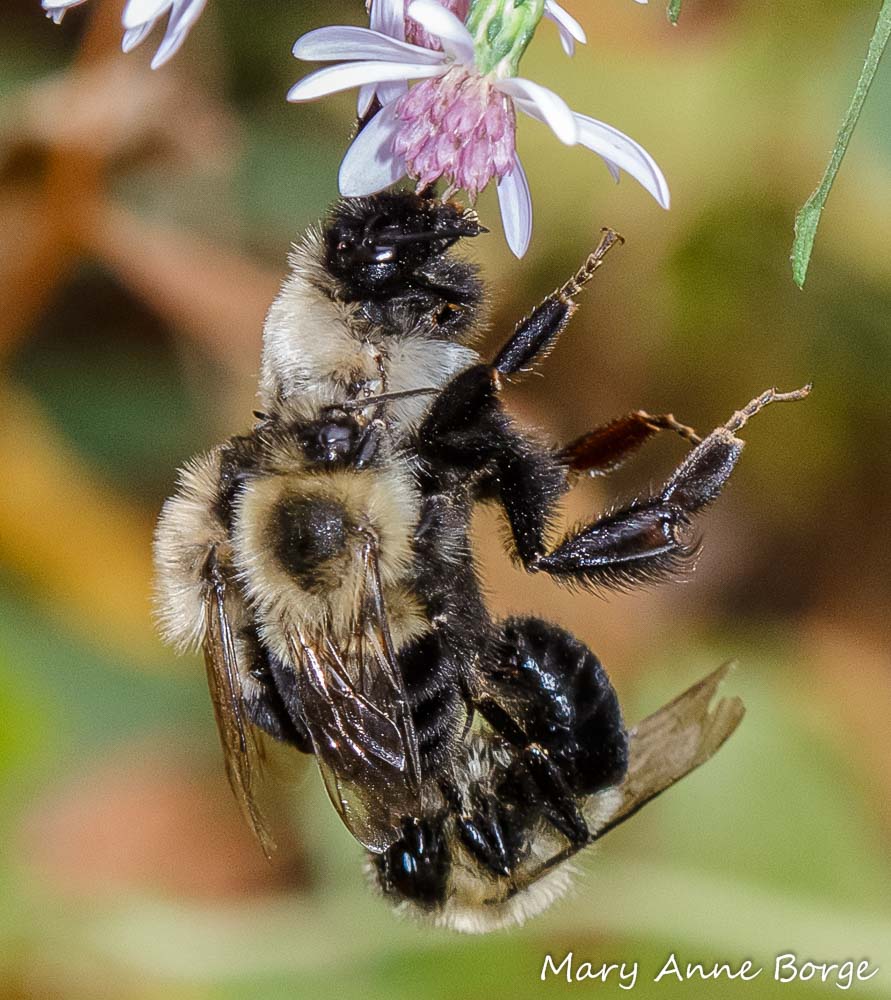
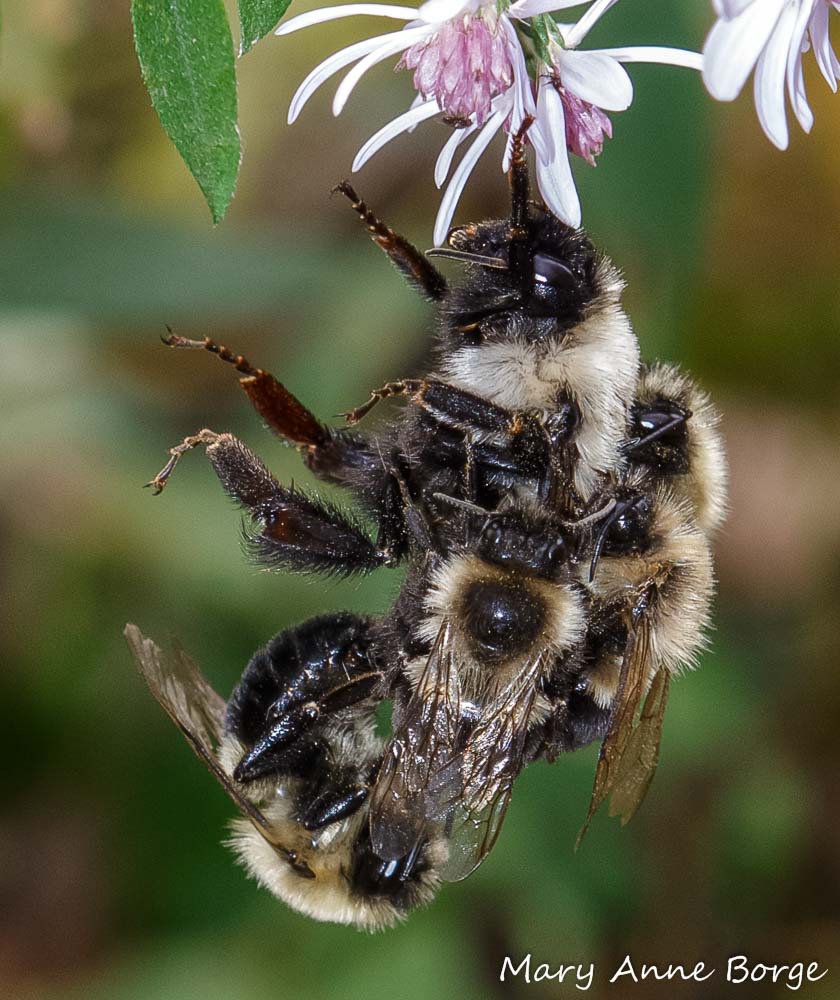
Mysterious Bumble Bee Behavior
Resources
Eaton, Eric R.; Kauffman, Ken. Kaufman Field Guide to Insects of North America. 2007.
Eastman, John. The Book of Forest and Thicket. 1992.
Mader, Eric; Shepherd, Matthew; Vaughan, Mace; Black, Scott Hoffman; LeBuhn, Gretchen. Attracting Native Pollinators: Protecting North America’s Bees and Butterflies. 2011.
Rhoads, Ann Fowler; Block, Timothy A. The Plants of Pennsylvania. 2007
Wagner, David L.; Caterpillars of Eastern North America, 2005.
Wilson, Joseph S.; Carril, Olivia Messinger. The Bees in Your Backyard. 2016.
 The Natural Web