Wild Yam

A few days ago the weather was chilly but dry, so we went for a walk at Spring Lake in the Abbott Marshlands.  The holidays are over, but woodland shrubs there are still decorated with garlands of Wild Yam (Dioscorea villosa).

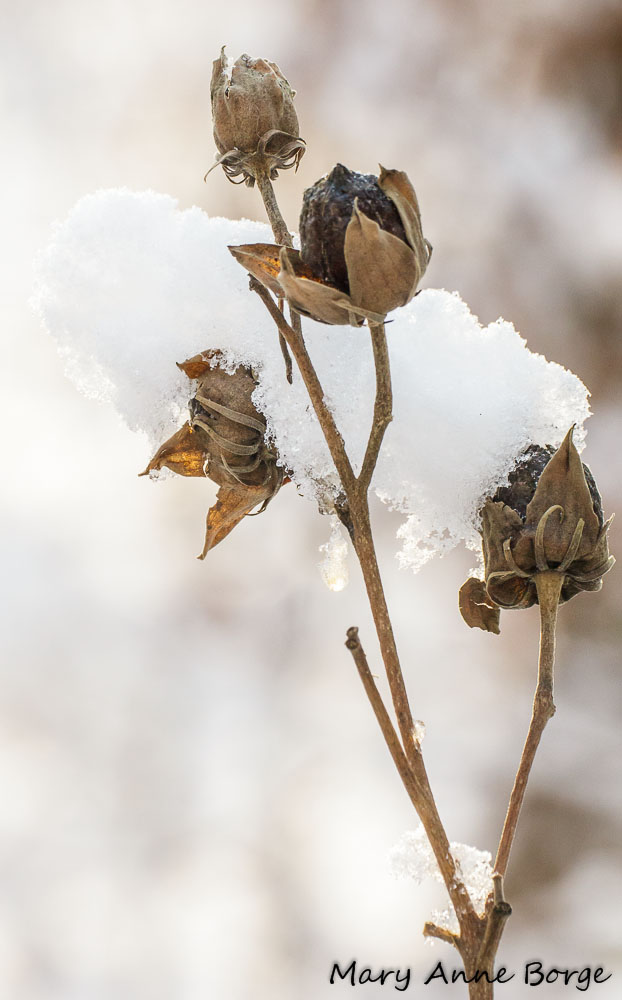
Wild Yam fruit capsules in Winter

Wild Yam fruit capsules in Winter

This vine isn’t much of an attention-getter during the growing season, although it has lovely glossy, deeply veined heart-shaped leaves.  It has male and female flowers on separate plants, but both are pretty inconspicuous.  I always notice this plant in winter, much less often in summer.

Wild Yam with male flowers

Wild Yam with male flowers

Almost luminous in the sunlight, hanging clusters of Wild Yam’s dried three-sided fruit capsules are eye-catching in winter.  These fruits are opening now to release their winged seeds, a design well adapted for wind dispersal.

Although it is related to the yams and sweet potatoes we eat, Wild Yam is not really edible.  In fact, when consumed fresh, the underground rhizomes might make you nauseous or result in other unpleasant side effects.  But prepared properly it does have medicinal uses.  This unassuming looking plant is worth noting, because it has played an important role in modern drug development.  The roots of Wild Yam contain chemicals called diosgenins, from which many steroid hormones, including contraceptives, were derived.  These chemicals are components in medications used to treat ailments from asthma, arthritis and eczema to reproductive system problems and high blood pressure.

Wild Yam is generally thought to help relieve pain, and to be an effective anti-spasmodic.  Alternate common names are Colic-root or Rheumatism Root, after a few of its uses.  Native Americans used tea made of Wild Yam root to relieve the pain of childbirth.

Wild Yam is insect pollinated, and provides cover and nesting habitat for birds.  It is native in much of the eastern two-thirds of North America, from Ontario to Minnesota, Nebraska and Vermont, south to Texas in the west, Florida and even Puerto Rico in the east.  Look for it in woodlands and thickets, climbing in the shrub layer.

Wild Yam fruit capsules in winter

Wild Yam fruit capsules in winter

References

Foster, Stephen; Duke, James A.  A Field Guide to Medicinal Plants and Herbs of Eastern and Central North America, Second Edition.  2000.

Cech, Richo. American Wild Yam. From Planting the Future, Saving Our Medicinal Herbs, edited by Gladstar, Rosemary and Hirsch, Pamela. 2000.

USDA Natural Resources Conservation Service Plants Database

Illinois Wildflowers

Native American Ethnobotany (University of Michigan – Dearborn)
A Holiday Display, Courtesy of Nature

December Snow

December Snow

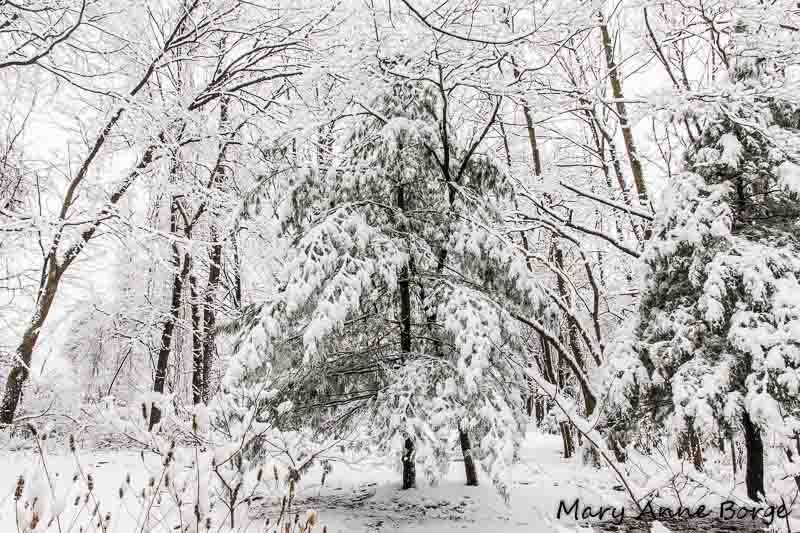
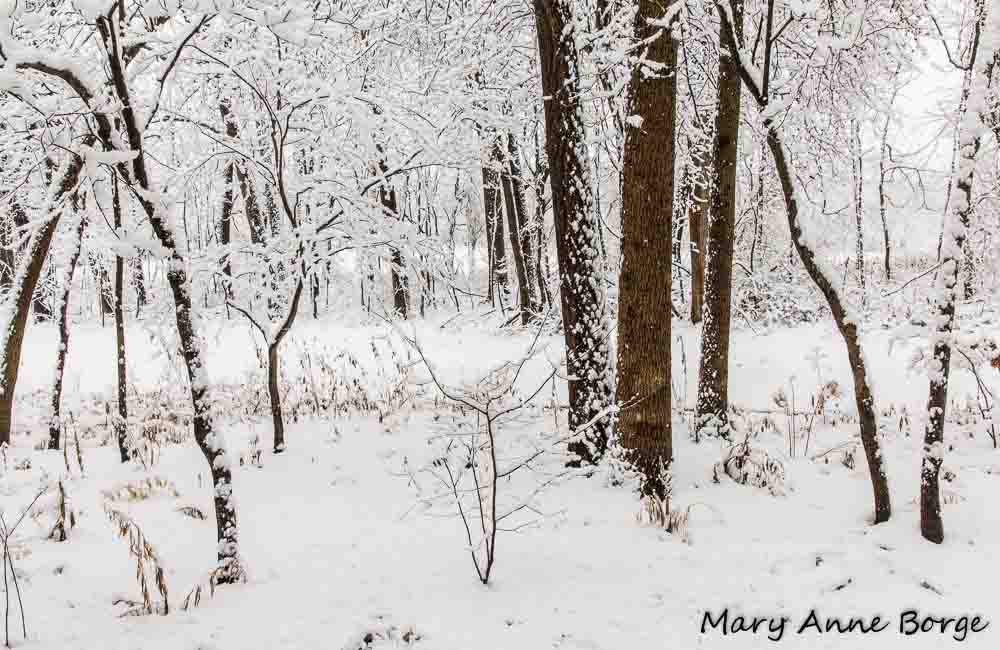
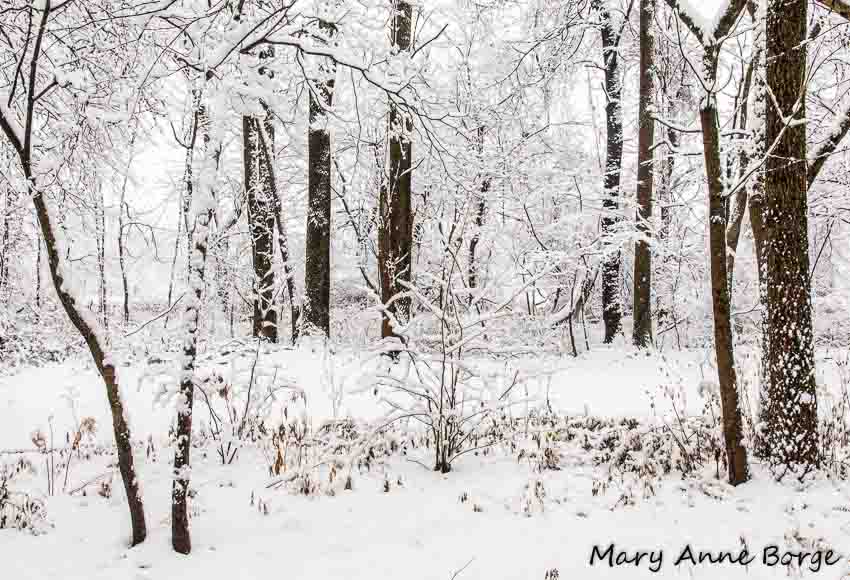
In a weather pattern that is pretty unusual for New Jersey in December, four snowstorms in a ten day period each brought a few inches of snow, sometimes with a mix of freezing rain or sleet.  The result?  A holiday display visible right outside our windows!

Anyone remember flocked Christmas trees?  This snow covered White Pine (Pinus strobus) could be the inspiration for them, although nothing we manufacture could provide such a lovely shelter from the elements and predators for birds in winter.

Snow covered White Pine (Pinus strobus)

Snow covered White Pine (Pinus strobus)

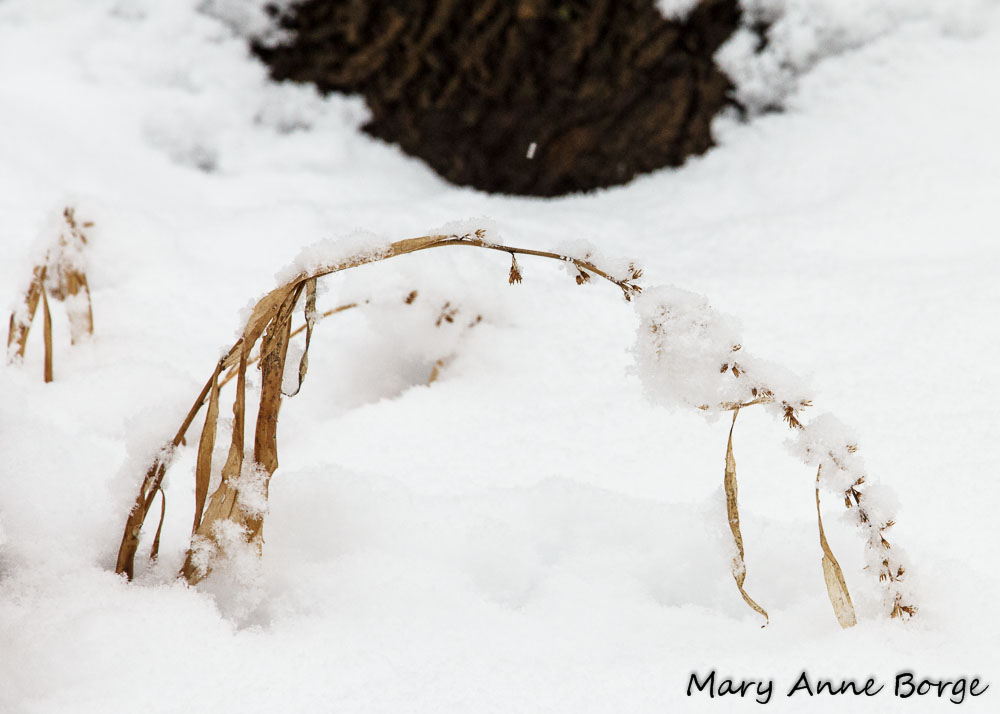
Other decorations include the aptly named Wreath Goldenrod (Solidago caesia) arching gracefully under its weight of snow.

Wreath Goldenrod (Solidago caesia)

Wreath Goldenrod (Solidago caesia)

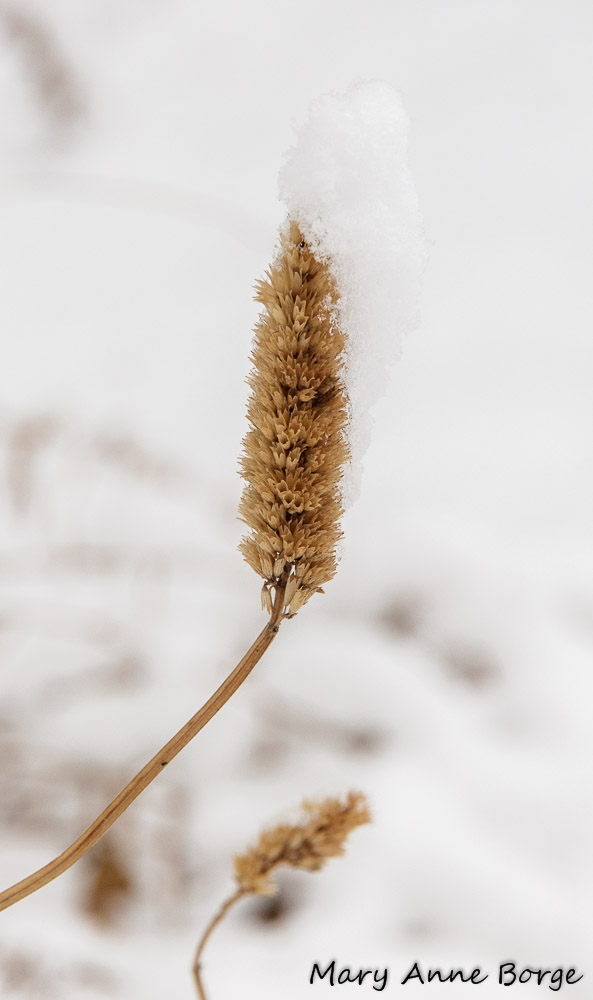
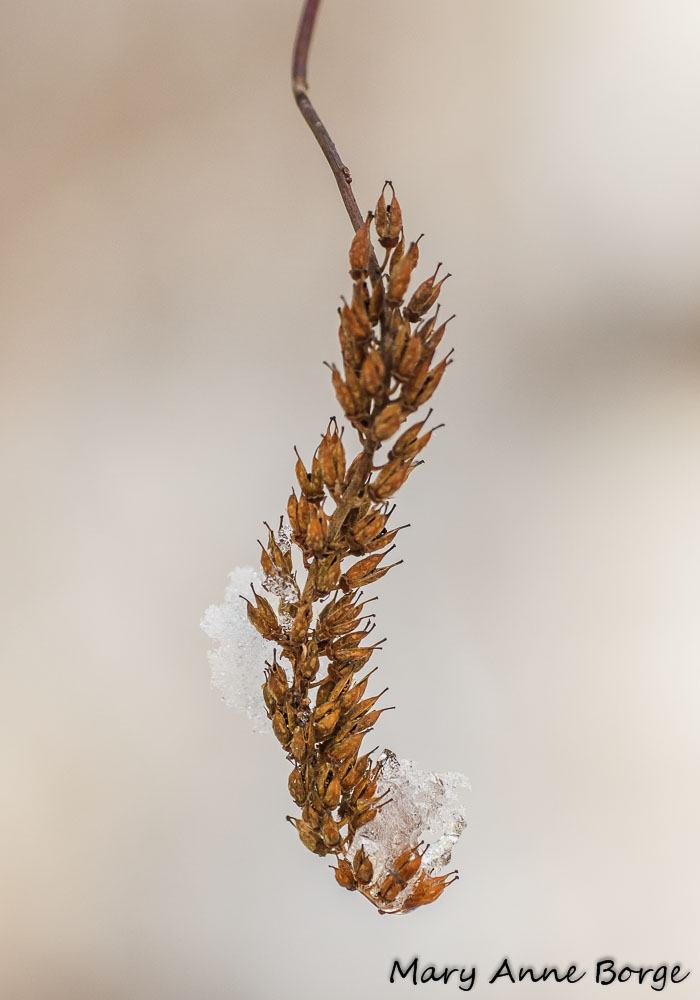
In place of a candelabra, a Purple Giant Hyssop (Agastache foeniculum) fruit cluster brightens its surroundings, while offering food for Goldfinches, Chickadees and even Dark-eyed Juncos.

Purple Giant Hyssop (Agastache foeniculum)

Purple Giant Hyssop (Agastache foeniculum)

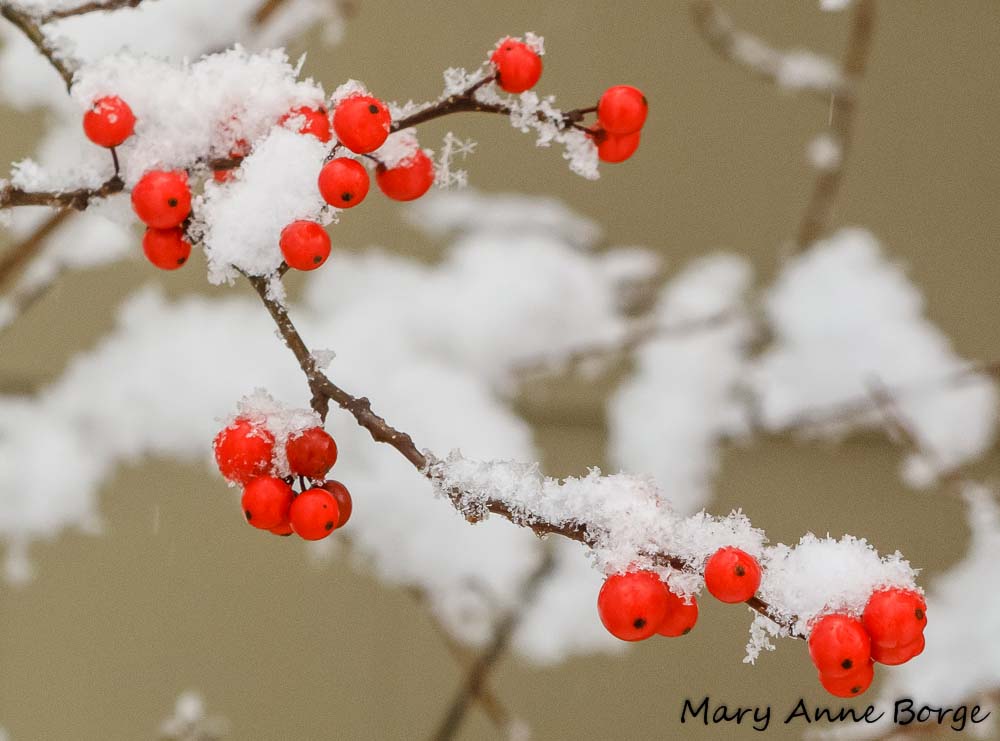
No need to string cranberries or make other garlands when the red fruits of Winterberry Holly (Ilex verticillata) blaze on snowy branches.

Winterberry Holly (Ilex verticillata)

Winterberry Holly (Ilex verticillata)

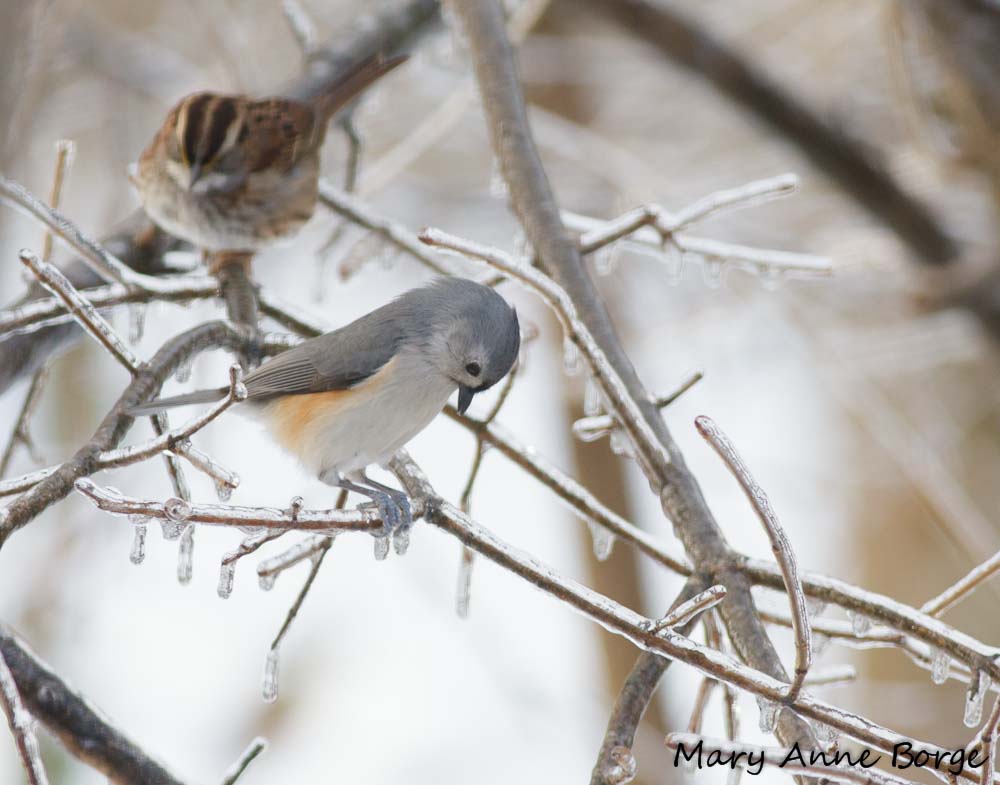
Like using tinsel or other ‘icicles’ to decorate your tree?  One storm provided the real thing.  A little ice doesn’t deter this Tufted Titmouse from its pursuit of a meal.

Tufted Titmouse and White-throated Sparrow on ice

Tufted Titmouse and White-throated Sparrow on ice

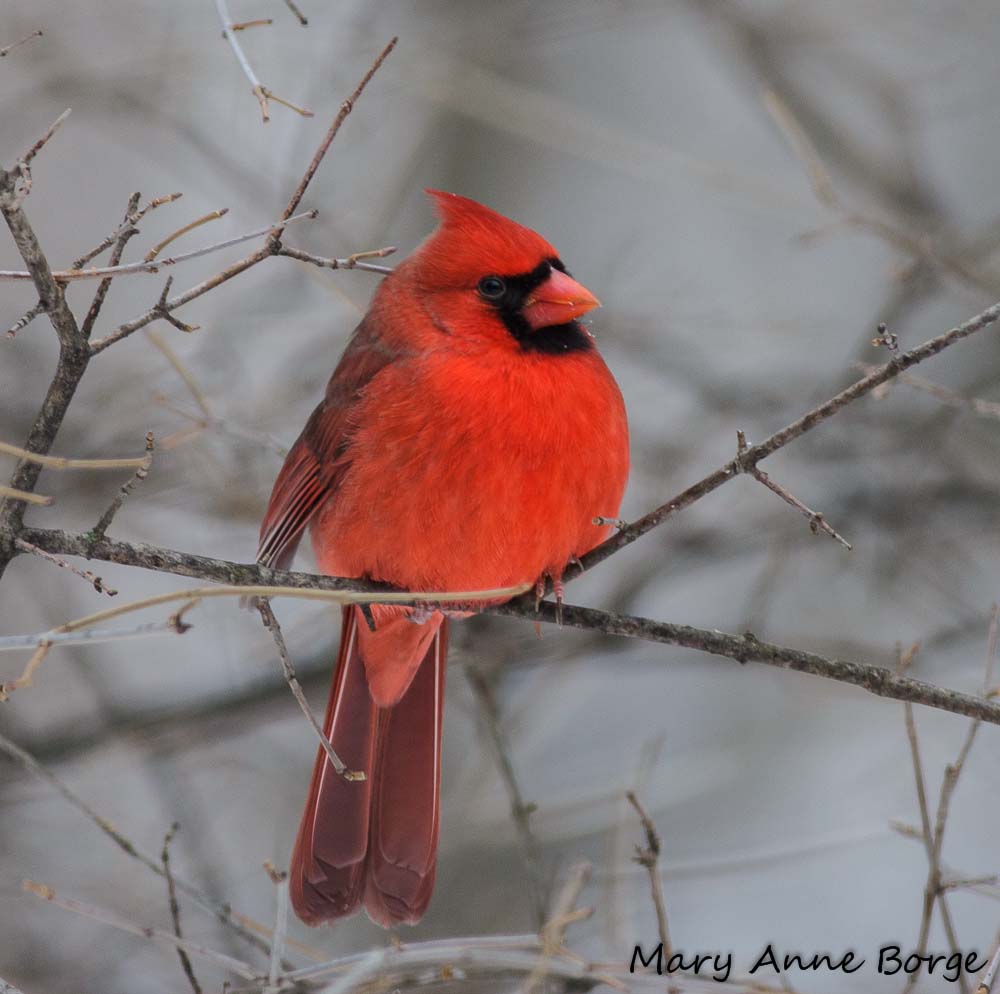
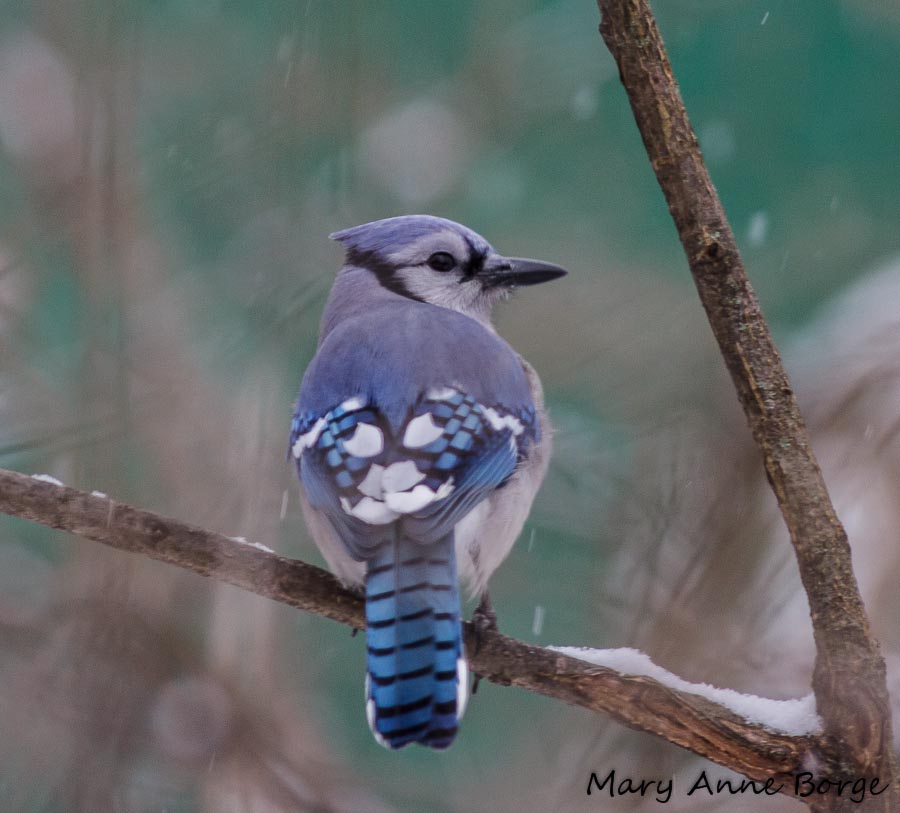
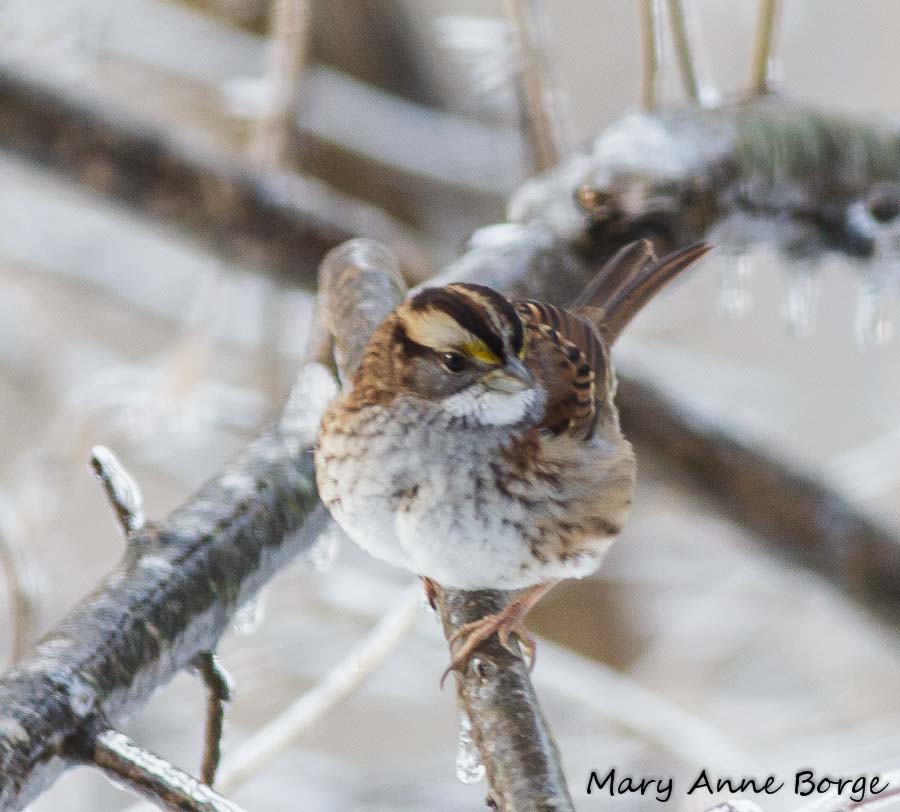
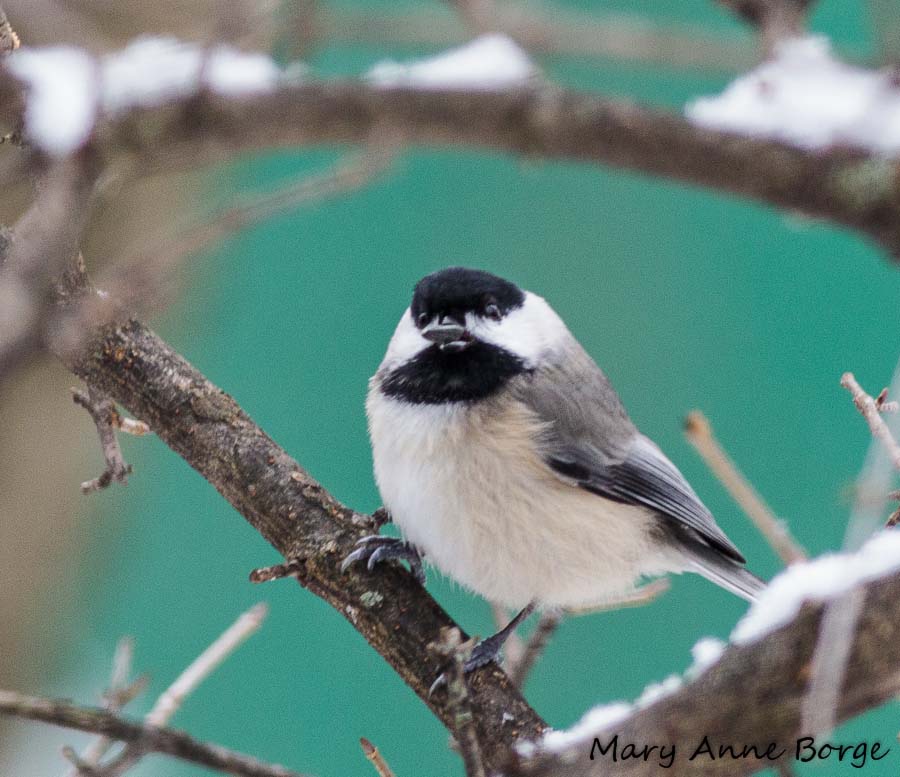
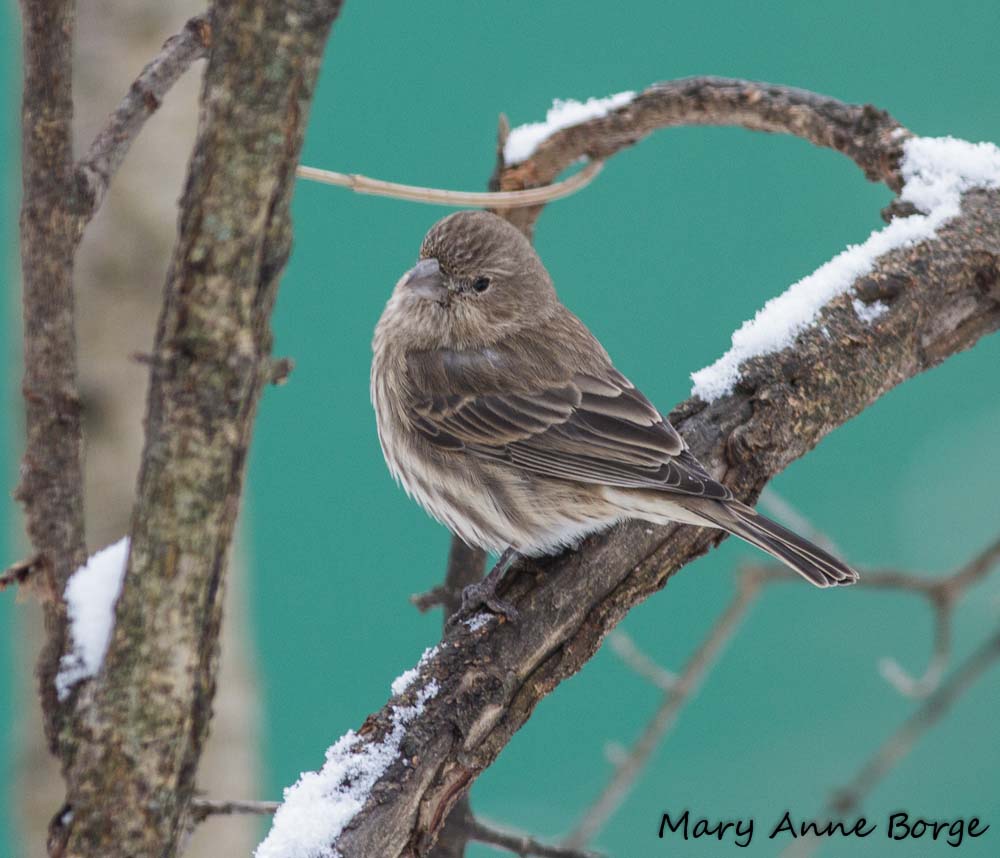
I like bird ornaments on a Christmas tree, but even better are the live models posing outside in the trees

Northern Cardinal, male

Northern Cardinal, male

Blue Jay

Blue Jay

White-throated Sparrow

White-throated Sparrow

Chickadee

Chickadee

House Finch, female

House Finch, female

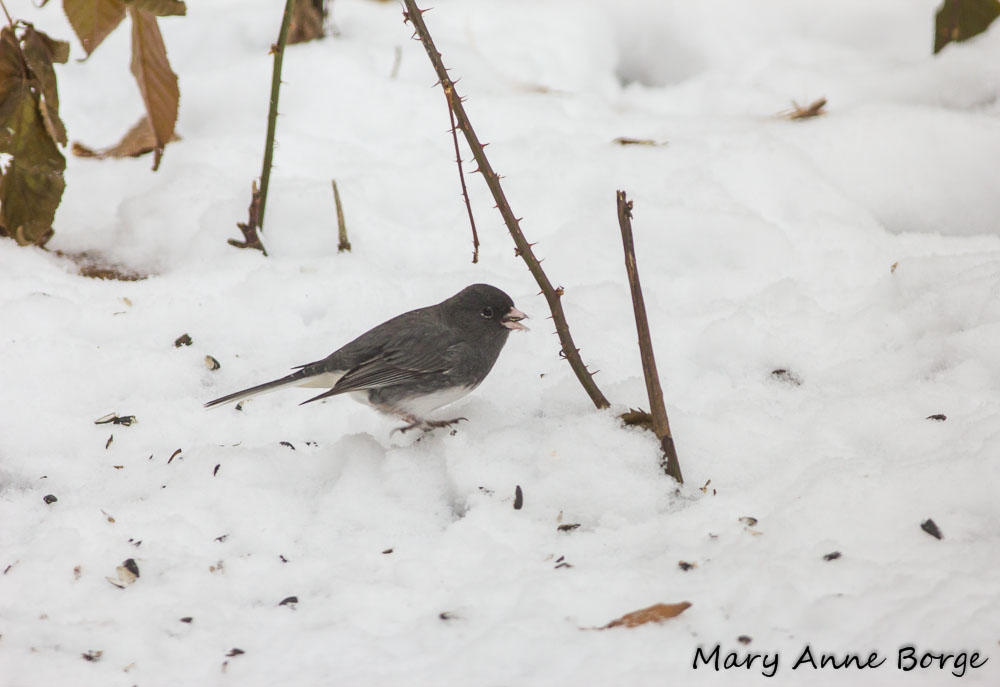
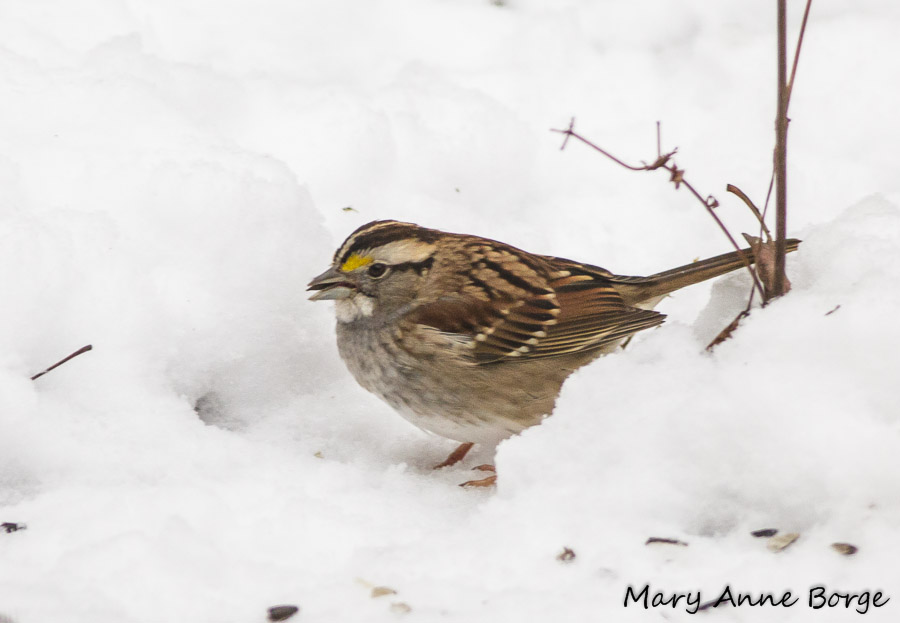
and on the ground below.

Dark-eyed Junco

Dark-eyed Junco

White-throated Sparrow

White-throated Sparrow

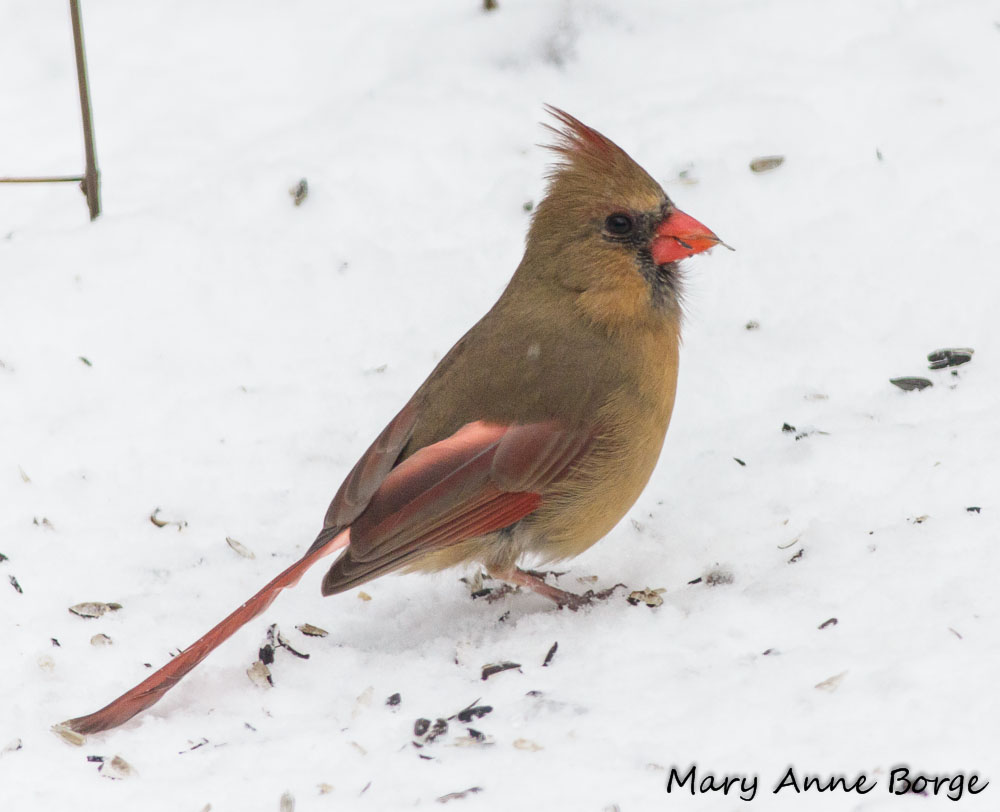
Northern Cardinal, female

Northern Cardinal, female

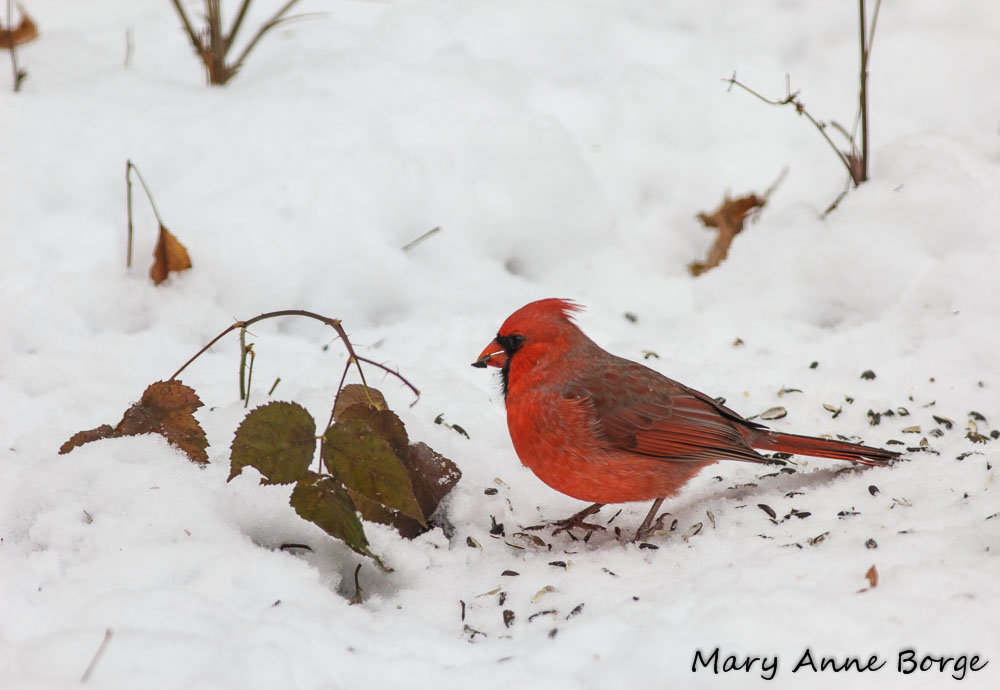
Northern Cardinal, male

Northern Cardinal, male

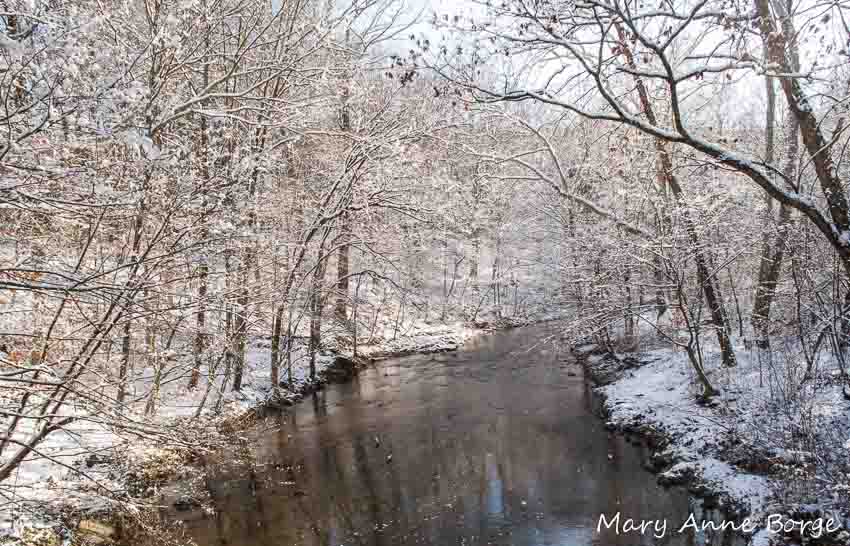
Just across the Delaware River from us, Bowman’s Hill Wildflower Preserve was also blanketed with the fluffy white stuff.

Bowman's Hill Wildflower Preserve, Pidcock Creek from the bridge

Bowman’s Hill Wildflower Preserve, Pidcock Creek from the bridge

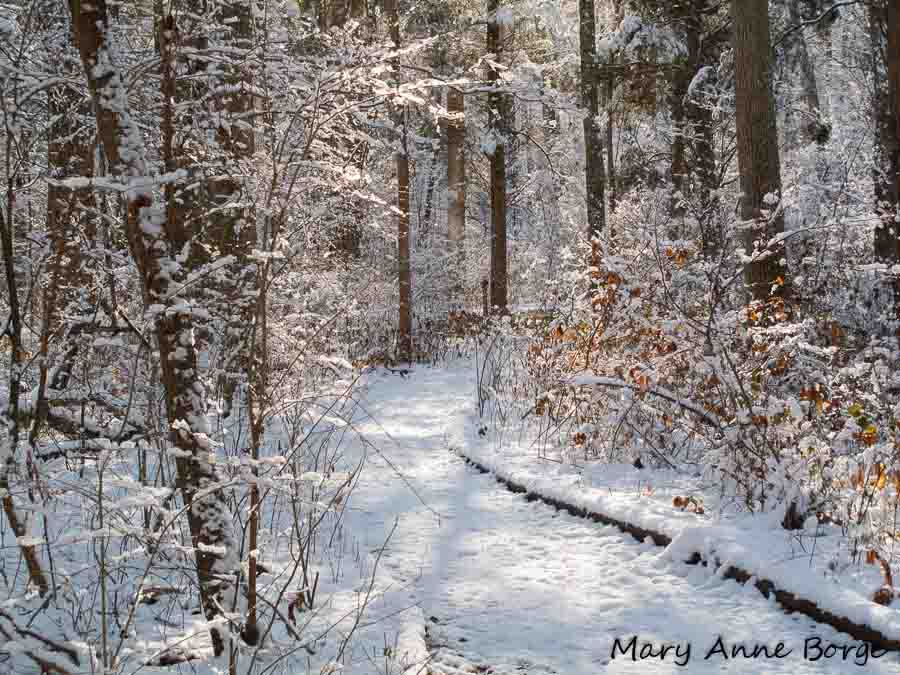
Bowman's Hill Wildflower Preserve, the Violet Trail

Bowman’s Hill Wildflower Preserve, the Violet Trail

Swamp Rose Mallow (Hibiscus moschuetos) on the Gentian Trail

Swamp Rose Mallow (Hibiscus moschuetos) on the Gentian Trail

Snow-covered fruits and leaves decorated the woods exactly like holiday ornaments dangling from the trees.

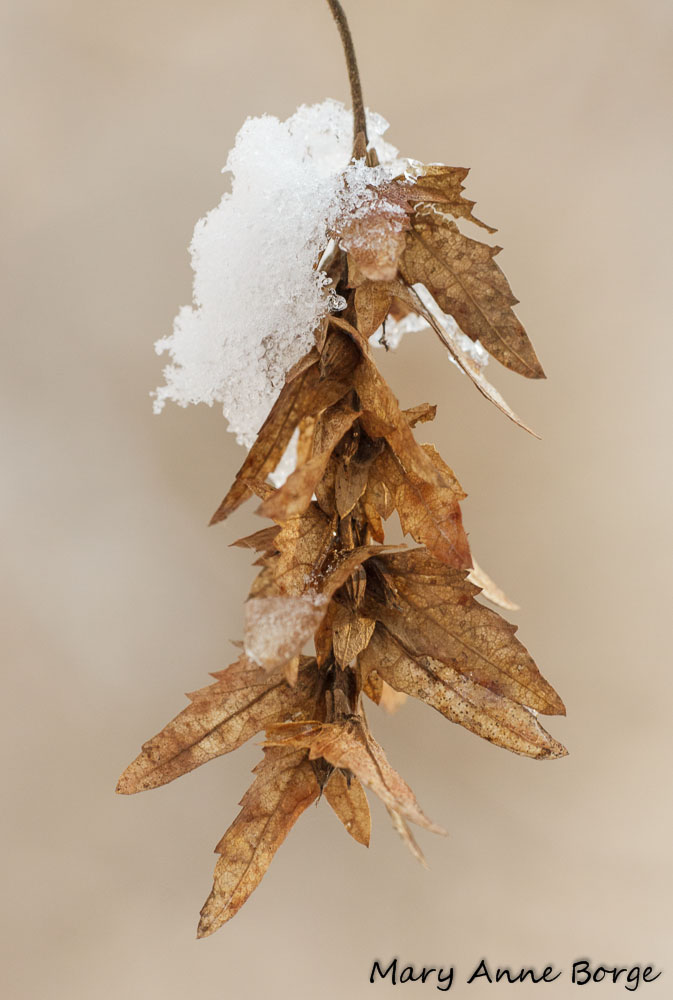
Ironwood, also called American Hornbeam (Carpinus caroliniana)

Ironwood, also called American Hornbeam (Carpinus caroliniana)

Virginia Sweetspire (Itea virginica)

Virginia Sweetspire (Itea virginica)

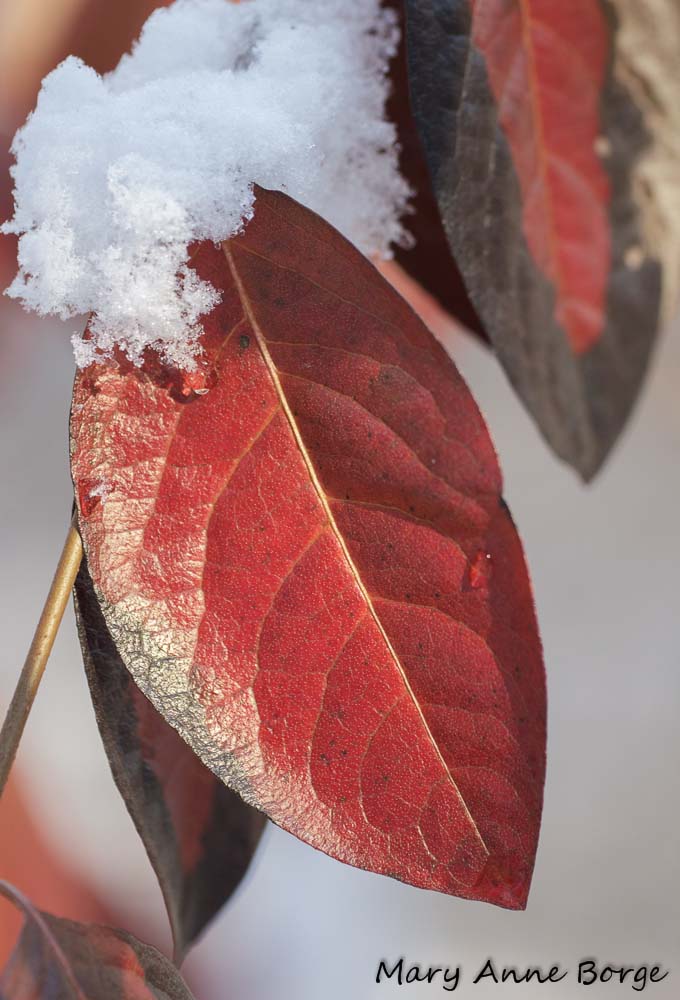
Possum-haw Viburnum (Viburnum nudum)

Possum-haw Viburnum (Viburnum nudum)

BlackJack Oak (Quercus marilandica)

BlackJack Oak (Quercus marilandica)

Snow tends to be ephemeral around here, and this weekend with temperatures in the 50s and 60s it has almost disappeared.  (65°F at 7 o’clock this morning!)  But even without the cover of snow, beautiful natural decorations are visible in some form every day of the year.  So get out and enjoy them whenever you can!

Happy Holidays!

December Snow

December Snow

Sleepy Orange Butterflies Overwintering in Pennsylvania

As I write this, it’s 30°F and snowing lightly, with snow, ice and rain predicted for the next few days.  It’s December in New Jersey.  Oddly, I like winter.  So what am I doing thinking about butterflies?

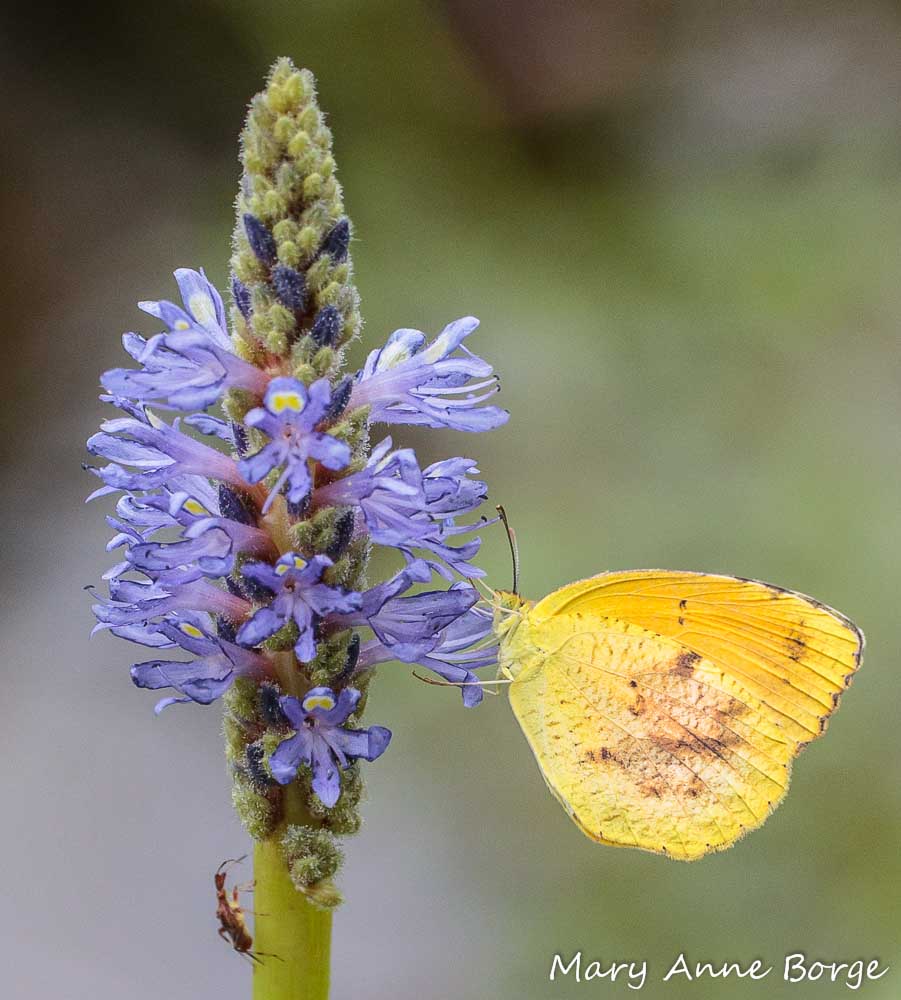
Sleepy Orange Nectaring on Pickerelweed (Pontederia cordata)

Sleepy Orange Nectaring on Pickerelweed (Pontederia cordata)

Since summer I’ve been puzzling over the fact that a butterfly species that is primarily tropical, the Sleepy Orange (Eurema nicippe or Abaeis Nicippe), has been seen regularly in summer across the Delaware River at Bowman’s Hill Wildflower Preserve, just south of New Hope, Pennsylvania.  (See Sleepy Orange Butterflies are Back)  This species is not thought to overwinter farther north than North Carolina.  How is it that Sleepy Oranges have consistently been at the Preserve for the past four summers, and before that in 2006 and 2008?

Is it random chance?  Are they successfully overwintering here?  Or have they evolved to be able to migrate south in the fall and back north in the summer, returning to the same location?  Inquiring minds want to know (ok, I want to know), so I gave myself the assignment of observing them throughout the fall to see if I could learn anything that could help answer this question.

Throughout August the Sleepy Oranges could be seen mating, with the females taking the lead in selecting the location, usually on or near their favorite caterpillar food plant, Wild Senna (Senna hebecarpa).

Sleepy Oranges mating on Wild Senna

Sleepy Oranges mating on Wild Senna

Naturally, this activity was followed by the females laying eggs.

Sleepy Orange laying an egg (ovipositing)

Sleepy Orange laying an egg (ovipositing)

Their efforts were pretty successful, treating me to many caterpillar

Sleepy Orange Caterpillar

Sleepy Orange Caterpillar

and chrysalis sightings throughout September.

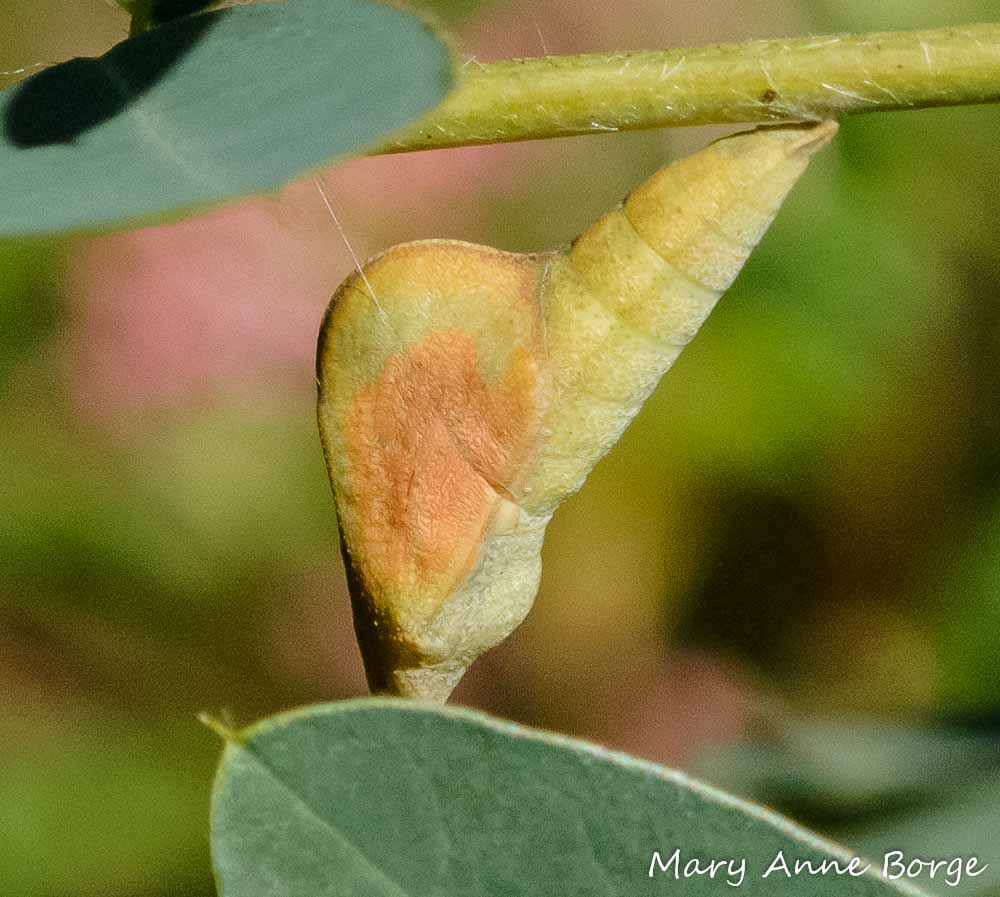
Sleepy Orange Chrysalis

Sleepy Orange Chrysalis

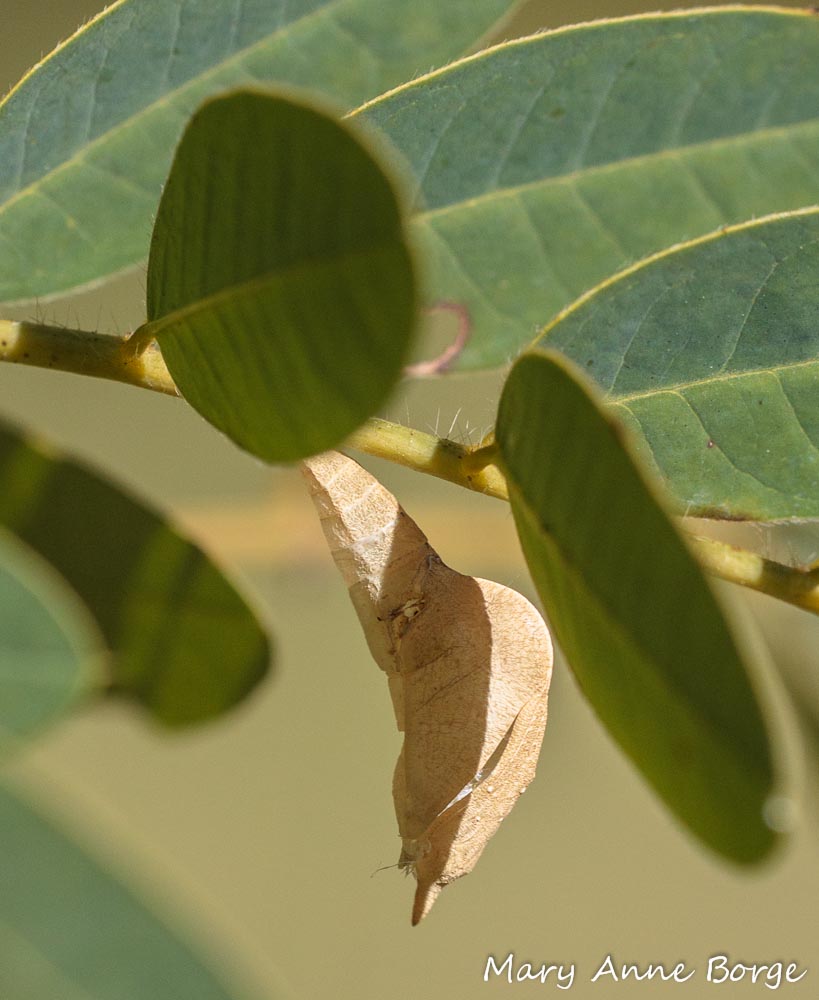
Empty Sleepy Orange Chrysalis - the butterfly has already emerged

Empty Sleepy Orange Chrysalis – the butterfly has already emerged

The chrysalises masqueraded perfectly as leaflets loosing their chlorophyll and changing to shades of tan, yellow and orange.

By late September, I still saw fresh-looking adult butterflies in their summer coloration form.

Sleepy Orange, summer color form

Sleepy Orange, summer color form

In the south, where Sleepy Oranges are known to overwinter as adults in reproductive diapause, they have a different, darker coloration for this overwintering generation. I observed my first individual with this coloration at the Preserve on September 24.

Sleepy Orange, winter color form

Sleepy Orange, winter color form

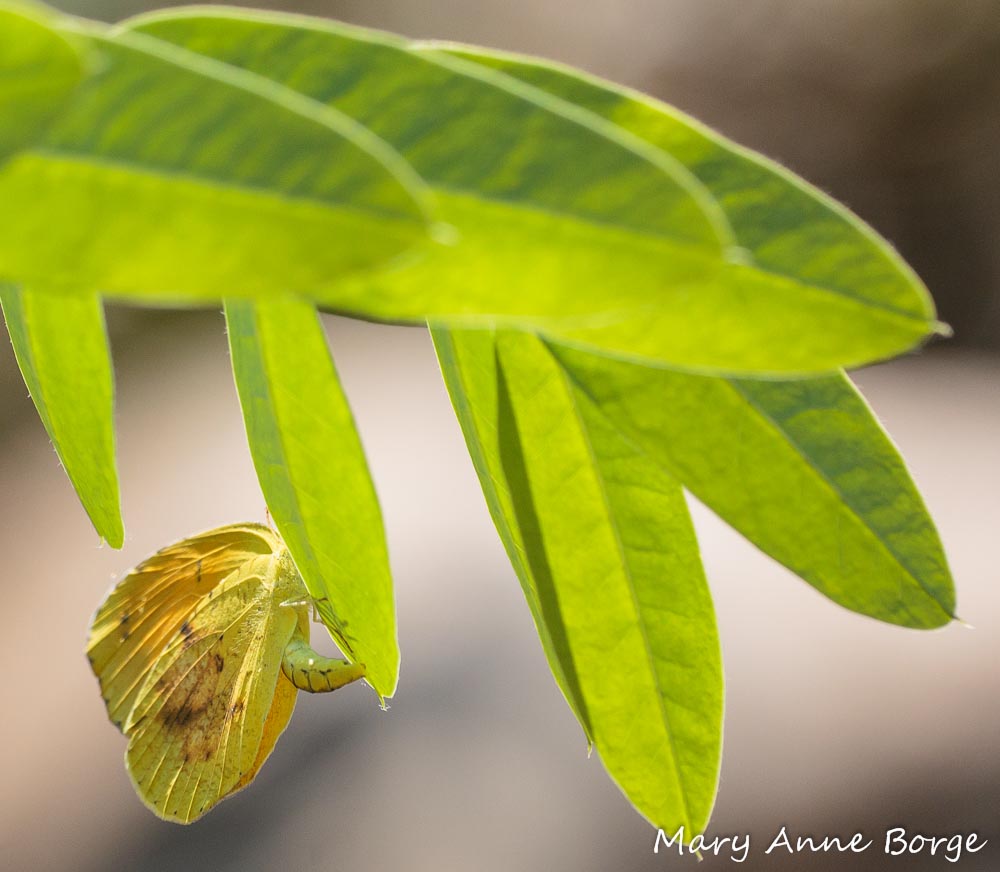
This butterfly had just emerged from its chrysalis.  The tan leaf-like thing hanging behind and between the two leaves to the right of this butterfly is the recently vacated chrysalis, positioned perfectly as if it were a leaflet.

Empty Sleepy Orange Chrysalis

Empty Sleepy Orange Chrysalis

Throughout October, every time I looked on a warm enough day I eventually saw adult Sleepy Oranges.  They usually made their appearance by flying up from the ground, first one butterfly, then two, maybe three or four, flying constantly, circling around each other, flitting back and forth, until they disappeared back down to the grasses and fallen leaves on the ground.  I no longer saw mating, caterpillars or chrysalises.

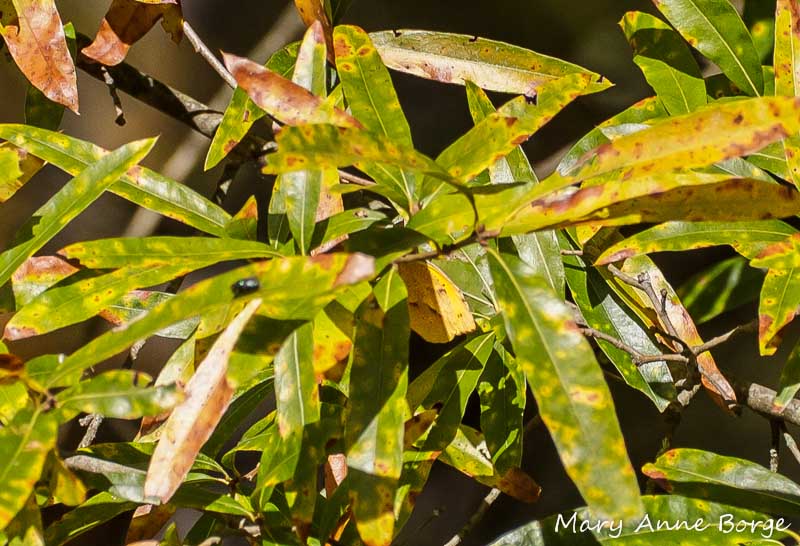
Occasionally a Sleepy Orange basked from a tree branch, safe in the camouflage of the changing fall leaves.

Sleepy Orange basking on Willow Oak - Can you see the butterfly?

Sleepy Orange basking on Willow Oak – Can you see the butterfly?

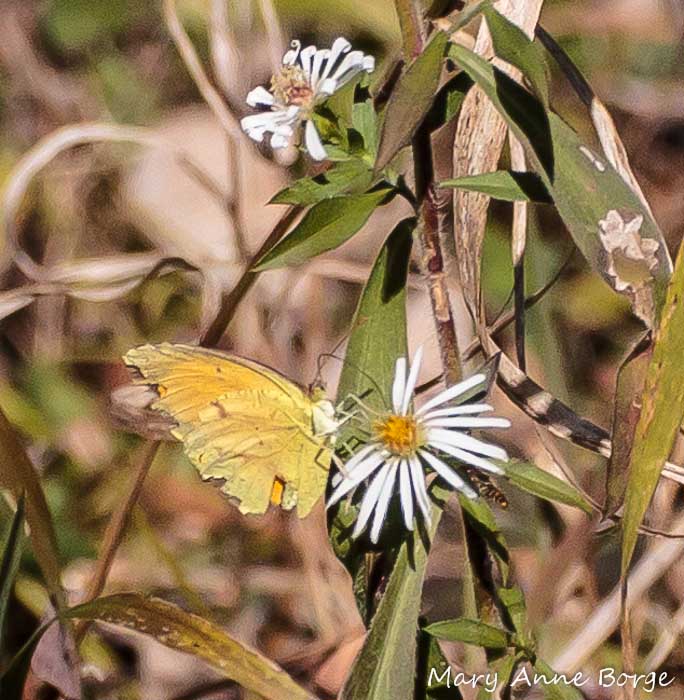
Only very rarely did I see them nectaring, although they may have been feeding more than I was able to observe, possibly on blossoms of young plants at nearly ground level, like this aster.

Sleepy Orange nectaring on aster

Sleepy Orange nectaring on aster

The spot where I saw the butterflies most frequently is a small meadow area with lots of young plants (including Wild Senna, their caterpillar food plant) and exposure to afternoon sun.

My last sighting of an adult was on November 2, a mild sunny day with a high in the mid-60s.  Given the current temperatures, I’m pretty sure that will be my last sighting until next year.

So it appears that the Sleepy Oranges are at least attempting to overwinter here, probably as adults, and probably in the shelter of the plants and fallen leaves on the ground.  Lets see if they’re successful.  This fall and winter is starting out a bit colder than normal, so even if they have survived the winter here in the past, it doesn’t necessarily mean they’ll make it this year.  I hope they do!

Even if they do overwinter here, it doesn’t exclude the possibility that they might also have a second strategy that involves migration.

I’ll keep you posted.

Sleepy Orange, winter form

Sleepy Orange, winter form

Resources:

Cech, Rick; Tudor, Guy.  Butterflies of the East Coast.  2005.

In Praise of Black Walnut Trees

If you go for a walk in the woods any time soon, you may still encounter black walnuts or the remains of their hulls on the ground.

Fallen Black Walnuts

Fallen Black Walnuts

The nuts usually remain on the tree until after the leaves fall, reminding me of a Charlie Brown Christmas tree.  Then all the nuts fall within a short time of each other.  These nuts are sweet tasting and highly nutritious.  Studies show that eating them helps prevent cardiovascular disease, diabetes and cancer.  Walnuts have as much protein as an equal weight of beef, but they also contain essential fatty acids that are necessary for healthy brain development and function.  Any aging brains out there?  Eat walnuts!

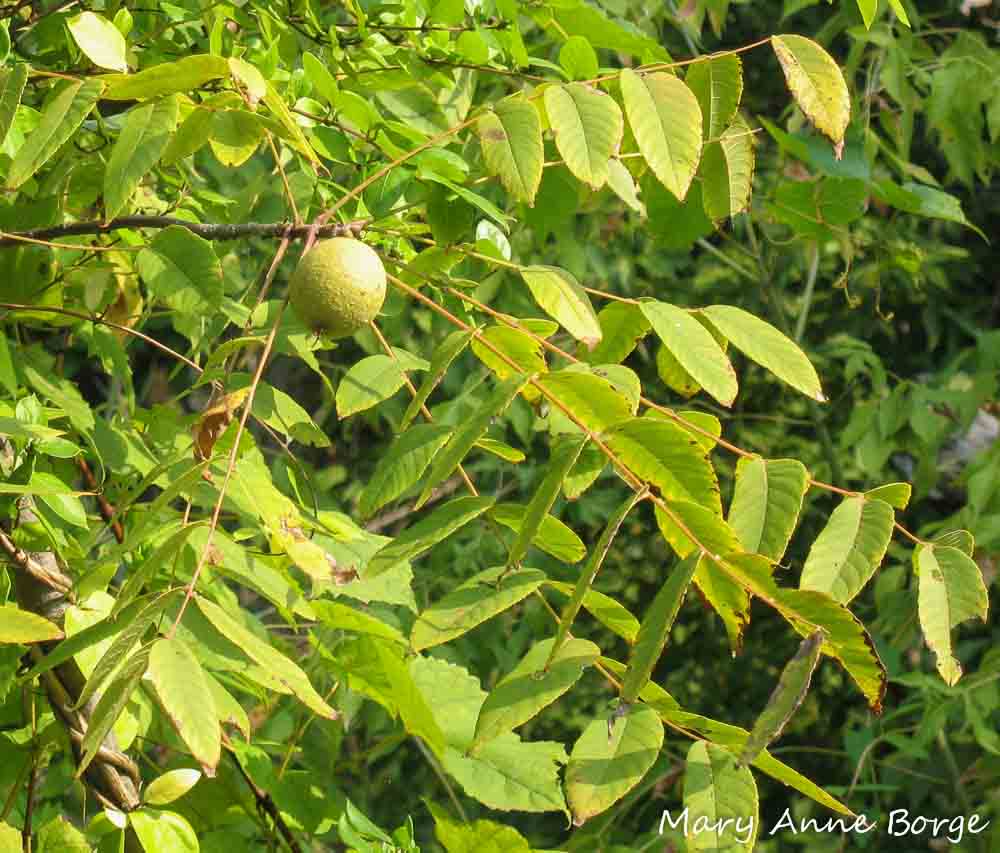
Black Walnut (Junglans nigra)

Black Walnut (Junglans nigra)

Mammals other than humans like them, too: squirrels, mice and voles, for example.

Eastern Gray Squirrels eat and help disperse Walnuts

Eastern Gray Squirrels eat and help disperse Walnuts

Red Squirrels also enjoy many tree nuts, including Walnuts

Red Squirrels also enjoy many tree nuts, including Walnuts

These animals aid in the spread of Walnut trees when they overlook some of the nuts they have hidden away for later use, effectively planting them.

In turn, these animals are food for larger animals, like fox

Red Fox

Red Fox

and raptors.

Red-shouldered Hawks, as well as most other raptors, hunt and eat small mammals

Red-shouldered Hawks, as well as most other raptors, hunt and eat small mammals

According to Douglas Tallamy in Bringing Nature Home, the leaves of Black Walnut (Juglans nigra) trees and the closely related Butternut (Juglans cinerea) provide food for the caterpillars of over 100 species of moths and butterflies, including Luna Moths and Banded Hairstreaks.

Banded Hairstreak on Butterflyweed. Their caterpillars feed on the leaves of Black Walnut and other woody species

Banded Hairstreak on Butterflyweed. Their caterpillars feed on the leaves of Black Walnut and other woody species

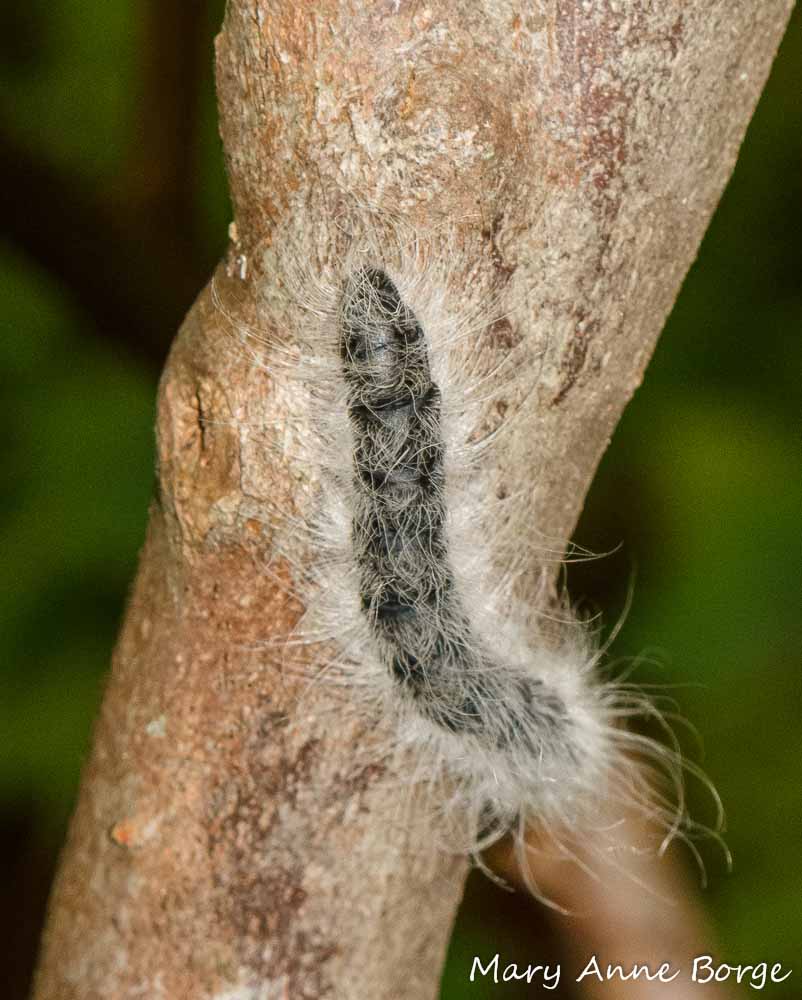
The Walnut Caterpillar specializes on Black Walnut and relatives such as Butternut.  This means the leaves of these trees are the only food these caterpillars can eat.

Walnut Caterpillar (Datana integerrima)

Walnut Caterpillar (Datana integerrima)

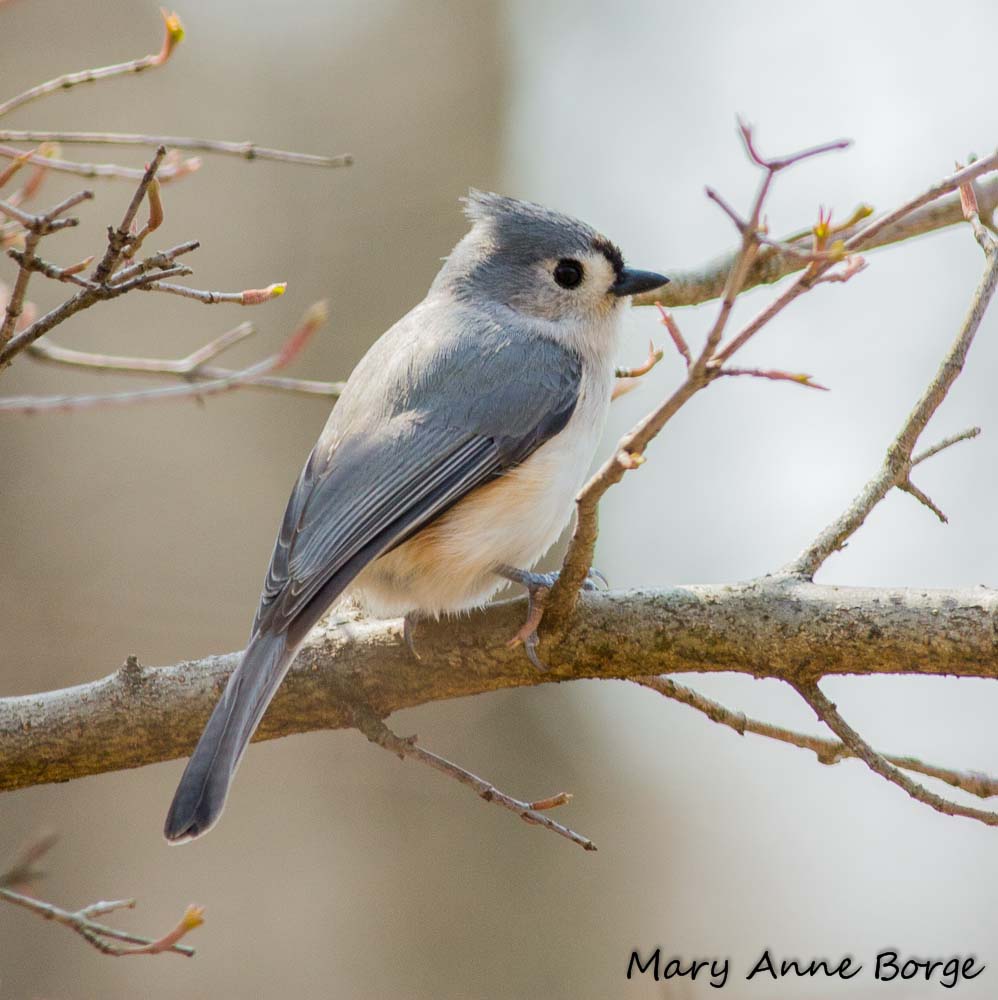
Since they are an important source of food for birds, not all caterpillars will see life as an adult butterfly or moth.

Tufted Titmouse

Tufted Titmouse

Black Walnut trees have a reputation for not playing well with other plants. That is, many plants won’t grow successfully in close proximity (within the drip-line or reach of the roots) of a Black Walnut. The reason is more complex than shade and competition for water.  Black Walnuts contain juglone, which is an anti-fungal chemical.  In order to derive nutrients from the soil, the vast majority of plants partner with underground mycorrhizal fungi (think mushroom, not the mold in your shower).  Unless the fungi on which the plant depends is resistant to juglone, or the plant doesn’t require this partnership to obtain its nutrition, that plant won’t do well.  Of course, some plants and their fungi partners have evolved in exactly this way.  Click here for some suggestions from The Mortem Arboretum for plants that can co-habit successfully with Black Walnut trees.

It’s of benefit to Black Walnut trees to produce juglone, since it does reduce competition for resources, and protects the trees from fungal invaders that might do them harm. Juglone also has sedative properties that may aid animals in dormancy. It can even have a calming effect on people.

Black walnut trees contain another compound called ellagic acid in both their nuts and leaves. This compound is thought to help prevent cancer in people who consume the nuts. The ellagic acid in the leaves is effective in removing carcinogenic hydrocarbons from the air, helping to reduce the effects of air pollution.

As if that weren’t enough, Black Walnut’s wood is valuable for furniture and cabinet making, and the nut hulls can be used to make a dye.

Black Walnut with hull partially removed

Black Walnut with hull partially removed

These are just some of the known benefits of Black Walnut trees.  Just imagine what we don’t know yet!  No wonder ‘juglans’ is sometimes translated as ‘nut of Jupiter’, or ‘nut of the gods’.

Black Walnut Tree (Juglans nigra)

Black Walnut Tree (Juglans nigra)

Resources

Beresford-Kroeger, Diana.  Arboretum America: A Philosophy of the Forest.  2003

Eastman, John. The Book of Forest and Thicket. 1992.

Tallamy, Douglas W.  Bringing Nature Home.  2007

Wagner, David L.  Caterpillars of Eastern North America.  2005.

Butterflies and Moths of North America

Natural History Museum Database of Leipidoptera Hostplants

Nutritious Fall Foliage: What makes leaves so colorful?

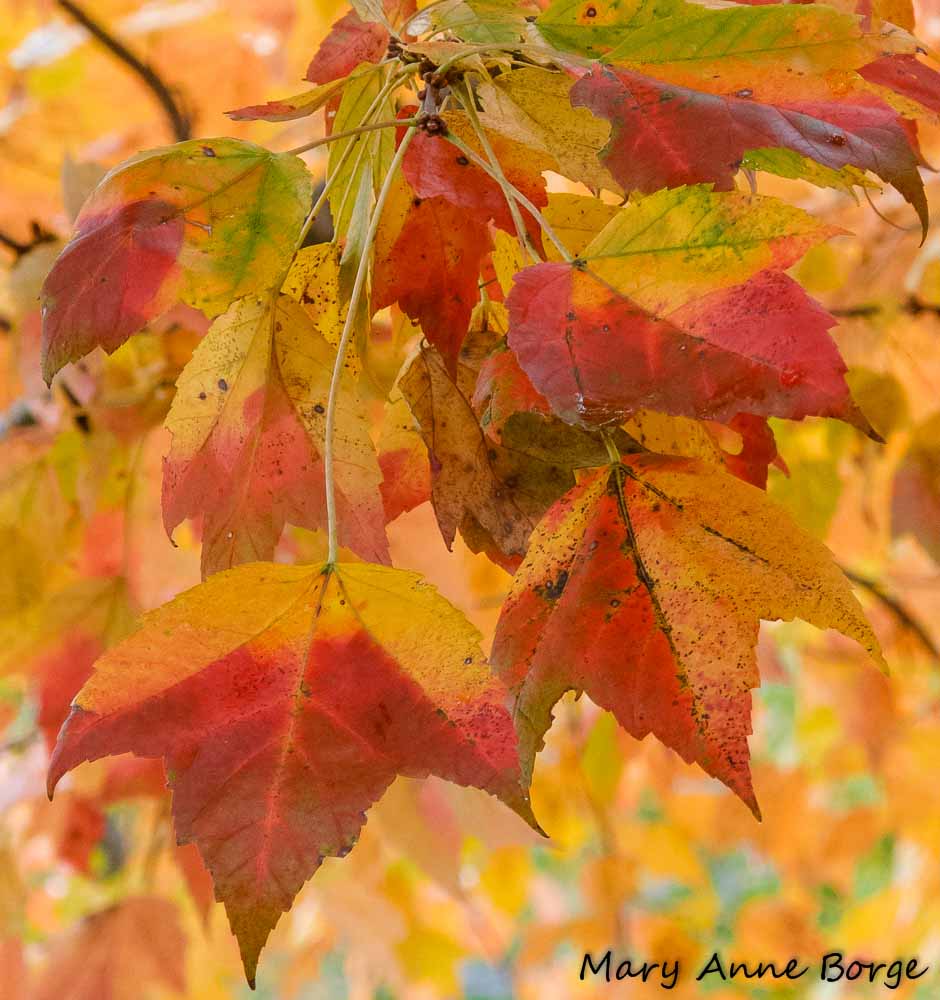
Red Maple (Acer rubrum)

Red Maple (Acer rubrum)

On Halloween, the Red Maple (Acer rubrum) outside our kitchen window gave up the ghost, so to speak. The leaves on the north side of the tree had been changing colors for weeks, but the rest of the tree remained stubbornly green.  Overnight, the entire tree was awash in reds and oranges.

It’s the change in day length (or really night length) and temperature that signals deciduous trees and shrubs that it’s time to get ready for winter. They have to drop their leaves to protect themselves from damage that would be caused due to the heavy weight of winter ice and snow storms. As nights get longer and temperatures drop, these woody plants gradually slow and eventually stop replenishing chlorophyll, the substance that is responsible for the green pigment in their leaves.

Alexauken Wildlife Management Area, West Amwell, New Jersey

Alexauken Wildlife Management Area, West Amwell, New Jersey

But what accounts for the array of colors that are revealed as the chlorophyll gradually disappears? The yellow, orange, red, purple, bronze and browns?

These colors reflect some of the same nutrients that are present in the plant-based foods we eat. Many of these chemicals were present throughout the growing season, but were masked by or blended with the green of the chlorophyll.

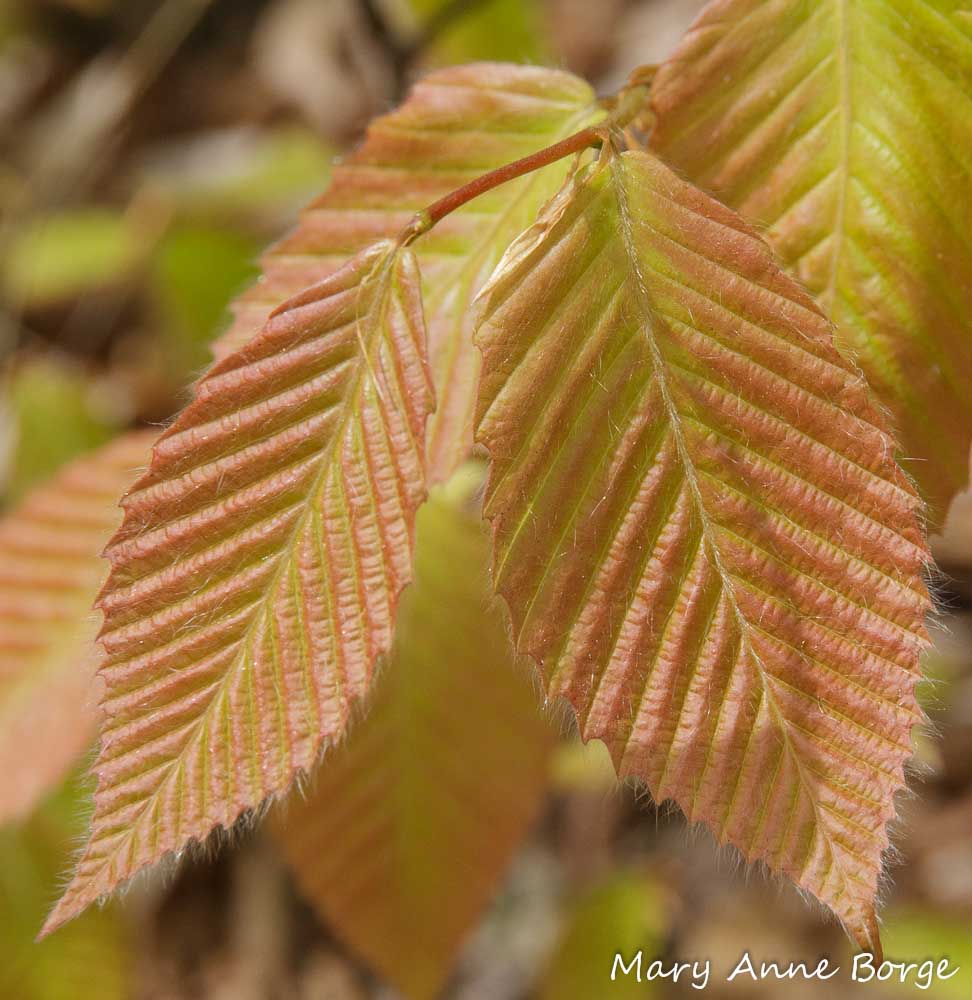
American Beech (Fagus grandifolia) Leaves in Spring

American Beech (Fagus grandifolia) Leaves in Spring

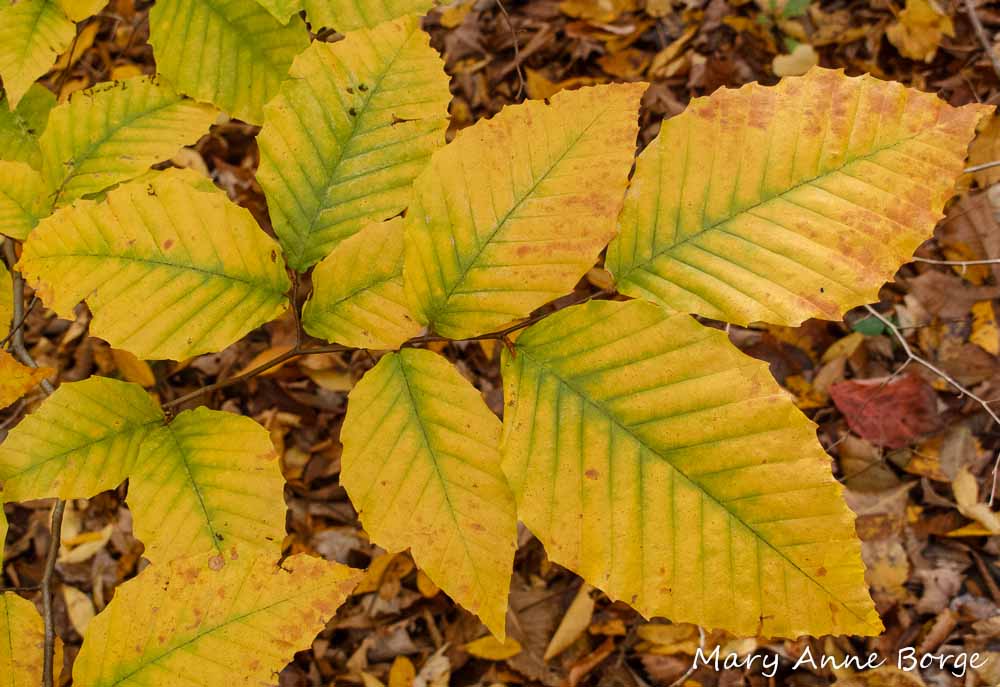
American Beech (Fagus grandifolia ) Leaves in Fall

American Beech (Fagus grandifolia ) Leaves in Fall

The yellows are carotenoids, mainly xanthophylls, nutrients that help to reduce inflammation, boost the immune system and reduce tumor growth. They are present in yellow summer squash, beets, carrots, corn, peppers, green leafy vegetables, and many others. Xanthophylls help plants to absorb energy from the sun while protecting tissues against the sun’s intense radiation.

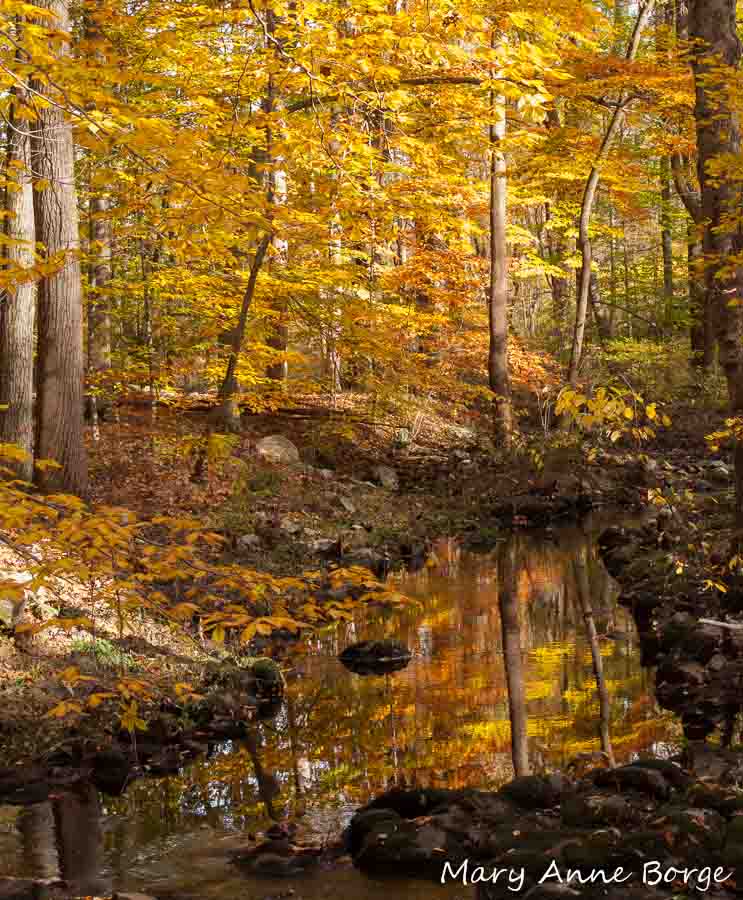
Alexauken Wildlife Management Area, West Amwell, New Jersey

Alexauken Wildlife Management Area, West Amwell, New Jersey

Carotenes (another group of carotenoids) are responsible for the orange shades revealed in fall leaves. Beta-carotene is an anti-oxidant, visible in the orange color of foods like winter squash, carrots and sweet potatoes. They assist in photosynthesis, and help protect plant tissues from too much exposure to the sun’s rays.

American Hornbeam (Carpinus caroliniana) or Ironwood

American Hornbeam (Carpinus caroliniana) or Ironwood

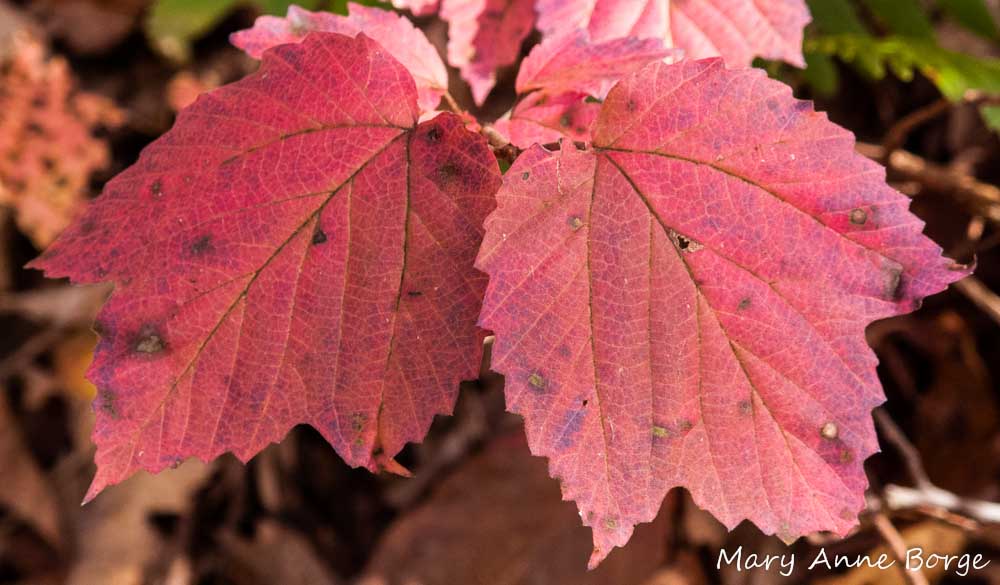
Reds and purples are anthocyanins, nutrients found in foods like blueberries, blackberries, cherries, grapes (and red wine; yay!), purple cabbage, other purple-tinged greens like red leaf lettuce, some kale and swiss chard, as well as many others that show red or purple colors.  Anthocyanins are antioxidants, with anti-inflammatory, anti-viral, and anti-cancer properties.  Plants may also benefit from anthocyanin’s antioxident effect, and the dark colored pigments help protect from sun damage. They continue to manufacture these chemicals until the leaves fall.

Maple-leaf Viburnum (Viburnum acerifolium)

Maple-leaf Viburnum (Viburnum acerifolium)

Brown and tan colors show the presence of tannins. They tend to be bitter or astringent tasting, and as a result discourage browsing by herbivores (plant-eaters) so they may provide some protection to plants. Tannins are found in foods like grapes, wine, tea, and chocolate, though, so you can see that this protection isn’t foolproof.

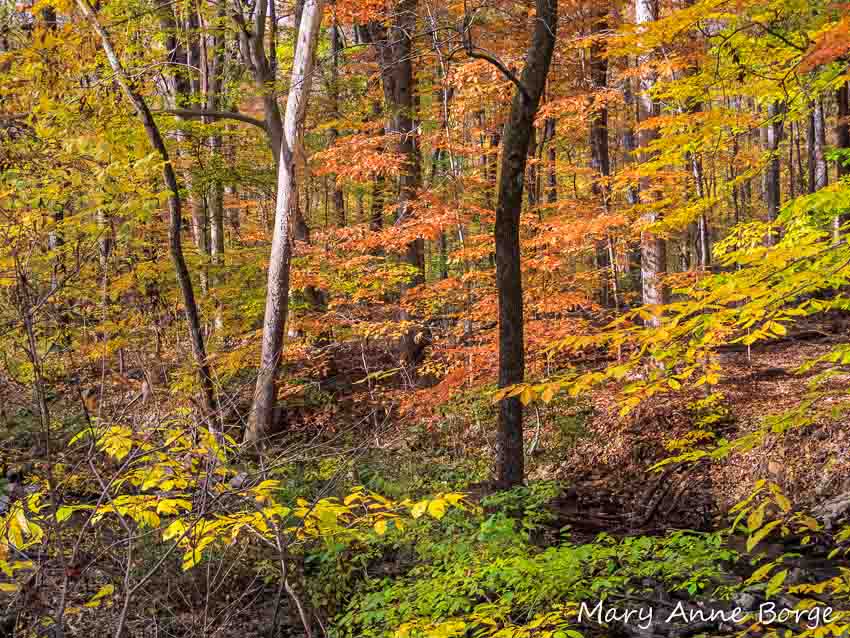
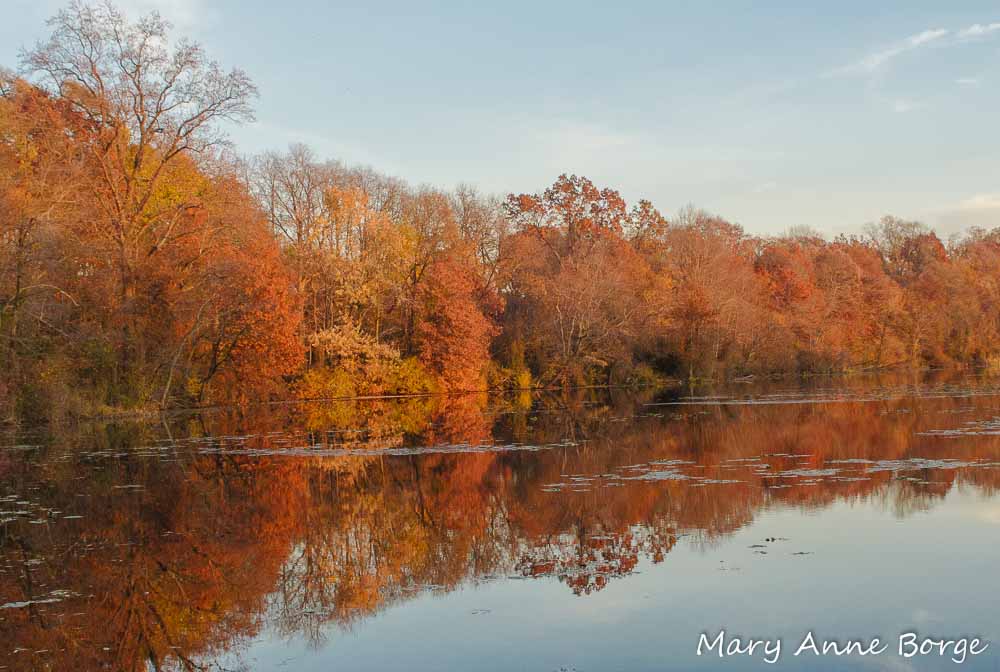
Spring Lake at Roebling Park, Abbott Marshlands, Hamilton Township, New Jersey

Spring Lake at Roebling Park, Abbott Marshlands, Hamilton Township, New Jersey

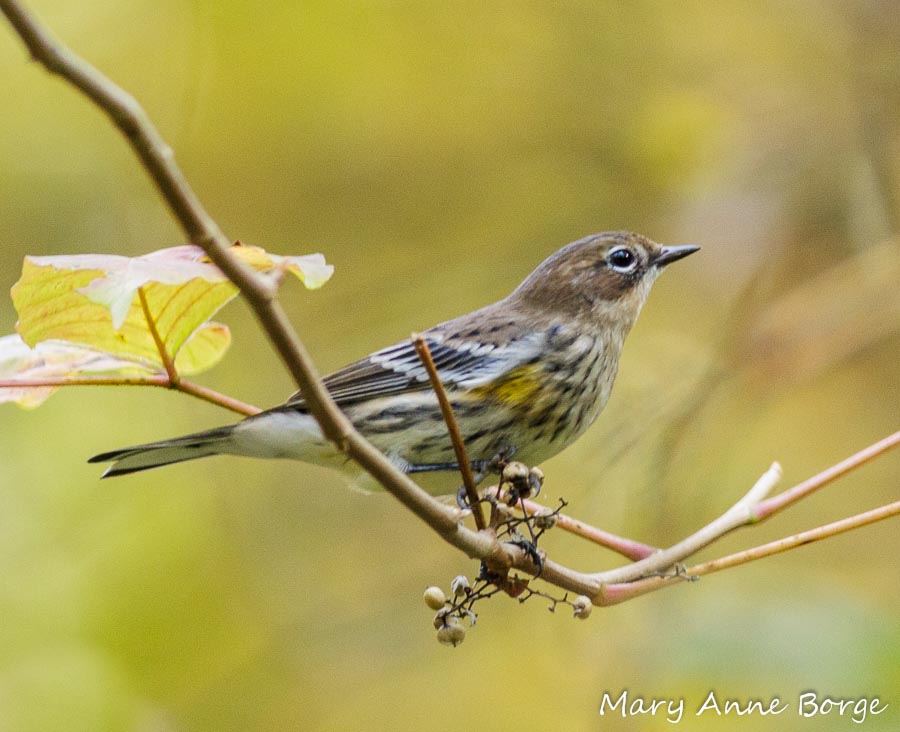
There is overlap and blending of colors based on the mix of chemicals in the leaves. These bright colors may also signal to birds that there is fruit available for consumption.

Yellow-rumped Warbler with Poison Ivy Fruit

Yellow-rumped Warbler with Poison Ivy Fruit

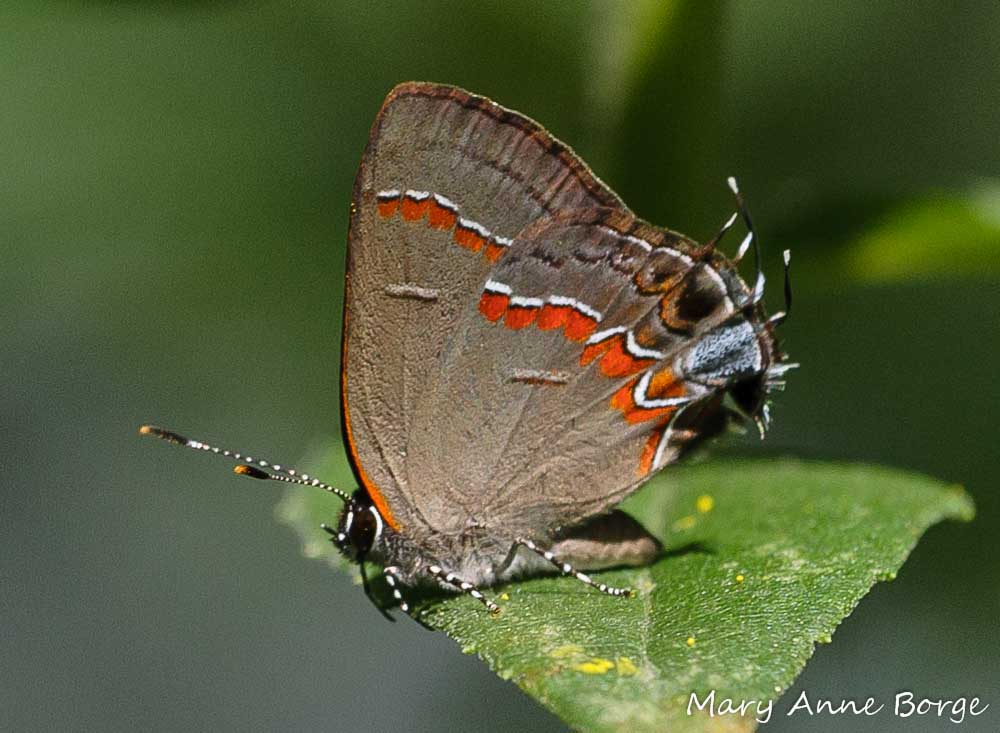
These nutrients, along with others that are obtained from the soil, like calcium and potassium, break down and return to the soil as the fallen leaves gradually decompose. During this process, animals may still take advantage of the nutrients. Red-banded Hairstreak caterpillars, for example, feed on fallen leaves, especially those of sumacs, contributing to the process of decomposition, and the cycle of life for the next generation.

Red-Banded Hairstreak

Red-Banded Hairstreak

A few days later, and the leaves on our Red Maple have almost all fallen. We’ll watch them gradually break down, nourishing the soil, and the plants and animals that rely on them.

Haul Road at the Trapp Family Lodge, Stowe, Vermont

Haul Road at the Trapp Family Lodge, Stowe, Vermont

Resources

http://science.jrank.org/pages/5303/Plant-Pigment-Carotenoids.html

http://www.usna.usda.gov/PhotoGallery/FallFoliage/ScienceFallColor.html