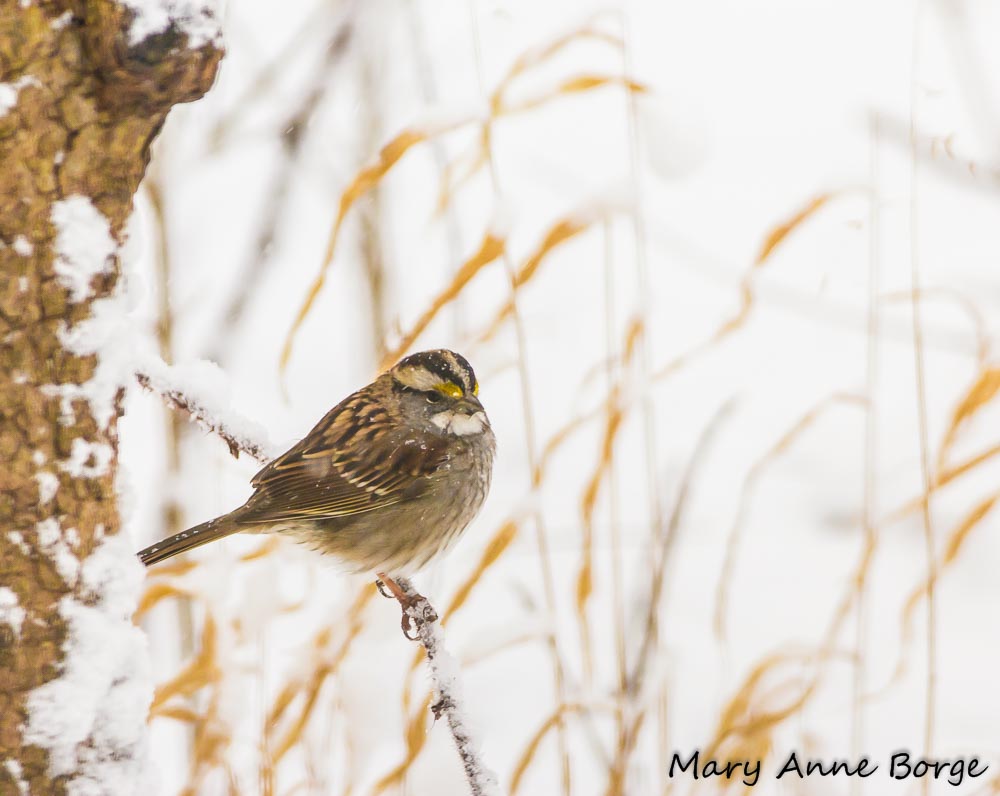
White-throated Sparrow with River Oats (Chasmanthium latifolium) in background
Wishing you the wonder and delight of nature this holiday season!

White-throated Sparrow with River Oats (Chasmanthium latifolium) in background
Wishing you the wonder and delight of nature this holiday season!
On a walk in the woods the other day, I found what I was looking for: a leaf! It may seem like it should be pretty easy to find a leaf on the forest floor, but I was looking for something very specific, not a fallen leaf, but the newly unfurled leaf of a native orchid called Puttyroot (Aplectrum hyemale).
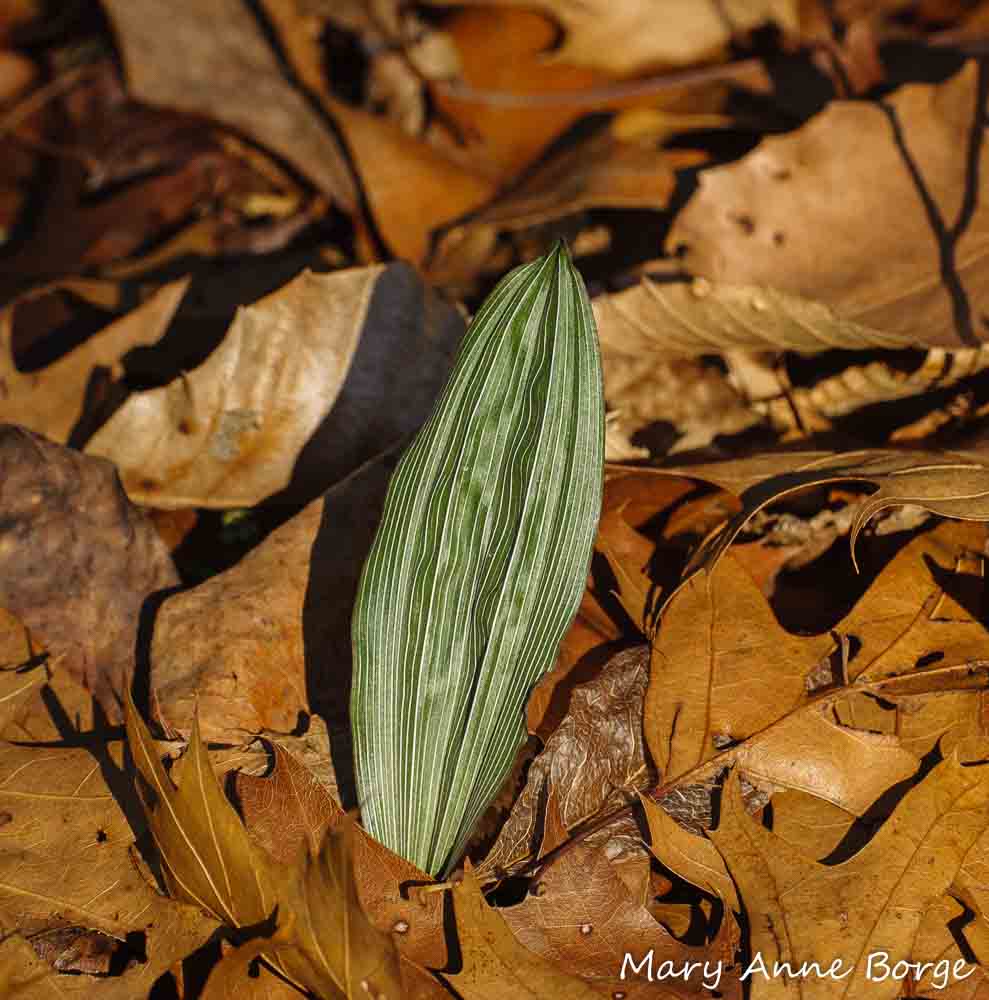
Puttyroot (Aplectrum hyemale) leaf
‘Hyemale’ means winter, a reference to the fact that the leaves of this plant emerge in late November or December and are visible until spring. Puttyroot is found in rich deciduous woodlands, often in the company of Sugar Maple (Acer saccharum) and American Beech (Fagus grandifolia). It gathers its energy from the sun during the months when the forest canopy is open, while the leaves are off the trees. Photosynthesis occurs in this plant at temperatures as low as 35ºF (2ºC). During this time, Puttyroot also benefits from the nutrients released to the soil from the blanket of decomposing leaves from the neighboring trees.
In ideal conditions, Puttyroot sends up a single striped, accordion-pleated leaf in late fall, about 3-8 inches (.75 – 2 dm) long and 1-3 inches (.25 – .75 dm) wide. The leaf dies back by the time the single flower stalk blooms in May or early June. The flower stalk height can vary from about 6 to 20 inches (1.5 – 5 dm).

Puttyroot (Aplectrum hyemale) flowers
Bees are likely the pollinators of Puttyroot, enticed to visit by the showy flowers, but they aren’t rewarded for their efforts, since the flowers don’t offer any nectar. If bees don’t come through, the flowers can also self-fertilize if necessary. Puttyroot’s many tiny seeds are dispersed by the wind.
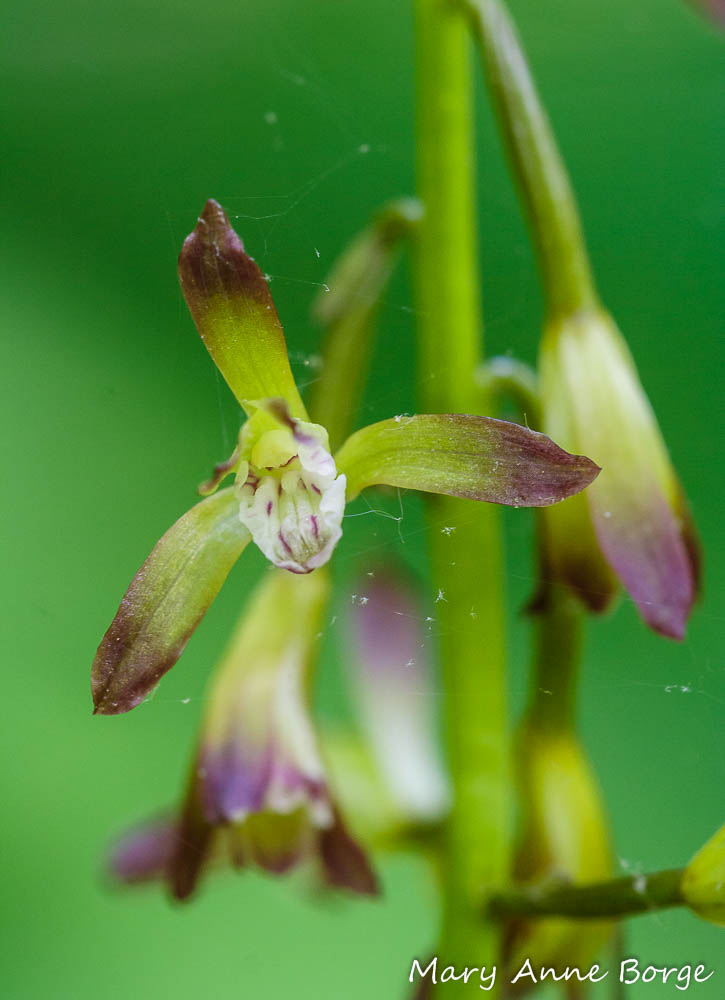
Puttyroot (Aplectrum hyemale) flower
There may be years when a Puttyroot plant doesn’t bloom, its presence only revealed by the winter leaf. Some years the plant may be completely dormant, without even the leaf visible above ground.
This orchid species is native throughout the eastern half of the United States (except Florida) and in Quebec and Ontario provinces in Canada, but it is listed as rare, threatened or endangered throughout much of its range, including New York, New Jersey, Pennsylvania, Vermont and Massachusetts.
Non-native, invasive plants like Garlic Mustard (Alliaria petiolata) and Japanese Stiltgrass (Microstegium vimineum) are a serious threat to Puttyroot and its companion woodland plants. Not only do these invasive species compete for resources with native plants, they also alter the soil chemistry in a negative way, interfering with the mycorrhizal fungi that is present. Most plants don’t get the nutrients they need directly from the soil, but rather through a partnership with mycorrhizal fungi. Plants provide sugars to the fungi, and the fungi in turn make nutrients available to the plants. If the fungi aren’t present, the plants won’t get the nutrients necessary to continue to be viable. The good news is that both Garlic Mustard and Japanese Stiltgrass are easy to remove by pulling. Garlic Mustard is edible, so you can reward yourself for removing it by eating your ‘harvest’. Garlic Mustard pesto, anyone?
Early settlers used a mucilaginous substance obtained from Puttyroot’s corms (part of the underground food storage system) to repair broken pottery, a practice that resulted in the plant’s common name. Another common name, Adam and Eve, also refers to the plant’s corms, which are usually paired.

Puttyroot (Aplectrum hyemale) leaf
Go for a walk in the woods and see if you can find a Puttyroot leaf. If you’re successful, make a mental note of its location. Then visit the spot again in May or June, to see if you can find the flower stalk in bloom. Repeat the process until you find this buried treasure!
Resources
Capon, Brian. Botany for Gardeners. 2005
New England Plant Conservation Program Aplectrum hyemale (Muhl. ex Willd.) Nutt. Puttyroot
USDA National Invasive Species Information Center:
Garlic Mustard
Japanese Stiltgrass
Maple-leaf (or Maple-leaved) Viburnum (Vibernum acerifolium) is spectacular this fall, with colors ranging from pale pink to deep magenta,

Maple-leaf Viburnum (Vibernum acerifolium)
often with washes of blue and purple.

Maple-leaf Viburnum (Vibernum acerifolium)
The combination of decreasing hours of daylight, the increasing length of darkness, and cool nighttime temperatures is nature’s signal that it’s time to prepare for winter. Plants gradually stop producing chlorophyll, which is responsible for the green color visible in the leaves during the growing season. The absence of chlorophyll reveals the colors of other chemical compounds present, like the yellows of xanthophylls, oranges of carotenes, and browns of tannins.
Many days this fall have been warm and sunny. Nights have been cool with temperatures often in the low to mid 40s (4 – 8°C). These conditions enable deciduous trees and shrubs to continue to produce sugars in their leaves during the day. Some of the sugars combine with minerals obtained from the soil to manufacture anthocyanins, the chemicals that cause the red, blue and purple colors in the leaves. The decreasing number of daylight hours combined with the cool temperatures signal the plant to stop nutrients from moving into the trees’ circulatory system as the leaves prepare to detach from the plant. These chemical compounds are trapped in the leaves, resulting in the colorful fall display.

Maple-Leaved Viburnum (Viburnum acerifolium) with fruit
Fleshy, dark blue, berry-like fruits called drupes accompany the colorful leaves. Each drupe contains a single seed enclosed by a stony casing or pit, like a peach. For many birds and other animals, the fleshy fruit is an enticement to dine in the coming weeks. Maple-leaf Viburnum and many other plants have evolved to produce such fruits in order to enlist animals as partners in dispersing their seeds. The animal consumes the fruit, passing the seed through its digestive system, and depositing the seed accompanied by other nutrients. White-throated Sparrows,
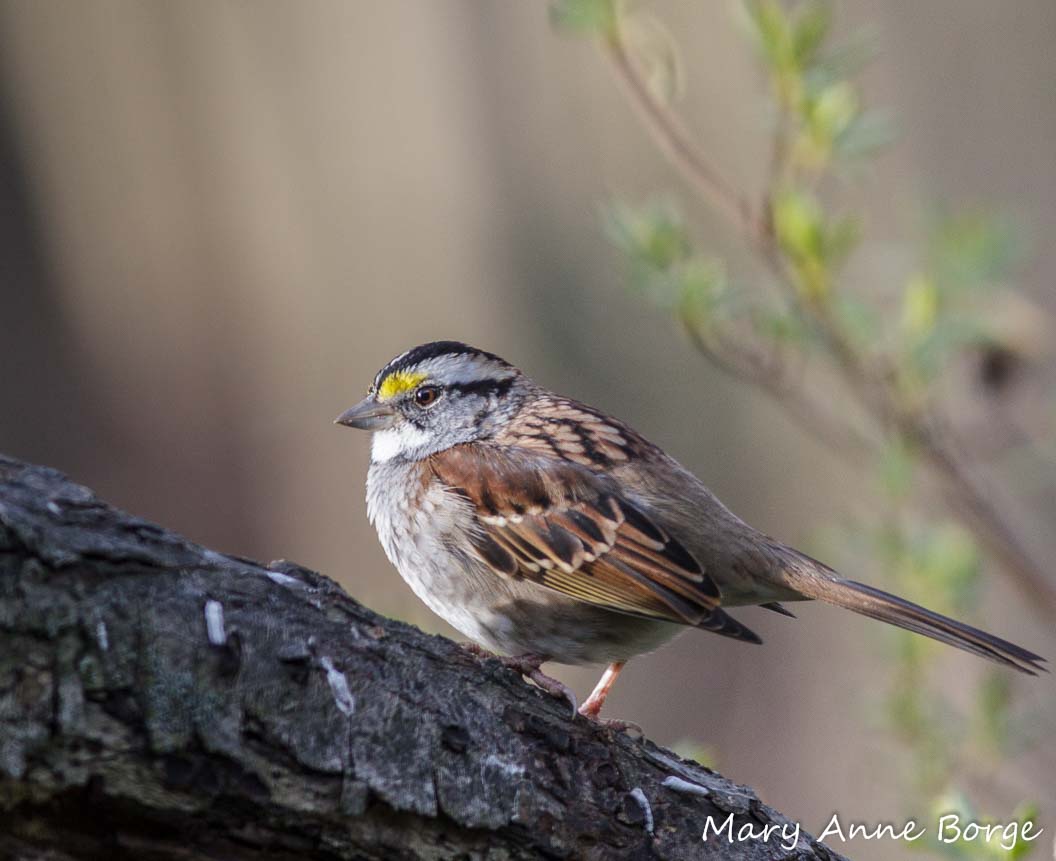
White-throated Sparrow
Cardinals,
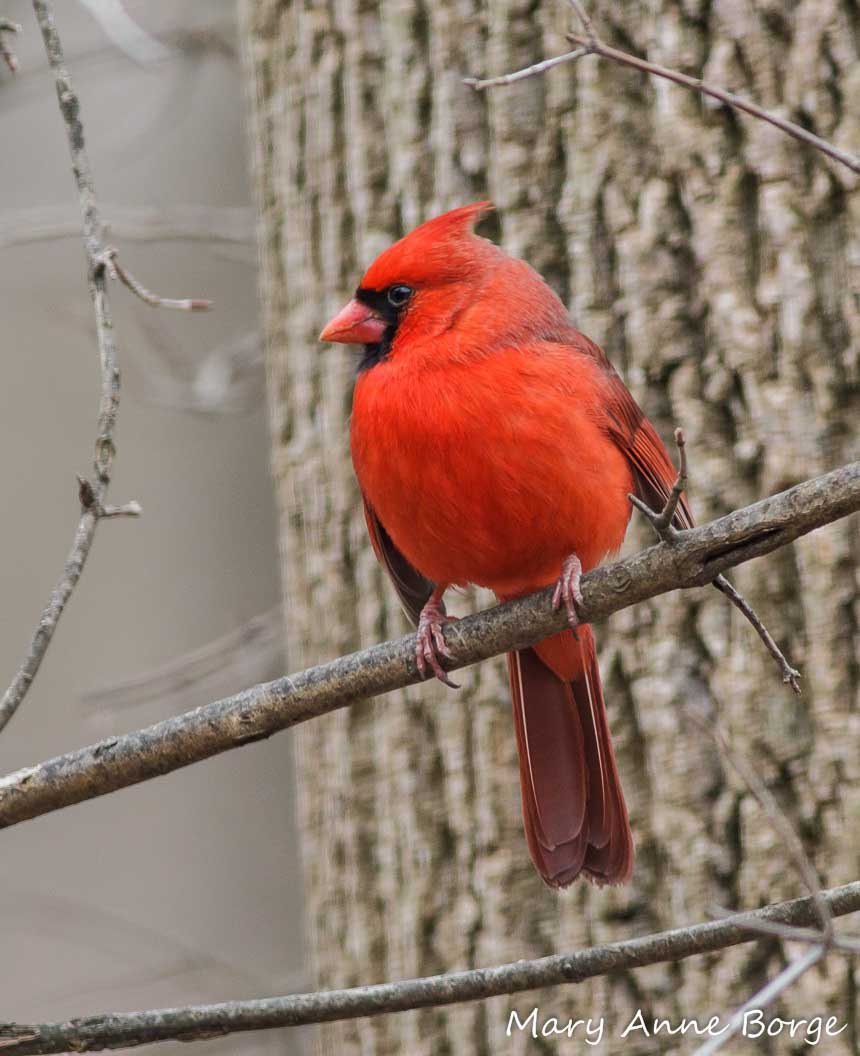
Northern Cardinal
and Hermit Thrush, as well as chipmunks and squirrels are among those who consume the fruits and disperse the seeds.
Spring or Summer Azure butterflies may lay eggs on the flower buds of this and many species of viburnums, dogwoods and other shrubs.
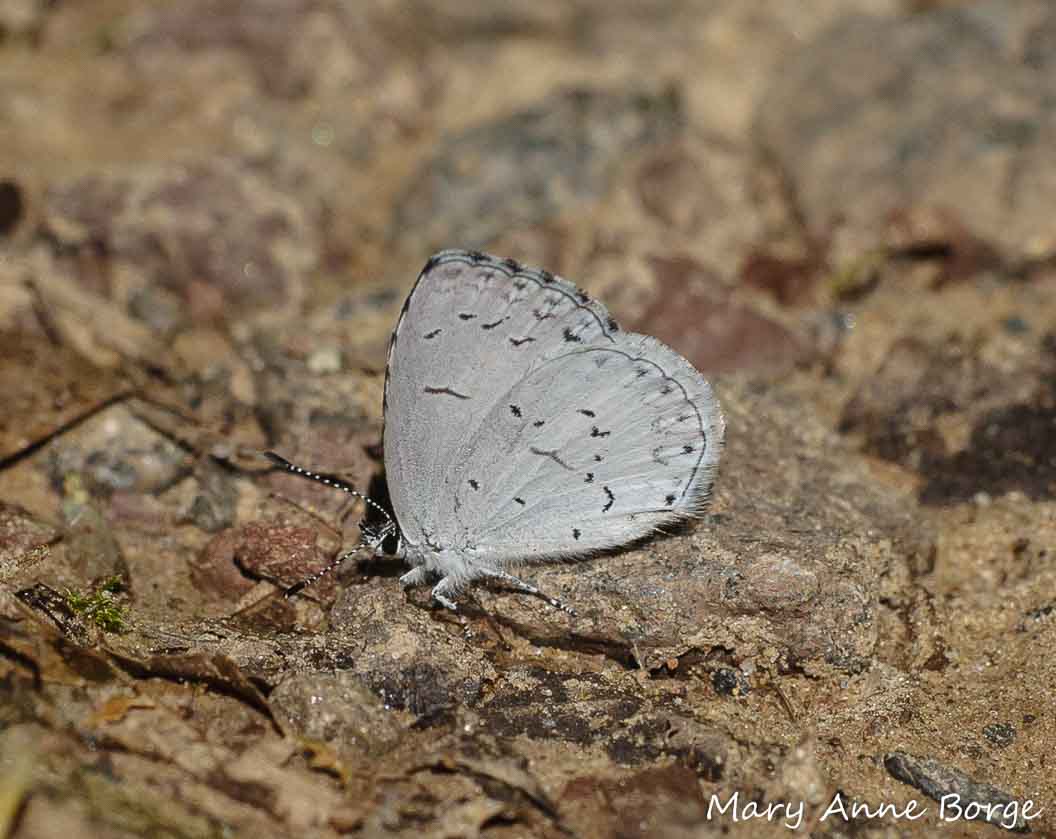
Summer Azure
After hatching from the eggs, the butterfly’s caterpillars feed on the flower buds. That is, they do if they manage to avoid being eaten by a predator like a bird, a spider, or another insect.
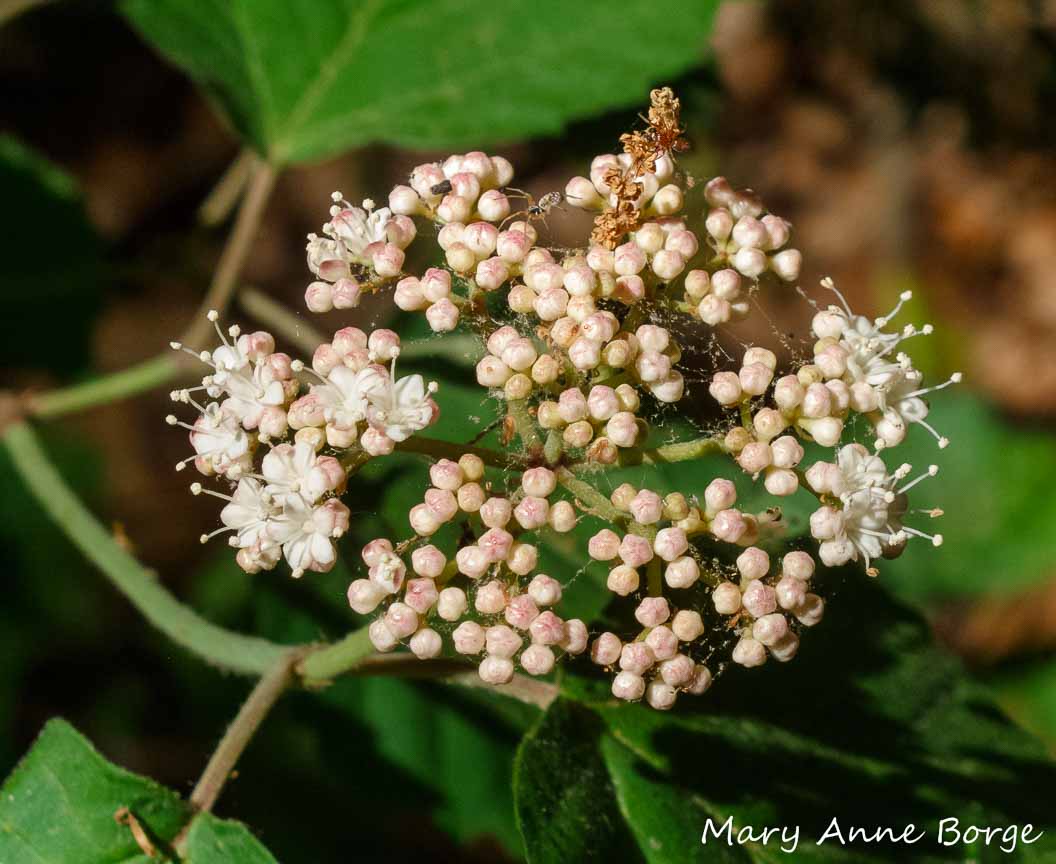
Maple-leaf Viburnum (Vibernum acerifolium) in bud. Can you spot the two spiders waiting patiently for an unsuspecting caterpillar or other victim?
Plenty of flowers survive the feeding frenzy to provide a beautiful summer display. Several species of native bees, flies and other insects visit the flowers for nectar, providing essential pollination services that result in the fall fruits.
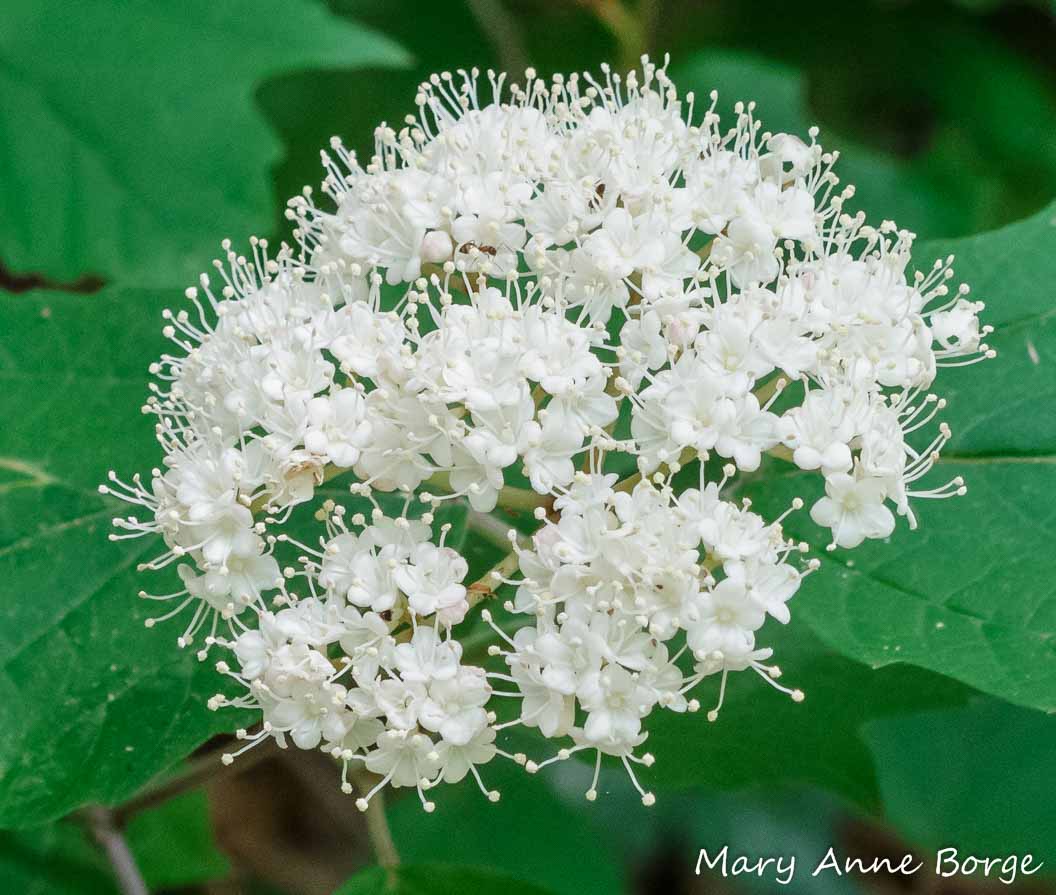
Maple-leaf Viburnum (Vibernum acerifolium) in flower. Look for the ants who are visiting the flowers for nectar. They would also be happy to find a caterpillar.
Maple-leaf Viburnum is a great alternative to the non-native, invasive Burning Bush (Euonymus alatus), which is often planted in formal landscapes for its fall foliage. Maple-leaf Viburnum offers an equally attractive, and more nuanced display. More importantly, it provides food and shelter for the insects, birds and other animals that share its territory.

Maple-leaf Viburnum (Vibernum acerifolium)
Maple-leaf Viburnum is a woodland understory shrub native to the eastern United States, and Quebec and Ontario provinces. If you live within its natural range, go for a walk in the woods near you to see if you can spot it. Then think about adding it to your own landscape to guarantee a view of this gorgeous shrub.
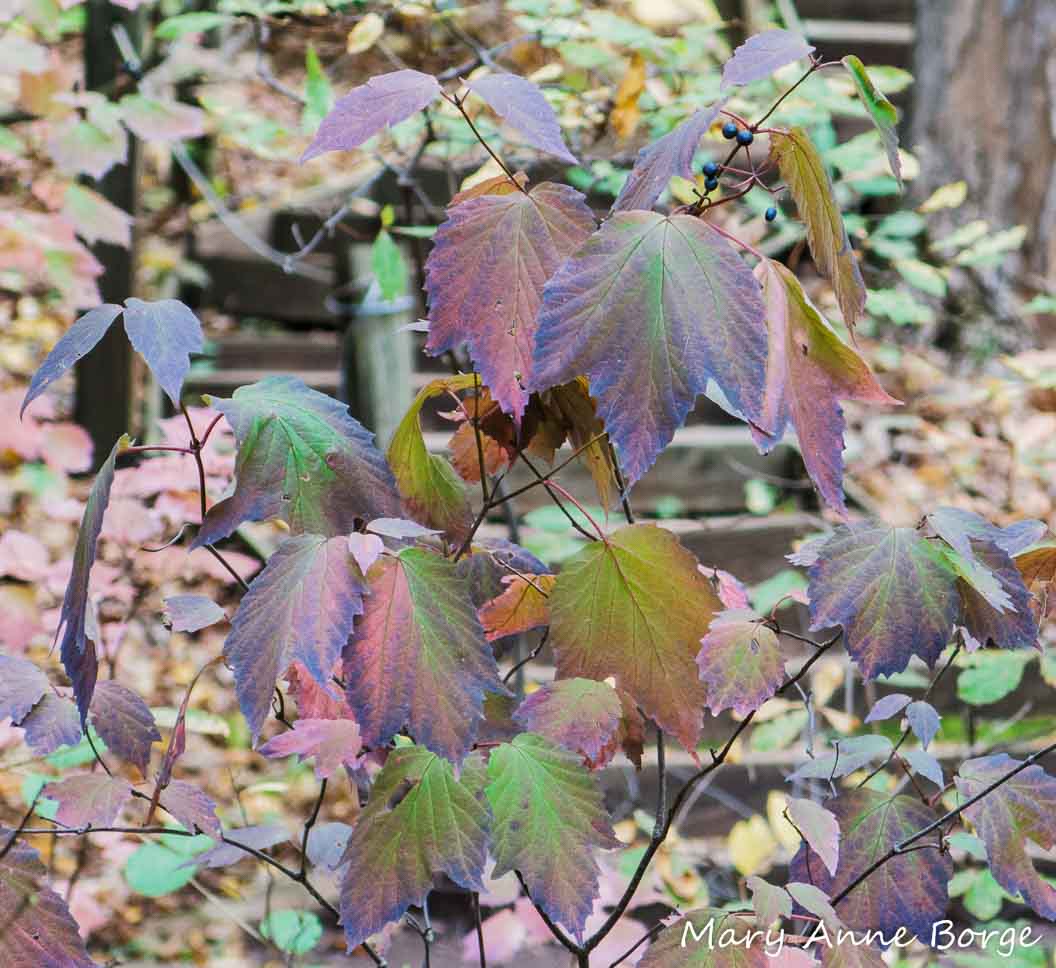
Maple-leaf Viburnum (Vibernum acerifolium)
For more information on fall foliage colors, see Nutritious Fall Foliage: What Makes Fall Leaves So Colorful?
Resources
Capon, Brian. Botany for Gardeners. 2005
Cech, Rick; Tudor, Guy. Butterflies of the East Coast. 2005.
Glassberg, Jeffrey. Butterflies through Binoculars A Field Guide to Butterflies in the Boston-New York-Washington Region. 1993.
We often think of butterflies as relying on nectar from flowers as their primary source of food for adult butterflies, and many species do.
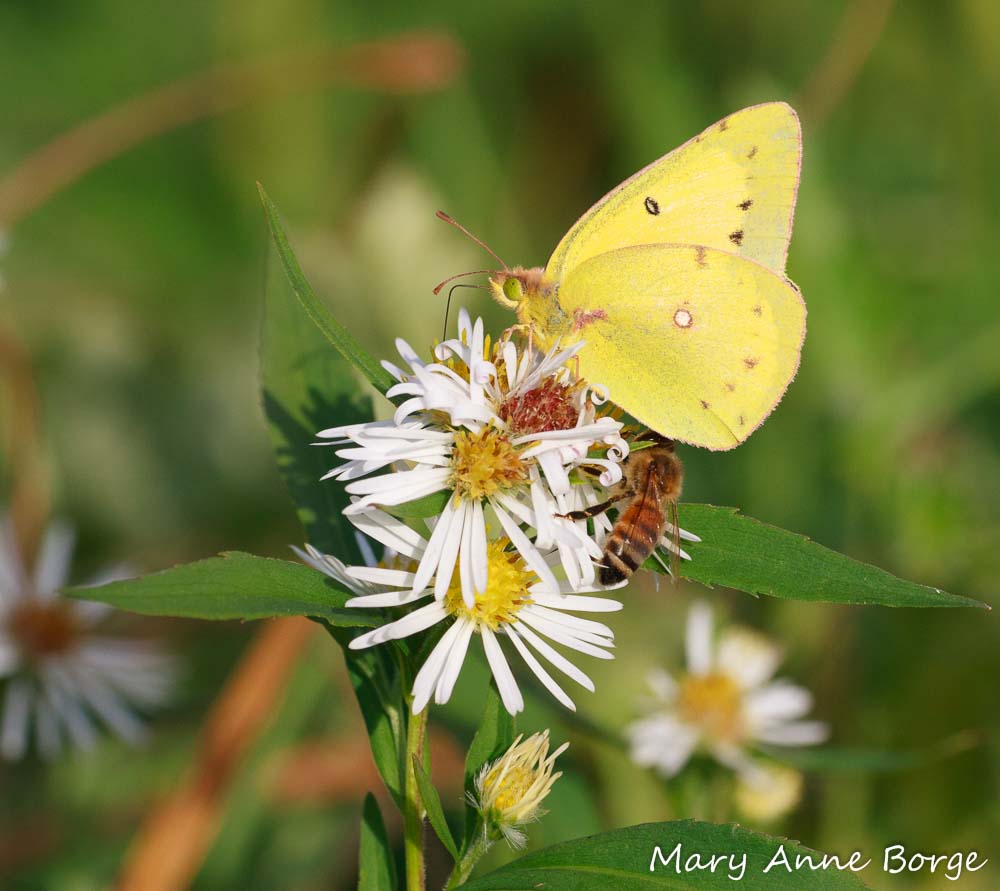
Clouded Sulphur and Honey Bee on Aster
But there are others who feed mainly on minerals, often from mud or dung, or who consume both nectar and mineral sources.
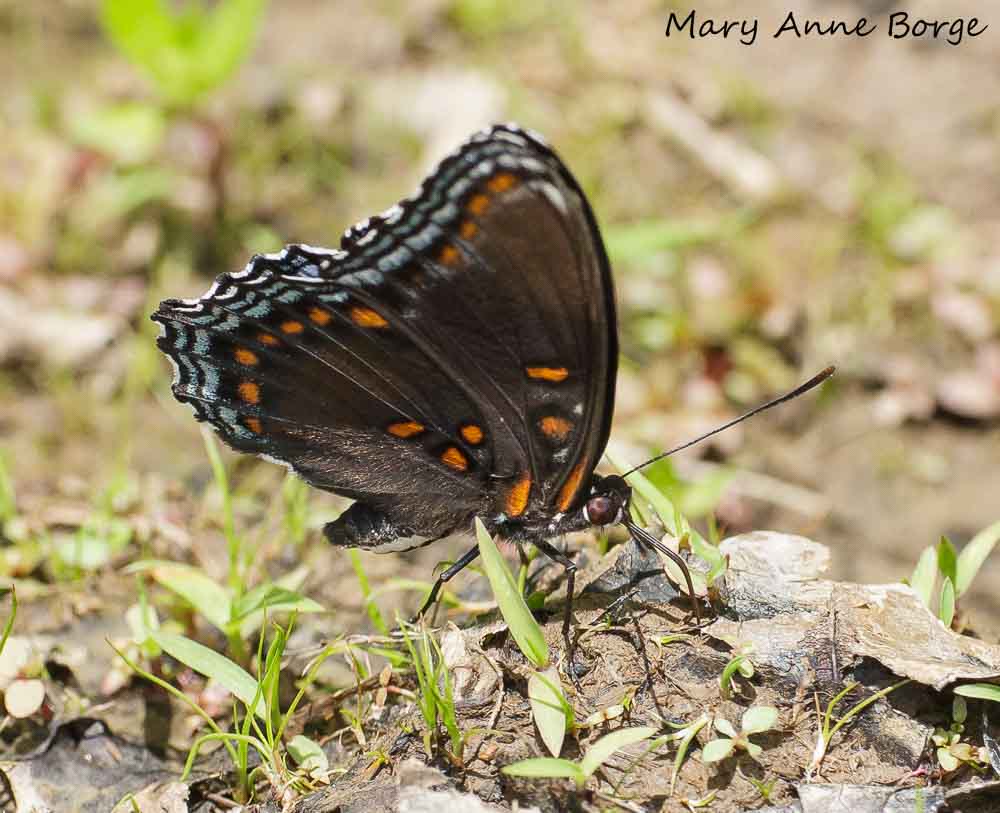
Red-spotted Purple feeding on minerals in mud
One species that has more unusual eating habits is the Harvester (Feniseca tarquinius).
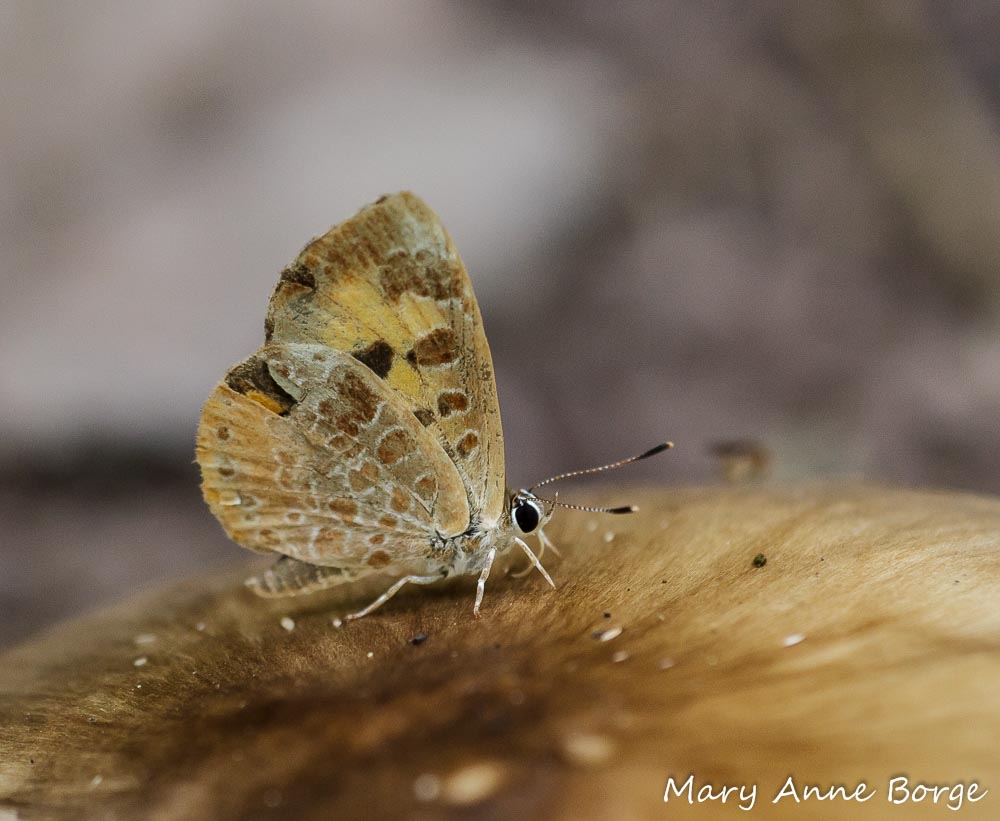
Harvester (Feniseca tarquinius)
This butterfly rejects flower nectar in favor of honeydew, the sugary secretion produced by aphids. Harvesters also feed on mineral sources such as dung, sap and mud. In the photo below, the butterfly is feeding on a mushroom.
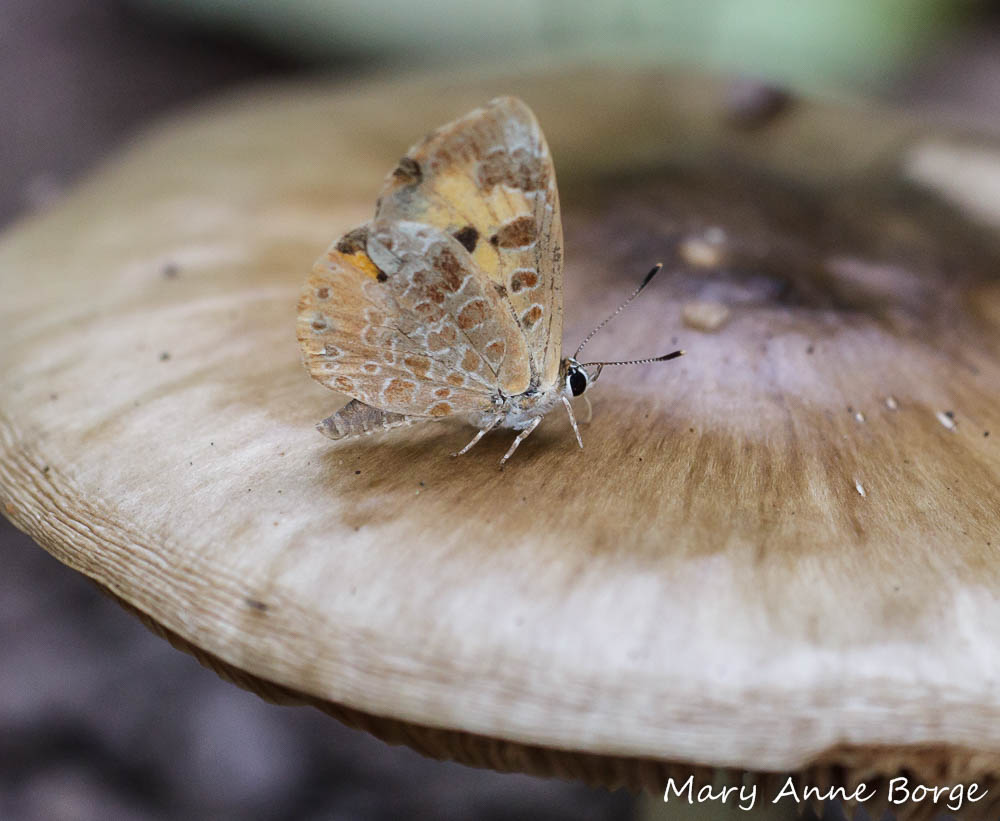
Harvester (Feniseca tarquinius)
The Harvester’s eating habits explain its habitat preference, wet woodlands or along streams, especially where alders are found.
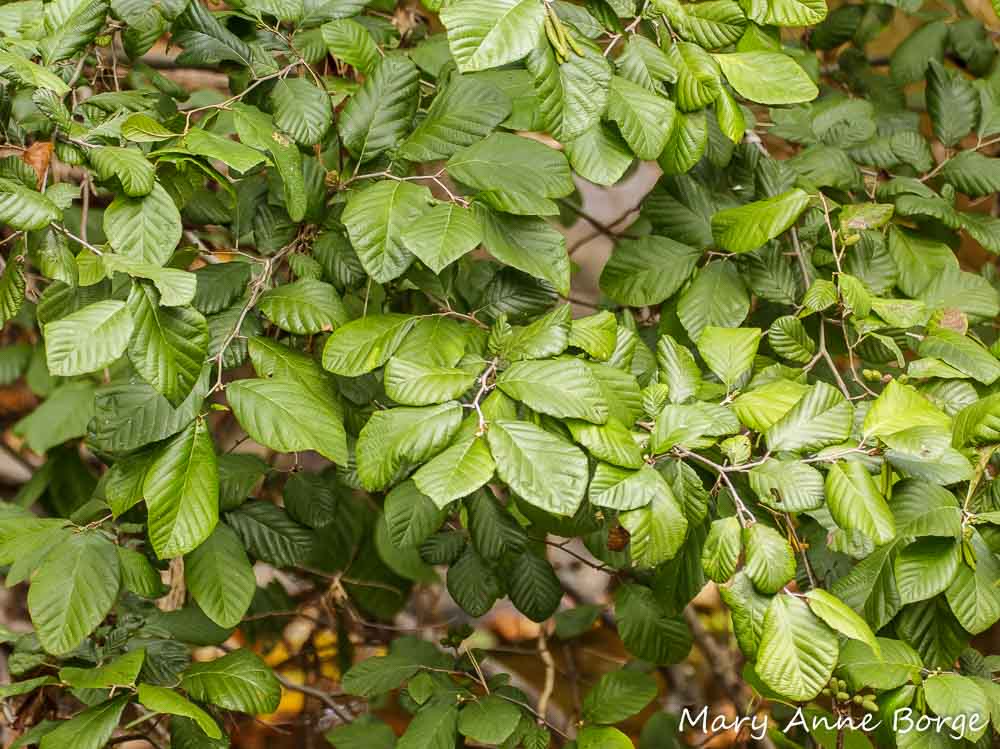
Smooth Alder (Alnus serrulata)
Alders are hosts to the Woolly Alder Aphid (Prociphilus tessellatus), a favorite honeydew source for Harvesters.
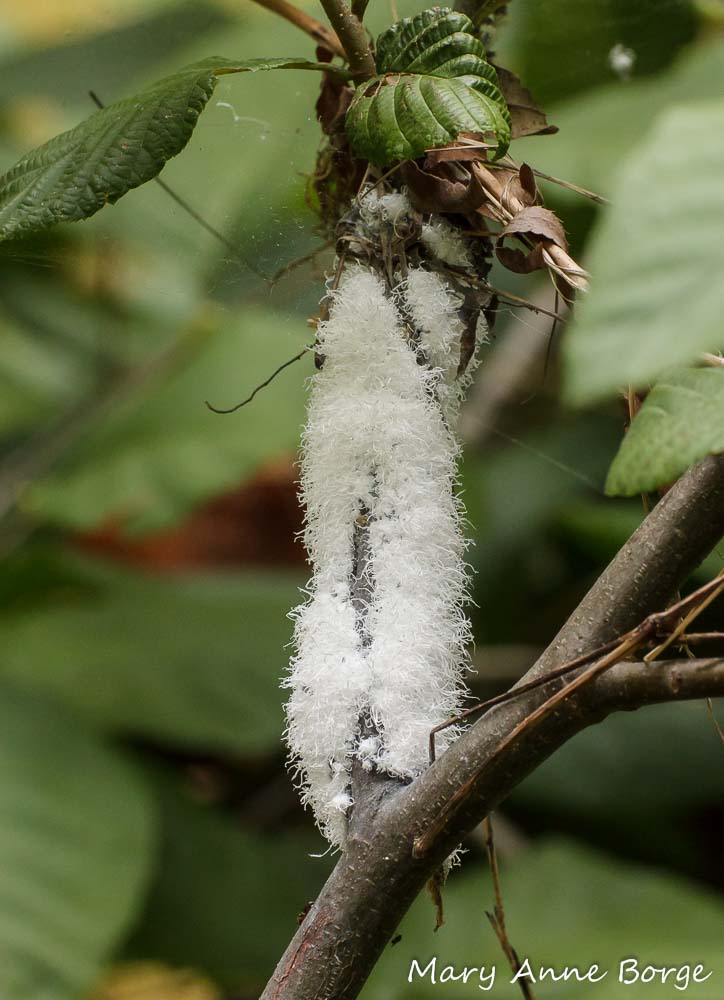
Woolly Alder Aphids on Smooth Alder (Alnus serrulata)
Even more important for the Harvester, these aphids are a favorite diet source of its caterpillars. The Harvester is the only butterfly species in North America whose caterpillars are strictly carnivorous. They feed primarily on several species of woolly aphids, often the Woolly Alder Aphid, but also the Woolly Beech Aphid, as well as others. The caterpillars will sometimes disguise themselves from predators by using their silk to tie to their bodies the remains of the aphids they consume. This is especially effective as protection from ants that may be tending the aphids for their honeydew. The Harvester caterpillars share some of the chemical signature of their aphid diet, which also may give them protection from predatory ants.
So wooly aphids feed both the Harvester butterfly and its caterpillars. Because of its habitat and food preferences, the Harvester is not commonly seen. So consider yourself lucky if you encounter one!
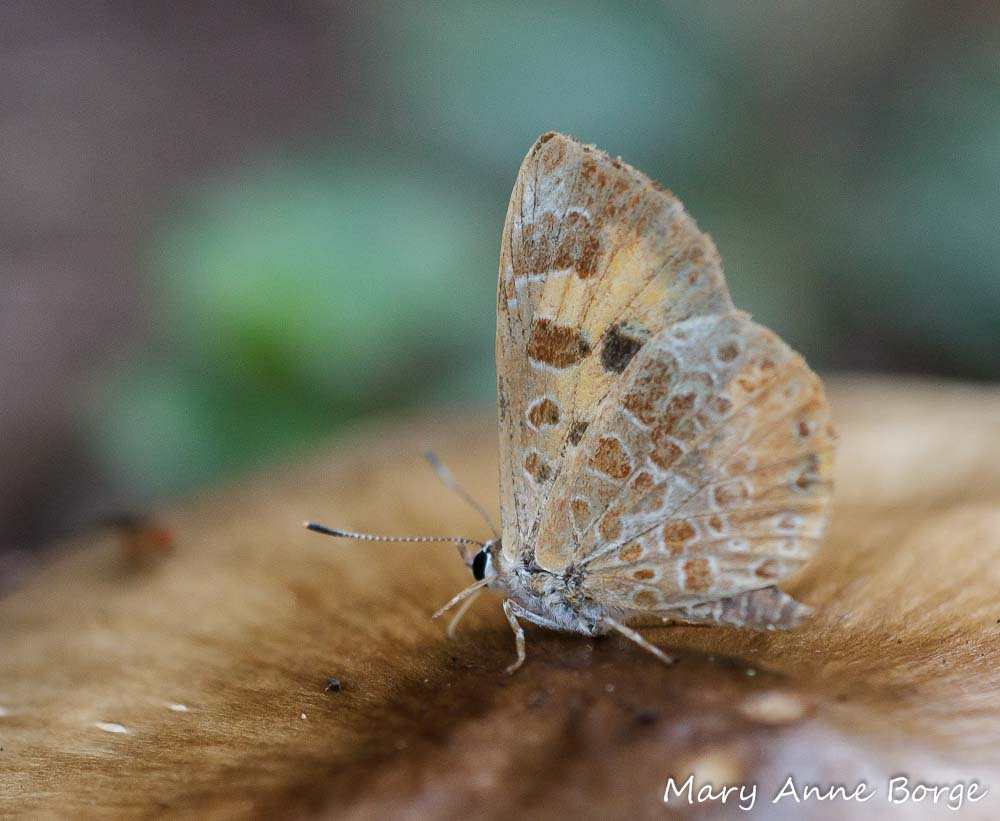
Harvester
Brock, Jim P.; Kauffman, Ken. Kaufman Field Guide to Butterflies of North America. 2003.
Cech, Rick; Tudor, Guy. Butterflies of the East Coast. 2005.
Glassberg, Jeffrey. Butterflies through Binoculars A Field Guide to Butterflies in the Boston-New York-Washington Region. 1993.
Featured Creatures – University of Florida
Butterflies and Moths of North America
If you need any evidence to convince yourself of the nutritional value of leaf mulch, look to the Red-banded Hairstreak’s eating habits for confirmation. This small but showy butterfly, named for the wide slash of red across its wings, has a preference for leaf mulch as the food source for its caterpillars.

Red-banded Hairstreak nectaring on Short-toothed Mountain Mint
By leaf mulch I mean naturally fallen, decomposing leaves. It is often referred to as leaf litter or detritus, terms that sound like something we should clean up or remove. Leaf mulch is such a valuable source of nutrients for both plants and animals, and such a good habitat for so many beneficial insects, that I’ve decide it needs a positive public relations campaign to make it socially acceptable to use naturally fallen leaves as a garden mulch. So I’m calling it what it is – leaf mulch. Join the movement!
Adult Red-banded Hairstreaks nectar on a variety of flowers, including Mountain Mints (Pycnanthemum species), Goldenrods (Solidago species), Green-headed (or Cutleaf) and other coneflowers (Rudbeckia laciniata, Rudbeckia species), and even the flowers of sumac (Rhus species) trees.
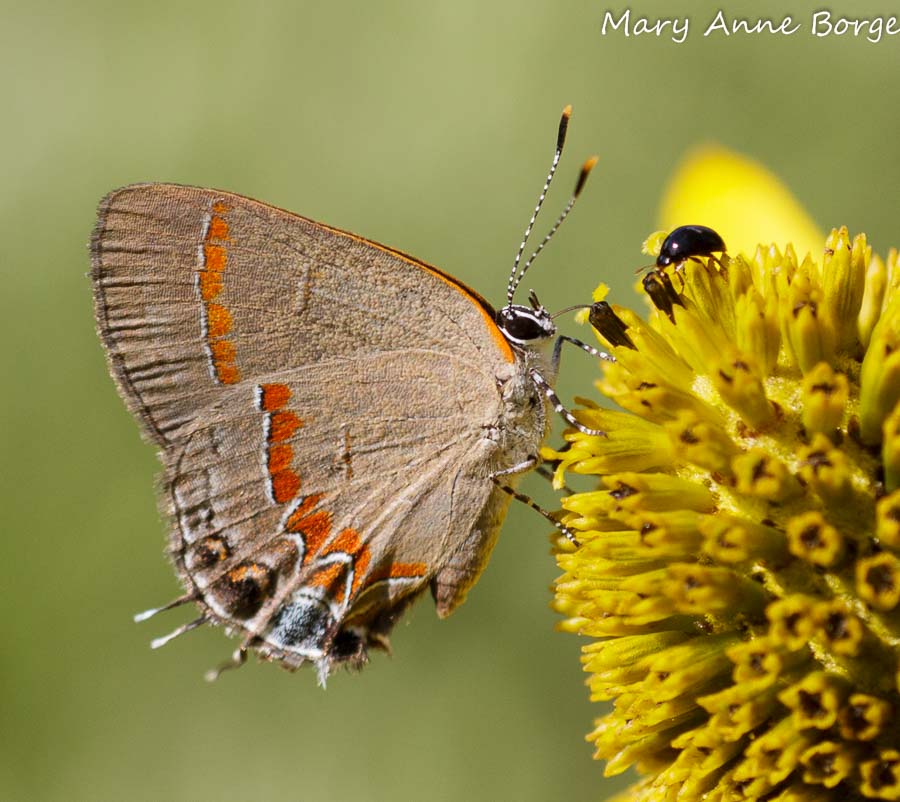
Red-banded Hairstreak and friend nectaring on Green-headed or Cutleaf Coneflower
Red-banded Hairstreak caterpillars are reported to eat the fallen leaves of Wax Myrtle (Myrica cerifera) and other trees including oaks (Quercus species), but fallen sumac leaves are thought to be the favored hosts for this butterfly’s caterpillars.
When laying their eggs (ovipositing) female Red-banded Hairstreaks walk on the ground, usually depositing eggs on the underside of fallen leaves. After they hatch, the caterpillars feed on the leaves. Red-banded Hairstreaks spend the winter as fourth instar caterpillars, likely in the shelter of this naturally fallen leaf mulch.
Winged Sumac (Rhus copallinum) is a favorite food source for Red-banded Hairstreak caterpillars. It’s also a good choice as an ornamental shrub, because it has glossy deep green compound leaves with a ‘winged’ midrib that gives this species its name.
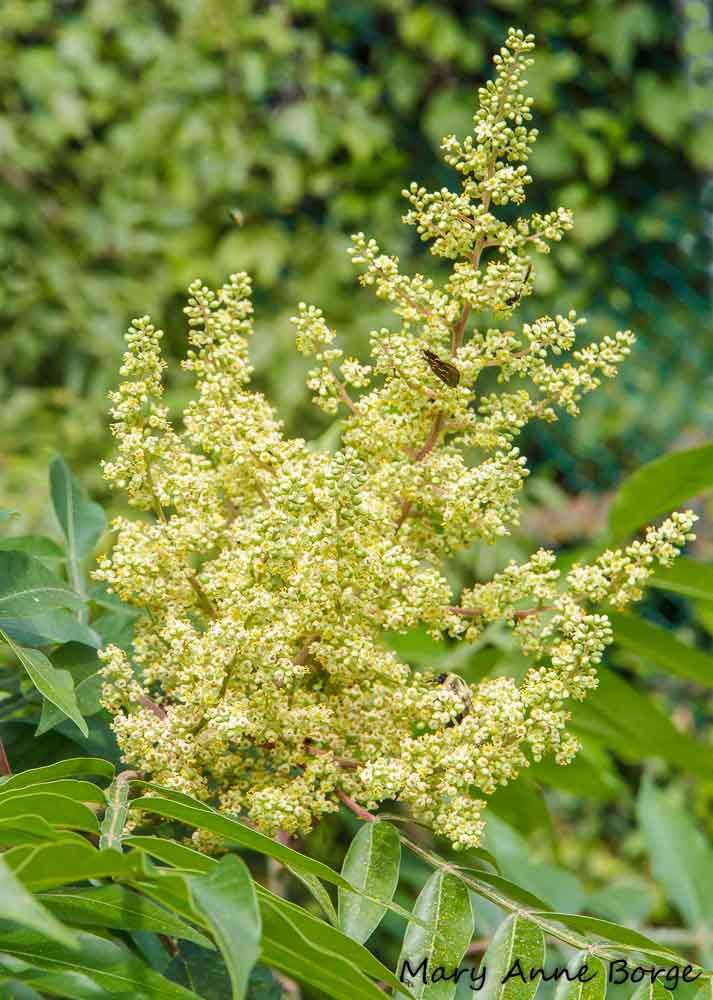
Winged Sumac flowers
Its large pyramid-shaped clusters of yellowish flowers bloom in mid to late summer. They are attractive to many insect pollinators, including butterflies.
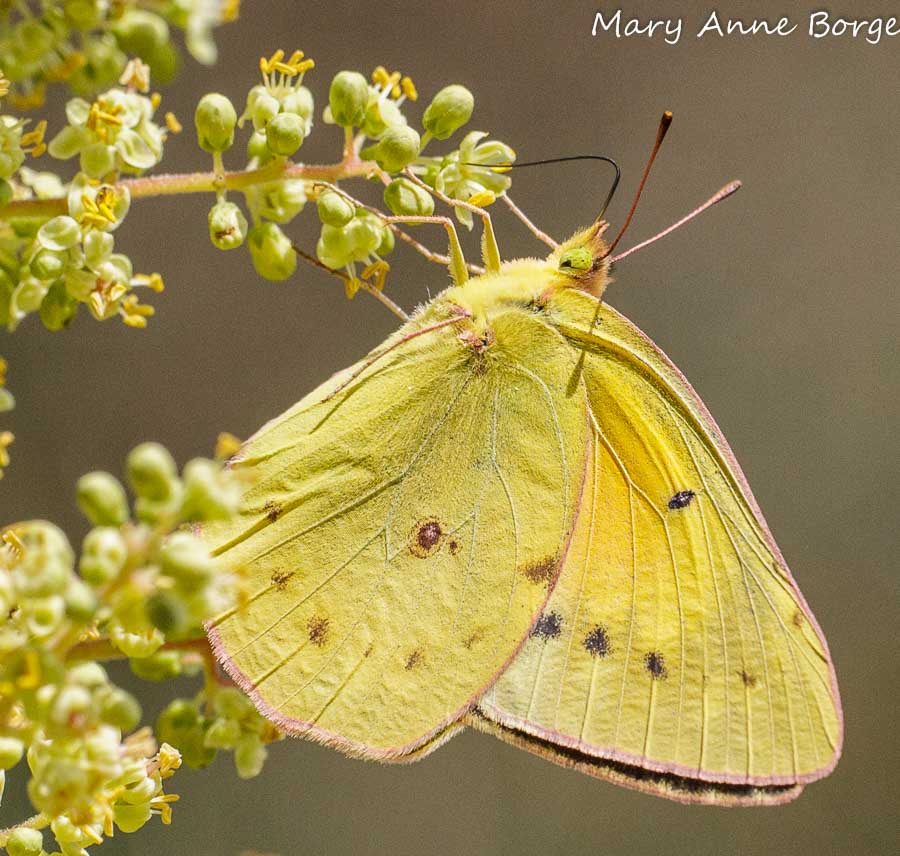
Orange Sulphur nectaring on Winged Sumac flowers
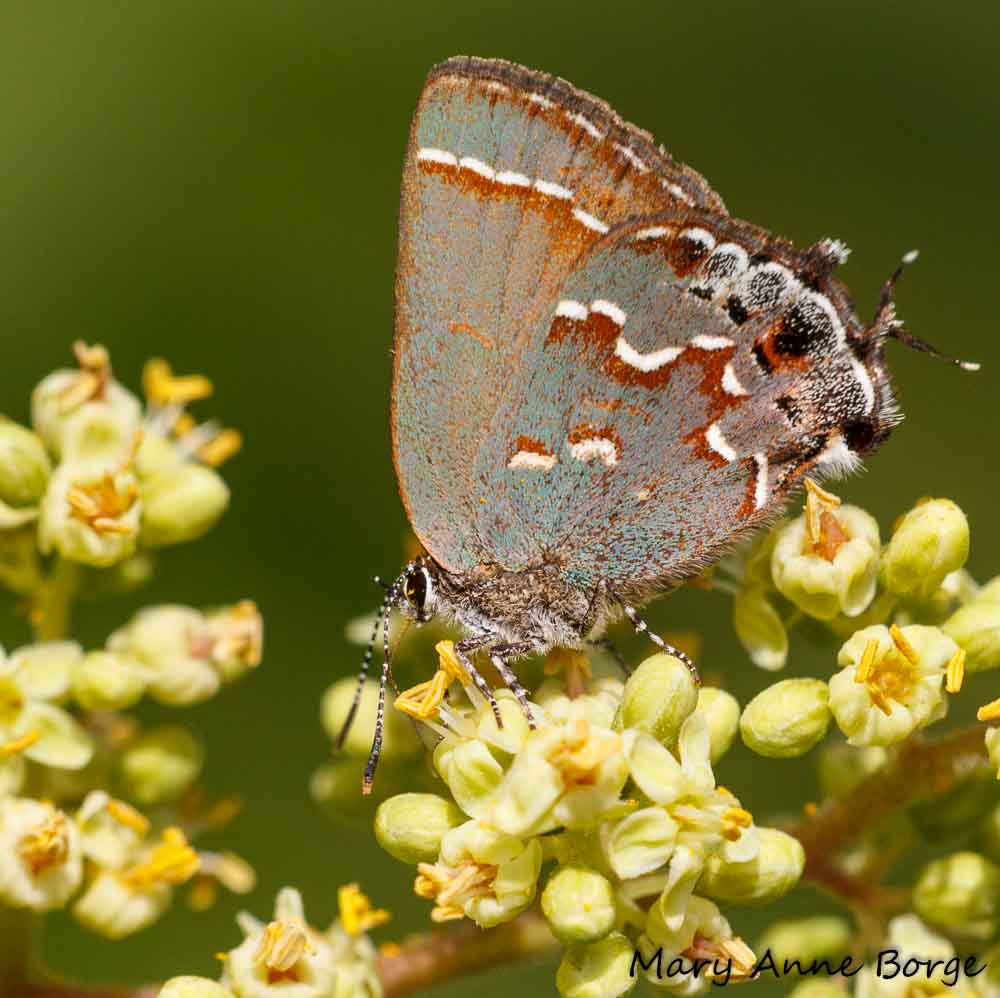
Juniper Hairstreak nectaring on Winged Sumac flowers
Successfully pollinated flowers yield bright red fruit that is complemented by dark red foliage in fall. Winged Sumac grows to a maximum height of about 10 feet (3 meters), and prefers sunny locations.

Winged Sumac in fall
Fragrant Sumac (Rhus aromatica) is another attractive shrub that grows to a height of about 8 feet (2.5 meters) with glossy blue-green three-parted leaves that are somewhat aromatic. It blooms in spring before or concurrently with its leaves unfurling, has brightly colored fall foliage, and red fruit. It can tolerate sun to part shade.
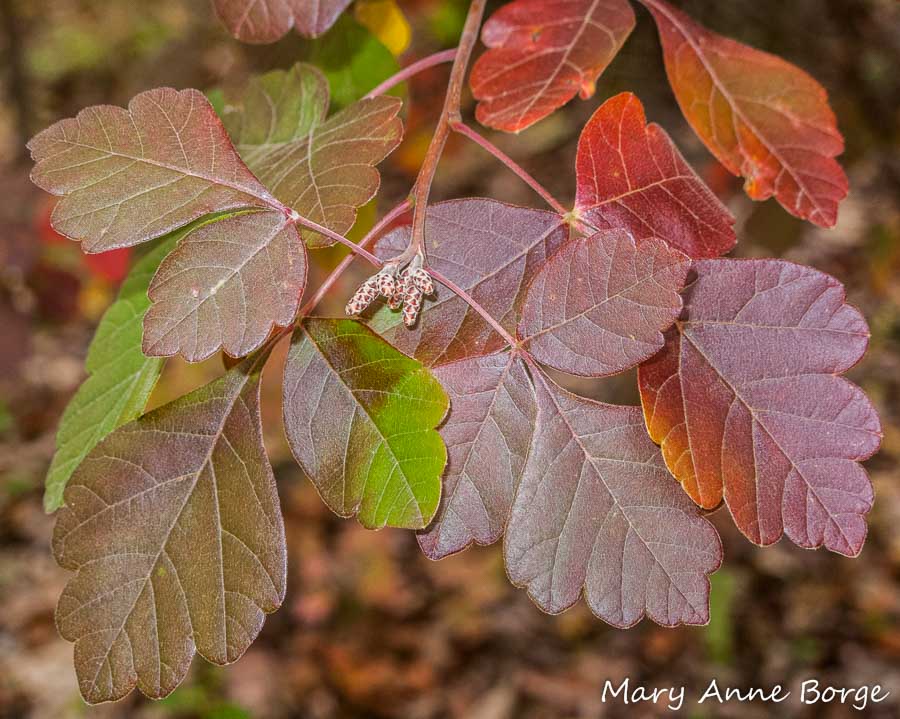
Fragrant Sumac in fall
Staghorn Sumac is (Rhus typhina) taller, with a maximum height of about 25-33 feet (7.5-10 meters), beautiful fall color that begins to show in late summer, and bright red fruit clusters. It has large clusters of yellowish flowers that generally bloom in June.

Staghorn Sumac in fall
With sumacs, male and female flowers are usually, although not always, on separate plants, so to get fruit make sure you have a male as well as females. According to the USDA, several mammals and over 300 species of birds eat the fruit, although usually not until late in the winter, so you’ll be able to see their luscious bright red color for a long time.

Staghorn Sumac fruit
Among the birds I’ve seen eating the fruits are Chickadees, Downy and Pileated Woodpeckers.
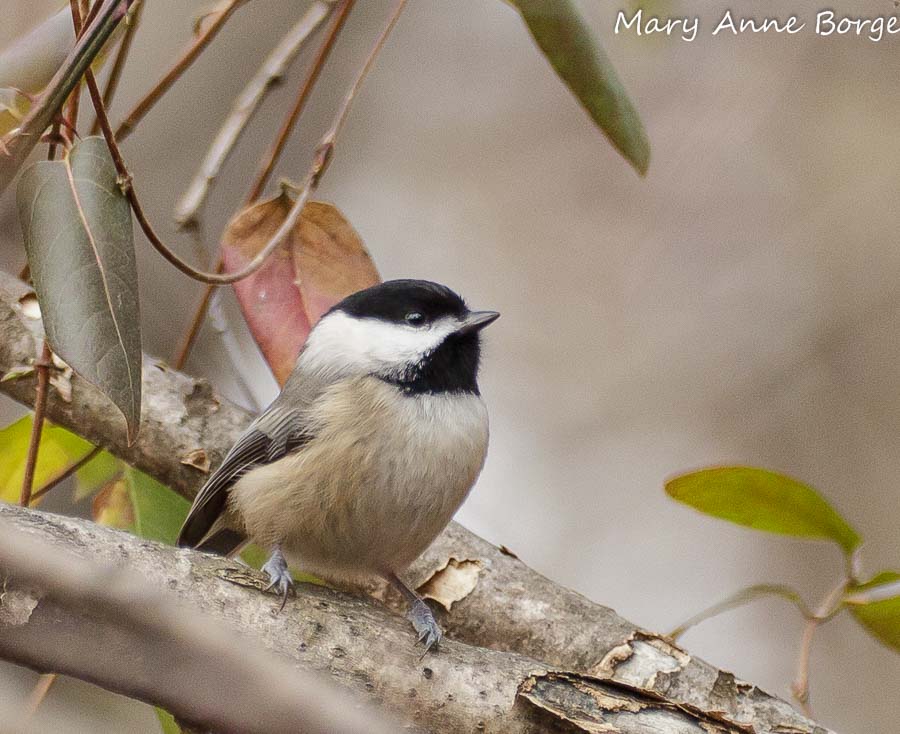
Carolina Chickadee
When established, sumacs may also spread through their underground root system. If you are considering a plant screening or hedgerow, consider Winged Sumac. It spreads quickly, and is quite lovely.
Are you thinking, “Sumacs? Won’t I get a rash from them? Aren’t they poison?” No! Only the related species, Poison Sumac (Toxicodendron vernix), has the chemical composition to give you a rash. Poison Sumac is actually more closely related to Poison Ivy (Toxicodendron radicans) than it is to the other sumacs. Even these two ‘poison’ plants have wildlife value in the food offered by their flowers and fruits! But they’re usually not recommended as garden plants.
Let’s get back to leaf mulch for a minute, because it’s the best fertilizer you can offer your plants. There may be more scenarios than those below, but let’s consider some of our options:
I like option 3. What about you? To entice Red-banded Hairstreaks to take up residency with you, consider adding sumacs to your landscape. For a healthy garden, use leaf mulch. To enable Red-banded Hairstreaks to successfully reproduce and survive the winter, let the naturally fallen leaves be your mulch.
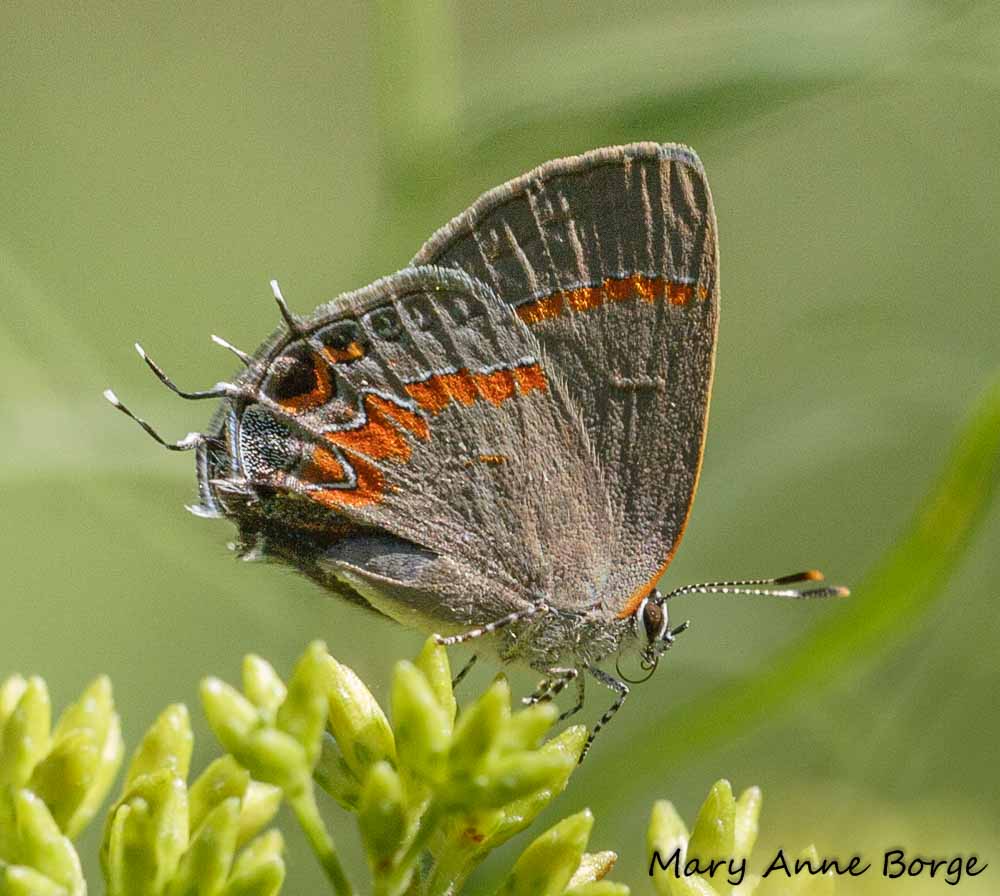
Red-banded Hairstreak on goldenrod flower buds
Note: This post was adapted from an article that appeared in the Fall 2013 issue of Butterfly Gardener, a publication of the North American Butterfly Association.
References
Brock, Jim P.; Kauffman, Ken. Kaufman Field Guide to Butterflies of North America. 2003.
Cech, Rick; Tudor, Guy. Butterflies of the East Coast. 2005.
Glassberg, Jeffrey. A Swift Guide to Butterflies of North America. 2012.
Glassberg, Jeffrey. Butterflies through Binoculars A Field Guide to Butterflies in the Boston-New York-Washington Region. 1993.
Rhoads, Ann Fowler; Block, Timothy A. The Plants of Pennsylvania. 2007
Lady Bird Johson Wildflower Center Native Plant Database
 The Natural Web