Who Uses Black Cohosh?

Black Cohosh (Actaea racemosa, synonym Cimicifuga racemosa) blooms in mid-summer, lighting up the forest understory.
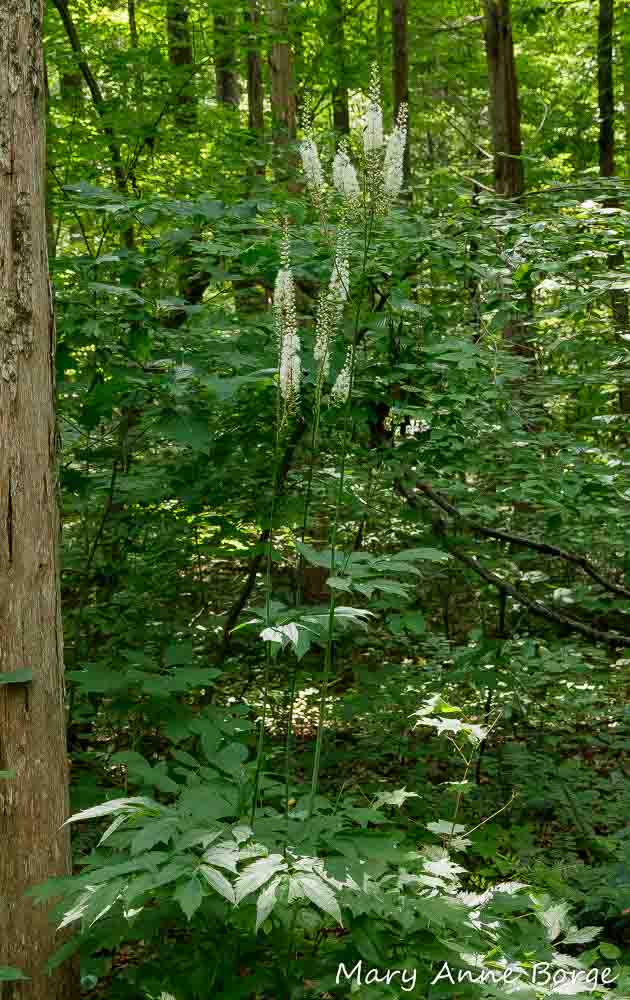
Black Cohosh (Actaea racemosa, syn. Cimicifuga racemosa)

Black Cohosh (Actaea racemosa, syn. Cimicifuga racemosa)

The spikes of white flowers seem to glow even in the dark, begging to be called Fairy Candles, one of the other common names by which Black Cohosh is known.

Black Cohosh (Actaea racemosa, syn. Cimicifuga racemosa)

Black Cohosh (Actaea racemosa, syn. Cimicifuga racemosa)

Black Cohosh flowers are arranged in long narrow clusters called racemes, blooming from the bottom of the flower stalk to the top. Each individual flower looks like a pom-pom, formed by an aggregation of many stamens (the male reproductive parts) surrounding a single pistil (the female reproductive part).
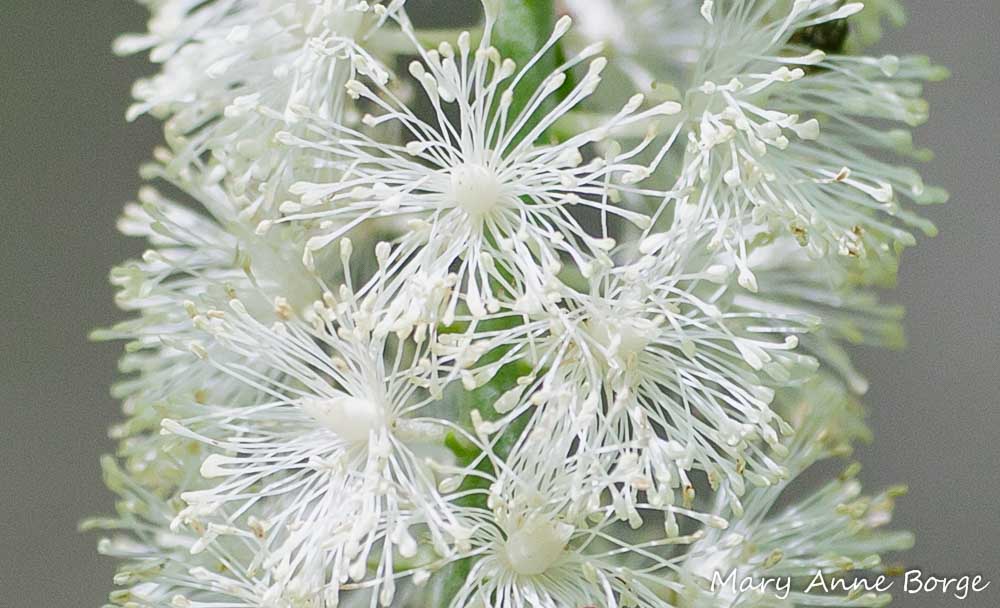
Black Cohosh (Actaea racemosa, syn. Cimicifuga racemosa) flowers

Black Cohosh (Actaea racemosa, syn. Cimicifuga racemosa) flowers

Black Cohosh depends on the assistance of animals to achieve pollination. The flowers are visited by many species of insects whose bodies may come in contact with pollen dispensed from anthers at the tips of the stamens.  Some of that pollen may adhere to the insect’s body.  When the insect moves to a flower of another Black Cohosh plant and brushes against the flower’s stigma (the receptive part of the pistil), then Black Cohosh’s pollination goal is achieved.

It’s not an accident that insects visit the flowers. Plants and animals have evolved together over centuries to depend on each other.  About 80% of flowering plants depend on animals to carry their pollen to other plants of the same species, helping them achieve successful cross-pollination.  In exchange, many animals depend exclusively, or for at least part of their diet, on plants.

The most common food enticements that plants offer to flower visitors are nectar and pollen. Many insects visit flowers for nectar, but some are also interested in eating pollen, and in the case of bees, harvesting it to bring back to their nests to feed their larvae.

Black Cohosh has evolved a strategy of offering pollen, but not nectar, to entice potential pollinators. Plants evolve to be as efficient as possible, trying not to expend unnecessary resources.  Black Cohosh is able to attract enough visitors to its flowers by offering them pollen only.

Insects want to eat pollen and plants want insects to transport their pollen to another plant of the same species. If this sounds like a potential conflict of interest, it is.  Only about 2% of pollen is actually used for pollination.  Potential pollinators or their offspring eat much of the remaining 98%.

In spite of the fact that another common name for Black Cohosh is Bugbane, many insects are more attracted than deterred by its fragrance. Bees, flies and beetles visit Black Cohosh flowers to eat or harvest pollen.  While I watched for just a few minutes, the activity at a small group of Black Cohosh plants included bees, flies and beetles.  Bumble Bees, Sweat Bees, and Leaf-cutter Bees, all worked the flowers.
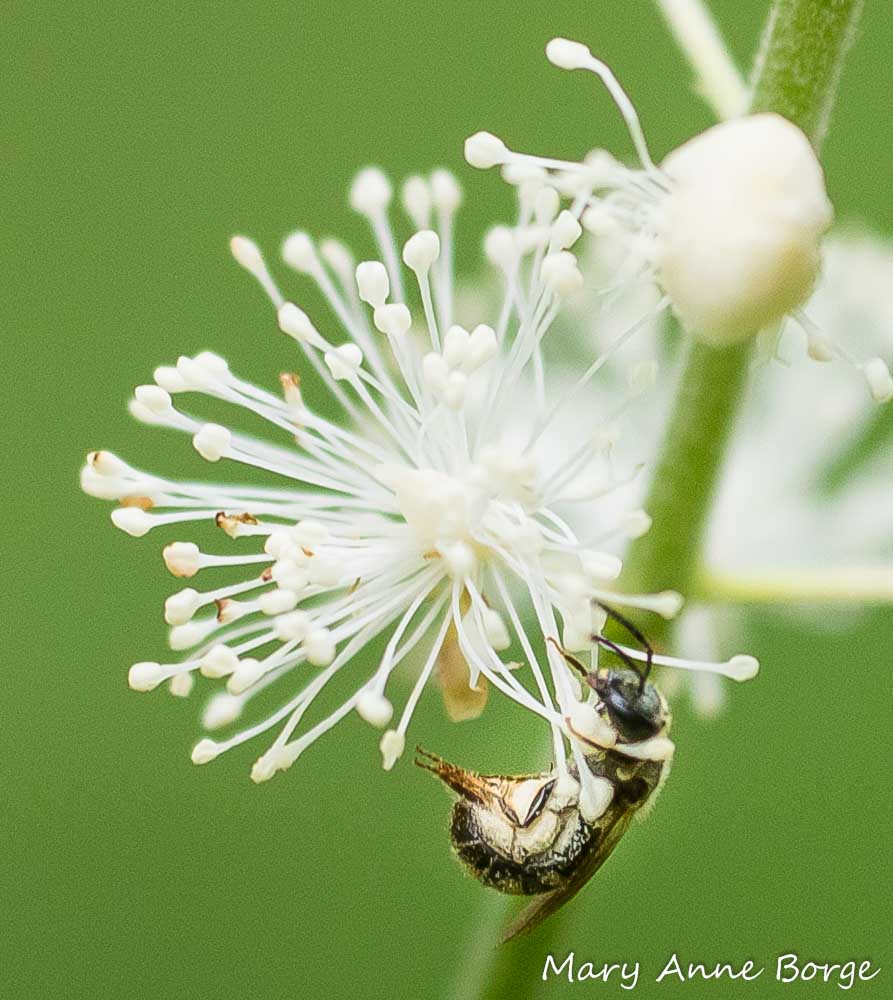
Black Cohosh (Actaea racemosa, syn. Cimicifuga racemosa) with Leafcutter bee (Megachile species)
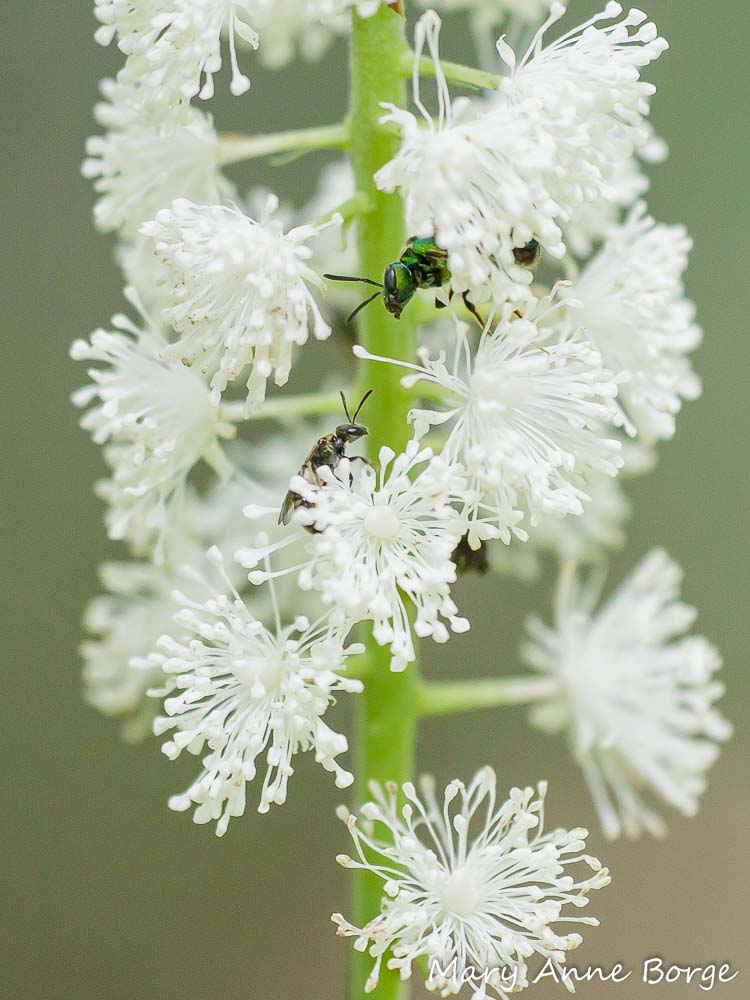
Black Cohosh (Actaea racemosa, syn. Cimicifuga racemosa) with Leafcutter bee (Megachile species)

Black Cohosh (Actaea racemosa, syn. Cimicifuga racemosa) with Sweat bee (Haictidae)

Black Cohosh (Actaea racemosa, syn. Cimicifuga racemosa) with Sweat bee (Haictidae)

Bumble Bee visits were the most brief. They stopped for just a few seconds per plant before moving on to another.  It may seem counterintuitive, but this may make Bumble Bees the most successful of Black Cohosh’s cross-pollinators, since they are the most likely to move the pollen to a different plant.

A Flower or Syrphid Fly (Toxomerus geminatus) dined on the flowers’ pollen.

Black Cohosh (Actaea racemosa, syn. Cimicifuga racemosa) with Flower Fly (Toxomerus geminatus)

Black Cohosh (Actaea racemosa, syn. Cimicifuga racemosa) with Flower Fly (Toxomerus geminatus)

At least two species of tiny Tumbling Flower Beetles (Falsomordellistena pubescens and Mordellistena fuscipennis) munched on the flowers’ tissues.    Tumbling Flower Beetles are named for their behavior when threatened; they bounce and tumble unpredictably and may fly away, carrying pollen to another plant, possibly helping to meet Black Cohosh’s pollination needs.
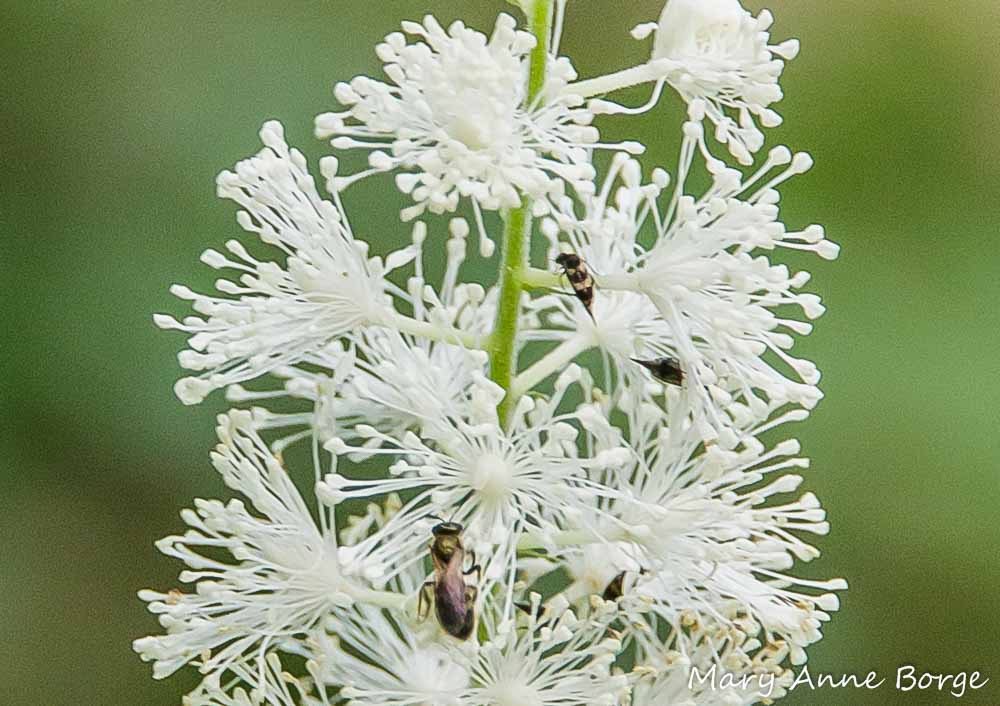
Black Cohosh (Actaea racemosa, syn. Cimicifuga racemosa) with Tumbling Flower Beetle (Falsomordellistena pubescens) in upper right

Black Cohosh (Actaea racemosa, syn. Cimicifuga racemosa) with Tumbling Flower Beetle (Falsomordellistena pubescens) in upper right

The Tumbling Flower Beetles were joined by at least three species of Longhorn Beetles, the Banded Longhorn Beetle (Typocerus velutinus), and two others, Metacmaeops vittata, and Analeptura lineola.
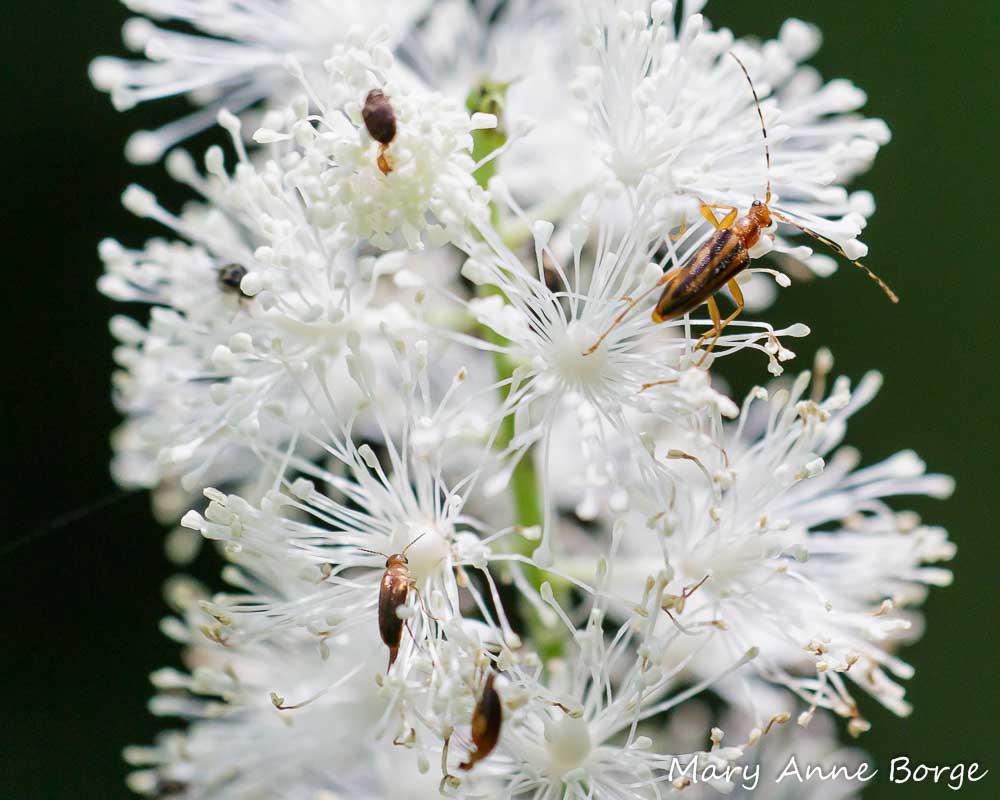
Black Cohosh (Actaea racemosa, syn. Cimicifuga racemosa) with Longhorn Beetle (Metacmaeops vittata), upper right, and Tumbling Flower Beetles (Mordellistena fuscipennis)
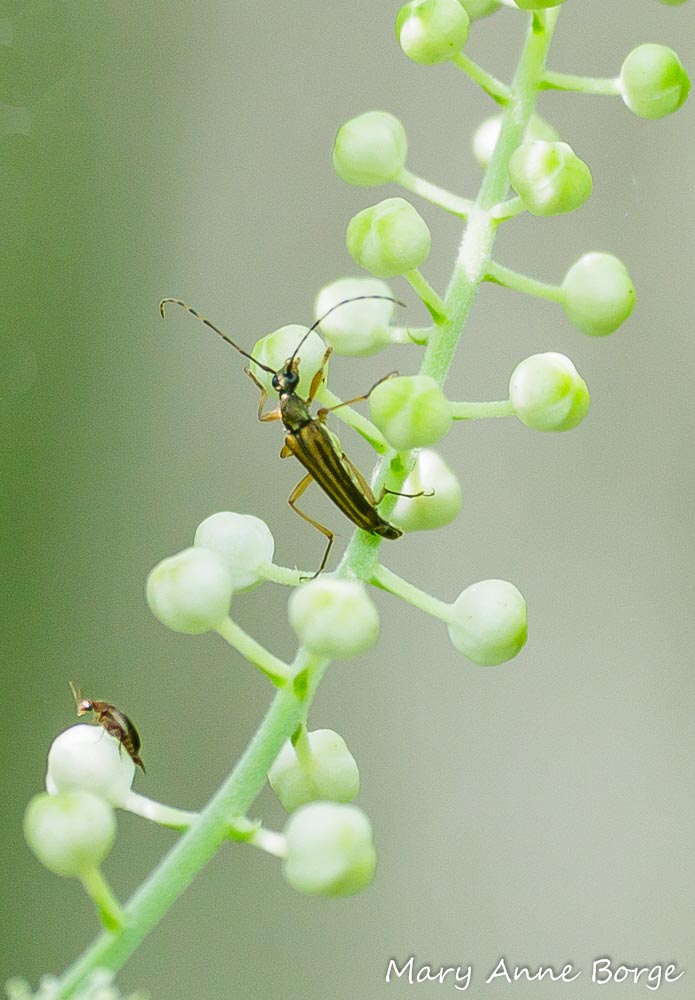
Black Cohosh (Actaea racemosa, syn. Cimicifuga racemosa) with Longhorn Beetle (Metacmaeops vittata), upper right, and Tumbling Flower Beetles (Mordellistena fuscipennis)

Black Cohosh (Actaea racemosa, syn. Cimicifuga racemosa) with Longhorn Beetle (Analeptura lineola), center, and Tumbling Flower Beetle (Mordellistena fuscipennis)

Black Cohosh (Actaea racemosa, syn. Cimicifuga racemosa) with Longhorn Beetle (Analeptura lineola), center, and Tumbling Flower Beetle (Mordellistena fuscipennis)

For an insect, visiting Black Cohosh flowers is not without its risks. Predators like the perfectly camouflaged Crab Spider in the photo below may be lurking in the shadows, waiting for an unwary victim.
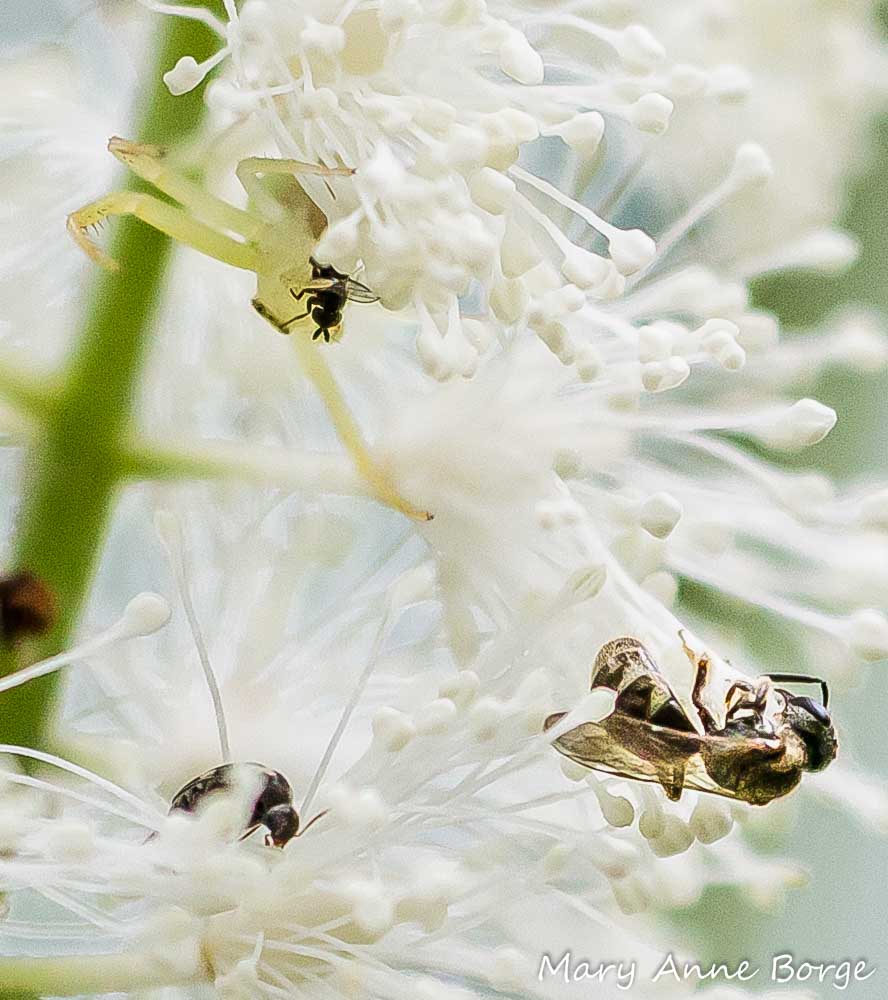
Crab Spider with a fly victim (upper left), bee and Tumbling Flower Beetle on Black Cohosh (Actaea racemosa, syn. Cimicifuga racemosa)

Crab Spider with a fly victim (upper left) on Black Cohosh (Actaea racemosa, syn. Cimicifuga racemosa) with bee and Tumbling Flower Beetle

Black Cohosh is the only food Appalachian Azure butterfly caterpillars can eat. Female butterflies lay their eggs on flower buds.  When the caterpillars hatch, they begin eating the buds and flowers, moving on to leaves if no flowers remain.  Like the other Azure butterfly caterpillars, the Appalachian Azure caterpillars are protected by ants in exchange for the delicious honeydew the caterpillars excrete.  Depending on the species, ants have different forms of defensive weapons; they may bite, sting, or spray an acid at their enemy targets, deterring even birds from their prey.
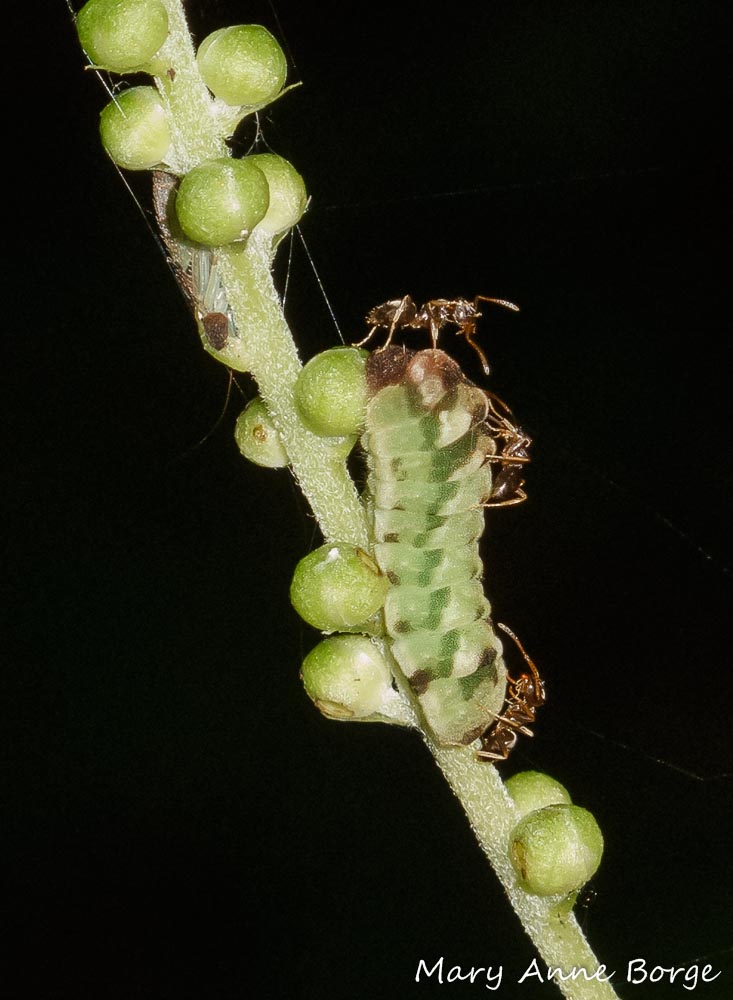
Appalachian Azure caterpillar being tended by ants, on Black Cohosh (Actaea racemosa) flower buds

Appalachian Azure caterpillar being tended by ants, on Black Cohosh (Actaea racemosa) flower buds

Although I have seen Appalachian Azure caterpillars, I’ve never seen the butterfly. The Appalachian Azure closely resembles the Summer Azure, pictured below.
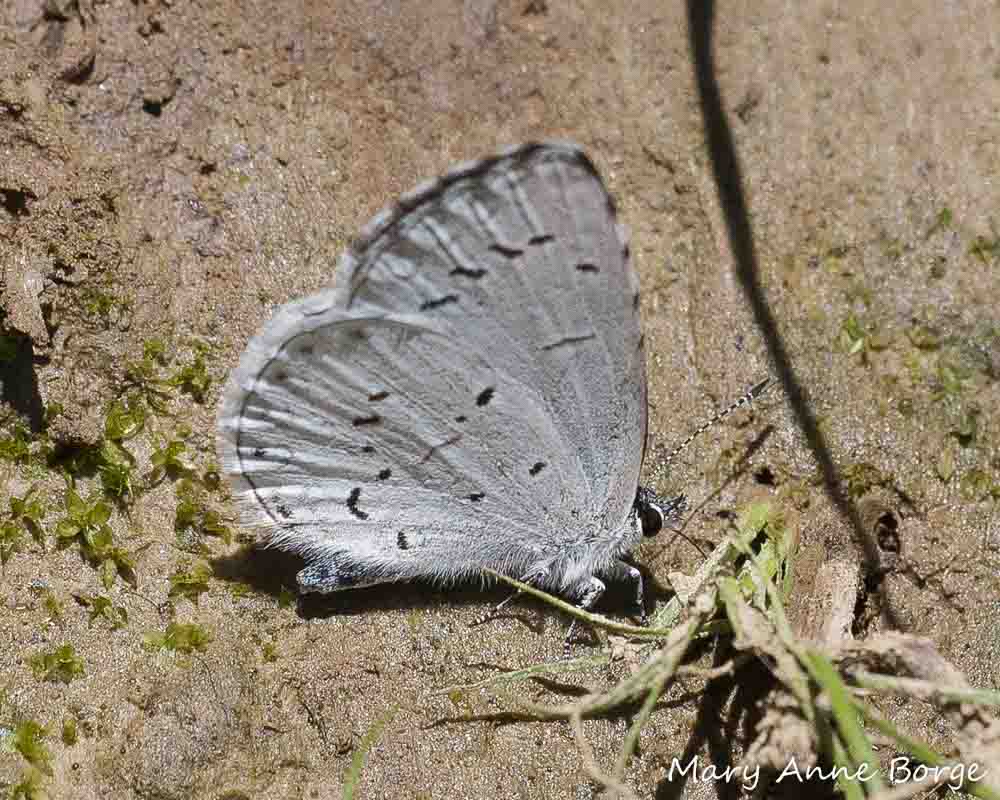
Summer Azure

Summer Azure

People use Black Cohosh, primarily the root, for medicinal purposes. Black Cohosh contains chemical compounds that are anti-inflammatory, antirheumatic, and that have efficacy in managing female reproductive system problems.  Black Cohosh is approved in Germany for treating menopausal symptoms.  Several indigenous Native American tribes also used Black Cohosh to treat rheumatism and other ailments.

Black Cohosh is native primarily in the eastern United States and the Canadian provinces of Quebec and Ontario. It grows in rich, moist woods, in ravines and on slopes.  Its height can range from just over two feet (.7 meters) to as much as eight feet (2.5 meters).  Black Cohosh will light up a shade garden, blooming from late June through early August.
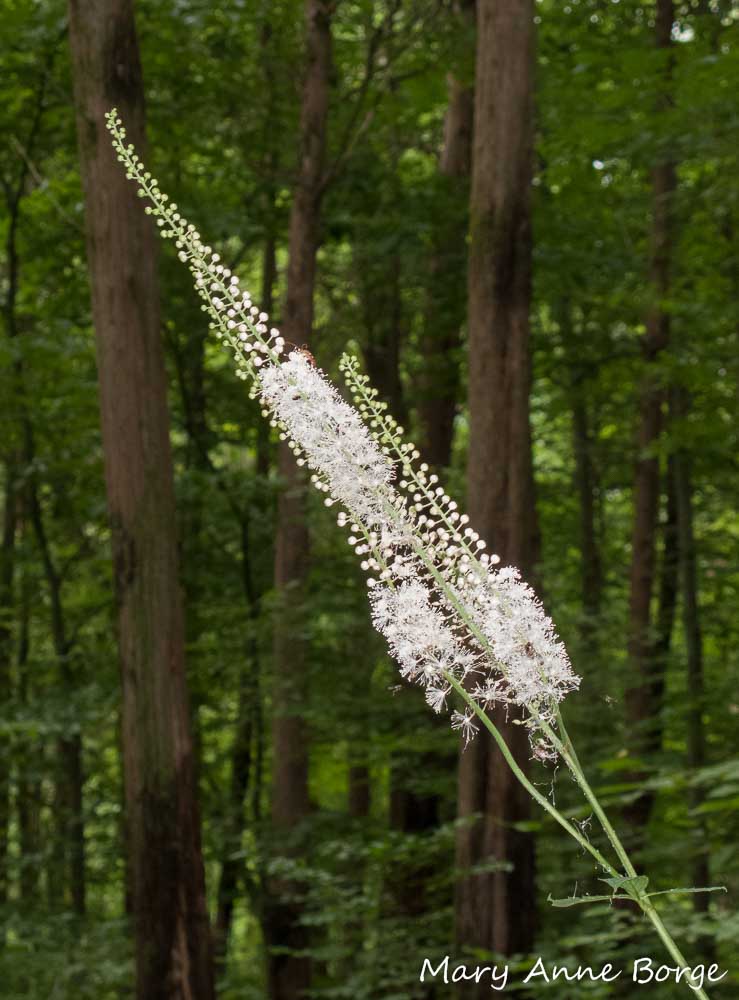
Black Cohosh (Actaea racemosa, syn. Cimicifuga racemosa)

Black Cohosh (Actaea racemosa, syn. Cimicifuga racemosa)

Who uses Black Cohosh? Insects do, including bees, flies, beetles, ants, and butterflies; spiders and other predators of the insects feeding there do, and even people use it, for medicinal purposes and for the beauty it brings to a garden.

Related Posts

Spring Azures

Resources

Cech, Rick; Tudor, Guy. Butterflies of the East Coast.  2005.

Eaton, Eric R.; Kauffman, Ken. Kaufman Field Guide to Insects of North America.  2007.

Eisner, Thomas. For Love of Insects.  2003.

Evans, Arthur V. Beetles of Eastern North America.  2014.

Foster, Steven; Duke, James A. A Field Guide to Medicinal Plants and Herbs of Eastern and Central North America.  2000.

Hoffmann, David. Medical Herbalism.  2003.

Marshall, Stephen A. Insects Their Natural History and Diversity. 2006.

Rhoads, Ann Fowler; Block, Timothy A. The Plants of Pennsylvania.  2007

Willmer, Pat. Pollination and Floral Ecology. 2011
USDA NRCS Plant Database


White Beardtongue for Pollinators

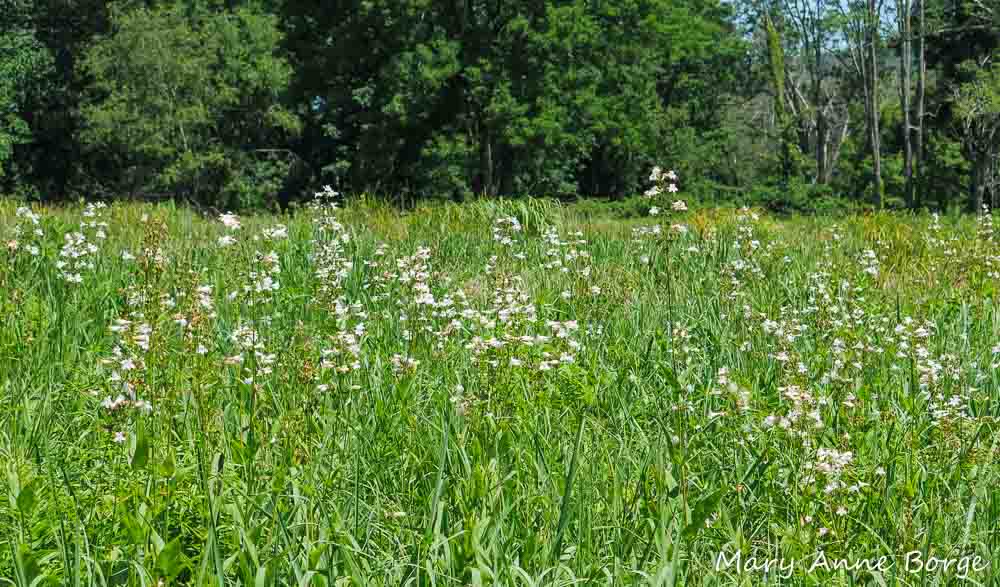
White or Foxglove Beardtongue (Penstemon digitalis) blooms in late spring to early summer, offering nectar and pollen to flower visitors.  It’s easy to recognize in fields and along roadsides by its upright habit and its inflorescence of many whitish flowers, all positioned perpendicularly to the stem.  The name Penstemon reflects the fact that these flowers each have five male flower parts, called stamens.  ‘Foxglove’ and ‘digitalis’ both refer to the shape of the flowers, which resemble those of Foxglove (Digitalis purpurea).

White or Foxglove Beardtongue (Penstemon digitalis)

White or Foxglove Beardtongue (Penstemon digitalis)

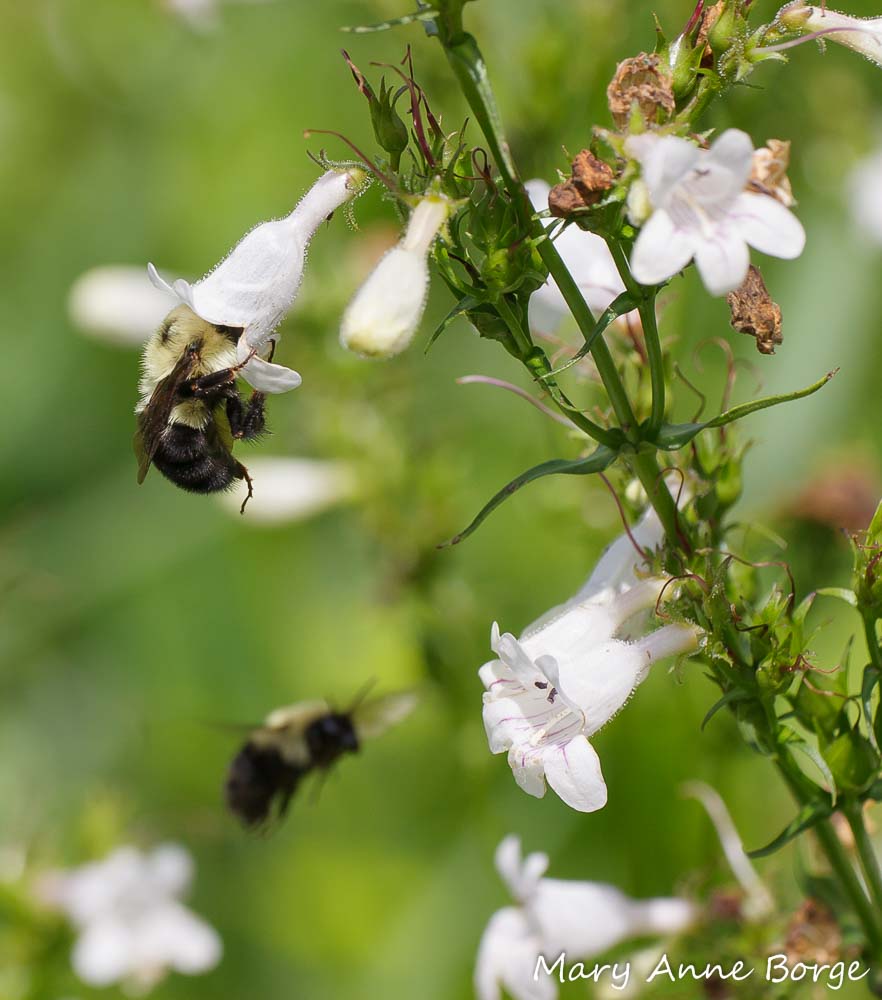
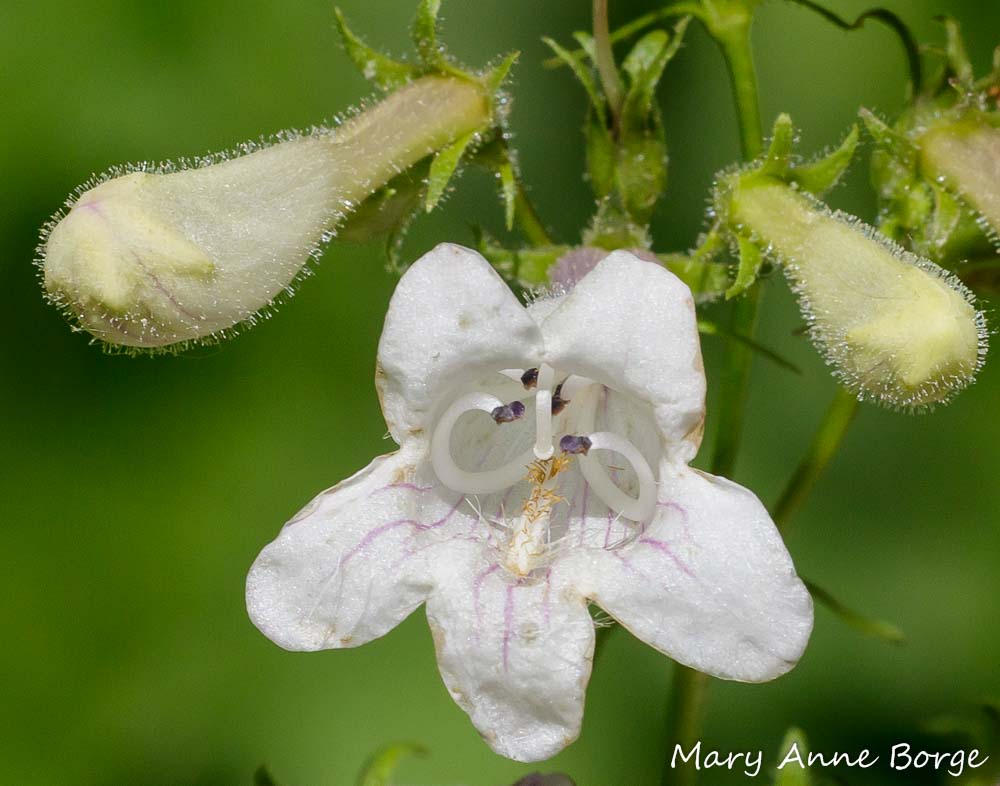
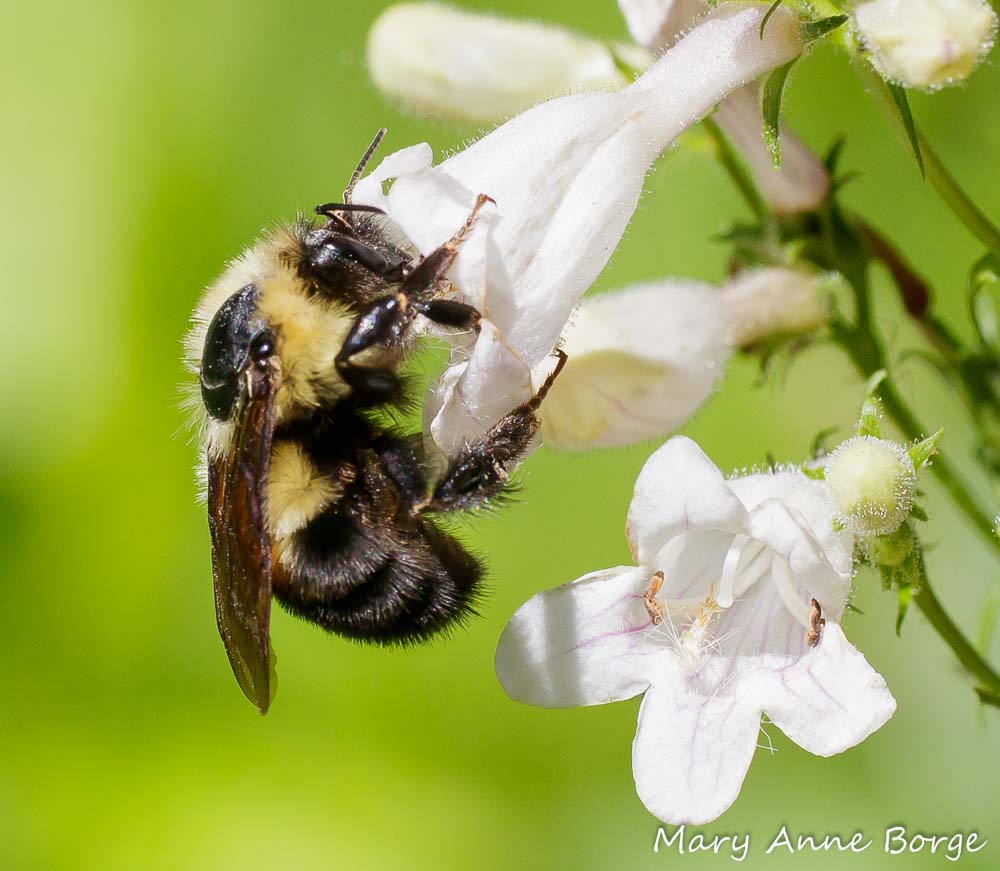
The white flowers beckon to a variety of bees who are enticed by the possibility of a meal of nectar and pollen, with the purple lines (nectar guides) on the throat of the flower showing them the way.

Bufflehead Mason Bee (Osmia bucephala) on White Beardtongue (Penstemon digitalis)

Bufflehead Mason Bee (Osmia bucephala) on White Beardtongue (Penstemon digitalis)

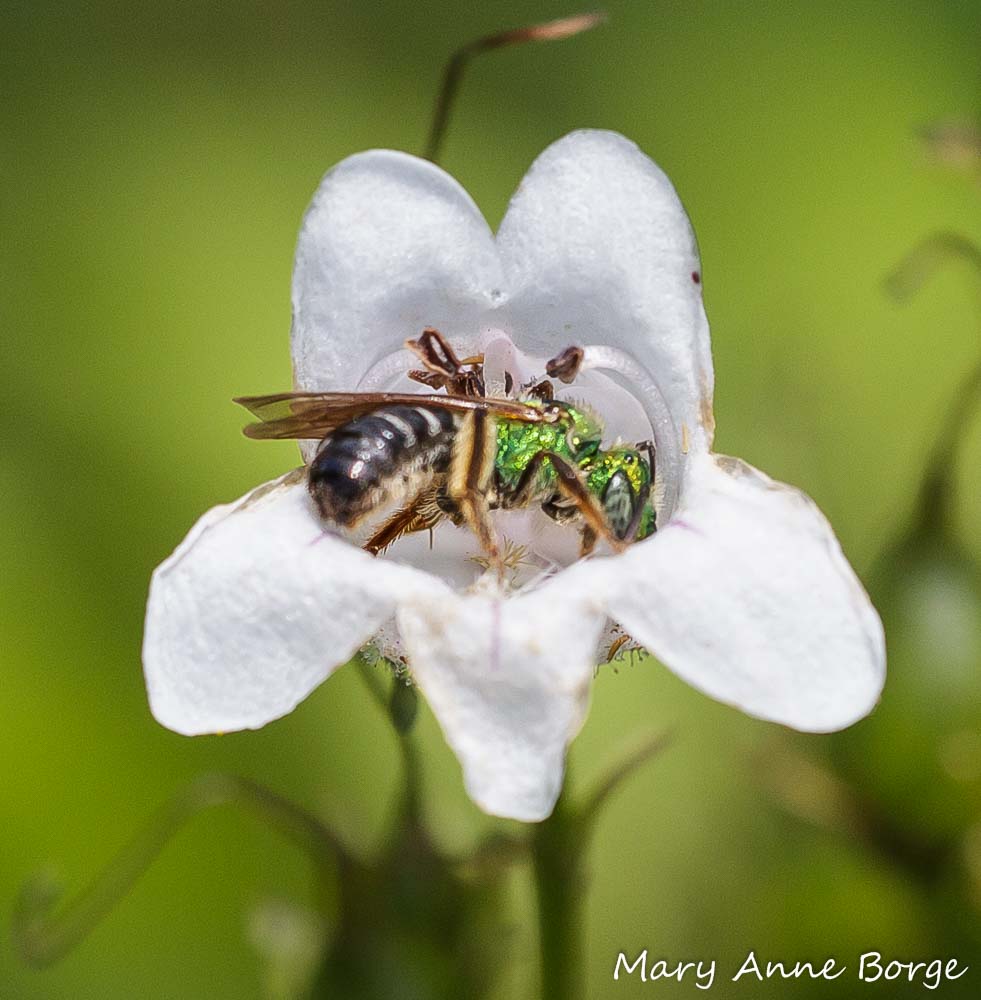
Sweat Bee on White Beardtongue (Penstemon digitalis)

Sweat Bee on White Beardtongue (Penstemon digitalis)

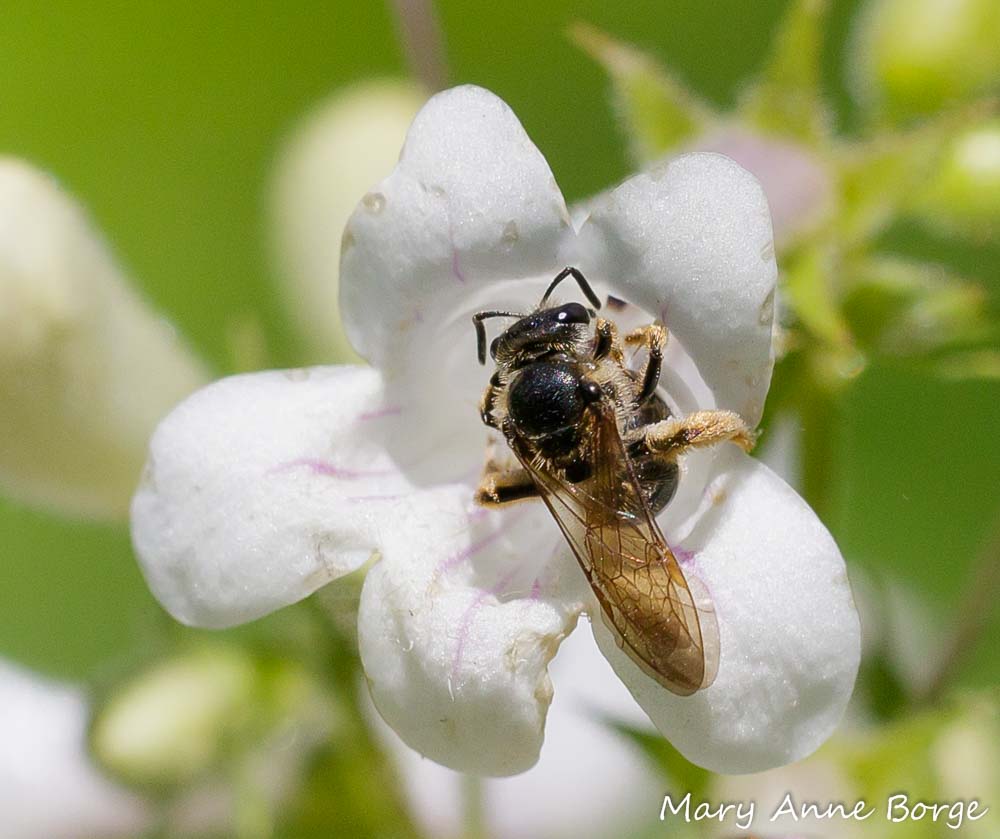
Bee on White Beardtongue (Penstemon digitalis)

Bee on White Beardtongue (Penstemon digitalis)

In addition to feeding themselves, female bees also harvest pollen and nectar to provision their nests for their larvae. But if bees are eating and harvesting the pollen, how will the flowers be pollinated?  Will there be any pollen left to fulfill the plant’s goal of reproduction?

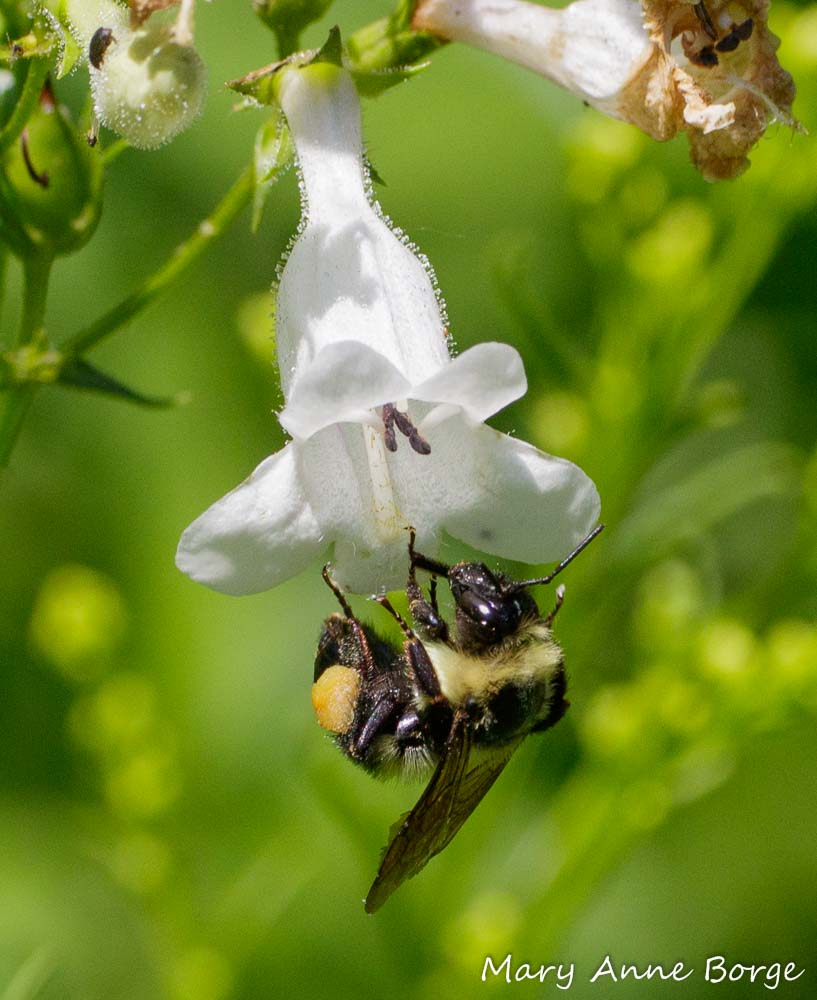
Female Bumble Bee on White Beardtongue (Penstemon digitalis). Note the harvested food on her hind leg.

Female Bumble Bee on White Beardtongue (Penstemon digitalis). Note the harvested food on her hind leg.

Although much of its pollen is used to entice and reward insect visitors, White Beardtongue’s strategy is to deposit pollen on its flower visitors’ bodies in a place that can’t be easily reached for grooming.

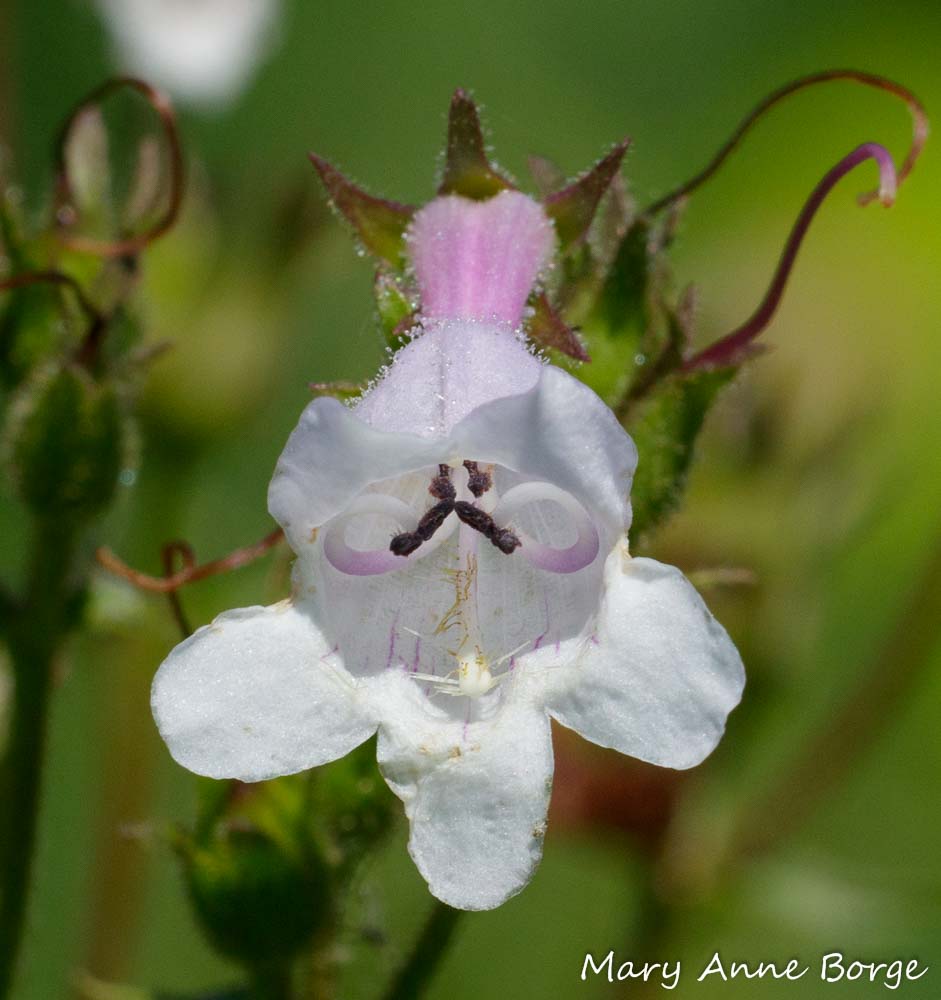
The flowers have both male and female parts, but they are sequentially unisexual. The male flower parts, or stamens, mature first, with the anthers at their tips opening up to release pollen. Although White Beardtongue has five stamens, only four are capable of producing fertile pollen. These four stamens are all positioned just below the ‘roof’ of the flower tube, or corolla.  The dark brown anthers, which contain the pollen, are at the tips of the stamens, clustering above the center of the entrance to the flower.

White Beardtongue (Penstemon digitalis) in the male phase. The dark brown anthers are clustered just below the center of the ‘roof’ of the flower.

White Beardtongue (Penstemon digitalis) in the male phase. The dark brown anthers are clustered just below the center of the ‘roof’ of the flower.

When the flowers are in this phase, a visitor like the Bumble Bee in the photo below may enter the flower, and be brushed with pollen on the top of its head, thorax or even its tongue (proboscis).

Bumble Bee on White Beardtongue (Penstemon digitalis).

Bumble Bee on White Beardtongue (Penstemon digitalis).

After a day or so, the anthers begin to wither and the female flower part begins to mature, the sticky stigma at its tip becoming receptive to pollen. The style extends and curves downward, taking the same position that the anthers once held.

White Beardtongue (Penstemon digitalis) in the female phase. The stigma has replaced the anthers just below the center of the ‘roof’ of the flower.

White Beardtongue (Penstemon digitalis) in the female phase. The stigma has replaced the anthers just below the center of the ‘roof’ of the flower.

If a bee carries the pollen to a flower in the female phase, it will generally enter the flower in the same way, depositing the pollen on the receptive stigma. Success!  White Beardtongue’s pollination strategy has worked.

Bumble Bee depositing pollen on stigma of a White Beardtongue (Penstemon digitalis) in the female phase.

Bumble Bee depositing pollen on stigma of a White Beardtongue (Penstemon digitalis) in the female phase.

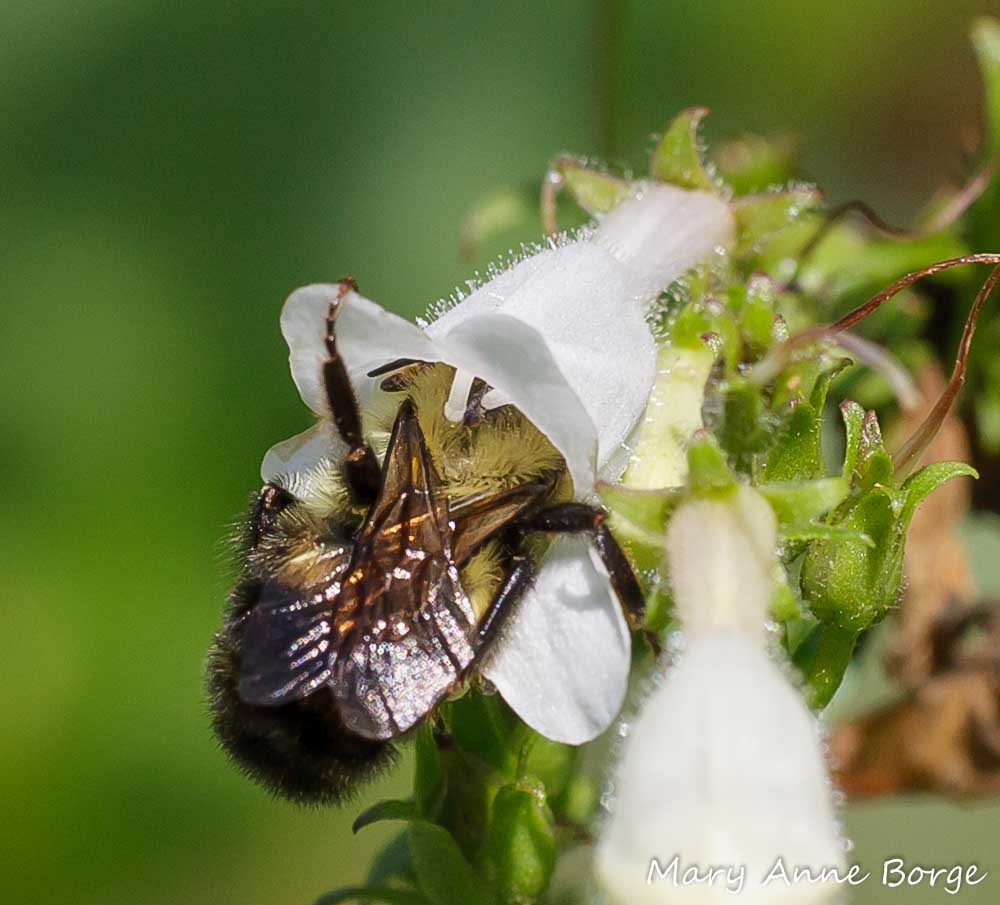
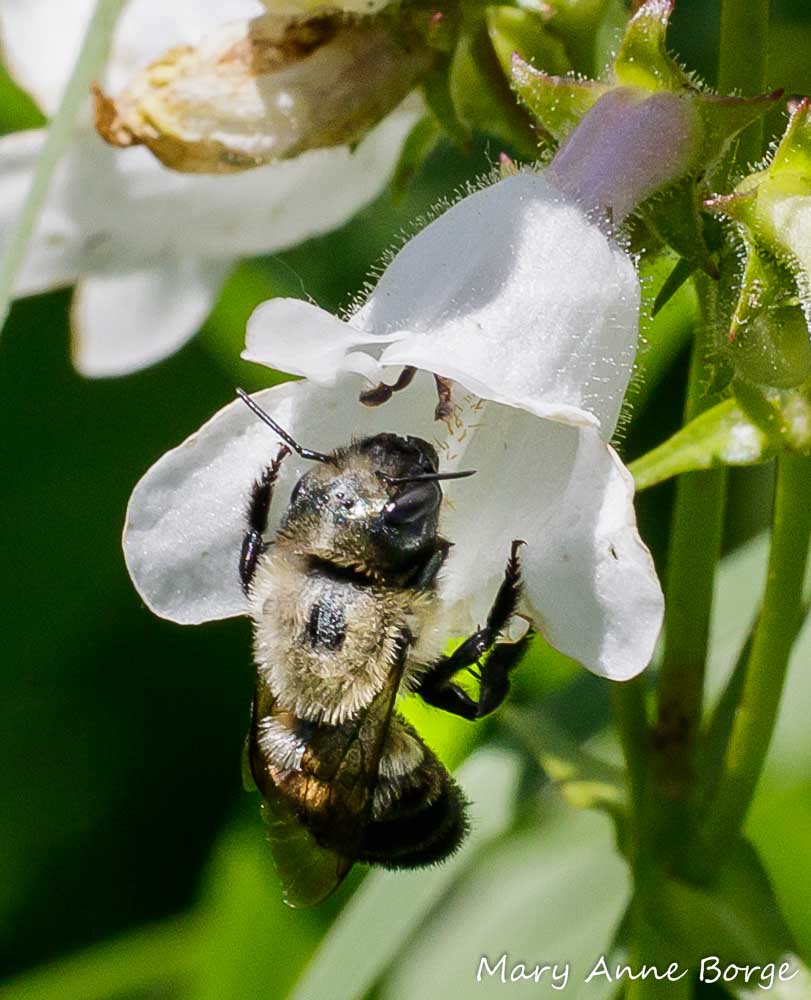
Some pollen may fall on the ‘floor’ of the flower, where the fifth stamen is positioned. This stamen is sterile; it does not produce its own pollen.  It is somewhat hairy, giving the plant its common name ‘beardtongue’.  This hairy stamen may catch some of the fallen pollen and deposit it on an insect visitor as it brushes past, a secondary means of pollen dispersal.  Some smaller bees may cling upside down while foraging for pollen.

Bee visiting White Beardtongue (Penstemon digitalis), possibly harvesting pollen

Bee visiting White Beardtongue (Penstemon digitalis), possibly harvesting pollen

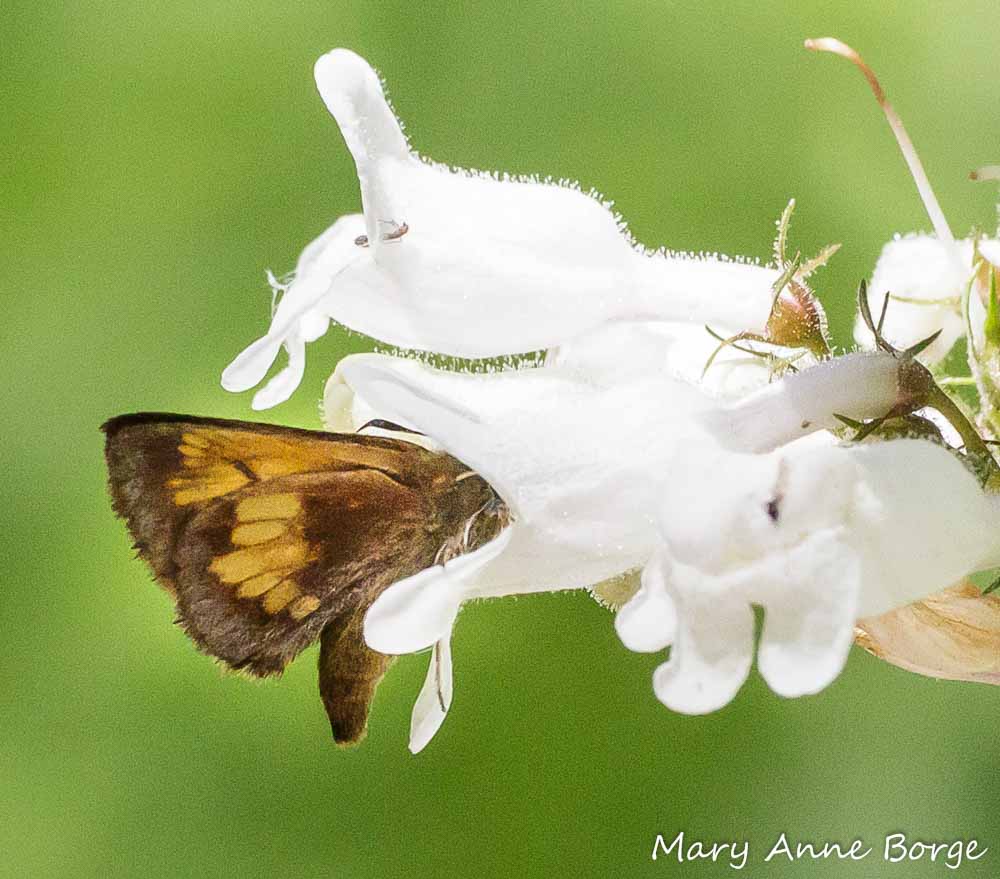
Butterflies and even hummingbirds may stop by for nectar. They may not be as effective in pollinating White Beardtongue as the bees are if their anatomy and behavior is not as good a match for the anatomy of the flower.  On the plus side, neither butterflies nor hummingbirds harvest pollen, so any that does adhere to them has the possibility of being deposited on another flower.

Hobomok Skipper butterfly visiting White Beardtongue (Penstemon digitalis) for nectar. It may be just the right size to pick up or deliver pollen on its head.

Hobomok Skipper butterfly visiting White Beardtongue (Penstemon digitalis) for nectar. It may be just the right size to pick up or deliver pollen on its head.

White Beardtongue blooms for a period of about a month in June to early July. It is native in the eastern two-thirds of the United States, and is found in several Canadian provinces.  It can tolerate sun to part shade in dry to somewhat moist, well-drained soil, and grows to a height of 2-5 feet (6 – 15 decimeters).  It’s a good addition to a natural area or a pollinator garden.

Bumble Bee visiting White Beardtongue (Penstemon digitalis)

Bumble Bee visiting White Beardtongue (Penstemon digitalis)

Here are some other early summer blooming plants that are important for pollinators:

Milkweed – It’s Not Just for Monarchs

What Good is Dogbane?

Resources

Eastman, John. The Book of Field and Roadside.  2003.

Holm, Heather. Pollinators of Native Plants.  2014.

Willmer, Pat. Pollination and Floral Ecology. 2011
Illinois Wildflowers

Lady Bird Johnson Wildflower Center Plant Database

Ontario Wildflowers

USDA NRCS Plant Database


Black Cherry – for Wildlife, and People, too!

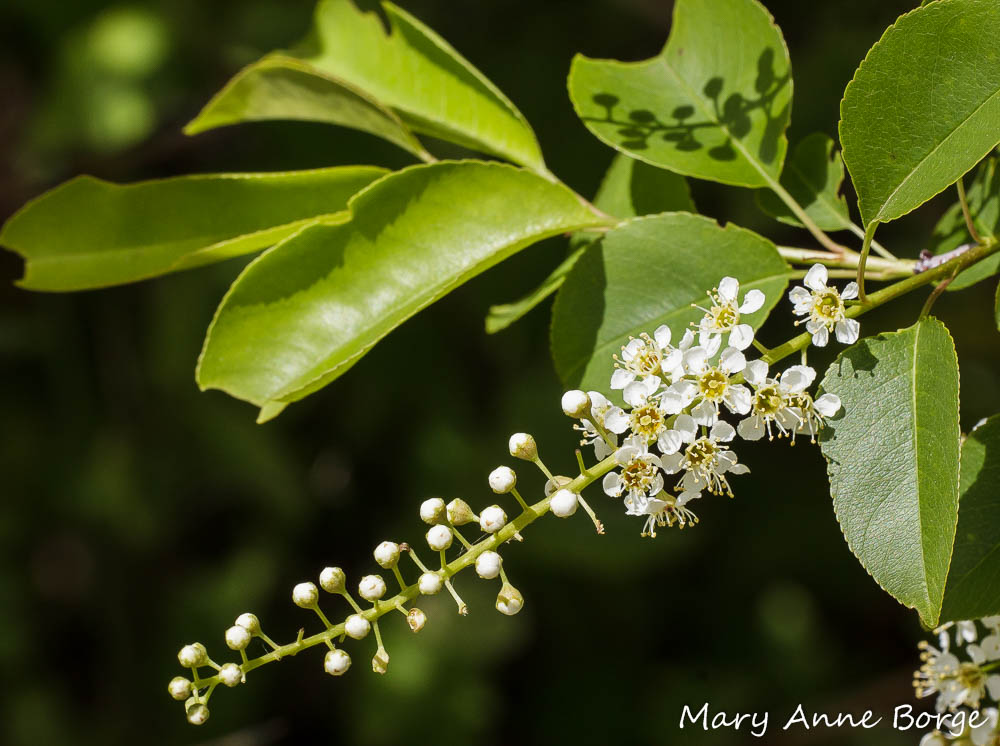
Black Cherry or Wild Black Cherry (Prunus serotina) is a bountiful tree for wildlife, and an important species for humans, too.  It blooms in spring, with a profusion of long, slender, densely packed flower clusters.

Black Cherry (Prunus serotina) in bloom

Black Cherry (Prunus serotina) in bloom

The flowers offer nectar and pollen as enticements to a variety of bee and fly species who need this food to survive. The insects become Black Cherry’s unsuspecting pollination partners.  In return for the food provided to these insect floral visitors, the flowers benefit by having some of their pollen transported on the insects’ bodies and deposited advantageously for pollination on other Black Cherry flowers.  Successful pollination will result in fruit that ripens in late summer and fall.

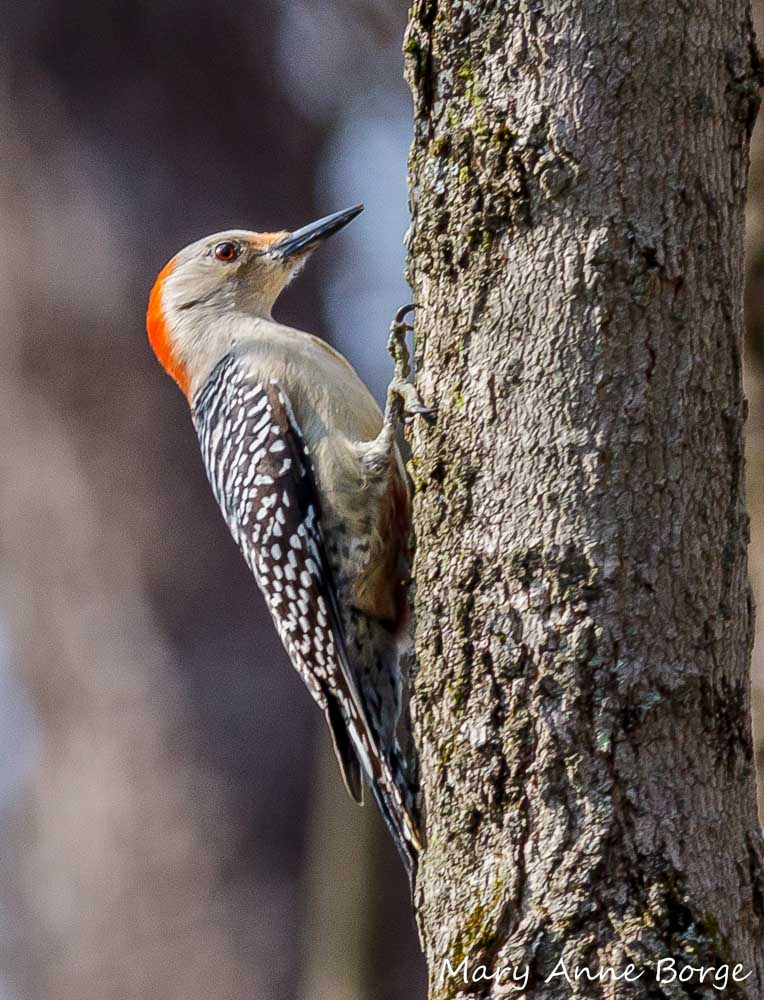
A broad spectrum of animals eat Black Cherry’s fleshy fruit. Many thrushes, woodpeckers, sparrows, bluebirds, tanagers, orioles, and Cedar Waxings are among the dozens of bird species that eat the fruit.

Wood Thrush

Wood Thrush

Red-bellied Woodpecker

Red-bellied Woodpecker

Mammals as diverse as fox, squirrels, chipmunks, mice and even Black Bears eat Black Cherry’s fruit.

Eastern Chipmunk

Eastern Chipmunk

The fruit has evolved to lure animals to help Black Cherry spread its seeds. In exchange for the meal, the seeds are ‘dispersed’ after traveling through the animals’ digestive tracts.

Hundreds of insect species depend on Black Cherry for food, and in some cases, shelter.

In spring, finger galls caused by a mite (Eriophyes cerasicrumena) are conspicuous on Black Cherry leaves.  A gall is a plant’s reaction to being used as food and shelter by an insect.  The mite will feed on the tissue inside the gall until the mite matures and emerges from the gall.

Finger galls caused by a mite (Eriophyes cerasicrumena) on Black Cherry (Prunus serotina) leaves

Finger galls caused by a mite (Eriophyes cerasicrumena) on Black Cherry (Prunus serotina) leaves

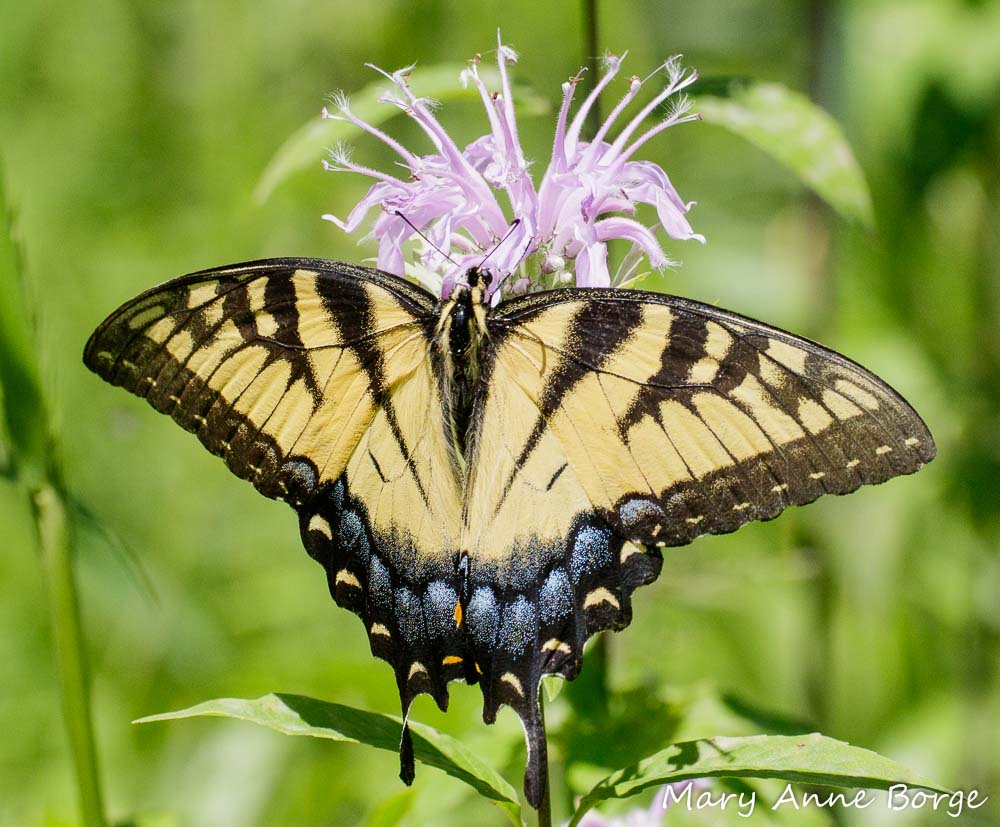
You may be used to seeing Eastern Tiger Swallowtail butterflies feeding on nectar from a variety of plants.

Eastern Tiger Swallowtail nectaring at Wild Bergamot (Monarda fistulosa) flowers

Eastern Tiger Swallowtail nectaring at Wild Bergamot (Monarda fistulosa) flowers

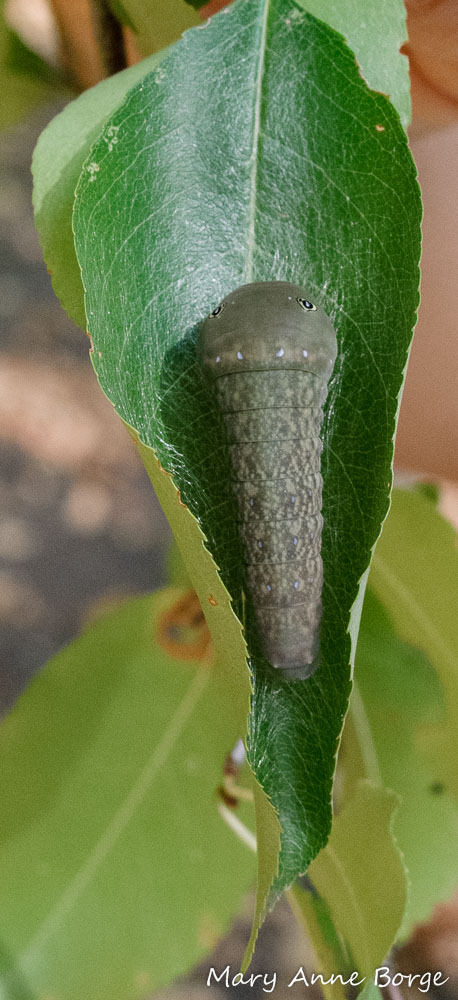
But Eastern Tiger Swallowtail caterpillars have a completely different diet. They depend on the leaves of several woody plants species as their food source, including Black Cherry.

Eastern Tiger Swallowtail caterpillar in Black Cherry leaf

Eastern Tiger Swallowtail caterpillar in Black Cherry leaf

Eastern Tiger Swallowtails are just one of 456 species of butterflies and moths whose caterpillars eat the leaves of Black Cherry and other Prunus species, according to research from Douglas W. Tallamy and the University of Delaware.  These caterpillars are in turn an important source of food for birds, especially when they are raising their young.

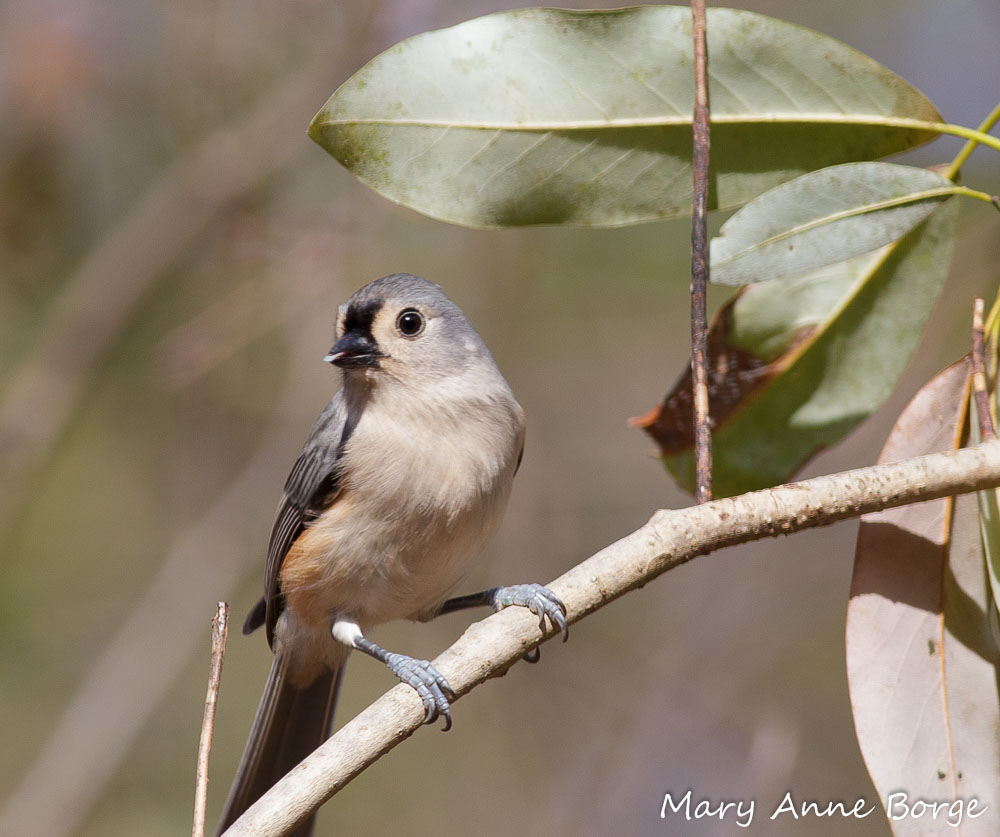
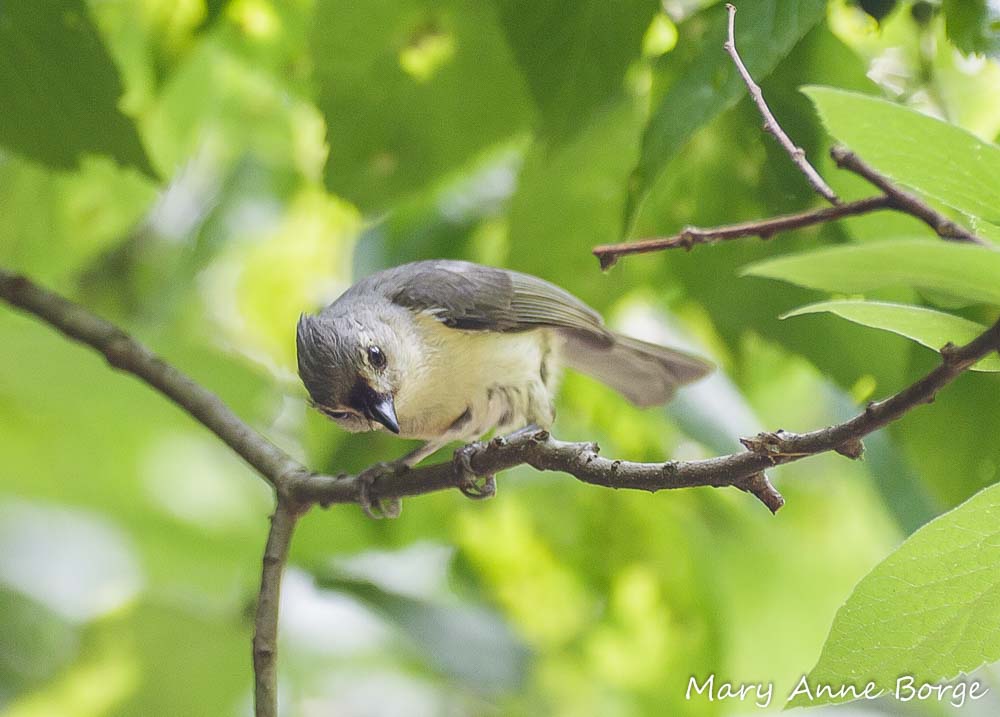
Tufted Titmouse - one of many bird species that harvest caterpillars from Black Cherry

Tufted Titmouse – one of many bird species that harvest caterpillars from Black Cherry

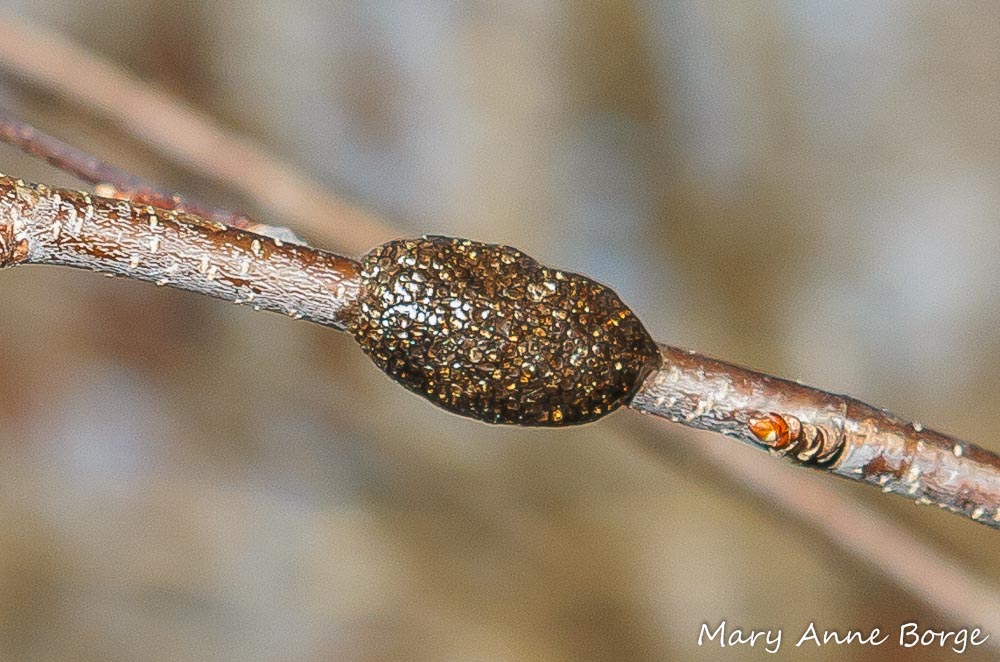
Tent caterpillars favor Black Cherry, a practice that gardeners usually view unfavorably.

Tent Caterpillar egg mass in winter

Tent Caterpillar egg mass in winter

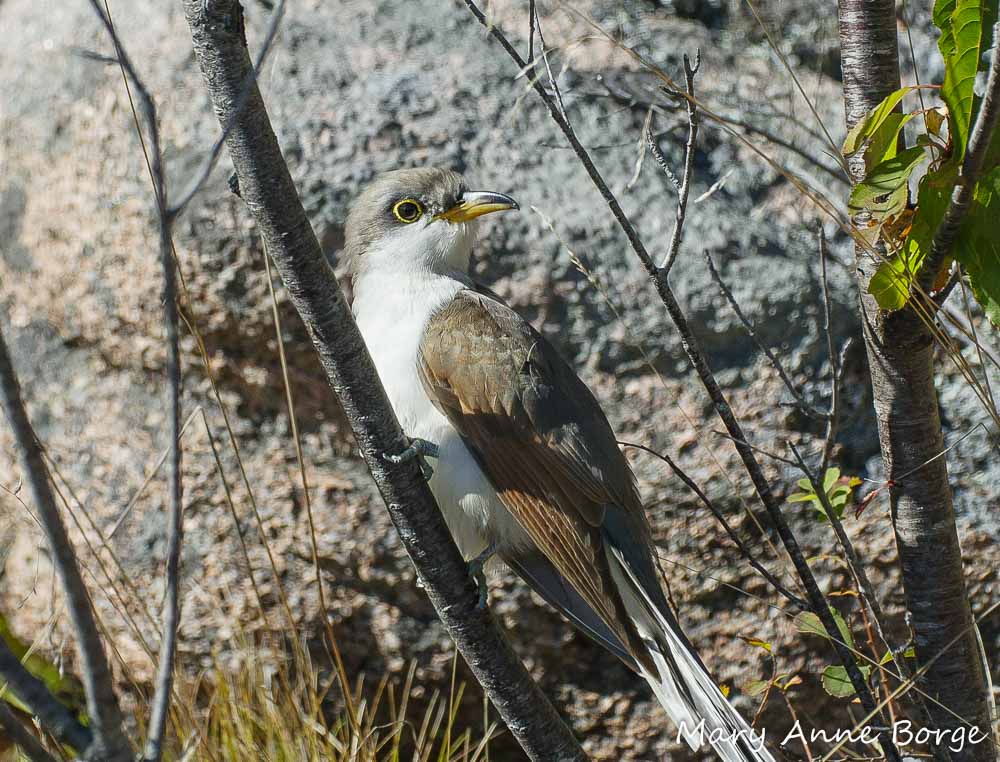
But even Tent caterpillars have redeeming qualities, since they are an important food source for both Yellow- and Black-billed Cuckoos.

Yellow-billed Cuckoo

Yellow-billed Cuckoo

Adult butterflies and moths may also become food for birds or other insects, and in the case of night-flying moths (including Tent caterpillars that survive to become adult moths), for bats.

In addition to the nectar offered by its flowers, Black Cherry provides nectar from glands on its leaf stems. These nectaries are not targeting pollinators.  Instead, they are there to lure a mercenary army of ants to protect the tree from herbivores, especially caterpillars. The nectaries entice ants to visit the trees for a drink.  While there, the ants may also help to keep the caterpillar population in check, since ants also need insect protein as part of their diet.

Black Cherry (Prunus serotina) in bloom

Black Cherry (Prunus serotina) in bloom

People benefit directly from Black Cherry trees.  In addition to the beauty of its flowers, fruits and foliage, Black Cherry’s wood is an important timber crop, primarily for use in furniture and cabinet making.  Black Cherry’s fruit is used to flavor brandies and to make a liqueur called cherry bounce.  The fruit is somewhat bitter, but with added sugar it can be used to make jellies.  Eating the raw fruit is not advisable, since the seeds can be toxic.  Medicinally, Black Cherry’s inner bark has been used in cough suppressants.

Black Cherry can grow to a maximum height of 80-100 feet (24-30 meters). Its range is primarily eastern North America, from Canada through the United States and south into Mexico, although it is an adaptable species and may also be found in some areas of the Pacific Northwest.

Providing beauty, timber, food and medicine for humans, food for birds, mammals, pollinators and hundreds of other insects, Black Cherry is among our most productive native trees.

Black Cherry (Prunus serotina) in bloom

Black Cherry (Prunus serotina) in bloom

Related Posts

Will Work for Food – Extrafloral Nectaries

Resources

Eastman, John. The Book of Forest and Thicket.  1992.

Eiseman, Charley; Charney, Noah. Tracks & Sign of Insects and Other Invertebrates. 2010.

Foster, Steven; Duke, James A. A Field Guide to Medicinal Plants and Herbs of Eastern and Central North America.  2000.

Hoffmann, David. Medical Herbalism.  2003.

Peterson, Lee Allen. A Field Guide to Edible Wild Plants of Eastern and Central North America. 1977.

Rhoads, Ann Fowler; Block, Timothy A. The Plants of Pennsylvania.  2007

Tallamy, Douglas W. Bringing Nature Home, 2007,

Illinois Wildflowers

USDA Plant Database


Spring Azures

Spring Azures spent the winter as pupa, cozy in their chrysalises, poised to take the final step to adulthood when spring conditions were right, with longer days and warmer temperatures. Their fluttering flight showing flashes of azure began lighting up woodlands and gardens earlier than usual this year, when unseasonably warm March temperatures encouraged them to complete their metamorphosis and emerge as early as the last week of March.

Spring Azure butterfly

Spring Azure butterfly

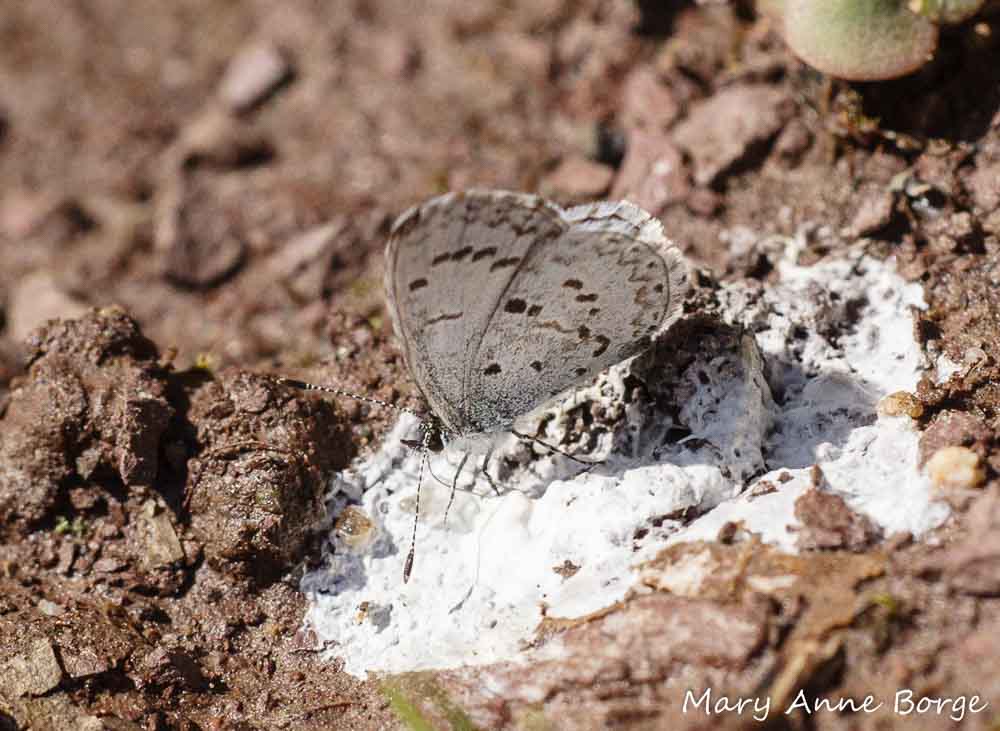
Nectar was scarce in those early days of emergence, especially when weather whiplash sent the temperatures in the opposite direction, dropping below normal. During the lean times, Spring Azures got their nourishment from a variety of mineral sources, including mud puddles, rocks, leaves, and even bird droppings.

Spring Azure getting nutrients from bird droppings

Spring Azure getting nutrients from bird droppings

As temperatures soared again, nectar supplies became plentiful.

Spring Azure dringing nectar from Wild Plum (Prunus americanus) blossoms

Spring Azure dringing nectar from Wild Plum (Prunus americanus) blossoms

Now their priority is reproduction – making sure their species has a future. After mating, female Spring Azures look for plants appropriate for egg-laying, plants whose leaves their caterpillars can eat and on which they will thrive.  Spring Azures evolved to use the newly emerging leaves, flowers and buds of a variety of woody plants as their caterpillars’ food, including viburnums, dogwoods (Cornus species), and New Jersey Tea (Ceanothus americanus). For the past week, I’ve watched Spring Azures flitting from plant to plant, and from leaf to bud of Maple-leaf Viburnum (Viburnum acerifolium), taking only seconds to lay each egg.

Spring Azure laying an egg on Maple-leaf Viburnum (Viburnum acerifolium) flower buds

Spring Azure laying an egg on Maple-leaf Viburnum (Viburnum acerifolium) flower buds

The eggs will hatch and caterpillars will emerge, nibbling on the newly developing leaves and buds. Not all of the caterpillars will complete metamorphosis to fly as butterflies, however.  Caterpillars are very vulnerable to predators, including other insects, spiders and birds.  Caterpillars are an essential source of food for birds, especially when they are feeding their young.  It may take thousands of caterpillars to feed a hungry clutch of growing birds.

Hungry young Tufted Titmouse looking for food

Hungry young Tufted Titmouse looking for food

Normally, ants would be among the insects that would love to eat a tasty caterpillar treat. Even when fully grown Azure caterpillars are small, the perfect snack size for an industrious ant on the hunt.  To protect themselves, Azure butterflies have developed a way to enlist the ants to protect them rather than eat them.  Azures produce delicious honeydew that ants love.  The ants guard the Azure caterpillars, palpating them to trigger the honeydew payment.

Ant guarding/palpating an Azure caterpillar for honeydew. They're on New Jersey Tea (Ceanothus americanus).

Ant guarding/palpating an Azure caterpillar for honeydew. They’re on New Jersey Tea (Ceanothus americanus).

Ants will work for the highest bidder, and in this case they help some of those caterpillars live to become butterflies.

Spring Azure butterfly on Maple-leaf Viburnum (Viburnum acerifolium)

Spring Azure butterfly on Maple-leaf Viburnum (Viburnum acerifolium)


Related Posts

‘Will Work for Food’ – Extra-floral Nectaries

Maple-leaf Viburnum

Gray Dogwood for Butterlies, Bees and Birds

Resources

Butterflies and Moths of North America

Cech, Rick; Tudor, Guy. Butterflies of the East Coast.  2005.


Evening Primrose

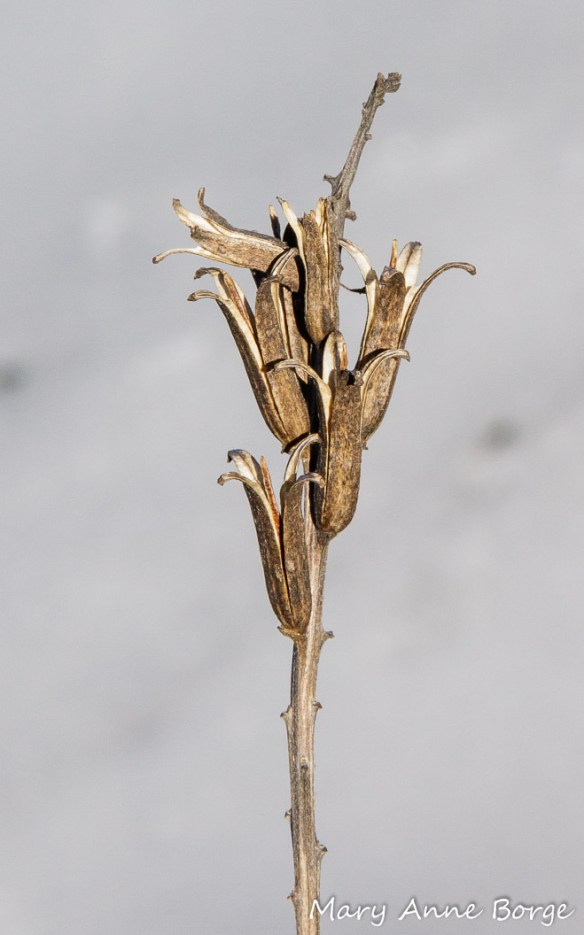
By late February, the spent stems of many herbaceous plants are beginning to fall to the ground and break down, adding to the nutrients in the soil, or making nesting material available for birds and other animals. Evening Primrose (Oenothera biennis) is an exception, with stems still upright, and fruit capsules still dispersing seeds – via wind, or scattered on the ground near parent plants.  Evening Primrose is a biennial, a characteristic reflected in its scientific name, ‘biennis’.  This means that it typically lives only two years, the first as a ground-level rosette of leaves.  If it gathers enough energy, the second year of life it will bloom, develop fruits, and die.  Replacing the parent plant with offspring in the same location is a good evolutionary strategy for the plant.

Evening Primrose fruit capsules

Evening Primrose (Oenothera biennis) fruit capsules

Not all seeds are destined to grow into another Evening Primrose plant, since some will become a snack for hungry birds. Evening Primrose can afford this loss.  There are plenty of seeds, with potentially hundreds produced by each fruit capsule.

Eastern Goldfinches eat Evening Primrose seeds.

Eastern Goldfinches eat Evening Primrose seeds.

Evening Primrose can be found throughout most of the United States (some Rocky Mountain states are an exception) and Canada, blooming from late June through much of the fall, often in disturbed areas.  ‘Evening’ in this plant’s name refers to the fact that the flowers open late in the day, usually blooming from dusk until the early morning hours, although they may stay open longer on cloudy or overcast days.

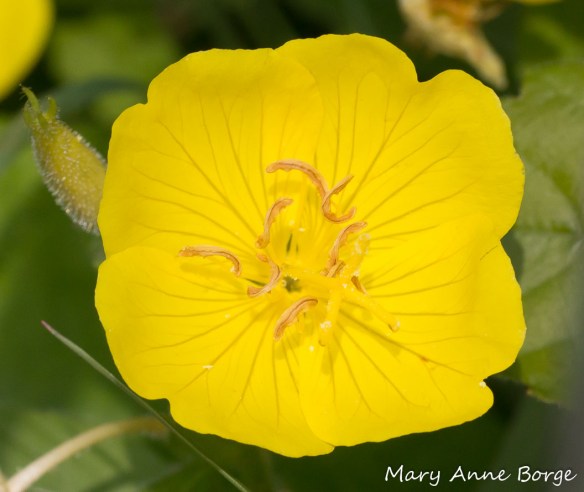
Evening Primrose in bloom

Evening Primrose in bloom

Plant species that bloom at night have generally evolved to partner for pollination services with an animal that is active at night, usually moths or bats. The flowers are fragrant, which is another characteristic of night blooming plants.  Many moth species can detect fragrances from long distances, and will follow the fragrance to find their nectar reward.  Moths, particularly some sphinx moths, are among Evening Primrose’s pollinators.

During those daylight hours that the flowers are open, butterflies may drink nectar from Evening Primrose flowers.

Little Glassywing drinking nectar from an Evening Primrose flower.

Little Glassywing drinking nectar from an Evening Primrose flower.

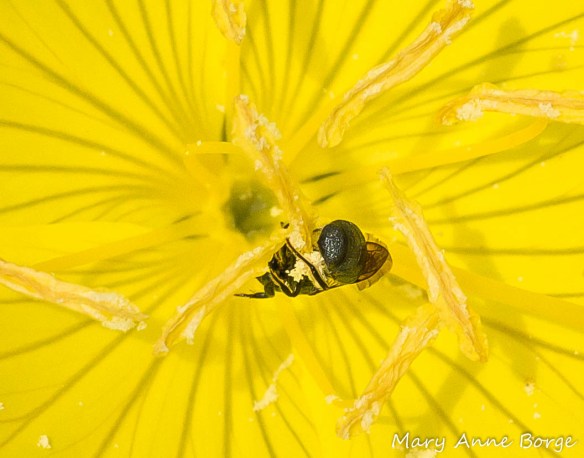
Many bee species also visit the flowers, including some that specialize on Evening Primrose and other related species.

Sweat Bee, probably Lasioglossum oenotherae, on Evening Primrose

Sweat Bee, probably Lasioglossum oenotherae, on Evening Primrose

Sweat Bee, probably Lasioglossum oenotherae, harvesting pollen from Evening Primrose. These bees have evolved scopa that are efficient for handling Evening Primrose's stringy pollen.

Sweat Bee, probably Lasioglossum oenotherae, harvesting pollen from Evening Primrose. These bees have evolved scopa that are efficient for handling Evening Primrose’s stringy pollen.

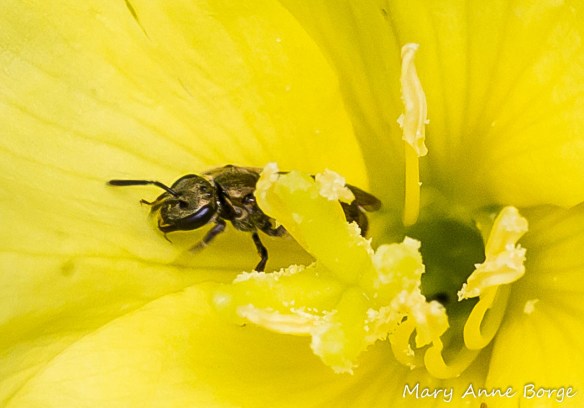
Some of these specialists are able to fly in dim light during dusk and dawn, and even into the night when there is enough moonlight. In addition to the large compound eyes on each side of their faces, bees have ocelli, simple eyes at the top of their heads.  Ocelli help the bee in positioning and orientation, with the aid of light from the sun or even a full moon. These specialist bees are aided by larger ocelli than the typical bee, so they can function in low light.

Sweat Bee, probably Lasioglossum oenotherae, on Evening Primrose.  These bees have evolved scopa that are efficient for handling Evening Primrose's stringy pollen.  Look for the ocelli (eyes) at the top of its head.  They look like  little dots.

Sweat Bee, probably Lasioglossum oenotherae, on Evening Primrose. These bees evolved scopa on their hind legs that are efficient for carrying Evening Primrose’s stringy pollen. Look for the ocelli (eyes) at the top of its head. They look like little dots.

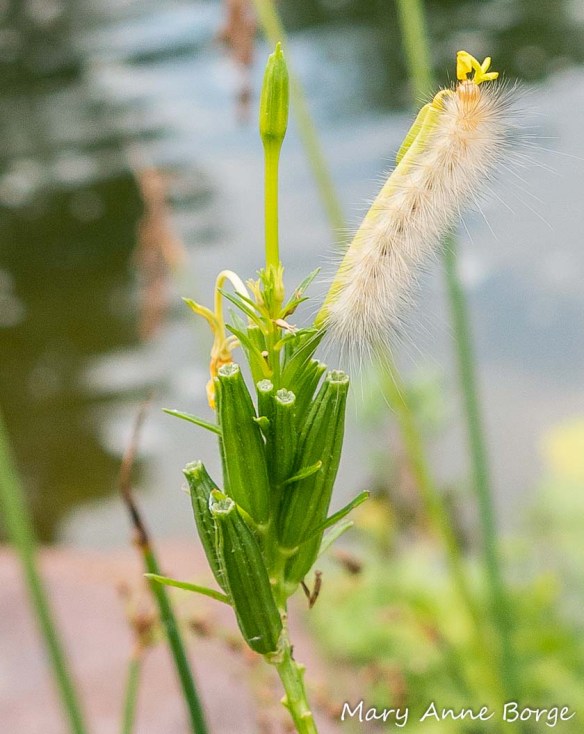
Caterpillars of several moth species feed on the leaves or flowers of Evening Primrose.

Yellow Bear (Virginian Tiger Moth) caterpillar on Evening Primrose

Yellow Bear (Virginian Tiger Moth) caterpillar on Evening Primrose

For human consumers, the young leaves, flowers, shoots and first year roots of Evening Primrose are edible, with the proper preparation. The leaves and roots are thought to have a peppery taste.   Evening Primrose is cultivated for its oil, which contains some essential fatty acids (Omega-6 fatty acid, linolenic acid and gamma-linolenic acid). Evening Primrose oil has been licensed in several countries for treatment of eczema and breast pain.  Native Americans used it to treat a broad range of ills.

Evening Primrose (Oenothera biennis)

Evening Primrose (Oenothera biennis)

Look for Evening Primrose fruit capsules now,

Evening Primrose (Oenothera biennis) fruit capsules

Evening Primrose (Oenothera biennis) fruit capsules

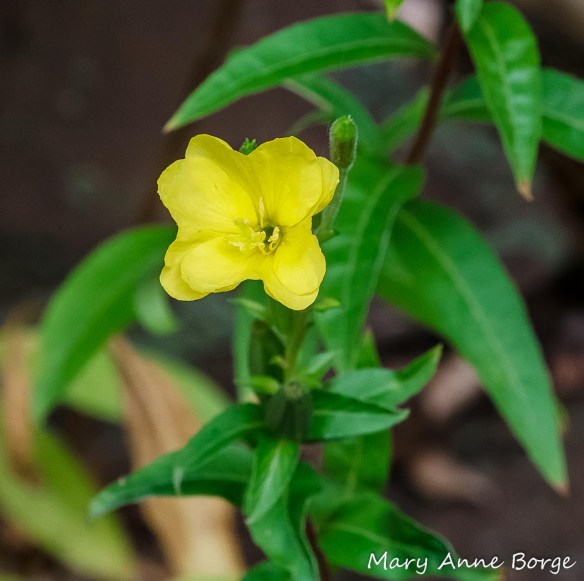
and watch for new plants blooming at nearby locations this summer.

Evening Primrose (Oenothera biennis) in bloom

Evening Primrose (Oenothera biennis) in bloom


Resources

Foster, Steven; Duke, James A. A Field Guide to Medicinal Plants and Herbs of Eastern and Central North America.  2000.

Peterson, Lee Allen. A Field Guide to Edible Wild Plants of Eastern and Central North America. 1977.

Wagner, David L.; Caterpillars of Eastern North America, 2005.

Wilson, Joseph S.; Carril, Olivia Messinger. The Bees in Your Backyard. 2016.

Illinois Wildflowers

Discover Life

USDA Plant Database

Mayo Clinic