Life in Dead Wood

‘Getting rid of dead wood’ or ‘Cutting out the dead wood’ are phrases that are so commonly used that they have become ubiquitous when referring to a ‘reduction in force’ in the corporate world. These phrases have their origin in advice for maintaining landscaping. In a formal setting where neatness is desired, or where a dead tree or branch poses a threat to people, property or power lines (why don’t they bury those power lines, anyway?), removing dead wood is certainly a prudent thing to do.

But is ‘getting rid of dead wood’ always a good idea? Does dead wood have any function or benefit in a less formal or a natural setting?

Well, let’s think about it. On the plus side, dead wood does provide a home for many species of fungi, some of which are eaten by insects, mammals (including people!) and other critters.
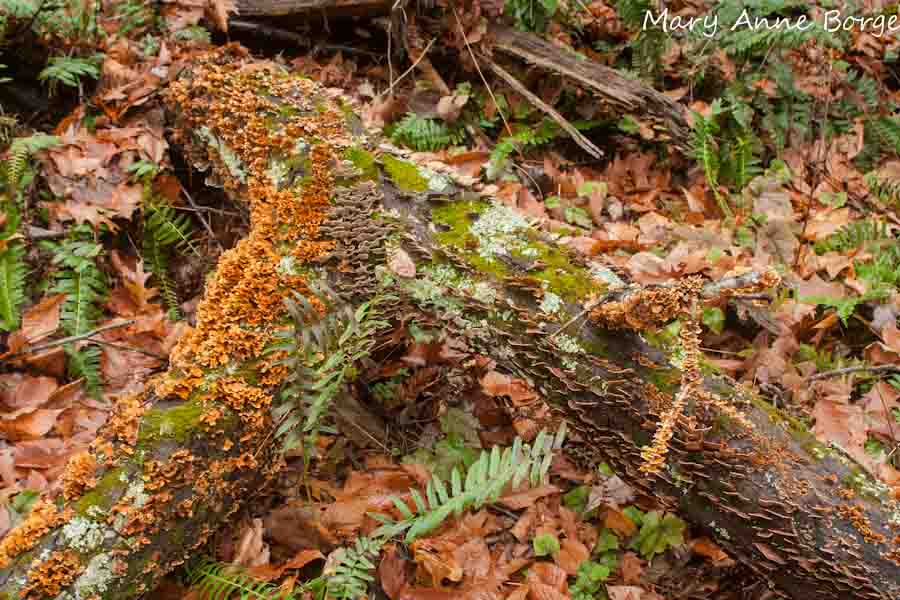
Mushrooms on dead wood

Mushrooms on dead wood

Some insects even develop inside mushrooms, like the puffballs pictured below.
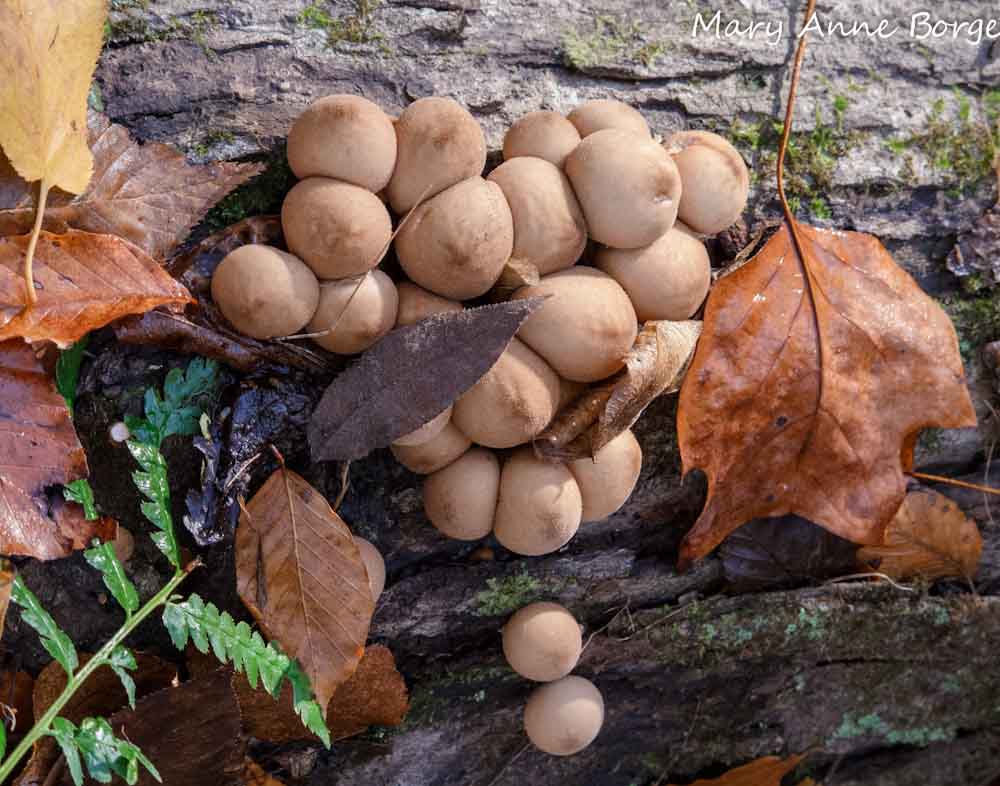
Puffballs

Puffballs

At first glance these snails seem to be using the mushrooms as a sun deck, but a closer look shows that they are feeding here.
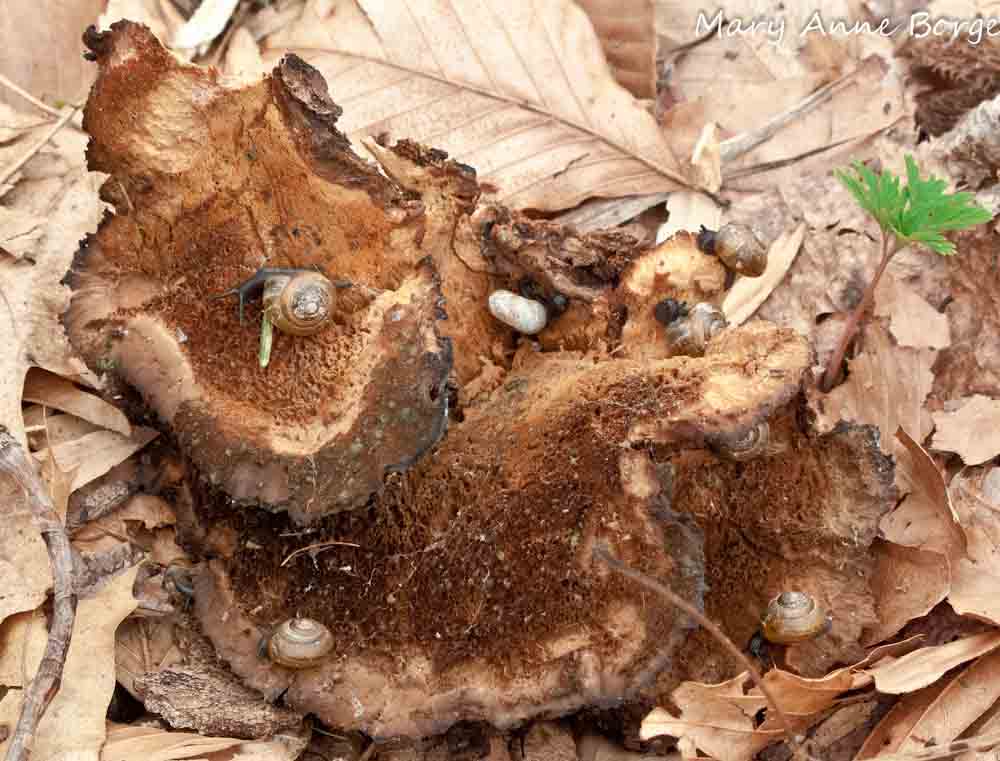
Snails feeding on mushrooms

Snails feeding on mushrooms

The young edges of the colorful Chicken of the Woods mushroom are edible, and taste like, well, chicken.
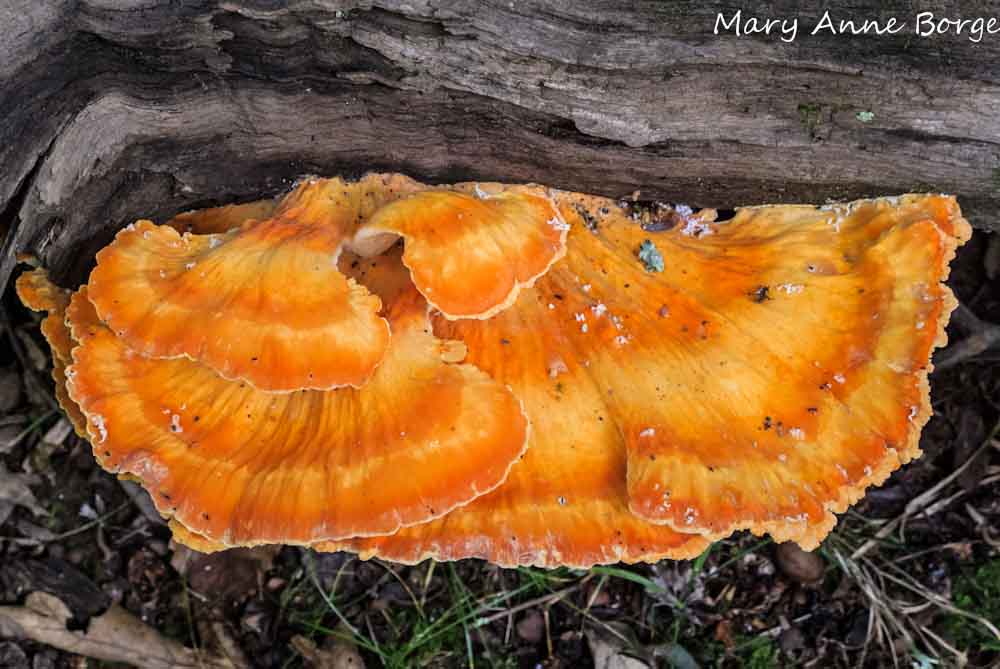
Chicken of the Woods

Chicken of the Woods

Many insect species, including ants, wasps, bees, beetles and even butterflies make dead wood their home for at least part of their life cycle.

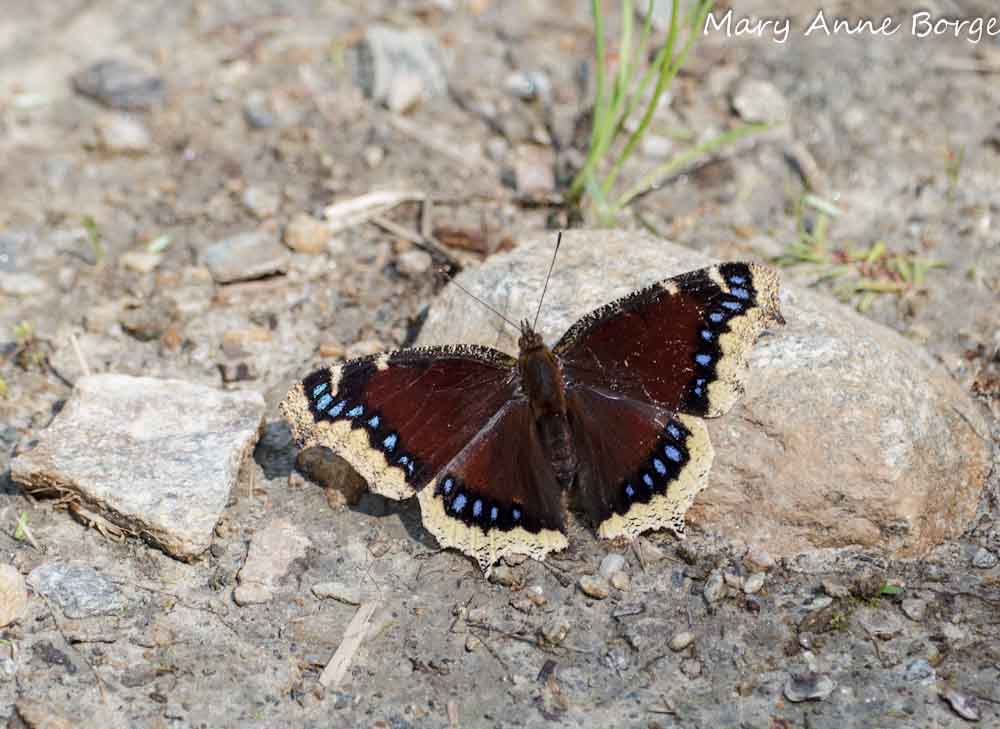
Eastern Commas, Question Marks and Mourning Cloaks survive the cold northern winter as adults, often taking shelter in a woodpile or underneath loose bark.
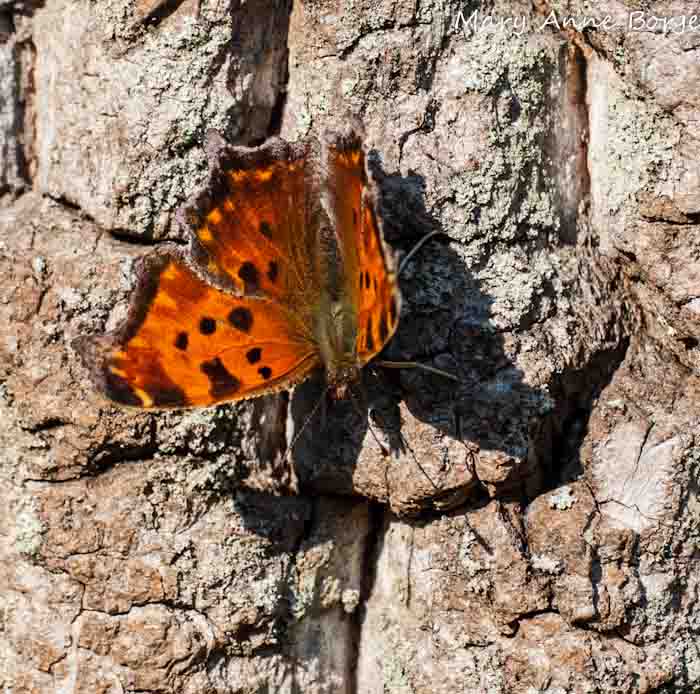
Eastern Comma
Eastern Comma

Mourning Cloak

Mourning Cloak

Some species of solitary bees may make their nests in dead wood, like the sweat bee pictured below sipping nectar in the company of a Gray Hairstreak butterfly. This little sweat bee and other solitary bees are important pollinators, many providing free pollination services for food crops. Some of our native bees are more efficient pollinators than Honey Bees, because the native bees are a better anatomical match for the plants with which they evolved.  Providing habitat for native bees can reduce the need to pay to truck in Honey Bees, the migrant workers of the insect world.  It may also increase pollination rates and crop yield.
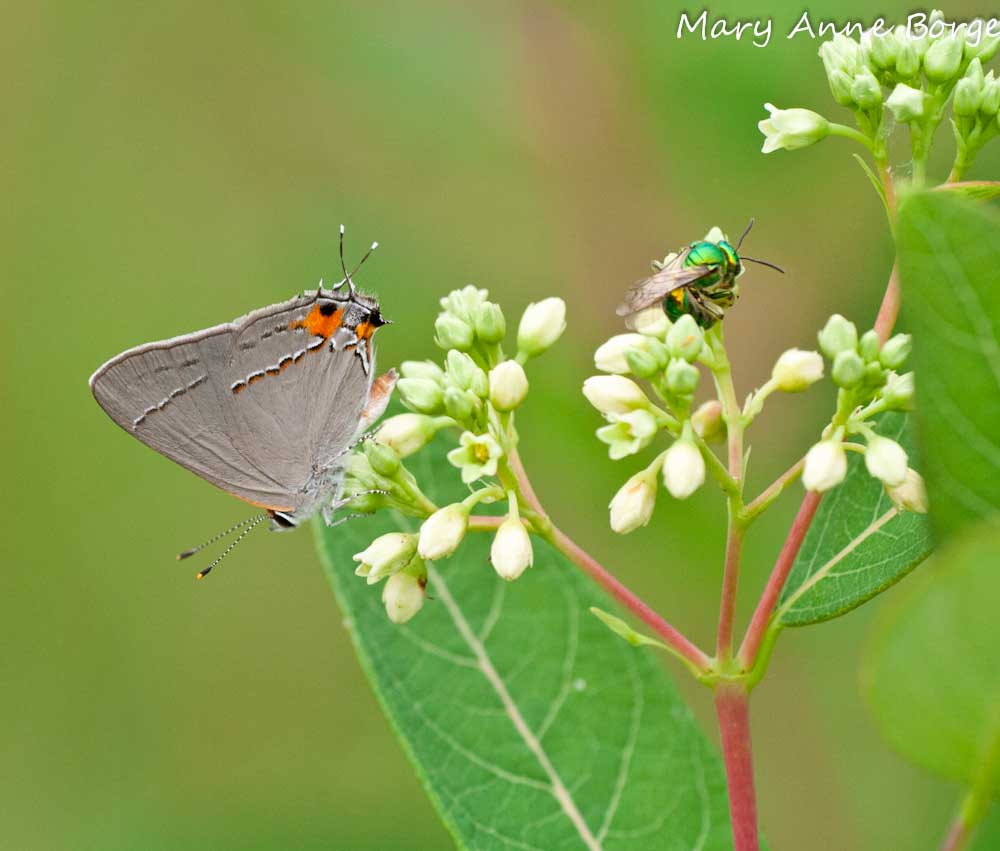
Sweat Bee and Gray Hairstreak on Indian Hemp (Apocynum cannabinum)

Sweat Bee and Gray Hairstreak on Indian Hemp (Apocynum cannabinum)

Most wasps are predators of other insects, helping to keep their populations in balance. Mason wasps, for example, provision their nests with caterpillars on which their larvae feed as they develop. They usually nest in borings made in dead wood by other insects like beetles or bees.
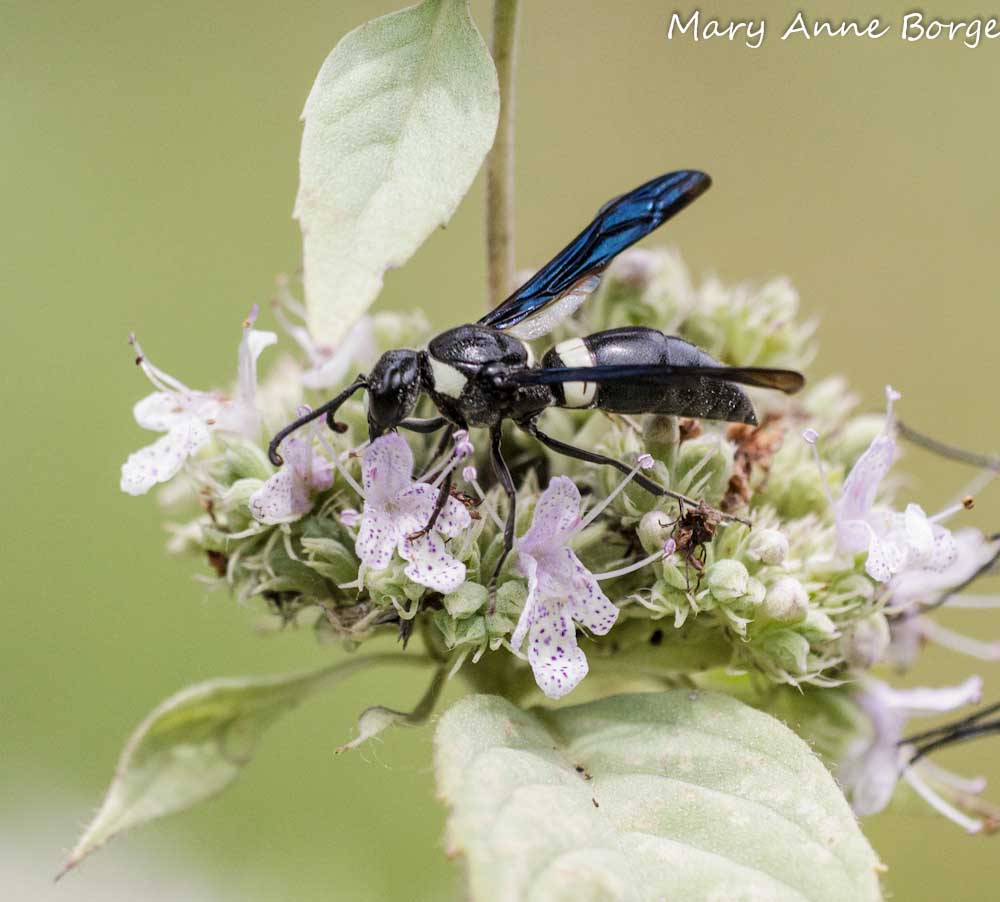
Mason Wasp (Monobia quadridens) on Hoary Mountain Mint (Pycnanthemum incanum)

Mason Wasp (Monobia quadridens) on Hoary Mountain Mint (Pycnanthemum incanum)

There are ant species that make their homes in rotting wood. Ants don’t cause wood to rot, and they don’t eat the wood. They excavate spaces for their nests in wood that is already soft, moist, and decaying. Ants are important seed dispersers for many plants, including violets, trilliums, Dutchman’s Breeches, Spring Beauty, and many more.
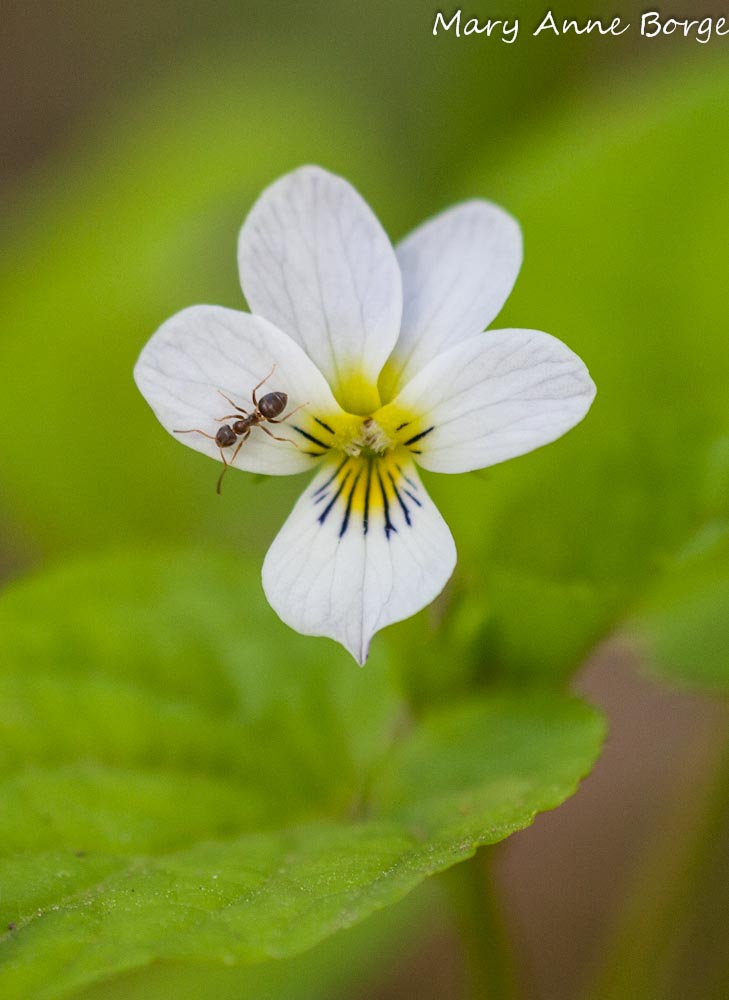
Ant with Canada Violet (Viola canadensis)

Ant with Canada Violet (Viola canadensis)

Ants and wood boring beetle larvae are favorite foods of many woodpeckers. Among them are the largest woodpeckers in North America, the Pileated Woodpecker. Have you have ever had a Pileated Woodpecker attack the siding of your home? If so, it’s because the bird has detected the presence of a delectable meal of carpenter ants there, which would only be present if you had rotting wood. So think of it as a free consultation, courtesy of nature, to let you know that you have some maintenance to do. Replace, paint or otherwise seal the wood to prevent moisture from getting in, and your problems with ants and woodpeckers will go away. They’ll go back to feeding on insects in the naturally rotting wood found in nature.
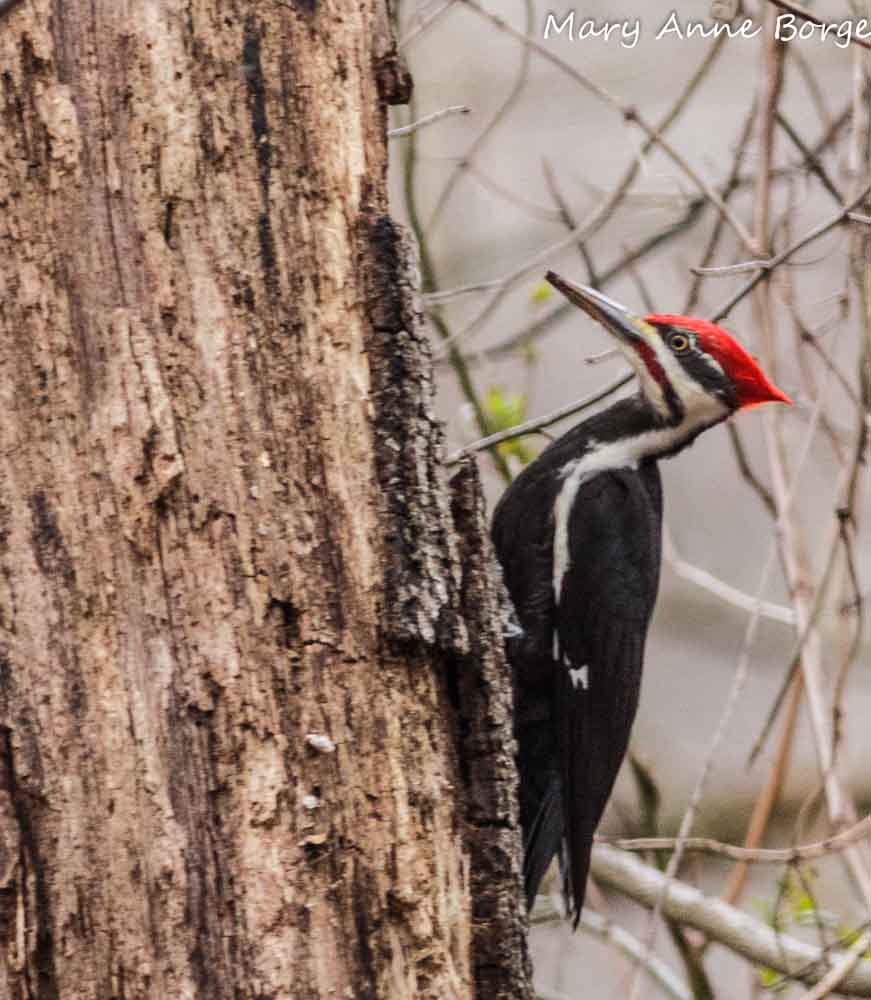
Pileated Woodpecker feeding on insects in dead tree

Pileated Woodpecker feeding on insects in dead tree

In the photo below a Pileated Woodpecker is peeking out from his nest hole. Can you tell what type of tree this is?
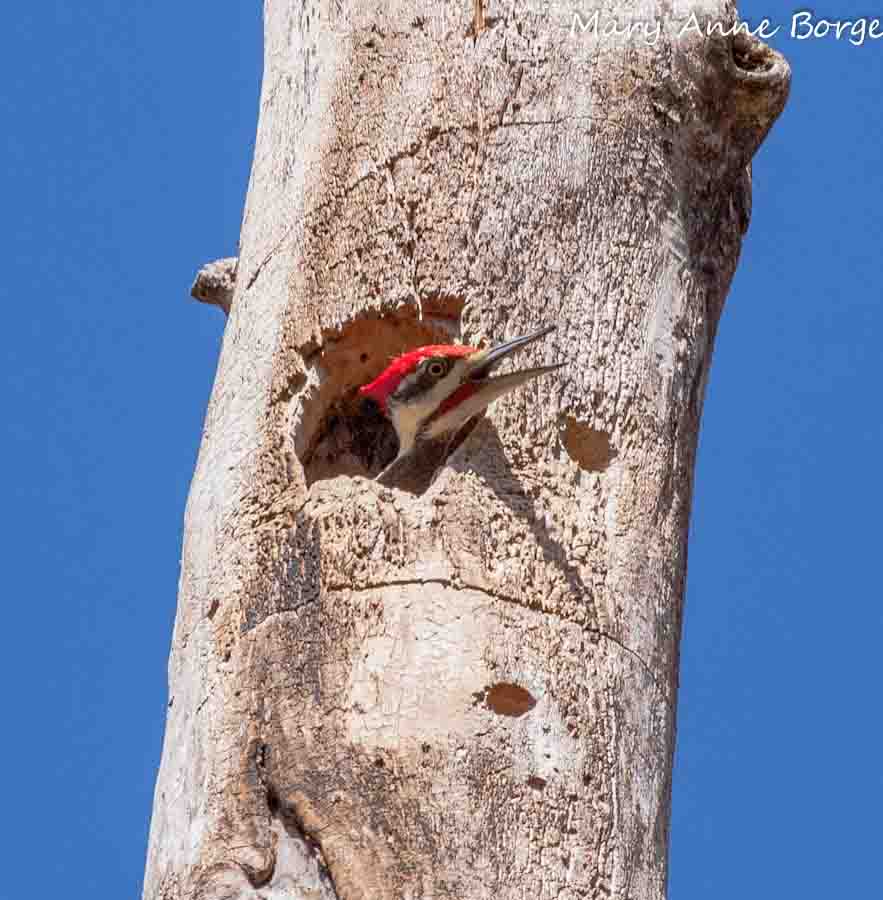
Pileated Woodpecker looking out of nest hole

Pileated Woodpecker looking out of nest hole

If you said ‘dead’, you’re correct! In addition to providing a bountiful source of insect protein, dead wood offers real estate for homes for many birds, including Downy, Hairy, and Red-bellied Woodpeckers, and Flickers. Even Chickadees excavate holes in very soft, rotting wood for their nests. Titmice, White- and Red-breasted Nuthatches, Carolina and House Wrens all nest in holes in dead or living trees, sometimes using abandoned woodpecker holes. All of these birds also forage for insect protein, a bounty of which is available in or on dead wood.
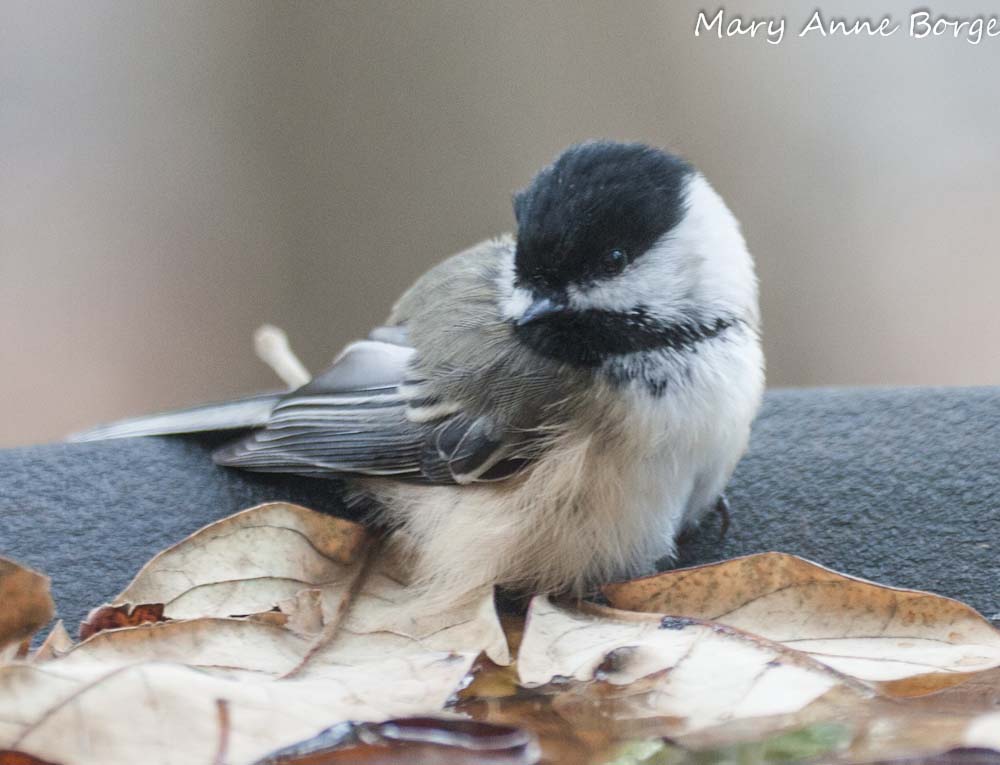
Carolina Chickadee

Carolina Chickadee

Eastern Gray Squirrels are among the small mammals that may make their homes in hollows in dead or living wood. Their diet depends heavily on tree nuts, but it also includes insects and fungi, as does that of Eastern Chipmunks.
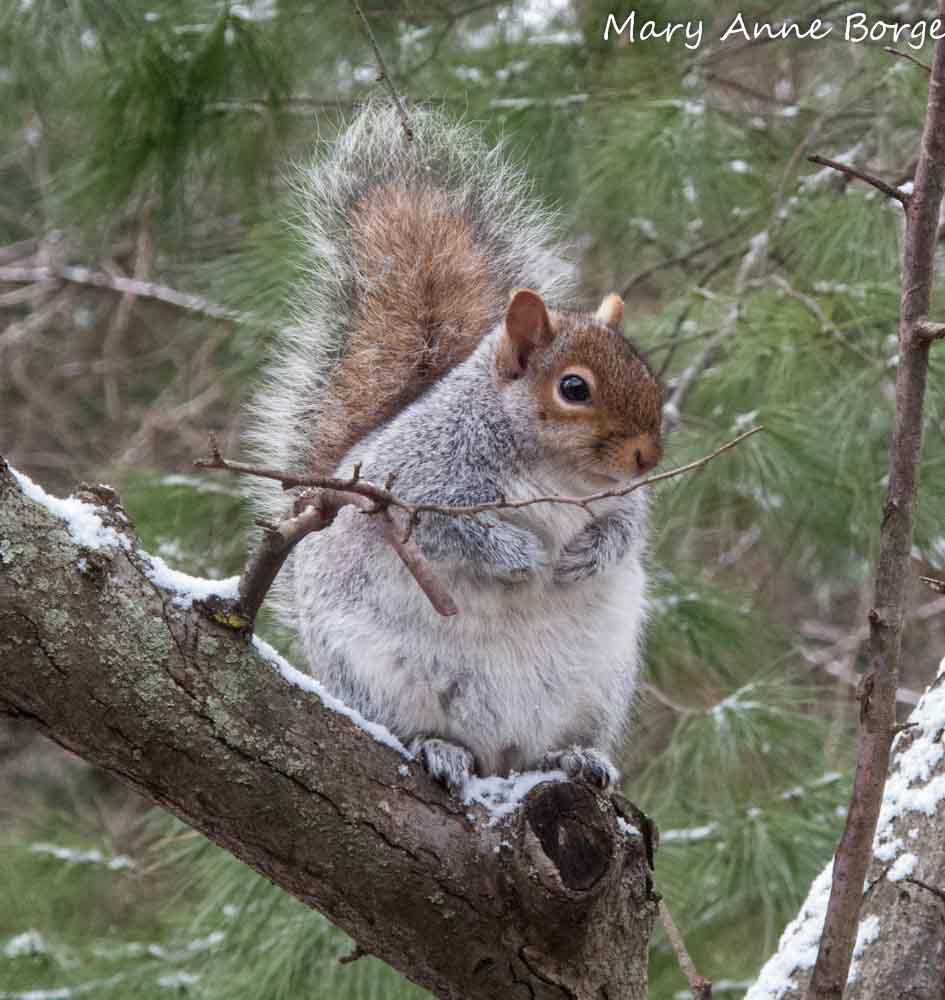
Eastern Gray Squirrel

Eastern Gray Squirrel

Chipmunks often dig underground burrows, but they also use tree cavities for shelter. Larger mammals, like Red Fox or even Black Bear may use fallen or hollowed out trees as a shelter.
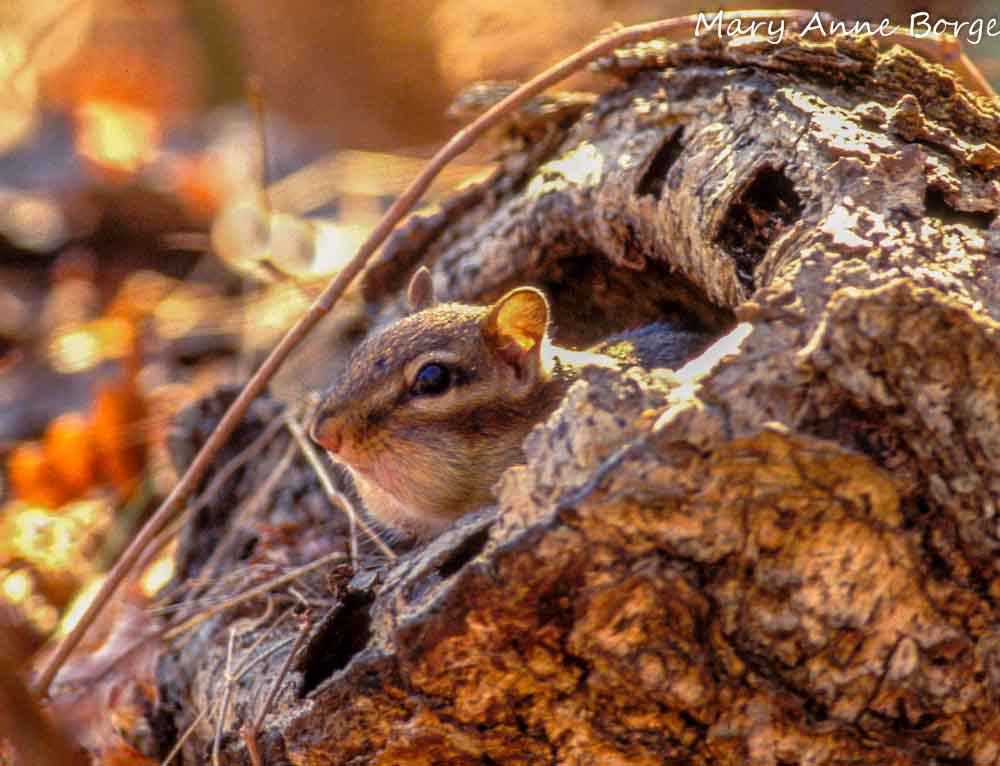
Eastern Chipmunk peeking out of tree stump

Eastern Chipmunk peeking out of tree stump

The chipmunks and squirrels may become a meal for a Red Fox …
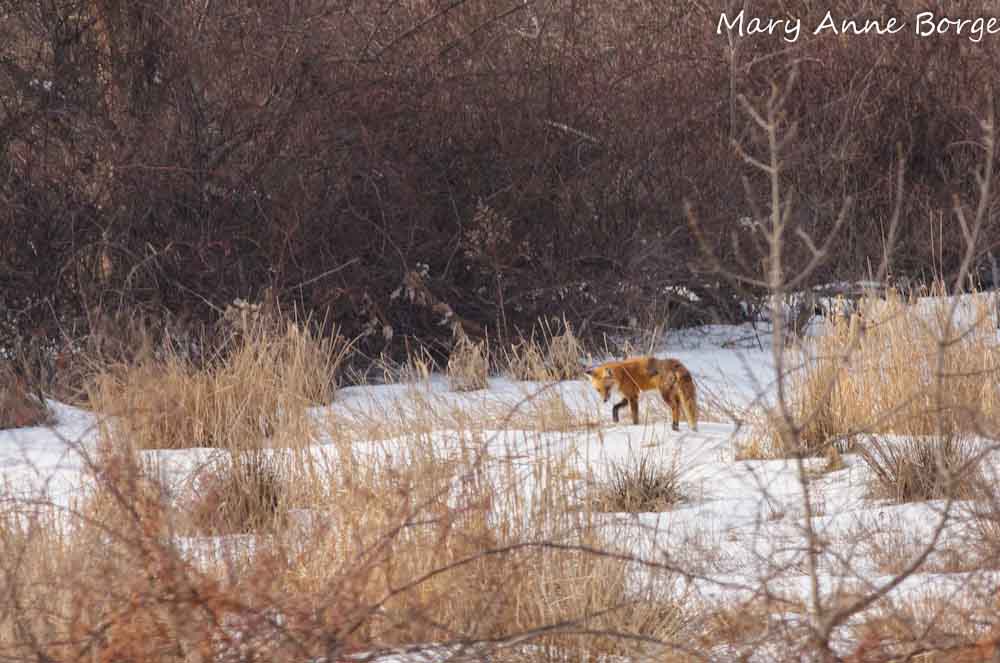
Red Fox, hunting

Red Fox, hunting

or a Red-tailed Hawk …
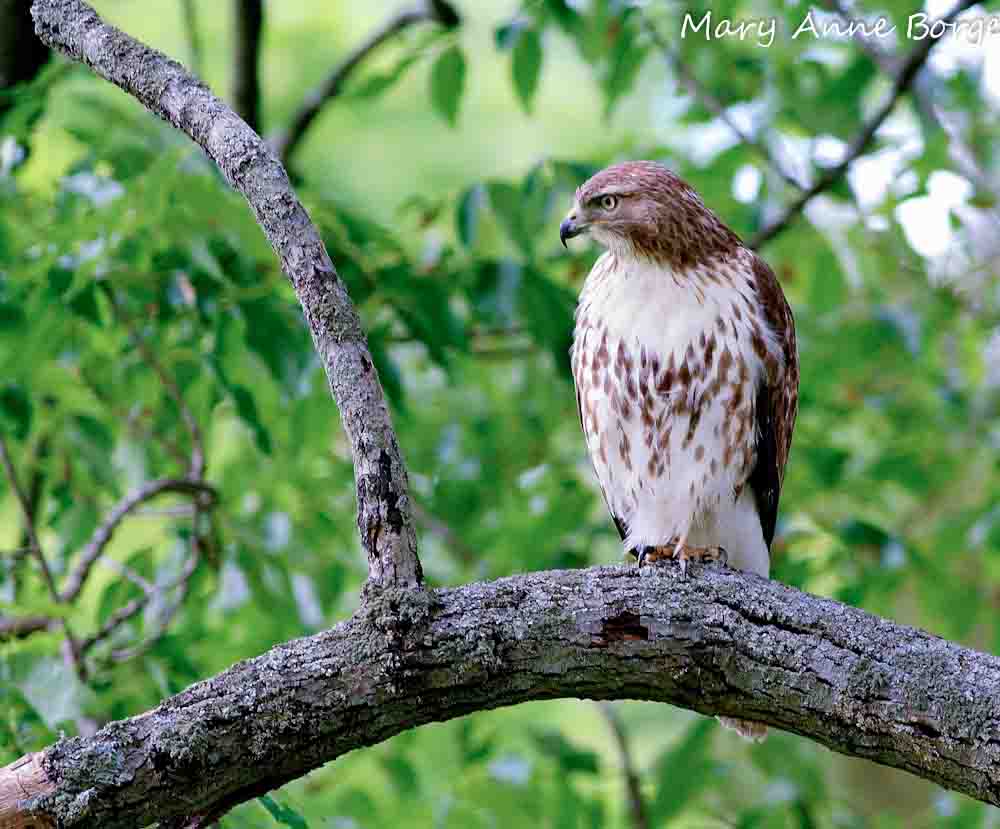
Red-Tailed Hawk

Red-Tailed Hawk

… or a Great Horned Owl. Dead broken trees, called snags, are a favorite nesting place for these large predators.
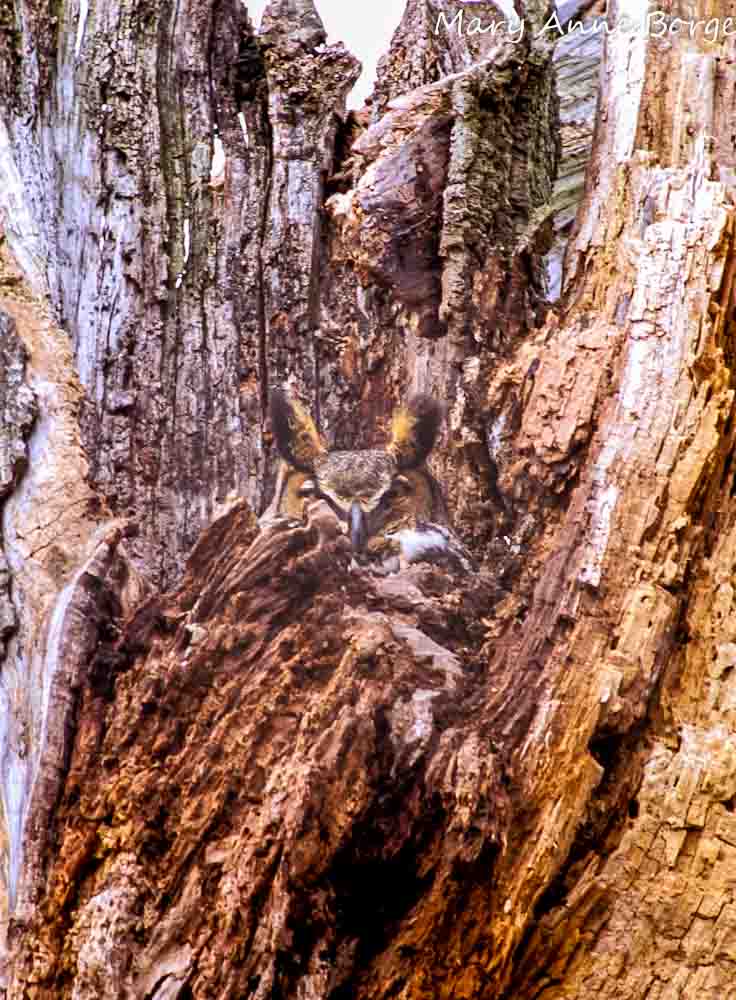
Great Horned Owl in snag

Great Horned Owl in snag

All of this activity contributes to the breakdown and decomposition of the wood, which provides valuable nutrients to the soil. This makes a new generation of plants possible, keeping the cycle of life going.
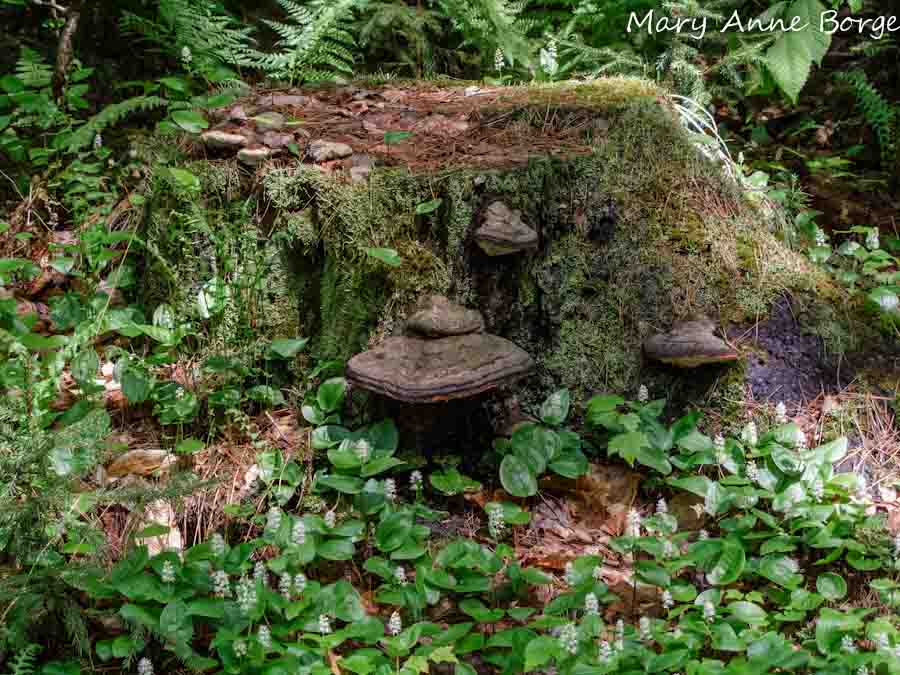
Tree stump with mushrooms, mosses, ferns and Canada Mayflower (Maianthemum canadense)

Tree stump with mushrooms, mosses, ferns and Canada Mayflower (Maianthemum canadense)

Dead wood provides shelter and food for insects and other arthropods, birds, and large and small mammals, including people. With the assistance of all of the inhabitants who avail themselves of these services, dead wood gradually breaks down, enhancing the soil for a new generation of plants.

Dead wood also helps to divert and slow the flow of water in heavy rainstorms, allowing the water to slowly penetrate into the soil where it falls, rather than rapidly running off into creeks, rivers, streams and storm sewer systems, contributing to flash flooding along the way.

So, what do you think, should we ‘get rid of the dead wood’?

Resources:

http://www.carnegiemnh.org/mollusks/palandsnails/ecology-diet.html

http://bugguide.net/node/view/5345

Cech, Rick; Tudor, Guy. Butterflies of the East Coast. 2005.

Eastman, John. Birds of Forest, Yard, & Thicket. 1997.

Eiseman, Charley; Charney, Noah. Tracks & Sign of Insects and Other Invertebrates. 2010.

Elbroch, Mark; Rinehart, Kurt. Behavior of North American Mammals. 2011.

Eaton, Eric R.; Kauffman, Ken. Kaufman Field Guide to Insects of North America. 2007.

Harrison, Hal H. Eastern Birds’ Nests. 1975

Mader, Eric; Shepherd, Matthew; Vaughan, Mace; Black, Scott Hoffman; LeBuhn, Gretchen. Attracting Native Pollinators: Protecting North America’s Bees and Butterflies. 2011.
Asters Yield A Treasure Trove!

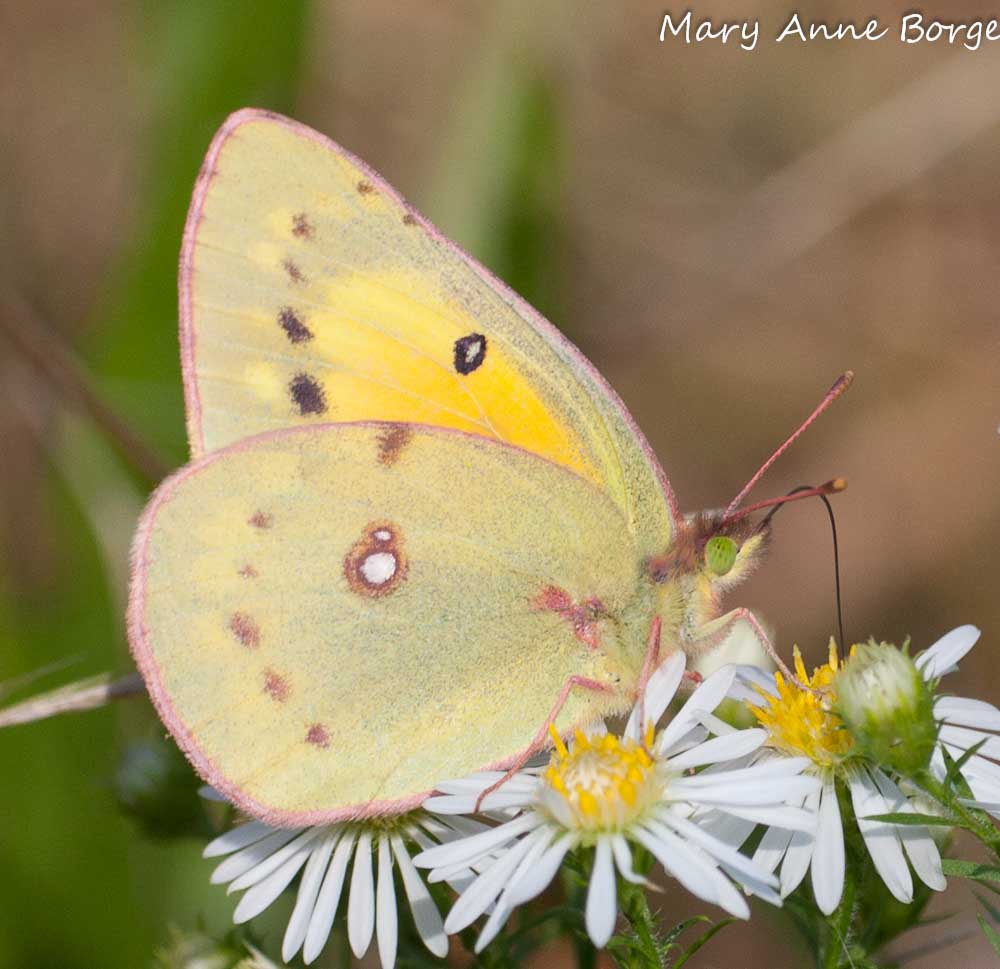
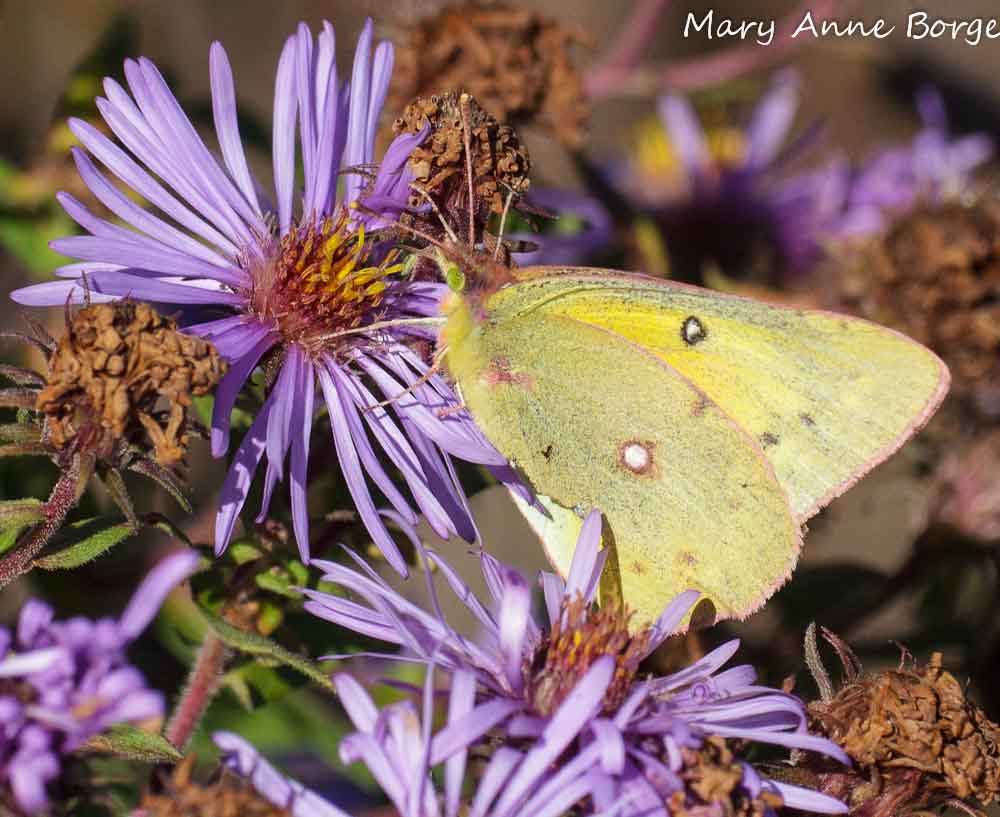
Orange Sulphur on New England Aster (Symphyotrichum novae-angliae)

Orange Sulphur on New England Aster (Symphyotrichum novae-angliae)

A few days ago the weather was beautiful, with temperatures in the mid-60s, cloudless blue skies and a bit of a breeze, so we went for a walk at a wildlife management area in West Amwell, New Jersey.  We were looking for birds, fall fruit and foliage, and any other interesting critters that happened to present themselves.

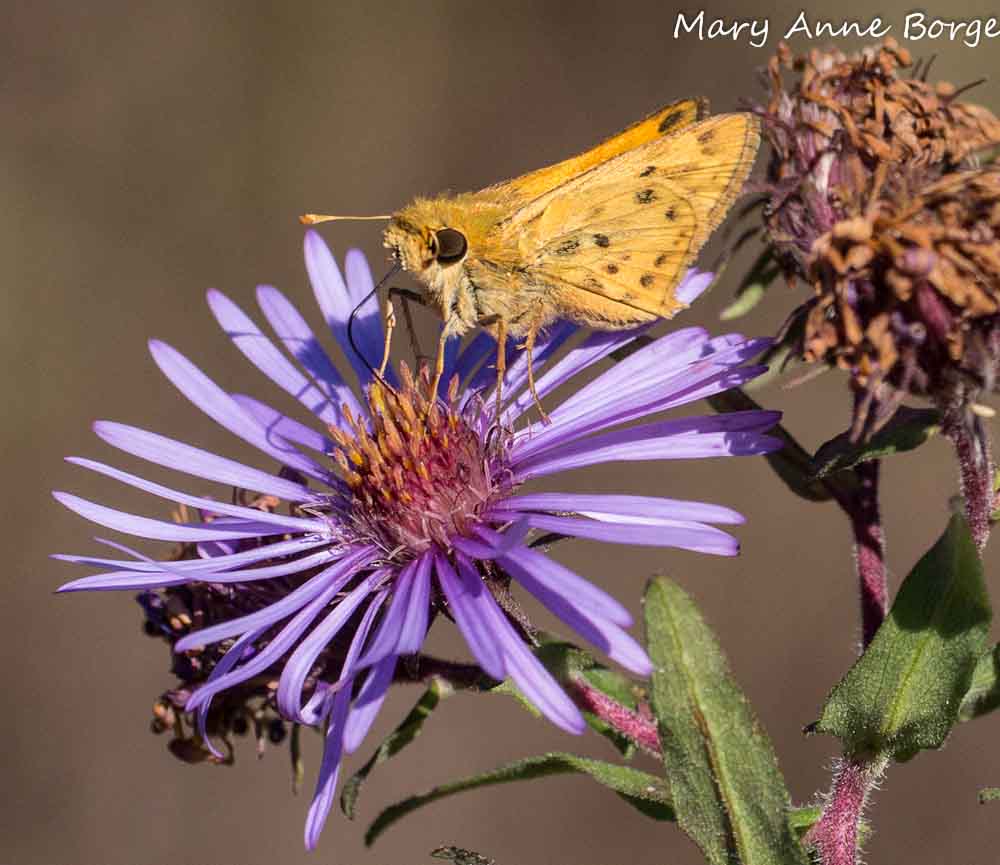
We didn’t expect to see a lot in the way of butterflies because of the cool temperatures, and because it’s so late in the season.  We didn’t see many butterflies, but those we did see were pretty spectacular.  Orange Sulphurs were out and about, which was to be expected, since they are among the species that stay active as late as November in this area.  But the surprises were a Fiery Skipper and an American Snout, both of which are fairly rare in New Jersey, especially in late October.  All were nectaring on various species of asters, or other aster family members, the goldenrods.

American Snout

American Snout

Fiery Skipper on New England Aster (Symphyotrichum novae-angliae)

Fiery Skipper on New England Aster (Symphyotrichum novae-angliae)

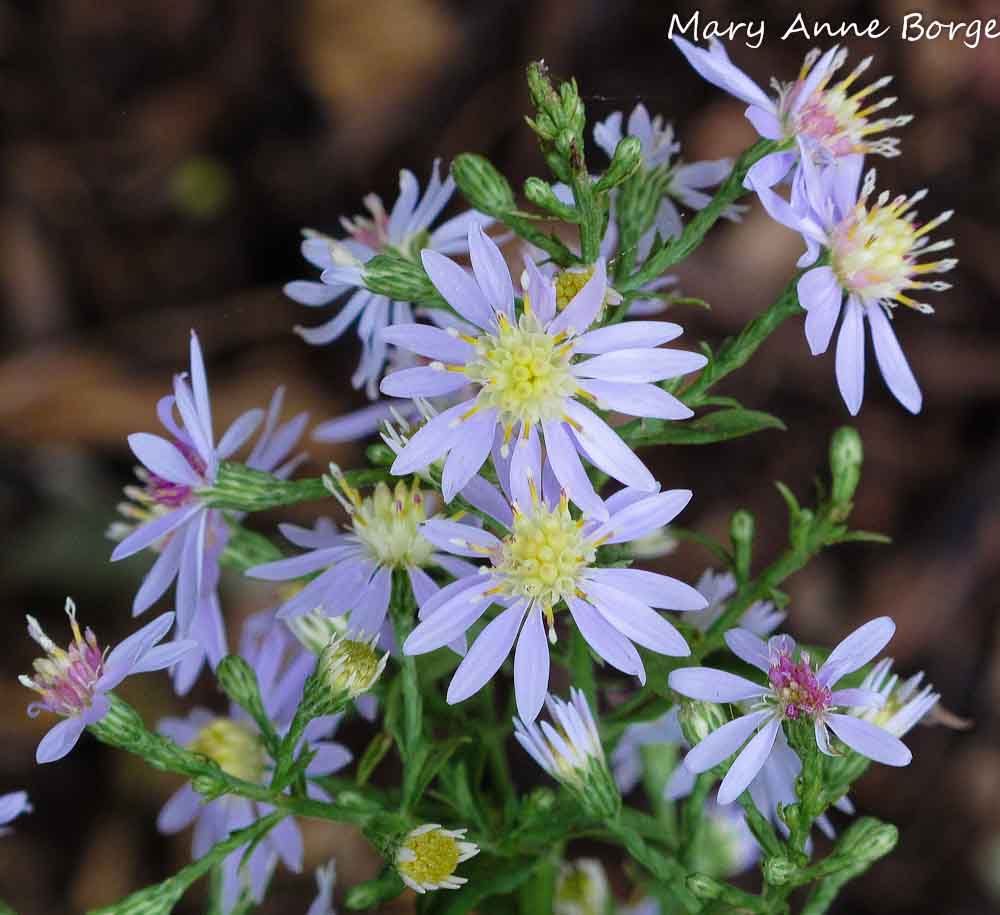
Asters family members are the primary source of food for late season pollinators.  They are prolific in their long bloom period, often continuing into November.  Their flowering structure reflects a very clever strategy, and suggests this plant family’s alternate name, ‘composite’.  What looks to us like a single flower is actually a cluster of tiny flowers, potentially of two different types, ray flowers and disk flowers.

Blue Wood Aster (Symphyotrichum cordifolium)

Blue Wood Aster (Symphyotrichum cordifolium)

The photograph above of Blue Wood Aster (Symphyotrichum cordifolium) shows the classic flower heads of the Aster family:  a circle of ray flowers that look like petals, pale blue in this species, surrounding a cluster of tiny tubular disk flowers in the center of the head.  If you look carefully at the disk flowers in this photo, you can see that the outer rows are open and blooming, while those in the center of the cluster are still in bud.  This gradual bloom habit supports a long period of flowering, offering nectar to fall pollinators for many weeks.  The disk flowers of this plant are a pale yellow in bud and when they first open, then turning pink or magenta as they age.  This color change is thought to be a signal to pollinators, directing them to the receptive yellow flowers which are not yet pollinated and that will reward them with nectar, and steering them away from those blossoms that are already satisfactorily pollinated.  (Plants are so clever!)  Notice the pink and magenta disk flowers in some of the flower heads in this photo.

As soon as the temperature gets into the low 50s on these crisp late October mornings, the Bumble Bees begin foraging on billowing clouds of luminous Blue Wood Asters outside my windows, soon joined by other tiny bees and flies.  Large dense clusters of bright pale blue flowers top the heart-leaved covered stalks of this woodland beauty.  The shape of the leaves is reflected in the species name, cordifolium, and also gives this plant another commonly used name, Heart-leaved Aster.  Pair Blue Wood Aster with White Wood Aster (Eurybia divaricata) and Wreath (Bluestem) Goldenrod (Solidago caesia) or Zigzag Goldenrod (Solidago flexicaulis) for a spectacular late season shade garden display.

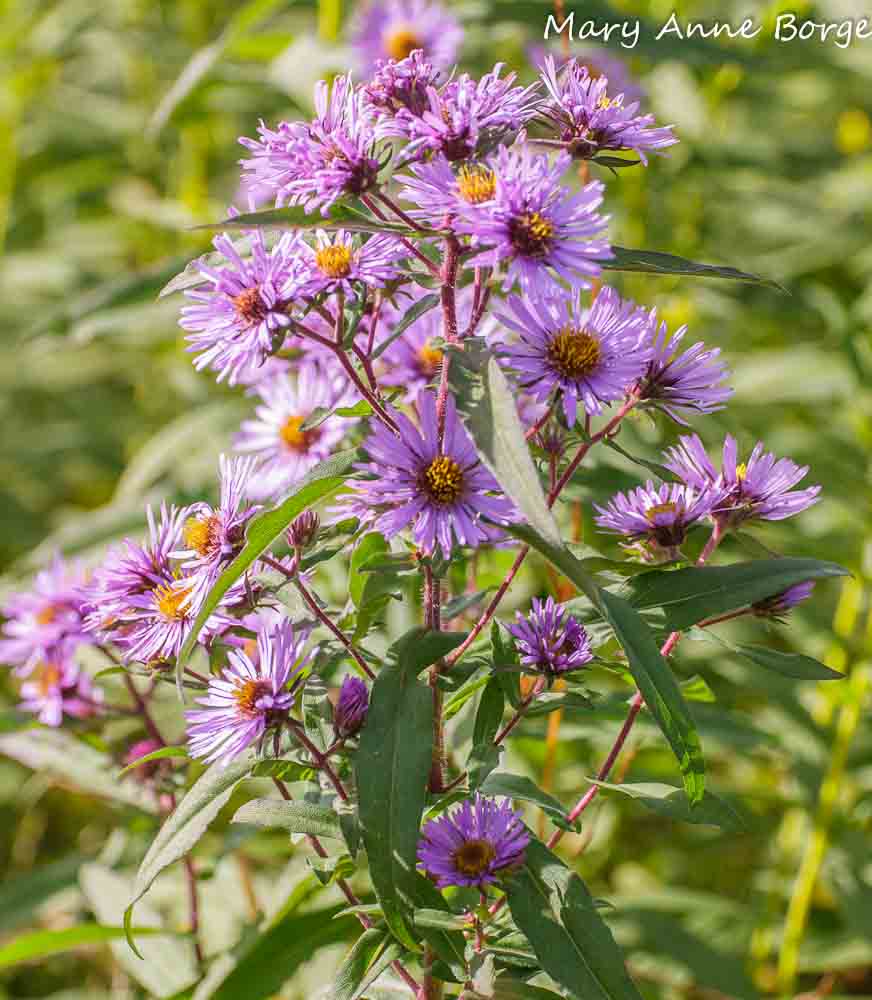
New England Aster (Symphyotrichum novae-angliae)

New England Aster (Symphyotrichum novae-angliae)

Favorites for a sunny garden or meadow include New England Aster (Symphyotrichum novae-angliae), which is also seen blooming in many spots along roadsides, and Aromatic Aster (Symphyotrichum oblongifolium), whose intense blue flowers are irresistible to insects and humans alike.

Following are more asters and their visitors.  You never know what treasures asters will yield!

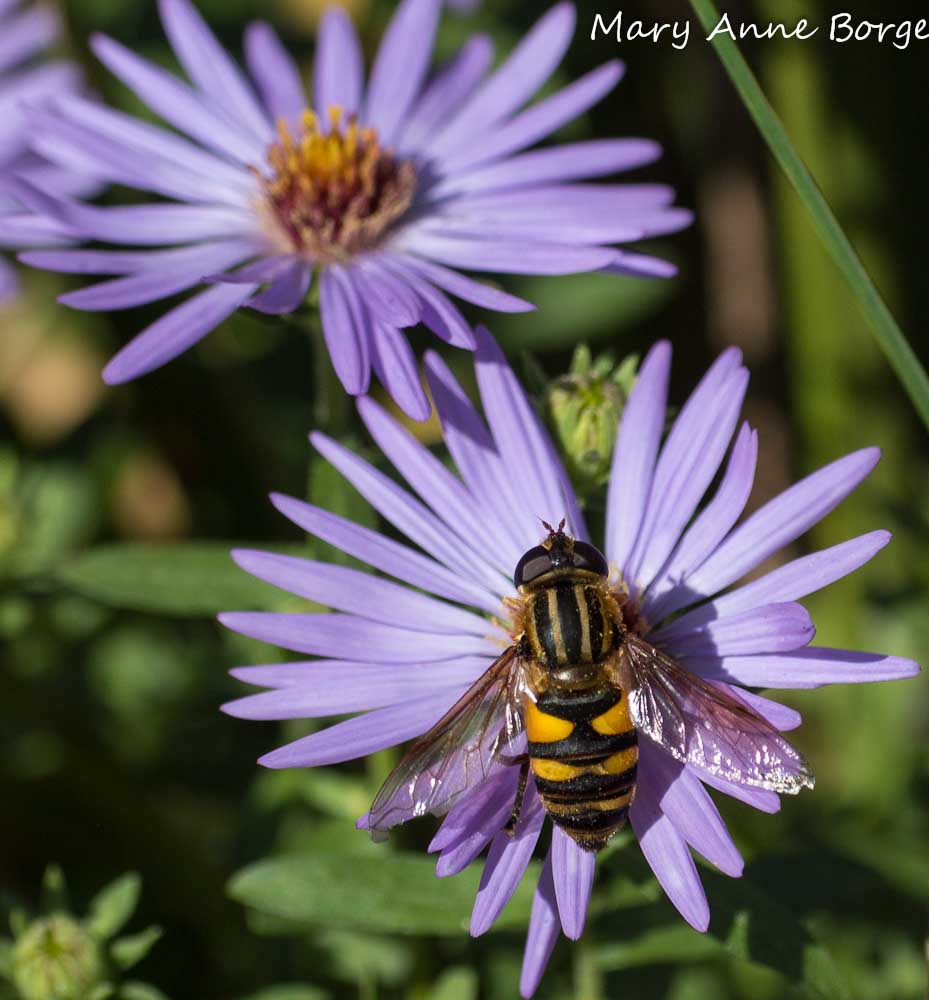
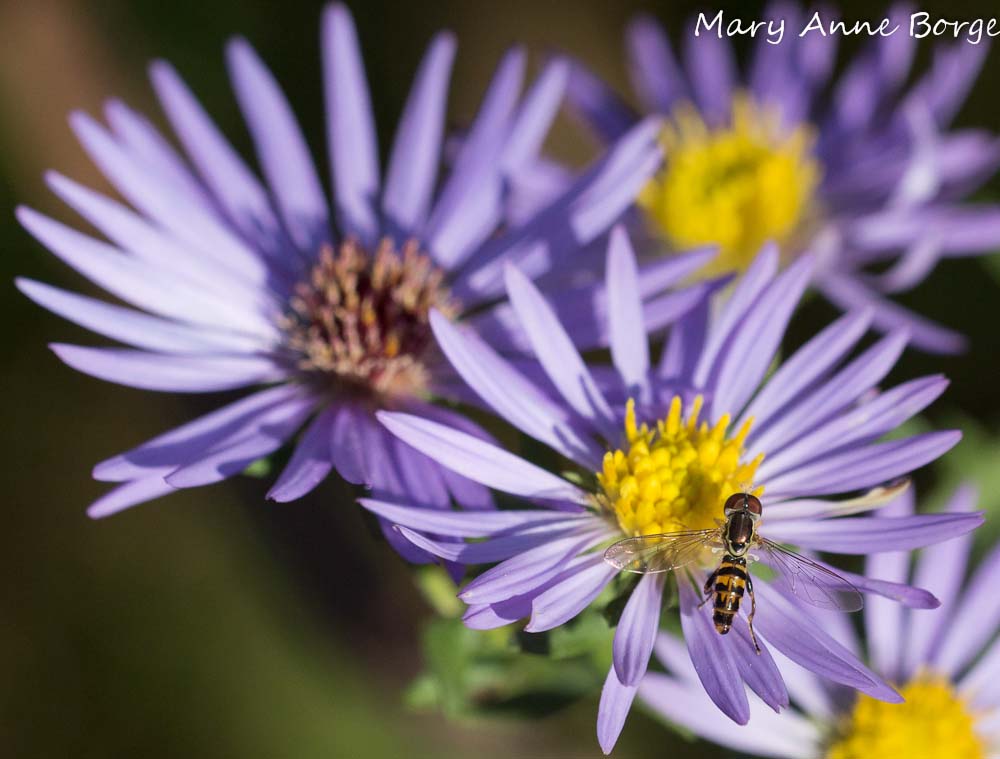
Flower or Hover Fly, Helophilus sp, on Aromatic Aster (Symphyotrichum oblongifolium)

Flower or Hover Fly, Helophilus sp, on Aromatic Aster (Symphyotrichum oblongifolium)

Orange Sulphur on Aromatic Aster (Symphyotrichum oblongifolium)

Orange Sulphur on Aromatic Aster (Symphyotrichum oblongifolium)

Orange Sulphur on Awl Aster (Symphyotrichum pilosum)

Orange Sulphur on Awl Aster (Symphyotrichum pilosum)

Hover or Flower Fly, likely Toxomerus geminatus, on Aromatic Aster (Symphyotrichum oblongifolium)

Hover or Flower Fly, likely Toxomerus geminatus, on Aromatic Aster (Symphyotrichum oblongifolium)

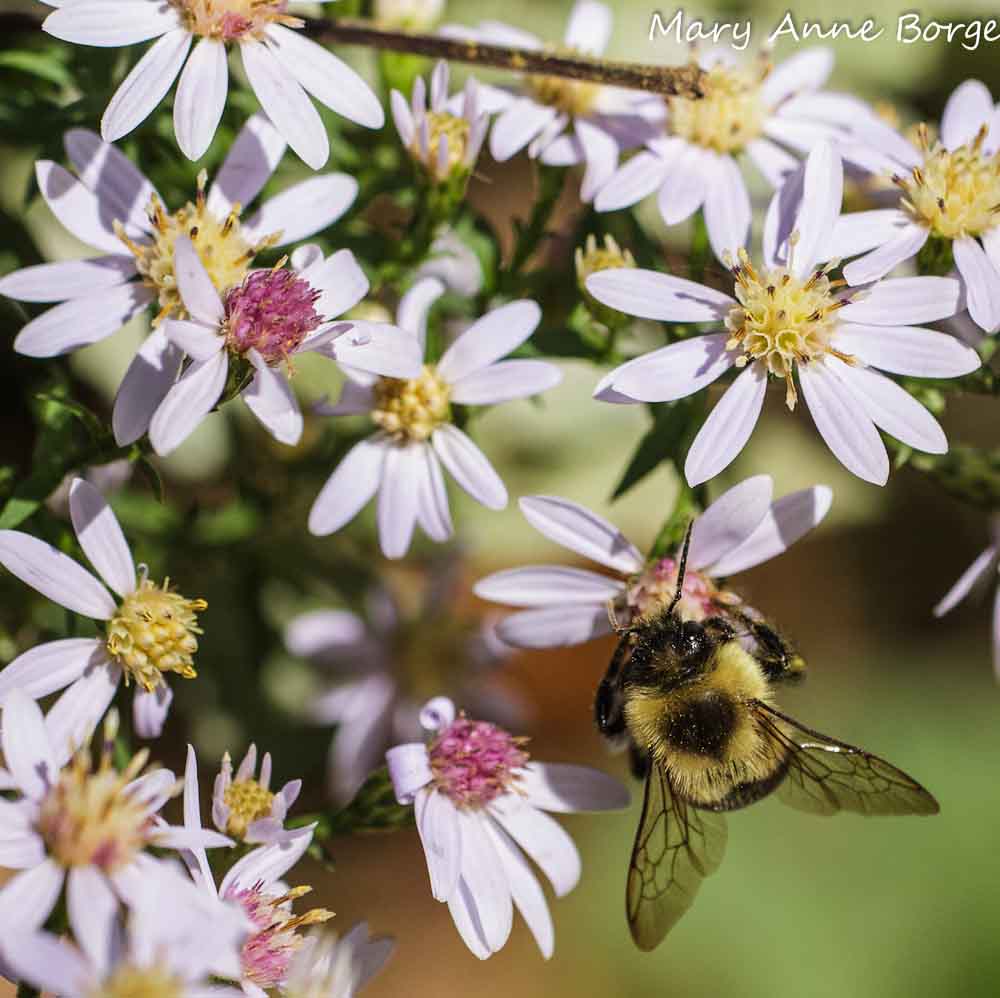
Blue Wood Aster (Symphyotrichum cordifolium) with Bumble Bee

Blue Wood Aster (Symphyotrichum cordifolium) with Bumble Bee

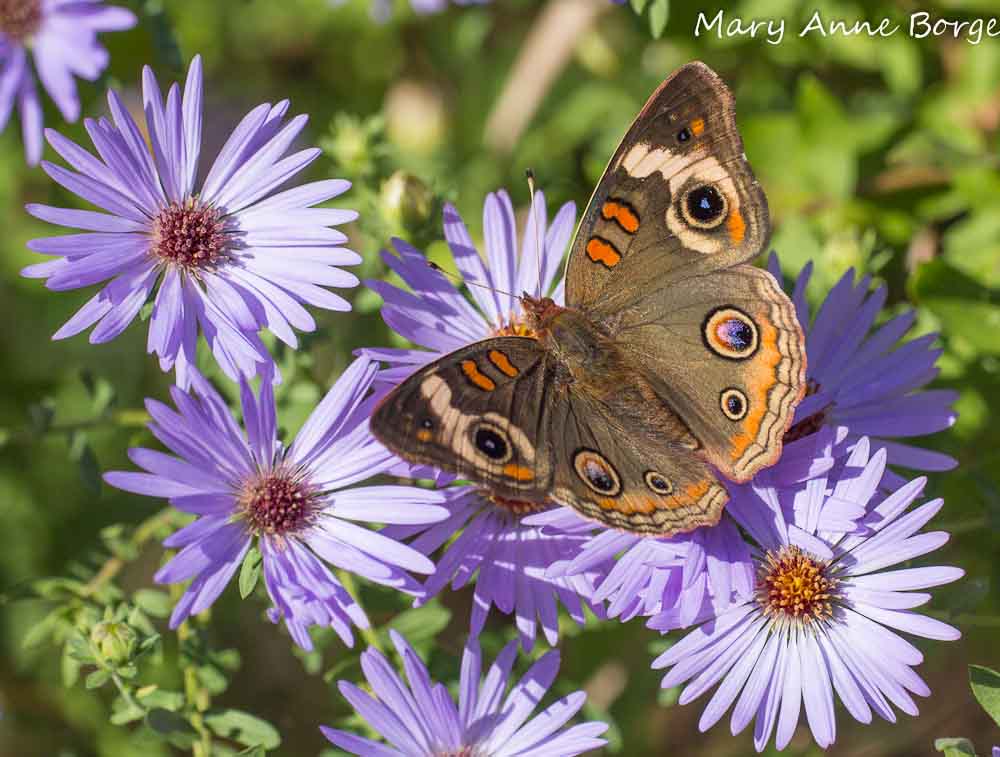
Aromatic Aster (Symphyotrichum oblongifolium) with Common Buckeye

Aromatic Aster (Symphyotrichum oblongifolium) with Common Buckeye

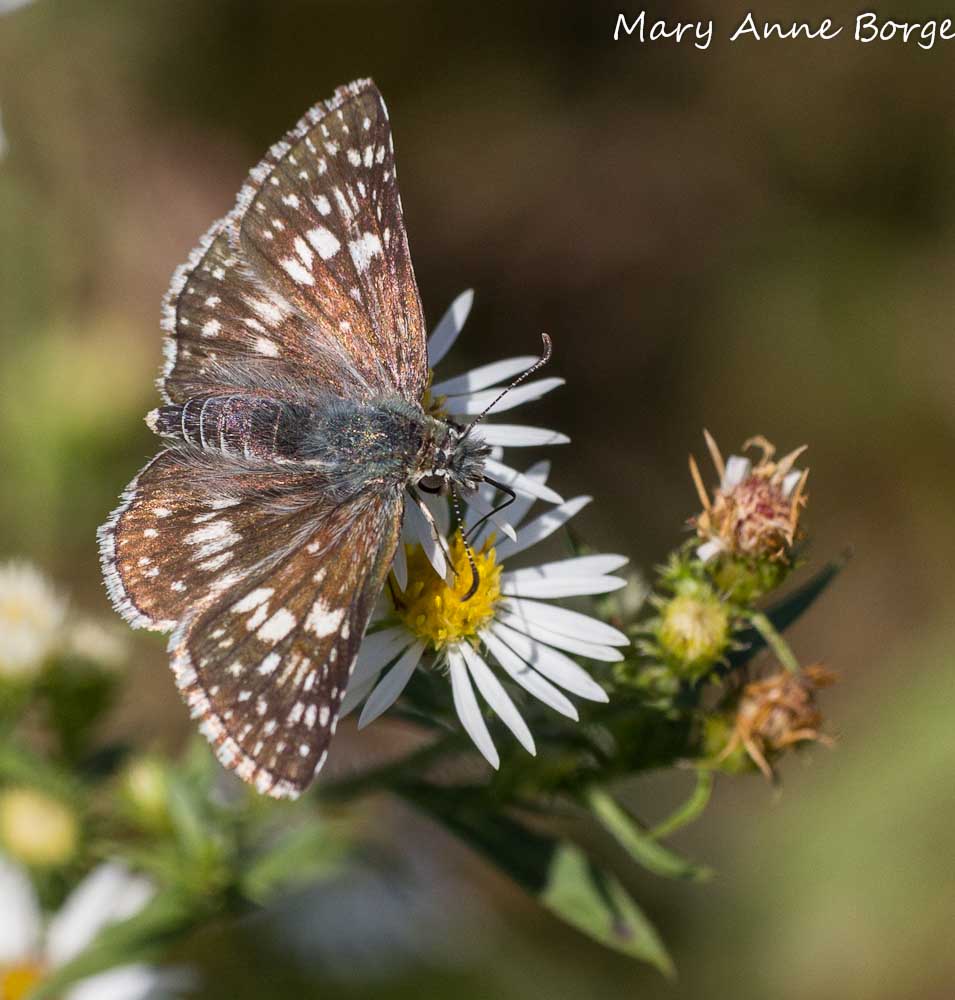
Common Checkered Skipper on Aster

Common Checkered Skipper on Aster

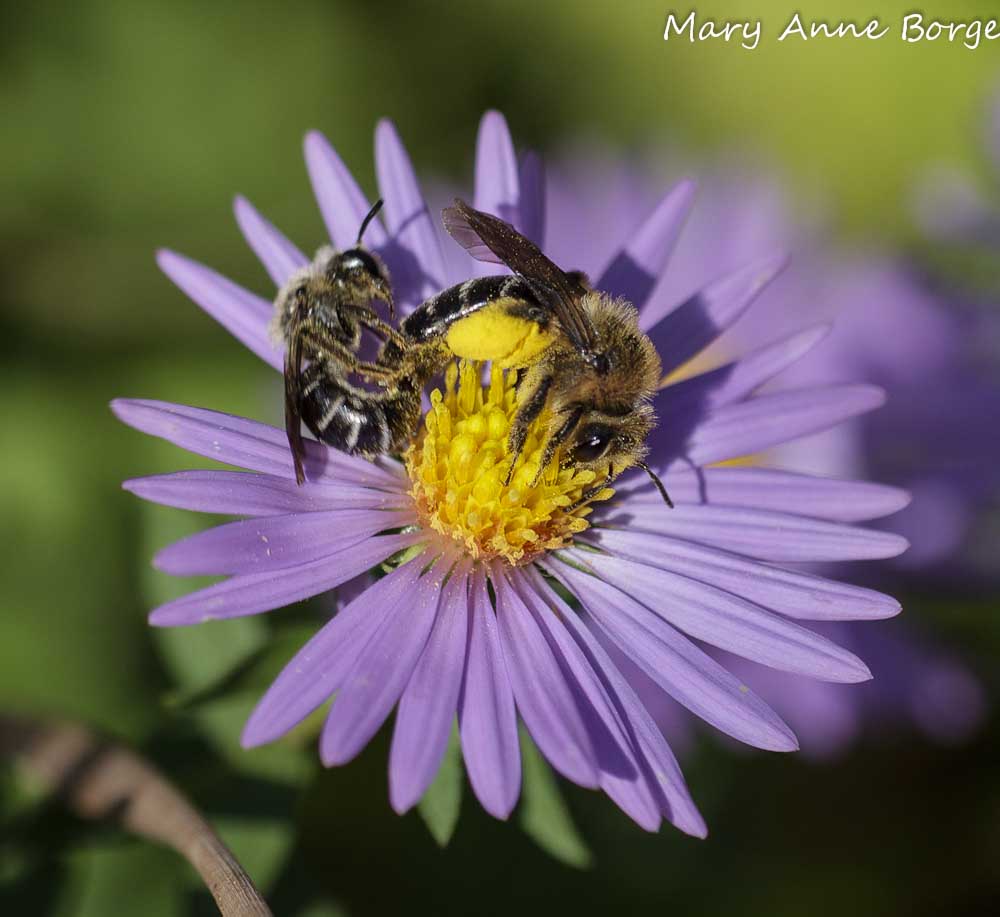
Mating Bees on Aromatic Aster (Symphyotrichum oblongifolium)

Mating Bees on Aromatic Aster (Symphyotrichum oblongifolium)

Fall allergies? Don’t blame Goldenrod!

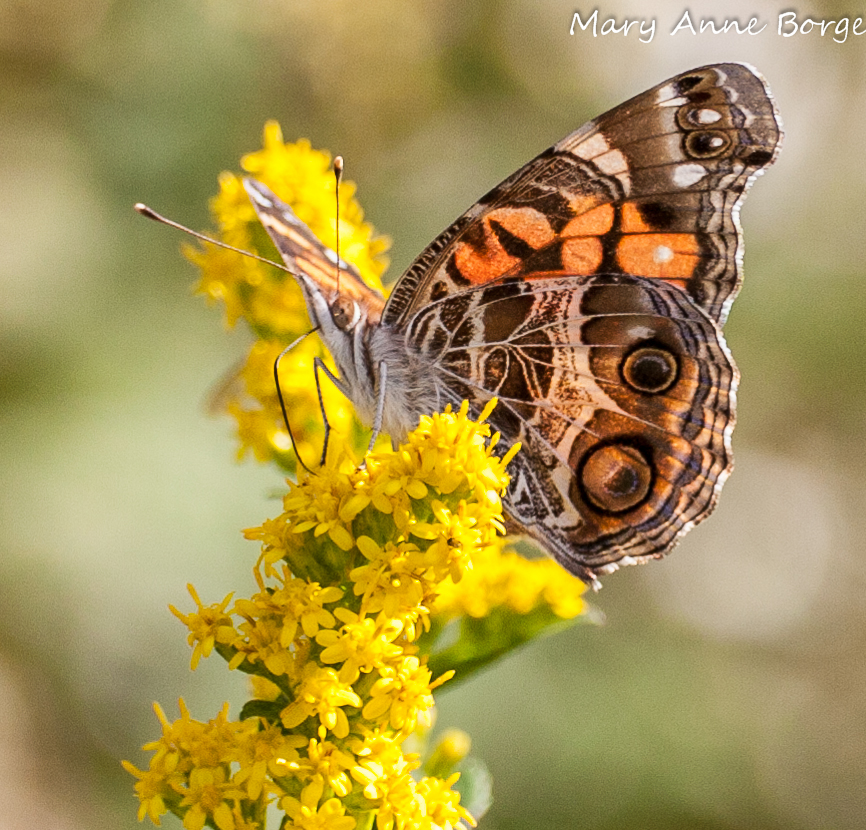
American Lady on Goldenrod

In mid summer and throughout fall, if your eyes start to water and itch and you can’t stop sneezing, you look around for something to blame.  You see fields of bright clusters of tiny yellow flowers belonging to various species of goldenrods, and you think, “Aha!  They must be the culprits!”

If that’s what you think, you would be wrong.

The perpetrator is something far more subtle, something that you could walk right past without really noticing, something with very inconspicuous, greenish flowering parts.  Continue reading

Mountain Mints Are Pollinator Magnets!

To enlarge an image, click on the thumbnail below.

Looking for a deer-resistant pollinator magnet?  Mountain Mints are your answer.

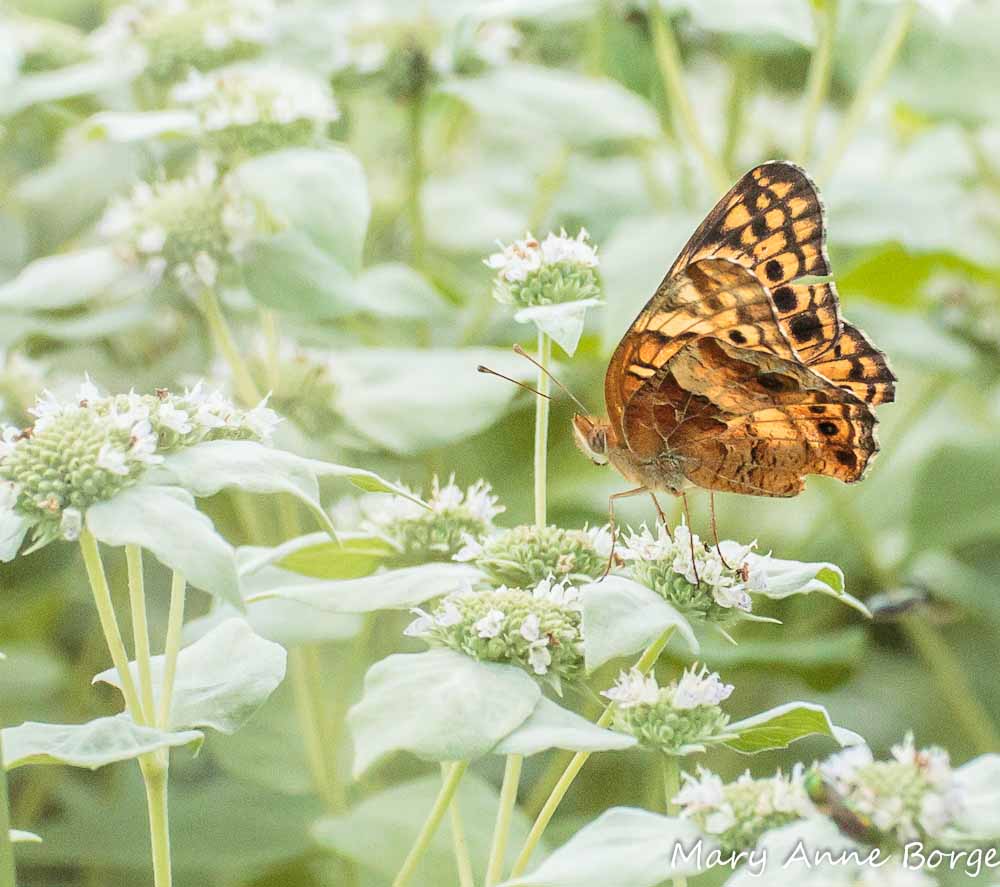
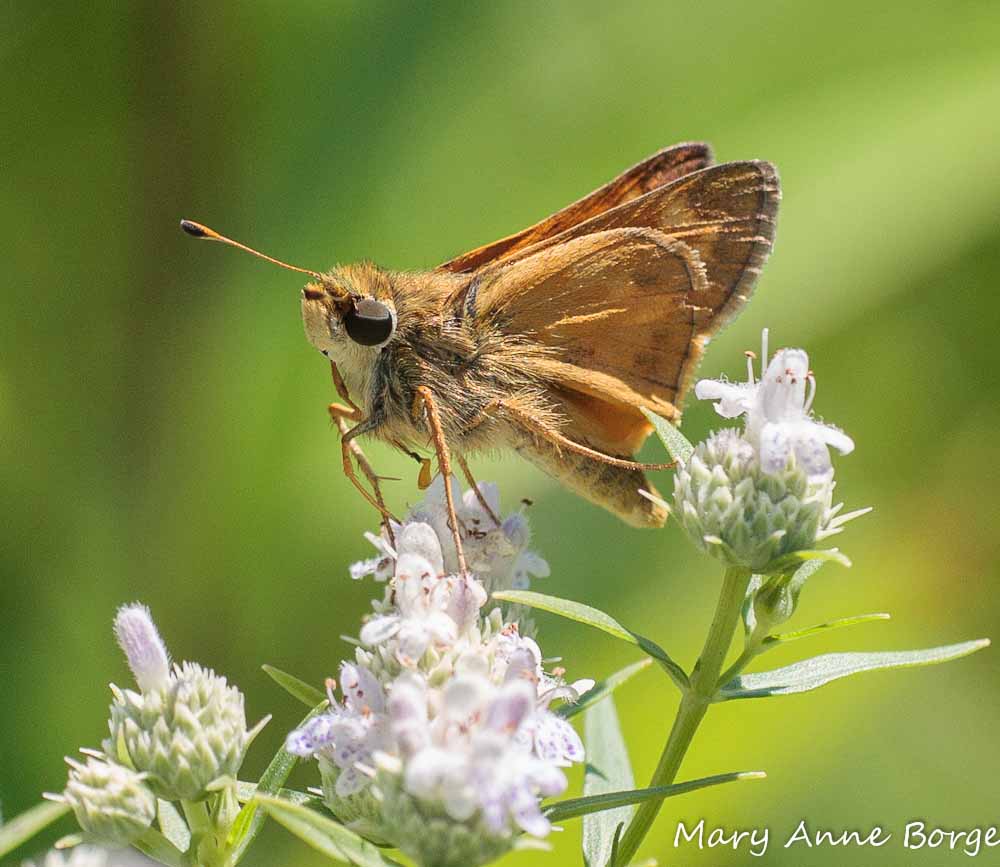
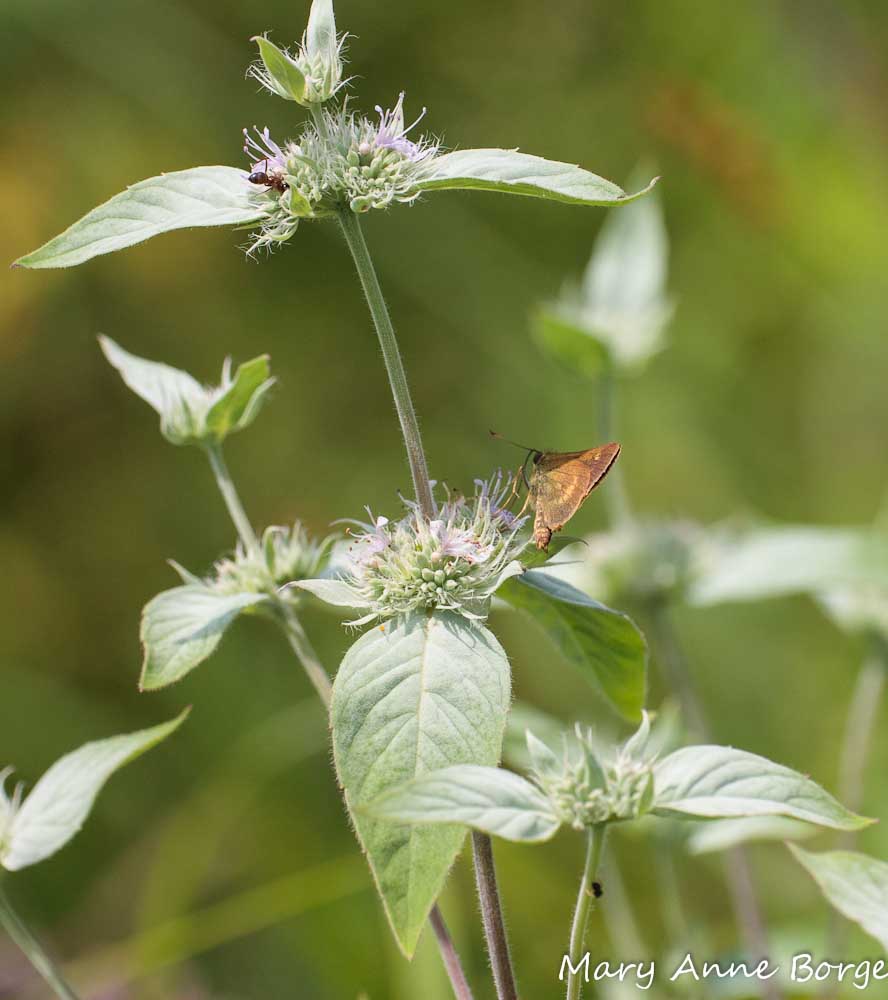
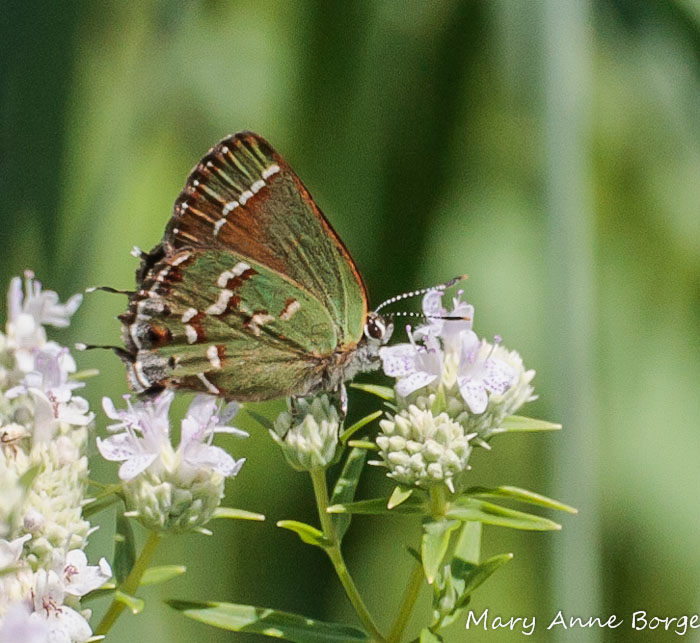
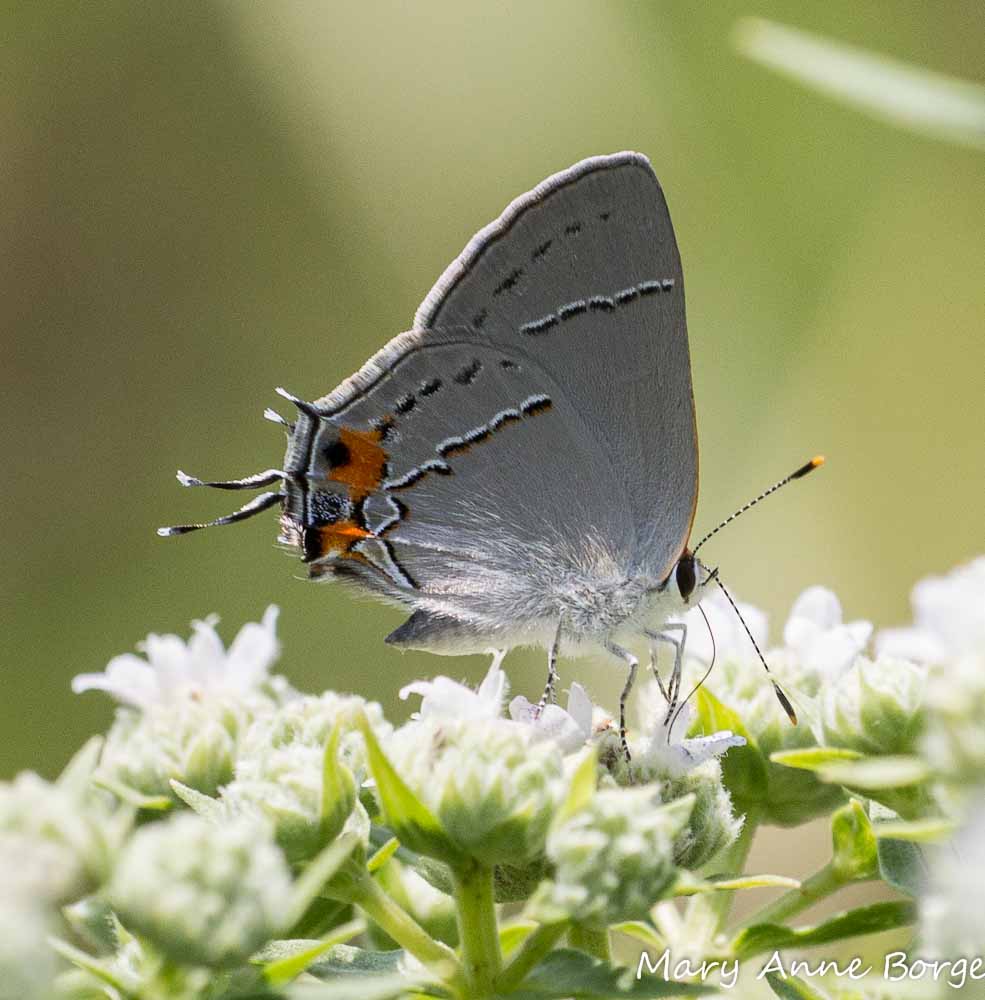
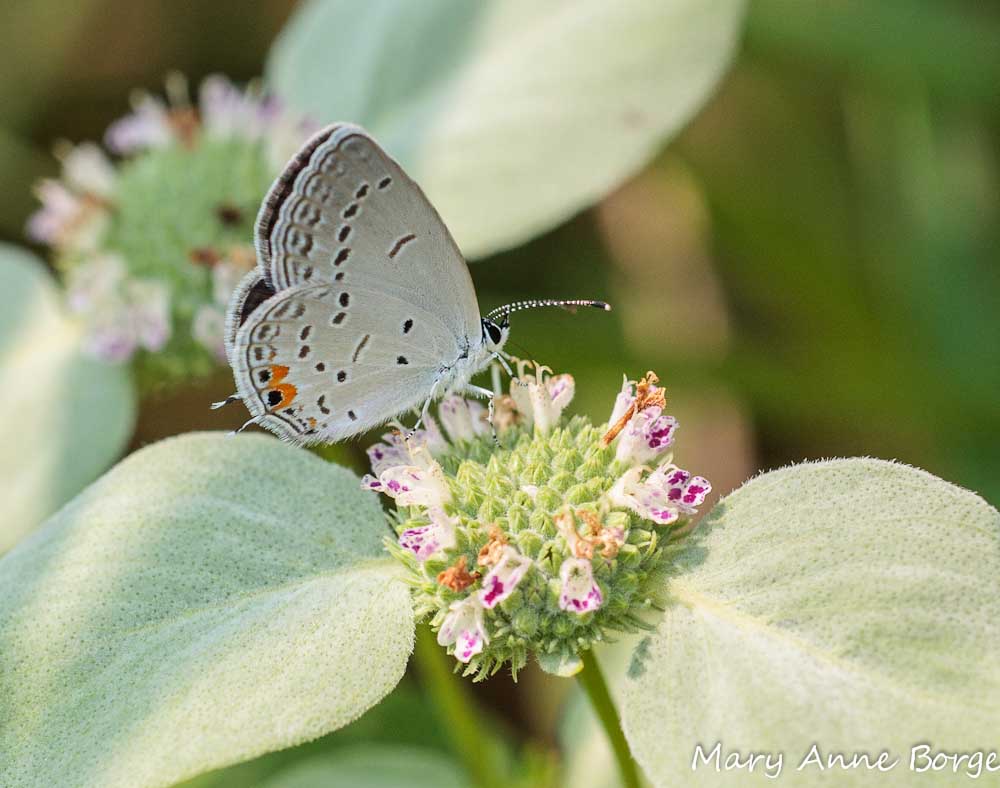
Usually blooming from late June through August, Mountain Mints attract a spectacular assortment of butterflies, bees, moths, and other critters.  These beneficial insects graze amiably together for nectar, since the profusion of tiny blossoms offered by these plants provide enough food for everyone to dine in harmony for many weeks throughout the summer.  From morning until evening Mountain Mints are alive with the dance of pollinators.

There are several species of Mountain Mints, but my favorites are Short-toothed Mountain Mint (Pycnanthemum muticum) and Hoary Mountain Mint (Pycnanthemum incanum).  The genus name, Pycnanthemum, means densely flowered, hinting at the reason that these plants can accommodate so many hungry visitors simultaneously.  The foliage of these two species is as showy as the flowers, enhancing their visual appeal.

Plants are all about surviving and reproducing, and Mountain Mints are among the plant species whose survival strategy is to produce clusters of diminutive flowers, together forming a showy inflorescence, a strategy that has evolved to attract insects as assistants in the pollination process.  Individual flowers in each cluster bloom progressively over many weeks, increasing each plant’s chances for successful reproduction.  This works out really well for their pollinator partners, who are looking for a continuing reliable source of food.

Short-toothed Mountain Mint grows to a maximum height of about three feet, topped with round heads of tiny white flowers smudged with bright magenta.  The plants are truly ‘densely flowered’.  A soft velvety bed of pale blue-green foliage frames the blossoms.  Rub or crush the leaves and you’ll be rewarded with a scent that confirms that this is a mint family member.  Short-toothed Mountain Mint can tolerate part shade to full sun, and likes moist but well-drained, average soil.

Hoary Mountain Mint, as the name implies, has foliage very similar to Short-toothed Mountain Mint, with the leaves just below the flower heads looking as if they had been lightly but evenly dusted with powdered sugar.  Each delicate flower is white with a sprinkling of tiny purple spots.  The flowers grow in rounded heads much like Short-toothed Mountain Mint, but the blossoms are somewhat larger, growing in multiple tiers on each stem. The branching habit is open and graceful, showing off the layers of flowers, and providing easy access to their many visitors.  This species grows to a height of 2-4 feet, prefers sun, and average to dry soil.

Virginia (Pycnanthemum virginianum) and Narrow-leaved (Pycnanthemum tenuifolium) Mountain Mints are also good garden candidates.  Narrow-leaved Mountain Mint grows to a height of 1-3 feet, while Virginia may achieve a slightly taller stature, depending on growing conditions.

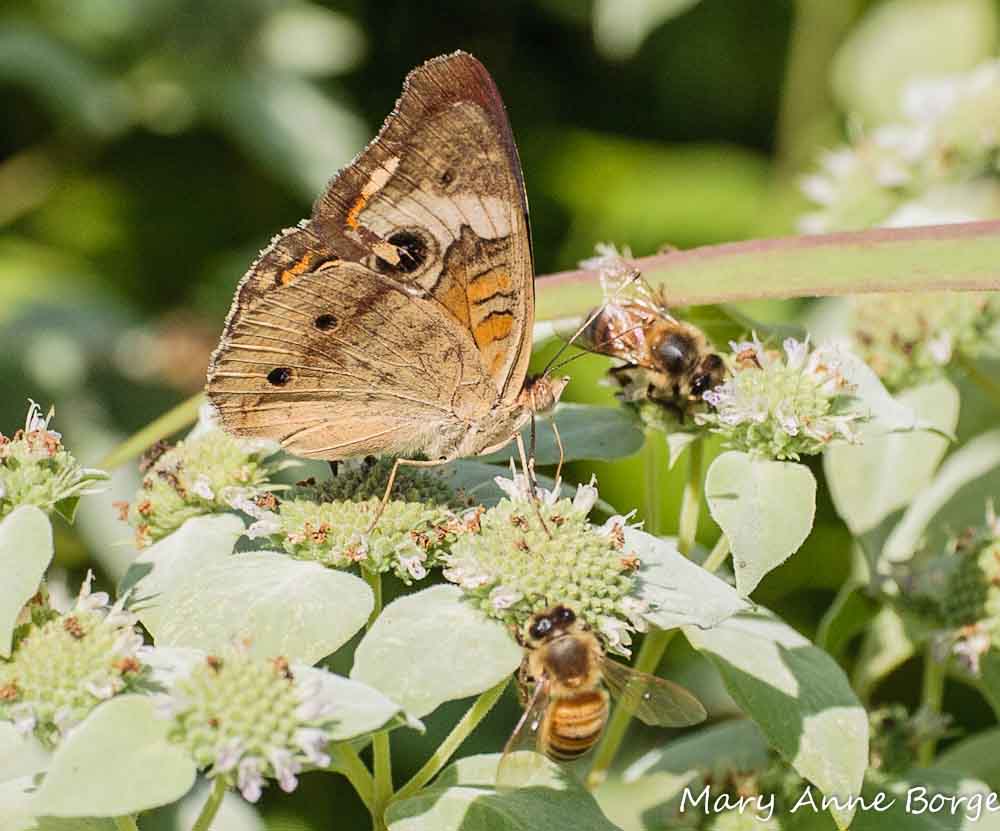
The seemingly endless supply of nectar makes Mountain Mints a great option for attracting butterflies.  Short-toothed, Narrow-leaved and Virginia Mountain Mints all attract small to medium-size butterflies;  expect to see hairstreaks, blues, Common Buckeyes, ladies and smaller fritillaries.  Hoary Mountain Mint flowers are large enough to also accommodate larger butterflies, like some of the swallowtails.

If you have a vegetable garden, you might consider planting some Mountain Mint nearby.  Good nectar producing plants like these attract many bee species that will help increase your garden’s yield.

Because of their strongly fragrant foliage, foraging deer reject Mountain Mints.     In fall the flower heads dry to a dramatic steel gray, and can be an eye-catching addition to a garden in winter.

The Mountain Mints have adapted to thrive in a fairly broad range of weather conditions.  All of these species are native to much of the eastern half of the United States, some as far west as Texas, and as far north as the eastern Canadian Provinces.  In the northeastern U.S., they have been holding their own very well even during this hot, dry summer.  To see if a particular species is native in your area, and for additional Mountain Mint species, check the USDA website:  http://plants.usda.gov/java/profile?symbol=PYCNA

Purple Giant Hyssop

Eastern Tiger Swallowtail with Bumble Bee on Purple Giant Hyssop

Pictured here are an Eastern Tiger Swallowtail and a Bumble Bee, dining together amicably at Purple Giant Hyssop (Agastache scrophulariifolia) flowers.  This graceful plant is quite an attraction to butterflies and other beneficial pollinators, including many species of bees.  They may be seen on a single flower spike drinking contentedly.

Ruby-throated Hummingbirds may also sip nectar from the tiny purple tubular flowers.  Although the individual flowers are tiny, they can still accommodate this thirsty, industrious little bird.

Generally blooming from late July or early August through September, like so many other plants this year Purple Giant Hyssop started blooming many weeks earlier than normal, encouraged by the unusually warm temperatures.  It started blooming in June, and shows no sign of stopping.

Reaching to a height of two to four feet, Purple Giant Hyssop can tolerate part shade to full sun, and prefers a moist soil.  Characteristic of the mint family, this plant has a square stem, and opposite leaves that are fragrant when crushed.

Tiny flowers mass in showy spikes five to six inches long, adorning the candelabra-like plant.  As with other mint family members, blooming takes place out over a long period, since the individual flowers on each spike don’t all open at once.  The flowers open gradually over a period of several weeks, maximizing the plant’s chances of successful pollination, with the assistance of its insect partners.  This long bloom period is good for the pollinators, too, since it offers a continuing supply of food.  Individual flowers on the spike open to a tasteful shade of purple when in bloom, and provide a softer background color when the flower is spent.

If the dry flower spikes are left standing in the garden after the bloom period is finished, you may find that you have an unexpected bonus: a source of food for birds.  Local Chickadees and Goldfinches may seek out the seeds that result from flowers pollinated by the summer visits of butterflies and bees.  Left in the garden, the flower heads will last through the winter, retaining their shape and form.  Purple Giant Hyssop will readily reproduce from seed, so if you prefer that it not spread, deadhead the spent flowers before they produce and release their seeds.

If pale yellow is more your color, there is a close relative, Yellow Giant Hyssop (Agastache nepetoides), with similar characteristics, but pale yellow flowers.

Both Purple and Yellow Giant Hyssop are rated as imperiled species in New Jersey because of their rarity, primarily due to habitat destruction.

Purple Giant Hyssop is easy to grow, and those fragrant leaves make it deer resistant.  It is native in the eastern United States from New Hampshire to Georgia, and as far north and west as Ontario province, Minnesota and North Dakota, and south to Kansas, so it has adapted to the growing conditions in this broad area.

Include this plant in your garden, and enjoy the butterflies, birds and bees that visit.