Warm Enough for Butterflies

Zabulon Skipper – Male

After two and a half days of cool, cloudy weather and some much needed rain, the skies cleared, the temperatures soared, and so did a myriad of butterflies.  They were just waiting for temperatures warm enough to give them the solar power to flit through gardens, meadows and woods.

Doll's Eyes (Actaea pachypoda) in fruit

Doll’s Eyes (Actaea pachypoda) in fruit

I was drawn outside to our garden by the sight of this bright little Zabulon Skipper, catching the sun’s rays as he landed on the horizontal leaves of a Doll’s Eyes, also known as White Baneberry (Actaea pachypoda).  Because of the warm early spring weather, the Doll’s Eyes has already finished blooming, and is now developing fruit.  Later in the summer when the fruit is mature, it should look like the plant in this photo.  Maybe you can begin to see the origin of the name.

The skipper found this sunlit platform to be the perfect spot to hang out, displaying his many positive attributes, while looking for hot chicks in the form of female Zabulon Skippers.  His forewings curved slightly, protecting the effect of the pheromones he wafted in hopes of enticing a partner.

This little guy is a testament to the notion that size is not important.  Each time larger butterflies came close to his perch, including swallowtails, anglewings and Red Admirals, he flew up as if to warn them to keep on moving, because they were encroaching on his turf.  Then he reclaimed his spot.
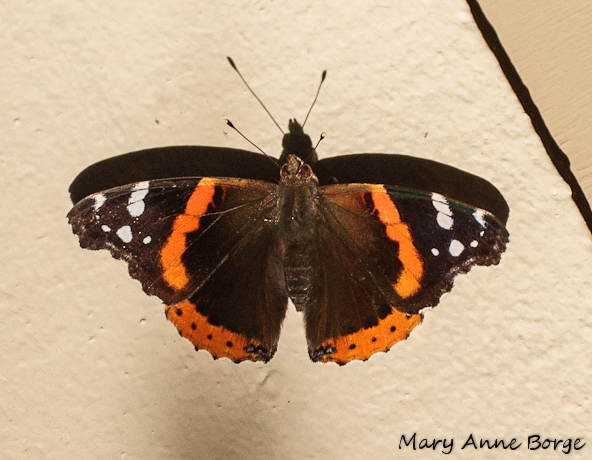
Red Admiral

Red Admirals are willing to use even human-made structures like roads and buildings to showcase themselves while looking for the perfect mate.  Eventually a Red Admiral found a place where he, too, could display without inviting a conflict with the Zabulon Skipper.

For Great Spangled Fritillaries, Leave the Leaf Litter!

Great Spangled Fritillary on Butterflyweed

Great Spangled Fritillary on Butterflyweed

If we really want to get to know butterflies a little better, we need to encourage them to take up residence on our property rather than just stopping for a quick bite to eat.  To achieve that, we need to think about providing the habitat they need throughout as much of their life cycle as we are able.  Let’s look at the Great Spangled Fritillary as an example.

Adult Great Spangled Fritillaries love to cruise fields, meadows, open woods, and gardens, looking for nectar rich flowers.  Some of their favorite food sources include Butterfly-weed (Asclepias tuberosa), Common Milkweed (Asclepias syriaca), Wild Bergamot (Monarda fistulosa), Joe-pye-weeds (Eutrochium dubium, E. fistulosum, E. maculatum, E. purpureum), Ironweeds (Vernonia sp.), and Dogbanes (Apocynum cannabinum).  These plants all have broad appeal to many species of butterflies, including the showy bright orange and brown Fritillaries.  Continue reading

Early Spring, Sourland Mountains, West Amwell, NJ

This slideshow requires JavaScript.

Spring was early this year, and the bloom period was very condensed as a result.  In case you missed it, here are some of the wildflowers blooming at Rockhopper and the Alexauken Wildlife Management Area.  Continue reading

Dutchman’s Breeches and Squirrel Corn

Dutchmans Breeches at Bowman’s Hill Wildflower Preserve

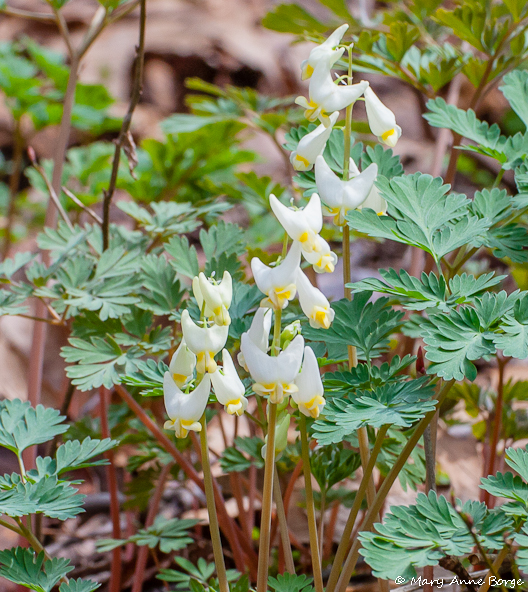
Dutchman’s Breeches (Dicentra cucullaria) are still blooming along the trails in rich moist woods, the white blossoms offset by delicate blue-green, finely cut foliage. Like many spring blooming plants, Dutchman’s Breeches were encouraged to get an early start by March’s warm weather. April’s cooler temperatures should help prolong the bloom season.

Dutchman’s Breeches are named for their flowers, shaped like tiny pantaloons hanging from a wash line. Continue reading