Signs of Spring: Hazelnuts in Bloom

Beaked Hazelnut Flowers

Beaked Hazelnut Flowers

Need some reassurance that spring is on the way? Well, there may already be some shrubs blooming near you. Look for the flowers of my favorite harbinger of spring, American Hazelnut (Corylus americana), or its close relative, Beaked Hazelnut (Corylus cornuta). Hazelnuts can be found in rich woodlands, wood edges, thickets and along roadsides. They’re blooming down the road from me now.

American Hazelnut

American Hazelnut

With separate male and female flowers on the same plant, both species of hazelnut enlist the assistance of the wind in their pollination efforts. The flowers bloom before the leaves emerge, increasing the odds that the wind will successfully transport the pollen grains from the male flowers to a compatible female flower, since there are no leaf surfaces to impede the pollination effort.

Cream colored catkins containing the male flowers are visible from fall through winter, hanging stiffly from the hazelnut branches. As the winter winds down, the catkins grow longer and looser, their color evolving to include a hint of yellow. At maturity, thousands of tiny grains of pollen are released from the cluster of male flowers encompassed by the catkins, traveling on the wind in search of a female flower as a mate, preferably on a nearby compatible hazelnut. Pollination with a separate plant expands the gene pool, and increases the likelihood of successful offspring.

American Hazelnut Flowers

American Hazelnut Flowers

The female flowers are wonderfully gaudy in a subtle, inconspicuous way. Usually found at the tips of branches, the buds appear to be small and reddish brown during the winter. In bloom, the female flower parts resemble tiny, bright magenta sunbursts. There are several female flowers inside a single bud, with only their stigmas emerging to catch the wind blown pollen. Check the hazelnuts branches to see these petite, spidery female delights when the catkins containing the male flowers elongate and move freely in the wind.

American Hazelnut Female Flower

American Hazelnut Female Flower

If the flowers are successfully pollinated, nuts are produced, ripening by late summer. While the shrubs are fruiting these two species of Hazelnut are easily distinguished. The flowers of the two species are very similar, but the nuts have very distinctive coverings. American Hazelnuts have a leafy sheath with a ruffled edge.

American Hazelnut

American Hazelnut

Beaked Hazelnut’s coverings are long, tubular and beak-like, giving this species its name.
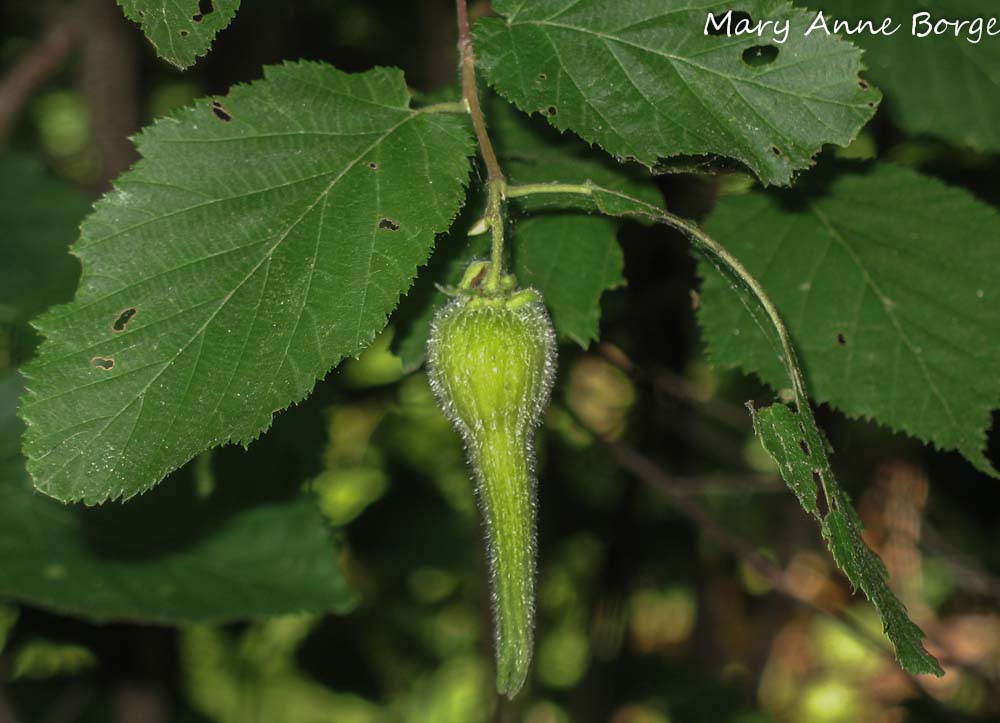
Beaked Hazelnut

Beaked Hazelnut

The nuts, also called filberts, are edible, although these North American species have generally not been grown as a commercial crop. A European species with larger nuts is grown commercially. Scientists from the Hybrid Hazelnut Consortium, whose members are Rutgers University, Oregon State University, Arbor Day Foundation and the University of Nebraska–Lincoln, are working to develop hybrid hazelnuts as a sustainable crop that can be grown in much of the United States and Southern Canada, to produce food, feed or bio-energy.

Humans are not the only consumers of hazelnuts. Squirrels, chipmunks, rabbits and fox are among the other mammals who eat these tasty treats. Birds with beaks strong enough to open the shells for a meal include woodpeckers, Blue Jays, Wild Turkey and grouse.

During their growing season, hazelnuts may provide food for many beneficial insects, including the caterpillars of some of the most beautiful giant silkworm moths such as the Cecropia and Polyphemus Moths.
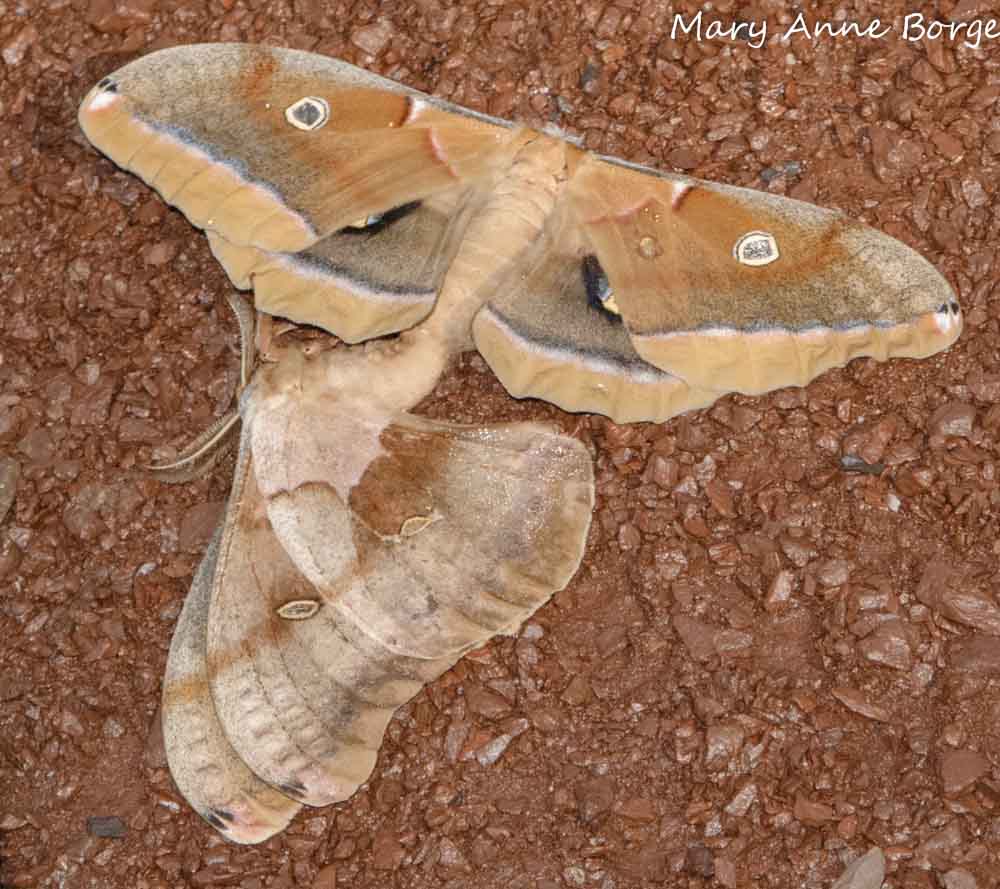
Polyphemus Moths Mating

Polyphemus Moths Mating

Beaked Hazelnut may also be used as food by Early Hairstreak butterfly caterpillars. According to Douglas Tallamy in Bringing Nature Home, over 130 species of butterflies and moths may use the hazelnuts as caterpillar food plants. Birds rely on these insects and others as an important source of protein, especially during the critical period when they are feeding their young families.

The fall color of the leaves may vary from yellow to deep reds. At Bowman’s Hill Wildflower Preserve, near New Hope, Pennsylvania, you can see the two species of hazelnut growing next to each other. At that location, the leaves of American Hazelnut turn luscious shades of red, peach and orange.
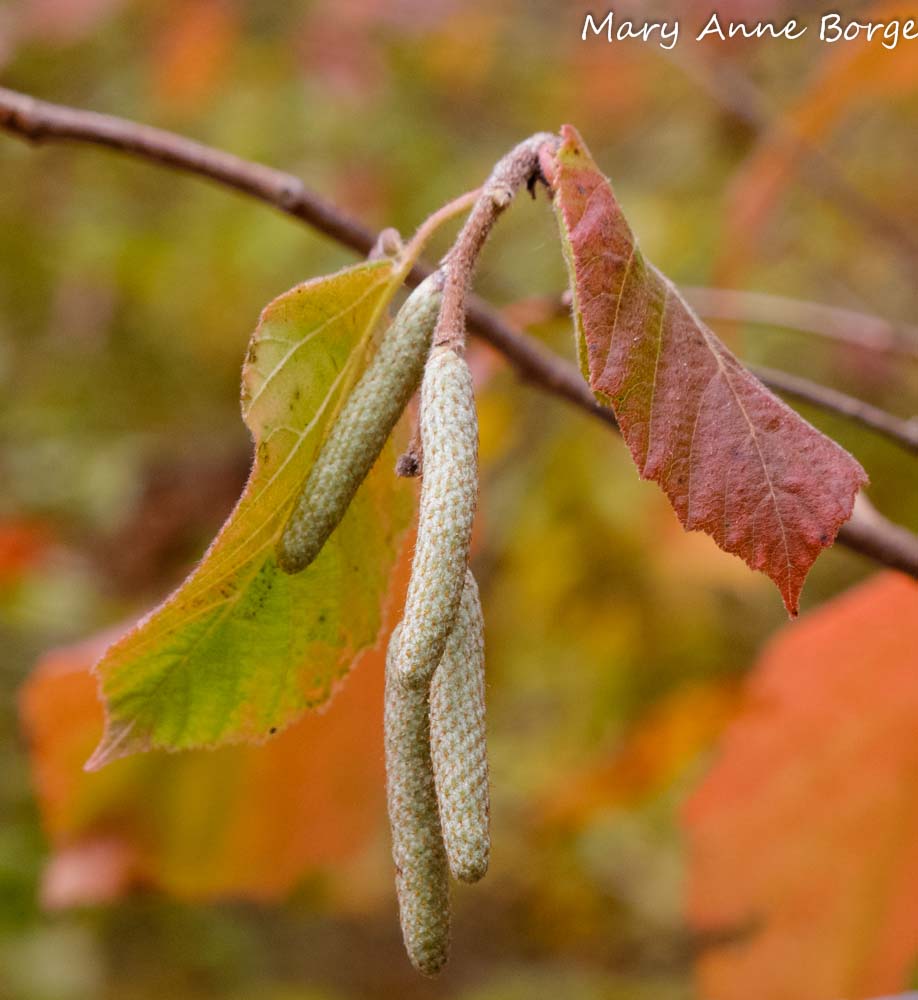
American Hazelnut in Fall

American Hazelnut in Fall

Beaked Hazelnut’s leaves at the same spot are bright yellow. Makes me wonder about the difference in their chemical make-up.
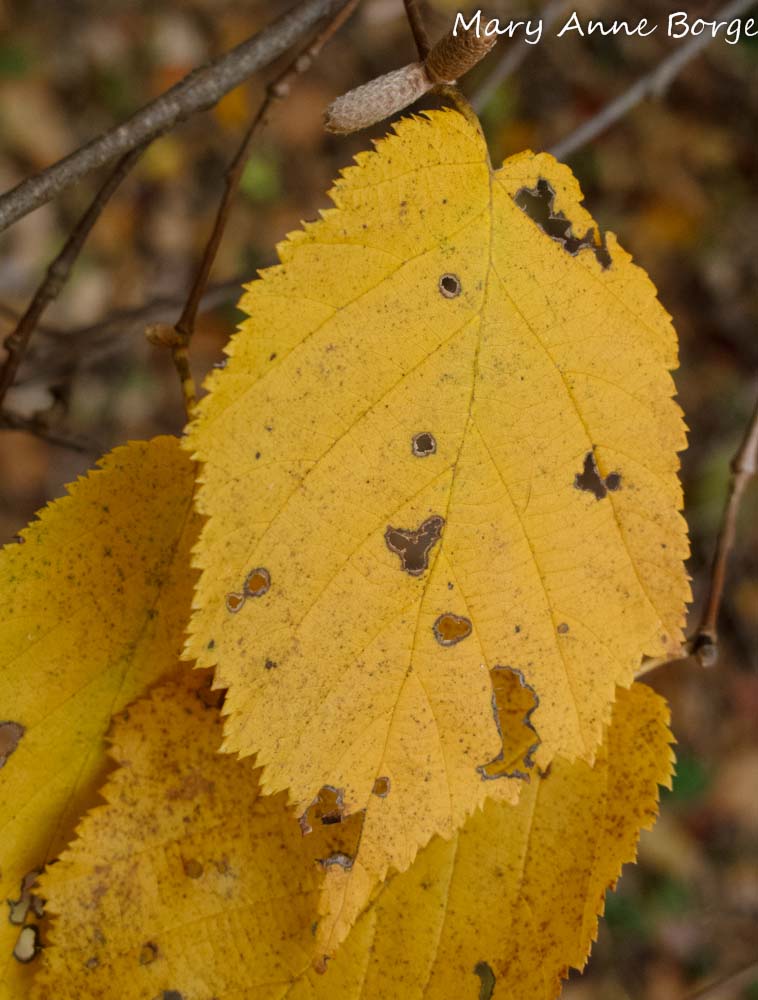
Beaked Hazelnut in Fall

Beaked Hazelnut in Fall

These multi-stemmed shrubs grow to a maximum height of about eight to ten feet, and can expand to a ten foot width. They make good candidates for a hedge row, either alone or with a mix of other shrubs. American Hazelnut can tolerate shade to sunny conditions, and moist, well-drained to dry soils. Beaked Hazelnut prefers a bit more sun.

American Hazelnut is native to the eastern two-thirds of the United States (except Florida), and to Quebec, Ontario and Manitoba provinces in Canada. Beaked Hazelnut’s native range includes the Canadian provinces from Newfoundland and Nova Scotia west to British Columbia, and much of the northern tier of the United States, southward in the east to Alabama and Georgia, and in the west to California.

See if you can find a hazelnut growing near you. When spring arrives, think about planting this versatile shrub to attract birds, butterflies, moths and other wildlife to your yard. It will also provide welcome assurance that spring is just about here.

Resources

Bringing Nature Home, 2007, Tallamy, Douglas W.
Butterflies and Moths of North America

USDA Plants Database

Hybrid Hazelnut Consortium

Hazelnut Research and Breeding at Rutgers University

The Mist, the Meadow, and a Mystery

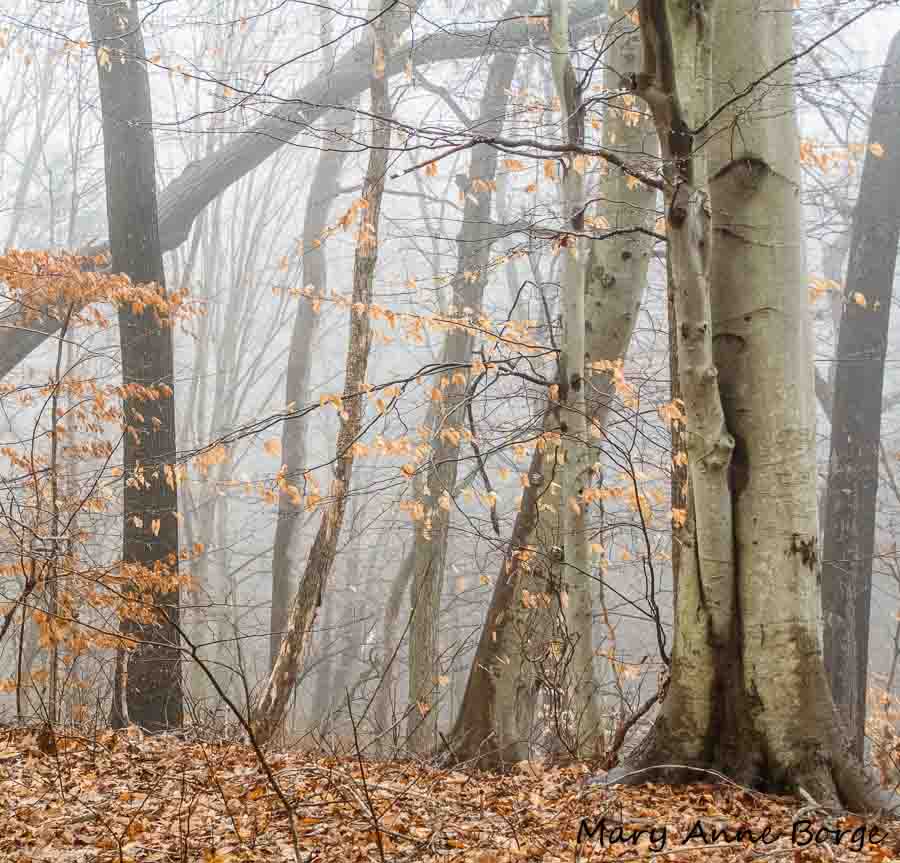
The weather this winter has been very variable, with warm temperatures and foggy conditions one day, followed by cold, wind and snow the next.  On one of the recent warm foggy days, I went for a walk at Bowman’s Hill Wildflower Preserve, just south of New Hope, Pennsylvania.  The misty air exaggerated everything – silence, sounds, colors and images.

Fog in the woods

Fog in the woods

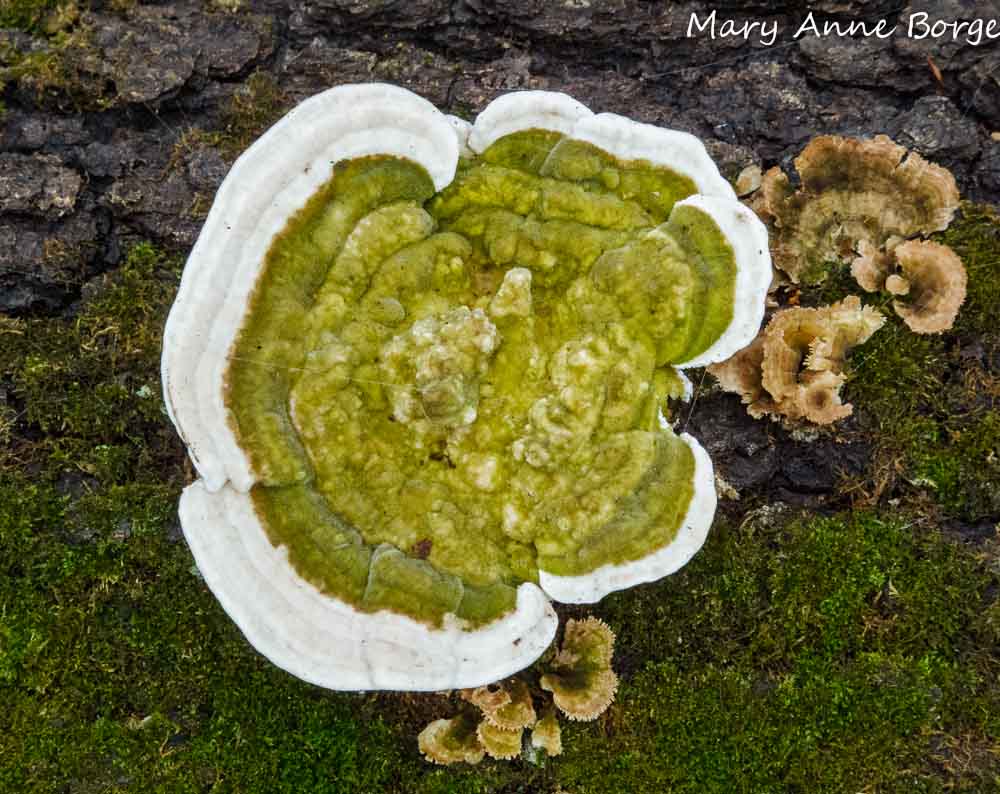
Soft light intensified the bright white and green of the Lumpy Bracket (Trametes gibbosa) mushroom, causing it to jump out and catch my eye.

Lumpy Bracket (Trametes gibbosa)

Lumpy Bracket (Trametes gibbosa)

The changeable weather makes it challenging to adjust to the season, not just for people, but for plants, too.  I saw Golden Alexanders (Zizea aurea) in bud, a plant that typically blooms in early May in this area in eastern Pennsylvania.  A little scary!

Golden Alexanders (Zizia aurea)

Golden Alexanders (Zizia aurea)

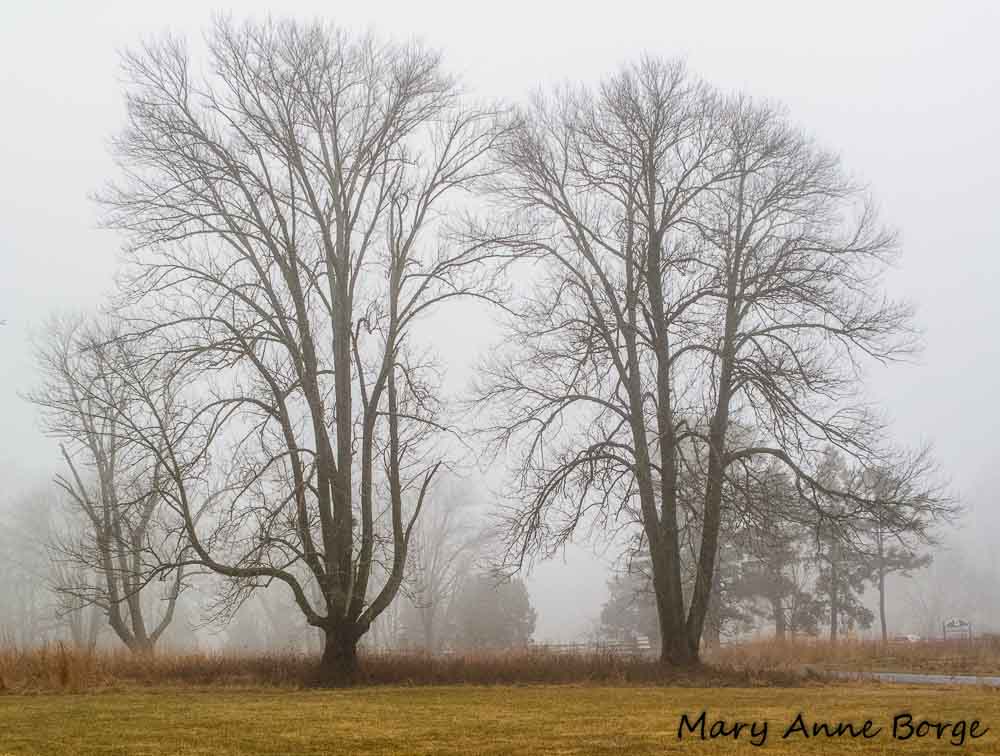
Two White Ash (Fraxinus americana) trees were sentinels on the approach to the meadow…

White Ash (Fraxinus americana) trees at the edge of the meadow

White Ash (Fraxinus americana) trees at the edge of the meadow

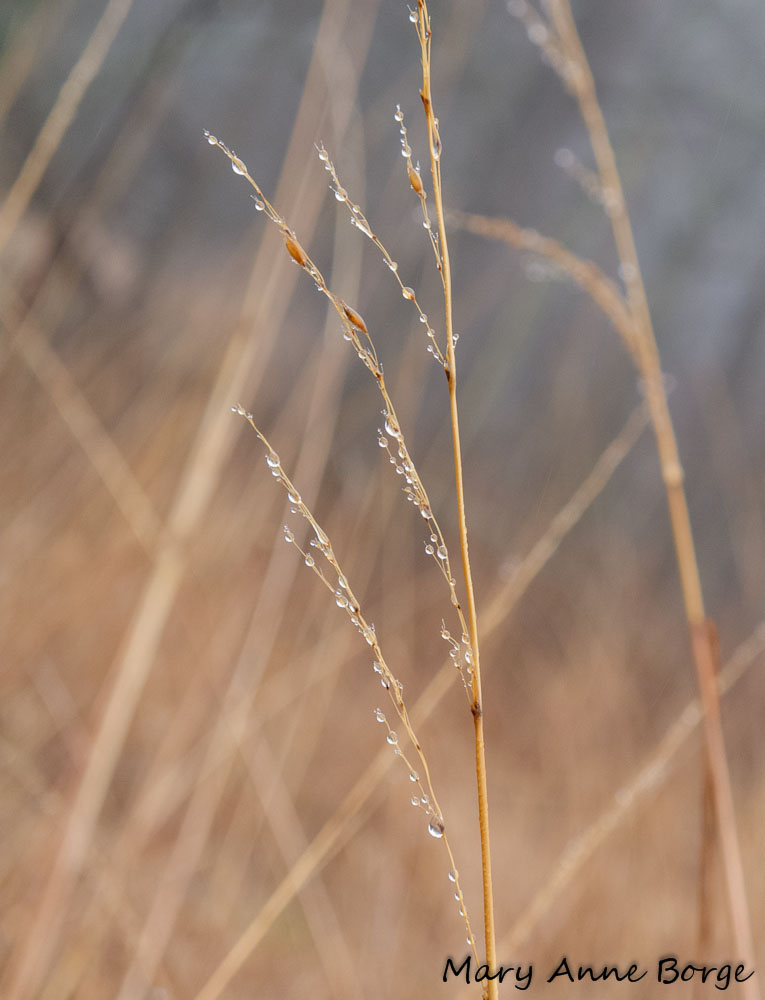
…where the grasses were beaded with water droplets.

Switchgrass (Panicum virgatum)

Switchgrass (Panicum virgatum)

Purpletop (Tridens flavus)

Indiangrass (Sorghastrum nutans)

Indiangrass (Sorghastrum nutans)

There were many signs of life in the meadow. A spider successfully blended in with the dried fruit capsules of Culver’s Root (Veronicastrum virginicum).

Culver’s Root (Veronicastrum virginicum) with spider

Culver’s Root (Veronicastrum virginicum) with spider

Spider on Culver’s Root (Veronicastrum virginicum)

 Chinese Mantis (Tenodera aridofolia sinensis) egg cases were very common.

Chinese Mantis egg case on Indian-hemp (Apocynum cannabinum) fruit capsules

Chinese Mantis egg case on Indian-hemp (Apocynum cannabinum) fruit capsules

Much less common was the egg case of a native, the Carolina Mantis (Stagmomantis carolina). I only found one.

Carolina Mantis (Stagmomantis carolina) egg case

Carolina Mantis (Stagmomantis carolina) egg case

The mantises are pretty indiscriminate about where they deposit their egg cases. They are not plant specific, but will use any sturdy structure that’s handy – a shrub, a perennial, even a fence will do.  Each egg case, or ootheca, may contain hundreds of eggs.  The young will all emerge at the same time in the spring. (Unless they’re eaten by another insect first!)

Goldenrod galls were evidence of insects overwintering. A gall is a growth that is a plant’s reaction to being used, or colonized, by another organism.  Galls generally don’t cause any harm to the plant.

Goldenrod Ball Gall

Goldenrod Ball Gall

One of the easiest galls to recognize is the goldenrod ball gall, a spherical growth found on the stems of some goldenrods, caused by the goldenrod gall fly (Eurosta solidaginis), a fruit fly. There are many species of goldenrod, but the goldenrod gall fly is very particular about which species it will use;  it specializes primarily on Solidago altissima, but Solidago giantea may also be a host. (Solidago altissima goes by many common names: the USDA calls it Canada Goldenrod, but other sources may use Tall or Late Goldenrod. Solidago giantea is Giant Goldenrod according to the USDA, but it is referred to by other sources as Late or Smooth Goldenrod. So confusing! This makes the need for a standard scientific name clear.)

The adult female goldenrod gall fly lays an egg in the leaf bud of the goldenrod before the leaves unfold. After hatching, the larva bores into the stem of the plant, and begins to eat. This stimulates the plant to generate additional nutrients and the gall tissue, a process that takes about three weeks to complete. The gall provides food and shelter for the insect for the remainder of its stay.  After spending the winter in a dormant state, called diapause, if the insect is lucky it will pupate in spring and then emerge as an adult from its winter home.

But there are many dangers that could cut the life of the goldenrod gall fly larva short while it takes shelter in the gall. Other insects, including two chalcid wasp species, Eurytoma gigantea and Eurytoma obtusiventris, may eat the insect larva and take possession of the gall. If the goldenrod gall fly larva manages to avoid these and other predators, a Downy Woodpecker or a Chickadee may make it a tasty winter meal.

This Goldenrod Ball Gall has been excavated by a Downy Woodpecker

This Goldenrod Ball Gall has been excavated by a Downy Woodpecker

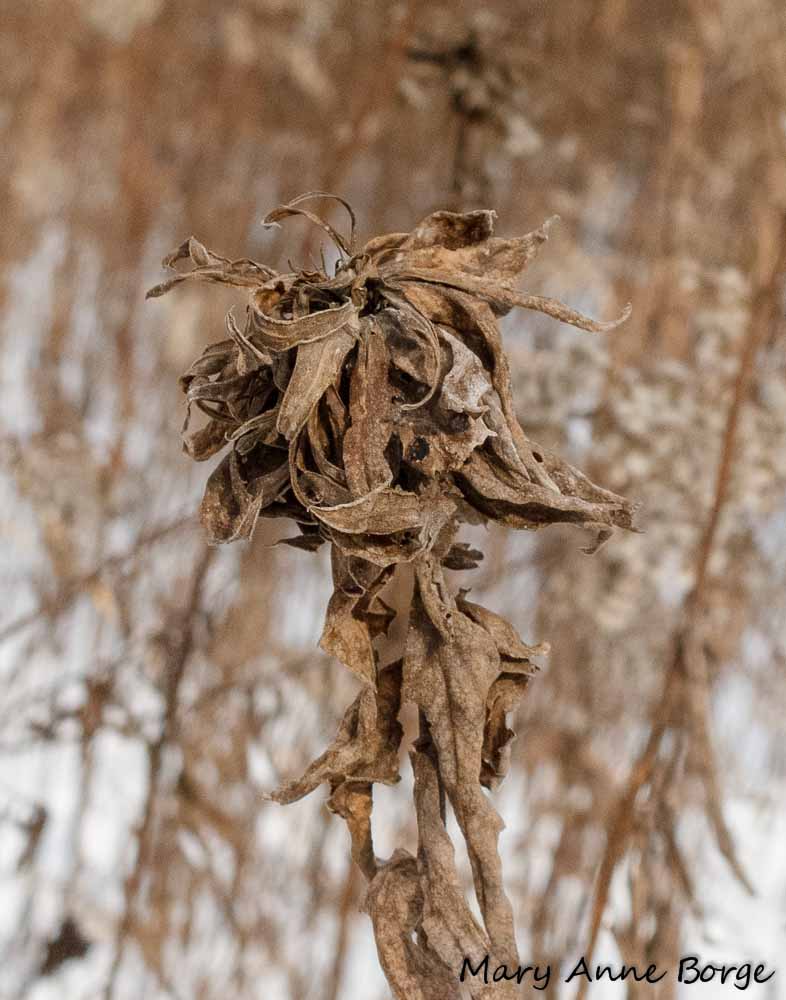
The goldenrod bunch gall resembles a flower, but it is actually a rosette of leaves caused by the entry of a goldenrod bunch gall midge (Rhopalomyia solidaginis) larva into the stem of its host goldenrod species, Solidago altissima. This stops additional upward growth in the stem of the plant, although leaves will continue to sprout, forming the rosette.  Additional growth is through side shoots branching off from the stem below the gall.  The presence of this gall actually increases the diversity of other insect species where it is present, by providing additional habitat for them.

Goldenrod Bunch Gall

Goldenrod Bunch Gall

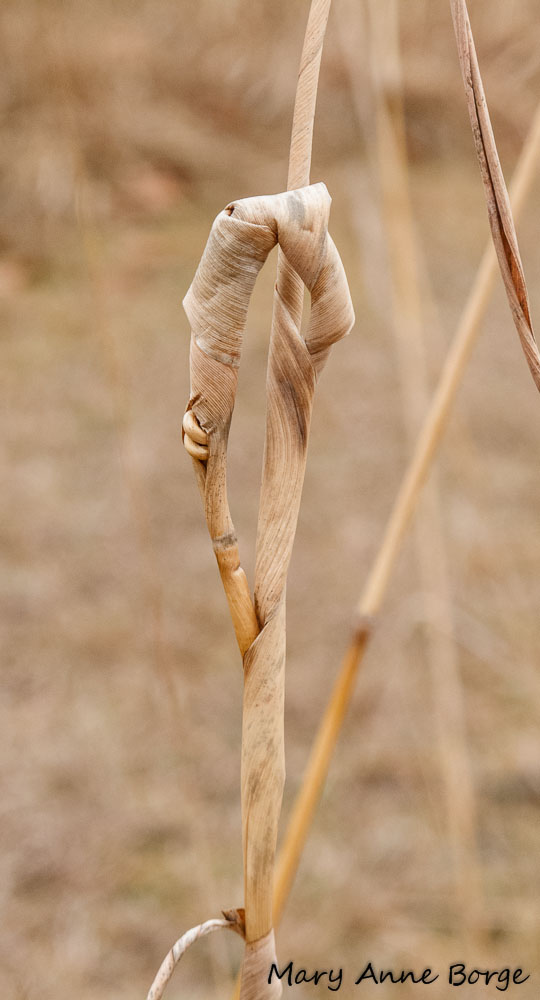
I found a wonderful, complex, twisted, origami-like structure made in the leaves of Indiangrass (Sorghastrum nutans) that remains a mystery to me.

Mystery shelter

Mystery shelter

Could it be a winter shelter for a butterfly caterpillar, maybe a Pepper and Salt Skipper?  This butterfly is possible, although not common in this area, and its caterpillars spend the winter in rolled grass leaves, including Indiangrass.  Maybe some other skipper?  Or did a spider make this refuge? If you have any idea who could be hiding inside, let me know!

If you are lucky enough to have custody of a meadow, you may be wondering how to maintain it without killing the critters that live there. To prevent a meadow from evolving into a forest, you will have to mow it. But this will disrupt habitat for the resident insects, birds and mammals. To minimize the damage, try mowing at a height of 12-16 inches, in a mosaic pattern if possible, and don’t mow more than a third of the meadow in a year. For the sake of birds and mammals, mow as late in the winter as you can. These techniques will help preserve life, and increase the diversity of the residents in your meadow.

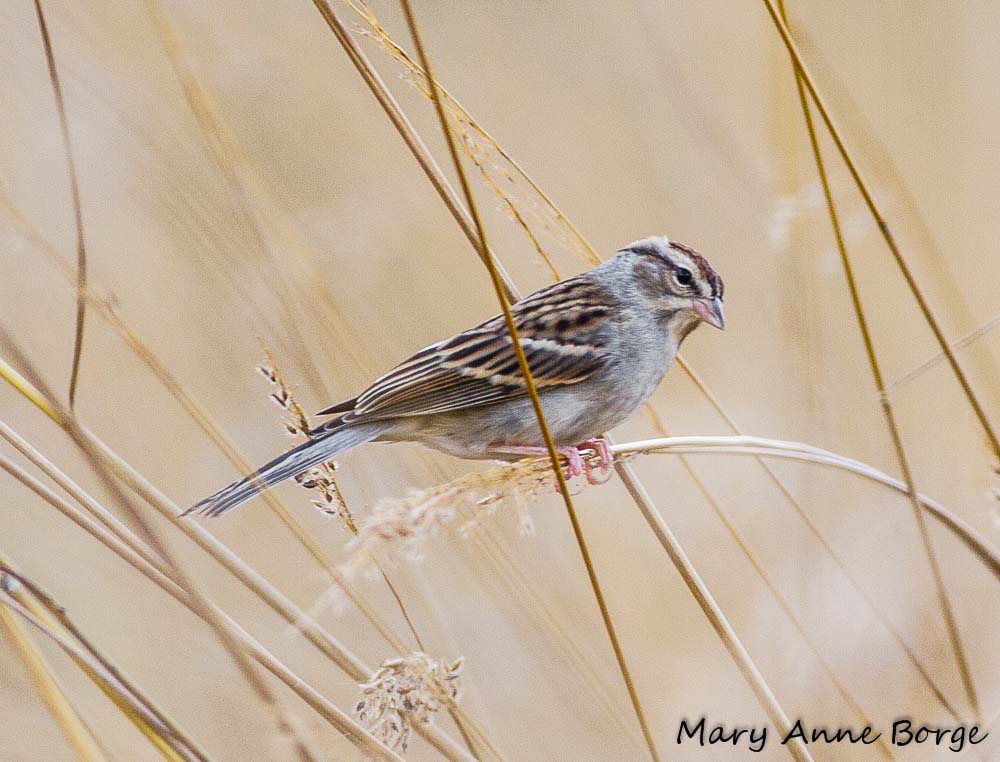
Chipping Sparrow on Indiangrass

Chipping Sparrow on Indiangrass

Resources

Eastman, John. The Book of Field and Roadside. 2003.

Eiseman, Charley; Charney, Noah. Tracks & Sign of Insects and Other Invertebrates. 2010.

Mader, Eric; Shepherd, Matthew; Vaughan, Mace; Black, Scott Hoffman; LeBuhn, Gretchen. Attracting Native Pollinators: Protecting North America’s Bees and Butterflies. 2011.

Special thanks to Beatriz Moisset, who was generous with information about goldenrod galls, including pointing me to some helpful information on Bugguide.net: http://bugguide.net/node/view/324012

I found this paper especially interesting: Host-plant Genotypic Diversity Mediates the Distribution of an Ecosystem Engineer, by Kerri M. Crawford, Gregory M. Crutsinger, and Nathan J. Sanders

Asters Yield A Treasure Trove!

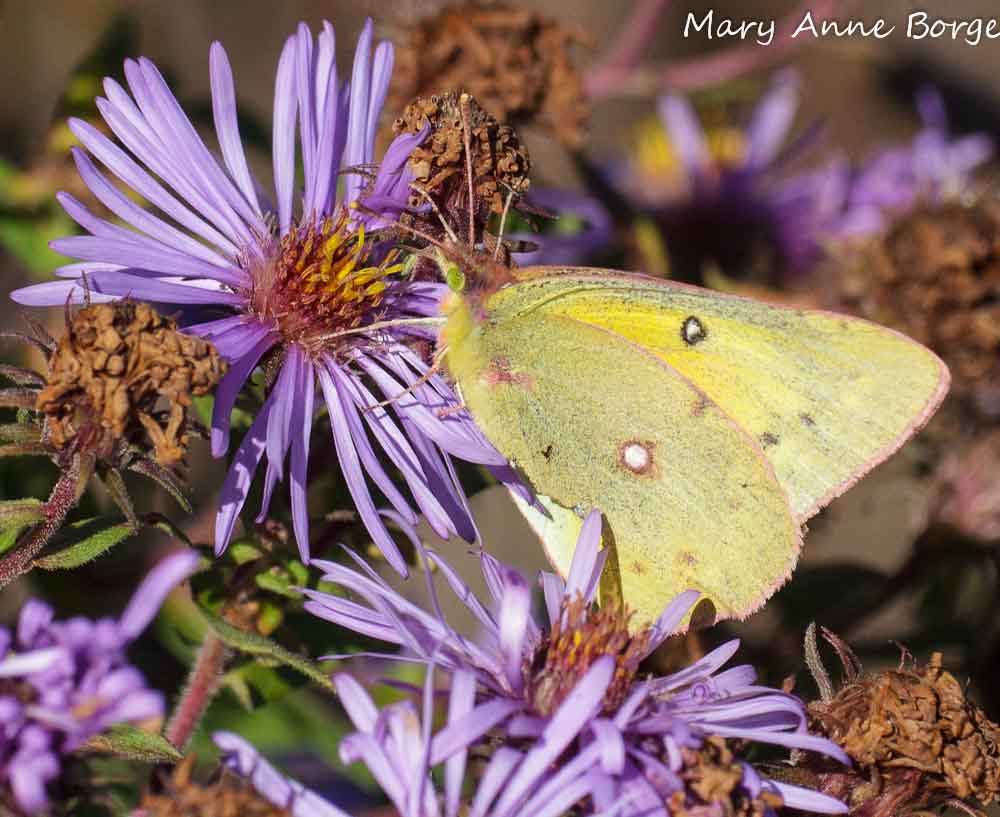
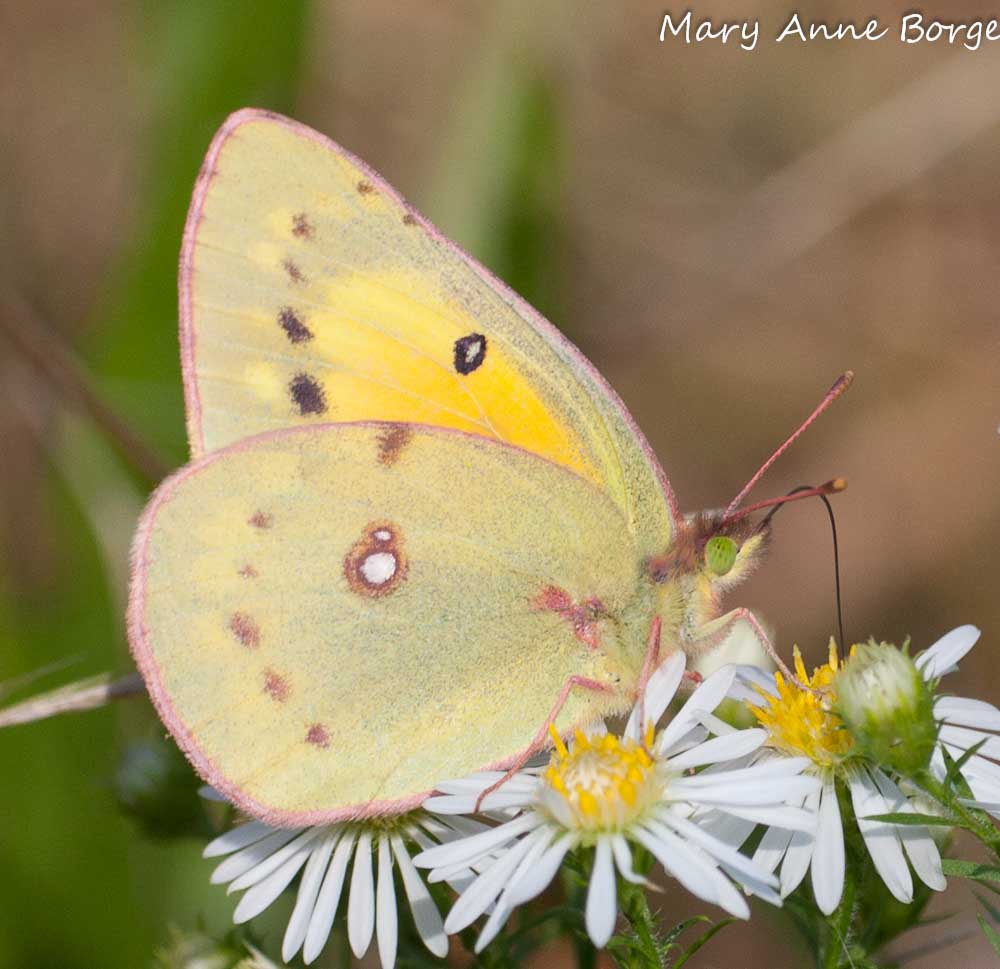
Orange Sulphur on New England Aster (Symphyotrichum novae-angliae)

Orange Sulphur on New England Aster (Symphyotrichum novae-angliae)

A few days ago the weather was beautiful, with temperatures in the mid-60s, cloudless blue skies and a bit of a breeze, so we went for a walk at a wildlife management area in West Amwell, New Jersey.  We were looking for birds, fall fruit and foliage, and any other interesting critters that happened to present themselves.

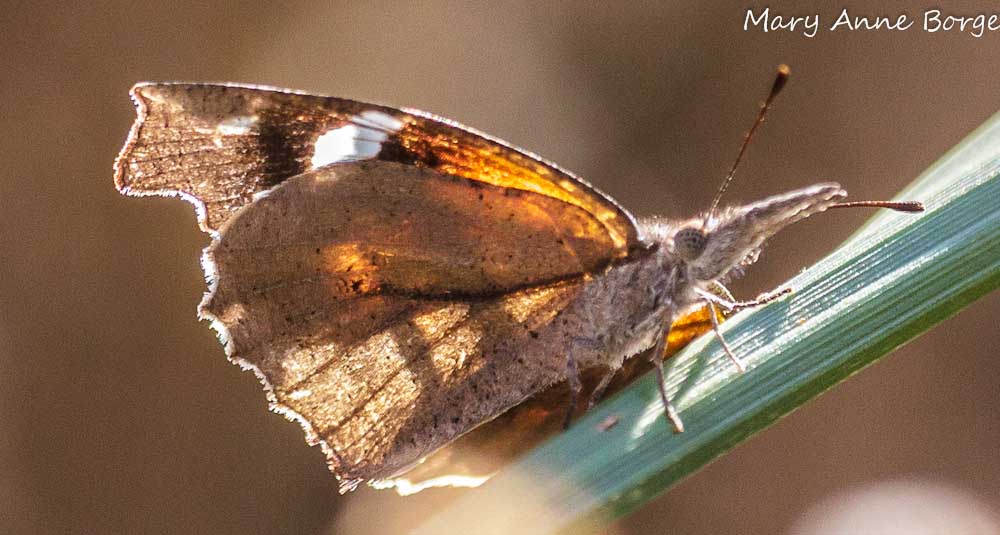
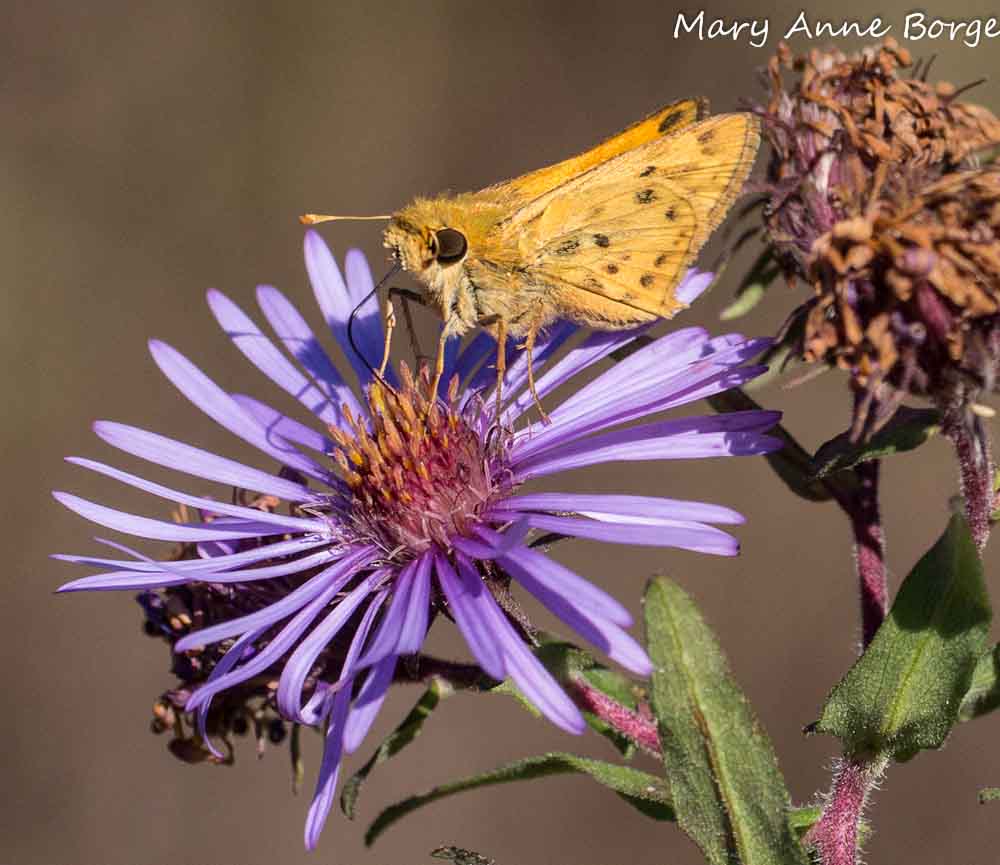
We didn’t expect to see a lot in the way of butterflies because of the cool temperatures, and because it’s so late in the season.  We didn’t see many butterflies, but those we did see were pretty spectacular.  Orange Sulphurs were out and about, which was to be expected, since they are among the species that stay active as late as November in this area.  But the surprises were a Fiery Skipper and an American Snout, both of which are fairly rare in New Jersey, especially in late October.  All were nectaring on various species of asters, or other aster family members, the goldenrods.

American Snout

American Snout

Fiery Skipper on New England Aster (Symphyotrichum novae-angliae)

Fiery Skipper on New England Aster (Symphyotrichum novae-angliae)

Asters family members are the primary source of food for late season pollinators.  They are prolific in their long bloom period, often continuing into November.  Their flowering structure reflects a very clever strategy, and suggests this plant family’s alternate name, ‘composite’.  What looks to us like a single flower is actually a cluster of tiny flowers, potentially of two different types, ray flowers and disk flowers.

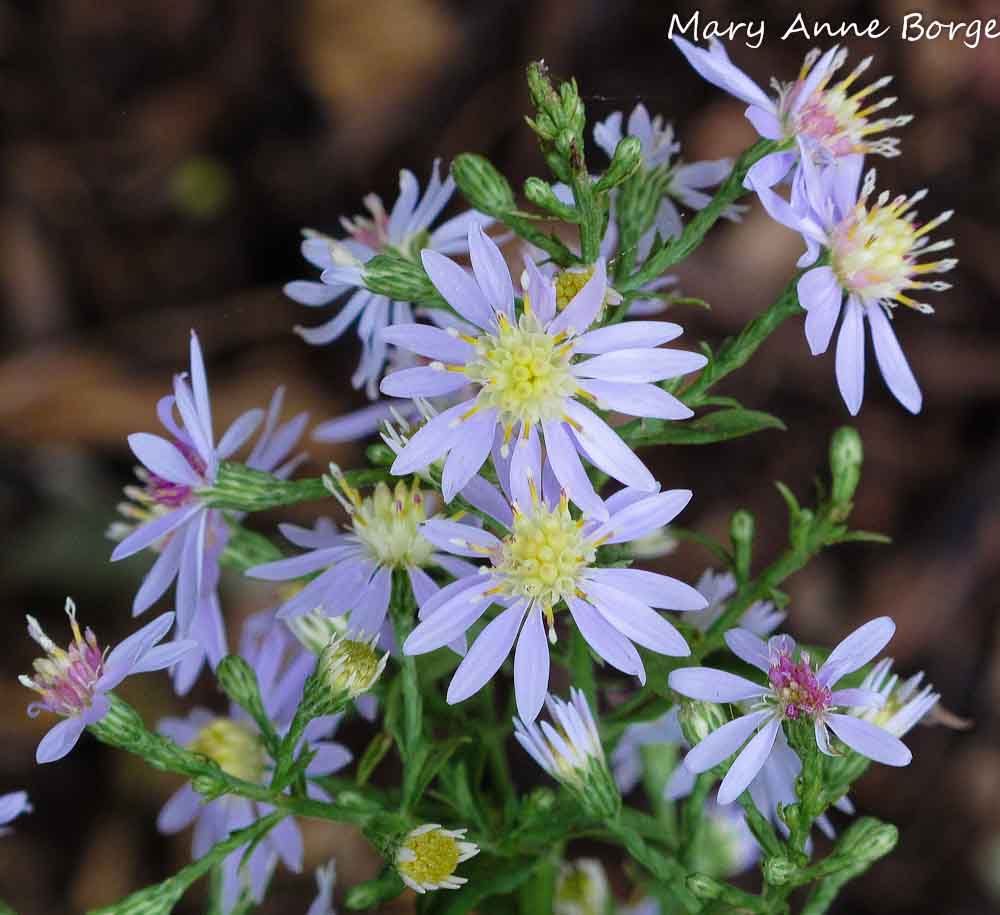
Blue Wood Aster (Symphyotrichum cordifolium)

Blue Wood Aster (Symphyotrichum cordifolium)

The photograph above of Blue Wood Aster (Symphyotrichum cordifolium) shows the classic flower heads of the Aster family:  a circle of ray flowers that look like petals, pale blue in this species, surrounding a cluster of tiny tubular disk flowers in the center of the head.  If you look carefully at the disk flowers in this photo, you can see that the outer rows are open and blooming, while those in the center of the cluster are still in bud.  This gradual bloom habit supports a long period of flowering, offering nectar to fall pollinators for many weeks.  The disk flowers of this plant are a pale yellow in bud and when they first open, then turning pink or magenta as they age.  This color change is thought to be a signal to pollinators, directing them to the receptive yellow flowers which are not yet pollinated and that will reward them with nectar, and steering them away from those blossoms that are already satisfactorily pollinated.  (Plants are so clever!)  Notice the pink and magenta disk flowers in some of the flower heads in this photo.

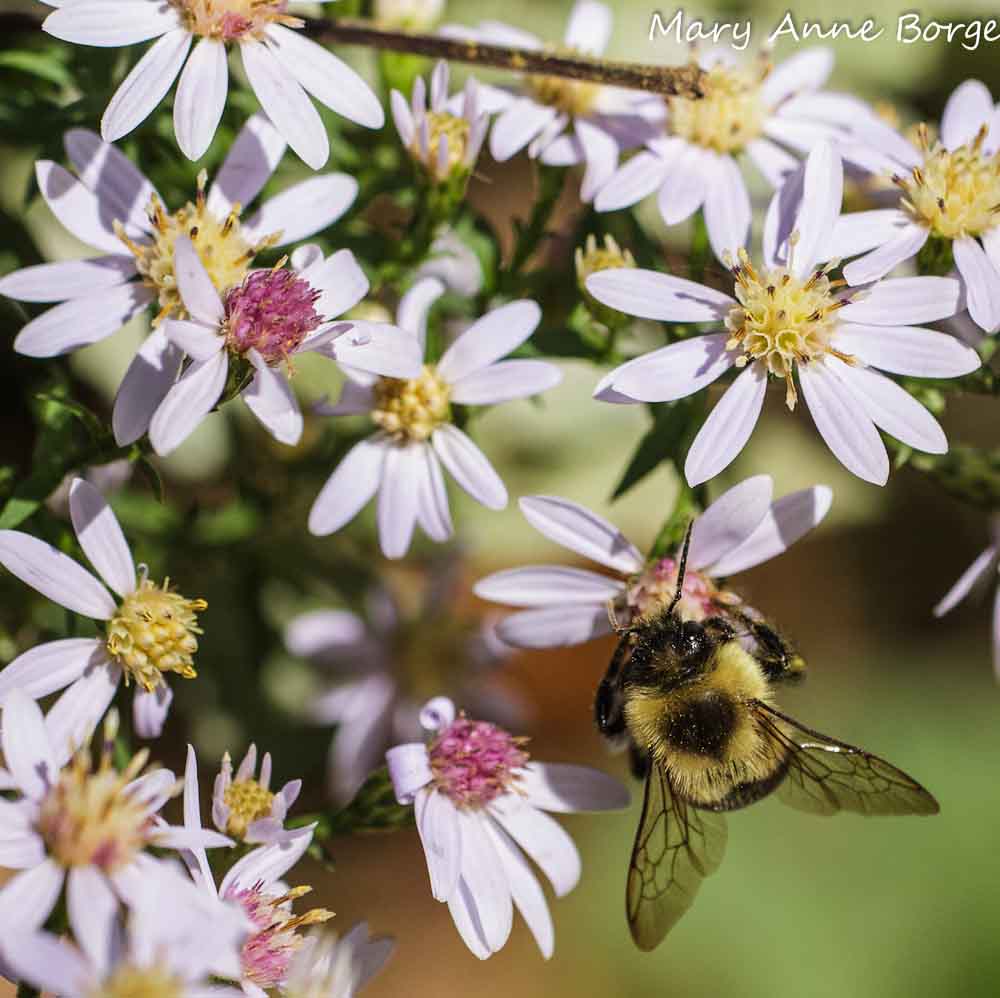
As soon as the temperature gets into the low 50s on these crisp late October mornings, the Bumble Bees begin foraging on billowing clouds of luminous Blue Wood Asters outside my windows, soon joined by other tiny bees and flies.  Large dense clusters of bright pale blue flowers top the heart-leaved covered stalks of this woodland beauty.  The shape of the leaves is reflected in the species name, cordifolium, and also gives this plant another commonly used name, Heart-leaved Aster.  Pair Blue Wood Aster with White Wood Aster (Eurybia divaricata) and Wreath (Bluestem) Goldenrod (Solidago caesia) or Zigzag Goldenrod (Solidago flexicaulis) for a spectacular late season shade garden display.

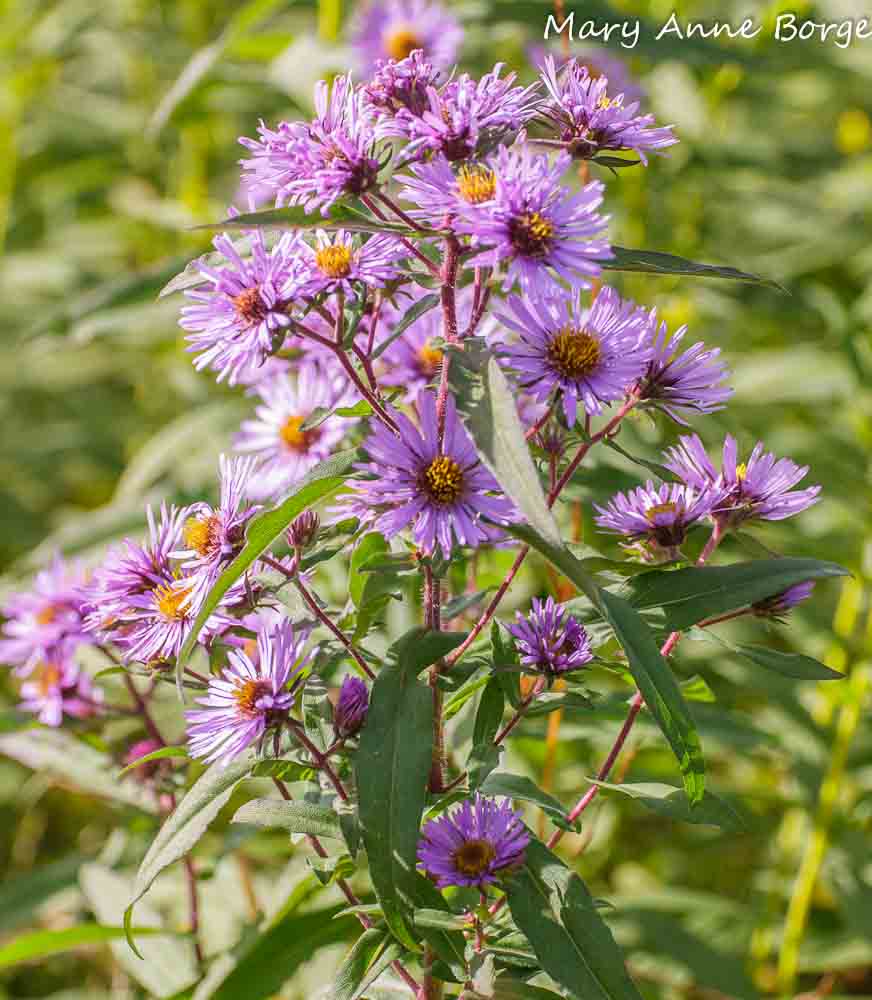
New England Aster (Symphyotrichum novae-angliae)

New England Aster (Symphyotrichum novae-angliae)

Favorites for a sunny garden or meadow include New England Aster (Symphyotrichum novae-angliae), which is also seen blooming in many spots along roadsides, and Aromatic Aster (Symphyotrichum oblongifolium), whose intense blue flowers are irresistible to insects and humans alike.

Following are more asters and their visitors.  You never know what treasures asters will yield!

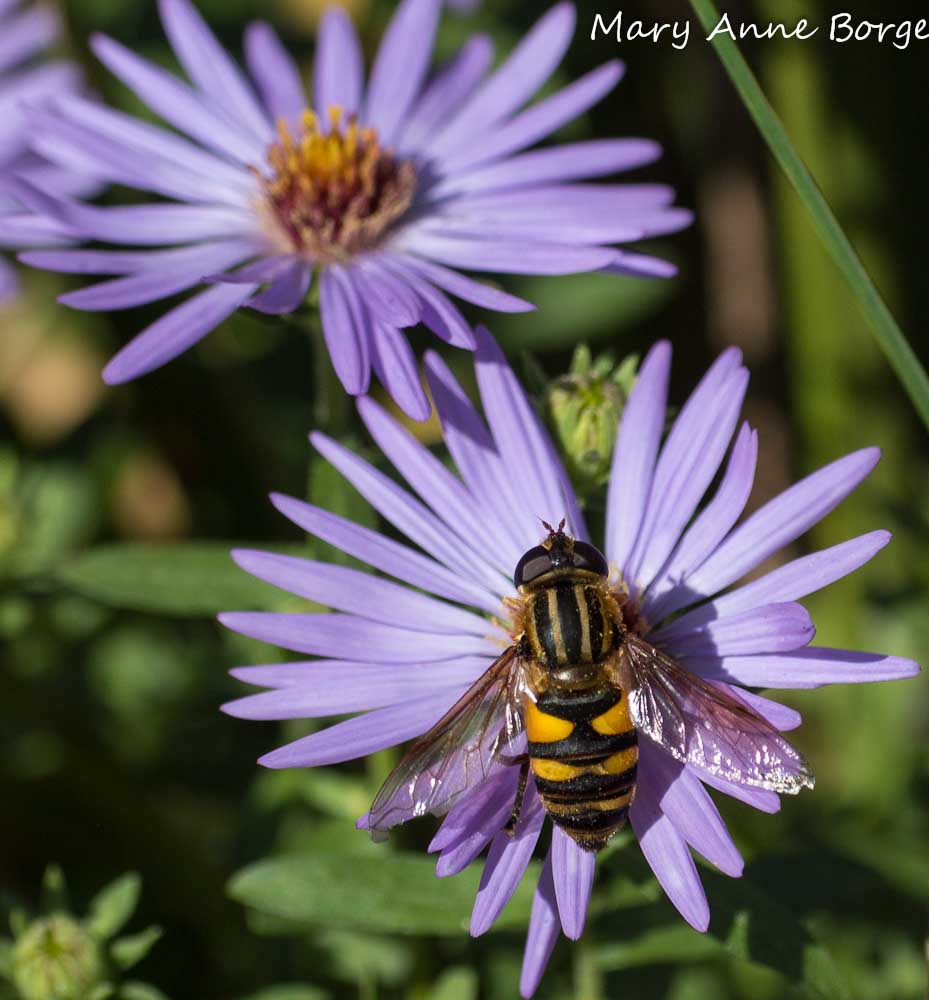
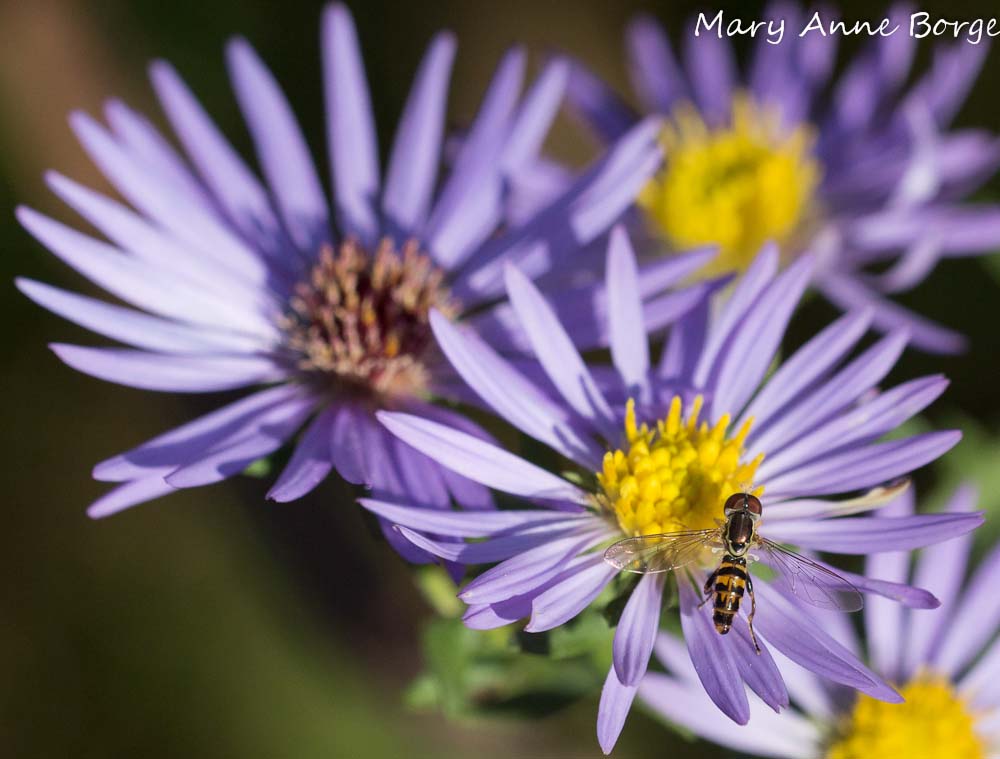
Flower or Hover Fly, Helophilus sp, on Aromatic Aster (Symphyotrichum oblongifolium)

Flower or Hover Fly, Helophilus sp, on Aromatic Aster (Symphyotrichum oblongifolium)

Orange Sulphur on Aromatic Aster (Symphyotrichum oblongifolium)

Orange Sulphur on Aromatic Aster (Symphyotrichum oblongifolium)

Orange Sulphur on Awl Aster (Symphyotrichum pilosum)

Orange Sulphur on Awl Aster (Symphyotrichum pilosum)

Hover or Flower Fly, likely Toxomerus geminatus, on Aromatic Aster (Symphyotrichum oblongifolium)

Hover or Flower Fly, likely Toxomerus geminatus, on Aromatic Aster (Symphyotrichum oblongifolium)

Blue Wood Aster (Symphyotrichum cordifolium) with Bumble Bee

Blue Wood Aster (Symphyotrichum cordifolium) with Bumble Bee

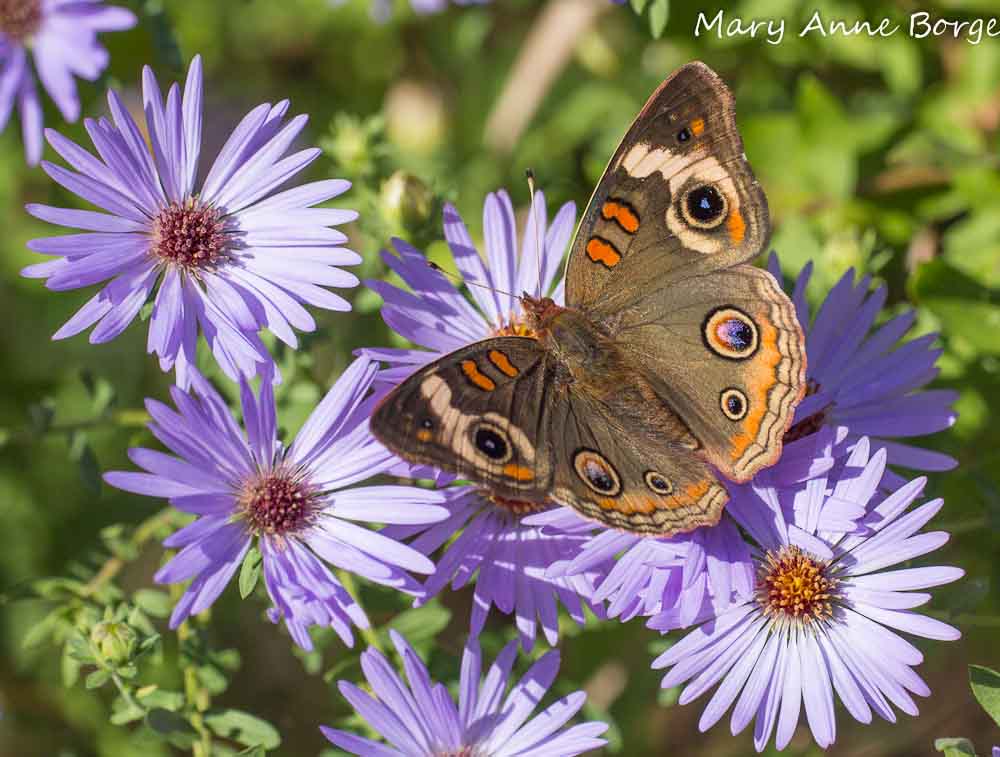
Aromatic Aster (Symphyotrichum oblongifolium) with Common Buckeye

Aromatic Aster (Symphyotrichum oblongifolium) with Common Buckeye

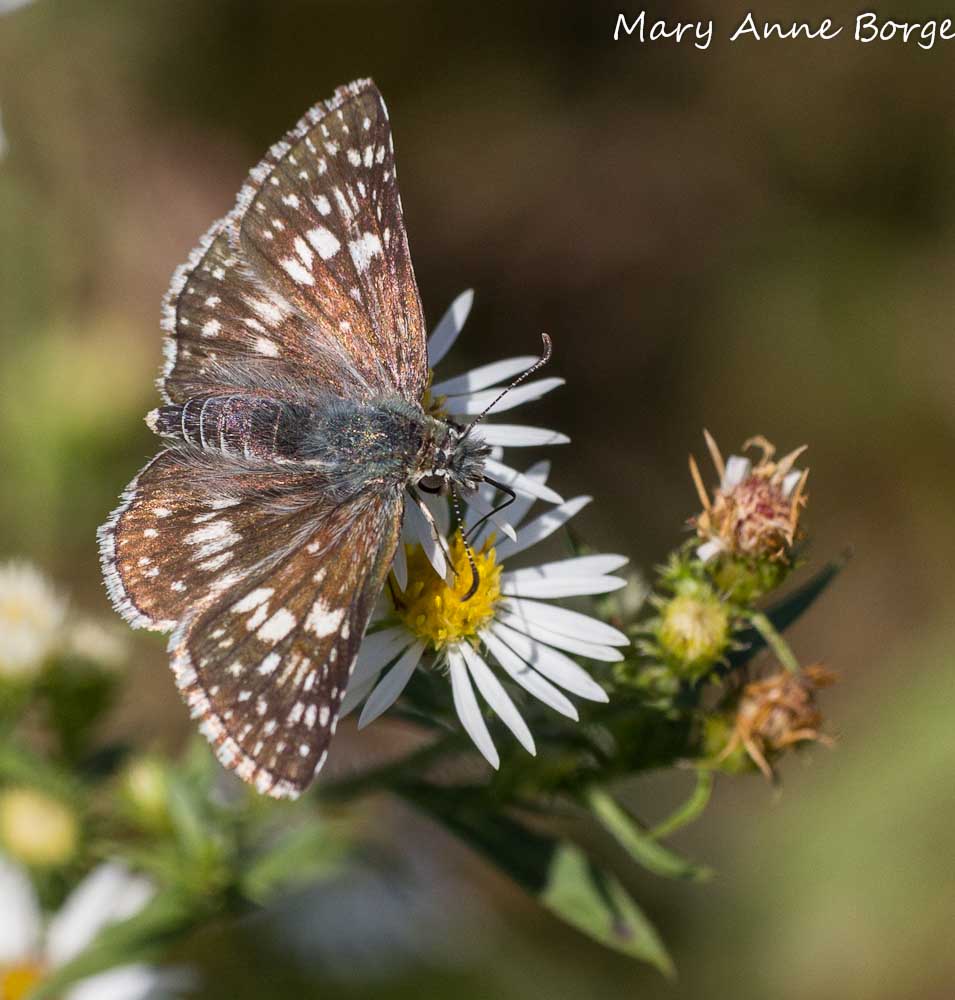
Common Checkered Skipper on Aster

Common Checkered Skipper on Aster

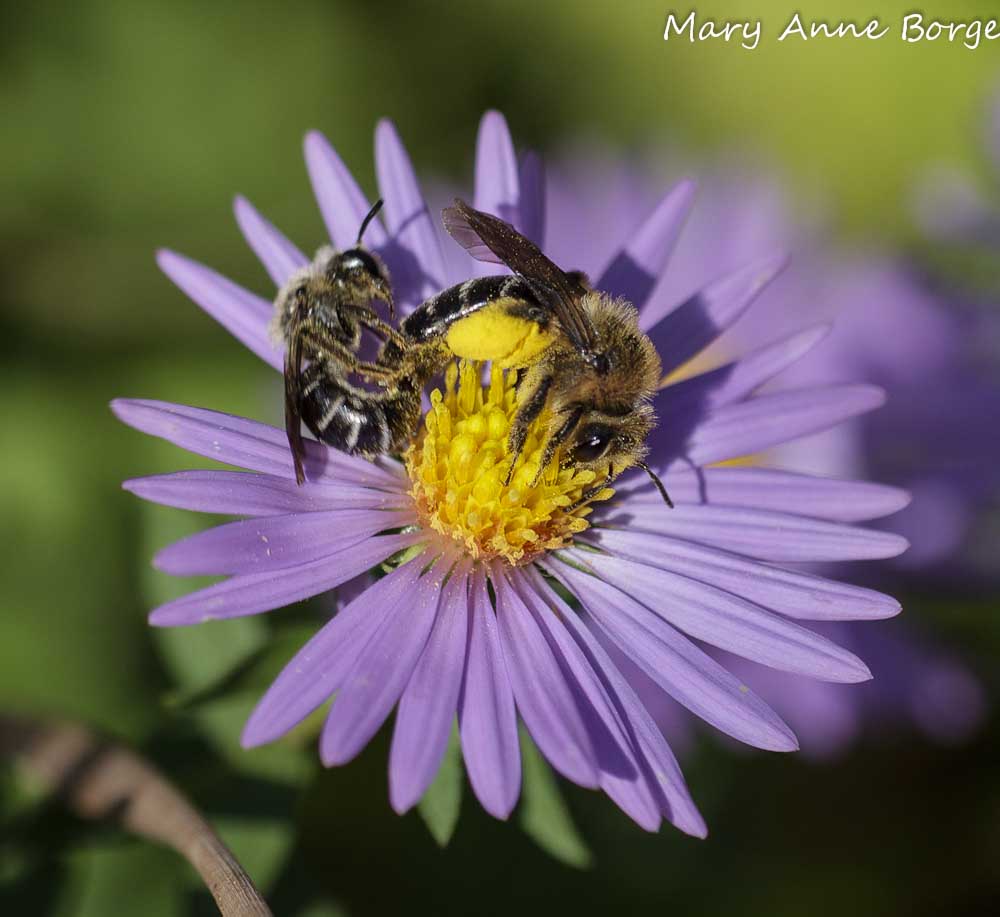
Mating Bees on Aromatic Aster (Symphyotrichum oblongifolium)

Mating Bees on Aromatic Aster (Symphyotrichum oblongifolium)

Fall allergies? Don’t blame Goldenrod!

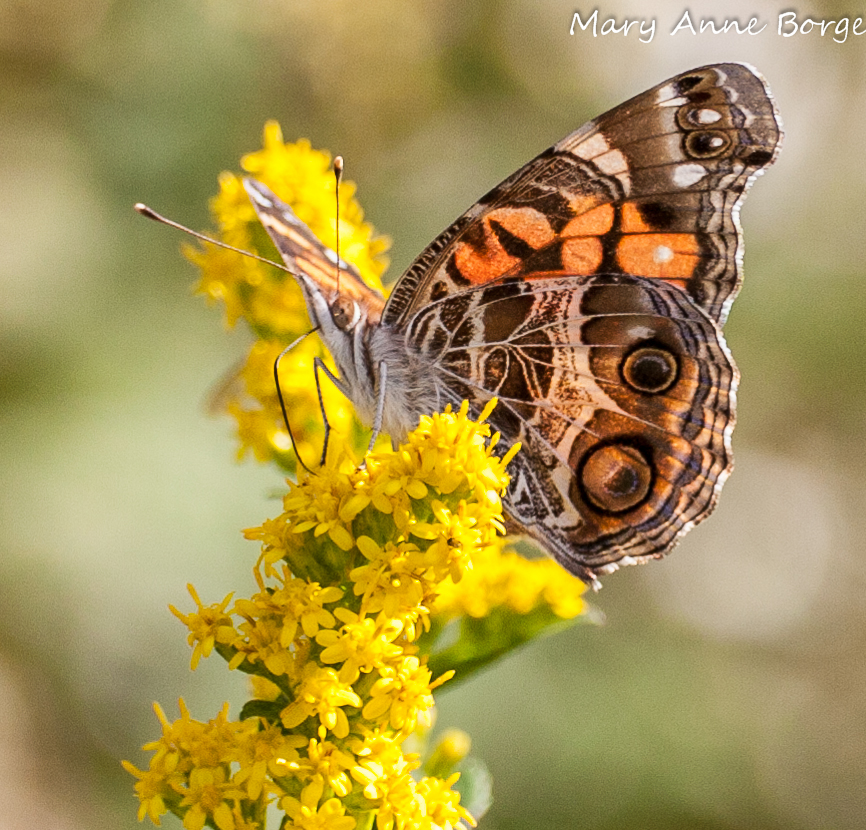
American Lady on Goldenrod

In mid summer and throughout fall, if your eyes start to water and itch and you can’t stop sneezing, you look around for something to blame.  You see fields of bright clusters of tiny yellow flowers belonging to various species of goldenrods, and you think, “Aha!  They must be the culprits!”

If that’s what you think, you would be wrong.

The perpetrator is something far more subtle, something that you could walk right past without really noticing, something with very inconspicuous, greenish flowering parts.  Continue reading

Mountain Mints Are Pollinator Magnets!

To enlarge an image, click on the thumbnail below.

Looking for a deer-resistant pollinator magnet?  Mountain Mints are your answer.

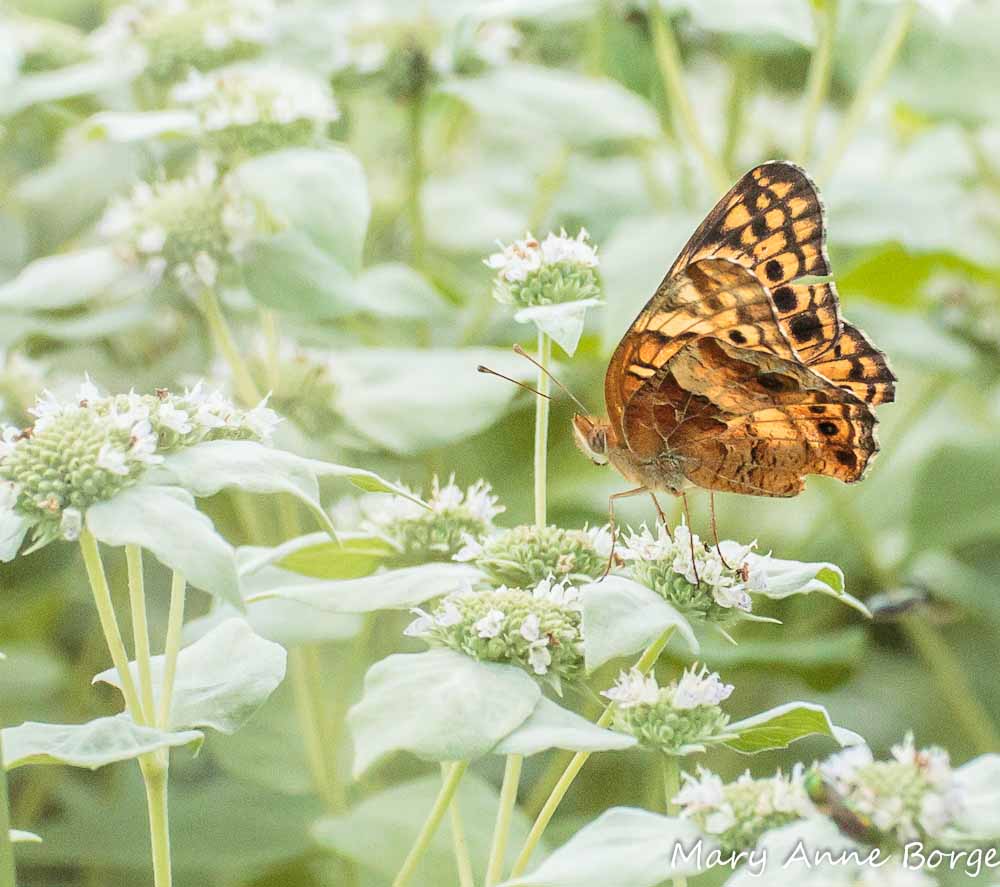
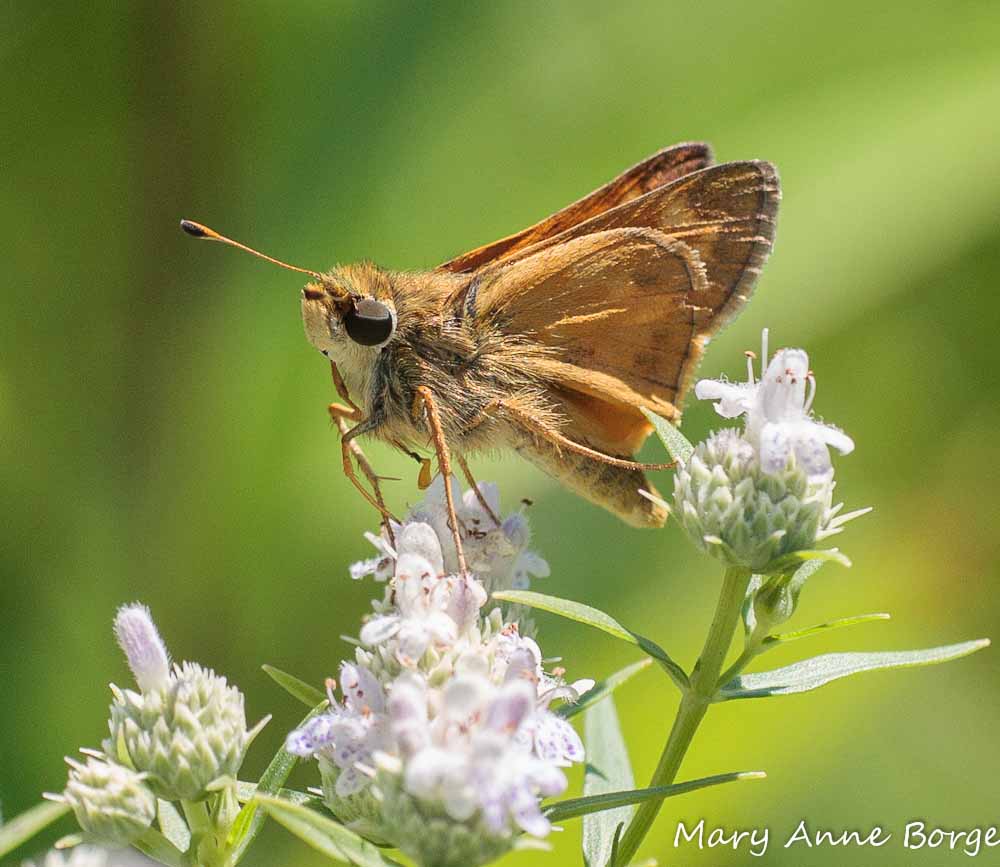
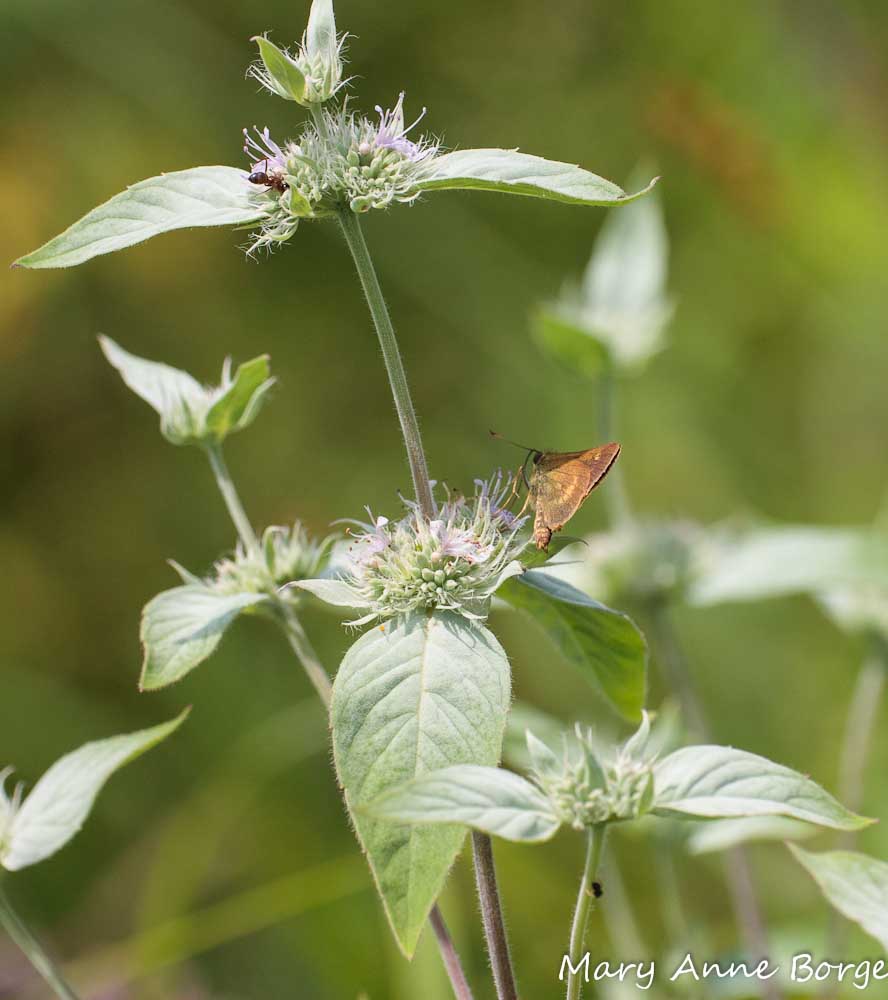
Usually blooming from late June through August, Mountain Mints attract a spectacular assortment of butterflies, bees, moths, and other critters.  These beneficial insects graze amiably together for nectar, since the profusion of tiny blossoms offered by these plants provide enough food for everyone to dine in harmony for many weeks throughout the summer.  From morning until evening Mountain Mints are alive with the dance of pollinators.

There are several species of Mountain Mints, but my favorites are Short-toothed Mountain Mint (Pycnanthemum muticum) and Hoary Mountain Mint (Pycnanthemum incanum).  The genus name, Pycnanthemum, means densely flowered, hinting at the reason that these plants can accommodate so many hungry visitors simultaneously.  The foliage of these two species is as showy as the flowers, enhancing their visual appeal.

Plants are all about surviving and reproducing, and Mountain Mints are among the plant species whose survival strategy is to produce clusters of diminutive flowers, together forming a showy inflorescence, a strategy that has evolved to attract insects as assistants in the pollination process.  Individual flowers in each cluster bloom progressively over many weeks, increasing each plant’s chances for successful reproduction.  This works out really well for their pollinator partners, who are looking for a continuing reliable source of food.

Short-toothed Mountain Mint grows to a maximum height of about three feet, topped with round heads of tiny white flowers smudged with bright magenta.  The plants are truly ‘densely flowered’.  A soft velvety bed of pale blue-green foliage frames the blossoms.  Rub or crush the leaves and you’ll be rewarded with a scent that confirms that this is a mint family member.  Short-toothed Mountain Mint can tolerate part shade to full sun, and likes moist but well-drained, average soil.

Hoary Mountain Mint, as the name implies, has foliage very similar to Short-toothed Mountain Mint, with the leaves just below the flower heads looking as if they had been lightly but evenly dusted with powdered sugar.  Each delicate flower is white with a sprinkling of tiny purple spots.  The flowers grow in rounded heads much like Short-toothed Mountain Mint, but the blossoms are somewhat larger, growing in multiple tiers on each stem. The branching habit is open and graceful, showing off the layers of flowers, and providing easy access to their many visitors.  This species grows to a height of 2-4 feet, prefers sun, and average to dry soil.

Virginia (Pycnanthemum virginianum) and Narrow-leaved (Pycnanthemum tenuifolium) Mountain Mints are also good garden candidates.  Narrow-leaved Mountain Mint grows to a height of 1-3 feet, while Virginia may achieve a slightly taller stature, depending on growing conditions.

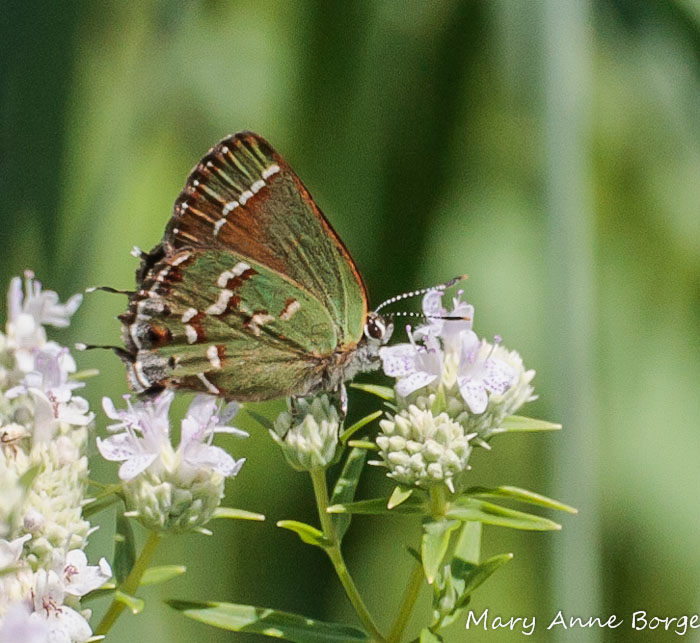
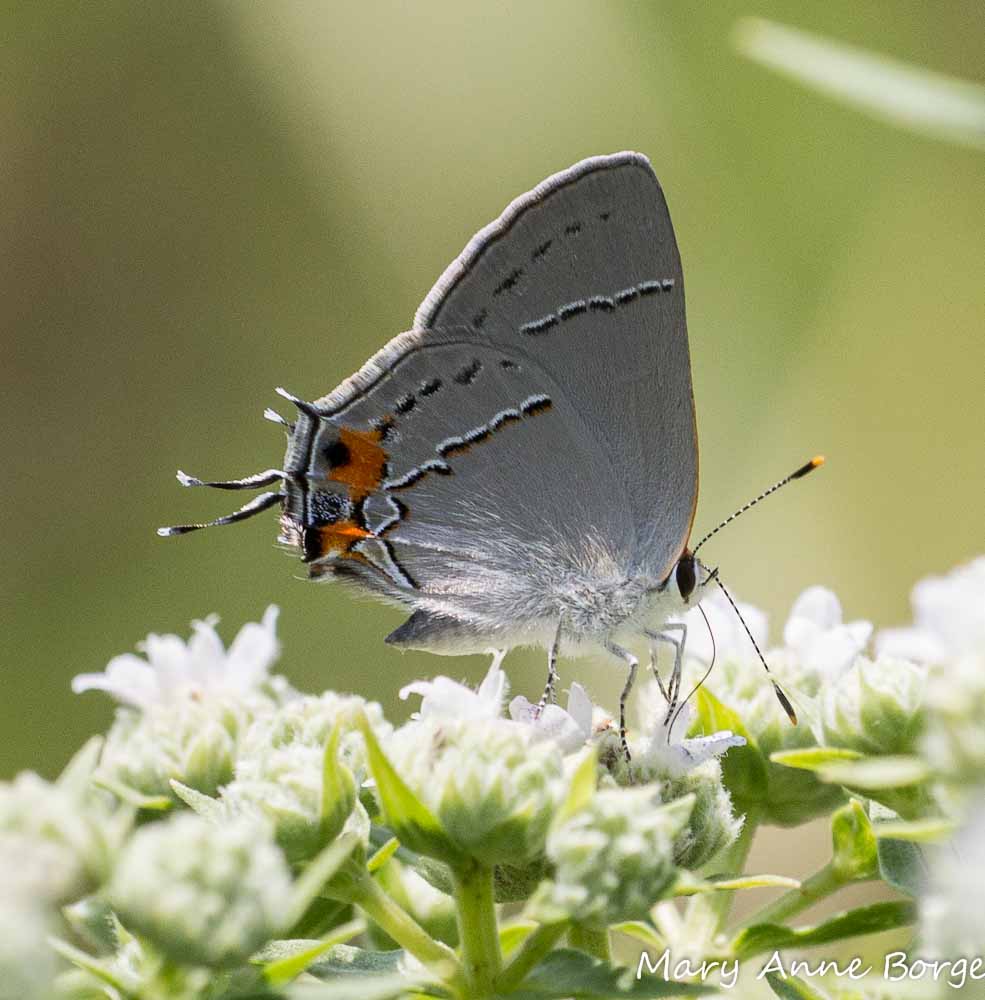
The seemingly endless supply of nectar makes Mountain Mints a great option for attracting butterflies.  Short-toothed, Narrow-leaved and Virginia Mountain Mints all attract small to medium-size butterflies;  expect to see hairstreaks, blues, Common Buckeyes, ladies and smaller fritillaries.  Hoary Mountain Mint flowers are large enough to also accommodate larger butterflies, like some of the swallowtails.

If you have a vegetable garden, you might consider planting some Mountain Mint nearby.  Good nectar producing plants like these attract many bee species that will help increase your garden’s yield.

Because of their strongly fragrant foliage, foraging deer reject Mountain Mints.     In fall the flower heads dry to a dramatic steel gray, and can be an eye-catching addition to a garden in winter.

The Mountain Mints have adapted to thrive in a fairly broad range of weather conditions.  All of these species are native to much of the eastern half of the United States, some as far west as Texas, and as far north as the eastern Canadian Provinces.  In the northeastern U.S., they have been holding their own very well even during this hot, dry summer.  To see if a particular species is native in your area, and for additional Mountain Mint species, check the USDA website:  http://plants.usda.gov/java/profile?symbol=PYCNA