
Zabulon Skipper – Male
After two and a half days of cool, cloudy weather and some much needed rain, the skies cleared, the temperatures soared, and so did a myriad of butterflies. They were just waiting for temperatures warm enough to give them the solar power to flit through gardens, meadows and woods.

Doll’s Eyes (Actaea pachypoda) in fruit
I was drawn outside to our garden by the sight of this bright little Zabulon Skipper, catching the sun’s rays as he landed on the horizontal leaves of a Doll’s Eyes, also known as White Baneberry (Actaea pachypoda). Because of the warm early spring weather, the Doll’s Eyes has already finished blooming, and is now developing fruit. Later in the summer when the fruit is mature, it should look like the plant in this photo. Maybe you can begin to see the origin of the name.
The skipper found this sunlit platform to be the perfect spot to hang out, displaying his many positive attributes, while looking for hot chicks in the form of female Zabulon Skippers. His forewings curved slightly, protecting the effect of the pheromones he wafted in hopes of enticing a partner.
This little guy is a testament to the notion that size is not important. Each time larger butterflies came close to his perch, including swallowtails, anglewings and Red Admirals, he flew up as if to warn them to keep on moving, because they were encroaching on his turf. Then he reclaimed his spot.
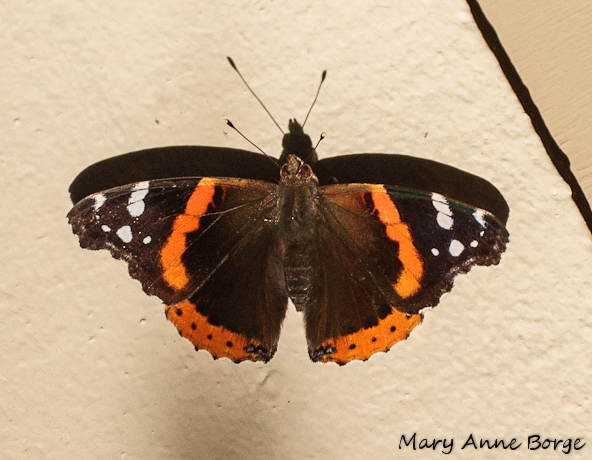
Red Admiral
Red Admirals are willing to use even human-made structures like roads and buildings to showcase themselves while looking for the perfect mate. Eventually a Red Admiral found a place where he, too, could display without inviting a conflict with the Zabulon Skipper.

 The Natural Web