December Bounty

What will birds and other animals do for food, now that we’re entering the long winter months?

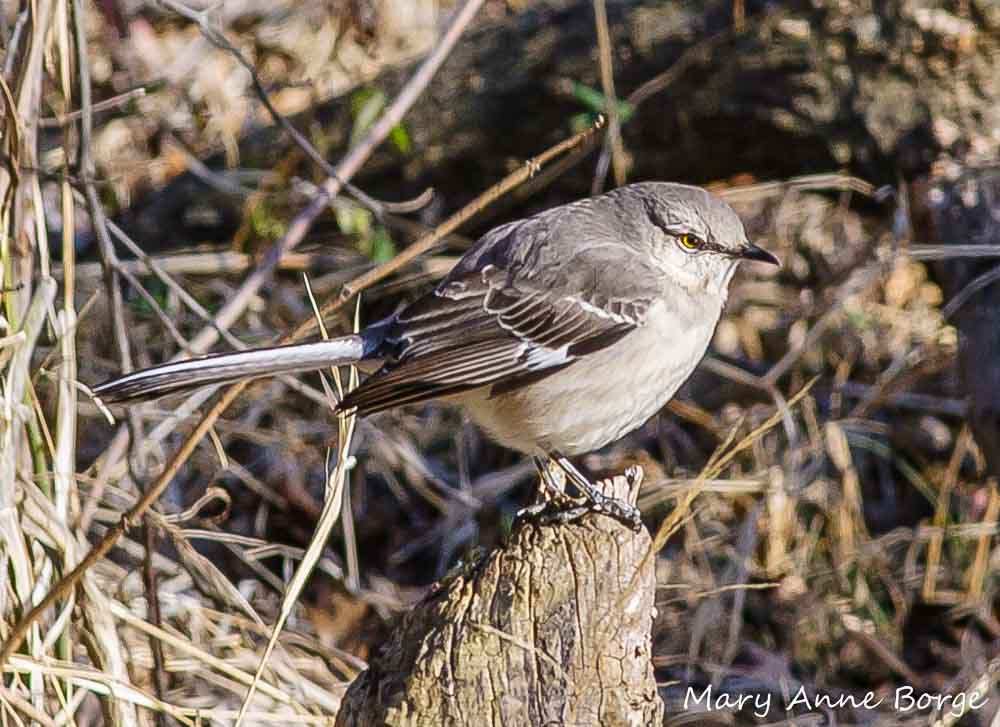
Northern Mockingbird

Northern Mockingbird

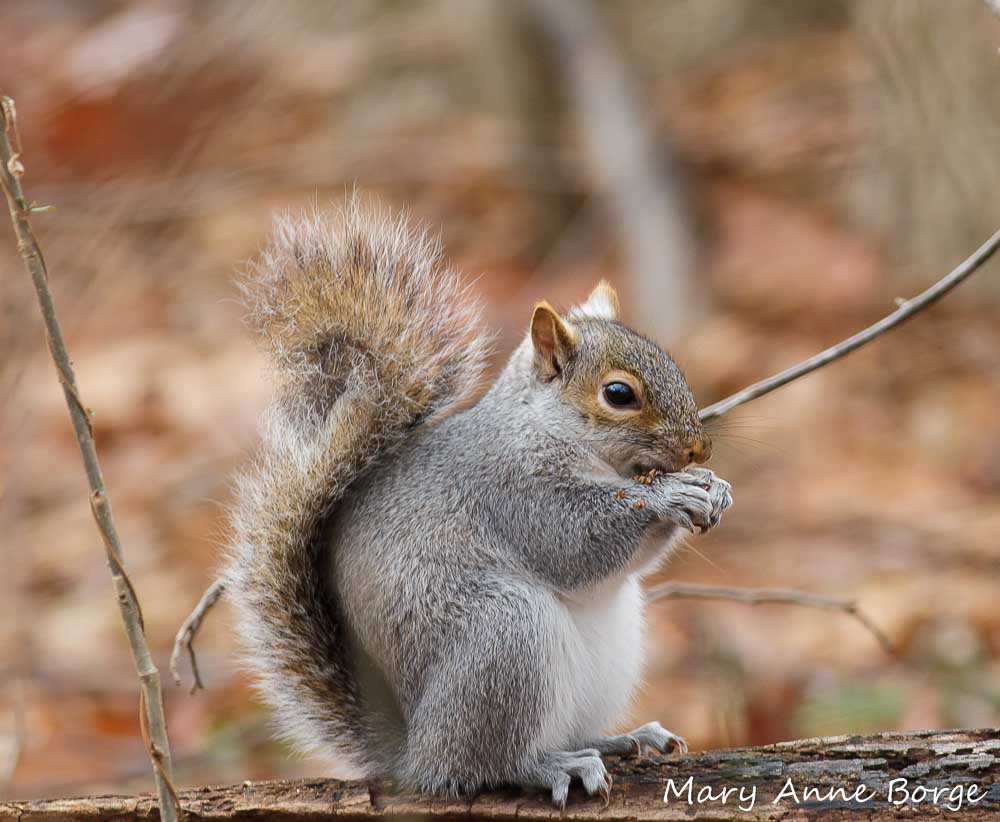
They’ll still be foraging for protein in the form of insects, but the supply will be much less plentiful than in the warmer months when many more insects are active. Ground feeders will forage among the fallen leaves, while others will investigate branches and probe bark crevices of trees and shrubs for a meal.

Gray Squirrel

Gray Squirrel

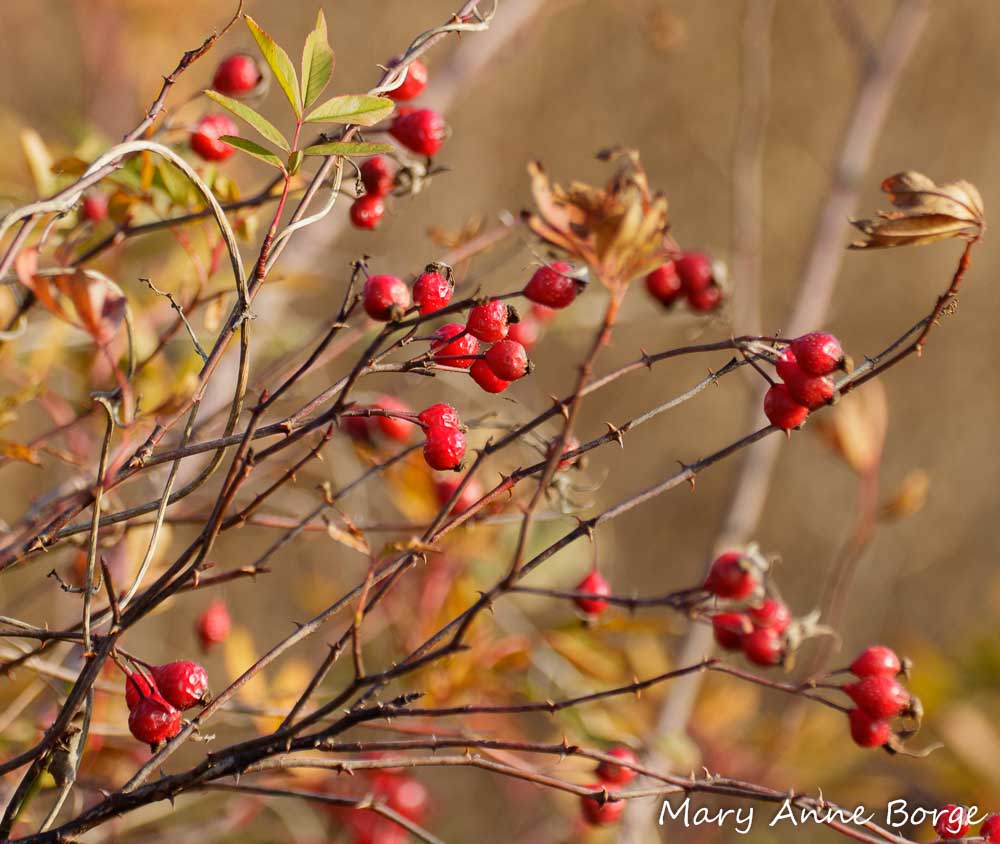
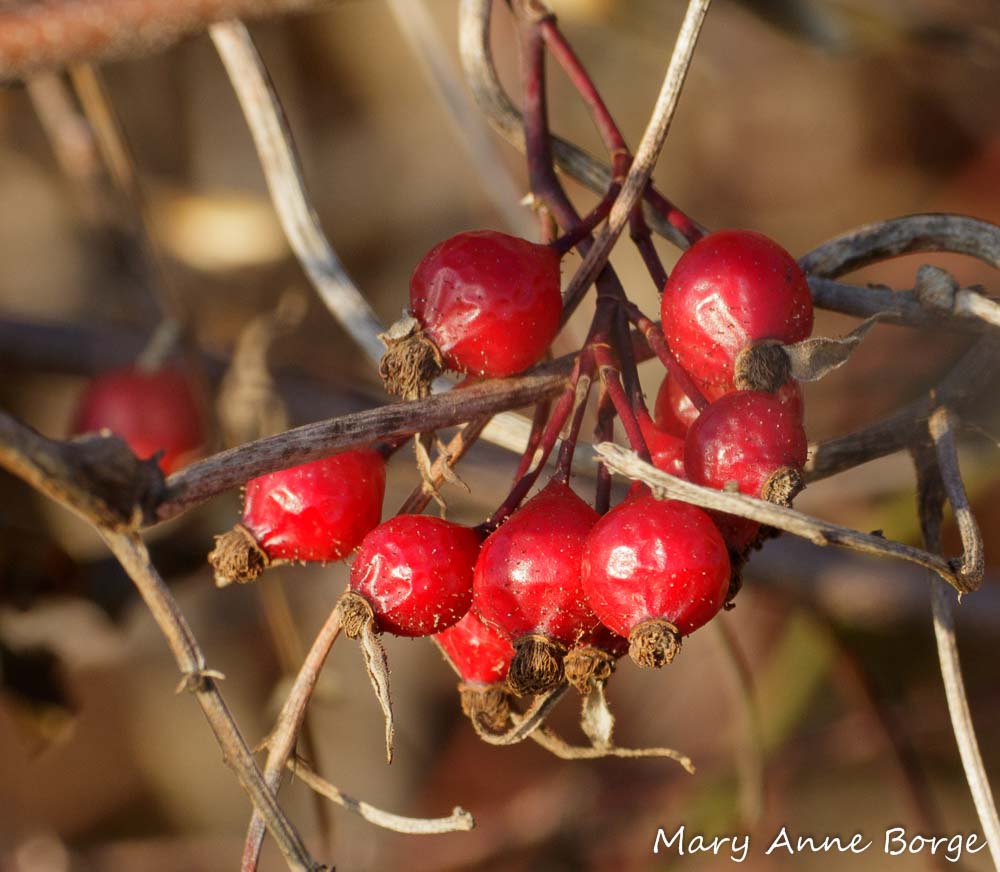
Ripe fruit will also help sustain resident winter animals. On a recent visit to Spring Lake at the Abbott Marshlands, from a single spot where the land meets the marsh, we found a bounty of food, including the hips of Swamp Rose (Rosa palustris),

Hips of Swamp Rose (Rosa palustris). Rose hips are rich in vitamin C. The hips of some rose species are used in teas.

Hips of Swamp Rose (Rosa palustris). Rose hips are rich in vitamin C. The hips of some rose species are used in teas.

Hips of Swamp Rose (Rosa palustris).

Hips of Swamp Rose (Rosa palustris).

open legumes of Groundnut (Apios americana), a pea family member,

Open legumes of Groundnut (Apios americana)

Open legumes of Groundnut (Apios americana)

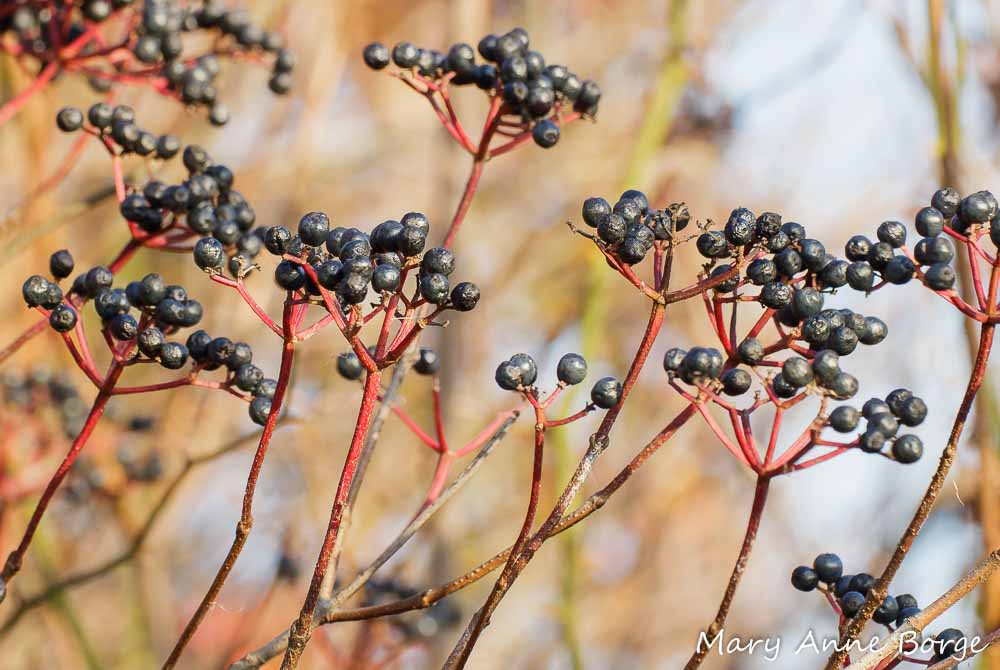
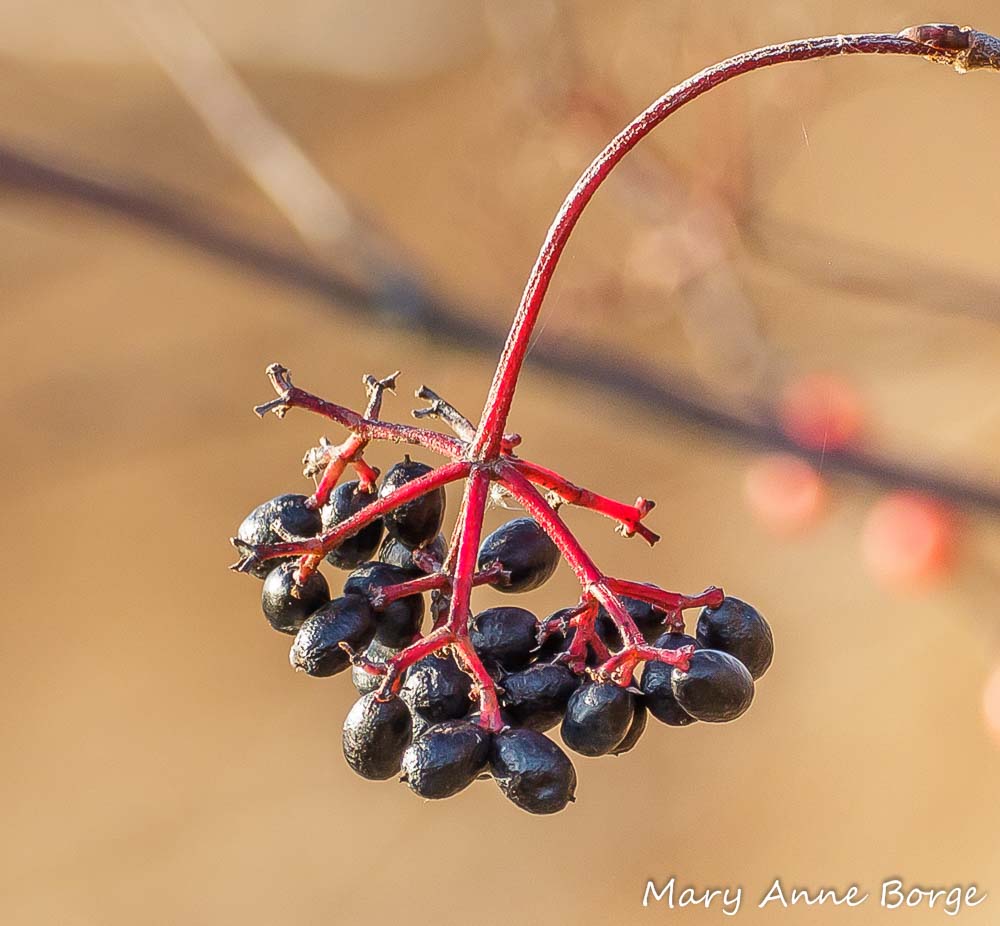
ripe drupes of Arrowwood Viburnum (Viburnum dentatum),

Arrowwood Viburnum (Viburnum dentatum) fruit

Arrowwood Viburnum (Viburnum dentatum) fruit

Arrowwood Viburnum (Viburnum dentatum) fruit, called drupes

Arrowwood Viburnum (Viburnum dentatum) fruit, called drupes

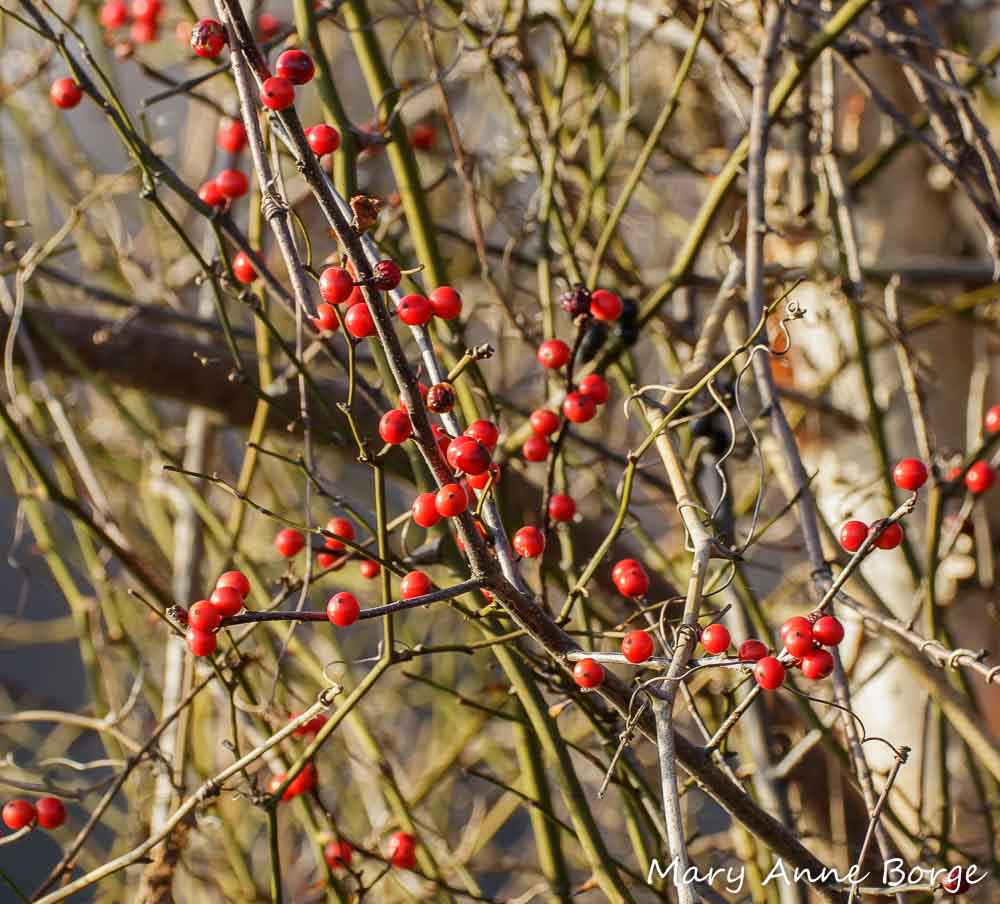
the berry-like drupes of Winterberry Holly (Ilex verticillata),

Winterberry Holly (Ilex verticillata) fruit

Winterberry Holly (Ilex verticillata) fruit

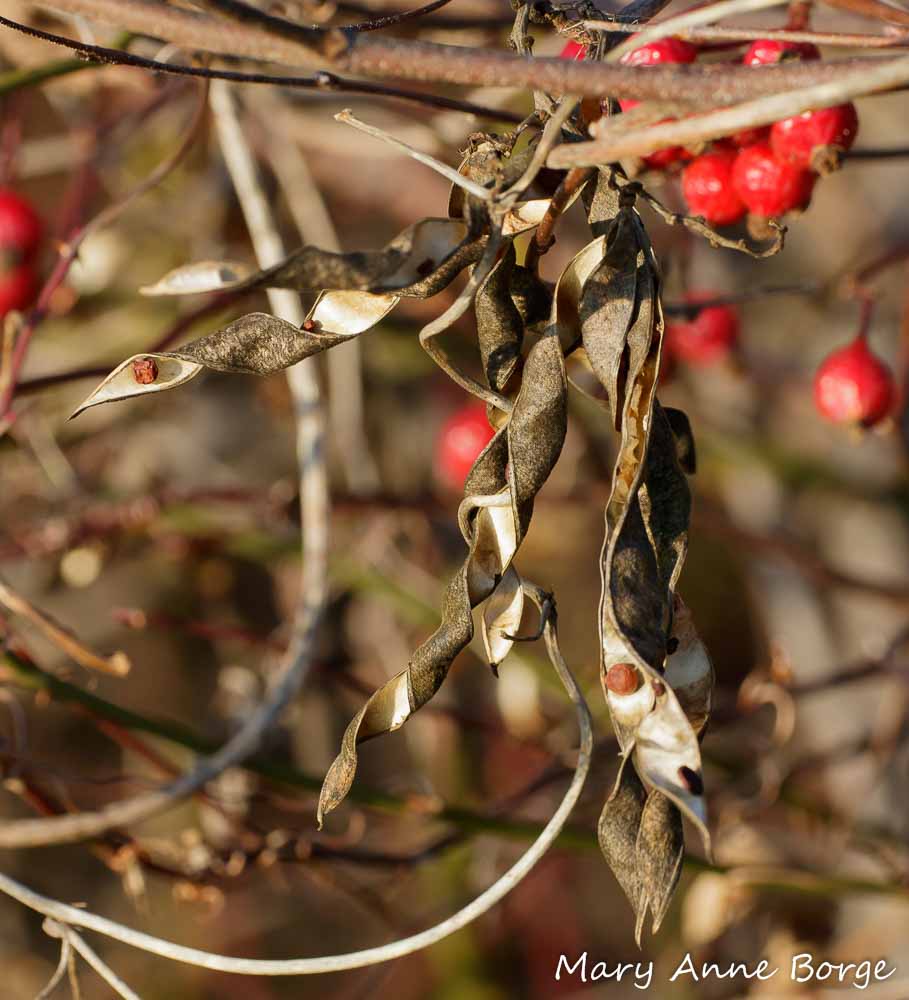
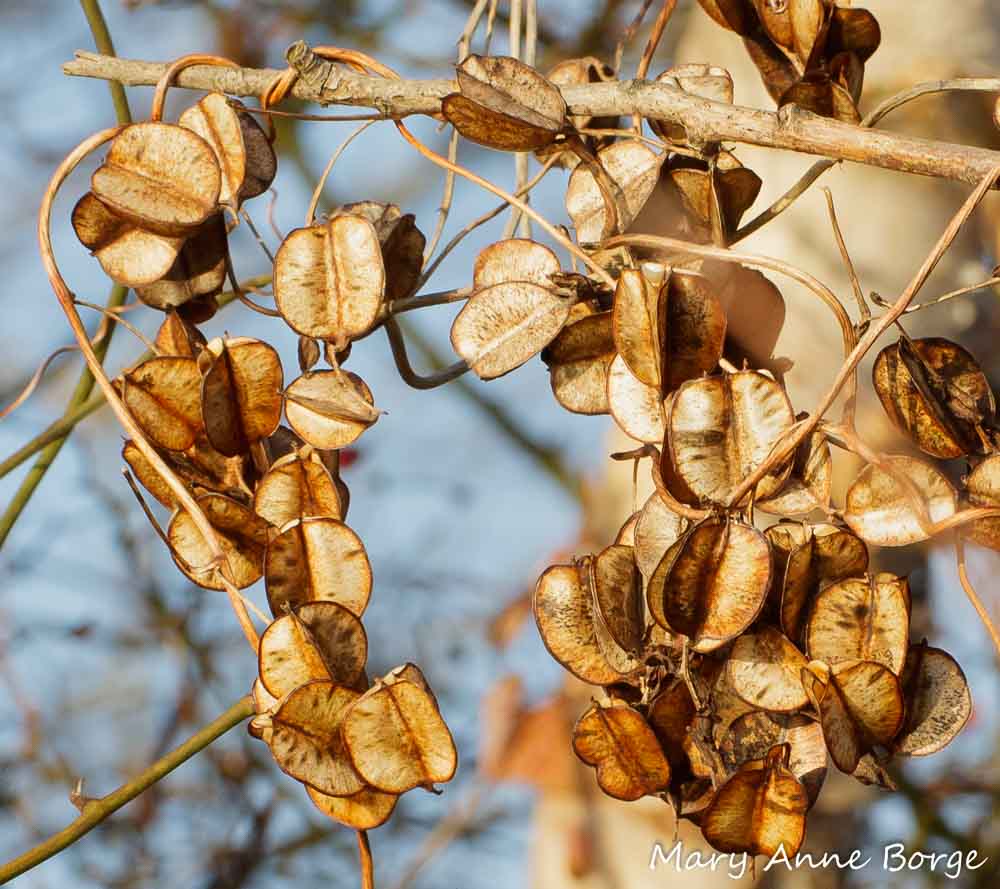
and a cascade of Wild Yam (Dioscorea villosa) fruit capsules.

Wild Yam (Dioscorea villosa) fruit capsules

Wild Yam (Dioscorea villosa) fruit capsules

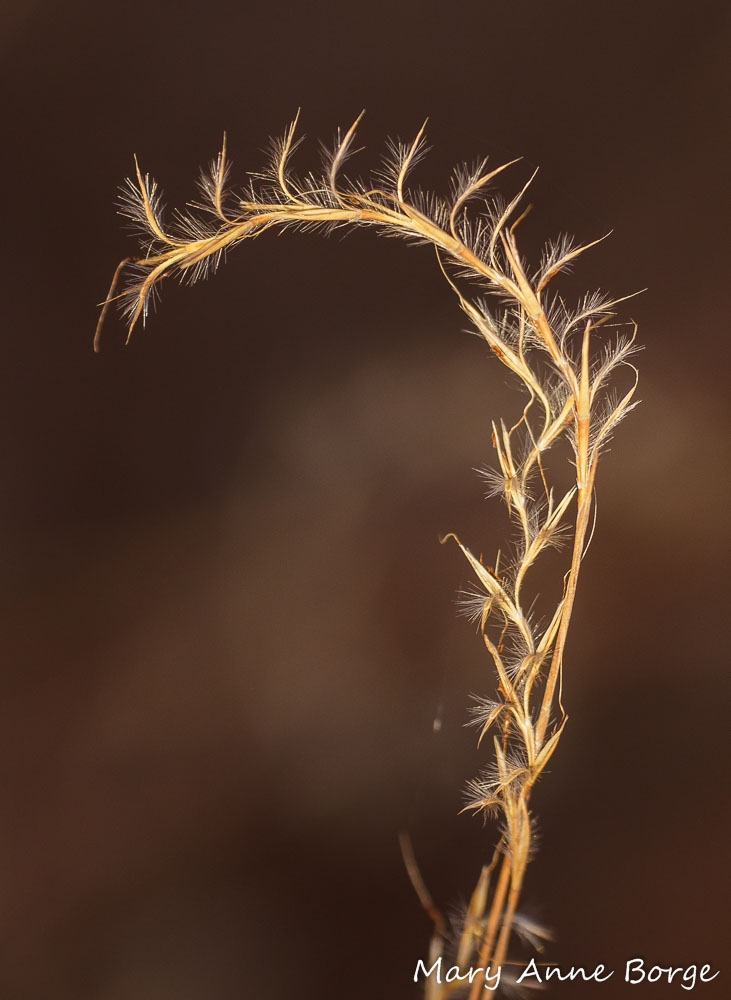
Little Bluestem (Schizachyrium scoparium) fluttered in the breeze a bit further down the trail.

Little Bluestem (Schizachyrium scoparium)

Little Bluestem (Schizachyrium scoparium)

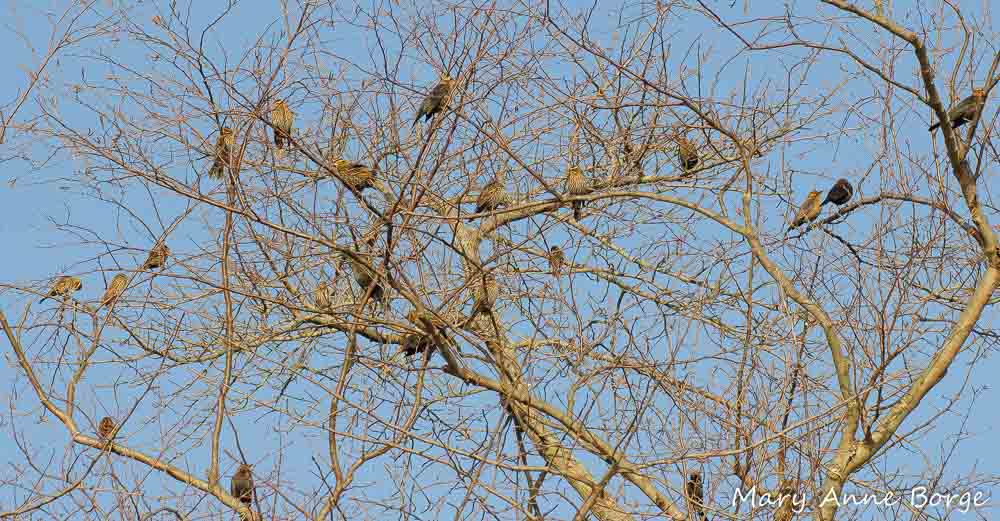
A mixed flock of migrating Red-winged and Rusty Blackbirds paused in the bare branches of trees overlooking the feast, to rest and refuel before continuing their journey.

Red-winged and Rusty Blackbirds

Red-winged and Rusty Blackbirds

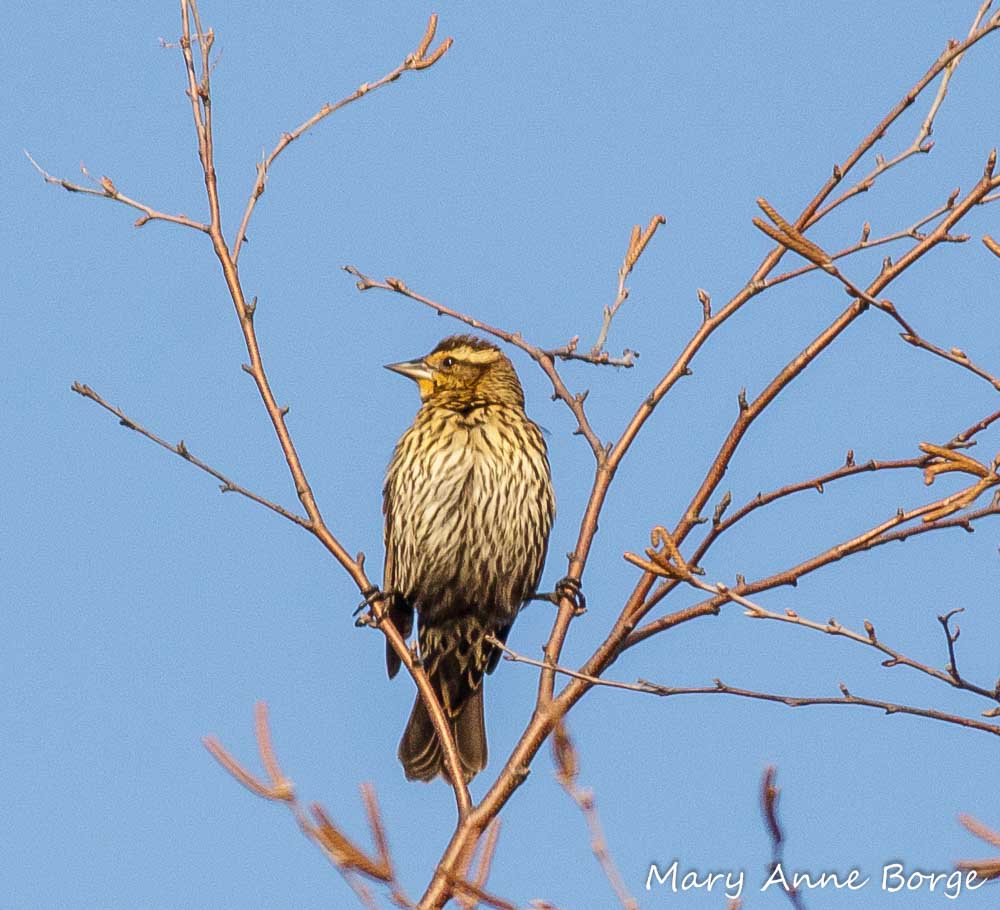
Female Red-winged Blackbird

Female Red-winged Blackbird


Related Posts

A Winter Garden Can be a Wildlife Habitat

Late Winter Bird Food

Wild Yam

Resources

Rhoads, Ann Fowler; Block, Timothy A. The Plants of Pennsylvania.  2007


American Persimmon

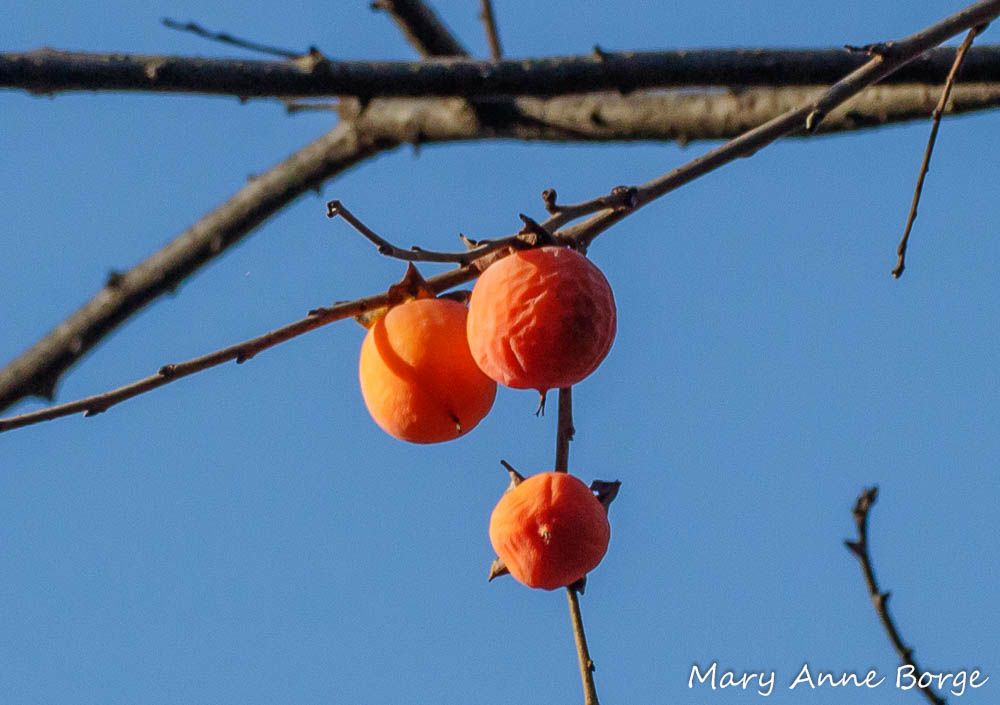
If you look up while wandering in the woods in the fall, you may see bright orange ball-like fruit hanging like holiday ornaments from the bare branches of some deciduous trees. They are probably persimmons, the fruit of the American Persimmon (Diospyros virginiana) tree.

American Persimmon (Diospyros virginiana) fruit, Sourland Mountains, West Amwell, NJ

American Persimmon (Diospyros virginiana) fruit, Sourland Mountains, West Amwell, NJ

Male and female flowers are on separate trees, blooming in spring or early summer. Only the female trees bear fruit.  The eye-catching fruits are edible, very tasty and mildly sweet when they are ripe.  They can also be used for baking.

Humans are not the only ones who find these fruits desirable. Fox, raccoons, opossum, skunks and white-tailed deer are among the mammals that eat persimmons and help disperse their seeds.

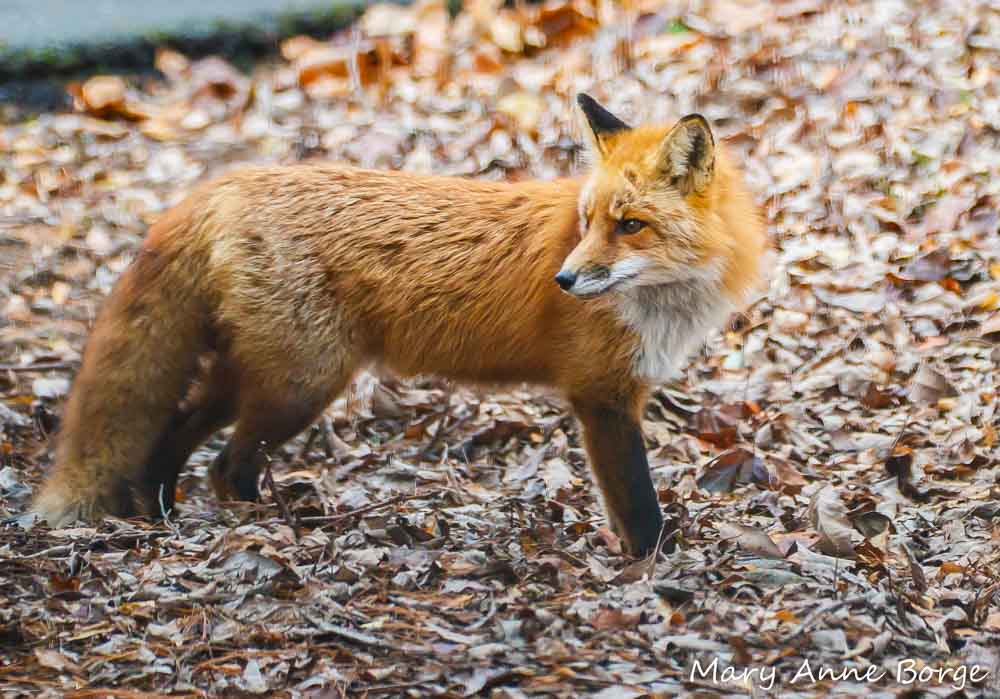
Red Fox

Red Fox consume fruit, including persimmons

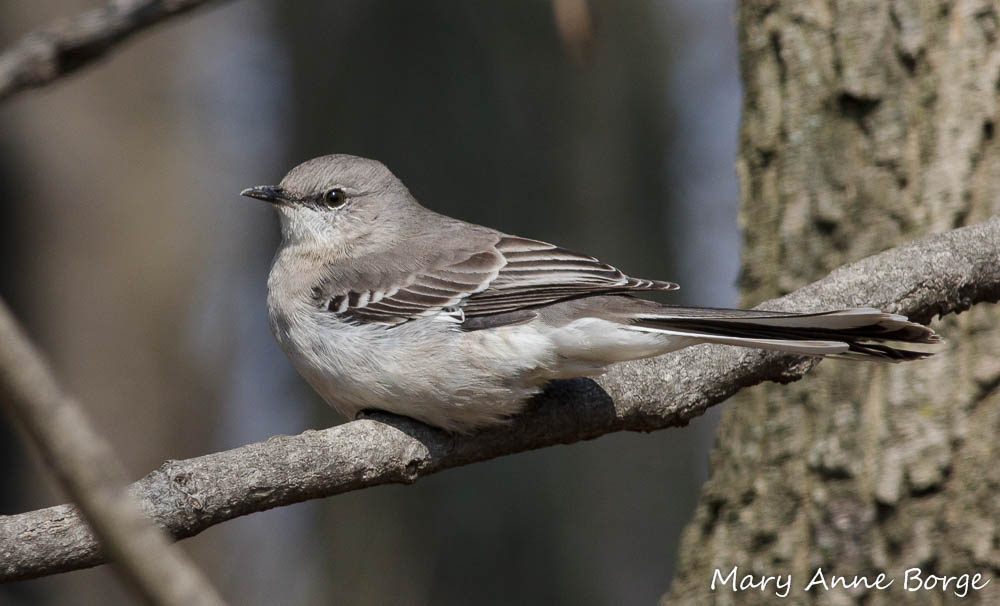
Birds that consume this tasty treat include Catbirds, American Robins, Cedar Waxwings, Mockingbirds,

Northern Mockingbird

Northern Mockingbird

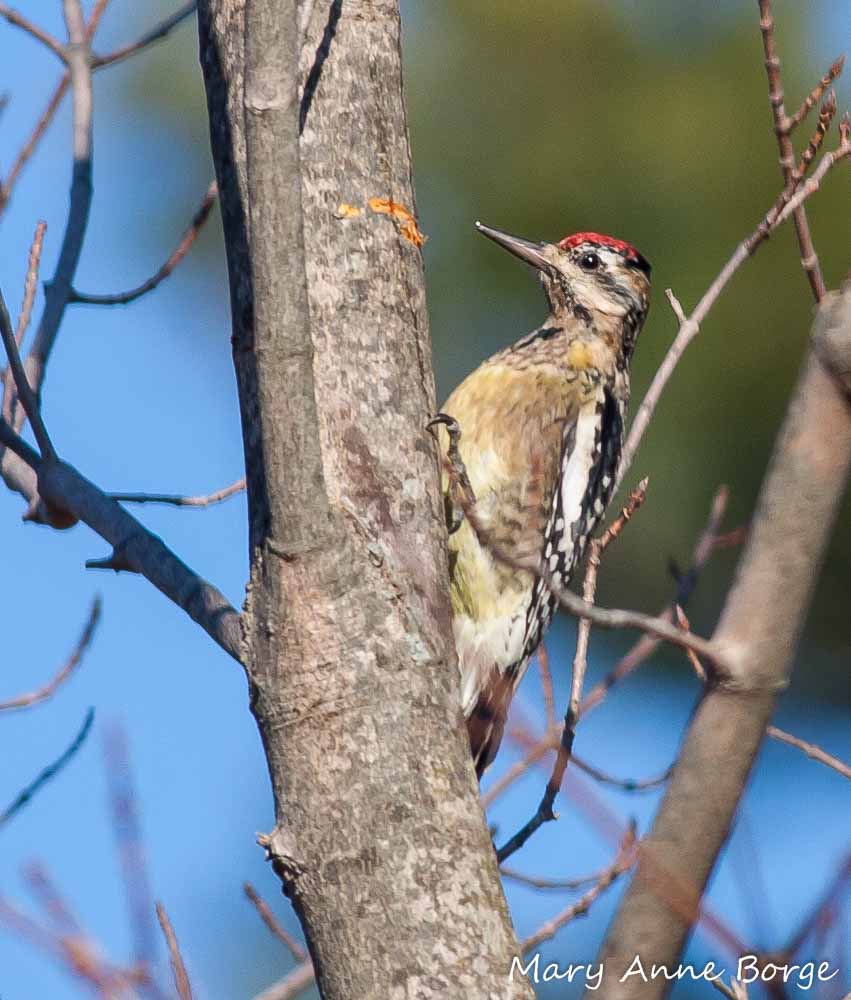
Yellow-bellied Sapsuckers,

Yellow-bellied Sapsucker

Yellow-bellied Sapsucker

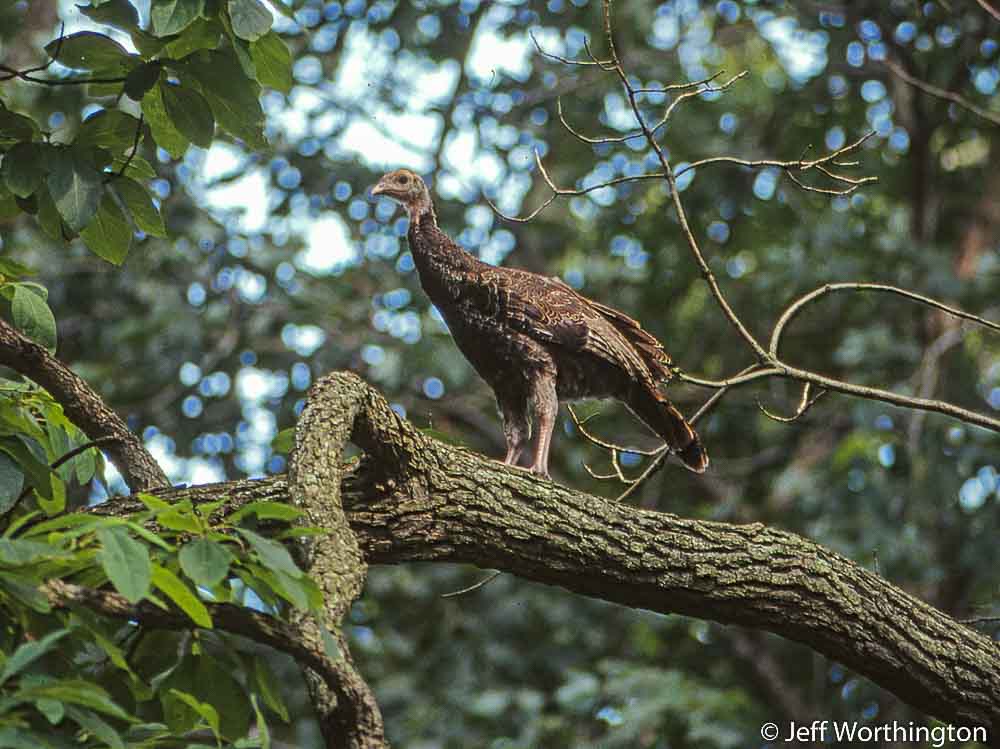
and the seasonally appropriate Wild Turkey.

Wild Turkey

Wild Turkey

The caterpillars of Luna, Regal and Hickory Horned Devil moths feed on American Persimmon leaves. The caterpillars may complete their metamorphosis to become moths, or they may become a meal for a hungry bird or other predator.

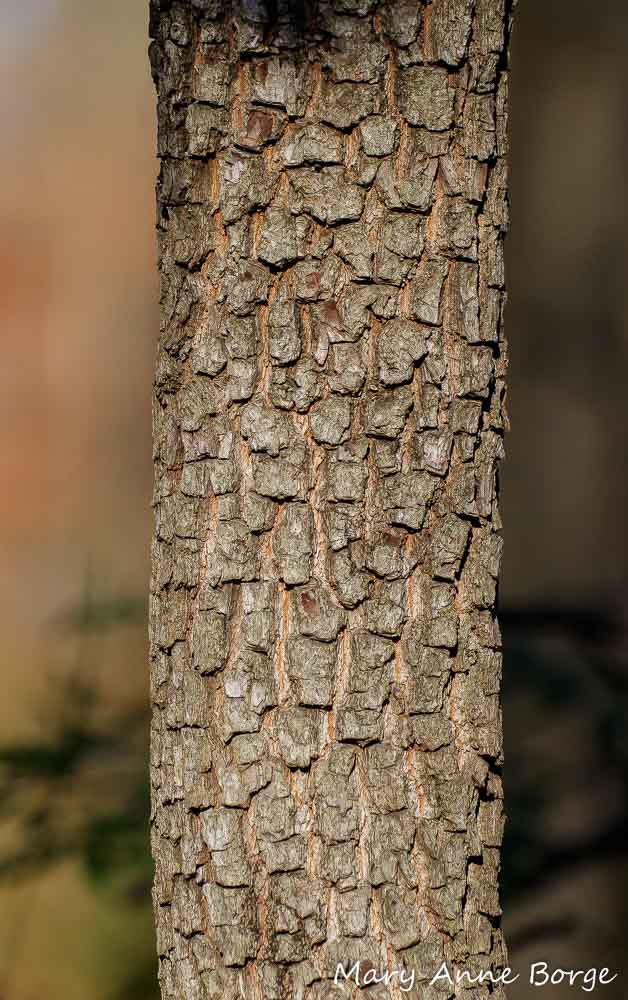
In addition to its fruit, American Persimmon can be recognized by its bark, which is deeply furrowed, forming rectangular blocks.

American Persimmon (Diospyros virginiana) bark, Sourland Mountains, West Amwell, NJ

American Persimmon (Diospyros virginiana) bark, Sourland Mountains, West Amwell, NJ

American Persimmon is a member of the ebony family, with wood that is very hard and shock resistant. It has been used to make textile shuttles, and for the heads of some golf clubs that are also called woods.

American Persimmon does well in a broad range of sites, from open fields to woodlands, in moist to dry soils, growing to a maximum height of about 50 feet (15 meters). Its native range is primarily the eastern and central United States, including parts of Massachusetts, Connecticut, and southern New York, as far west as Nebraska, and to the south from Texas to Florida.  It may also be found in parts of California and Utah.  Like Eastern Red Cedar (Juniperus virginiana), American Persimmon is considered a pioneer species, one that is an early colonizer in the transition from a field to a forest.  It may eventually be shaded out as a mature forest rises above it.

American Persimmon (Diospyros virginiana) fruit, Sourland Mountains, West Amwell, NJ

American Persimmon (Diospyros virginiana) fruit, Sourland Mountains, West Amwell, NJ


Resources

Martin, Alexander C.; Zim, Herbert S.; Nelson, Arnold L. American Wildlife & Plants A Guide to Wildlife Food Habits.  1951.

Wagner, David L.; Caterpillars of Eastern North America, 2005.

Illinois Wildflowers

USDA Forest Service

USDA NRCS Database

USDA NRCS Plant Guide


What Do Juniper Hairstreaks and Cedar Waxwings Have in Common?

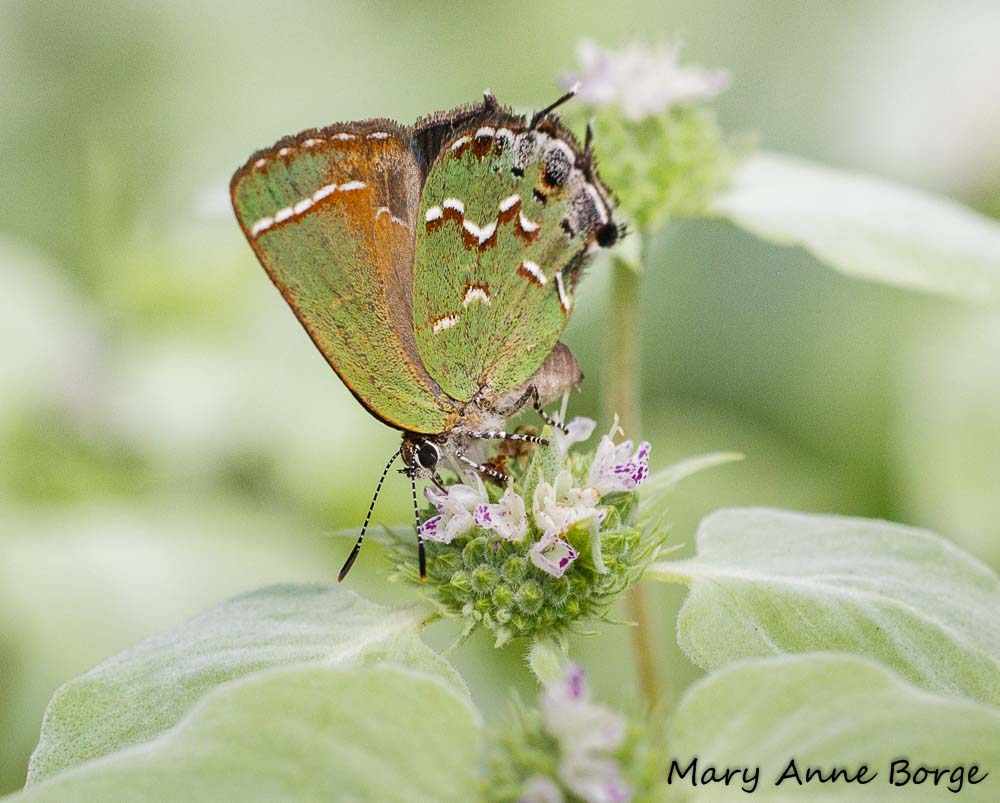
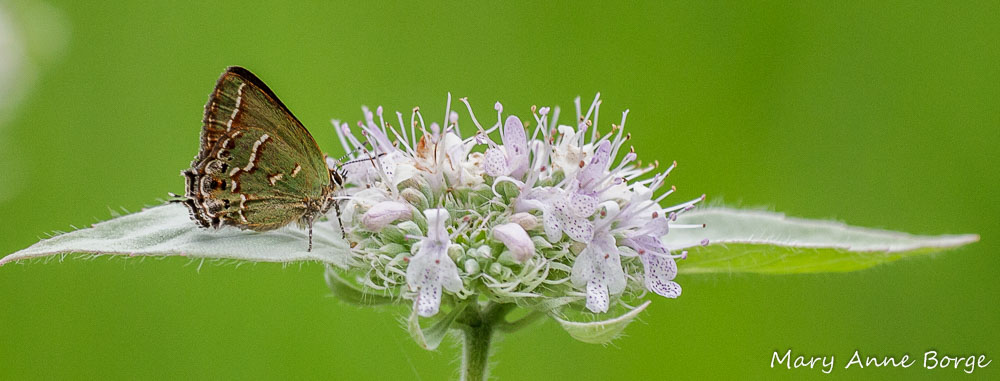
Juniper Hairstreaks are sprightly little butterflies with varying color forms that predominate in different parts of their range.  Where I live in the east, the ‘Olive’ Juniper Hairstreak is present, sporting a sparkling bright green and brown coloration.  The Juniper Hairstreak is named after its caterpillar food plant, which is Eastern Red Cedar in much of the eastern two thirds of the United States, east of the Rocky Mountains.  To understand the origin of the butterfly’s name, it helps to know that this plant is actually a juniper, reflected in its scientific name, Juniperus virginiana.
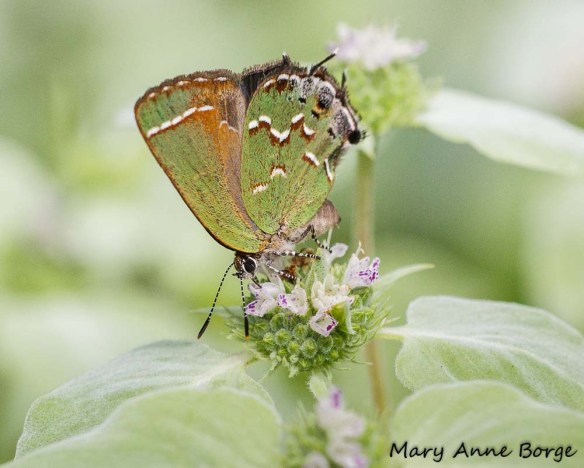
Juniper Hairstreak nectaring on Short-toothed Mountain Mint (Pycnanthemum muticum)

Juniper Hairstreak nectaring on Short-toothed Mountain Mint (Pycnanthemum muticum)

Juniper Hairstreak’s distribution is sometimes described as ‘locally common’, because this butterfly is usually found in close proximity to its caterpillar food plant.  Male Juniper Hairstreaks spend their time perched on the branches of their caterpillar food trees, waiting for a receptive female to appear.  Eggs are laid singly on the tips of the tree branches.
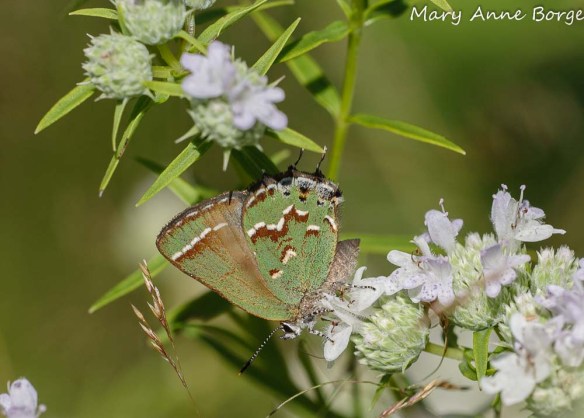
Juniper Hairstreak nectaring on Narrow-leaved Mountain Mint (Pycnanthemum tenuifolium)

Juniper Hairstreak nectaring on Narrow-leaved Mountain Mint (Pycnanthemum tenuifolium)

Adult Juniper Hairstreaks visit flowers of many perennials for nectar, but this is most often in the vicinity of their caterpillar food plants.  In my area, they seem especially fond of nectaring at Mountain Mints (Pycnanthemum species), but I have also seen them feeding on coneflowers and other aster family members.

Juniper Hairstreak nectaring on Eastern Coneflower (Rudbeckia fulgida)

Juniper Hairstreak nectaring on Eastern Coneflower (Rudbeckia fulgida)

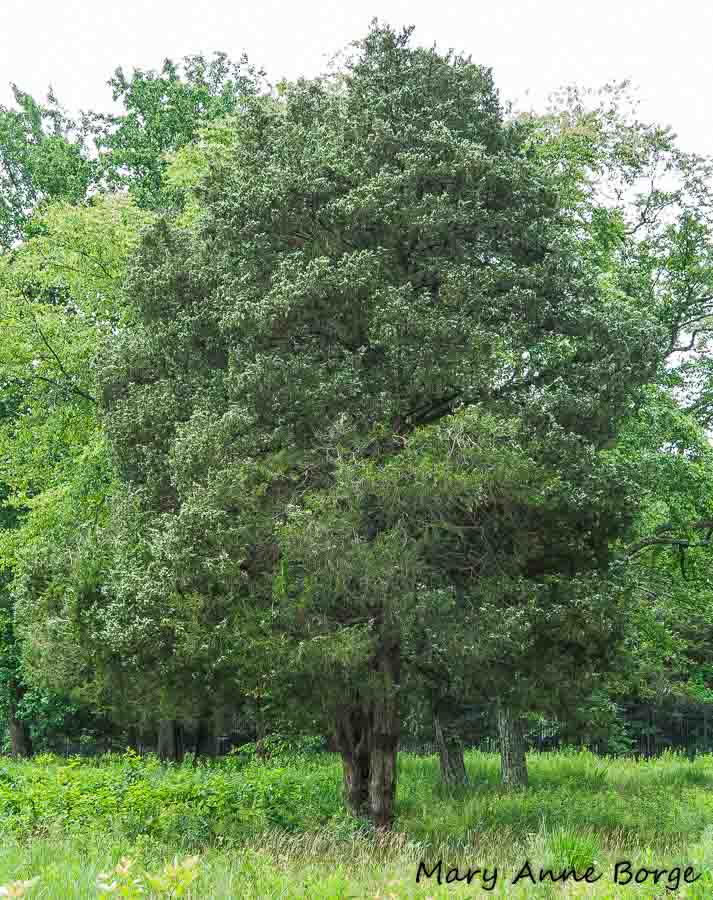
Eastern Red Cedar is an evergreen tree with a shape that is generally pyramidal or columnar.  It usually grows to a maximum height of about 40 feet (12+ meters), although in the right conditions it can grow taller.  It does best in full sun.  Eastern Red Cedar can tolerate moist to dry soils but is especially well adapted to dry conditions, making it a good candidate for locations where drought is a concern.  It is effective alone as a specimen tree, or on larger properties it can be used for privacy screening or to line a driveway.  Its deep root system enables Eastern Red Cedar to stand up to strong winds, so it also makes an effective windbreak. It can even stand up to tropical storms.
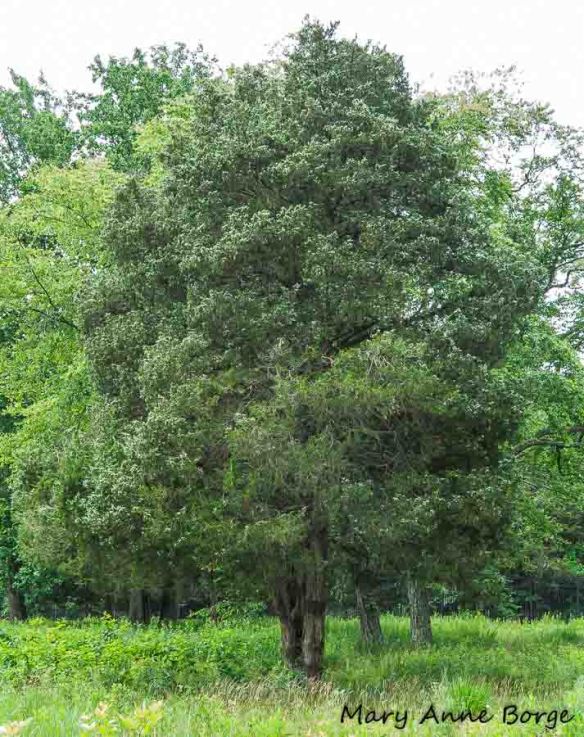
Eastern Red Cedar (Juniperus virginiana)

Eastern Red Cedar (Juniperus virginiana)

The evergreen foliage of Eastern Red Cedar provides year-round visual interest.  It is accented by the changing color of its fruit, which begin to develop in pale shades of grayish blue by mid to late spring, ripening throughout the summer to a deep blue.  Often some fruits will remain on the trees through much of the winter.  While these fruits look like luscious berries, they are actually cones.  Although there are occasional exceptions, Eastern Red Cedar generally has male and female reproductive parts on separate plants.  At least one male is needed in the neighborhood to produce pollen.  Only the female trees will have the showy berry-like cones.  Eastern Red Cedar relies on wind to achieve pollination.
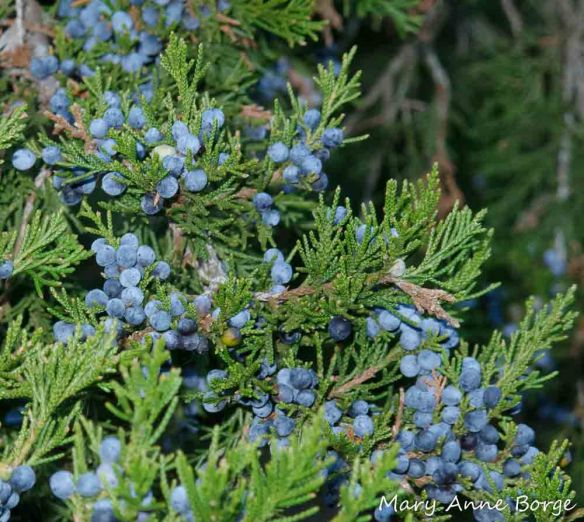
Eastern Red Cedar (Juniperus virginiana) cones

Eastern Red Cedar (Juniperus virginiana) cones

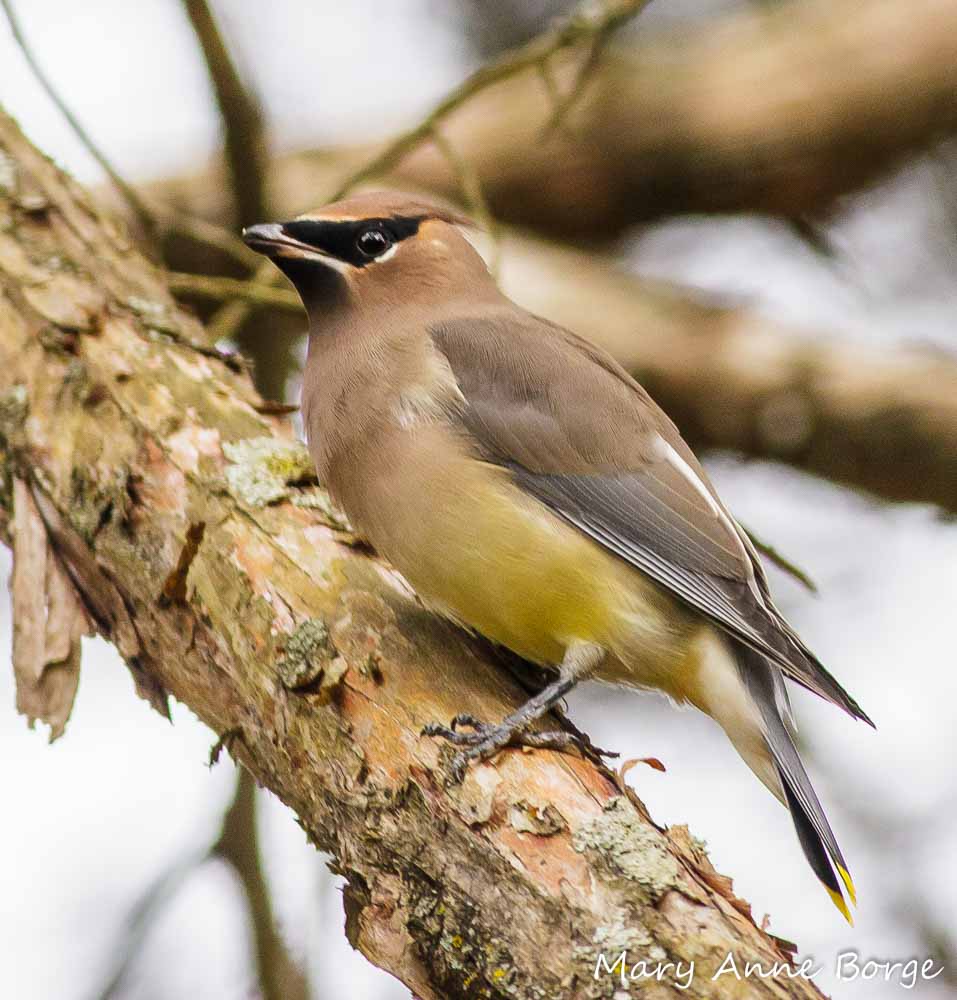
In addition to being a caterpillar food plant for Juniper Hairstreaks, Eastern Red Cedar is great for birds.  The berry-like cones provide food from late summer through much of the winter for many bird species.  The social Cedar Waxwings, for whom fruit is a larger part of their diet than it is for most birds, were named for their love of these cones.  Eastern Red Cedar’s dense foliage provides good coverage for small to medium sized birds who are looking for a place to perch safely out of view and reach from larger predators.

Cedar Waxwing

Cedar Waxwing

Eastern Red Cedar is a hardy tree that reproduces readily.  It is sometimes referred to as a pioneer species, since it is often one of the first tree species to appear in fields and meadows.  This is usually the result of its seeds passing through the digestive system of birds, a process that increases the chance that the seed will germinate successfully.

What do Juniper Hairstreaks and Cedar Waxwings have in common?  Both depend on Eastern Red Cedar for food.  Juniper Hairstreak caterpillars rely for their survival solely on this tree species .  Cedar Waxwings have a strong preference for the cones of Eastern Red Cedar, but also eat many other fruits.  The names of both of these animals reflect the strong association between them and Eastern Red Cedar.

Watch to see how many different bird species dine or take shelter in Eastern Red Cedar.  If there are good nectar plants nearby, you’ve found a hospitable home for Juniper Hairstreaks, too.

Juniper Hairstreak on Hoary Mountain Mint (Pycnanthemum incanum)

Juniper Hairstreak on Hoary Mountain Mint (Pycnanthemum incanum)


Resources

USDA Eastern Red Cedar Plant Fact Sheet

USDA Eastern Red Cedar Plant Guide

Lady Bird Johnson Wildflower Center

Butterflies and Moths of North America

Sibley, David Allen.  The Sibley Guide to Bird Life and Behavior.  2001.


Blackhaw Viburnum – A Subtle Beauty

Blackhaw Viburnum (Viburnum prunifolium)

Blackhaw Viburnum (Viburnum prunifolium)

Blackhaw Viburnum (Viburnum prunifolium) begins to bloom about a week after Flowering Dogwood (Cornus florida), its profuse rounded clusters of creamy white flowers visited by a variety of bees, flies and butterflies for their nectar and pollen.  Although less well known than some of its woodland neighbors, such as Dogwood and Redbud, Blackhaw Viburnum’s subtle beauty is a common and essential element of the forest’s palette in spring.
Blackhaw Viburnum (Viburnum prunifolium)

Blackhaw Viburnum (Viburnum prunifolium)

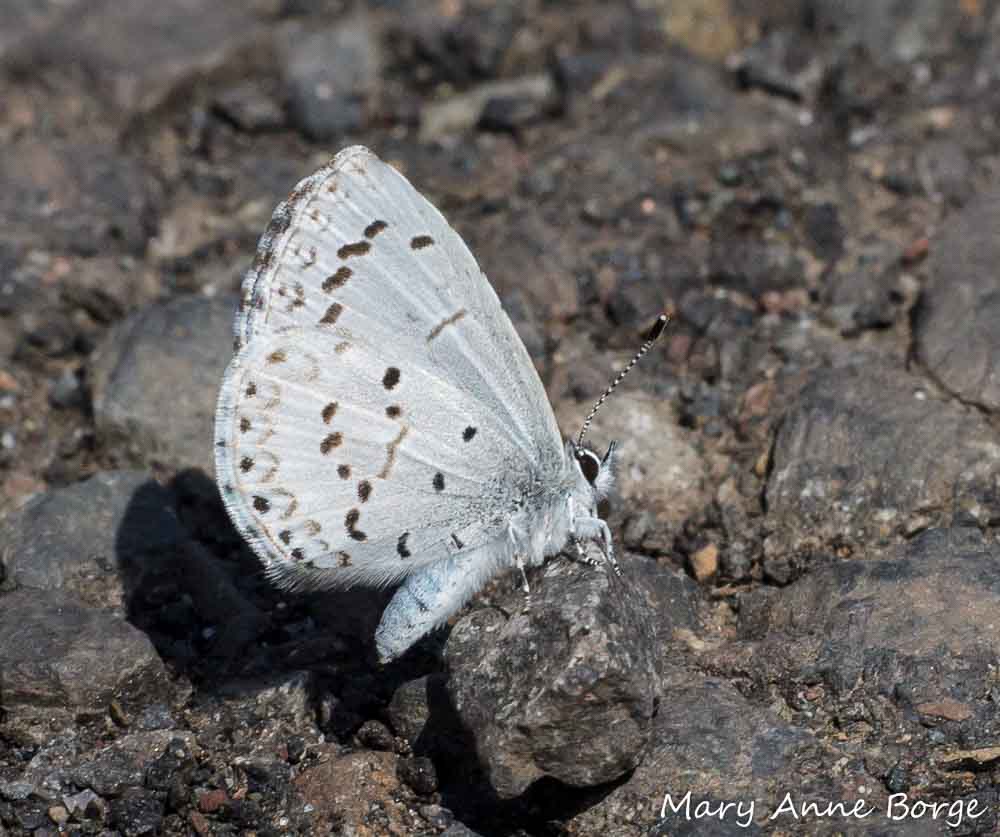
Spring Azure butterfly caterpillars may eat the flowers or buds of many woody plant species, including the viburnums.

Spring Azure

Spring Azure

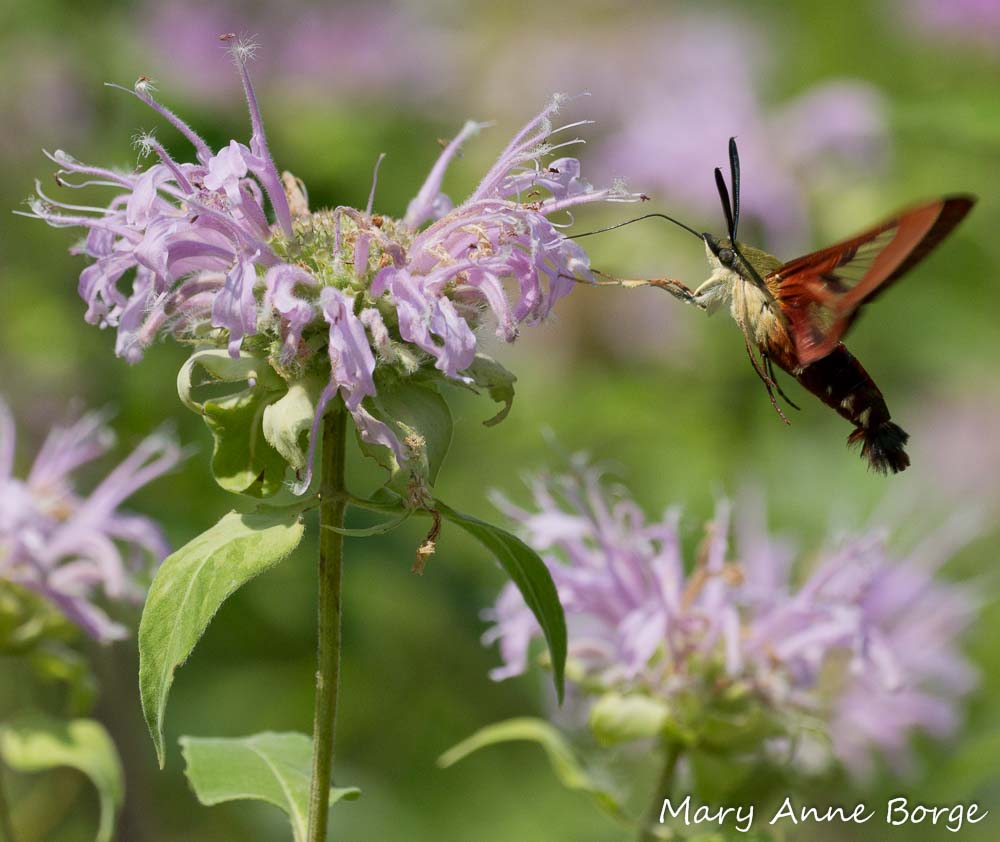
Hummingbird Clearwing moth caterpillars may feed on their leaves.

Hummingbird Clearwing nectaring on Wild Bergamot (Monarda fistulosa)

Hummingbird Clearwing nectaring on Wild Bergamot (Monarda fistulosa)

In their later development stages, even Baltimore Checkerspot caterpillars may migrate from the leaves of their preferred food plant, Turtlehead (Chelone glabra) to eat viburnum leaves.

Baltimore Checkerspot

Baltimore Checkerspot

The caterpillars may be lucky enough to attain adulthood, or they may become food for another animal somewhere along the way.  Caterpillars are an important source of food for many animals, but especially for birds.  It can take thousands of caterpillars to feed a hungry brood of young Chickadees or Titmice.

Tufted Titmouse

Tufted Titmouse

If Blackhaw Viburnum’s spring visitors successfully pollinate its flowers, dark blue fruits (called drupes) are produced, maturing in fall.

Blackhaw Viburnum (Viburnum prunifolium) fruit

Blackhaw Viburnum (Viburnum prunifolium) fruit

Chipmunks, squirrels and many bird species, including Hermit Thrush, Cardinals, Bluebirds and White-throated Sparrows, are among those that eat the fruit.

Northern Cardinal

Northern Cardinal

Blackhaw Virburnum can be single or multi-stemmed, and grows to a maximum height of about 15-25 feet (4.6-7.6 meters).  It tends to grow taller when single-stemmed.  Its natural habitat is generally medium to dry upland areas, even growing in rocky soil, like the Sourland Mountains of New Jersey where I live.  Its range is from New York to Michigan and Wisconsin in the north, to the south from Texas to Georgia.

Blackhaw Virburnum makes a great landscape plant.  Look for it blooming in a forest near you, or better yet, add it to your garden and enjoy it and its visitors throughout the seasons.

Blackhaw Viburnum (Viburnum prunifolium)

Blackhaw Viburnum (Viburnum prunifolium)


Resources

Cech, Rick; Tudor, Guy.  Butterflies of the East Coast.  2005.

Wagner, David L.;  Caterpillars of Eastern North America, 2005.

http://www.illinoiswildflowers.info/trees/plants/blackhaw.htm

Late Winter Bird Food

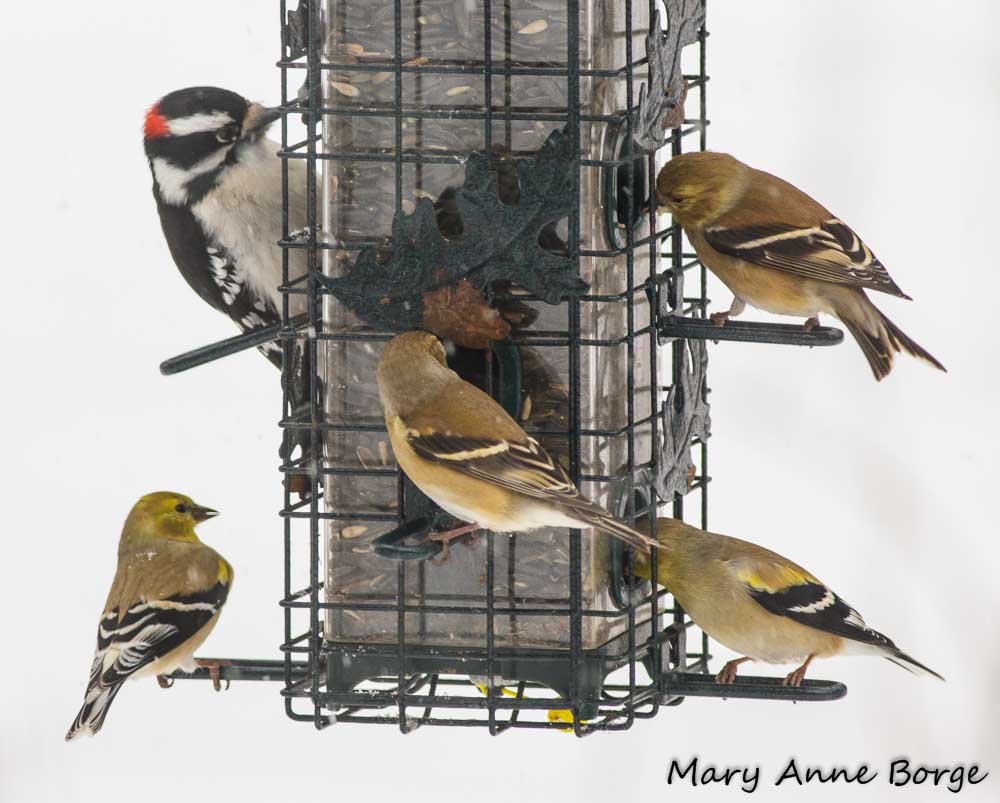
A Downy Woodpecker and Goldfinches sharing a meal

A Downy Woodpecker and Goldfinches sharing a meal

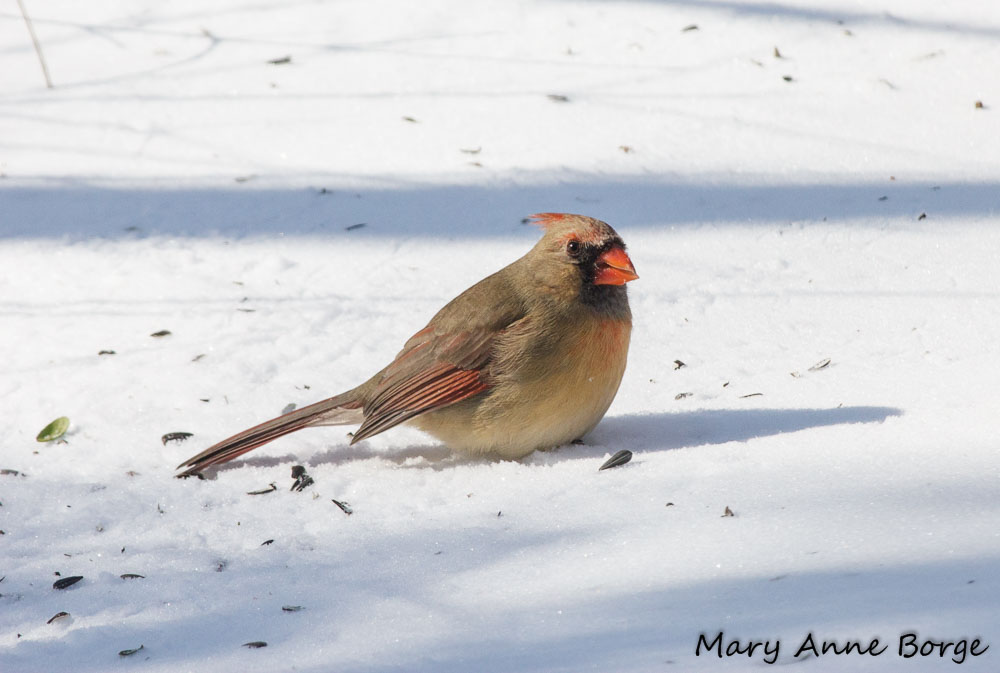
The ground has been solidly snow covered for weeks.  As a result, traffic at bird feeders is heavy, with birds often emptying our feeder in less than a day.  It’s especially tough on birds that feed on the ground, like Cardinals,

Female Northern Cardinal

Female Northern Cardinal

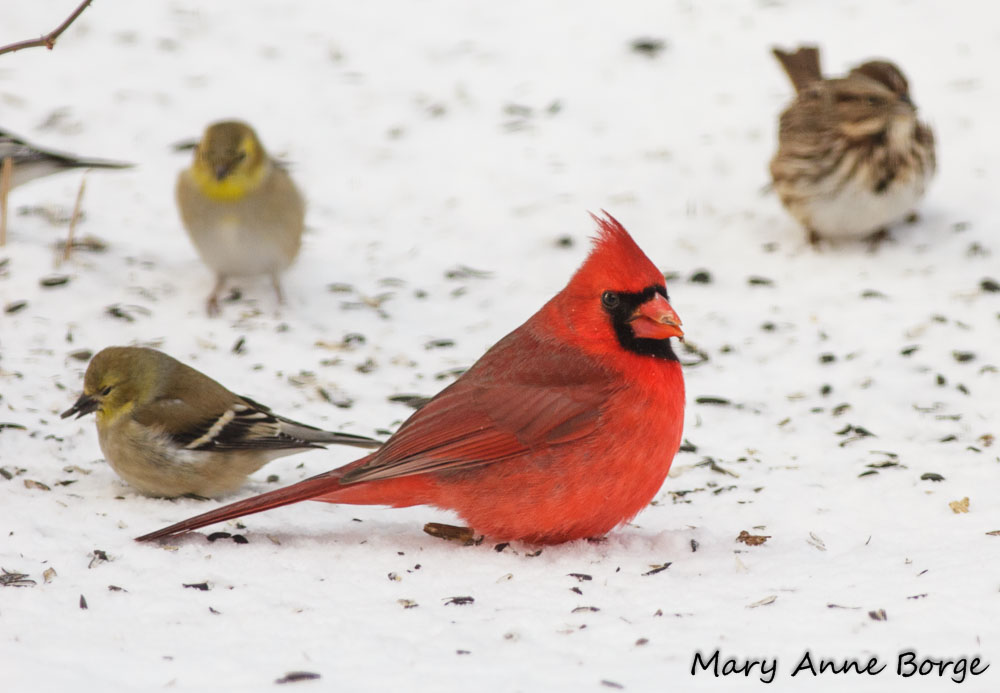
Male Northern Cardinal with American Goldfinches and Song Sparrow

Male Northern Cardinal with American Goldfinches and Song Sparrow

White-throated Sparrows

White-throated Sparrow

White-throated Sparrow

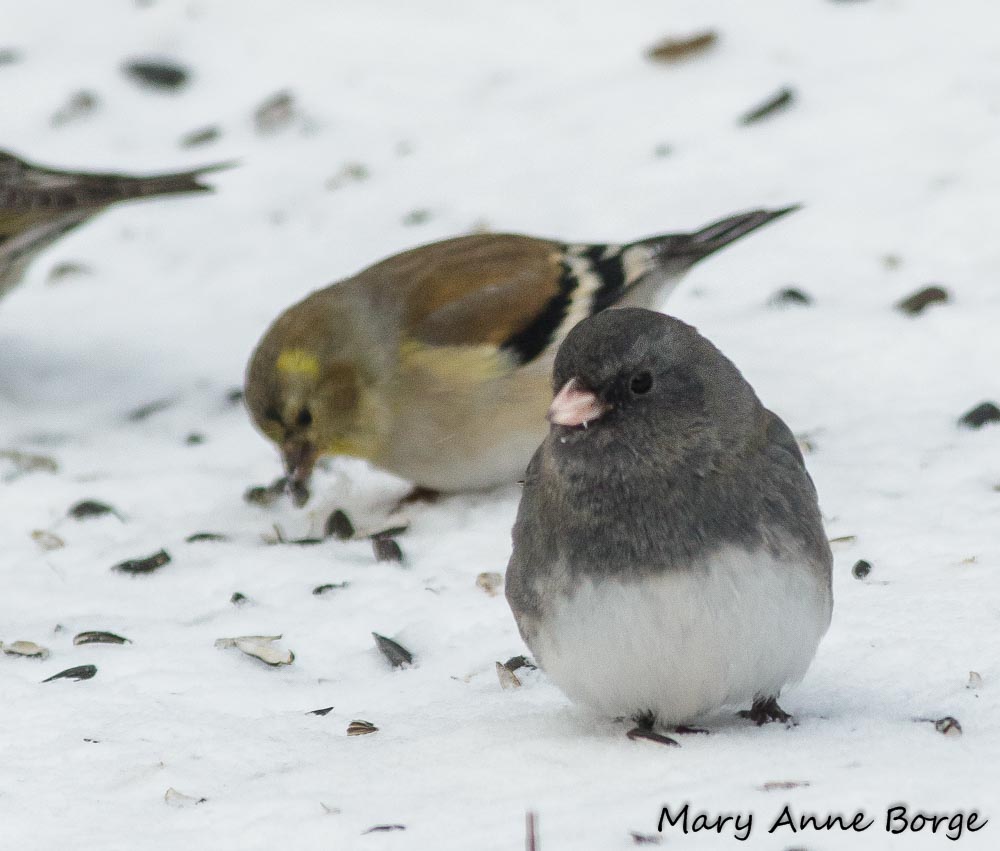
and Dark-eyed Juncos.

Dark-eyed Junco with American Goldfinch

Dark-eyed Junco with American Goldfinch

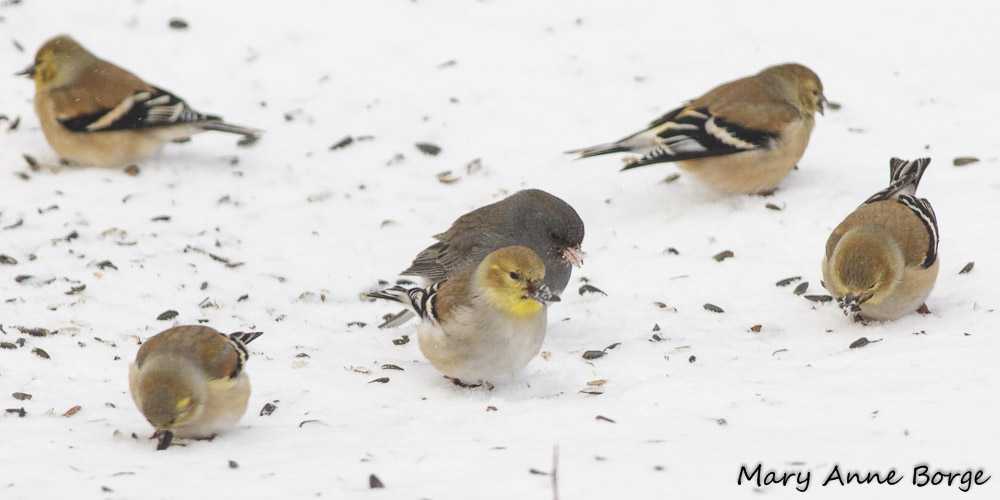
In our yard, a flock of Goldfinches moved back and forth from the feeder to the ground below,

American Goldfinches with Dark-eyed Junco

American Goldfinches with Dark-eyed Junco

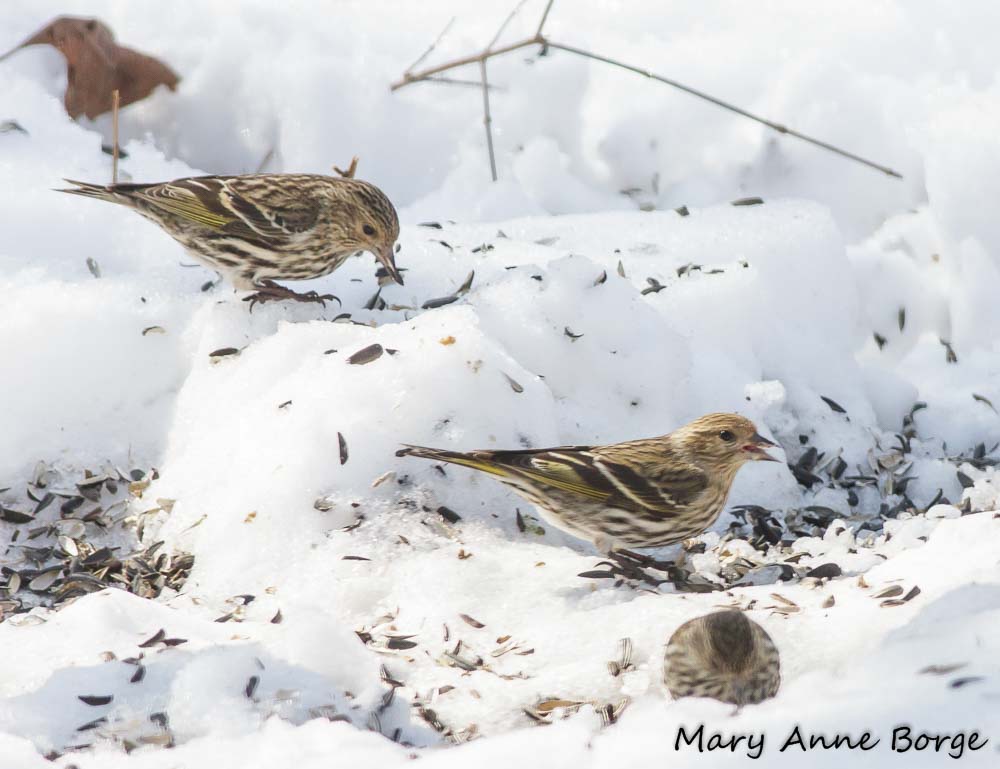
joined by a trio of Pine Siskins, visiting us for the past few weeks.

Pine Siskins and American Goldfinches

Pine Siskins and American Goldfinches

Pine Siskins

Pine Siskins

Birds take advantage of the food we provide, but what else do they eat in winter?

White-throated Sparrow

White-throated Sparrow

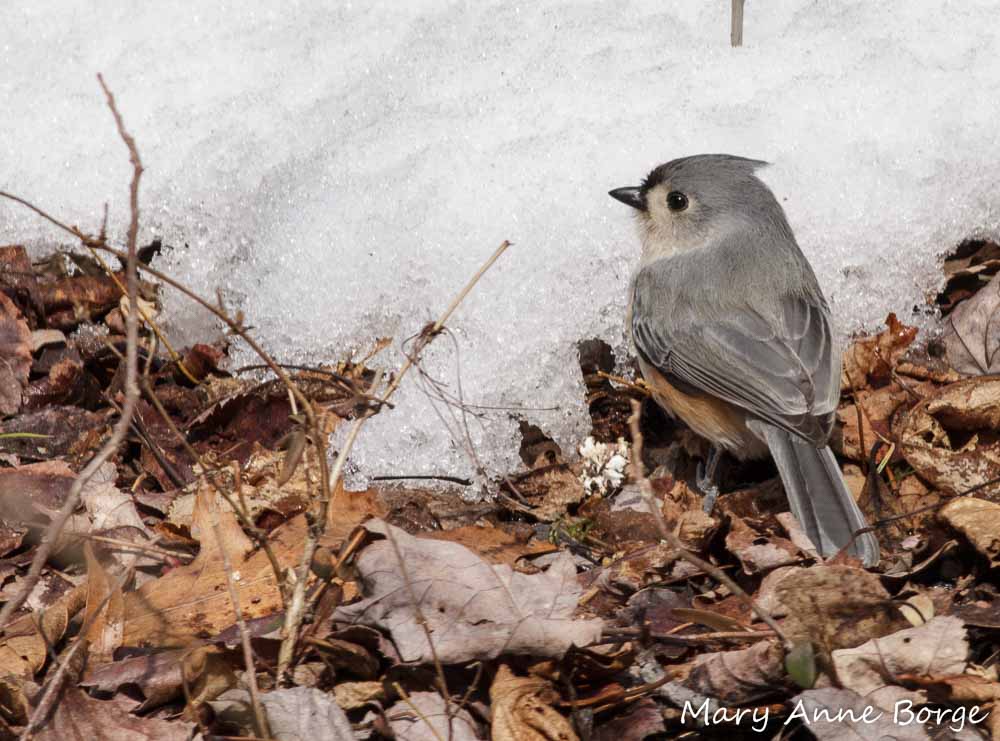
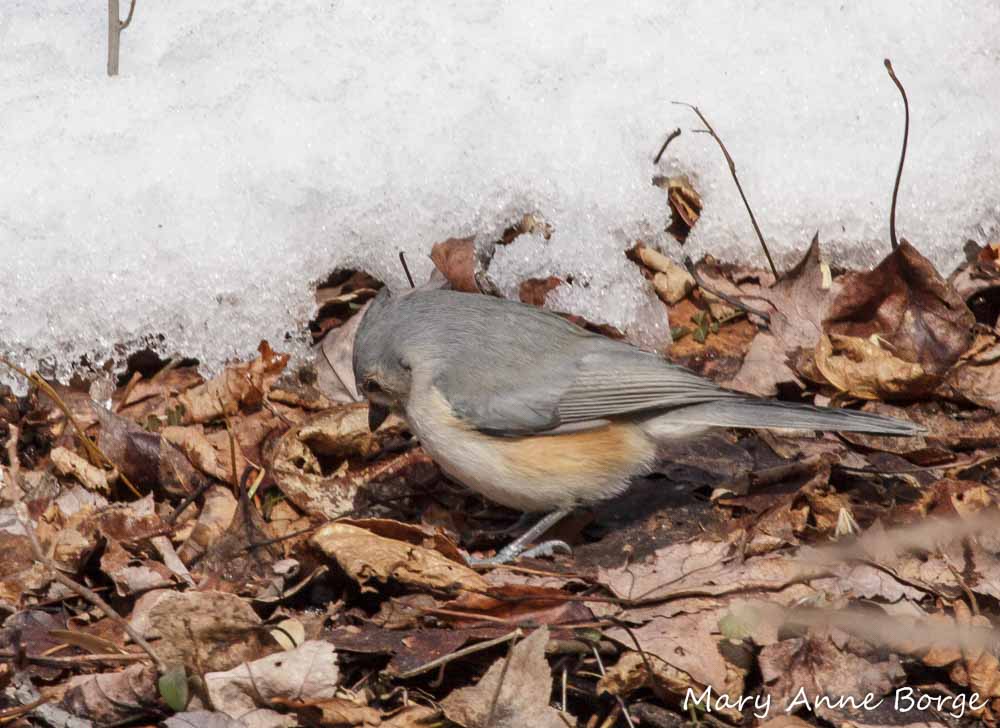
Just as in the warm months, insects are still an important part of their diet.  As soon as there is open ground, birds begin tossing and probing leaves, looking for overwintering insects to eat.

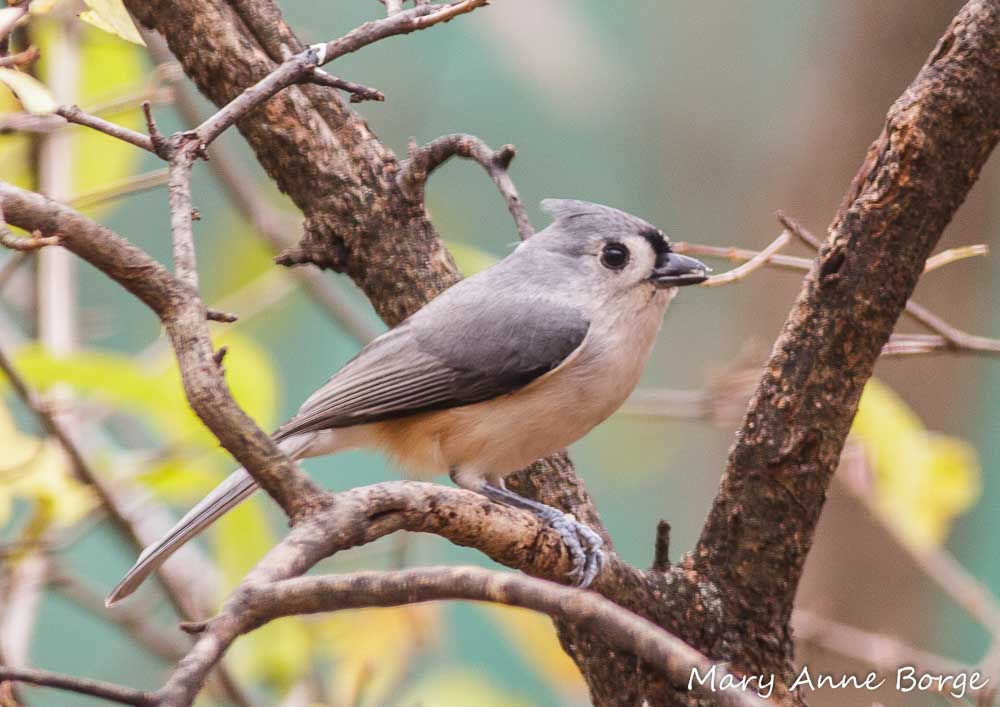
Tufted Titmouse

Tufted Titmouse

Tufted Titmouse searching for food

Tufted Titmouse searching for food

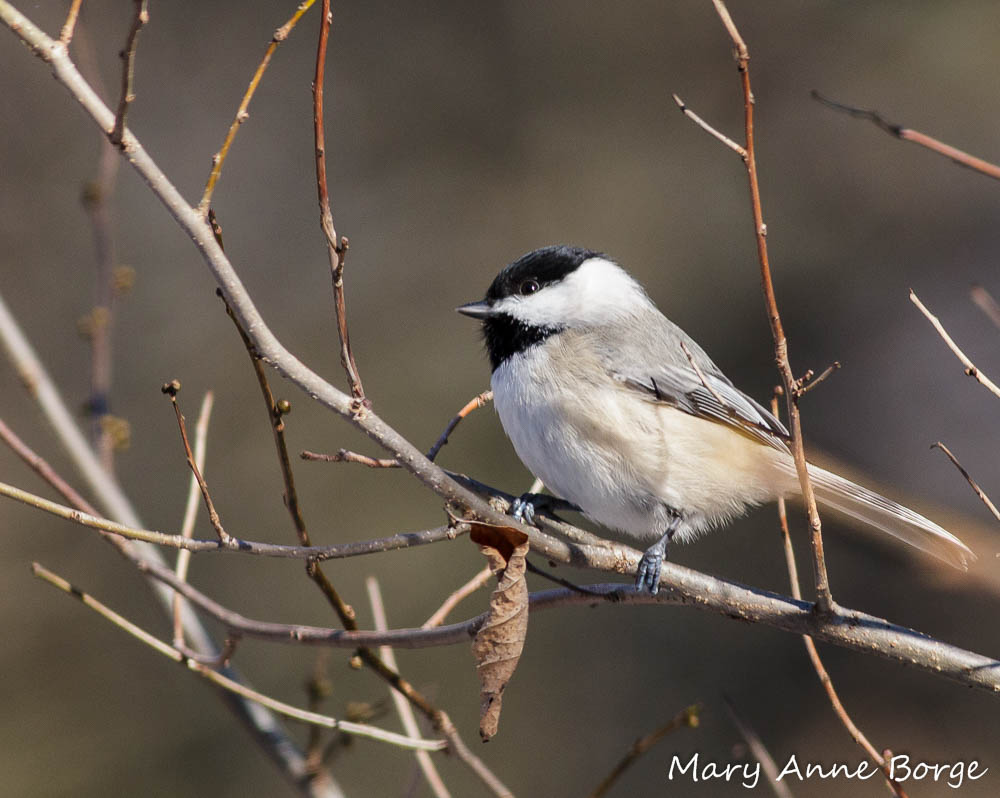
Watch for Chickadees and Titmice searching branches of trees and shrubs for eggs, chrysalises, caterpillars and other insects sheltering there.

Carolina Chickadee

Carolina Chickadee

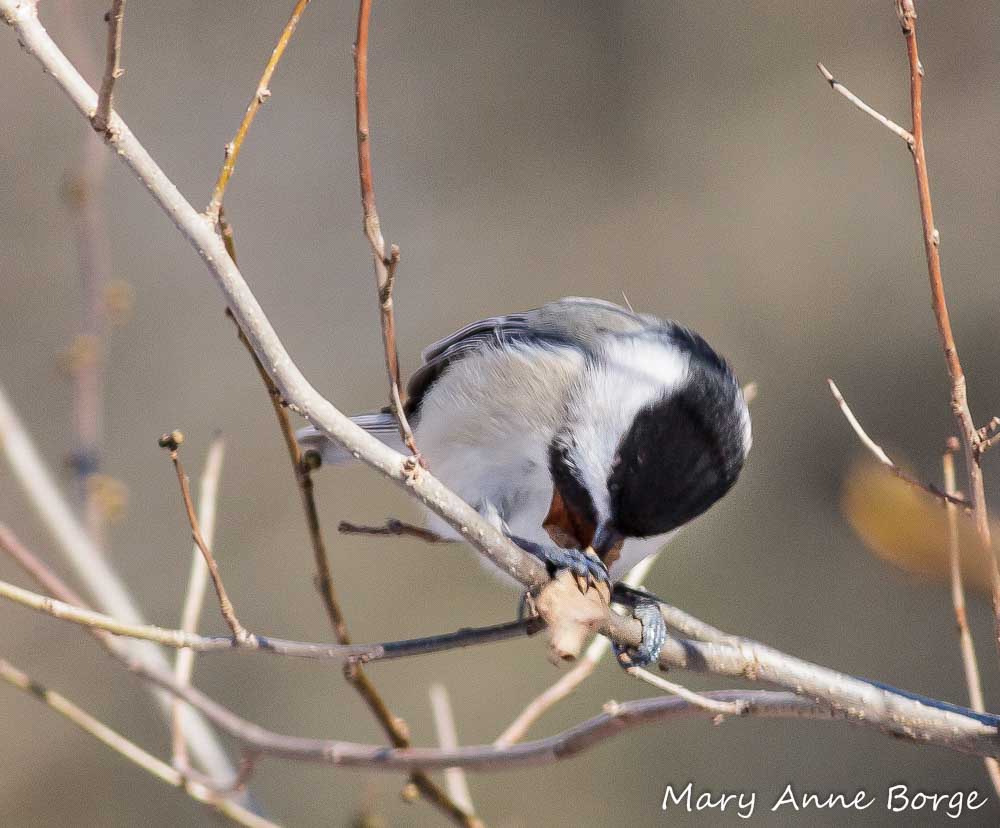
Chickadees investigate curled leaves clinging to branches, knowing that a leaf might be a winter insect shelter.

Carolina Chickadee searching for an insect in a leaf

Carolina Chickadee searching for an insect in a leaf

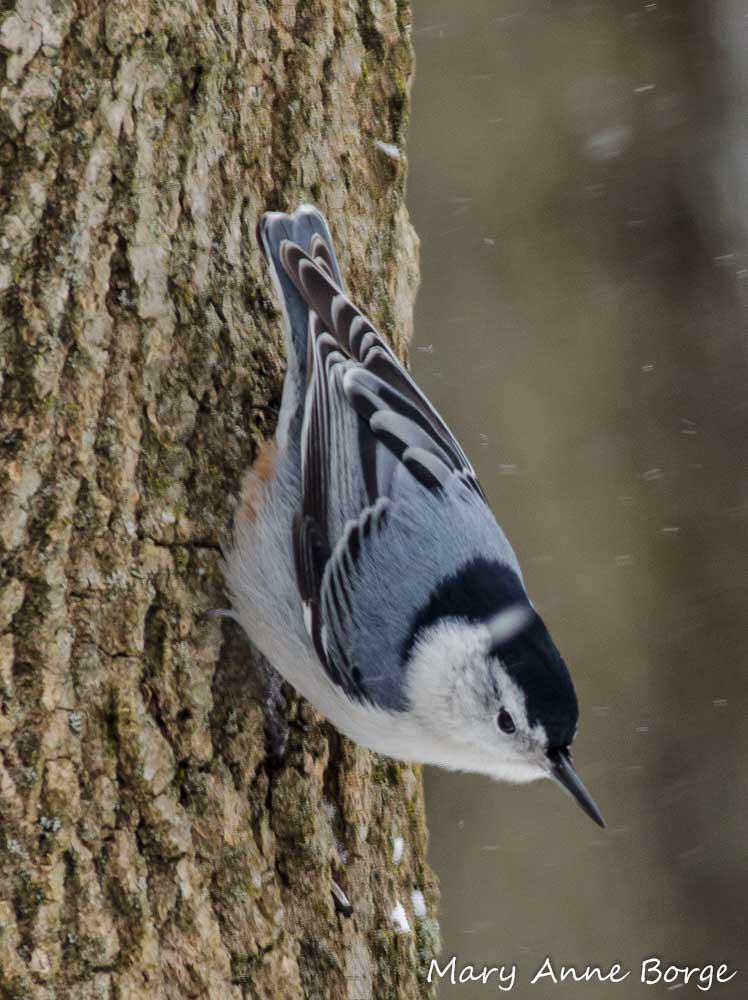
Nuthatches travel down tree trunks probing bark crevices, looking for a winter insect snack.  Brown Creepers cover the same territory in the opposite direction, eating what the Nuthatches miss.

White-breasted Nuthatch

White-breasted Nuthatch

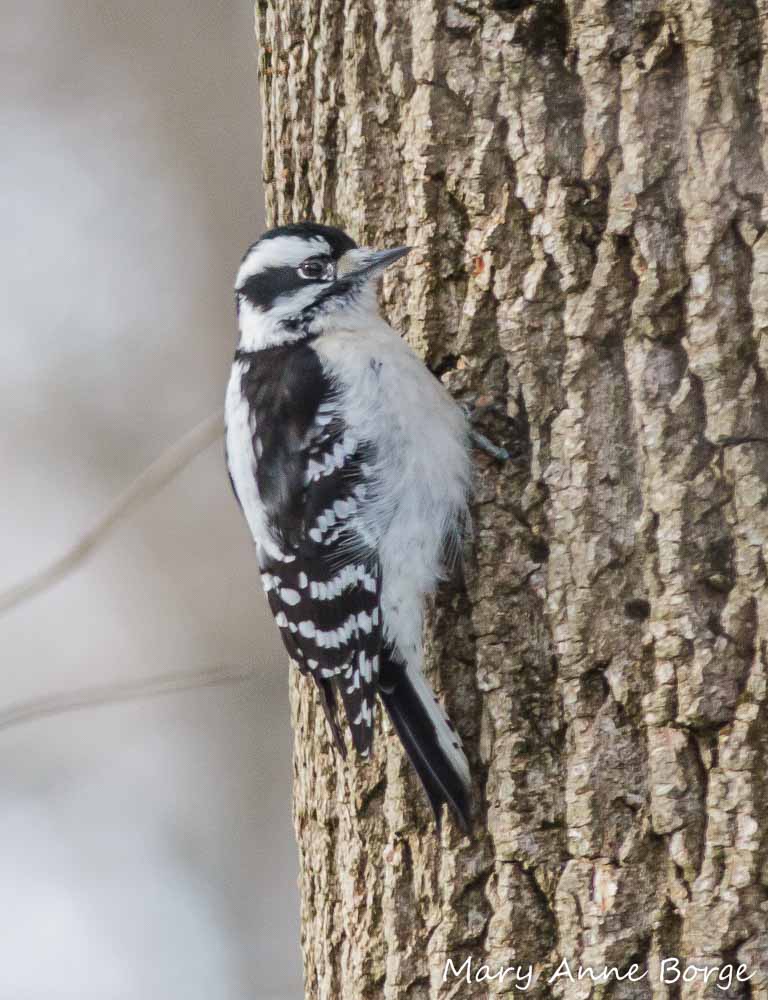
Downy Woodpeckers explore both branches and tree trunks looking for food.

Downy Woodpecker

Downy Woodpecker

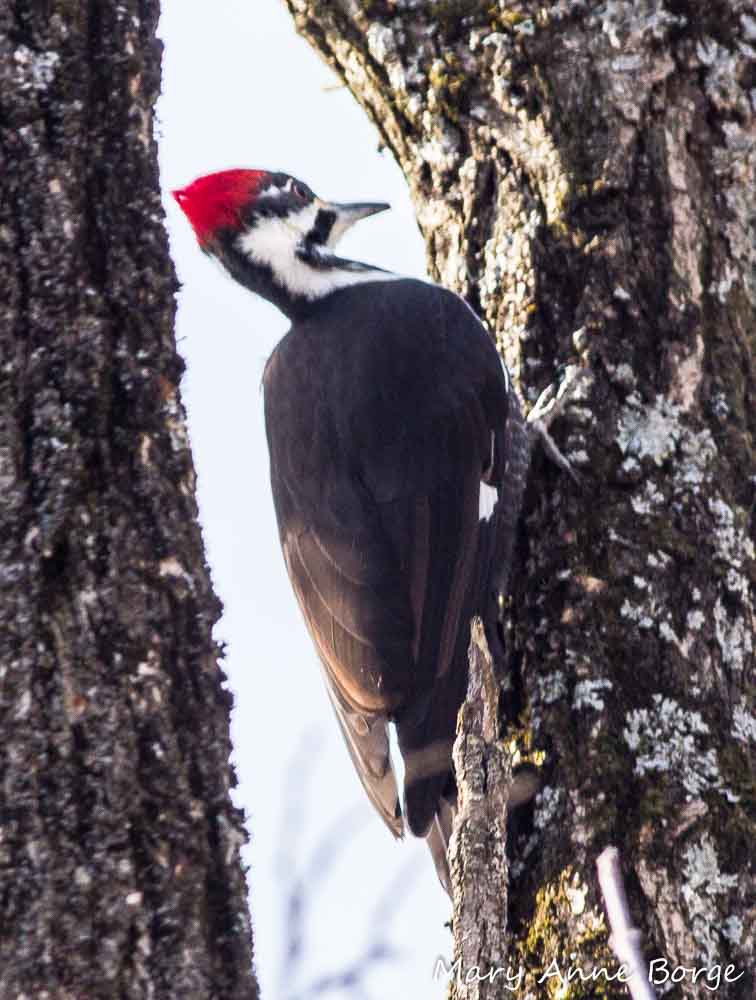
This Pileated Woodpecker

Pileated Woodpecker

Pileated Woodpecker

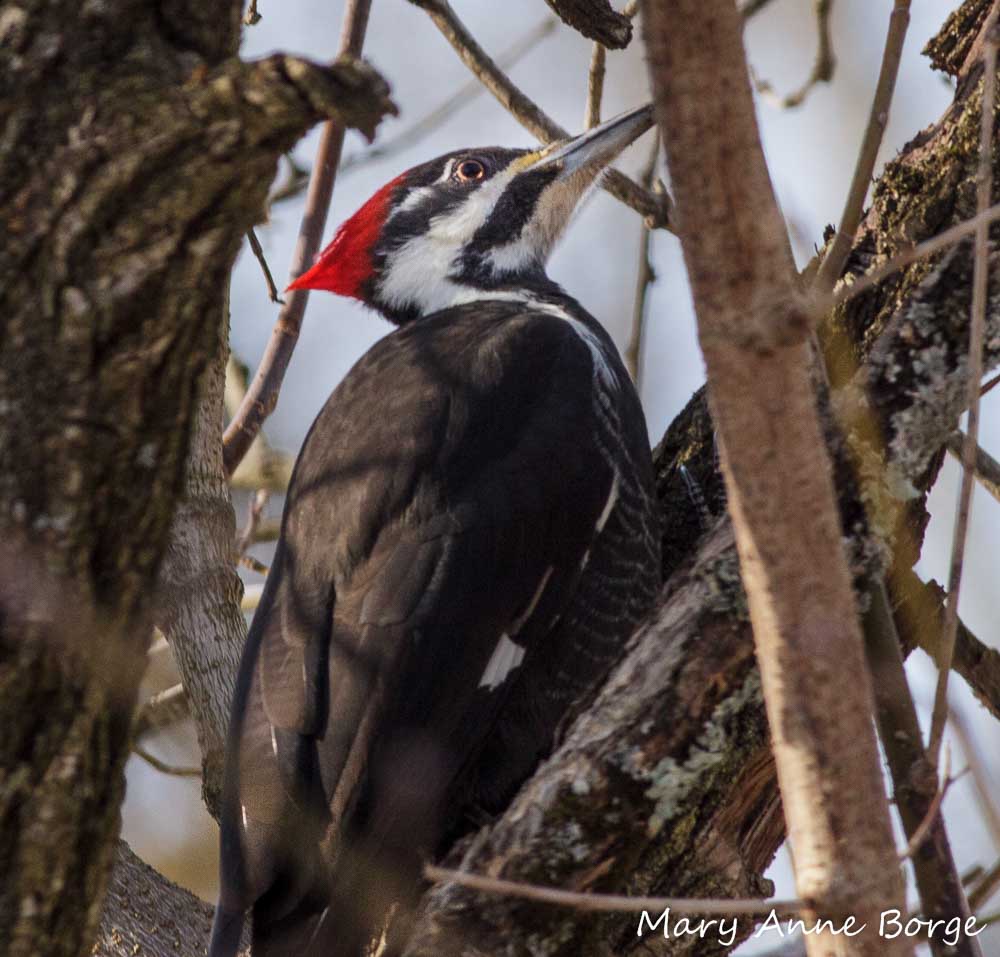
found a branch that promised her an insect reward, probably Carpenter Ants.

Pileated Woodpecker, excavating a branch for ants

Pileated Woodpecker, excavating a branch for ants

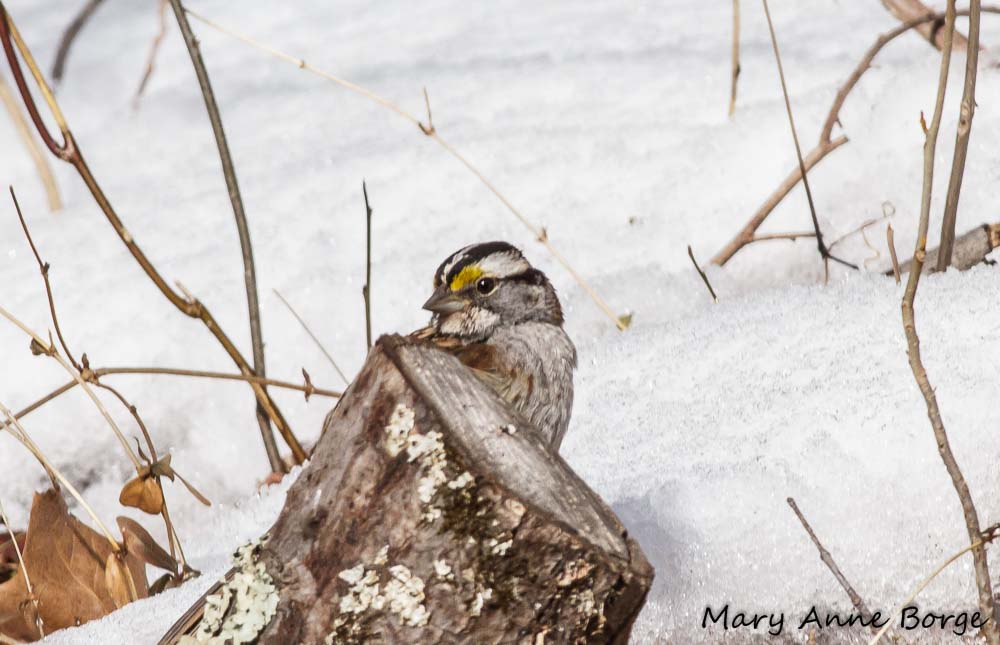
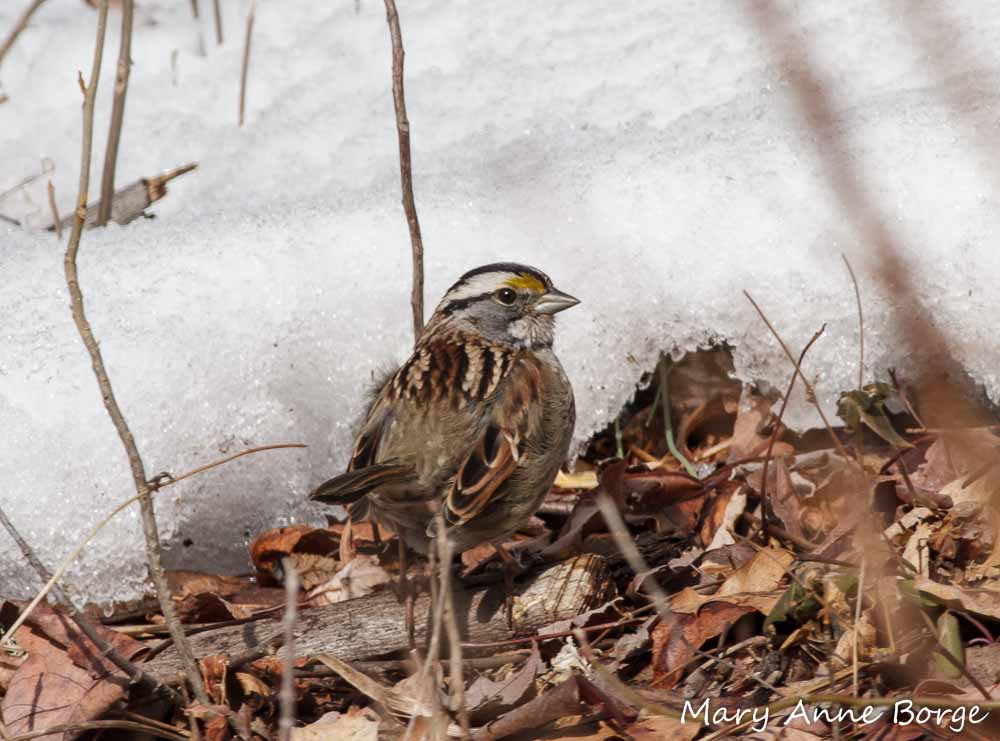
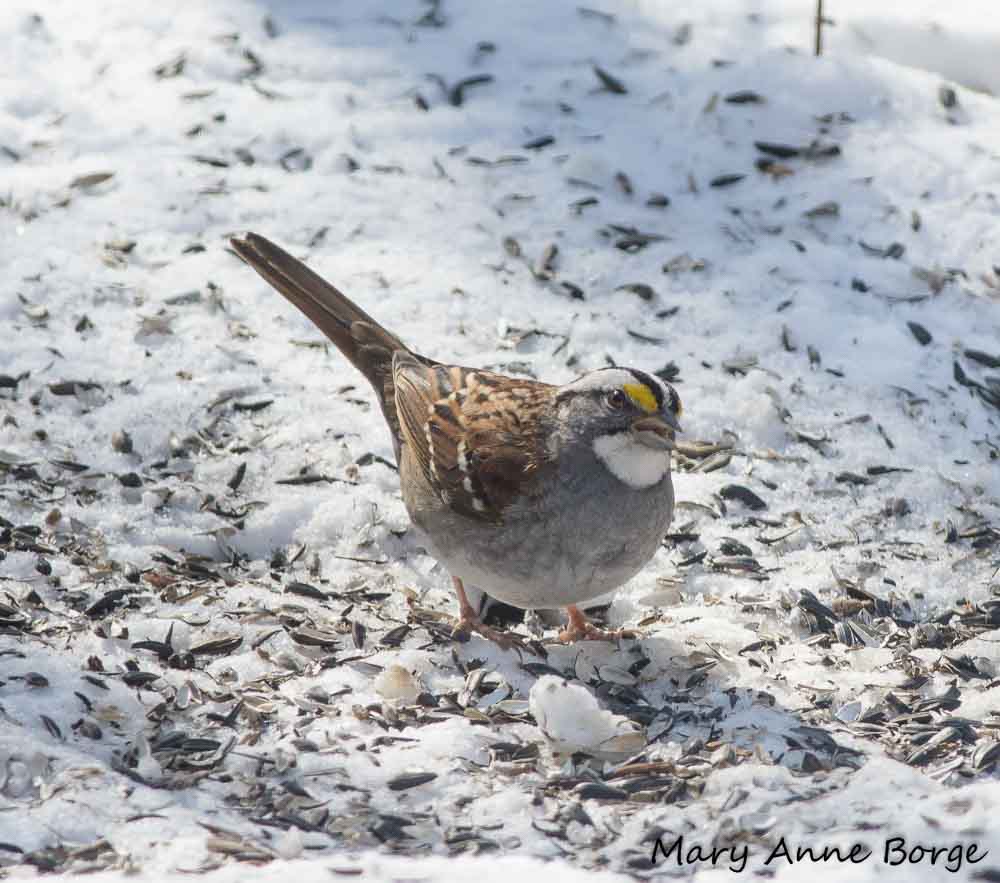
Signs of spring are beginning to show.  Look closely at the plumage of male Goldfinches and you’ll see some splotches of bright yellow, the beginning of their molt to summer garb.  This White-throated Sparrow is already sporting its summer suit, in spite of the snow!

White-throated Sparrow

White-throated Sparrow