Indigo Buntings – Living on the Edge!

As I started down the path through the meadow, I heard a ‘Chip!’ call to my left, then a ‘Chip!’ call to the right. Then another ‘Chip!’ to the left, followed by a ‘Chip!’ to the right. This call and response was repeated several times until I finally spotted the source of half of the duet, a male Indigo Bunting perched on New York Ironweed (Vernonia noveboracensis). Indigo Buntings often use this vocalization if you are near their nest, even if you are still as far away as 30-40 feet (9-12 meters).

Male Indigo Bunting perched in New York Ironweed (Vernonia noveboracensis)

Male Indigo Bunting perched in New York Ironweed (Vernonia noveboracensis)

Indigo Buntings need edge habitat, like an open field or meadow near a woodland, or a woods opening. They nest fairly low to the ground, usually at a height of at least 2-3 feet (.6 – .9 meters), but not more than 10 feet (3 meters) above ground. They require a dense cover of shrubs or brambles for their nesting site. The female Indigo Bunting makes the nest, weaving the structure from plant materials, including leaves, twigs, bark, and stems, possibly wrapping it with spider web, and lining it with softer grasses, mosses, rootlets, hair, down, or the fluff often attached to seeds.

Male Indigo Buntings need a high perch from which they can survey their territory and ward off encroaching competitors, which explains the need for the nearby trees. They sing to advertise their presence and ownership of their turf. The song often consists of several paired notes, sung repeatedly in rapid succession.
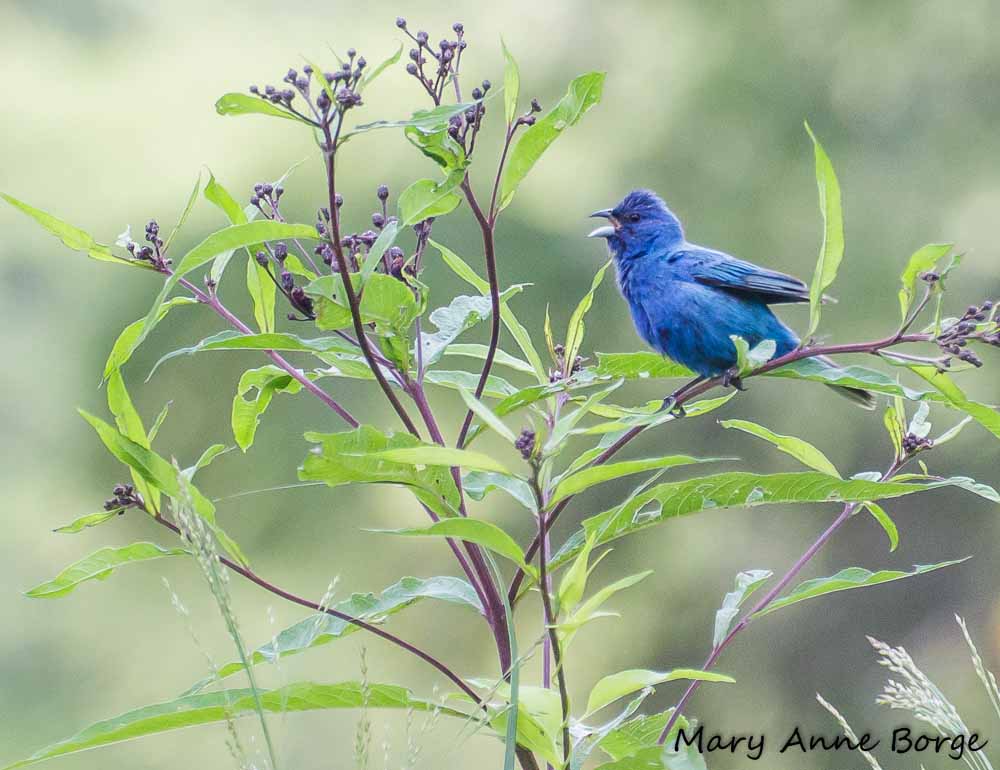
Male Indigo Bunting, singing

Male Indigo Bunting, singing

The male I saw on this visit started to sing, then flew off about 40 feet (12 meters) from his original position, continuing his song from his new grass perch. He was closer to me, and sang to draw my attention to him, presumably to distract me from seeing his partner so she could return to the nest undetected. His ploy almost worked, but I did catch a glimpse of her peeking out of a patch of blackberry brambles, about 30 feet (9 meters) away and almost out of my range of vision when I looked directly at the male.

Male Indigo Bunting

Male Indigo Bunting

On several visits to the meadow, I caught glimpses of the female, but she was always on the move. Each time I saw her she had food in her mouth to take back to her offspring. Like most birds, Indigo Buntings require a lot of protein in their diet, especially when they are young. The meadow offers plenty of grasshoppers, caterpillars, beetles, aphids and other insects and spiders to fill that dietary need. To round out the menu, berries and seeds are made available by blackberries, goldenrods, asters and other meadow plants. There is no shortage of fresh, local, organic food available for foraging nearby!

On one visit, a female and I finally had a close encounter. She was hiding in a blackberry bramble near the trail, with an insect in her beak, as usual.

Female Indigo Bunting in Blackberry (Rubus allegheniensis) bramble

Female Indigo Bunting in Blackberry (Rubus allegheniensis) bramble

As I watched, she gradually moved to a more open spot,

Female Indigo Bunting in Blackberry (Rubus allegheniensis) bramble

Female Indigo Bunting in Blackberry (Rubus allegheniensis) bramble

stayed for a few minutes,

Female Indigo Bunting in Blackberry (Rubus allegheniensis) bramble

Female Indigo Bunting in Blackberry (Rubus allegheniensis) bramble

then disappeared into the brambles to feed the kids.

To hear an Indigo Bunting’s song, click here.

Male Indigo Bunting

Male Indigo Bunting

Resources

Eastman, John. Birds of Forest, Yard, and Thicket. 1997.

Harrison, Hal H. Eastern Birds’ Nests. 1975

Eaton, Eric R.; Kauffman, Ken.  Kaufman Field Guide to Insects of North America.  2007.

Stokes, Donald W.; Stokes, Lillian. A Guide to Bird Behavior Volume II. 1983
Bugguide.net

The Cornell Lab of Ornithology All About Birds

What Good is Dogbane?

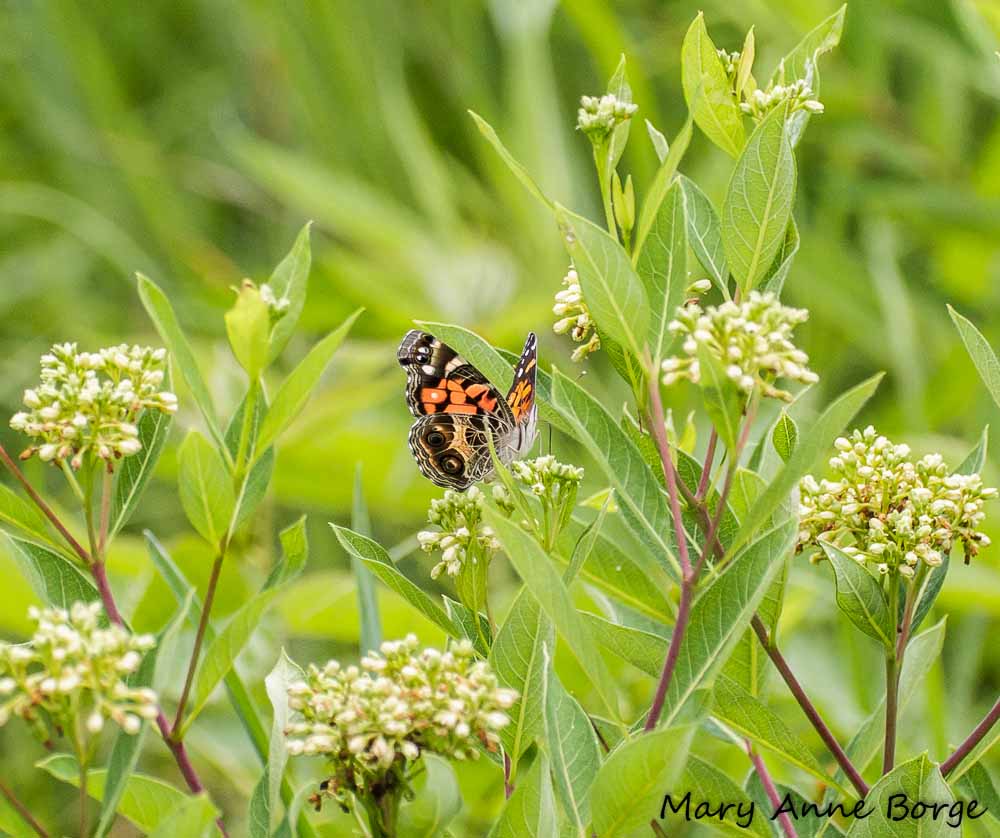
American Lady on Indian Hemp (Apocynum cannabinum)

American Lady on Indian Hemp (Apocynum cannabinum)

A friend asked for help in identifying a plant growing on her property. She thought it was a milkweed, and she was excited at the prospect that it might attract Monarch butterflies. Milkweeds are the only food plants on which Monarch caterpillars can thrive. Monarch numbers have declined steeply in the past few years, largely due to loss of habitat and their caterpillar food plants, the milkweeds.

The plant in question turned out to be a dogbane, a species commonly called Indian Hemp (Apocynum cannabinum). There is a closely related species called Spreading Dogbane (Apocynum androsaemifolium), but Indian Hemp is the species I see most often. These two species also interbreed.

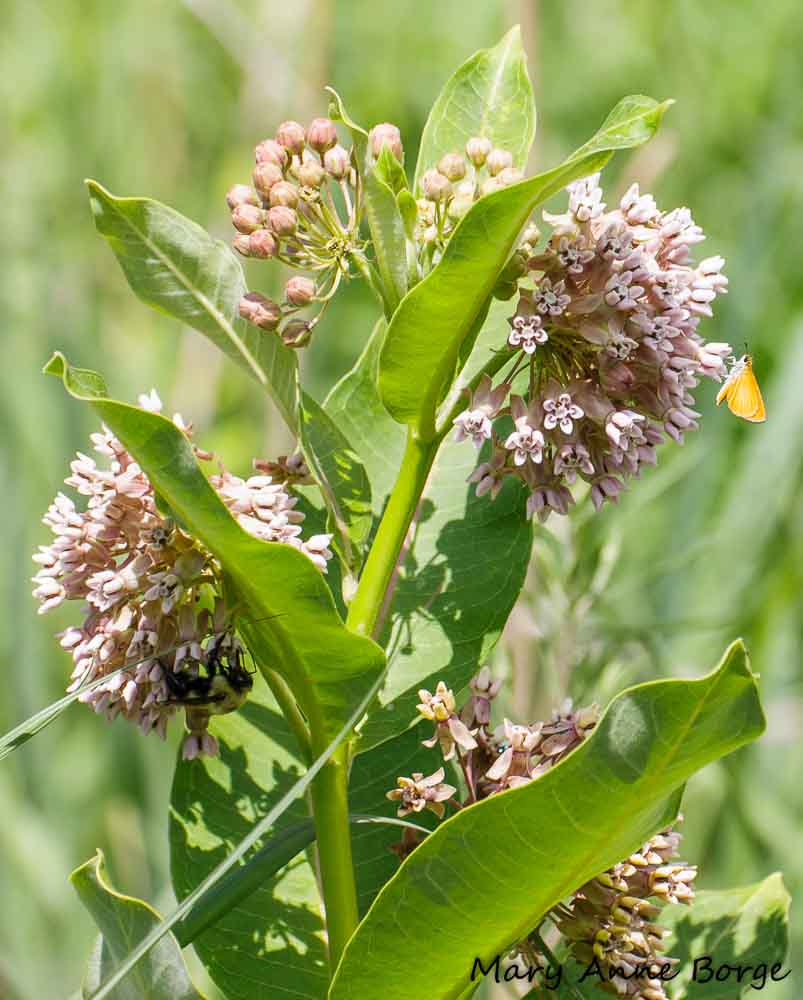
It’s easy to understand how my friend was fooled, since Indian Hemp and the other dogbane species resemble milkweeds. You might even say there is a family resemblance, since milkweeds are in the Dogbane (Apocynaceae) family. Both have simple, opposite, untoothed oval leaves with a strong midvein, and look similar at a glance.

Common Milkweed (Asclepias syriaca) with Least Skipper and Bumble Bee

Common Milkweed (Asclepias syriaca) with Least Skipper and Bumble Bee

My friend, disappointed that the plants weren’t a milkweed species, asked ‘What good is dogbane?’.

Plenty, as it turns out. It’s a great source of nectar in early summer, before many other species start blooming. The US Department of Agriculture – Natural Resources Conservation Service (USDA NRCS) ranks Indian Hemp’s value to pollinators as ‘very high’. Many bee species are frequent visitors to Indian Hemp, feeding on both nectar and pollen.

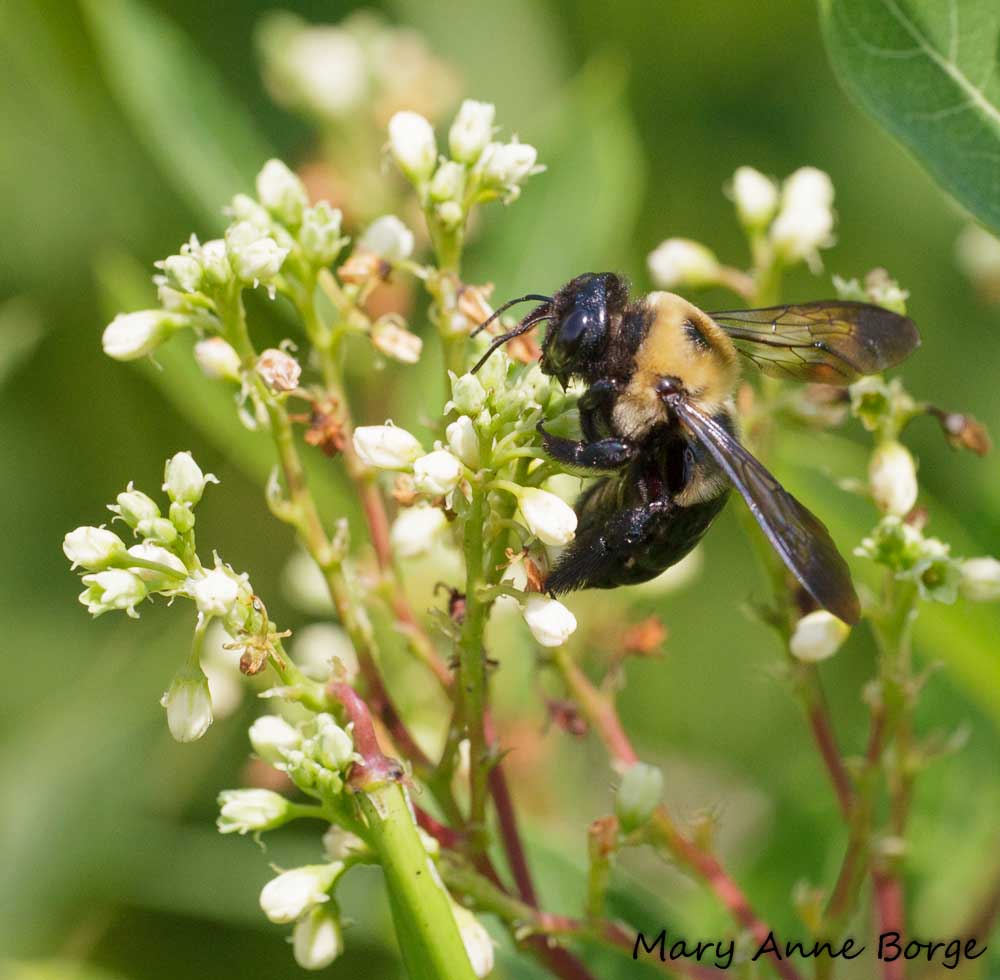
Bumble Bee on Indian Hemp (Apocynum cannabinum)

Bumble Bee on Indian Hemp (Apocynum cannabinum)

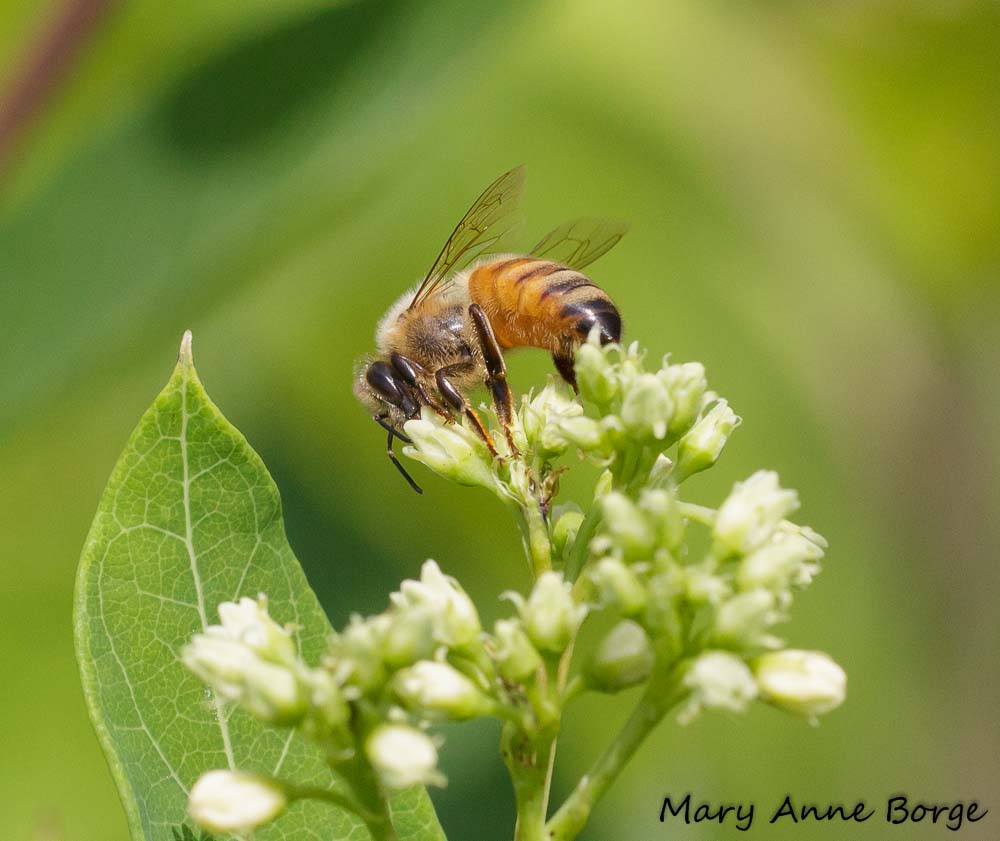
Honey Bee on Indian Hemp (Apocynum cannabinum)

Honey Bee on Indian Hemp (Apocynum cannabinum)

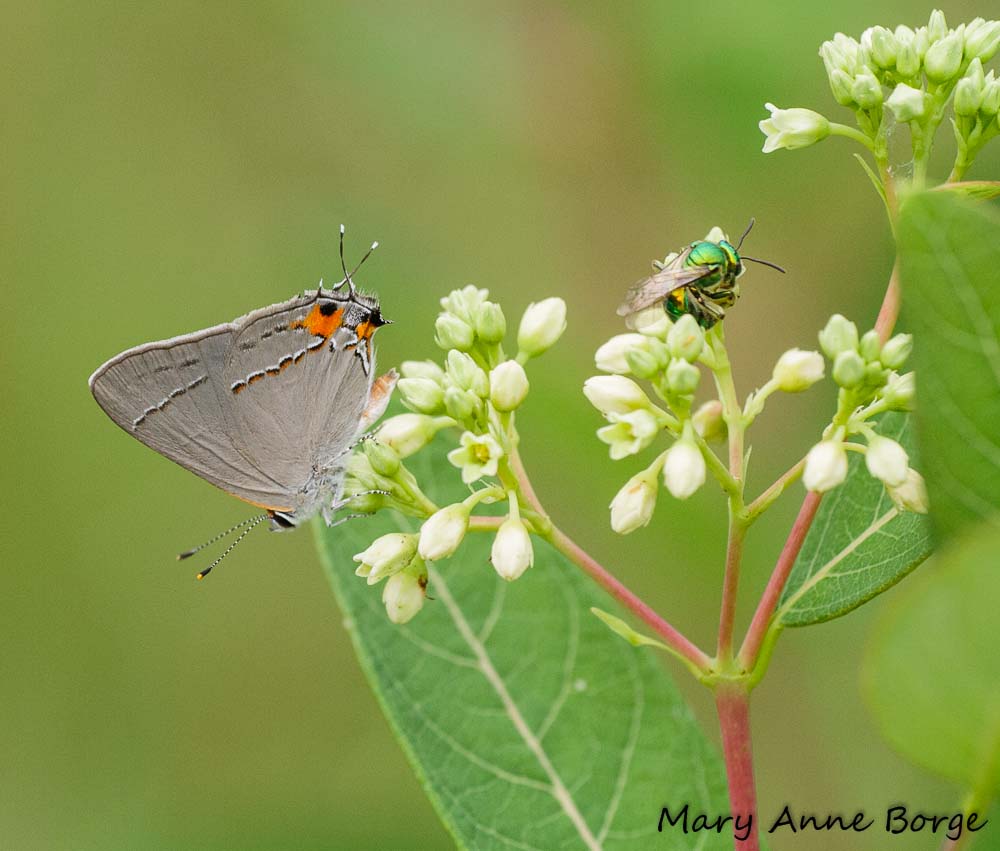
Sweat Bee and Gray Hairstreak on Indian Hemp (Apocynum cannabinum)

Sweat Bee and Gray Hairstreak on Indian Hemp (Apocynum cannabinum)

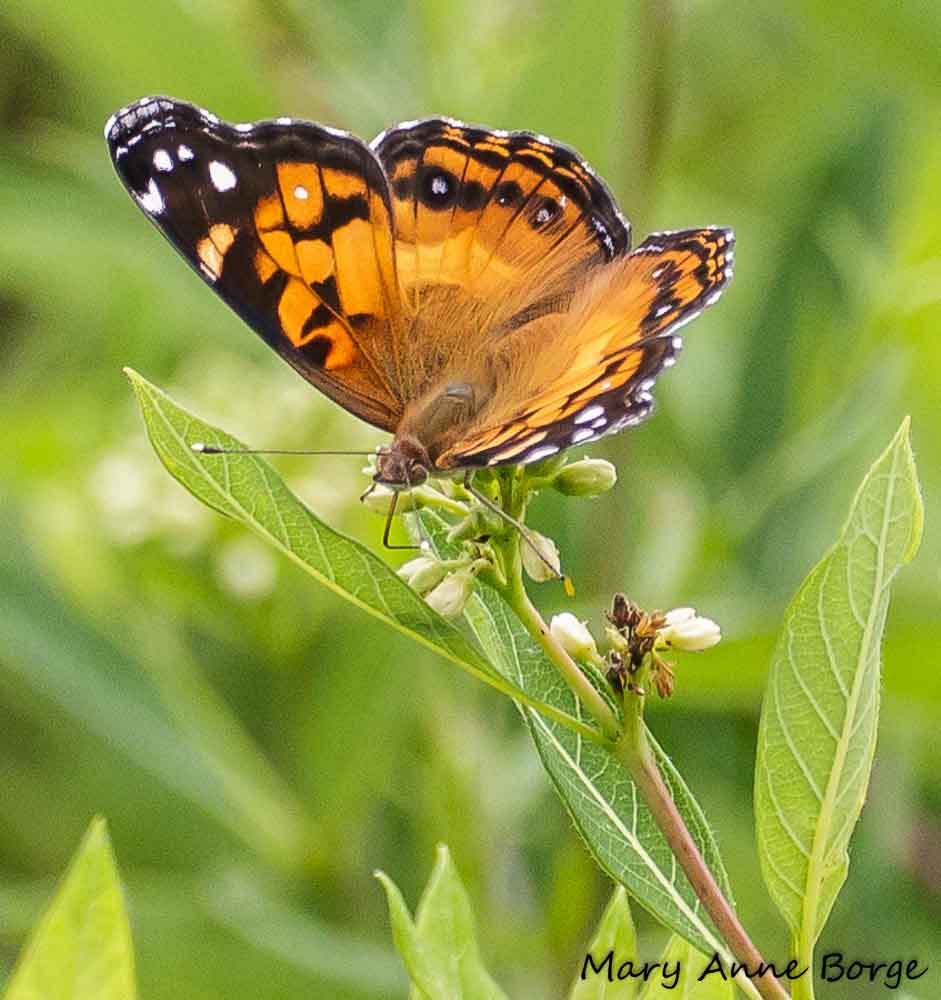
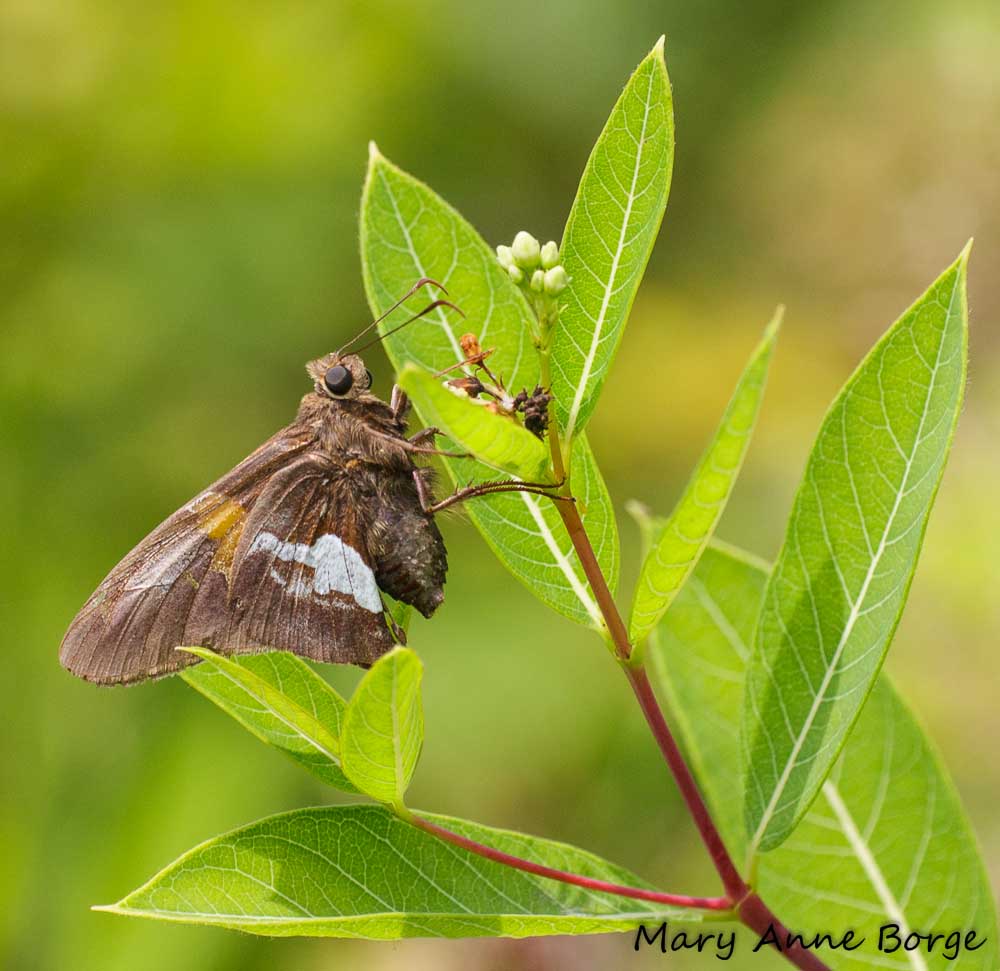
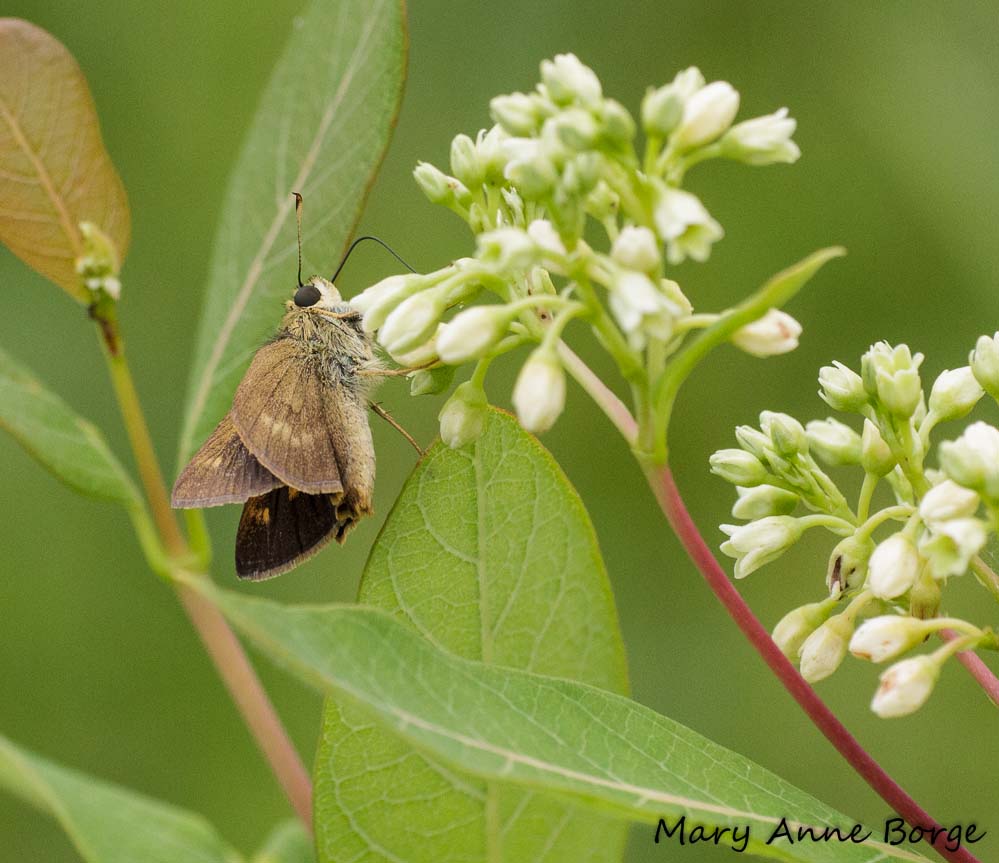
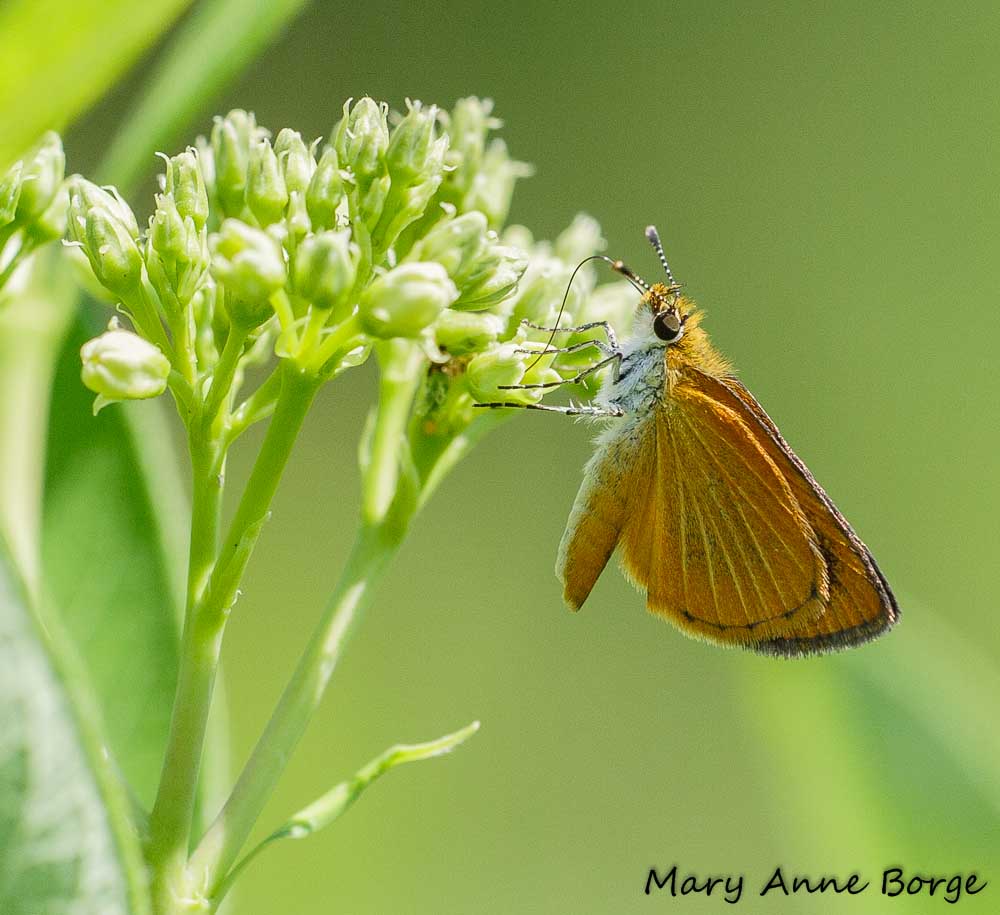
Butterflies also visit Indian Hemp for its nectar.

American Lady on Indian Hemp (Apocynum cannabinum)

American Lady on Indian Hemp (Apocynum cannabinum)

Silver-spotted Skipper on Indian Hemp (Apocynum cannabinum)

Silver-spotted Skipper on Indian Hemp (Apocynum cannabinum)

Northern Broken-dash on Indian Hemp (Apocynum cannabinum)

Northern Broken-dash on Indian Hemp (Apocynum cannabinum)

Least Skipper on Indian Hemp (Apocynum cannabinum)

Least Skipper on Indian Hemp (Apocynum cannabinum)

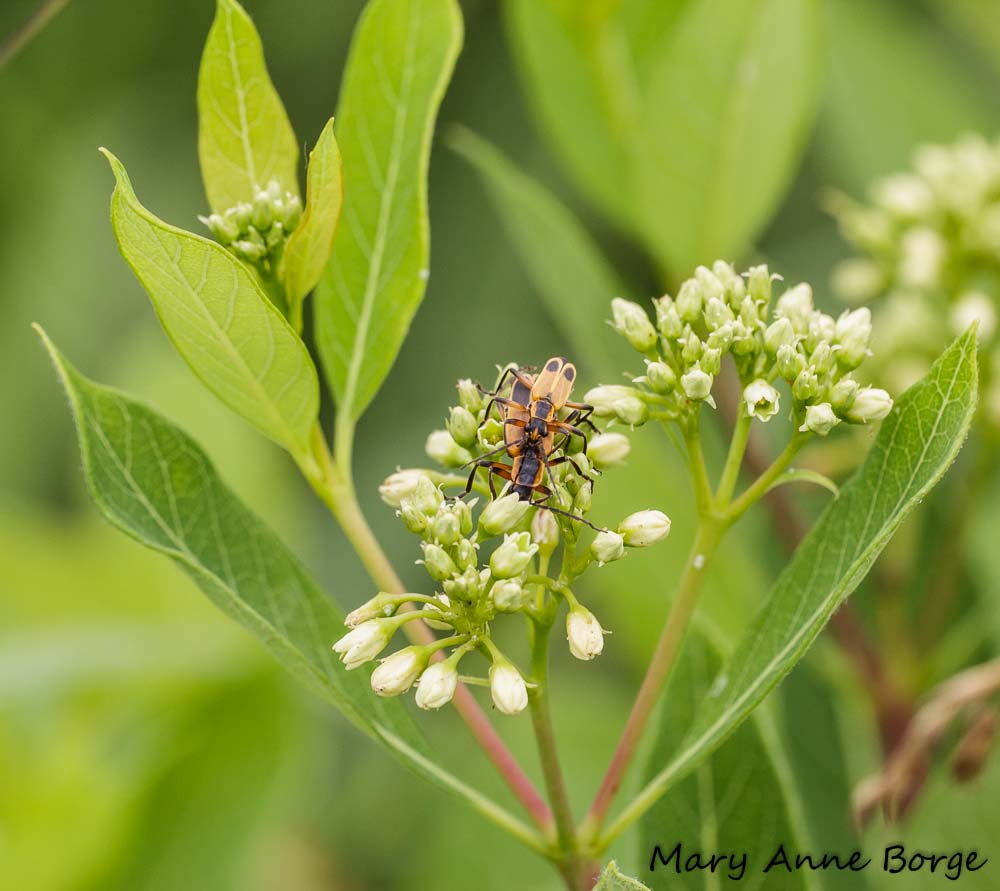
Many other beneficial insects can be found feeding on Indian Hemp. Adult Pennsylvania Leatherwings (Chauliognathus pensylvanicus), sometimes called Goldenrod Soldier Beetles, are known for foraging on goldenrods for pollen, but they visit a variety of other flowers, including Indian Hemp. Their larvae prey on the eggs and larvae of other insects, helping to keep those other insect populations in check.

Pennsylvania Leatherwings (Chauliognathus pensylvanicus) on Indian Hemp (Apocynum cannabinum)

Pennsylvania Leatherwings (Chauliognathus pensylvanicus) on Indian Hemp (Apocynum cannabinum)

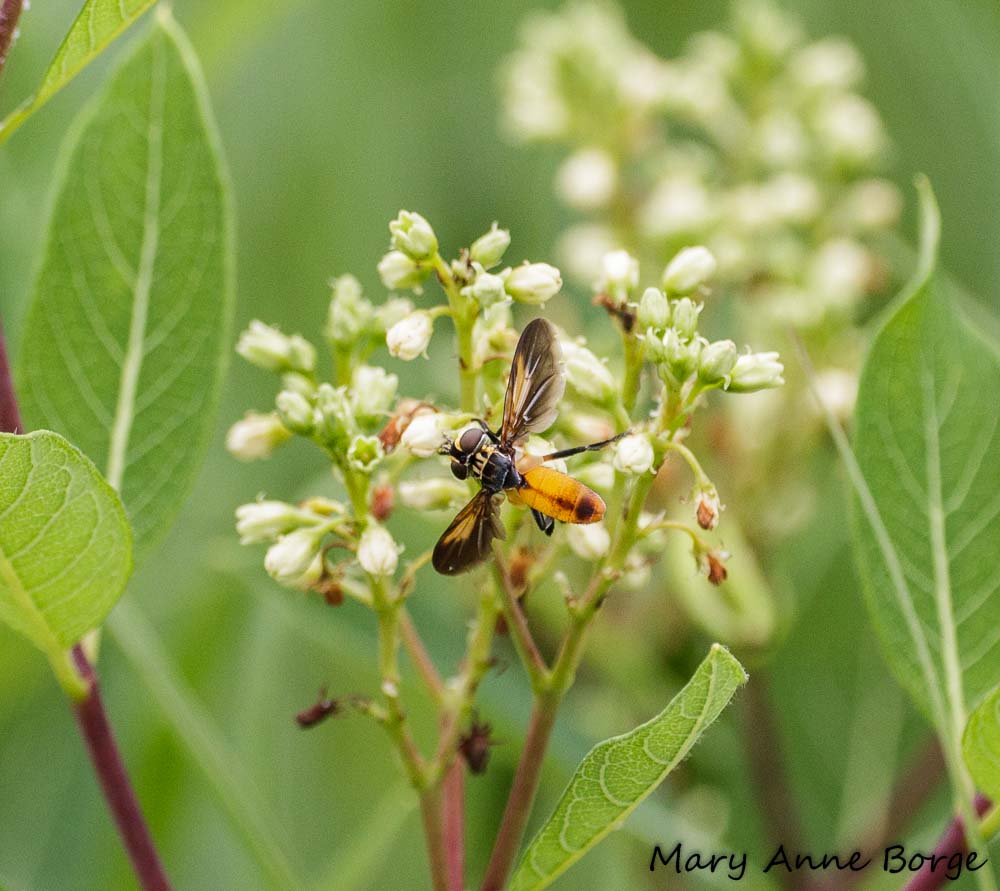
Tachinid flies may visit Indian Hemp for nectar. These beneficial critters lay eggs on nymph or adult insects, some of which are harmful to crops or to plants in general, including stink bugs, squash bugs, and even Gypsy Moths and Japanese Beetles. Their larvae live inside these host insects, feeding on their insides. This prevents the victimized insects from reproducing, and ultimately kills them. (Science fiction writers, eat your hearts out!)

Tachinid Fly (Trichopoda pennipes) on Indian Hemp

Tachinid Fly (Trichopoda pennipes) on Indian Hemp

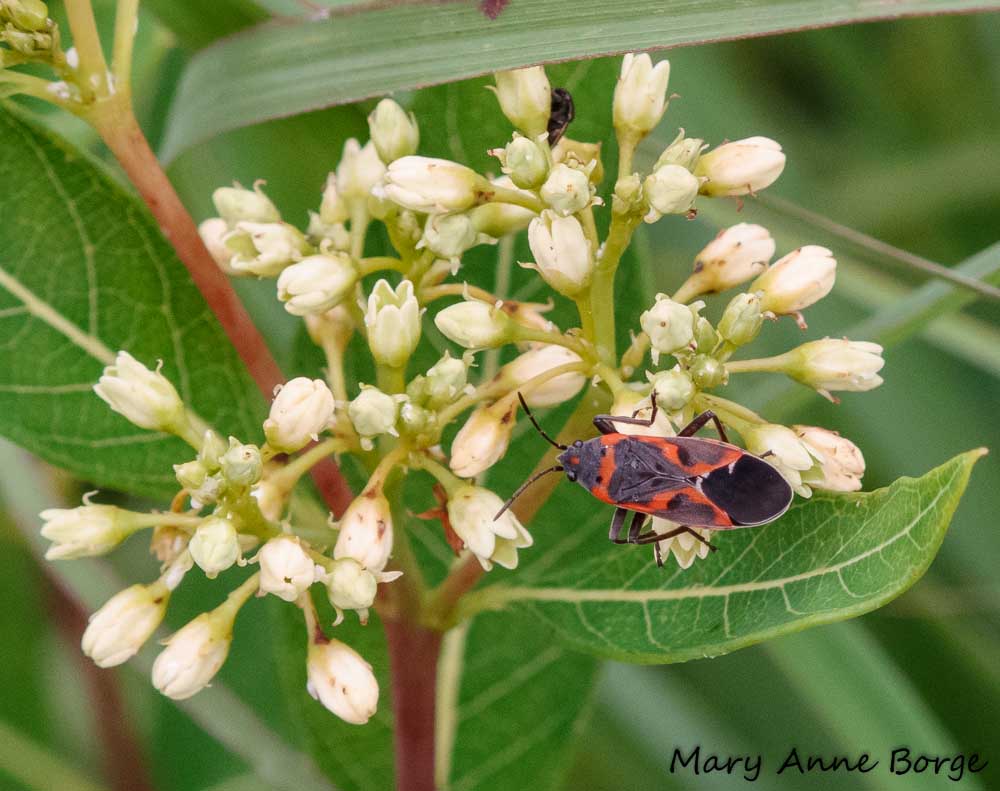
Small Milkweed Bugs (Lygaeus kalmii) are primarily seed eaters, but they have a broader palate than their name implies. The adults feed on a variety of food sources, including nectar from many flowers such as the dogbanes.

Small Milkweed Bug (Lygaeus kalmii) on Indian Hemp

Small Milkweed Bug (Lygaeus kalmii) on Indian Hemp

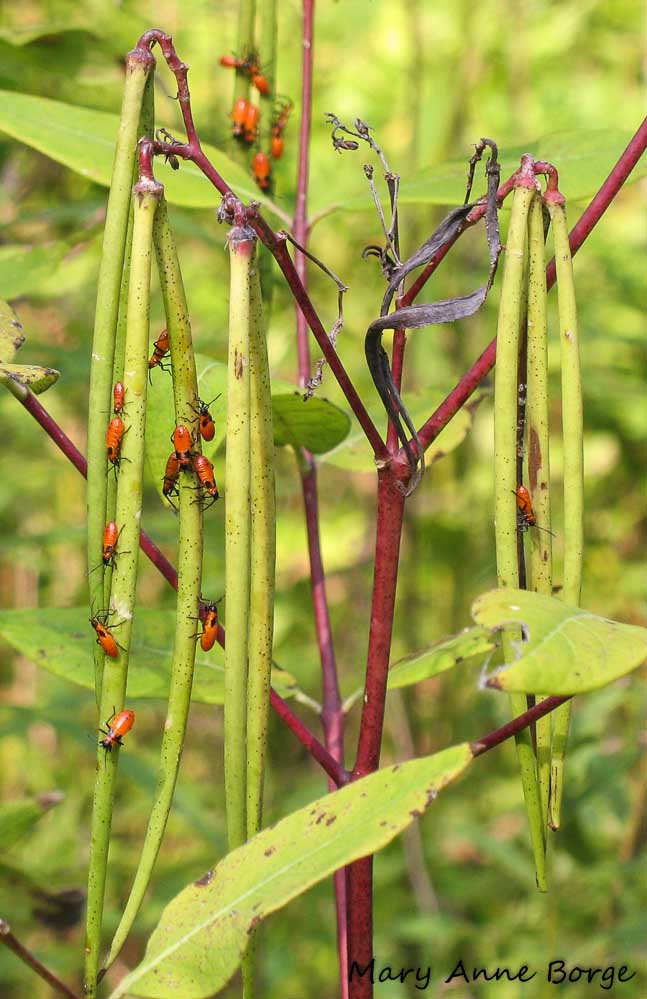
When Dogbane flowers are pollinated, they produce a pair of fruits, reflecting the structure of the flowers’ reproductive parts. Each flower has two ovaries, and each ovary produces one fruit called a follicle, a dry (not fleshy) fruit that splits open along one seam to release the many seeds inside. Small Milkweed Bug nymphs feed on dogbane seeds in addition to milkweeds, as well as the seeds of some other plants.

Small Milkweed Bug (Lygaeus kalmii) nymphs on Indian Hemp

Small Milkweed Bug (Lygaeus kalmii) nymphs on Indian Hemp

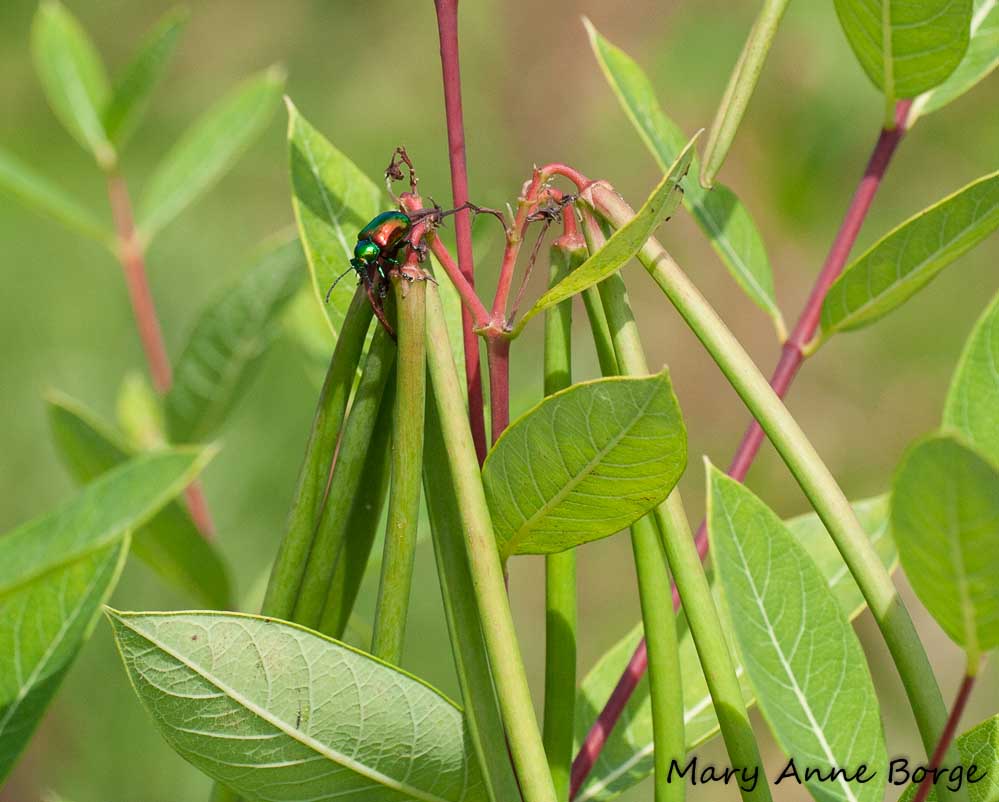
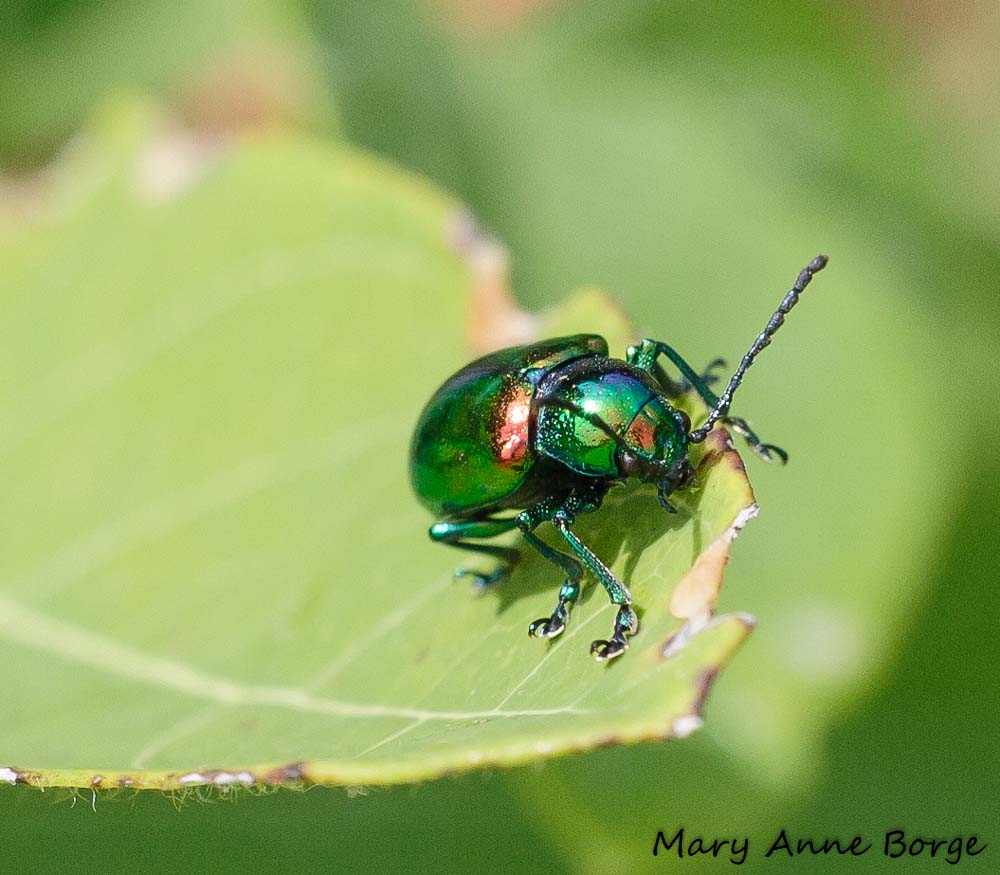
Dogbanes even have a beetle named after them, the Dogbane Beetle (Chrysochus auratus). This insect feeds primarily on various parts of plants in the Dogbane family throughout its life cycle. It’s appearance is often compared to that of the Japanese Beetle, but it’s much more beautiful, with distinctive iridescent red, blue-green and copper coloring.

Dogbane Beetle (Chrysochus auratus) on Indian Hemp (Apocynum cannabinum)

Dogbane Beetle (Chrysochus auratus) on Indian Hemp (Apocynum cannabinum)

Dogbane Beetle (Chrysochus auratus) on Indian Hemp (Apocynum cannabinum)

Dogbane Beetle (Chrysochus auratus) on Indian Hemp (Apocynum cannabinum)

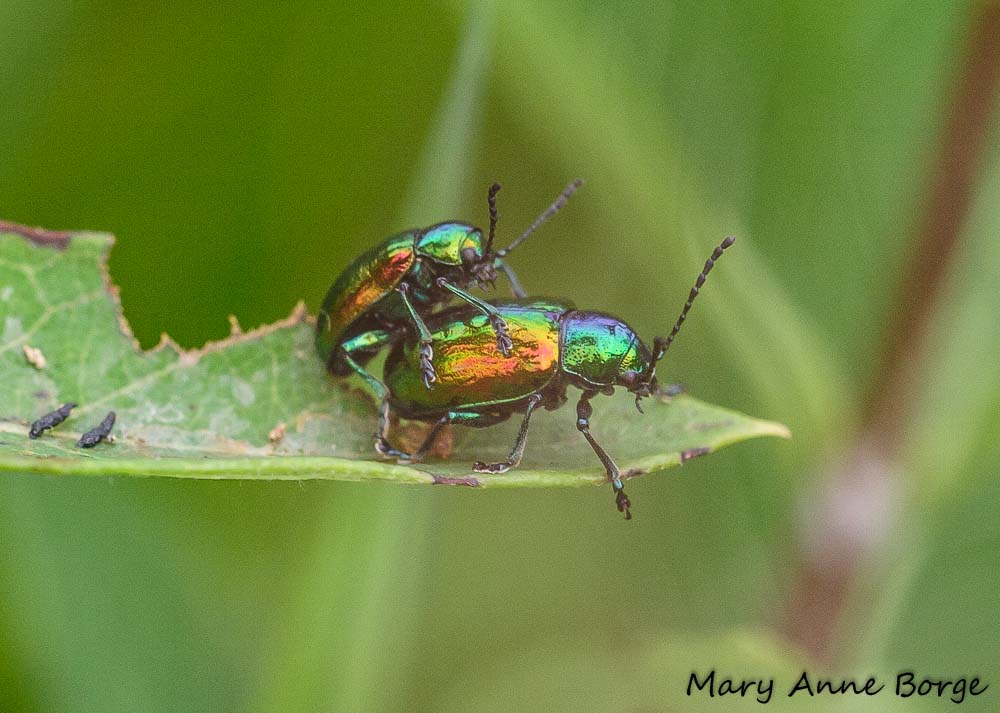
Dogbane Beetles (Chrysochus auratus) mating on Indian Hemp (Apocynum cannabinum)

Dogbane Beetles (Chrysochus auratus) mating on Indian Hemp (Apocynum cannabinum)

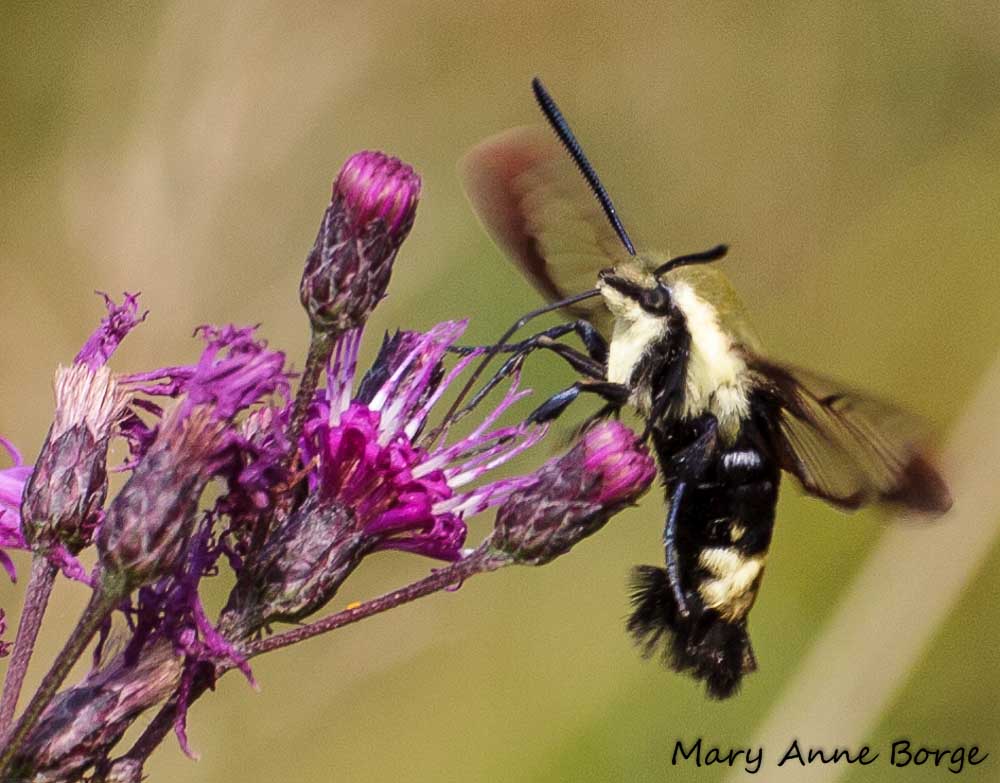
Dogbanes are among the food plants used by the caterpillars of the Snowberry Clearwing moth,

Snowberry Clearwing Moth on New York Ironweed (Vernonia noveboracensis)

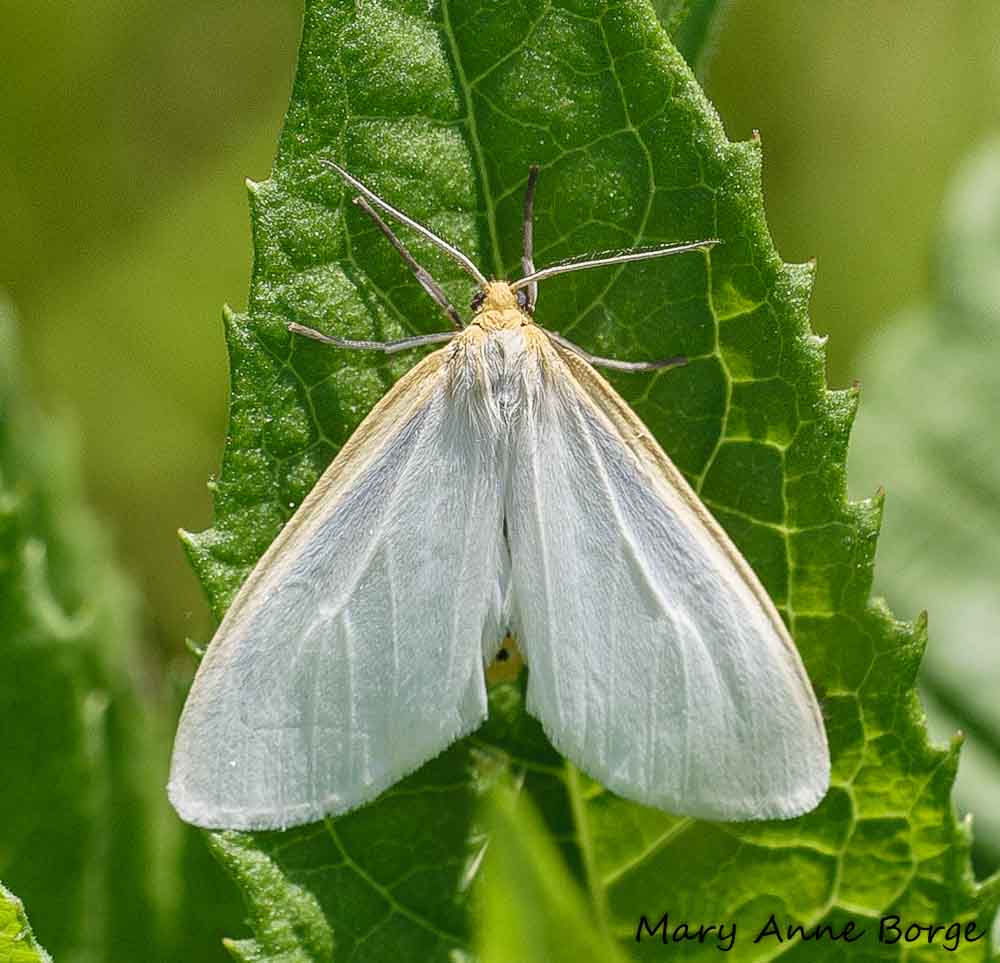
and of the Delicate Cycnia, also called the Dogbane Tiger Moth (Cycnia tenera).

Delicate Cycnia, or Dogbane Tiger Moth(Cycnia tenera)

Delicate Cycnia, or Dogbane Tiger Moth(Cycnia tenera)

Like the milkweeds, dogbane stems contain fibers that can be used to make rope. The common name Indian Hemp is based on the fact that this species is a particularly good source for these fibers, and were used by Native Americans for this purpose.

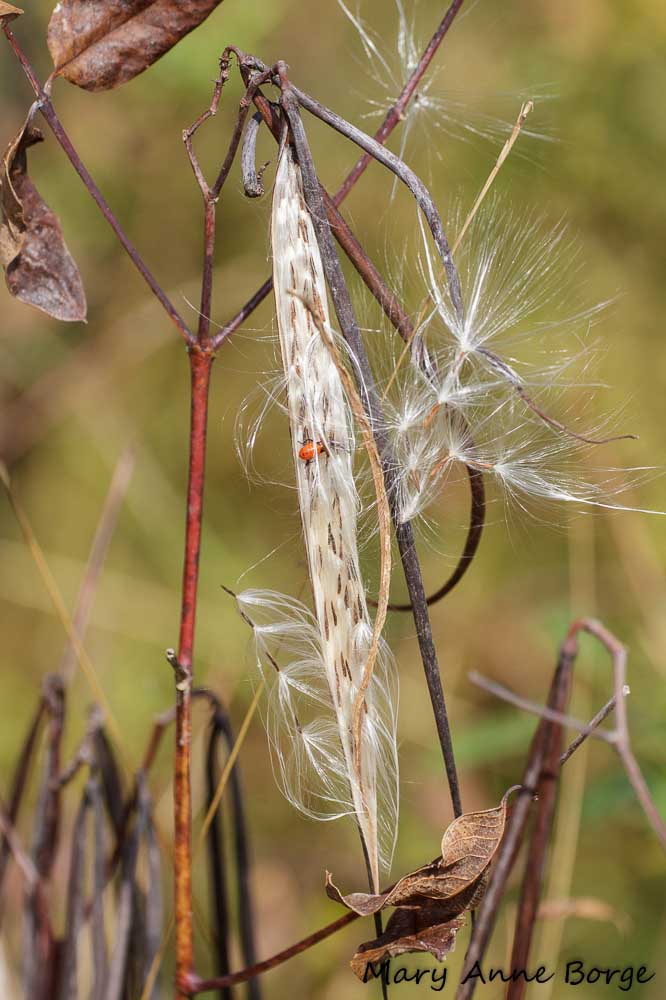
Birds take advantage of these fibers and the fluff from dogbane seeds for nest-building, just as they do with the fibers and seed fluff from milkweeds. (See Milkweed – It’s not just for Monarchs.)

 Indian Hemp seeds with Small Milkweed Bug (Lygaeus kalmii) nymph

Indian Hemp seeds with Small Milkweed Bug (Lygaeus kalmii) nymph

Dogbanes share some of the chemical compounds, including cardiac glycosides, that make milkweeds indigestible or toxic to many herbivores that would otherwise eat them.  These chemicals are especially potent in Indian Hemp.  A few sources (Natural History Museum; The Book of Swamp and Bog by John Eastman) say that Monarchs may use Spreading Dogbane as a caterpillar food plant.  Since the protection offered by sequestering these chemicals in parts of their bodies is the reason Monarchs have evolved to specialize on Milkweeds, maybe they can evolve to use dogbanes, too.  Have you ever seen a Monarch caterpillar on a dogbane? (I haven’t, but I’ll keep looking!)

Even without Monarchs, dogbanes are pretty productive plants!

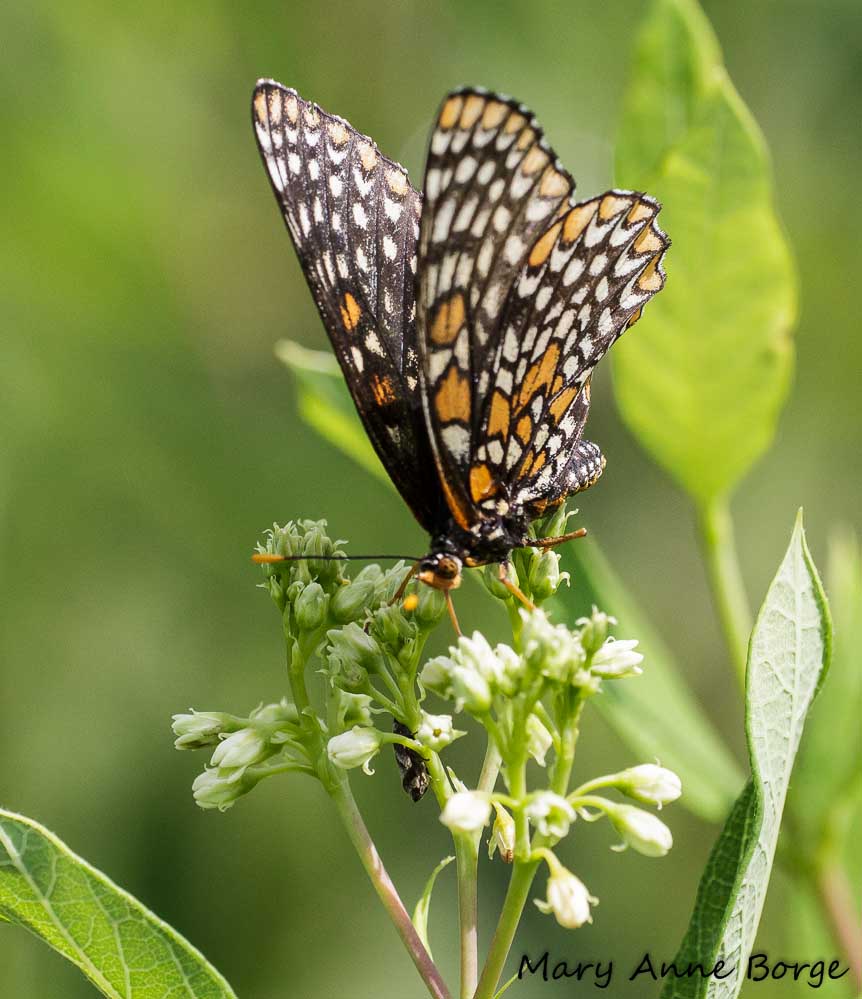
Baltimore Checkerspot on Indian Hemp (Apocynum cannabinum)

Baltimore Checkerspot on Indian Hemp (Apocynum cannabinum)

Resources

Eastman, John. The Book of Swamp and Bog. 1995.

Eaton, Eric R.; Kauffman, Ken. Kaufman Field Guide to Insects of North America. 2007.

Elpel, Thomas J. Botany in a Day. 2006.

Evans, Arthur V. Beetles of Eastern North America. 2014.

Rhoads, Ann Fowler; Block, Timothy A. The Plants of Pennsylvania of Pennsylvania. 2007.

Pollinator-friendly Plants for the Northeastern United States (USDA NRCS)

Illinois Wildflowers

USDA-NRCS Plant Guide

NRCS Wildflower Plant Characteristics for Pollinator and Conservation Plantings in the Northeast

Enhancing Farm Landscapes for Native Bees and Improved Crop Pollination

Primitive Ways

Native Plants and Ecosystem Services

Tachinid flies:
Attracting Beneficial Bugs

USDA National Agroforestry Center

Beneficial Insects and Spiders in Your Maine Backyard

Small Milkweed Bug:
Bug Eric

Dogbane Beetles:
Illinois State Museum 

University of Wisconsin-Milwaukee